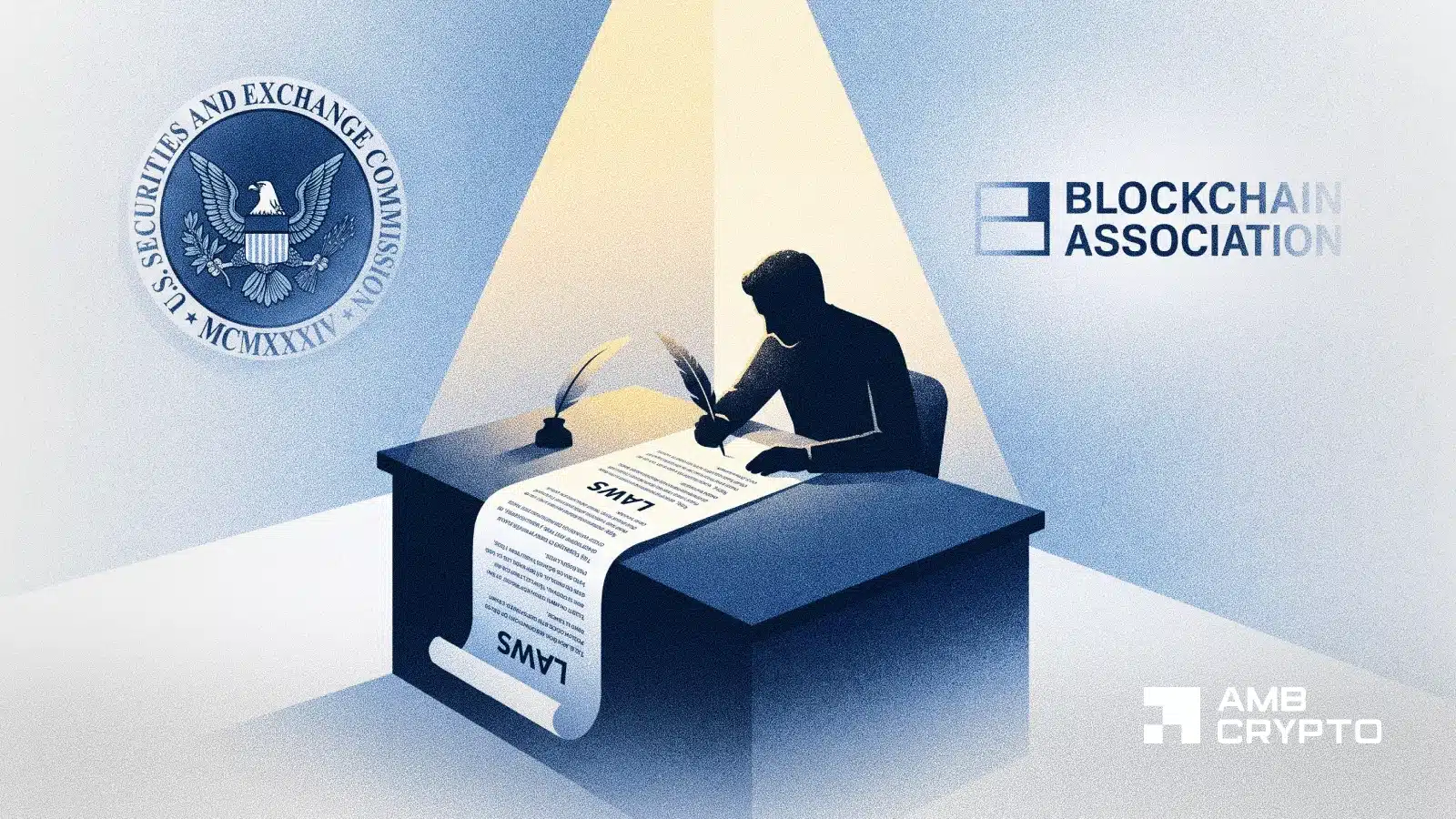
It’s 2026, and the crypto market is not what it was back 2 decades ago in 2005. This time frame forced the U.S. SEC to come up with a proposal to revise the outdated clauses of Regulation NMS—Rules 611 and 610(e). Supporting their proposal on the 17th of August, the Blockchain Association has sent a letter of comment to the SEC.
Table of Contents
All about the two rules
For those unaware, Rule 611, often referred to as the trade-through rule, created fragmented trading and increased costs by requiring investors to connect to several venues with protected quotes, even if those venues may not provide the best overall execution.
Meanwhile, Rule 610(e), which prohibits locked and crossed markets, used to skew price discovery because displayed prices usually did not accurately reflect actual economic value after fees and rebates.
Hence, the Blockchain Association supports the SEC’s proposal that removing both of these rules could improve competition, liquidity, and price discovery for the upcoming crypto market.
The letter clarified that the two rules have
Led to a myriad of consequences in today’s trading environment, including increased costs and market structure complexity, limiting order handling and execution choice, and contributing to exchange proliferation and fragmentation of trading on equity exchanges
Why do these rules feel outdated in 2026?
This is because the current crypto market has become more automated, interconnected, and technologically advanced. Additionally, the Blockchain Association argues that the rise of tokenized securities requires securities rules to evolve.
Unlike traditional exchanges, blockchain markets can offer 24/7 trading, near-instant settlement, transparent records, and self-custody, while using models such as AMMs, on-chain order books, and intent-based systems. Because these mechanisms differ from traditional exchanges, the association says Rules 611 and 610(e) may not be suitable for on-chain markets.
The letter added,
The Proposing Release is also consistent with the Administration’s intention to promote United States leadership in digital assets and financial technology.
What’s the plan after all?
It therefore wants the SEC to consider factors beyond price and rather put the attention on speed, costs, settlement, certainty, interoperability, and self-custody.
Moreover, the Blockchain Association also wants the SEC to clarify how tokenized securities can trade and settle using stablecoins. This is important, given that regulation should not prevent blockchain-based markets from integrating tokenized assets, stablecoins, and on-chain settlement.
This follows Chairman Paul Atkins recently proposing his “Regulation Crypto” vision, which was scheduled to vote on the 14th of August. However, the voting has now been postponed to allow lawmakers to first focus on the approval of the CLARITY Act.
Final Summary
- Rule 611 created fragmented trading and increased costs, whereas Rule 610(e) was used to skew price discovery.
- The Blockchain Association stands in full support of the SEC’s proposal to amend these two rules.