
Strategic reserve accumulation can cut both ways.
On one hand, new additions can fuel short-term speculation, with traders betting on a potential supply squeeze.
On the other hand, continued accumulation could bolster a token’s long-term narrative by anchoring token demand to actual network revenue and adoption.
Chainlink is now at the center of this debate.
Notably, its reserve has increased its holdings of the native token by 89,200 LINK, worth $1.11 million, taking total holdings to 6.29 million LINK. In fact, over the past 30 days, it has accumulated another 431,900 LINK worth $5.41 million.
The catch? These tokens aren’t being spent on network development right now.
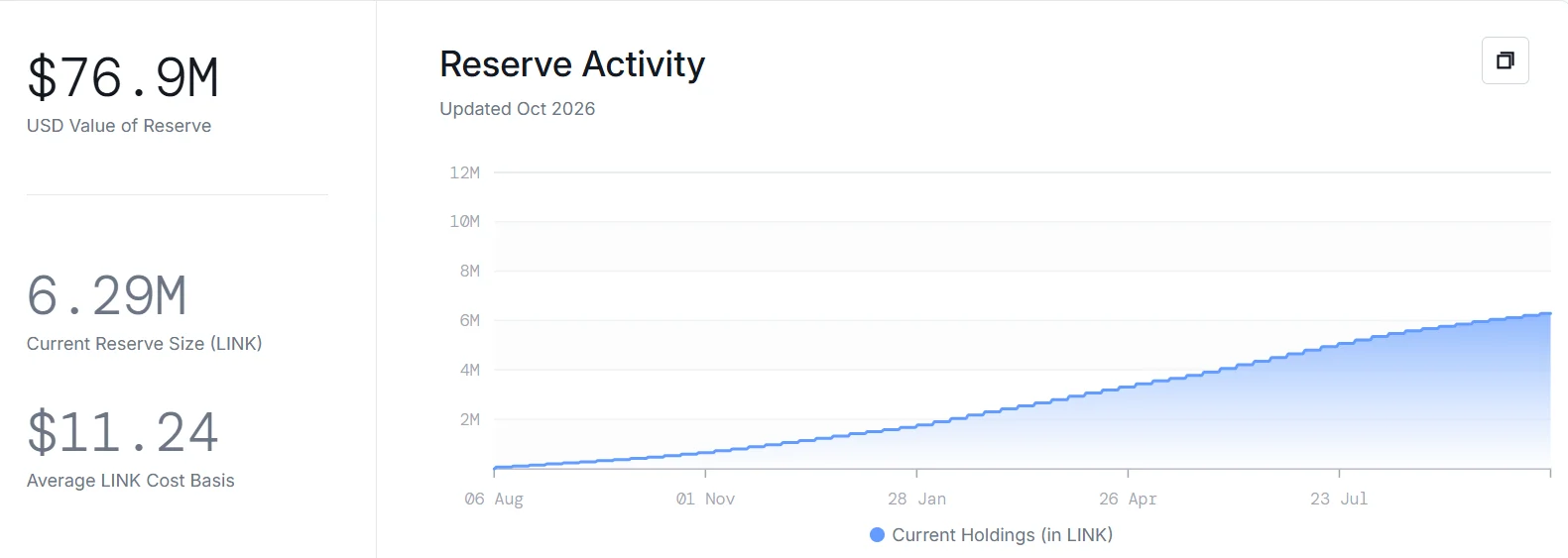
As the chart above shows, not a single LINK token has left the Chainlink Reserve.
And that is because, from a technical perspective, the prolonged accumulation could create a supply-demand imbalance on the market. Should buying pressure come on while the holdings are still rising, there is a possibility of a scarcity-driven rally.
Notably, Chainlink’s [LINK] 27% rise in September adds weight to the bullish case, as the Reserve has been accumulating 431,900 LINK worth nearly $5.41 million over the last 30 days.
However, does this make LINK’s recent momentum more speculative than fundamentally-driven?
LINK’s supply squeeze narrative faces institutional demand test
Analysts believe LINK’s supply dynamics could help set the stage for a new all-time high.
LINK has a maximum supply of 1 billion tokens, with approximately 767 million currently circulating. The remaining 233 million represent a potential supply overhang, although their market impact depends on when they enter circulation.
At 6.29 million LINK, the reserve held roughly 0.82% of circulating supply. Its purchases could absorb some supply, but their scale remains modest.
That said, analysts flagged that reserve holdings remained small relative to overall supply. ETF purchases also offer no guarantee of sustained demand.
On the 16th of October, spot LINK ETFs recorded $397,000 in net outflows, only their third net-outflow day.
One negative session does not establish a lasting institutional retreat. It does, however, show that ETF demand can reverse.
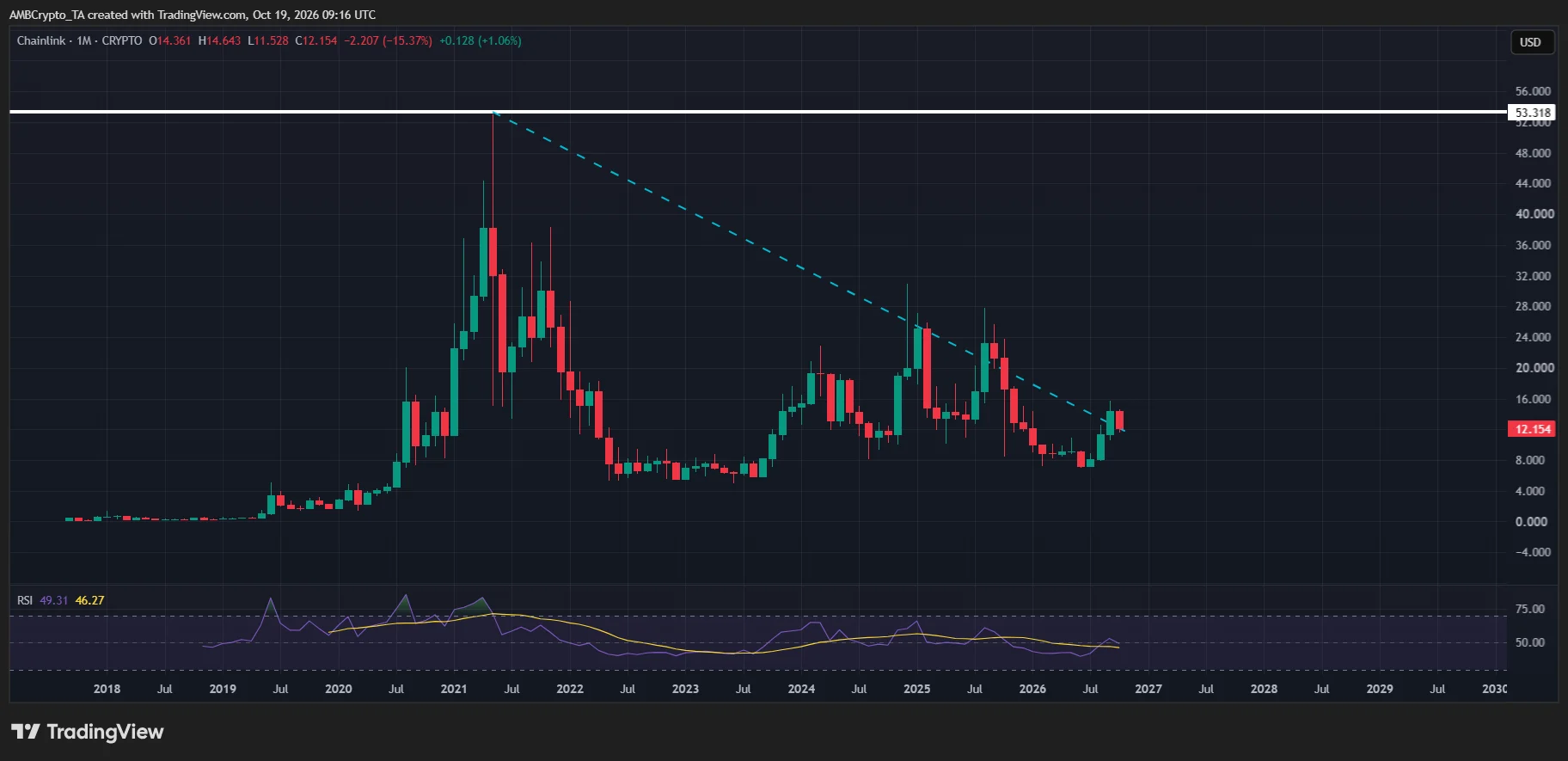
What would take LINK back to THIS?
Therefore, for LINK to reclaim its $52.70 all-time high, demand must grow fast enough to absorb new supply and support a market cap of roughly $40 billion at today’s circulating supply.
In this context, while Chainlink’s Q3 surge was supported by fundamental factors, its 27% increase seems to be primarily driven by speculation surrounding scarcity.
Until institutional investors absorb the bulk of supplies, it is possible that further gains will continue to be propelled by similar narratives rather than actual demand for the asset itself.
Final Summary
-
Chainlink’s Reserve added 431,900 LINK worth $5.41 million in 30 days.
-
LINK’s 27% September rally may be driven more by supply-squeeze hype than strong institutional demand.