Strategy has prioritized bolstering its capital base rather than accelerating the purchase of Bitcoin [BTC], using approximately three times more for preferred stock repurchases.
From the 14th of September to the 18th of October, Strategy purchased nearly $888 million worth of its own preferred stock. During that same time frame, it acquired an additional 3,466 Bitcoins at a cost of approximately $290 million.
Although Strategy may be able to reduce future obligations related to dividends, the reduced rate of growth in Treasury holdings is likely to continue.
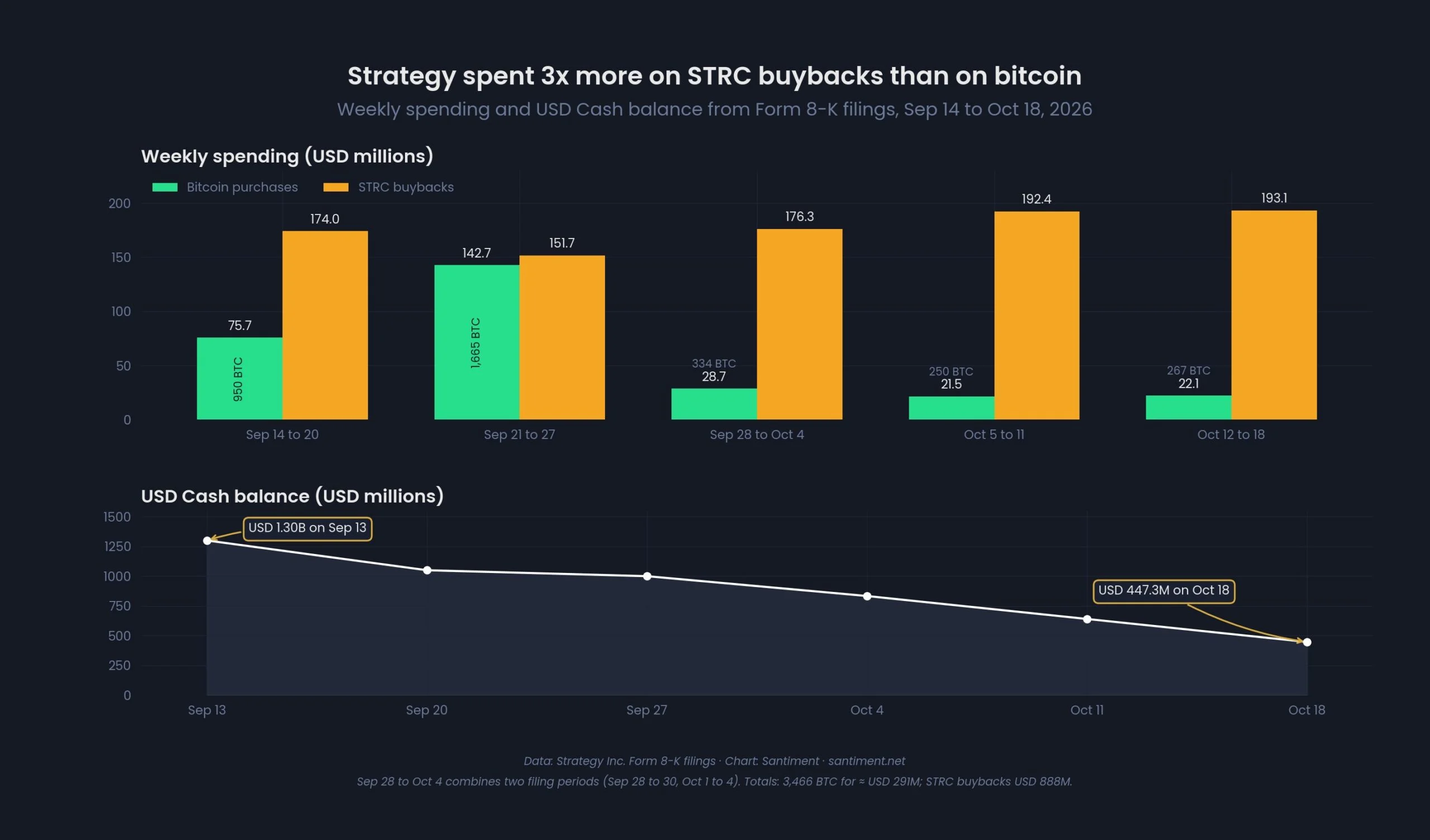
The weekly purchases of Bitcoin declined dramatically from 1,665 in late September to only 267 by the middle of October, while the amount spent by Strategy on buybacks grew to $193.1 million.
This spending switch led to a significant decline in Strategy’s cash reserves from $1.3 billion to $447.3 million.
Whale accumulation outpaces Strategy’s Bitcoin buying
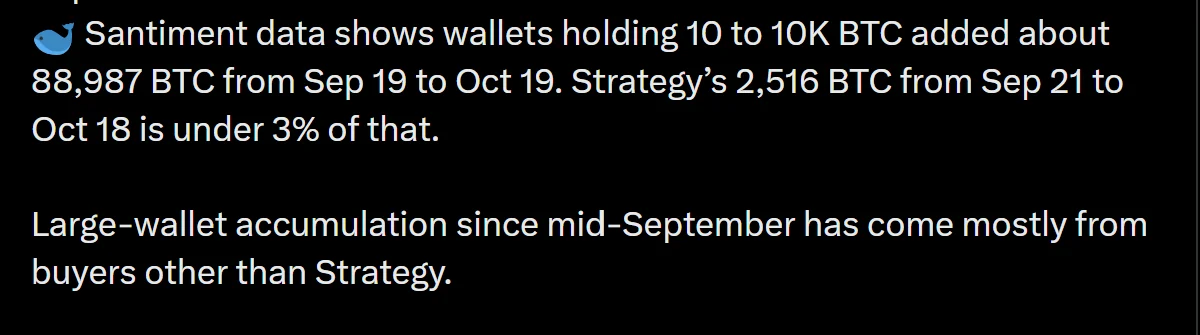
Over roughly a one-month period, large whale buyers accumulated 88,987 Bitcoins, while Strategy purchased only 3,466. This difference illustrates that large whales are currently accumulating significantly more Bitcoin than Strategy is directly contributing to overall demand.
However, Strategy’s ability to resume larger purchases depends increasingly on its preferred-stock financing strategy. In fact, Strategy has already expanded its authorization to spend $3 billion on buybacks and has used approximately $1.84 billion of those funds.
Currently, STRC trades for around $99.20 per share and offers a 12% annualized dividend. These commitments may limit the amount of Bitcoin that strategy can purchase going forward should Strategy’s cash reserves continue to dwindle.

Meanwhile, exchange reserves edged up from 2.67 million to 2.68 million BTC, suggesting some supply remains available. Sustained accumulation will depend on financing flexibility, dividend coverage, and continued institutional demand.
MSTR outperforms Bitcoin as STRC holds near par
While Strategy has prioritized preferred-stock buybacks over Bitcoin purchases, its market performance reveals how investors value its different securities.
For example, after Bitcoin recovered on the 21st of October, MSTR moved upward by 7.54% to trade at $153.48. However, Bitcoin only experienced a gain of 2.07%.
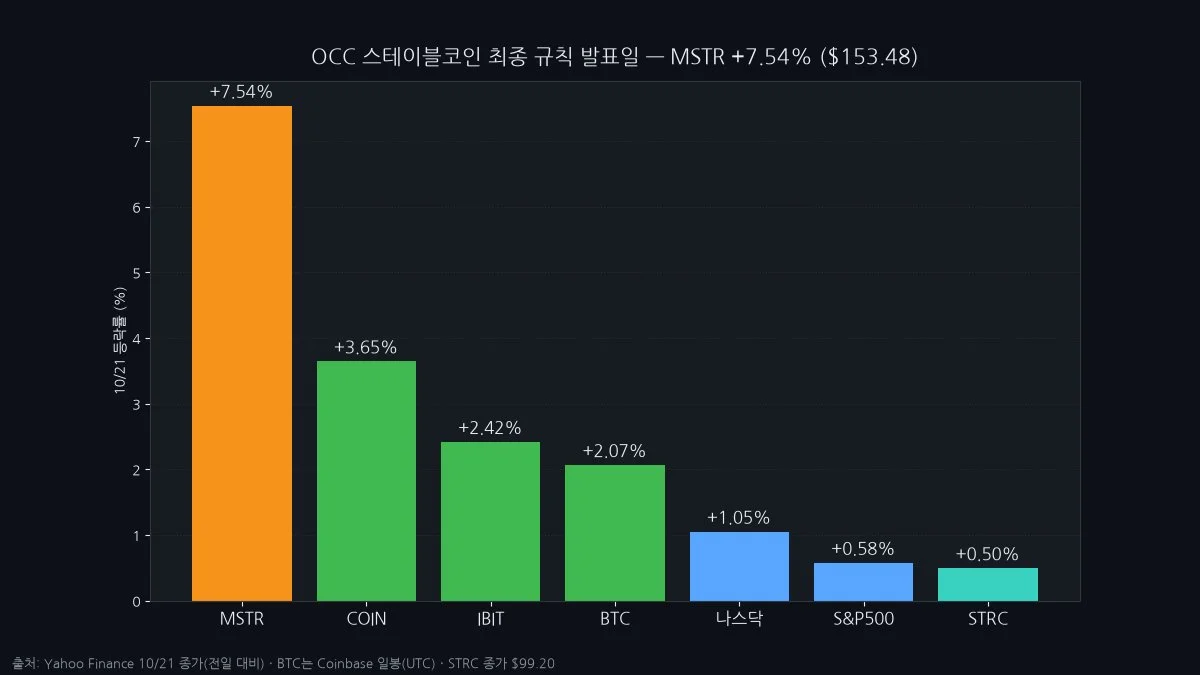
This stronger move suggests investors responded more sharply to Bitcoin’s recovery through Strategy’s leveraged equity exposure. Coinbase also rose 3.65%, while BlackRock’s IBIT gained 2.42%, reflecting broader strength across crypto-linked investments.
Both represented positive performance for other crypto-linked investment vehicles. Conversely, STRC traded higher by only .50% to reach $99.20, remaining very close to its par value of $100.
While STRC’s 12% annualized dividend provides attractive support for income-focused investors, this support limits price movements relative to MSTR.
MSTR’s outperformance highlights stronger near-term equity demand but does not prove Strategy can sustainably finance larger Bitcoin purchases.
Final Summary
-
Strategy spent $888 million on buybacks versus $291 million on Bitcoin, draining cash reserves.
-
Strategy trailed whale accumulation, as future Bitcoin buying depends on liquidity and financing.