Institutional activity around Bitcoin [BTC] escalated as Fidelity and BlackRock received significant BTC transfers into their ETF wallets, suggesting fresh interest among these key asset managers.
According to Onchain Lens on X, Fidelity’s FBTC ETF wallet reportedly received 282.63 BTC valued around $23.08 million from Binance. Additionally, BlackRock’s ETF wallets also received 384.77 BTC, valued at approximately $31.4 million.
Combined, these transactions reflected a continued institutional activity despite Bitcoin’s latest price weakness.
Here it is important to note that even though wallet transfers alone could not validate fresh purchases, the movements strengthened the attention toward institutional Bitcoin positioning.

Beyond the institutional activity, another noteworthy accumulation activity emerged among newly created wallets.
Since the 1st of October, Bitcoin’s large holders additionally heightened their activity, with 40 newly created wallets withdrawing 9,458 BTC from Wintermute. These withdrawals totaled roughly $771.5 million, which reflected considerable movements among wallets potentially connected to large market players.
This concentration of withdrawals across the newly created addresses reinforced the chance of a well-coordinated accumulation ahead of a possible price recovery. In fact, such transfers often attract attention since investors sometimes move acquired Bitcoin into wallets for longer-term custody.
The broader exchange activity meanwhile provided additional context for assessing whether BTC holders were indeed reducing their available exchange supply.

BTC exchange withdrawals deepen amid reserve decline
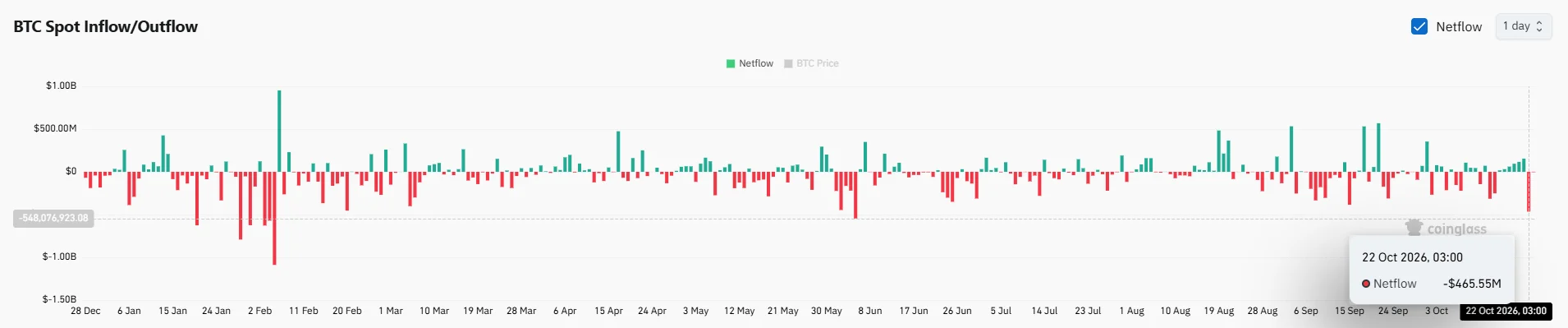
Bitcoin‘s Spot market registered around -$465.55 million in Spot Netflows on the 22nd of October, validating the withdrawal narrative. For context, this negative netflow implied that more BTC left exchanges than entered during the reporting period.
Interestingly, Bitcoin’s USD-denominated exchange reserves fell 1.35% over 24 hours, reaching roughly $226.33 billion. These figures together pointed towards reduced exchange balances, even though Bitcoin’s valuation also influenced the dollar-denominated reserve metric.
Importantly, the continued withdrawals could reduce the immediately available selling supply in case holders continued moving coins away from trading platforms.
Now with institutional accumulation and whale withdrawals dominating the recent activity, Bitcoin’s price structure became increasingly important.
Bitcoin demand zone strengthens as SAR flips
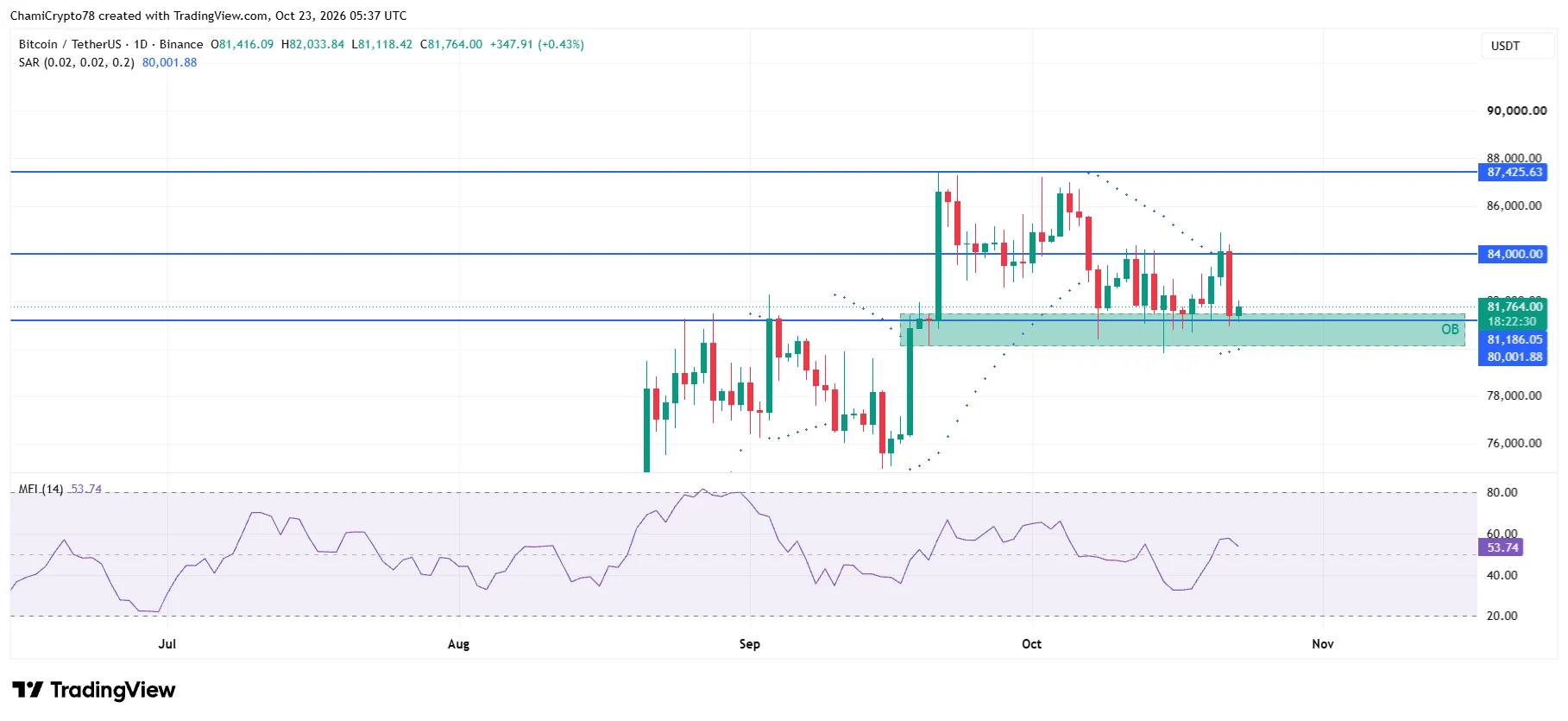
Bitcoin’s daily timeframe chart highlighted buyers defending an important order block around the $81k price region.
Following the most recent price rebound, BTC traded around $81,764 at press time, maintaining its position above the identified demand region. Importantly, the Parabolic SAR had just flipped below price, with its dots visibly at $80,001, suggesting improving bullish conditions amid the earlier decline.
Meanwhile, the Money Flow Index (MFI) indicator stood at 53.74, implying moderately positive buying pressure as capital inflows slightly outweighed outflows. Overall, institutional transfers, whale withdrawals, and declining exchange balances favored a bullish outlook as BTC defended its key support level.
Bitcoin, therefore, stands a better chance of extending its recovery toward $84,000 so long as buyers continue defending the demand zone supported by the bullish Parabolic SAR reversal.
Final Summary
- Institutional Bitcoin transfers and $771.5 million in whale withdrawals highlighted growing accumulation activity.
- BTC held its demand zone as the bullish SAR flip strengthened recovery attempts toward $84,000.