
One of the main metrics to look at is liquidity.
With over 4% of USDT supply being removed in Q4, worth around $10 billion, there is still not enough dry powder to confirm that the market has hit bottom. In this context, Aave’s decision to allow Bitcoin to be used within DeFi lending becomes a lot more impactful. Naturally, the question becomes — Can the move increase capital inflows by allowing users to use Bitcoin as collateral and therefore increase stablecoin volumes?
In essence, could this be the much needed catalyst for a DeFi resurgence?
Table of Contents
Aave wants to unlock native Bitcoin as collateral
In a recent development, Aave [AAVE] has gained DAO approval to add support for using Bitcoin as collateral.
The proposal will allow holders to lock up their BTC to borrow stablecoins. Notably, the proposal was unanimously approved on 9th November. This means Bitcoin holders can gain new liquidity through Aave’s $21 million credit market by borrowing stablecoins using their BTC as collateral.
As the chart below shows, Aave will be allocating $21 million to their credit products to five different stablecoins. The two largest stablecoins will be USDT and USDC which have been allocated $8 million each. These account for almost 76% of the total capacity.
Meanwhile, AAVE’s native stablecoin GHO will be allocated $1 million. The last $4 million will be split evenly between USDG and RLUSD with $2 million allocated to each.
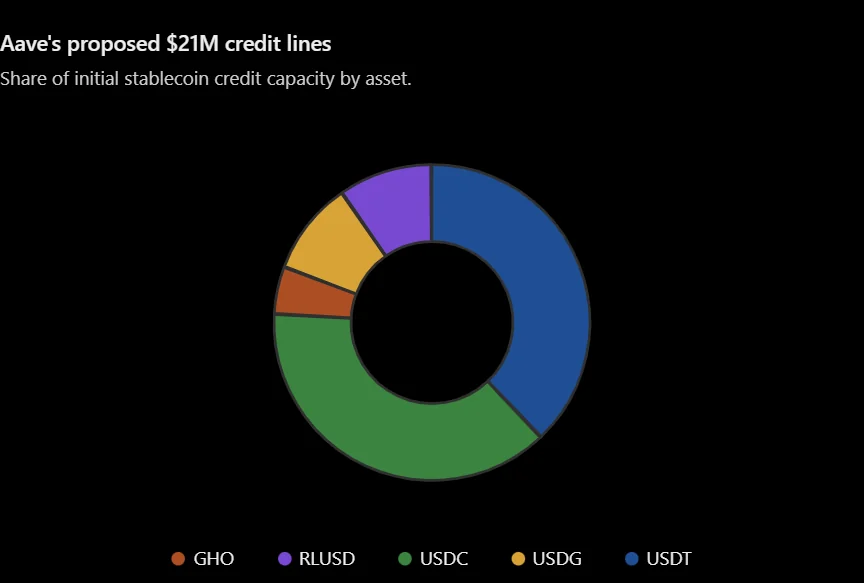
Why does this matter? Well, this allocation shows that Aave is looking to blend both traditional stablecoins and newer assets to provide more options for borrowing. Consequently, this will allow Bitcoin holders to borrow against several stablecoin markets using their BTC as collateral.
As Aave Founder and CEO Stani Kulechov explained,
The Babylon-built Bitcoin-backed market on Aave V4 shows how easily new markets can be launched using the Hub and Spoke model. Native BTC collateral, without wrappers or custodians, unlocks a major new source of liquidity for on-chain borrowing and lending.
Aave V4 bets on Bitcoin as DeFi lending demand weakens
Crypto lending is slowing down as borrowers reduce their exposure amid market uncertainty.
According to Galaxy Research, the overall crypto-backed loan market fell by 16.78% during Q2, hitting a total value of $56.16 billion. This is the first time that all major lending sectors have fallen since 2022. DeFi lending also saw a sharp fall, with total active loans decreasing from $47.13 billion to $21.94 billion between April and July. In short, traders have lost interest in borrowing against their assets.
However, Aave has seen an opposite trend, with the platform noting all-time highs in active loans on the Aave V4 platform, increasing by almost 100% in Q2 to $500 million. Against this backdrop, the addition of Bitcoin to the lending market could lend further growth potential.
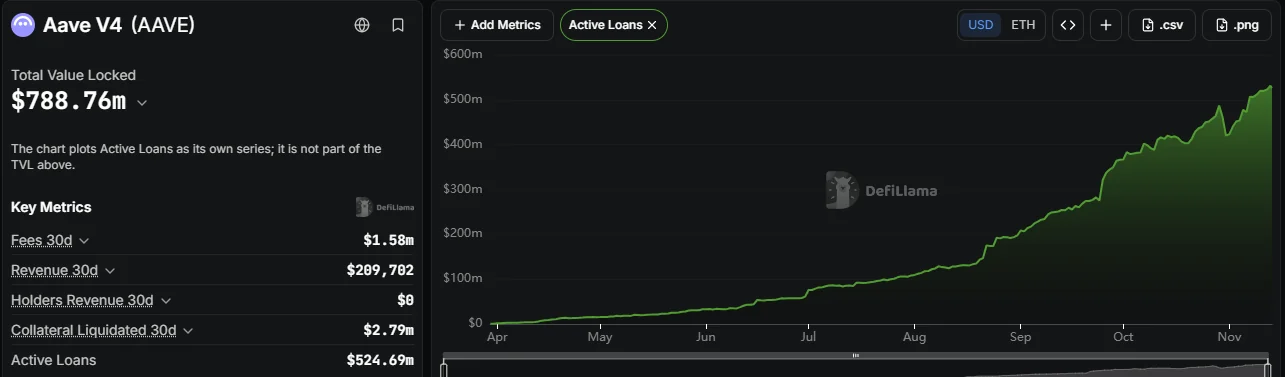
In essence, by allowing BTC holders to use their asset as collateral, the market could see more capital flowing into DeFi, more collateral on Aave, and more demand for on-chain borrowing.
As Babylon explained,
Aave V4’s Hub-and-Spoke architecture provides an isolated environment in which integrations can deploy both standard and custom Spokes without affecting other assets on the Hub.
Bitcoin’s untapped lending market could give DeFi a liquidity boost
The crypto market is facing its worst liquidity crunch since the 2022 bear market.
The overall stablecoin market cap has fallen by about $14 billion over the past month. By 10th November, the total stablecoin market cap was around $290 billion, according to DeFiLlama. In fact, the last two weeks alone saw the most net stablecoin outflows ever in over four years. Over half of this drop came from USDT and a further 20% from USDC.
This pressure can be seen across the DeFi space. In fact, the total DeFi TVL fell to around $76.6 billion on 12th November, with stablecoin market cap sitting at $286.9 billion at press time. However, DeFi TVL also fell by 9.7% week-on-week.

Against this backdrop, Aave’s move could offer a new source of liquidity.
There is one technical distinction worth keeping though. This integration doesn’t automatically mean any new stablecoins will flow into DeFi. Instead, borrowers will have access to liquidity that is already sitting in Aave. For liquidity to grow, the protocol will also need to attract more lenders and fresh deposits.
As per the attached chart, there is still a long way to go before the lending market on Bitcoin hits significant levels.
BTC-backed loans reached $3.58 billion in 2025, representing just 0.24% of Bitcoin’s market cap. So, by supporting Bitcoin as collateral, Aave could help unlock this largely untapped lending demand.
What is the hidden risk?
Aave’s move could also expose its lending market to greater risks.
According to AMBCrypto, although this new borrowing opportunity on Aave will create new demand, it can also lead to greater speculation. Users can borrow stablecoins using BTC as collateral and then re-lend them into leveraged crypto positions.
Consider this — Bitcoin Futures Open Interest increased by 12.1% in 19 days up to late-October, despite a 5.3% price decrease in BTC. This indicated that traders were increasing their leveraged exposure.
This continued into November, with Bitfinex reporting that this was the fifth time traders added leverage to their positions while BTC fell. The previous 4 times this occurred, traders executed liquidations of long positions worth over $800 million.
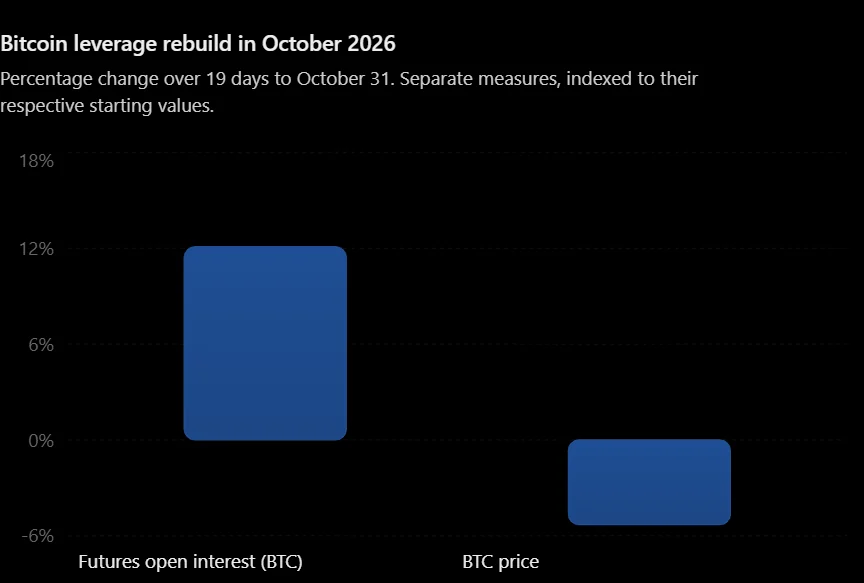
For Aave, the concern is that easier access to Bitcoin credit could add another source of speculation.
Ultimately, the move by Aave to integrate Bitcoin comes at a time where DeFi needs liquidity. However, its impact remains to be seen still. While the integration could entice early lenders and stablecoin deposits, there is a risk that high levels of demand could come from speculation and cause further volatility in the market.
Thus, Aave may unlock a new source of liquidity. However, turning that liquidity into DeFi growth will be the test.
Final Summary
- Aave’s Bitcoin integration could bring more liquidity into DeFi and boost stablecoin borrowing.
- However, more borrowing could also fuel speculation and increase market risks.