
Macro conditions are driving investors’ long-term positioning this cycle more than anything else.
While the ongoing West Asia crisis continues to weigh on assets, the broader macro volatility had already shaken the market long before that. The October crash, which sent Bitcoin down 30%, triggered a strong risk-off mood across crypto, with the current geopolitical uncertainty only adding another layer of pressure.
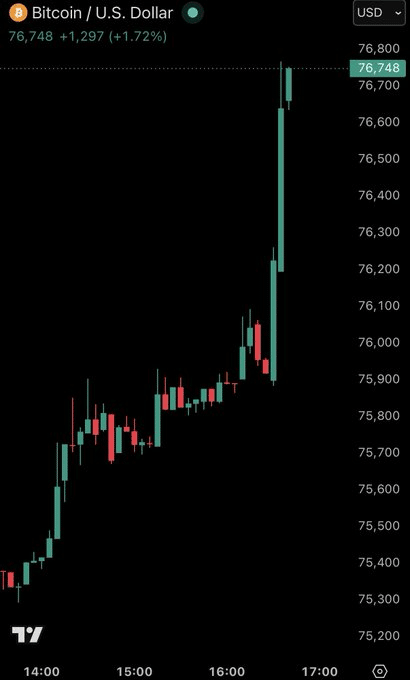
Bitcoin’s [BTC] price action reflects this clearly. The asset rallied to $77k after U.S. President Donald Trump said he would soon announce a deal with Iran, highlighting how closely BTC continues to react to macro headlines.
Against this backdrop, investors remain focused on macro data to shape Bitcoin’s long-term positioning.
In this context, recent comments from new Federal Reserve Chair Kevin Warsh are starting to gain attention. In a recent interview, Warsh signaled openness toward rate cuts, marking a notable shift in narrative for the crypto market, which until now had largely been pricing in the possibility of further rate hikes.
From a macro standpoint, though, rate cuts still look difficult to justify. Oil prices have surged following the war, while inflation across global markets remains at multi-year highs. Naturally, this shifts attention to the Fed’s longer-term policy stance, and what that could mean for Bitcoin investors “over time.”
Bitcoin pricing macro optimism ahead of on-chain validation
Market reaction to the Fed Chair’s comments has been surprisingly broad and fairly uniform.
One analyst highlighted strong consensus around rate cuts, aligning with Kevin Warsh’s “AI productivity” narrative, where AI-driven productivity gains are expected to lift long-term output. This could weaken demand relative to supply, pointing toward a more deflationary setup. In this context, rate cuts are being viewed as a natural policy response.
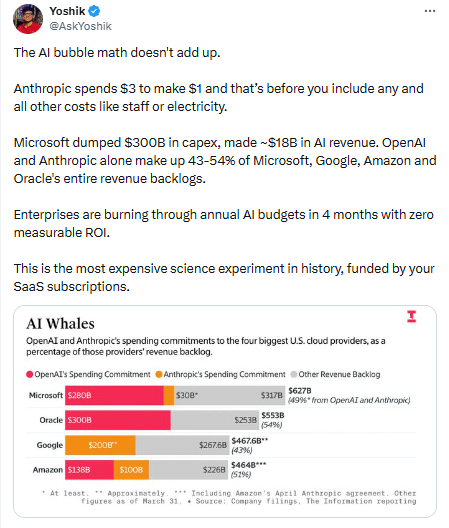
However, on-chain data isn’t reflecting the same stance yet. In a post on X, an analyst pointed to an ongoing bubble in the AI sector, with top AI companies burning cash and showing limited evidence of real ROI. This puts the long-term revenue model under scrutiny and adds pressure to the broader productivity thesis.
Consequently, this divergence puts Bitcoin’s long-term positioning under pressure.
The logic is straightforward: The Fed Chair’s rate-cut argument is based on AI-driven productivity, which could increase supply relative to demand and ease inflation over time by improving efficiency and output. However, if that productivity upside doesn’t materialize in real economic data or corporate earnings, the policy assumption weakens.
In that case, the gap between narrative-driven rate expectations and actual macro conditions widens, leaving Bitcoin exposed to long-term repricing risk by increasing the chance of a “sell-the-news” reaction.
Final Summary
- Bitcoin is being driven more by macro expectations, but the gap between rate-cut narratives and real data is creating long-term risk.
- If AI productivity doesn’t show up in real results, rate-cut optimism could fade and trigger a sell-the-news move in Bitcoin.