Equities trading on-chain is a solid example of TradFi–DeFi integration.
Despite the SEC ruling out the Innovation Exemption proposal, equity tokenization continues to gain momentum. Exodus, for example, has launched Exodus Markets with Ondo Finance, offering access to more than 200 tokenized stocks, ETFs, and RWAs.
In essence, this brings TradFi assets on-chain, allowing investors to trade them through blockchain-based infrastructure.
The key question, however, is where these assets are being issued. Notably, Exodus Markets has brought 200 tokenized assets to Solana, further cementing the network’s growing role in the tokenization narrative.
And the momentum doesn’t stop there.
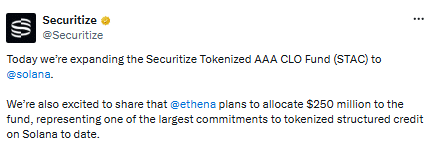
Securitize is expanding STAC, its tokenized AAA CLO fund, to Solana in partnership with BNY, while Ethena plans to allocate $250 million to the fund. The significance is hard to overlook.
CLOs account for more than $1.3 trillion in global issuance, making them one of the largest fixed-income markets in the world.
As these assets move on-chain, Solana is increasingly emerging as a settlement layer for institutional capital. Yet SOL’s price action tells a different story.
The asset remains well below the $100 mark, with its broader technical structure still lacking a decisive bullish shift.
That raises the key question: Are investors still focused on Solana’s [SOL] weak technical structure, or are they beginning to bet on the network’s strengthening fundamentals?
As institutional assets move on-chain, Solana takes center stage
Liquidity on Solana continues to trend sharply higher.
A key driver has been Ethena’s USDe, whose supply on Solana has surged more than 260% over the past month to exceed $500 million.
Against this backdrop, Ethena’s planned $250 million allocation to Securitize’s tokenized AAA CLO fund carries added significance.
In this context, Ethena’s $250 million allocation to Securitize’s AAA CLO fund is worth watching. The move connects one of crypto’s fastest-growing stablecoin protocols with a tokenized product, further expanding the range of institutional assets being brought on Solana.
What’s interesting is that all of this is happening while SOL remains under technical pressure.
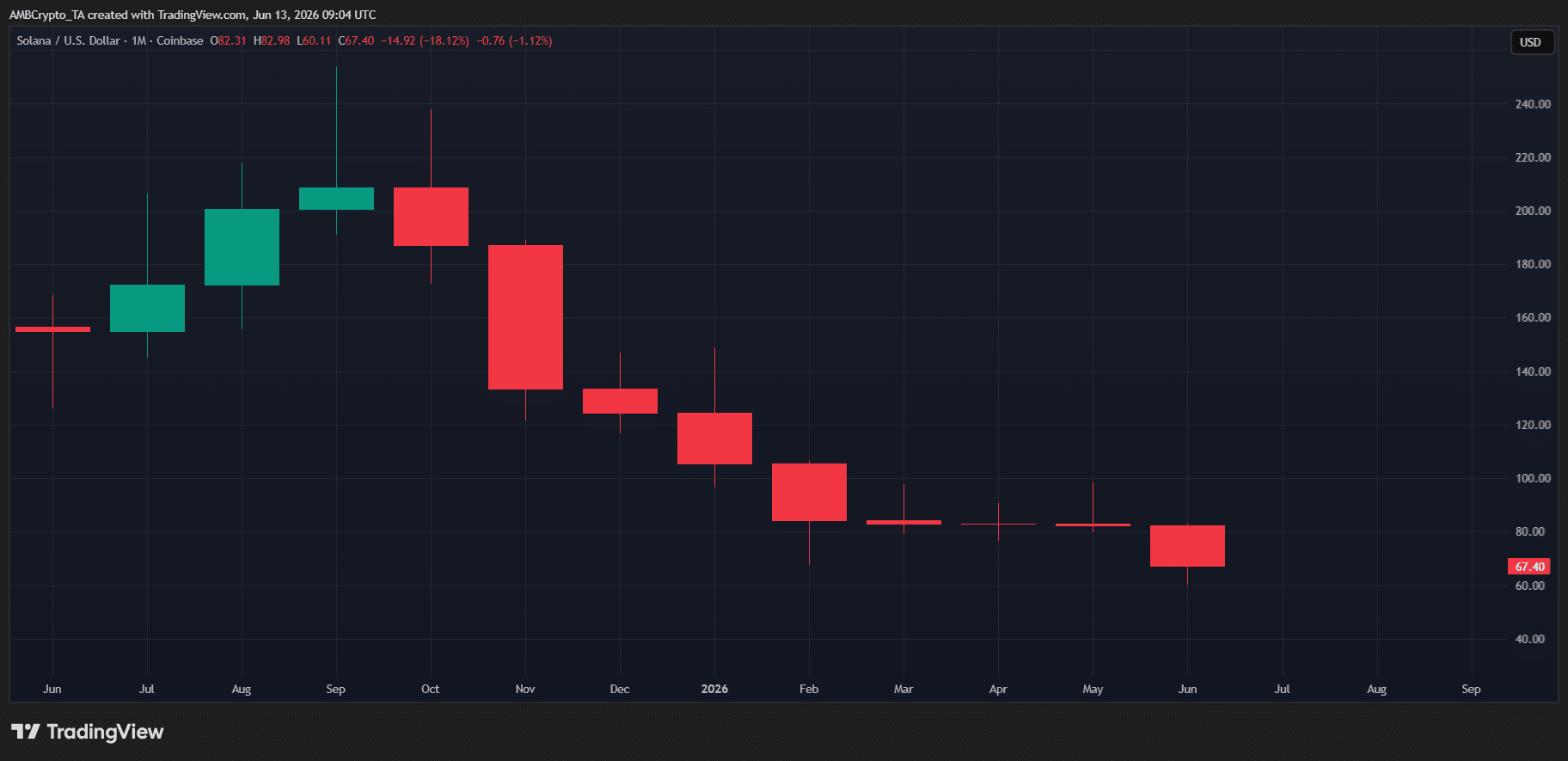
As the chart above shows, SOL has been stuck in a broader downtrend for nearly eight months, creating a noticeable disconnect between Solana’s improving fundamentals and its price action.
Against this backdrop, Solana’s tokenization momentum continues to build. With tokenized equities increasingly flowing onto the network, a much larger opportunity is starting to take shape.
The global equity market is worth $100 trillion, and as these assets move on-chain, they will need a settlement layer.
So far, the early signals suggest Solana is emerging as one of the leading destinations for that activity. In turn, this adds fuel to the growing debate around whether SOL is being undervalued.
While the token remains trapped in a prolonged downtrend, the network itself continues to attract liquidity, partnerships, and tokenized asset issuance at an accelerating pace.
Final Summary
- Tokenized assets are increasingly choosing Solana, with major players bringing equities, CLOs, and other RWAs onto the network.
- SOL remains under pressure despite this growth, raising questions about whether the market is undervaluing Solana’s fundamentals.