
Decentralization doesn’t really shield crypto from regulatory pressure.
Over the years, the market has expanded well beyond the U.S., into multiple jurisdictions, to unlock more real-world use cases for DeFi rails. Stablecoins sit at the center of this expansion, acting as a bridge between crypto and fiat systems.
Their decentralized infrastructure gives them advantages over TradFi rails.
However, the recent EU regulatory push leading to the delisting of Tether on major exchanges has triggered short-term market disruption. It highlights a key tension: Even decentralized systems still depend on centralized access points, such as exchanges operating under MiCA compliance rules.
As a result, USDT, still the dominant stablecoin by market cap, is once again under scrutiny at a $185 billion scale.
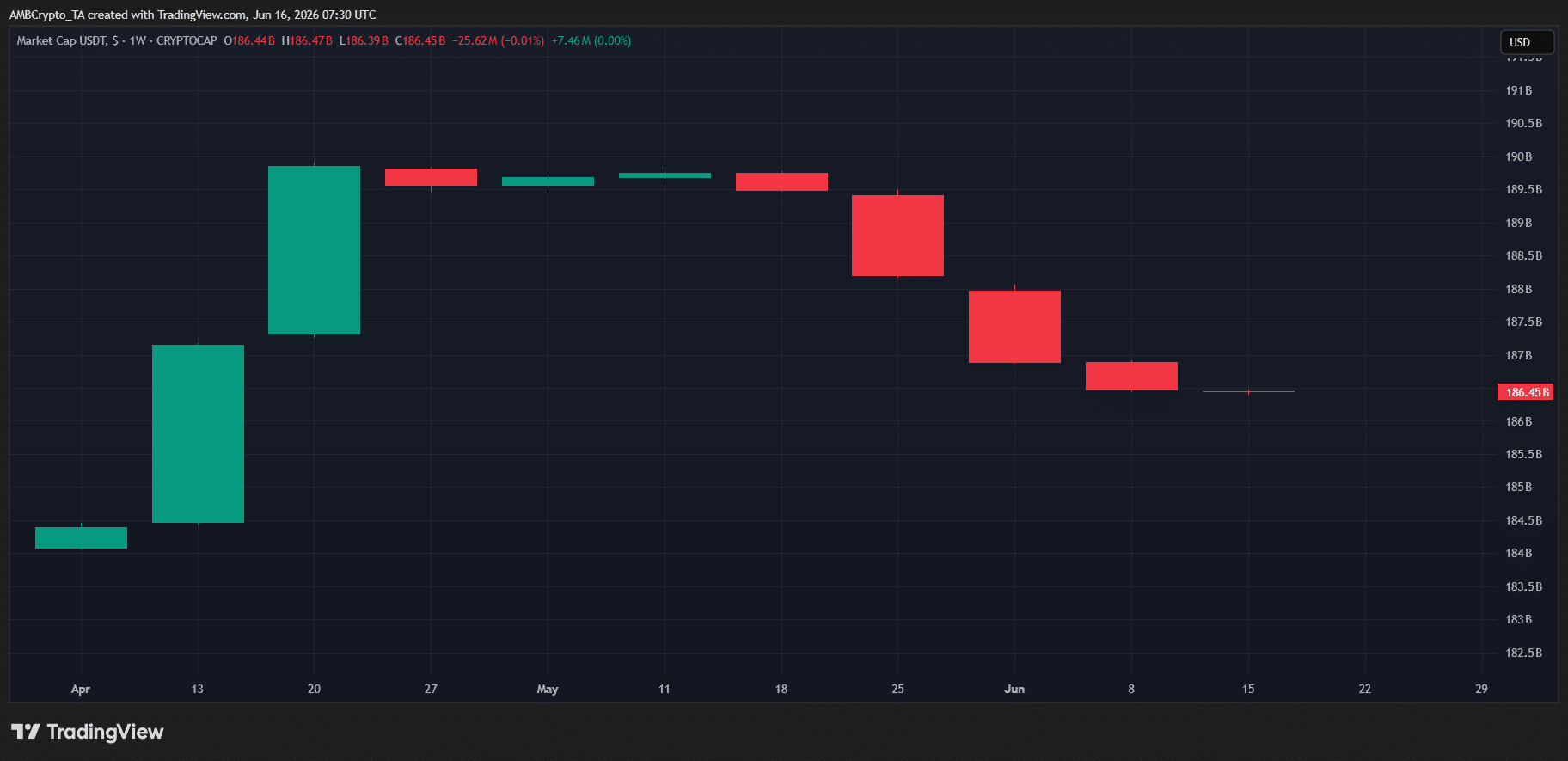
The impact of Tether not complying with MiCA has been immediate.
Major exchanges, including Binance, Coinbase, and Kraken, have removed USDT for EU users after Tether opted not to seek approval under Europe’s MiCA framework.
Meanwhile, on the technical front, USDT continues to trend lower, with $3 billion in outflows since peaking near $190 billion earlier in the Q2 cycle.
For the crypto market, this highlights liquidity tightening at a time when the market has shifted back into a risk-on mode following easing geopolitical tensions between the U.S. and Iran.
Naturally, it raises the question: With Tether facing growing FUD, is Q3 already starting to set up a bearish structure for risk assets?
Tether, liquidity flows, and the Q3 crypto setup
In a bullish market, liquidity is a key driver that helps sustain the rally.
When sentiment is positive, more liquidity makes it easier for people to buy without a big price impact. That helps momentum build. In crypto, this effect is even stronger because of leverage and fast-moving markets.
So when liquidity is high, price moves tend to accelerate, and rallies can extend more easily.
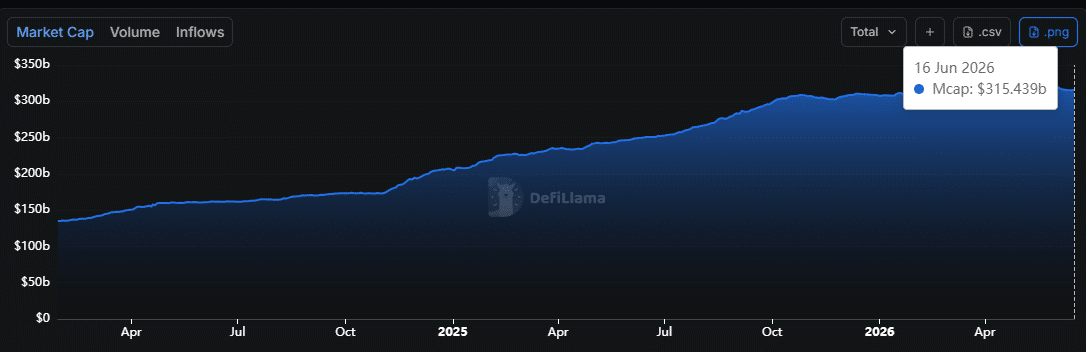
However, despite the recent jump in risk-on sentiment, the stablecoin market cap hasn’t shown a similar rebound and remains down over $6 billion since peaking above $321 billion in early May.
Tether’s USDT appears to account for most of the outflows, keeping ongoing FUD around it in focus.
Sure, Tether’s exclusion from the EU has triggered a shift in positioning, with USDC and RLUSD both viewed as MiCA-compliant alternatives gaining relative traction in liquidity flows.
However, USDC is still seeing a deeper monthly decline, down around 2.5%, while RLUSD is up over 6.5%. Even so, sustaining bullish momentum on stablecoin rotation alone still looks unlikely.
Therefore, the impact of Tether’s delisting could extend beyond EU liquidity setup, potentially affecting broader stablecoin flows and overall risk appetite across crypto markets.
In turn, this makes a key setup to watch for crypto’s Q3 cycle.
Final Summary
- Tether’s EU delisting is reducing USDT liquidity and adding pressure to stablecoin flows.
- Stablecoin supply is still weak despite risk-on sentiment, making Q3 a key test for crypto momentum.