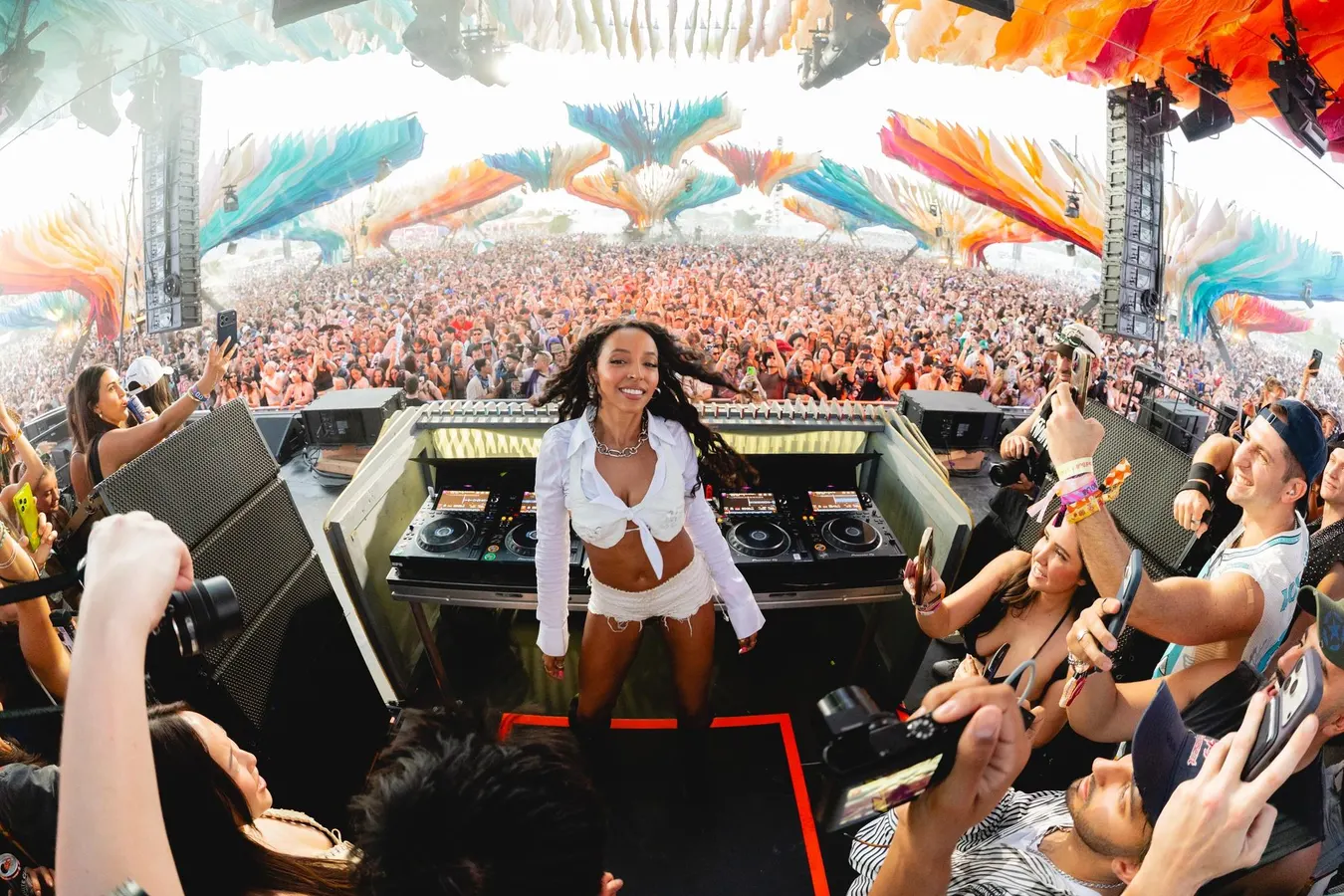
INDIO, CALIFORNIA – APRIL 11: (FOR EDITORIAL USE ONLY) (NOT TO BE LICENSED FOR ANY STANDALONE OR SPECIAL INTEREST BOOK PUBLISHING USE CONCERNING THE COACHELLA MUSIC FESTIVAL AND/OR STAGECOACH MUSIC FESTIVAL) Tinashe performs at Do LaB during the 2026 Coachella Valley Music and Arts Festival on April 11, 2026 in Indio, California. (Photo by Matt Winkelmeyer/Getty Images for Coachella)
Getty Images for Coachella
The music industry is full of advice about what artists should do: post consistently, chase trends, go viral, collaborate strategically. But the more interesting question is what artists should be — and what internal qualities make every external move land harder.
I asked marketing executives and creative strategists working at the intersection of artist development and brand building right now. Their answers converged around a common truth: the artists who get marketed best are the ones who give their teams something real to work with.
Table of Contents
Vision Over Ideas
Kasim Peterson, VP of Marketing and Strategic Partnerships at Dream Chasers Records, draws a distinction that sounds simple but cuts to the core of what separates breakout artists from ones who plateau.
“The best trait an artist can have is knowing the difference between having a good idea and having vision,” Peterson says. “Good ideas create moments, but vision creates culture and gives their team direction. When an artist has that level of clarity, their team can stop chasing attention and start building belief through every release, partnership, and experience.”
The downstream effect of that clarity is significant. A marketing team without a clear north star spends its energy reacting — to trends, to competitors, to whatever the algorithm rewarded last week. A team working from genuine artist vision gets to build instead. Peterson puts it plainly: “Great artists don’t just release music. They build worlds people want to belong to.”
Tinashe is a working example of what that world-building looks like in practice. Over the course of her career she has resisted pressure to conform to a single commercial lane, instead developing a distinct artistic identity rooted in her own aesthetic instincts. When “Nasty” broke through in 2024 and introduced her to a massive new audience, there was already a fully realized world underneath it — one her existing fanbase had been living in for years. The viral moment did not create the world. It just opened the door to it.
LAS VEGAS, NEVADA – JULY 16: (Exclusive Coverage) Lady Gaga performs during the kick off of The MAYHEM Ball tour at T-Mobile Arena on July 16, 2025 in Las Vegas, Nevada. (Photo by Kevin Mazur/Getty Images for Live Nation)
Kevin Mazur/Getty Images for Live Nation
Reinvention as a Standard
Kalesha Madlani, a creative strategist who has worked at SoundCloud, Interscope Records, and Epic Records, approaches the question from a craft perspective — and names something that cannot be manufactured from the outside.
“We’re living in an era of shared playbooks and borrowed references,” she says, “so the artists who get marketed best are the ones who possess an authentic, unrelenting appetite for reinvention and mastery of their craft.”
That hunger, Madlani argues, is not just a personal quality. It becomes a resource for everyone around the artist. “The hunger these artists have becomes infectious to everyone around them. That energy is a gift for marketers.”
Lady Gaga’s Mayhem era is the most recent proof of concept at the highest level. After years away from solo music, she did not return with a safe, nostalgia-driven play. She came back with a complete reinvention — new sonic direction, new visual identity, and a rollout that treated her audience as sophisticated enough to follow her somewhere genuinely new. The result was one of the most talked-about comebacks in recent memory, driven not by manufactured hype but by the sense that Gaga had actually gone somewhere and come back with something to show for it. That is what a high creative standard looks like at scale.
Shaboozey performs onstage at the 2024 BET Awards at Peacock Theater on June 30, 2024 in Los Angeles, California. (Photo by Christopher Polk/Billboard via Getty Images)
Billboard via Getty Images
Discipline as the Real Infrastructure
Janie Whitefield, Digital Director at Neon Coast, has worked with artists across multiple stages of their careers, and the quality she returns to consistently is one that rarely gets glamorized in conversations about creative identity.
“The best trait an artist can have to successfully market themselves is discipline,” she says. “I’ve worked with a lot of artists ranging in different stages of their careers, and I’ve found that the ones that keep themselves and their team accountable the best shine against the rest.”
The logic here is structural. Strategy only works if it gets executed. Brand vision only lands if it is applied consistently. Discipline is what converts intention into output — and what keeps a team from drifting when the early momentum fades.
Shaboozey’s trajectory makes the case without any embellishment. Before “A Bar Song (Tipsy)” became one of the longest-running number one singles in Billboard Hot 100 history, he had been putting in years of consistent, unglamorous work — building his catalog, refining his sound, and showing up without the validation of mainstream attention. The breakthrough did not happen to him. It was the return on a long, disciplined investment. “Great things take time, effort, and determination,” Whitefield says. “The ones that are willing to take control of their career and consistently take steps forward are the ones who will win.”
ATLANTA, GEORGIA – NOVEMBER 13: Recording artist Doechii performs during her “Alligator Bites Never Heal” tour at Center Stage Theater on November 13, 2024 in Atlanta, Georgia. (Photo by Paras Griffin/Getty Images)
Getty Images
Conviction Over Trend-Chasing
Alex Mas Cepero, Artist Programs Lead at Duetti, frames the central challenge facing artists in marketing as a question of identity versus imitation — and the cost of getting that wrong.
“The best trait an artist can have when it comes to marketing is the confidence to stop chasing trends and start leading with conviction,” he says. “The most powerful question any artist can ask is: what has actually worked for me, and what genuinely speaks to who I am?”
Doechii’s rise follows the same logic at a larger scale. Alligator Bites Never Heal was not a play for crossover accessibility. It was a deeply specific artistic statement — dense, conceptual, unapologetically itself. The Swamp Princess universe she built around it, the lore, the visual language, the performance persona, all of it came from a place of genuine conviction rather than market research. That specificity is exactly what made it travel. Mas Cepero’s observation holds: “When you’re doing something that feels true to you, it shows, and fans can feel the difference. Forced content leads to burnout, conviction builds longevity.”
Vision, reinvention, discipline, conviction. These are not the same word, but they point at the same underlying condition: the artist who is clear about who they are and committed to that at a high standard is the artist whose team can do its best work.
The marketing executions — the social strategy, the press rollout, the content calendar, the collaboration choices — are downstream of that clarity. When it is present, a good team can build something durable. When it is absent, the best team in the world is working without a foundation.
The artists who tend to get marketed well are not the ones who handed their team the most resources. They are the ones who handed their team the most to work with.