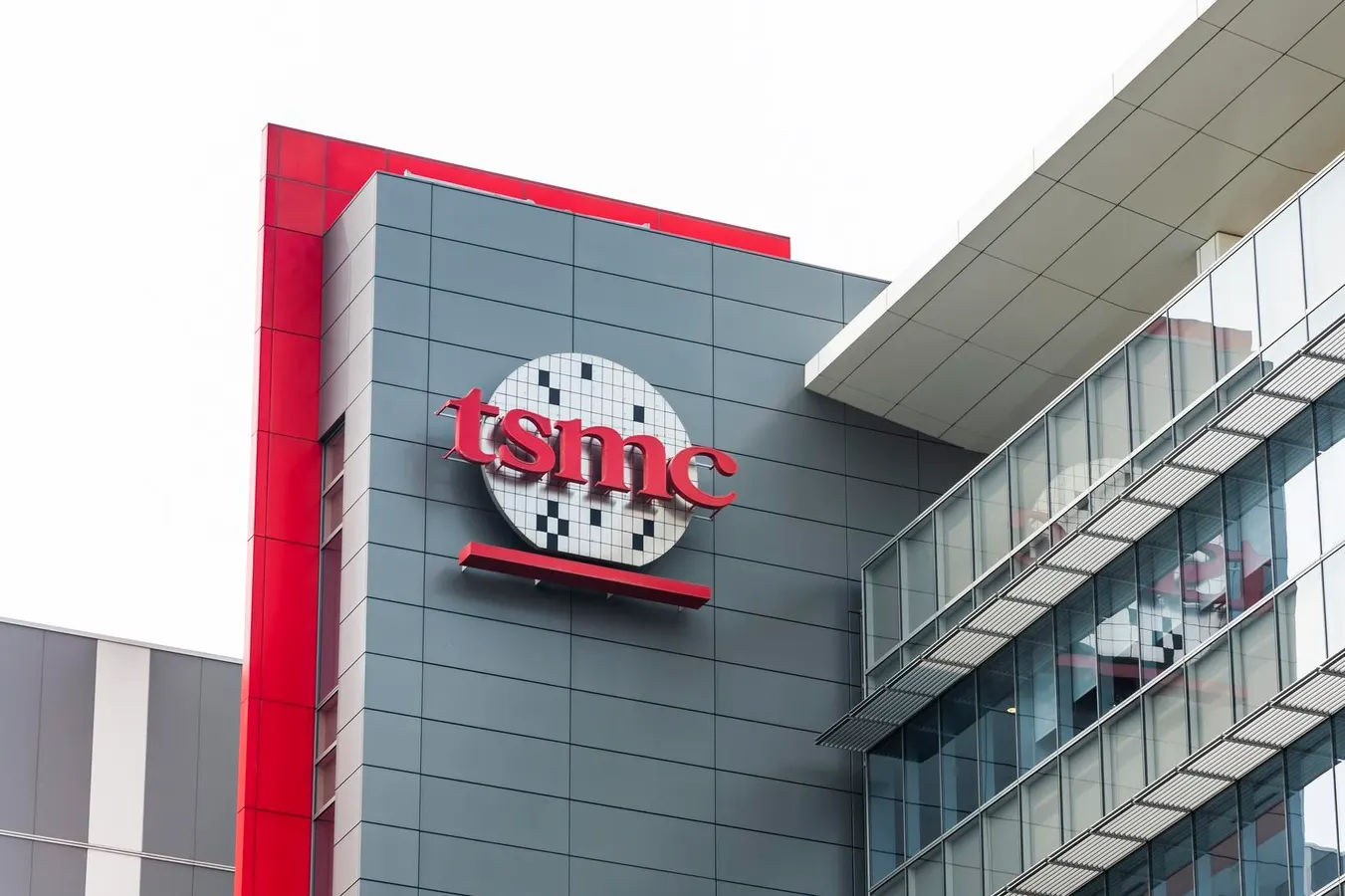
Taiwan Semiconductor Manufacturing Company (TSMC) plant in Tainan Science Park, Taiwan; TSMC is the world’s largest dedicated independent semiconductor foundry.
Getty
Taiwan Semiconductor’s second quarter earnings could cure—or aggravate—AI investing jitters. The chip foundry is the undisputed leader in the manufacture of high-performance AI chips and advanced packaging technology that helps chips work together more efficiently.
TSMC’s customers are the largest drivers of AI capital spending, so the company has a close view on the demand dynamics shaping the industry. For that reason, investors and analysts are watching TSMC’s earnings, capital budget and commentary closely to gauge the health and trajectory of the AI buildout.
Table of Contents
Evaluating TSMC’s 2026 Momentum
In 2026, Taiwan Semiconductor is converting strong AI-related demand into solid revenue and profit gains. In the first quarter, TSMC reported a year-over-year revenue gain of 35.1% in New Taiwan dollar terms. Gross margin increased to 66.2% from 58.9% in the prior year quarter, supporting a diluted EPS gain of 58.3%. Capital expenditures were slightly below the prior quarter’s spend, and 6% higher than the same quarter last year.
The company’s high-performance computing platform, which includes AI solutions, produced 61% of revenue. The next-largest platform in the quarter was smartphone, accounting for 26% of revenue.
TSMC Financial Snapshot And Forward Milestones
Taiwan Semiconductor reports in New Taiwan dollars and uses a weighted average exchange rate to convert quarterly metrics into U.S. dollars. The U.S.-traded security is an ADR trading on the NYSE as TSM. Each ADR represents five ordinary shares, so there are separate figures for EPS and earnings per ADR.
The table below summarizes the key financial metrics for the first quarter and projected 2026 values for revenue, gross margin and capital expenditures.
Key Focus Areas For TSMC’s Second Half Of 2026 Guidance
Capital Spending
Capital spending represents risk and reward at TSMC. Company leadership has said the capital spending is “always correlated” with higher growth opportunities. But the capital-intensive nature of foundry business is inherently risky. During periods of high demand, TSMC must expand capacity while innovating to enable faster, more efficient processing.
In the first quarter, TSMC said its 2026 capital spending budget would land toward the high end of its $52 billion to $56 billion guidance range. A reduction from that range could signal a more cautious growth outlook.
AI/HPC/5G Demand
TSMC has identified AI, high-performance computing, and the 5G buildout as megatrends driving the industry. Demand created by these trends, led by AI, drives the company’s capital spending budget and its outlook.
In the first quarter 2026 earnings call, TSMC chairman and CEO C.C. Wei characterized AI demand as “extremely robust.” Analysts expect to hear more of the same in the second quarter update.
Advanced Packaging Capacity
TSMC’s advanced packaging technology, CoWoS, is increasingly becoming a competitive differentiator and growth story. CoWoS is the industry standard method for integrating multiple chips into a single unit to create performance gains.
The problem is that CoWoS production is constrained, even more so than chip output. Nvidia has reportedly booked 60% of TSMC’s CoWoS capacity through 2026 plus more than half of the 2026-2027 expansion.
TSMC is addressing the bottleneck by building advanced packaging facilities in Arizona and “ramping up two new packaging facilities in Taiwan” according to CNBC. Analysts will want to know the progress of these buildouts.
N2 Ramp Progress
N2 is the latest generation of TSMC’s chip technology, which should command the highest pricing and margins. Prior generations N3, N4, and N5 are less powerful and efficient for high-performance applications but remain in demand for other uses.
The company began high-volume manufacturing of N2 in the fourth quarter of 2025. In the first quarter earnings call, Wei noted that N2 was ramping successfully at two sites, supported by smartphone, AI and HPC demand. Analysts will be watching for more data on N2 margins and how that affects the company’s overall profitability.
Gross Margin Outlook
TSMC recorded a gross margin increase for the first quarter of 2026 and guided second quarter gross margin in the range of 65.5% to 67.5%. The company predicted that N2 production ramp costs and overseas fab expansion could dilute gross margins by 2% to 3% for the full year of 2026.
The margin dilution could continue over the next few years as TSMC continues to ramp and optimize its production capacity. The company’s ability to project N2-related dilution for the second half of 2026 will help analysts evaluate future margin guidance.
What Experts Say About TSMC’s Outlook
Analysts are largely positive about Taiwan Semiconductor’s outlook. Average revenue estimates imply year-over-year sales growth in excess of 35% for the next two quarters. The average 2026 revenue estimate is $5.2 trillion, which would be a 36.5% gain over 2025.
EPS estimates also indicate expected growth. Analysts project $3.83 for the second quarter EPS for a 55% gain over the prior-year result of $2.47. The consensus estimate for 2026 is $15.91 per share, which is 49.3% improvement over 2025.
The Bull Case For H2 2026
Counterpoint estimated that Taiwan Semiconductor owned 73% of chip foundry demand in the first quarter of 2026. That dominance is fueled by TSM’s reputation as a critical design and manufacturing partner to the world’s largest tech companies. That positioning largely ensures that TSMC will profit from ongoing chip demand, which is currently strong and expected to remain that way for years.
The company’s advanced packaging technology should continue to be a differentiator, despite the capacity constraints. There are competing technologies, but they are less mature. And because switching platforms requires a full chip redesign, customers who build around CoWoS tend to stay.
These trends position TSMC for strong growth in the second half of 2026 and beyond.
The Bear Case For H2 2026
TSMC’s annual report filed with the SEC notes that “foundry customers generally do not place purchase orders far in advance” because the technology evolves so quickly. That means the company has limited protection from a massive spending slowdown. Should AI chip demand suddenly dry up, TSMC’s financial performance would reflect the change within a few quarters.
A dramatic slowdown in the short term would be difficult to manage, since it would coincide with heavy capacity investment and rising competition.
Escalating tensions between China and Taiwan represent another threat to TSMC, though probably not an immediate one. China has long expressed its intention to take control of Taiwan, which is currently a self-governing province. Most of TSMC’s manufacturing facilities are in Taiwan, and a military conflict would likely disrupt production.
In March 2026, U.S. intelligence said China is not planning on invading in 2027—but there is no guarantee.
Is TSM Stock One To Buy Now?
Taiwan Semiconductor is a primary beneficiary of the massive AI investments being made by the world’s largest tech companies. So far, TSMC has managed this period of high demand well, maintaining strong profitability while making strategic capacity investments and advancing its technology. Investors like to see that careful balance between managing current operations well while pursuing future growth.
But to invest in TSM stock now, you must believe that AI and HPC demand will remain strong for the foreseeable future. The company is funneling billions into capacity expansions, and those fabs need to be well-utilized. A sharp downturn in demand could lead to excess capacity down the road, at a time when competitors are investing heavily to close the gap.
TSMC is a solid, well-run company with a positive outlook. The second quarter earnings probably report won’t change that conclusion. But it should provide important feedback on how far and fast the AI spending trend will go. You can use that feedback to assess how risky TSMC’s capital budget is and whether this AI stock fits your investment criteria.