Home Blog Page 147

World’s most profitable airline now accepts crypto payments for flights

0
World's most profitable airline now accepts crypto payments for flights


Emirates has begun accepting cryptocurrency payments for flights. The airline on July 28 launched Crypto.com Pay across its website and app, letting customers with a Crypto.com account pay for tickets directly from their digital wallets.

The option is open to eligible UAE residents for bookings priced and settled in Emirati dirham (AED). It appears at checkout on emirates.com and the Emirates App, with transactions processed in line with UAE regulatory standards. The move delivers on a partnership the two companies signed in July 2025, taking the project from memorandum to live product in under a year.

Related: Travala CEO explains what makes crypto customers three times more valuable

“Bringing this initiative to life delivers on our commitment to expanding customer choice in how they pay for travel,” said Adnan Kazim, Emirates’ deputy president and chief commercial officer, pointing to “a younger, digitally fluent generation who manage their money and plan their journeys primarily from their phones.”

Eric Anziani, president and chief operating officer of Crypto.com, called the deal “a milestone for Crypto.com and our Pay feature,” and credited the UAE’s “forward thinking approach to innovation.”

Just how big Emirates is

Emirates is the world’s largest long-haul international airline and, by its own results, the most profitable. 

For the financial year ended March 31, 2026, the airline posted a record profit of AED 19.7 billion (about $5.4 billion) on record revenue of roughly $41 billion, and carried 53.2 million passengers. The wider Emirates Group cleared AED 24.4 billion (around $6.6 billion), its best result ever.

Founded in 1985 and owned by the Investment Corporation of Dubai, the airline flies a fleet of about 277 wide-body aircraft to more than 140 destinations. It is the largest operator of both the double-decker Airbus A380 and the Boeing 777, and at the 2025 Dubai Airshow it committed a further $41.4 billion to new jets.

Dubai, UAE – November 8, 2024: A row of Emirates Airlines airplanes at the terminal in Dubai, UAE.

Its reputation, though, rests on the cabin. Emirates is a fixture near the top of global airline rankings and a byword for premium travel — its A380s feature onboard shower spas in first class, a lounge and bar for premium flyers, and private first-class suites, alongside chauffeur-driven airport transfers. Putting a crypto checkout button in front of that customer base is what makes the launch notable.

More News:

How it works

On mobile, customers booking in the Emirates App are sent to the Crypto.com app to approve the payment from their wallet, then returned to Emirates for their confirmation and e-ticket. 

On desktop, they select Crypto.com Pay, scan a QR code on the booking page, and approve the payment in the Crypto.com app. Emirates is paid in AED, with the crypto side handled inside the Crypto.com account.

Why it’s happening in Dubai

The launch leans on the UAE’s push to become a crypto and fintech hub. 

The integration runs through Crypto.com’s Dubai entity, which it says was the first Virtual Asset Service Provider granted a Stored Value Facilities licence by the Central Bank of the UAE — the regulatory approval that lets it handle payments at all.

It also feeds Dubai’s Cashless Strategy under the D33 economic agenda, which aims to make 90% of all transactions across government and private sectors digital by the end of 2026. Crypto.com is expanding its retail app to UAE customers, with more than 250 cryptocurrencies available, and has separately partnered with Dubai Finance to accept digital payments for government services.

This story was originally published by TheStreet on Jul 28, 2026, where it first appeared in the MARKETS section. Add TheStreet as a Preferred Source by clicking here.


Source link

Senators said to strike idea to toughen Trump’s concession on Clarity Act’s crypto limits

0
Senators said to strike idea to toughen Trump's concession on Clarity Act's crypto limits

There are two timelines at war, now. First, the Senate’s own calendar is famously difficult to negotiate, with any contentious bill requiring days of floor time. Each passing hour narrows the legislation’s odds as just seven days remain before the recess, when senators will leave Washington and largely shift focus to the consequential midterm elections bearing down on them.

The other time crunch has been the clock ticking on the negotiating table, where the two parties and the White House are still working to round up the necessary 60 votes. Their final effort must win over a lot of resistant Democrats and a few reluctant Republicans.

Crypto lobbyists are fervently hoping that negotiators — especially Tillis and Gallego — can find a workable middle ground, circulate the refurbished bill again and watch it advance through the Senate voting process. At this point, Senate Majority Leader John Thune’s prediction remains sturdy: The bill almost certainly doesn’t have enough time to finish the Senate’s multi-stage process before the break.

But if it were to get started and potentially clear an initial 60-vote hurdle before next week is out, that could be enough to get it on a winning path. To give that possibility its best chance, the industry would want to see Thune roll out the first motion before the end of the week on what’s called “cloture,” the procedure that sets a bill up for votes.


Source link

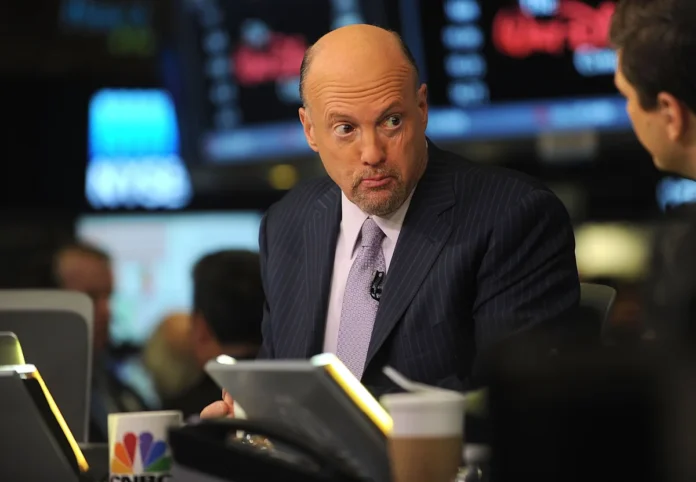
Jim Cramer says this post-earnings sell-off is a golden buying opportunity

0
Jim Cramer says this post-earnings sell-off is a golden buying opportunity


Some stock drops look like bad news on the surface. Some are, yes, but some also tell a completely different story underneath.

And I think American Express (AXP) investors have been handed the latter. The payments giant beat earnings expectations, raised its full-year revenue guidance, and reported its strongest card member spending growth in three years. The stock fell anyway.

This kind of reaction can frustrate shareholders and even confuse casual observers. But for “Mad Money” host Jim Cramer, it’s a pattern he’s seen before, and one he thinks is creating a clear opening.

I think it’s a terrific opportunity in one of the best-run companies on earth.

American Express CEO Steve Squeri echoed that confidence in the company’s Q2 2026 earnings statement, noting: “Six months into the year, we’re seeing stronger momentum than we expected.”

Also Read: History of American Express: Company timeline & facts

Jim Cramer on why the market read the AXP earnings wrong

Cramer’s argument comes down to a single distinction. And it is one the market appears to have missed.

American Express beat earnings expectations in Q2 2026 and raised its full-year revenue growth guidance to approximately 10%, according to a company statement. Earnings per share (EPS) came in at $4.53, up 11% year-over-year (YoY). Net income reached $3.11 billion, up 8% from the same period a year earlier.

So why did the stock fall?

The answer lies in what management chose not to do. Instead of accelerating share repurchases, which would have boosted EPS more quickly, Squeri announced the company would reinvest its outperformance into growth initiatives. 

More Jim Cramer:

Full-year EPS guidance remained unchanged at $17.30 to $17.90. Investors read the unchanged EPS range as a red flag. Cramer read it differently in his few words.

The 176-year-old American Express is prioritizing long-term growth over boosting earnings per share, and that’s exactly why I also think the stock is a buy.

Investing.com‘s earnings call transcript data showed a 36% return on equity during the quarter. That’s evidence that the strategy is working. Return on equity measures how efficiently a company converts shareholder money into profit, and 36% is fair.

“Based on Steve Squeri’s track record, I think he deserves the benefit of the doubt here, which is why I’d be a buyer,” Cramer said.


Source link

Long-term bearish trend threatens Bitcoin Cash’s recovery from $200

0
Long-term bearish trend threatens Bitcoin Cash's recovery from $200


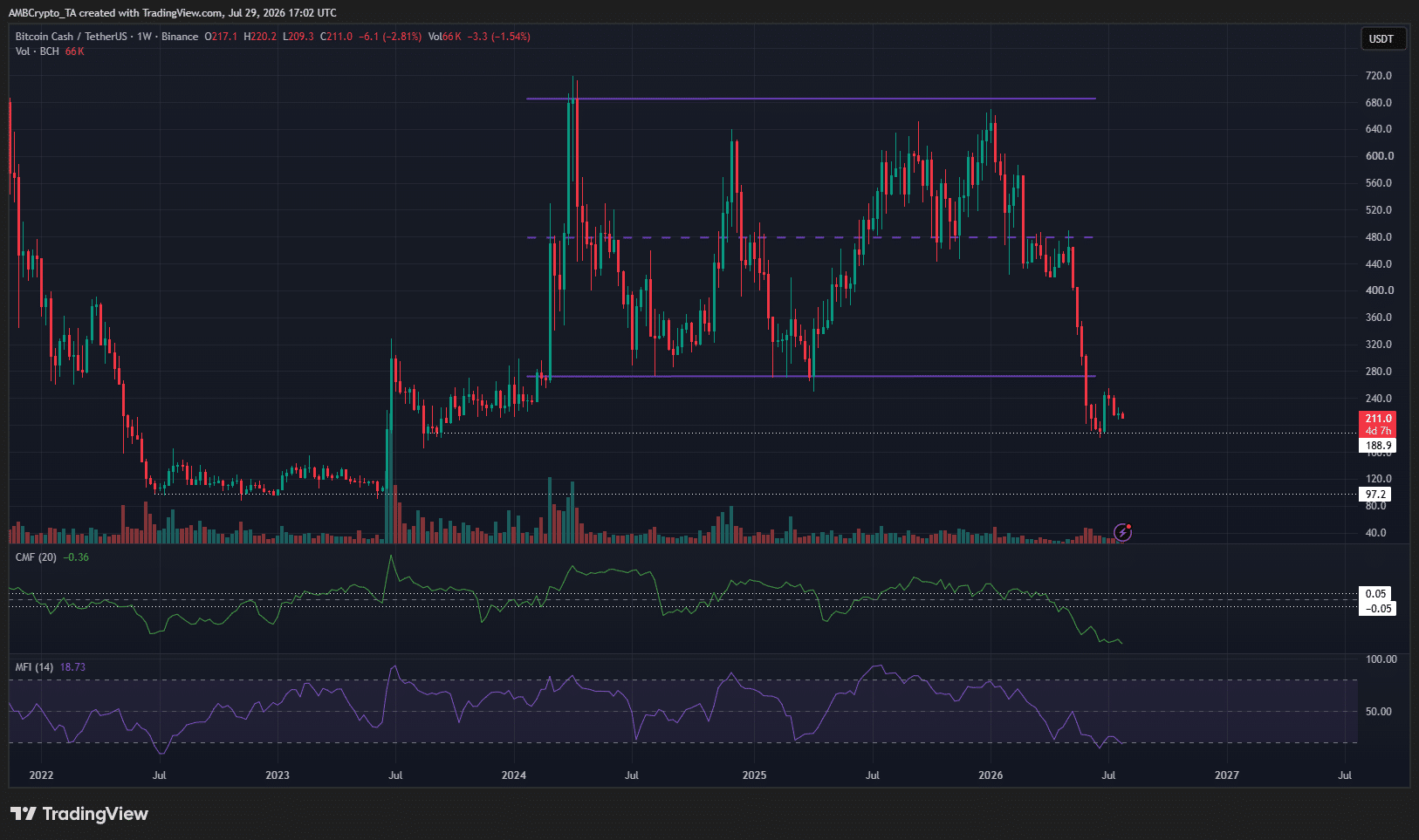
Bitcoin Cash [BCH] fell below a range that it had traded within for over two years. The critical support level at $272 was shattered by the selling pressure in May. A test of the $188 long-term support yielded a bounce to $240, which has begun to reverse since the end of June.

The altcoin’s relative strength against Bitcoin [BTC] evaporated in May. In that month, BCH had shed nearly 42%, a sizeable decline that continued into June.

With Bitcoin struggling to climb back above $67k, and the market maintaining a bearish bias, here’s what Bitcoin Cash investors need to watch out for.

Will Bitcoin Cash bulls sink or swim at $200?

Bitcoin Cash 1-week Chart
Source: BCH/USDT on TradingView

As covered earlier, the downward momentum picked up in May. The MFI raced from 49.8 in the second week of May to 14.64 by the third week of June. Similarly, the CMF also slid below -0.05 to indicate incessant selling underway.

In August 2023, the swing low at $165.4 had been the one that propelled the Bitcoin Cash uptrend up to $719. Therefore, this swing low is the one that must be breached to flip the weekly swing structure bearishly.

It appeared likely that this bearish scenario would soon unfold.

Lower timeframe Bitcoin Cash price action shows bullish signs

Bitcoin Cash 4-hour ChartBitcoin Cash 4-hour Chart
Source: BCH/USDT on TradingView

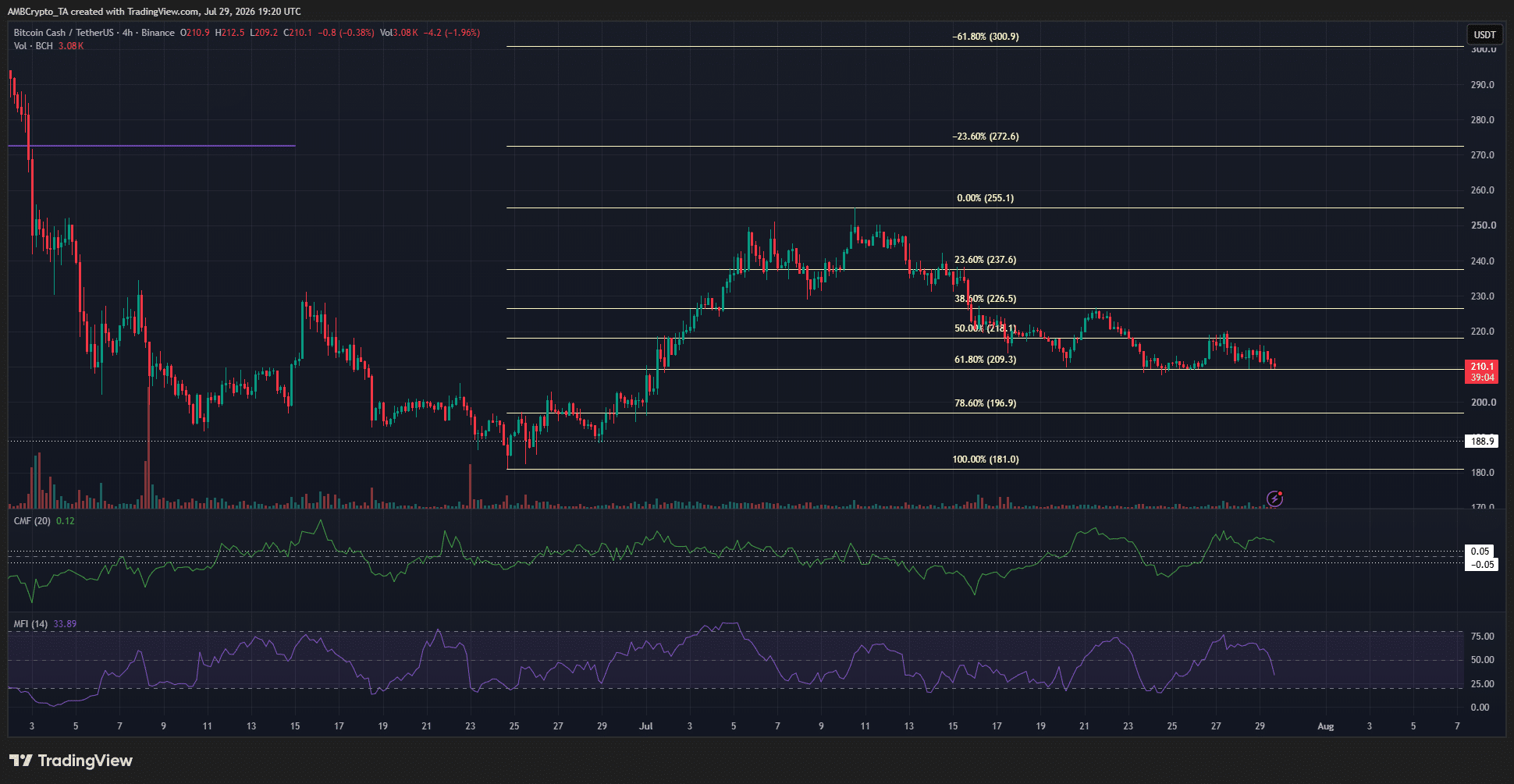
The 4-hour chart had a bullish swing structure. The CMF was at +0.12, showing buying pressure was dominant. Yet, the token was in a retracement phase. Over the past week, the buyers have desperately defended the $209.3 support.

A drop toward $196.9 would not be a buying opportunity, given the higher timeframe downtrend.

Bitcoin Cash Liquidation HeatmapBitcoin Cash Liquidation Heatmap
Source: CoinGlass

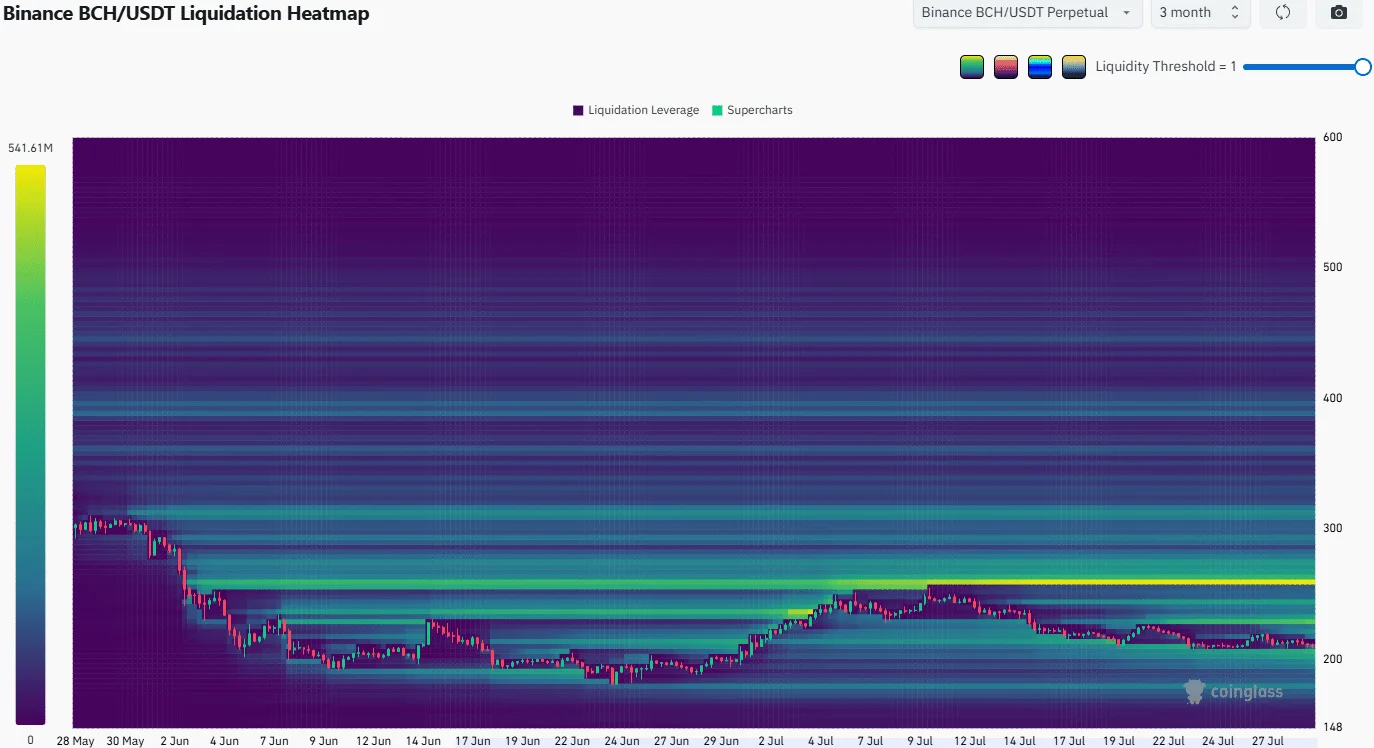
The rally toward $255 likely came as a  liquidity hunt. There still is a pocket of unswept short liquidations around $260. The rally earlier this month peaked at $255 and has retraced since then.

In the short-term, despite the H4 chart’s structure, a bounce up to $227 and $243 were possible. It was more likely that prices would continue below $200, due to the bearish momentum seen since May.


Final Summary

  • The Bitcoin Cash range of over two years was shattered by the strength of selling in May and early June.
  • The long-term bearish momentum is likely to continue and push BCH below $200.


Source link

The Good, Bad And Ugly From The Packers’ First Training Camp Practice

0
The Good, Bad And Ugly From The Packers’ First Training Camp Practice


The Green Bay Packers held their first training camp practice of 2026 on Wednesday, a non-padded workout that lasted roughly 80 minutes.

Here’s the good, bad and ugly from their first day back.

THE GOOD

TUCKER KRAFT: The news continues to be positive for tight end Tucker Kraft, who suffered a torn right ACL on Nov. 2 against Carolina.

Kraft is on the PUP list, but said he believes he’ll be activated “very soon.”

Packers general manager Brian Gutekunst echoed those sentiments.

“I anticipate … him being out there sooner rather than later,” Gutekunst said. “The more work he can get with Jordan in particular, even when he’s not ready for the team part of it, the more individual work he can get done with Jordan is going to be important for him as he heads into the season.

“We’ve had a lot of discussions about that, the timing with that. Obviously we want to be protective. But the way he looks, you’d think he’s ready to go.”

Kraft was in the middle of an All-Pro season in 2025 before his injury. Kraft started all eight games he played and posted 32 receptions, 489 receiving yards and six touchdowns.

He was the only tight end in the league with 30-plus receptions, 475-plus receiving yards, six-plus receiving touchdowns and an average of 15-plus yards per catch through Week 9. He also became just the fifth tight end since the 1970 merger to hit those marks in the first eight games of a season, joining Kellen Winslow (1980), Antonio Gates (2010), Jimmy Graham (2013) and Rob Gronkowski (2015).

Kraft led all NFL tight ends in yards per reception, yards after the catch (344), yards after the catch per game (43.0), yards after the catch per reception (10.8 avg.), was tied for No. 1 in explosive receptions (12) and ranked No. 2 in explosive-reception percentage (37.5) through Week 9.

Both Kraft and the Packers would like to get a long term contract done before the season starts.

“I think the best chance for Green Bay to win a Lombardi [Trophy] is with me on the field as well,” Kraft said. “That’s people under the front office telling me that and the importance of us getting this deal done in a timely fashion. But ultimately, like I’ve said over and over again, I’m just so grateful to be a part of this organization and I would like to keep it that way.”

MAKING STRIDES: Oft-injured running back MarShawn Lloyd, who’s played just one game in his first two seasons, appears to be healthy and ready to contribute.

Lloyd spent much of his offseason with Dr. John Meyer of the Meyer Institute of Sport in El Segundo, Calif. Meyer and his staff determined Lloyd was overcompensating while training his lower body.

“He’s the real deal,” Lloyd said of Meyer. “I had to do so (many) tests, and he’s seen how I moved and where I was overcompensating, and he kind of got those places better where I need it. So focus on a lot of single leg stuff and get my quads right and getting my hamstrings right.”

Lloyd said when training camp began last season he was “uncertain” about his health.

Today, he feels dramatically different.

“I mean, as far as like the strength of everything, yeah, my strength is a lot different,” Lloyd said. “A lot of single leg strength and just strong in all aspects from the hips, everything. So I do definitely feel a difference in the way my body feels.”

The Packers don’t have a proven No. 2 running back behind starter Josh Jacobs. And uncertainty still surrounds Jacobs after his arrest on May 26 for domestic disturbance.

So it seems like it’s now or never for Lloyd.

“Obviously we know MarShawn’s gone through his fair share of things,” Packers quarterback Jordan Love said. “To have him healthy, to have him out there is great.

“That’s a guy we need to have out there, because I know he’s going to be a special playmaker as somebody who can make those big explosive plays in the run game and the pass game.”

MAKING HIS MARK: Linebacker Zaire Franklin, acquired on an offseason trade for defensive tackle Colby Wooden, had an impactful day. The highlight came when MarShawn Lloyd made a reception and Franklin stripped the ball loose.

The only question was if it was a catch and a fumble, or an incompletion?

“First of all, the game is about the ball, so right, wrong or indifferent, you take the ball away, then you did your job for the day,” Franklin said. “So that felt good, but I love to practice. My favorite part of the game is practice. I’m (going to) make plays in practice.

“You make plays in practice, you make plays in the game. I just believe that, so me and Coach LaFleur even talked about it before today, like I couldn’t wait to get out there and just compete, get better and help make my teammates better. So it doesn’t matter if it’s July, May, August, middle of December, every time I’m on the field I’m playing like it’s my last play and any time I can make a play to help the team, that’s what I care about the most.”

UPSIDE FOR O-LINE?: Left guard Aaron Banks came off the Physically Unable to Perform (PUP) list Wednesday. And Green Bay’s offensive line, which struggled in 2025, could be improved this season.

After several players bounced around the line a year ago, Green Bay’s starters seem set with the quintet of (from left) Jordan Morgan, Banks, Sean Rhyan, Anthony Belton and Zach Tom.

“I really like that group,” general manager Brian Gutekunst said. “I’ve always talked about the versatility of that group. I think we’ve got some guys in places this year that make a little bit more sense. That continuity – hopefully we can stay healthy – will benefit us moving forward.”

THIS AND THAT: Cornerback Keisean Nixon was out with a hamstring injury. So rookie second round draft pick Brandon Cisse joined Carrington Valentine with the No. 1 unit. … Center Sean Rhyan did some long snapping with Matt Orzech (calf) out. … Undrafted cornerback Marlon Jones intercepted quarterback Kyle McCord and went 99 yards for a touchdown. “I had been watching the guys in front of me, just taking mental reps,” Jone said. “And so when I got in, I kind of had an idea of what was going to come. The coaches called a good play, and I was able to just make a play on the ball, celebrate with my teammates at the end there. Good way to end practice.” … Quarterback Jordan Love had two rushing touchdowns. … Skyy Moore, known primarily for his return skills, made a leaping catch for a touchdown.

THE BAD

ALREADY BEAT UP: The Packers haven’t played a game since Jan. 10. They won’t put on pads until Sunday.

Yet the following players are either on the PUP or the NFI list: edge rusher Micah Parsons (knee), tight end Tucker Kraft, defensive tackle Javon Hargrave (knee), running back Chris Brooks (hamstring), tight end Luke Musgrave (neck), long snapper Matt Orzech (calf), tackle Brant Banks (hamstring), cornerback Kamal Hadden (ankle) and defensive tackle Jordon Reilly (Achilles).

Cornerback Keisean Nixon (hamstring) was also out.

“I mean, you can’t control who’s available, who’s not available?” coach Matt LaFleur said. “Certainly, the medical isn’t in charge of that piece, and all you got to, you have to adapt as a coach and try to make it work at the end of the day.”

WAIT AND SEE: Green Bay’s place kicking battle is between rookie sixth round draft pick Trey Smack and fellow rookie Lenny Krieg. But with Orzech out, the Packers didn’t attempt any field goals.

“Obviously, with Matt out there, it kind of throws a wrench into some of the things we wanted to do,” LaFleur said. “But you know, yeah, it’s there’s always competition whether it’s at kicker, every position on the roster. Certainly, you know we drafted Trey, so we definitely have high hopes for him and understand that with all young kickers there’s typically some growing pains that are associated with that, but yeah just want to push him to be his best.”

THE UGLY

TURN BACK THE CLOCK: When Mike Sherman took over as Green Bay’s coach in 2000, he held 51 practices his first training camp.

This year, Packers coach Matt LaFleur has 13 scheduled practices.

The NFL world has changed dramatically in the last generation or two. And today’s training camps are far softer and gentler than the ones of yesteryear.

“Yeah, it’s really changed from when I first started and a lot of you guys were back there then too when we had the two practices a day,” Packers general manager Brian Gutekunst said. “Sometimes we had two padded days (practices).

“We had one in the morning. We’d come back, watch the film, eat lunch, get ready for the second practice, come back that night and watch the film. I think we had an 80-man roster at that time. We had smaller practice squads as we went into cutdown. So it was a lot different.”

The NFL’s collective bargaining agreement that was approved in 2020 has severely limited the amount of time that teams can be on the practice field.

For example, there’s a mandatory five-day acclimation period that’s required for players, where the focus is on meetings, medical exams, and controlled physical activity. Live contact is also prohibited during the first five days of camp and is limited in subsequent practices.

The NFL is definitely a safer place than it once was, and that’s a terrific thing. The daily grind of training camp is nothing like it once was, though, and there certainly aren’t as many opportunities for fans to see their heroes.

“The longer I do this, the more I keep reminding myself of (former general manager) Ted (Thompson) as far as with injuries, just trying to get through it healthy, but at the same time understanding what you have to do to become a good football team and how important this time of year is,” Gutekunst said. “So it’s changed quite a bit.

“I think certainly science and technology have changed some things about how we go. You see the CBA rules have changed things about how we go about it. But at the end of the day, there’s so much value in this time of year in coming together as a team. It’s extremely important. It really sets the tone for the entire season.”


Source link

Robinhood (HOOD) slides 4% as crypto revenue sharply fell

0
Robinhood (HOOD) slides 4% as crypto revenue sharply fell

Robinhood (HOOD) topped Wall Street’s second-quarter expectations, but shares fell about 4% in after-hours trading, adding to their 3.1% decline during Wednesday’s session.

The online brokerage reported adjusted earnings per share of $0.62, well ahead of analysts’ $0.43 estimate, while revenue climbed 32% from a year earlier to a record $1.31 billion, narrowly topping the $1.29 billion consensus forecast.

The results reflected strength across Robinhood’s expanding product lineup, even as crypto trading cooled. Crypto revenue fell 38% year over year to $100 million from $160 million, while transaction revenue was lifted by surging options, equities and prediction markets activity.

“Whether it’s the Robinhood Chain, Robinhood Ventures, or Trump Accounts, our product velocity is focused on one goal: making everyone an owner,” Vlad Tenev, Chairman and CEO of Robinhood, said in a statement.

The second quarter marked one of Robinhood’s biggest product pushes in recent years. The company launched Robinhood Chain, a blockchain network that supports tokenized U.S. stocks for eligible European customers as part of its push to bring traditional financial assets onchain.


Source link

7 best life insurance companies of 2026

0
7 best life insurance companies of 2026


An unexpected life event in your family can completely change the course of your financial future if you’re caught unprepared. Fortunately, a life insurance policy tailored to your specific needs can soften the financial blow and help you move forward on your terms.

To help you avoid the confusion of trying to choose between countless providers, we’ve done the research and compiled a list of the best life insurance companies, according to what makes them stand out (plus a few honorable mentions). 

  1. New York Life: Best overall

  2. MassMutual: Best for financial stability

  3. Nationwide: Best for policy flexibility

  4. Prudential Financial: Best for core products and riders

  5. Lincoln Financial: Best for claims experience

  6. State Farm: Best for transparency

  7. John Hancock: Best for customer experience

Star rating: 4.8 out of 5 ⭐

Why we like it: Among the life insurance companies we researched and compared, New York Life received top marks across multiple categories, including its core product availability, policy flexibility, and overall financial strength and stability. It also scored well on its application and claims experience criteria, as well as its transparency toward potential customers.

This sets up New York Life as the best-rated insurance provider on our list, as its offerings cover a wide range of specific life insurance needs. And with over 150 years in business, it has the industry know-how and financial reliability to address your insurance concerns and back up its policies.

Star rating: 4.8 out of 5 ⭐

Why we like it: MassMutual holds the same high AM Best Financial Strength Rating of A++ (Superior) as New York Life, but it has even fewer complaints, which are two huge reasons we rate it so highly.

In addition, MassMutual offers excellent core product availability and benefits, including guaranteed level premium periods for term life insurance policies. The claims process is a little vague, but we imagine that’s because we don’t have full access to all the details as non-customers.

Star rating: 4.8 out of 5 ⭐

Why we like it: Nationwide recently marked 100 years in business, which surprisingly makes it younger than many competitors. Still, relatively young age aside, it offers flexible policies and riders that fully compete with the offerings of other top-rated insurers. From a financial backing perspective,

Nationwide receives top marks for its AM Best Financial Strength Rating of A+ (Superior). (AM Best is an independent, global credit rating agency that rates insurers on their financial strength — the higher the rating, the more financially secure the company.)

We also like that you can apply for Nationwide life insurance online and find out your premium during the quote process. Many insurance companies point you directly to an agent, which isn’t always the most favorable experience for every potential customer.

Star rating: 4.5 out of 5 ⭐

Why we like it: Prudential Financial, along with New York Life and Nationwide, received perfect scores in our rubric for its core product availability, policy flexibility, and riders. This means it hits all the right notes for what it offers in core life insurance products and riders, including term life insurance, universal life insurance, no-exam policies, and more.

Prudential also provides an easy-to-use online quote tool to view your estimated premium, all without speaking to an agent.

Where does Prudential fall short? The number of complaints: It’s well above the average when compared to other top-rated life insurance providers.

Read more: Your comprehensive guide to life insurance riders

Star rating: 4.5 out of 5 ⭐

Why we like it: Lincoln Financial clearly outlines how its claims process works, helping to put your mind at ease if that’s one of your life insurance concerns. There are multiple paths for filing, along with details on special situations.

While we couldn’t find information about publicly disclosed premium costs, Lincoln’s offerings are still worth considering. It scored well on its core product availability and policy flexibility, which make for a nearly complete package when you also consider the details of its claims process.

Star rating: 4.4 out of 5 ⭐

Why we like it: If you want a transparent, online research experience, consider State Farm. With State Farm, you can find sample premium estimates and details about different types of policies, and even get a life insurance quote — all online. 

That’s not to say there’s no depth to a company like State Farm. It still has an overall low number of complaints and an A+ (Superior) Financial Strength Rating from AM Best. 

However, if you specifically want more coverage period options for term life insurance, you may need to look elsewhere, as State Farm offers a limited number of coverage periods compared to other insurers.

Star rating: 4.4 out of 5 ⭐

Why we like it: Similar to State Farm, John Hancock offers a modern, online-centric experience for people who prefer researching quotes on their own without an agent. You can get online quotes, review the claims process, and peruse different types of policies at your own pace and leisure.

In addition, John Hancock has a low number of complaints and offers adequate policy and rider options. However, it’s a little unclear whether any policies are available that don’t require a medical exam.

Star rating: 4.3 out of 5 ⭐

What we think: Pacific Life scored well overall, especially with its policy flexibility and availability of riders, but the claims process and guidance for beneficiary claims are somewhat vague, which could be a hindrance for potential customers.

Star rating: 4.3 out of 5 ⭐

What we think: Securian Financial outlines its claims process well and provides a useful online calculator for estimating your life insurance needs. However, its core product availability and policy flexibility slightly underperform those of higher-rated competitors.

Star rating: 4.3 out of 5 ⭐

What we think: Northwestern Mutual has excellent financial strength and stability, a low number of complaints, and over 150 years in the industry. Still, it’s missing (or the information isn’t disclosed) essential riders and term life policy flexibility.

Star rating: 4.3 out of 5 ⭐

What we think: Transmerica has a good lineup of available products and offers high transparency, but there are a few concerns with its overall financial strength and stability. Namely, its AM Best Financial Strength Rating of an A (Excellent), while still good, is lower than that of many other insurers. Also, Transmerica has more complaints than almost every other provider we compared.

Star rating: 4.1 out of 5 ⭐

What we think: Guardian Life has a low number of complaints and excellent financial stability, but we found it lacking in its core product availability and policy flexibility. Specifically, it doesn’t disclose whether its term life insurance offers different term lengths, and the details for riders and other benefits are few and far between.

Life insurance isn’t typically a one-size-fits-all proposition; any policy won’t work for every individual. You have to consider the best policy based on your specific situation.

For example, term life insurance may make sense if:

However, permanent or whole life insurance may make sense if:

Related: Term vs. whole life insurance: Which should you choose?

Life insurance policy riders are optional add-ons you can use to customize your plan. You may want to consider and review riders to better suit your needs.

Here are examples of common life insurance riders:

  • Accelerated death benefit (ADB): If you meet certain conditions, you can claim a portion or all of your death benefit while you’re still alive.

  • Accidental death: Can increase your payout if your death results from a covered accident.

  • Charitable benefit: Adds an extra amount to your death benefit to be paid to the charity of your choice.

  • Child and spouse: Pays out a death benefit if an insured child or spouse passes away during the rider’s term.

  • Chronic care: Provides tax-free access to a portion of the death benefit if you become chronically ill.

  • Renewable term: Can allow you the option to purchase renewable and convertible level term insurance as a way to increase the death benefit for a limited amount of time.

  • Term conversion: Allows you to convert a term life insurance policy to a whole life policy, typically without having to undergo a medical exam.

  • Waiver of premium: Can keep paying your premium if you become disabled and are unable to work.

Related: The comprehensive guide to life insurance riders

Once you’ve locked in the type of coverage and riders you need, it’s time to compare what different providers are offering. You may already have experience with certain companies from using other types of insurance, like homeowners or car insurance, but that doesn’t mean you should immediately use the same insurer.

If a provider doesn’t offer what you’re looking for, move on to the next. 

You can individually research each life insurance company via its website, use an independent agent, or try out a comparison website. There’s generally no wrong approach to this, as long as you end up with a policy you want at a price you’re comfortable with.

Related: How much life insurance do I need? A guide for every life stage.

The best life insurance providers include:

  • New York Life: Best overall

  • MassMutual: Best for financial stability

  • Nationwide: Best for policy flexibility

  • Prudential Financial: Best for core products and riders

  • Lincoln Financial: Best for claims experience

  • State Farm: Best for transparency

  • John Hancock: Best for customer experience

Life insurance categories generally include:

  1. Term life: Provides coverage for a certain number of years, but will only pay out during the coverage period.

  2. Whole life: Provides coverage for your whole life, paying out no matter what age you are when you pass away, as long as your premiums are paid.

  3. Universal life: Also provides coverage for your whole life, but offers more flexibility with your death benefit and premiums.

  4. Variable life: Typically provides whole life coverage, but there’s also an investment factor that can affect your death benefit and cash value.

In general, these factors can affect your life insurance premiums:

  • Age

  • Health

  • Family health history

  • Gender

  • Occupation

  • Lifestyle

  • Tobacco use

  • Coverage limits

  • Policy type

You typically get no benefit from a term life insurance policy if you don’t pass away within the coverage period.

Life insurance may not be worth it if you have no need for the death benefit or potential savings tools. For example, if you already have enough savings or investments, or if you have no dependents, you may not need to consider buying a life insurance policy. This could also be the case if you’re already in your retirement years and have no affordable life insurance options.

We compiled our list of the best life insurance providers by creating a rubric to compare countrywide life insurance companies. Our selection of providers was based on the 12 highest-ranked NAIC groups and companies that sell individual life insurance directly to consumers.

We did not consider every available life insurance group or company. 

We compared the selected providers based on various factors outlined in our rubric, including core product availability, policy flexibility, financial strength and stability, and more. Each provider received scores in each category, which contributed to a final percentage score and an overall star rating.


Source link