The Iran War, tariffs and the demand-driven AI-investment boon could add up to create inflationary conditions where Federal Reserve policymakers would need to consider interest-rate hikes later this year.
But not just yet.
According to the minutes of the June Federal Open Market Committee meeting, policymakers at the central bank were concerned about high inflation but needed more data before making a move on the benchmark Federal Funds Rate.
The data could also signal that rates should continue to hold for a while or even go lower sooner than many expected.
The minutes do not name participants so Fed watchers need to closely read the words in the 15-page document released July 8 as well as read between its lines.
LPL Financial Chief Economist Jeffrey Roach said the minutes suggest the FOMC had a “good family fight” over the various scenarios under review — a difficult situation with a wide range of outcomes.
“One thing is certain: future policy is heavily contingent on the political situation in the Middle East. If we can tease out any forward guidance from the minutes, it would be the committee is working through a wide range of scenarios and will not commit to a specific scenario until the incoming data provides necessary clarity,” he said.
Roach added that he didn’t expect the FOMC to make a change in either direction at the July 28-29 meeting.
Fed’s dual mandate requires a tricky dance
The Fed’s dual mandate from Congress requires maximum employment and stable prices.
Lower interest rates support hiring but can fuel inflation. This risks fueling further inflation, potentially leading to an inflationary spiral.
Higher rates cool prices but can weaken the job market. This increases the cost of borrowing and further stifles economic activity.
Fed holds interest rates steady thus far this year
The rate-setting Federal Open Market Committee voted unanimously last month to hold its benchmark Federal Funds Rate target in a range of 3.5% to 3.75%.
Policymakers had cut rates by 25 basis points at its last three meetings of 2025 to shore up the softening labor market.
These “insurance” cuts stopped after the majority of policymakers decided the risk from higher prices was outweighing signs that the jobs market was stabilizing.
The funds rate is the interest rate that the Federal Reserve charges other banks overnight.
A change in the funds rate triggers moves in borrowing costs ranging from credit cards to auto loans and influences long-term mortgage rates.
It is one of several tools the Fed could use to maintain a balanced economy that is neither overheating nor cooling down.
Warsh says inflation risk is dropping
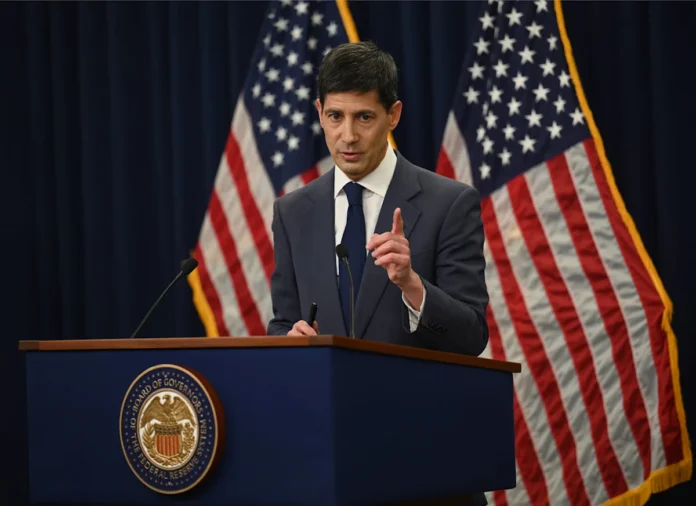
Federal Reserve Chair Kevin Warsh said July 1 that inflation risks have come down in recent weeks although he didn’t offer data or other numbers to support his argument.
Instead, speaking at the European Central Bank’s annual gathering of international policymakers and economists in Sintra, Portugal, the new Fed chair doubled down on his hawkish pledge from the June FOMC meeting that the Fed will focus on delivering “price stability.”
Warsh emphasized the Fed’s commitment to getting inflation back down to its 2% target — a level it has missed for the last five years.
“If there were people in households or the business sector or the financial markets who thought that this central bank was going to be comfortable with an inflation objective above 2%, well, I guess they’d be disappointed,” he said.
“We’re going to deliver price stability in the U.S.,” Warsh said, adding that “the tactics, the strategy and the rest, that’s still to come.”
June FOMC minutes show Fed split on interest-rate outlook
The FOMC debated multiple scenarios June 16-17 on how the U.S. economy could evolve through the end of the year.
In a scenario featuring moderating inflation, “most” participants said they expected the central bank would “maintain or eventually lower the target range for the Federal Funds Rate.”
But “most” participants said that “some policy firming would likely be warranted” if inflation remains elevated.
What’s ahead for interest rates?
Following the July 7 release of the June FOMC meetings, the CME Group FedWatch Tool estimated there will be at least one 25 basis point rate hike this year with more potentially to come in 2027.
New York Fed President John Williams said July 7 that monetary policy was well positioned and that he expected Headline PCE, the Fed’s preferred inflation gauge that’s been hitting close to 4%, will dip over the next several months as energy prices stabilize.
Vinny Amaru, Global Investment Strategist at J.P. Morgan Wealth Management, told TheStreet in an email following the June jobs report on July 2 that the U.S. economy remains resilient overall.
“Slightly weaker payroll gains and mild wage growth reinforce our view that the Fed will remain on hold this year as neither signal the need to hike interest rates to cool an overheating labor market,” Amaru said.
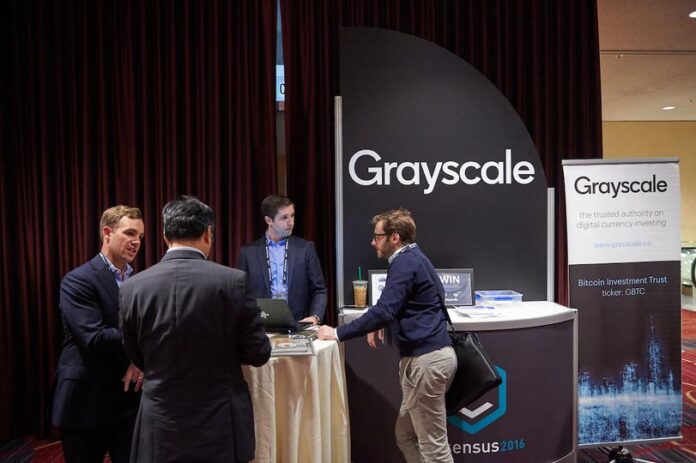
The leadership change follows another executive departure. Last fall, managing director and head of distribution and partnerships John Hoffman left Grayscale, and just joined tokenized asset platform Ondo Finance last month. The company has also added Chief Marketing Officer Ramona Boston and Head of Index Steve Vanourny over the past few months.
The departure comes as Grayscale put its plans to go public on hold. The Stamford, Connecticut-based company confidentially filed for a U.S. initial public offering in November last year. However, a person familiar with the matter previously told CoinDesk that Grayscale has paused its IPO preparations because of market conditions and is unlikely to restart the process before the fourth quarter.
A Grayscale spokesperson previously declined to comment on the IPO timeline, citing the SEC’s quiet period. CoinDesk reached out for comment regarding McGee’s departure.
Founded in 2013 and owned by Digital Currency Group, Grayscale has been a key bridge between traditional finance and digital assets through its regulated crypto investment products, most prominently its Bitcoin Trust (GBTC), which the firm converted into an exchange-traded fund (ETF) in January 2025. The fund once held about $28.5 billion in assets before becoming an ETF. It now manages roughly $8.5 billion as other, lower-fee ETFs have attracted investor money.
Blue Origin Raises $10 Billion at a $130 Billion Valuation – Moby
BREAKING NEWS
Our analysts just identified a stock with the potential to be the next Nvidia. Tell us how you invest and we’ll show you why it’s our #1 pick. Tap here.
Welcome to the new space race. Except this time, it’s capitalism on both sides, as Jeff Bezos puts Elon Musk in his sights.
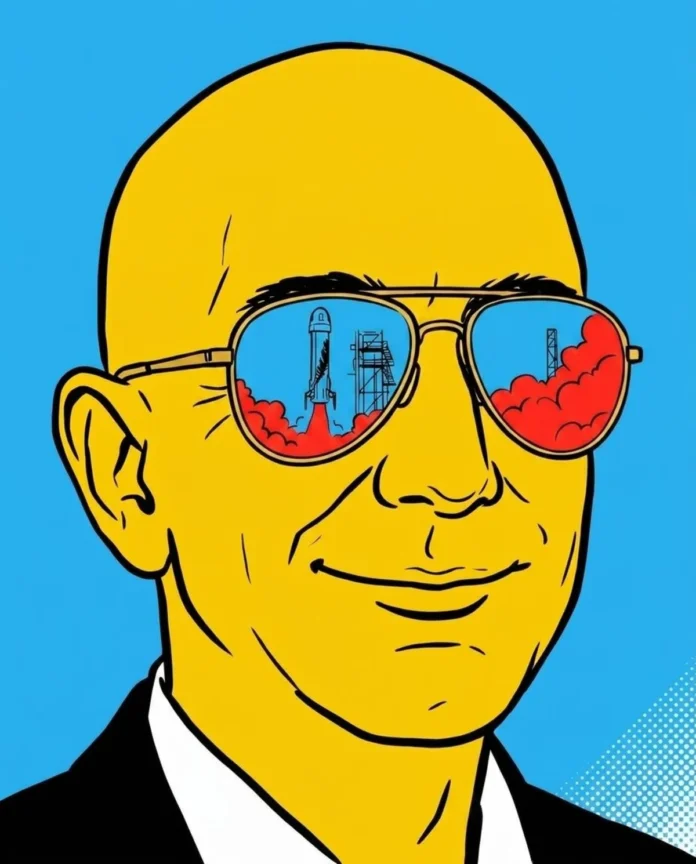
Bezos’ rocket company, Blue Origin, is raising $10 billion at a whopping $130 billion valuation, reports CNBC. Bezos will personally plow $2 billion into the deal. Another $4 billion will come from Coatue, and the company is actively seeking investors to fill the rest of the round.
Blue Origin likely needs the money. One of its New Glenn rockets exploded during a test in Florida in May, and the company has an aggressive goal to return to flight by the end of this year.
The deal comes at a hot time for space tech. Musk’s SpaceX went public in June, raising $86 billion in the largest public offering to date. The stock launched up to $225 per share before gravity pulled it back down to $148. Still, the company boasts a near-$2 trillion valuation, larger than South Korea’s GDP.
One stock. Nvidia-level potential. 30M+ investors trust Moby to find it first. Get the pick. Tap here.
Rocket Lab also recently acquired Iridium Communications, a satellite communications provider, in an $8 billion deal. It’s a bet that the newly combined company can chew into some of Starlink’s dominance.
While serious investors are pouring big money into space tech, like any other emerging sector, it’s still an open question how these companies are going to turn those investments into profit.
SpaceX’s wobbly ride since the IPO might be a harbinger: euphoria as shares break the atmosphere and enter orbit, only for gravity, or rather reality, to take over.
Sky [SKY] rallied 11% over the past day, extending a stretch of steady performance for the protocol.
At press time, usage across the protocol ran high, generating $987,000 in fees over the past 24 hours, while volume peaked at $13.49 million within the same window.
Notably, token volume has also trended higher, rising 5.78% to $23.25 million. Together, the price and volume gains point to strengthening performance, and several signals suggest SKY could extend the move.
Can SKY rally toward $0.67?
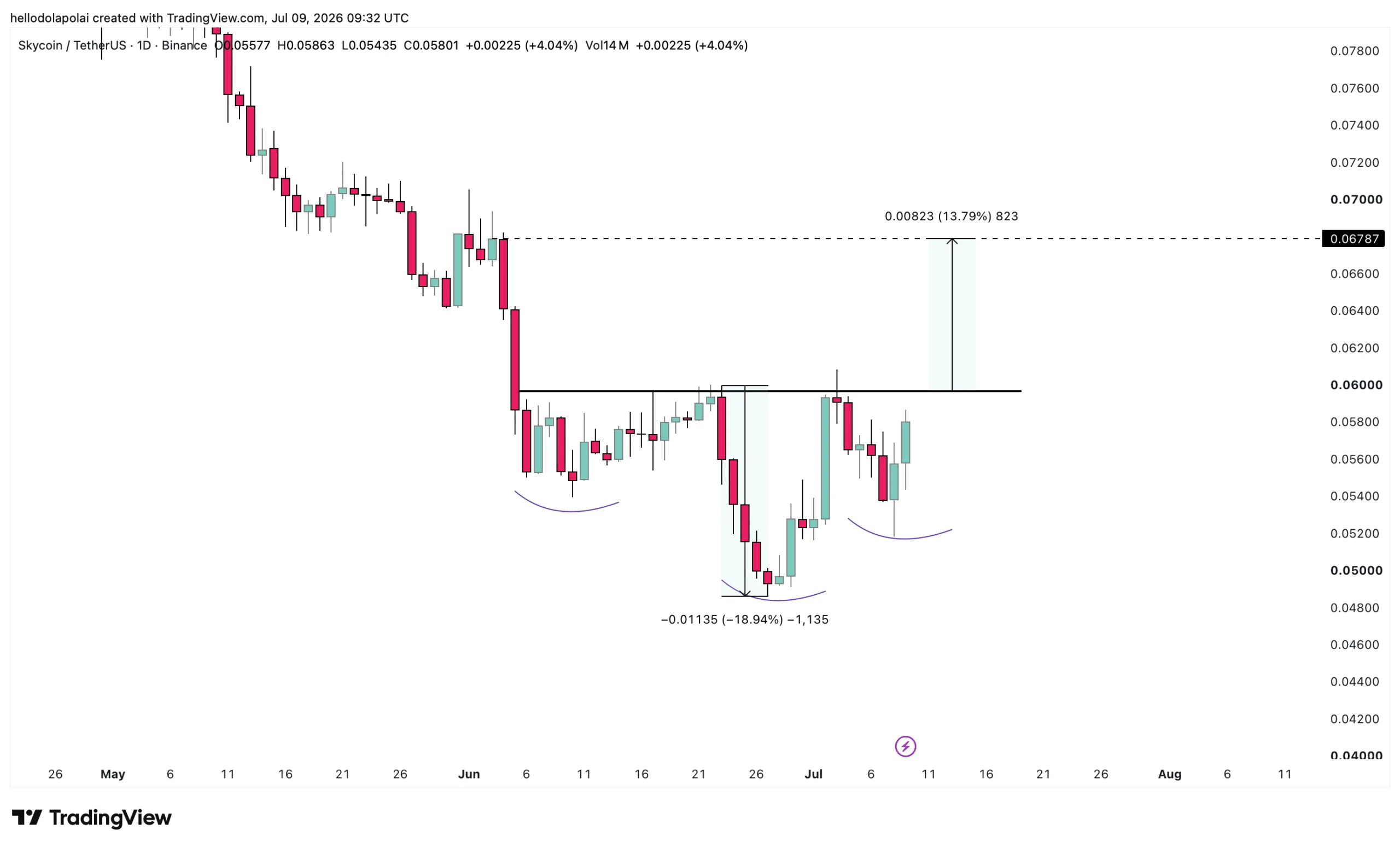
SKY could climb toward roughly $0.067, a level the token last touched in early June. The outlook rests on a recent chart formation, with SKY carving out an inverse head-and-shoulders pattern.
An inverse head-and-shoulders typically forms ahead of a stronger move to the upside. The structure is still developing, but a clean break above the $0.050 neckline would open the door to a much broader rally.
Source: TradingView
Should bullish momentum hold, SKY would post a 13.79% surge to its June target, a move that sits within the near term.
Over the short term, price could consolidate midway before reaching that final target. Getting there would see SKY recover every loss it has accumulated since June.
Momentum indicators strengthen SKY’s case for more upside
Numerous momentum indicators have converged, suggesting SKY could keep extending its gains.
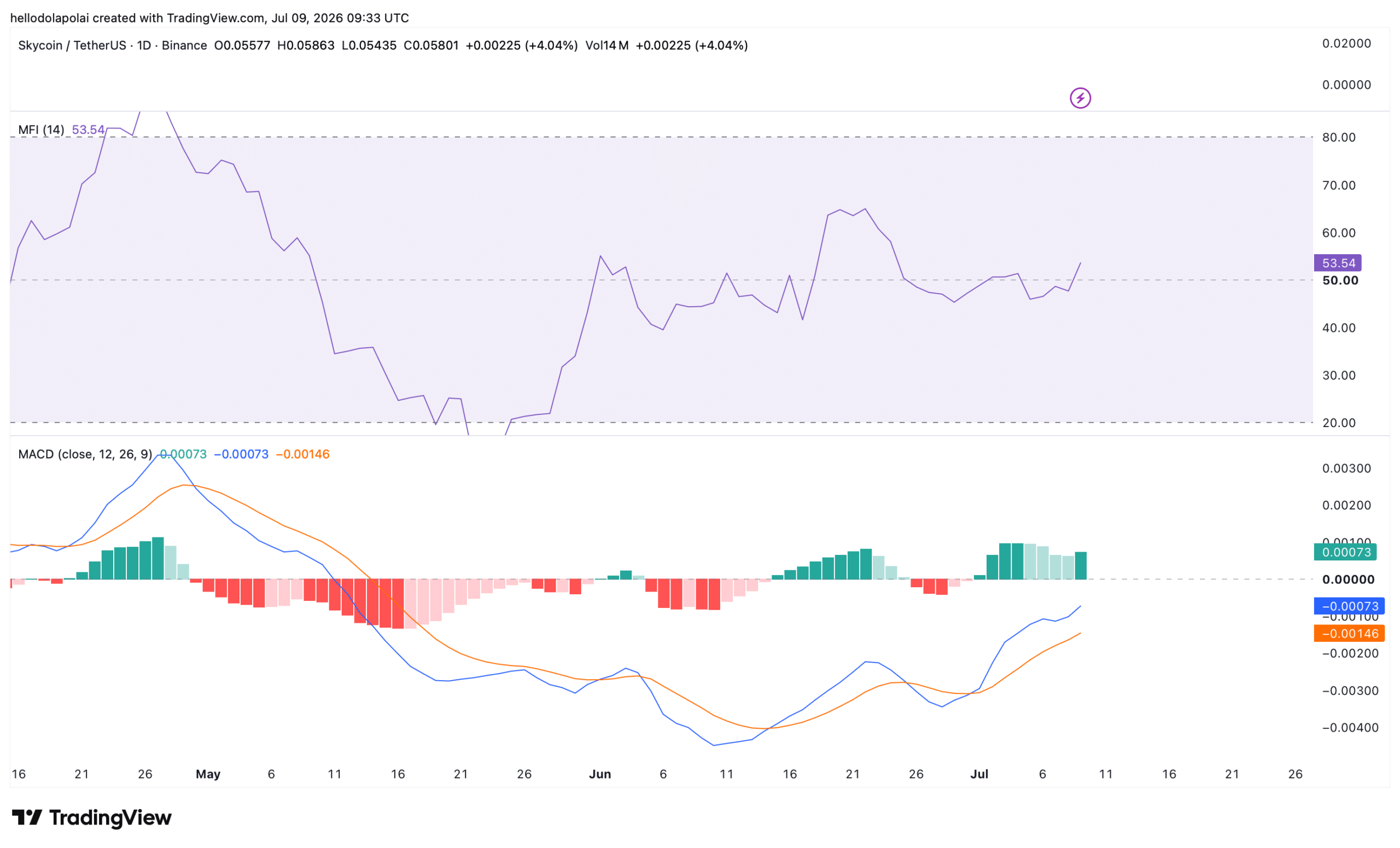
At the time of writing, the Money Flow Index, which tracks capital moving in and out of an asset, showed a growing inflow into the market.
The MFI has ticked upward and crossed the 50 mark. A reading above 50 signals that traders have entered a bullish phase, raising the odds that more capital flows in over the next few sessions.
Source: TradingView
The Moving Average Convergence Divergence (MACD) has regained strength, printing a green histogram bar after several days of fading momentum.
The key test comes as SKY approaches the neckline, where selling pressure typically intensifies. For the bullish case to hold, the MACD would need to cross into positive territory while the MFI stays below 80, a combination that would keep the rally sustainable.
Holder income adds incentive to lock up tokens
Traders now have a stronger incentive to keep their assets locked in the protocol’s TVL, driven by the income flowing to SKY holders. According to DeFiLlama, that income has reached $301,000 since July began, about 30% of the $1.1 million distributed in June.
The dynamic feeds on itself, as a rising SKY price makes holders more likely to lock their tokens, positioning to earn rewards while benefiting from the higher prices.
Final Summary
SKY climbed 11% in a day, with rising fees and trading volume signalling renewed demand for the token.
Growing capital inflows and steady holder rewards give traders reason to expect a further move toward $0.06.
At the last moment, New Hampshire has turned its back on a groundbreaking effort to establish what was expected to be the first rated, bitcoin-backed bond issued under a state’s authority, with a governmental body there canceling the project.
Just a few months after Moody’s Ratings gave the bond a Ba2 rating, the New Hampshire Executive Council, which reviews major state financial actions, slammed the door with a 3-2 decision that sided with those concerned about the state’s financial reputation.
“It was an extremely short-sighted decision,” Keith Ammon, a longtime crypto advocate and the majority floor leader in the New Hampshire House of Representatives, posted on social media site X. “They should gather all relevant facts and information and reconsider their vote at a future meeting.”
Ammon told CoinDesk that it’s an election year for council members, and it only takes one to swing the vote, adding, “We’re not giving up.”
Find out which banks are offering the best CD rates right now. If you’re looking for a secure place to store your savings, a certificate of deposit (CD) may be a great choice. These accounts often provide higher interest rates than traditional checking and savings accounts. However, CD rates can vary widely.
Learn more about where CD rates stand today and how to find the best rates available.
Banks with the best CD rates today
CD rates are relatively high compared to historical averages. That said, CD rates have been on the decline since last year when the Federal Reserve began cutting its target rate. The good news is that several financial institutions offer competitive rates of 4% APY and up, particularly online banks.
Today, Thursday, July 9, 2026, the highest CD rate is 4.10% APY. This rate is offered by Marcus by Goldman Sachs on its 14-month CD.
Here is a look at some of the best CD rates available today from our verified partners:
CD rate predictions for 2026
The Federal Reserve began decreasing the federal funds rate in light of slowing inflation and an overall improved economic outlook. It cut its target rate three times in late 2024 by a total of one percentage point.
Back in December, the Fed announced its third rate cut of 2025. However, it’s now unlikely the Fed will cut rates again in 2026. So far this year, the Fed has left rates unchanged, and a rate increase is growing more likely before the year’s end.
The federal funds rate doesn’t directly impact deposit interest rates, though they are correlated. When the Fed lowers rates, financial institutions typically follow suit (and vice versa). So now that the Fed has lowered rates and kept them low, CD rates are trending lower again. That’s why now may be a good time to put your money in a CD and lock in today’s best rates.
How to open a CD
The process for opening a CD account varies by financial institution. However, there are a few general steps you can expect to follow:
Research CD rates: One of the most important factors to consider when opening a CD is whether the account provides a competitive rate. You can easily compare CD rates online to find the best offers.
Choose an account that meets your needs: While a CD’s interest rate is a key consideration, it shouldn’t be the only one. You should also evaluate the CD’s term length, minimum opening deposit requirements, and fees to ensure a particular account fits your financial needs and goals. For example, you want to avoid choosing a CD term that’s too long, otherwise you’ll be subject to an early withdrawal penalty if you need to pull out your funds before the CD matures.
Get your documents ready: When opening a bank account, you will need to provide a few pieces of information, including your Social Security number, address, and driver’s license or passport number. Having these documents on hand will help streamline the application process.
Complete the application: These days, many financial institutions allow you to apply for an account online, though you might have to visit the branch in some cases. Either way, the application for a new CD should only take a few minutes to complete. And in many cases, you’ll get your approval decision instantly.
Fund the account: Once your CD application is approved, it’s time to fund the account. This can usually be done by transferring money from another account or mailing a check.
Rings of fire burn near the movie poster for the film “The Lord of the Rings: The Fellowship of the Ring.” Here’s where to watch the “Lord of the Rings” and “The Hobbit” movies. (Photo by Stephane Cardinale/Sygma via Getty Images)
Sygma via Getty Images
While we’re certainly not limited in options when it comes to larger than life action and adventure films, few stories have even come close to matching the epic scale and immense cultural hold of director Peter Jackson’s “Lord of the Rings” movies.
With meticulously recreated fantasy landscapes, endearing characters struggling and overcoming impossible challenges, and a core story highlighting the power of the good and noble against the forces of evil, this fantasy saga based on the classic works of J.R.R. Tolkien continues to capture the popular imagination.
However, with such an expansive saga crossing centuries and separate trilogies, it may be daunting, especially for the newcomer, to understand how each part connects to the next. The official film franchise currently has seven titles, including “The Lord of the Rings” main trilogy, “The Hobbit” prequel trilogy, and a more recent animated feature.
Let’s walk through how the films connect in chronological order (and release order) so you’ll never need to worry about getting lost during your trek through Middle-earth.
‘The Lord of the Rings’ Movies In Release Order
Let’s begin with the trilogy of films that started it all, listed in order of release.
The Lord of the Rings: The Fellowship of the Ring (2001)
The Lord of the Rings: The Two Towers (2002)
The Lord of the Rings: The Return of the King (2003)
MORE FROM FORBES ADVISOR
‘The Hobbit’ Movies In Release Order
Then, nearly ten years after the first trilogy’s end, a new collection of prequels brought us back to Middle Earth. “The Hobbit” trilogy is listed in release order below.
The Hobbit: An Unexpected Journey (2012)
The Hobbit: The Desolation of Smaug (2013)
The Hobbit: The Battle of the Five Armies (2014)
All films are currently streaming on HBO Max.
‘The Lord of the Rings’ And ‘The Hobbit’ Movies In Chronological Order
The two main trilogies follow simple orders on their own, but things can get confusing when watching all seven films together. This is both because the latest film actually takes place before both trilogies, and because the later released “Hobbit” films sit chronologically before the original “Lord of the Rings” films. So, if keeping to the timeline, one should actually watch the original trilogy last.
But below, let’s step through the movies chronologically.
The Lord of the Rings: The War of the Rohirrim (2024)
The story begins in Rohan when the Dunlending Freca, in a bid for power, demands his son Wulf marry King Helm Hammerhand’s daughter Héra. But when Hammerhand kills Freca in the ensuing argument, Wulf swears revenge.
Years later Wulf, now leading the Dunlendings, invades Rohan and forces the Rohirrim to flee to the Hornburg. But after Hammerhand’s lone battle weakens the enemy, Héra, allied with her cousin Fréaláf, confronts Wulf in a final stand for her people. Later, the valley is dubbed Helm’s Deep in tribute. Then, Héra rides off to meet a wizard named Gandalf.
The Hobbit: An Unexpected Journey (2012)
Nearly 200 years later, that same Gandalf visits the hobbit Bilbo in the Shire and recruits him to join a company of dwarves along their mission. The dwarves, led by Thorin, seek to reclaim their kingdom beneath The Lonely Mountain from the dragon Smaug, and could use Bilbo’s skills in their perilous journey.
Along the way the group encounters several foes including the Orc leader Azog, while Gandalf learns of a potential coming threat from a feared enemy. Separately, by chance, Bilbo meets someone named Gollum and from him acquires a mysterious ring.
The Hobbit: The Desolation of Smaug (2013)
The second film picks up right after and sees the company fend off more foes including giant spiders and, again, Azog. They also find unexpected allies in the elves Legolas and Tauriel. Eventually, the group reaches a lake town near The Lonely Mountain, and then enters the mountain to reclaim it from the titular Smaug.
However, chaos breaks out when the battle against Smaug unexpectedly ends with the dragon flying off towards the lake town in a fury.
Orlando Bloom accepts the Best Fight award for “The Hobbit: The Desolation of Smaug” at the 2014 MTV Movie Awards in Los Angeles.
WireImage
The Hobbit: The Battle of the Five Armies (2014)
The epic conclusion to the trilogy begins with a showdown against Smaug. But then, as Thorin grows mad with greed in his reclaimed kingdom, the people of the lake town, an elf army, and the dwarf army all face off against two orc armies in a deadly confrontation.
By the story’s end though, Bilbo is able to safely return home. However, he keeps the ring he found a secret from everyone, even as he begins to understand that something isn’t quite right about it.
The Lord of the Rings: The Fellowship of the Ring (2001)
And now we step into the main trilogy set about sixty years later. Here, as Bilbo celebrates his 111th birthday, he passes down his belongings to his cousin Frodo, including the ring. However, Gandalf then warns Frodo that the Dark Lord Sauron held the ring before and is sending forces to attack for it.
So Frodo leaves the Shire with his friend Samwise and then eventually allies with Legolas (returning from the “Hobbit” trilogy), Aragorn, Boromir, Merry, Pippen, Gimli and Gandalf on a mission to destroy the ring at Mordor before Sauron can get to it. Ultimately though the group splits apart, with Frodo and Sam continuing to Mordor on their own.
The Lord of the Rings: The Two Towers (2002)
The second entry in the trilogy picks up right after and sees Frodo and Sam stumble upon Gollum (returning from the “Hobbit” trilogy), who becomes their guide. Meanwhile, the other members of the fellowship, along with an even more powerful Gandalf, work to save the nation of Rohan from Saruman, who is working for Sauron.
These events ultimately lead to an epic battle at Helm’s Deep (the same setting from “The War of the Rohirrim”) where our heroes fend off Saruman’s orc forces in one of the most famous parts of the trilogy.
The Lord of the Rings: The Return of the King (2003)
In the epic conclusion to the entire story, our heroes first engage in a spectacular battle against Sauron’s forces at Gondor, the kingdom to which Aragorn is heir. Meanwhile, Frodo and Sam finally make it into Mordor, but find themselves battling with Gollum who wants the ring for himself.
Ultimately, the other members of the fellowship aid in clearing the way for Frodo and Sam, allowing Frodo to reach his destination and complete the mission he’d set out for in the climactic final move against Sauron.
That wraps the current, complete canon of films in this continuity. However, there may still be more to watch from here.
Peter Jackson on stage with his Best Director and Best Screenplay Academy Awards at a “Return of The King” Oscars celebration in Wellington, New Zealand on March 18, 2004.
AFP via Getty Images
New ‘Lord of the Rings’ Movies To Look Out For
While 2014’s “The Hobbit: The Battle of the Five Armies” put a close to the franchise’s formal trilogies so far, since then we’ve also gotten a celebrated TV series, the animated “War of The Rohirrim,” and also confirmation of two additional live action movies in development.
The Lord of the Rings: The Rings of Power (2022–)
Amazon’s TV series The Rings of Power, from showrunners J. D. Payne and Patrick McKay, is a prequel taking place thousands of years before the films. The first two seasons are currently streaming on Prime Video. While the show reliably earns headlines, the series holds mixed reviews from critics and fans.
The show features younger versions of characters familiar from the films, such as Galadriel, as they seek to thwart the growing threat of Sauron. However, the show is not intended to share a continuity with the movies. And, controversially, the series takes much greater departures from Tolkien’s writings than the original films ever did.
Warner Bros. Pictures and New Line Cinema have announced “The Hunt for Gollum” as the franchise’s first return to live action in 12 years. Andy Serkis, who has played Gollum since 2002, is set to both reprise his role and also step into the director’s seat for the film. Ian McKellen and Elijah Wood are returning as Gandalf and Frodo, and Anya Taylor-Joy has joined the cast as elf Seren.
The film is said to take place between “The Hobbit” and “The Fellowship of the Ring” and will follow Aragorn’s (Jamie Dornan) journey to capture Gollum.
The film is set to release December 17th, 2027.
The Lord of the Rings: Shadow of the Past (TBA)
In March, Peter Jackson took to social media to announce that comedian and committed Tolkien scholar Stephen Colbert would be, along with his son Peter McGee and Philippa Boyens, writing yet another live-action addition to the Middle Earth canon.
Set years after the adventures of the original trilogy, this film follows familiar hobbits Sam, Merry and Pippin as they, along with Samwise’s daughter Elanor, reflect on parts of their original adventures which never made it to the screen.
As of yet there are no confirmations on casting.
Future Titles (TBA)
In May, Peter Jackson announced he was in talks to bring forth even more films set in this universe, in particular taking inspiration from “The Silmarillion” and “Unfinished Tales of Númenor and Middle-earth.” Any development on these titles though would be very early, so fans know little about their plans for now.
Frequently Asked Questions (FAQs)
As with any multi-layered franchise with a growing number of entries, the films’ release order will generally be fans’ primary viewing order recommendation. In this case, that would mean beginning with the three “Lord of the Rings” films, and then going back in time chronologically to watch the three “Hobbit” films.
While this is not chronologically correct, watching it this way allows new viewers to experience the story just as fans did in theaters for the first time. Also, much of “The Hobbit” films’ storytelling style includes callbacks and references that will work best with a knowledge of the original trilogy.
For those invested in the timeline, though, a chronological order viewing is also enjoyable.
The Extended Editions of the films, all of which are also on HBO Max, represent a massive addition to the viewing experience with over two hours of additional footage restored across the trilogy. The added content not only extends existing scenes, but includes sequences and character moments unseen in the theatrical cuts that work to bring more of Tolkien’s dense texts to the screen.
However, of note is that director Peter Jackson considers the theatrical cuts to be the definitive versions of the story, with the extended versions being available only for fans seeking more.
Watching all seven canon films in the franchise would take 19 hours and 26 minutes. If watching all extended versions available, that number would go up to 22 hours and 29 minutes.
The core “Lord of the Rings” trilogy alone totals up to nine hours and 18 minutes, with the extended editions pushing this to 11 hours and 23 minutes.
Separately, the “Hobbit” trilogy adds up to seven hours and 54 minutes altogether, with the extended editions here beginning us to eight hours and 52 minutes.
“The Rings of Power” is an Amazon Studios series set thousands of years before the films, and it streams on Prime Video. However, it is not intended to share a continuity with the movies, so it does not have a place in the official chronological watch order.
“The War of the Rohirrim” is an animated film directed by Kenji Kamiyama set 183 years before the main films, making it the first title in the chronological order. It centers on Helm Hammerhand, the king of Rohan whose name is tied to Helm’s Deep, and features Miranda Otto reprising her role as Eowyn.