Marriott International, Inc. (NASDAQ:MAR) was among the stocks on Jim Cramer’s radar on Mad Money, as he advised investors to care about where a stock is going, not where it has been. When a caller asked for Cramer’s opinion of the stock, he said:
Alright, here’s the deal with Marriott. Okay, I have told, and I’ve said this to the CEO, this is what I call an up stock. Every time Marriott goes down, literally, if you take a look at the chart, you have to pull the trigger, and I’m sticking by that. And you know, it’s really incredible. I don’t feel that way about any other hotel company. Marriott is the best.
Photo by Jonathan Kemper on Unsplash
Marriott International, Inc. (NASDAQ:MAR) operates and franchises hotels, residences, and timeshares, ranging from luxury to budget options. Cramer was bullish on the stock and the industry during the February 25 episode, as he remarked:
I like Booking Holdings. I like Marriott for travel. I think the travel bull market lives. They won’t be brought down by Anthropic.
While we acknowledge the potential of MAR as an investment, we believe certain AI stocks offer greater upside potential and carry less downside risk. If you’re looking for an extremely undervalued AI stock that also stands to benefit significantly from Trump-era tariffs and the onshoring trend, see our free report on the best short-term AI stock.
Find out how much you could earn by locking in a high CD rate today. A certificate of deposit (CD) allows you to lock in a competitive rate on your savings and helps your balance grow. However, rates vary widely across financial institutions, so it’s important to ensure you’re getting the best rate possible when shopping around for a CD. The following is a breakdown of CD rates today and where to find the best offers.
Overview of CD rates today
Historically, longer-term CDs offered higher interest rates than shorter-term CDs. Generally, this is because banks would pay better rates to encourage savers to keep their money on deposit longer. However, in today’s economic climate, the opposite is true.
Today, Sunday, June 21, 2026, the highest CD rate is 4% APY. This rate is offered by Marcus by Goldman Sachs on its 14-month CD.
How much interest can I earn with a CD?
The amount of interest you can earn from a CD depends on the annual percentage rate (APY). This is a measure of your total earnings after one year, taking into account the base interest rate and how often interest compounds (CD interest typically compounds daily or monthly).
Say you invest $1,000 in a one-year CD with 1.52% APY, and interest compounds monthly. At the end of that year, your balance would grow to $1,015.20 — your initial $1,000 deposit, plus $15.20 in interest.
Now let’s say you choose a one-year CD that offers 4% APY instead. In this case, your balance would grow to $1,040.74 over the same period, which includes $40.74 in interest.
The more you deposit in a CD, the more you stand to earn. If we used the same example of a one-year CD at 4% APY but deposited $10,000, your total balance when the CD matures would be $10,407.42, meaning you’d earn $407.42 in interest.
When choosing a CD, the interest rate is usually top of mind. However, the rate isn’t the only factor you should consider. There are several types of CDs that offer different benefits, though you may need to accept a slightly lower interest rate in exchange for more flexibility. Here’s a look at some of the common types of CDs you can consider beyond traditional CDs:
Bump-up CD: This type of CD allows you to request a higher interest rate if your bank’s rates go up during the account’s term. However, you’re usually allowed to “bump up” your rate just once.
No-penalty CD: Also known as a liquid CD, this type of CD allows you to withdraw funds before maturity without penalty.
Jumbo CD: These CDs require a higher minimum deposit (usually $100,000 or more), and often offer a higher interest rate in return. In today’s CD rate environment, however, the difference between traditional and jumbo CD rates may not be much.
Brokered CD: As the name suggests, these CDs are purchased through a brokerage rather than directly from a bank. Brokered CDs can sometimes offer higher rates or more flexible terms, but they also carry more risk and might not be FDIC-insured.
The most consequential thing to happen to the American food system in the past two years arrived as a weekly injection. As of late 2025, roughly one in eight U.S. adults reported taking a GLP-1 medication for weight loss, roughly double the share from a year earlier. This class of weight-loss drugs is now delivering the one thing two decades of climate policy never could: a voluntary, durable reduction in how much carbon-intensive food Americans eat.
What GLP-1s Are Doing to Food Demand
GLP-1 drugs like semaglutide and tirzepatide suppress appetite through the gut-brain axis, producing average body weight reductions of about 15% in clinical trials, driven mostly by people eating less: adults on these medications consume roughly 21% fewer calories and cut their grocery spending by roughly 5–6%, per peer-reviewed research from Cornell University and Numerator.
Wall Street has already repriced the consequences — JPMorgan estimates the trend could erase $30–$55 billion in annual U.S. food and beverage sales as soon as 2030, when it expects about 25 million Americans to be on treatment (up from roughly 10 million today). Goldman Sachs estimates the 2035 user base at nearly 70 million, or about one in five adults.
The revenue hit is only the visible half of the story; the same pullback is rippling upstream, into the fields, feedlots, and water tables that supply all that food.
Where Food-System Emissions Actually Come From
The reason that withdrawal matters for the climate is because food’s emissions are concentrated. Food production generates roughly a third of global greenhouse gas emissions, and that footprint skews heavily toward one category: meat. Animal-based foods produce more than half of all food emissions. Beef is the extreme case, with a carbon footprint roughly sixty times that of beans.
This is where the demand shift becomes a climate story. The categories GLP-1 users give up first sit at the very top of that ranking, and clinical data shows they cut the most carbon-intensive foods — like red meat, ultra-processed snacks, and sugary drinks — rather than trimming calories evenly.
GLP-1 users are voluntarily adopting close to the diet that federal guidelines have recommended for years: less red meat, less sugar. When researchers modeled that shift across the U.S. population, food-system emissions fell 22%–32%. No carbon price, farm bill, or UN summit has moved demand in that direction at this speed.
How “Big Food” Is Restructuring
The companies with the most revenue at risk are moving first. Major manufacturers are reformulating for the GLP-1 consumer with smaller portions, more protein, and less sugar and refined starch, which shifts the composition of the American food supply toward lower-emission inputs. The farm system is starting to follow: corn and soybean planting projections have softened, and the U.S. cattle herd has hit a 75-year low, according to USDA data. Buying less food wastes less of it, and the roughly 700 million tons of CO₂ equivalent lost annually to food-system waste scales down with the volume.
For investors, the durability is what matters. We’re watching demand-side contraction in the single most emissions-intensive corner of the food economy, driven by consumer behavior rather than regulation. That makes it stickier than a policy that can be repealed and faster than a technology that has to be built — and the repricing rewards whoever positions before it finishes rather than after. Protein innovation, nutrient-dense formats, and the agricultural systems that supply them are where the demand is going.
The Bear Case
This thesis could break in a few places. GLP-1 adoption could plateau well below projections due to cost, access, side effects, or the simple difficulty of long-term adherence. Food companies could claw back lost calorie volume by engineering a new generation of ultra-processed products built for smaller stomachs — a reformulation risk that bears watching. Agricultural systems contract slowly, and a single year of low cattle inventory does not make a trend.
Each of those risks bears on how big and how fast the shift is, not on whether it happens. Adoption could disappoint and the supply chain could lag, but none of that puts calories back on American plates. The signal is already in the spending data and on the earnings calls. Waiting for certainty mostly means arriving after the repricing is done. Investors who treat this as a passing diet fad are calibrating to a baseline that no longer exists.
The larger lesson sits above the food system. The most powerful climate shifts are starting to arrive from outside the climate economy entirely, carried in by health, consumer behavior, and markets that were never trying to cut emissions. Investors who watch only the climate beat will keep being surprised by the ones that come from everywhere else.
The opinions expressed in Fortune.com commentary pieces are solely the views of their authors and do not necessarily reflect the opinions and beliefs of Fortune.
On the 20th of June, Jaredfromsubway.eth Maximal Extractable Value (MEV) bot was exploited, leading to losses amounting to $7.5 million. First, the attacker created a token (wrapper) and a liquidity pool that mimicked a profitable opportunity.
As the bot interacted with the opportunities, the attacker managed to maliciously alter the trading logic of the bot. This enabled the attacker to trick MEV bots into automating the approval process, giving the attacker-controlled contract lasting approval to withdraw funds.
The proceeds of the exploit included 1,583 in Ethereum [ETH], 2.87 million in USD Coin [USDC], and 2.09 million in Tether [USDT]. The assets were later consolidated and swapped in 4,427 ETH. This made it easier for the attacker to launder the proceeds while reducing their fragmentation.
Source: X
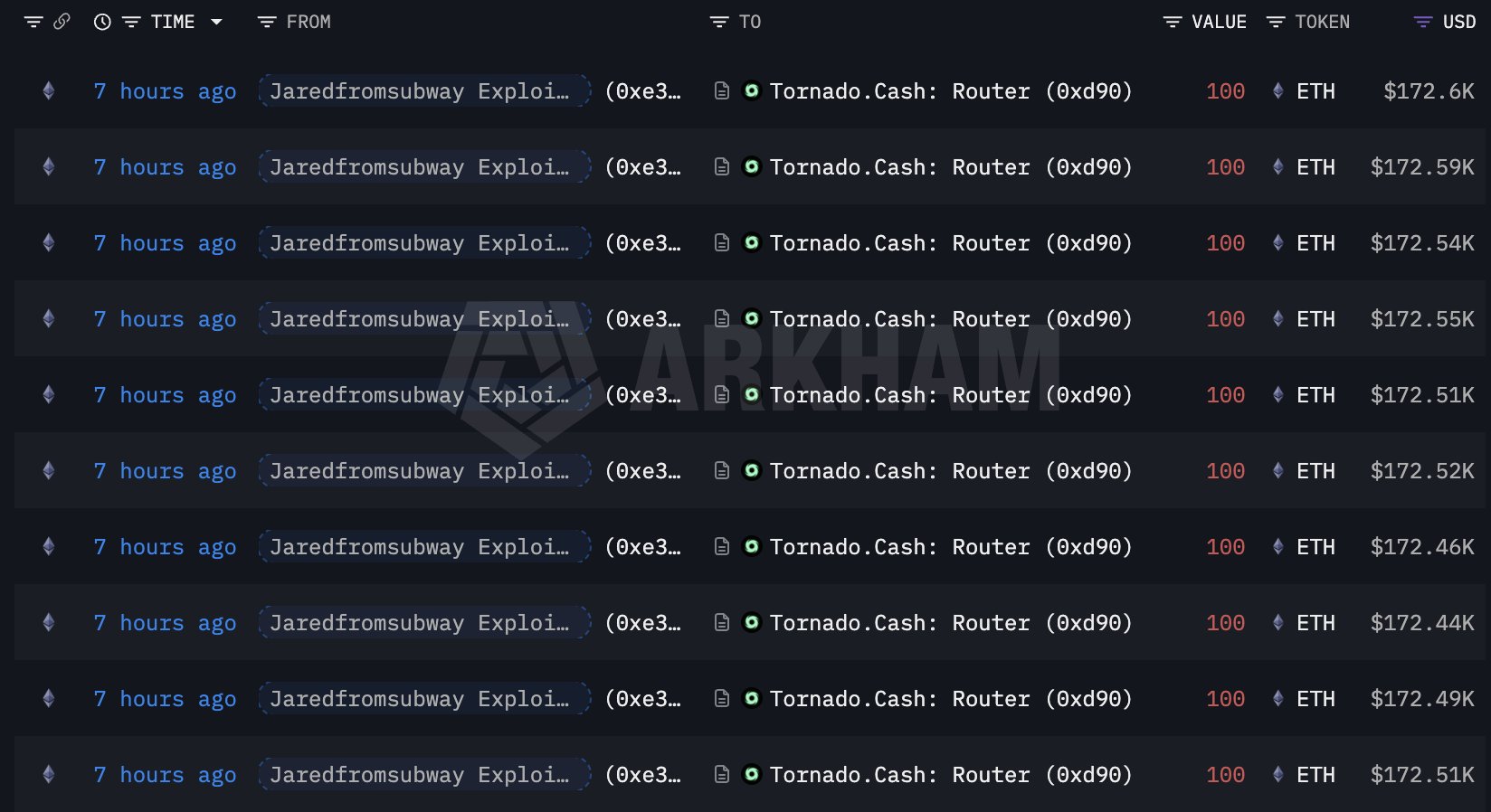
Shortly after that, multiple exact transfers of 100 ETH flowed into Tornado Cash. Each of these was in the amount of approximately $172k. This approach mattered because smaller deposits make fund tracing more difficult for the authorities.
As laundering activity accelerated, at least 1,000 ETH entered Tornado Cash. The movement suggests the attacker shifted focus from extraction to concealment. Therefore, the exploit evolved beyond the initial theft, with investigators now tracking efforts to break the on-chain trail and complicate fund recovery.
The rising stakes of automated trading systems
The Jaredfromsubway exploit arrived as MEV bots continued expanding their influence across on-chain markets.
For years, automated bots have evolved to multi-billion dollar execution engines capable of finding and executing opportunities across multiple blockchains, including Ethereum [ETH], Solana [SOL], and layer 2 networks.
As capital concentrates within these programs, operational risks become more significant. The Jaredfromsubway exploit highlighted this.
Rather than finding the flaw in the smart contract, the hacker found a way to target the token approvals embedded in the bot’s workflow. Therefore, hackers tend to exploit access rather than errors in coding.
Even though there have been numerous exploits that have resulted in losses amounting to hundreds of millions, revocation rates remain extremely low. Thus, as automation continues to drive both liquidity and price discovery in DeFi, managing permissions is becoming one of DeFi’s most pressing security issues.
Final Summary
The $7.5M Jaredfromsubway exploit highlights how attackers increasingly target workflows and permissions rather than code vulnerabilities.
Growing capital concentration in MEV infrastructure is raising the stakes of operational failures across on-chain markets.
Bitcoin steadied near $64,000 over the weekend, clawing back part of Friday’s drop, as traders weighed the start of US-Iran ceasefire talks against a renewed threat to close the Strait of Hormuz.
The token traded around $64,200 on Sunday, up 0.9% over 24 hours but roughly flat on the week, per CoinDesk data, after dropping below $63,000 on Friday. Most majors firmed alongside it.
Ether rose 0.5% on the day and 3.3% on the week to $1,734, solana gained 1.5% to $73 and tron added 1.2%. Hyperliquid’s HYPE slipped 2% on the day but remains the week’s standout, up 14.8%. Dogecoin was the weakest major, down 4.9% over seven days.
Bitcoin has gone nowhere on net this week, rallying early on the signed Iran deal, selling off Friday in a broad risk-off move, and stabilizing over the weekend.
The weekend’s focus is Switzerland, where US and Iranian officials, including Vice President JD Vance, are due to open talks on a permanent ceasefire, per Bloomberg.
The negotiations follow the memorandum of understanding President Donald Trump signed last week, which set a 60-day window that can be extended.
Moneywise and Yahoo Finance LLC may earn commission or revenue through links in the content below.
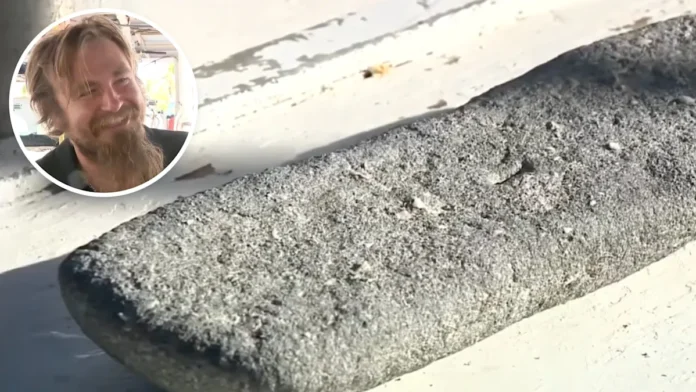
A team of divers searching the waters off the Florida Keys recently recovered something that hadn’t been seen in nearly three decades: a 22-pound silver bar (1) from the legendary Atocha shipwreck.
The artifact, which spent more than 400 years underwater after the Spanish galleon sank in a hurricane in 1622, is estimated to be worth about $100,000.
Top Picks
The Nuestra Señora de Atocha (2) was a heavily armed ship carrying an estimated $400 million to $500 million (3) in gold, silver and gemstones from the New World to Spain. Its wreckage was first discovered in 1985 by treasure hunter Mel Fisher (4) and his team, Treasure Salvors, Inc., following a 16-year search.
Hunters have not yet cleaned out the wreckage of its treasures.
“It was our last dive of the day — it was almost 7 o’clock,” lead diver Blake Baker recalled to Local 10 News. The new discovery was made by members of Mel Fisher’s Shipwreck Expeditions, the same organization that has spent decades recovering treasure from the wreck site.
According to Captain Drake Nicholas, the silver bar was found buried deeper than many of the other metal detector signals the team had investigated.
“We were in an area with a lot of metal detector hits,” Nicholas said. “This one was deeper.”
After striking the object with a knife and examining its surface, Nicholas said he noticed markings consistent with a silver bar.
He added, “I didn’t believe it at the moment.”
The artifact was covered in more than four centuries of marine encrustations and will be examined in a laboratory before its history is fully documented.
Sean Browne of Mel Fisher’s Shipwreck Expeditions estimated the silver bar’s value at roughly $100,000. Rather than being melted down, the piece will likely remain intact because of its historical significance.
Today, discoveries from the site are shared among investors involved in the expedition before being distributed to the Fisher family, according to Browne.
A treasure that has held its value for centuries
While few investors will ever uncover treasure from a centuries-old shipwreck, gold and silver have historically been viewed as stores of value, helping preserve wealth through wars, economic upheavals and changing currencies.
If you’re not particularly keen to take up professional diving, a gold IRA from Goldco lets you hold physical gold and other metals while still getting the tax advantages of an IRA — without getting wet yourself.
Goldco is widely regarded as one of the leading above-ground gold and silver companies in the space, with a 4.8/5 rating on Trustpilot and an A+ from the Better Business Bureau. They also offer a guaranteed buyback program, meaning they’ll repurchase your metals at the highest price, according to market value, if you ever decide to sell. As of June 19, 2026, silver is selling for $65 per troy ounce (5).
If the discovery has you wondering whether gold and silver deserve a place in your own portfolio, you can download Goldco’s free gold & silver guide to see if it’s a good fit for you.
Unlike the investors backing the Atocha recovery effort, most people aren’t searching for treasure hidden beneath the ocean floor. They’re looking for dependable assets that can generate income and appreciate over time.
Rental properties have long been a proven source of steady, passive income for high-net-worth investors. It’s no wonder that real estate accounts for nearly 25% of the typical family office portfolio. However, the time, effort and costs involved in managing and maintaining multiple properties prevent many from investing. So unless you’re a hedge fund titan or an oil baron, you’ve been shut out of one of the most profitable corners of the market.
Mogul offers a solution to bridge the gap here. This real estate investment platform offers fractional ownership in blue-chip rental properties, which provides investors with monthly rental income, real-time appreciation and tax benefits — without the need for a hefty down payment or 3 a.m. tenant calls.
Mogul’s founders are former Goldman Sachs real estate investors and the team handpicks the top 1% of single-family rental homes nationwide for you. Simply put, you can invest in institutional-quality offerings for a fraction of the usual cost — and you don’t even have to go underwater to find something valuable.
Each property undergoes a vetting process that requires a minimum 12% return, even in downside scenarios. Across the board, the platform features an average annual IRR of 18.8%. Their cash-on-cash yields, meanwhile, average between 10% to 12% annually. Offerings often sell out in under three hours, with investments typically ranging between $15,000 and $40,000 per property.
Every investment is secured by real assets, not dependent on the platform’s viability. Each property is held in a standalone Propco LLC, so investors own the property — not the platform. Blockchain-based fractionalization adds a layer of safety, ensuring a permanent, verifiable record of each stake.
Getting started is quick and easy. You can sign up for an account and then browse available properties. Once you verify your information with their team, you can invest like a mogul in just a few clicks.
Looking for larger opportunities?
For investors with larger portfolios, private-market real estate may offer access to opportunities that aren’t typically available through public markets. Just as the Atocha expedition relied on investor capital to pursue a unique opportunity, accredited investors today can gain exposure to specialized real estate investments through private offerings.
Lightstone DIRECT’s direct-to-investor model ensures a high degree of alignment between individual investors and a vertically-integrated, institutional owner-operator — a sophisticated and streamlined option for individual investors looking to diversify into private-market real estate.
A $100,000 silver bar is a nice problem to have, but deciding what to do with a valuable asset, inheritance, or other windfall can still be complicated. That’s where a financial advisor can help you out.
But hiring an advisor can be a lifelong commitment, which might make or break your retirement. That’s why finding reliable advisors is crucial — something Advisor.com can help you with.
Advisor.com does the heavy lifting for you, vetting advisors based on track record, client ratios and regulatory background. Plus, their network comprises fiduciaries, who are legally required to act in your best interests.
Just enter a few details about your finances and goals and Advisor.com’s AI-powered matching tool will connect you with a qualified expert best suited for your needs, whether you’ve come across a surprise windfall or you simply need to plan for the future.
Finding the right advisor isn’t always easy — there’s no one-size-fits-all solution. That’s why Advisor.com lets you set up a free initial consultation, with no obligation to hire, to see if they’re the right fit for you.
Once you’ve got the right financial advisor in your corner, the next step is getting a clear picture of where your money’s actually going. That starts with the basics — budgeting and tracking your spending.
You May Also Like
Join 250,000+ readers and get Moneywise’s best stories and exclusive interviews first — clear insights curated and delivered weekly. Subscribe now.
Article Sources
We rely only on vetted sources and credible third-party reporting. For details, see ourethics and guidelines.
Local 10 News (1); Wikipedia (2); Ocean Treasures (3); The Maritime Executive (4); JM Bullion (5)
This article provides information only and should not be construed as advice. It is provided without warranty of any kind.
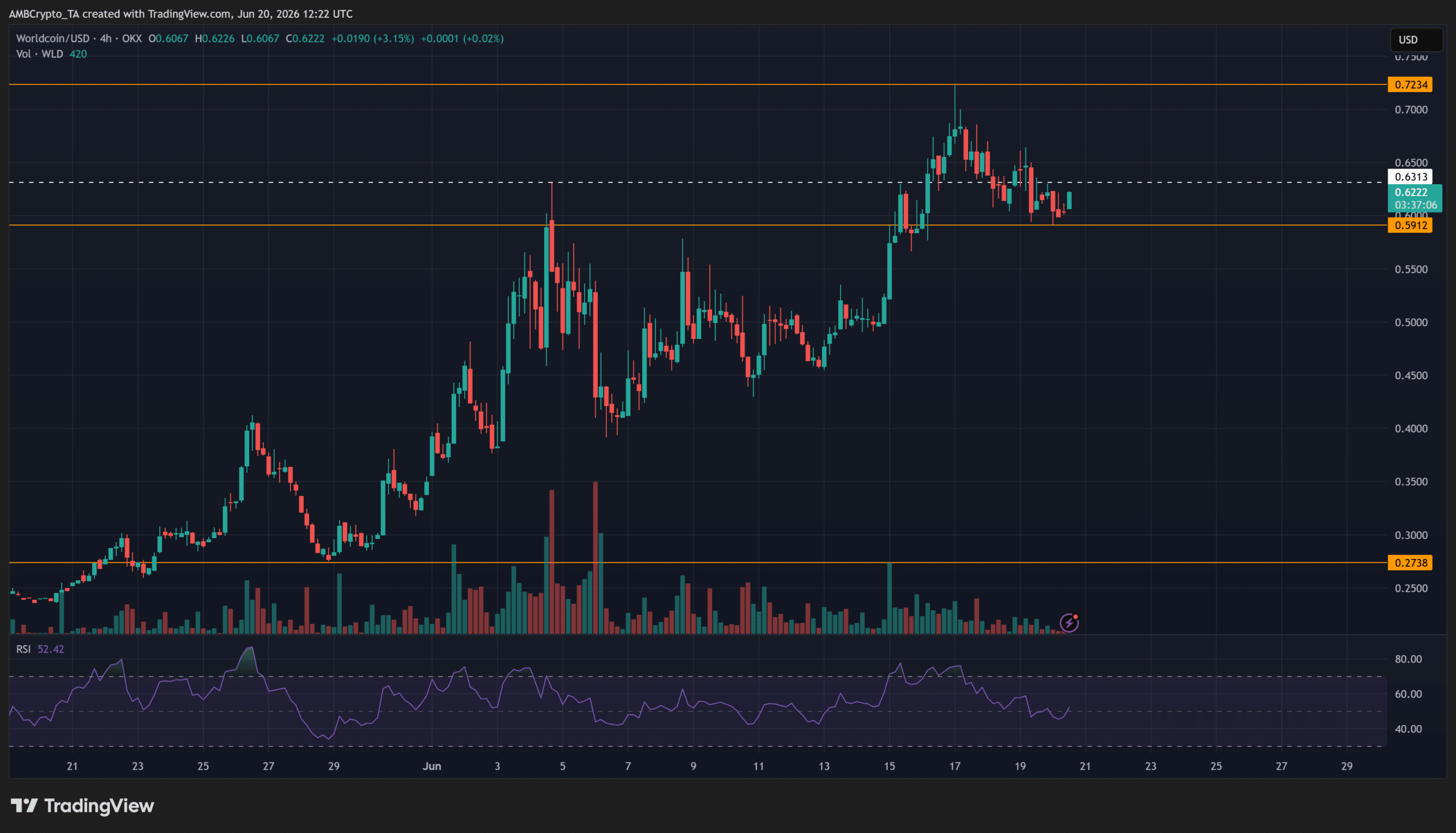
After rallying to a new local high of $0.715, Worldcoin [WLD] retraced back to $0.5912 at press time. This seemed more like profit-taking rather than selling pressure.
Once momentum stalled near that high, sellers stepped in with momentum, pushing the price below $0.70. As a result, the AI token shed 14%, creating a short-term trend. However, the bulls tried to defend the $0.65–$0.655 support zone that had previously served as a resistance zone.
Despite the attempts, bears continued breaching the support, as visible wicks indicated persistent supply. The efforts eventually became successful with the support being breached as the price declined gradually toward $0.6067 as it entered an accumulation.
Source: WLD/USD on TradingView
Later on, WLD bulls regained some control, pushing the token upward to $0.6222, resulting in a 3.15% rebound. Even so, RSI remained near 52.4 showing balanced momentum rather than capitulation.
Yet, buyers must reclaim $0.6313 to challenge the current downtrend toward reclaiming the $0.70 zone. However, failure to do that could lead sellers to retest $0.6067 and expose $0.5912 as the next support.
Conviction weakens after the decline
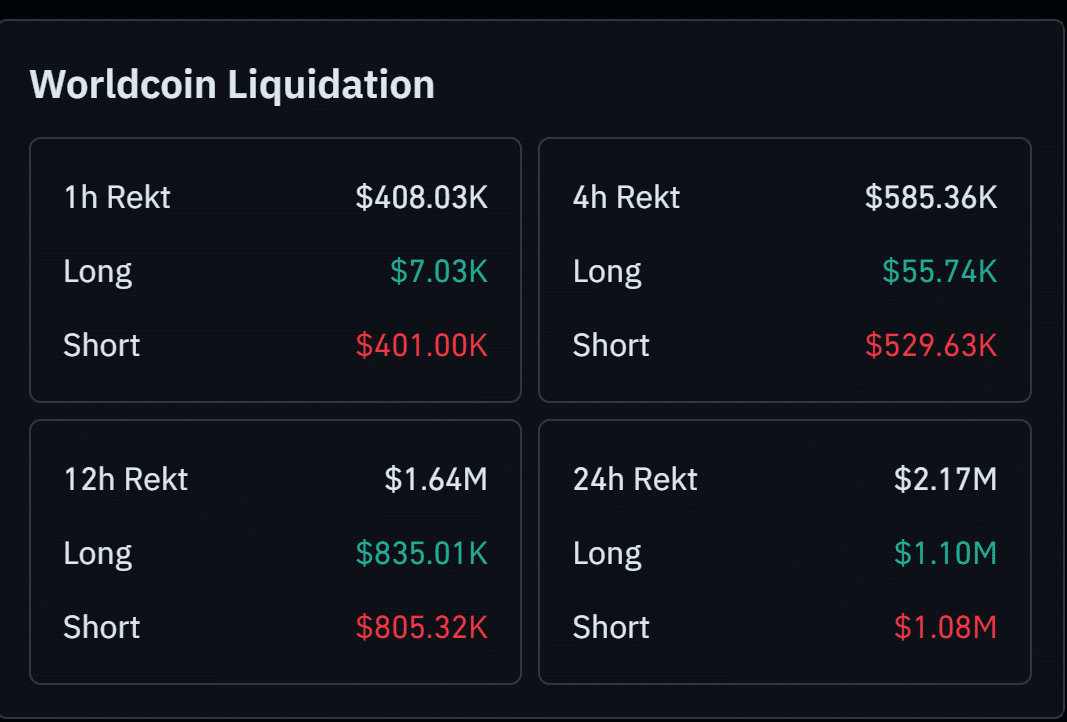
As WLD retraced from its swing high, CoinGlass data shows liquidation imbalance. In the last 24 hours $2.17 million was liquidated, with longs getting the larger share of $1.10 million while shorts accounted for $1.08 million. This implied that the recent volatility challenged both sides of the market evenly without bias. Earlier on, short liquidations helped fuel upside momentum as WLD advanced toward $0.7234.
Moments later, bullish traders also began losing positions as WLD’s price declined. This resulted in reduced speculative enthusiasm.
Source: CoinGlass
Open Interest (OI) surged drastically as the rally unwound toward a high of $0.7234. The metric rose from around $150 million to over $550 million as new speculative activity was introduced to the market with rising prices.
As this speculative frenzy began to decline around the 17th of June, the high of the rally, the price retreated down to $0.62, and OI was down to around $450-$480 million. This was not due to an increase in trader commitment or an appetite to push more money out into the market, but rather traders closing out their open positions and reducing their risk exposure.
Therefore, WLD’s next move will likely depend on whether fresh positioning returns alongside renewed buying pressure.
Final Summary
Worldcoin is still holding above key support levels, but buyers have yet to take full control as participation is waning.
Leverage continues to unwind in WLD, and fresh demand is critical for any move back towards recent highs.