Home Blog Page 359

From Fryers To Flight: American And Google Strike Record SAF Deal

0
From Fryers To Flight: American And Google Strike Record SAF Deal


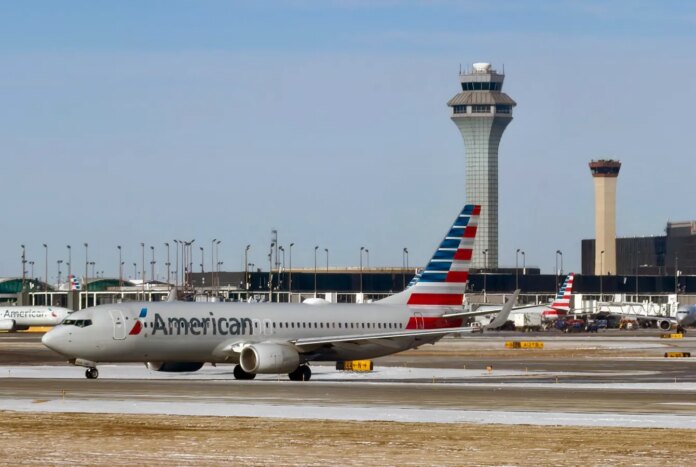
Yesterday’s french fries could help fuel tomorrow’s flights. American Airlines and Google have struck the largest publicly announced sustainable aviation fuel certificate agreement between an airline and a single corporate customer. The agreement would support 35 million gallons of sustainable aviation fuel over three years, with much of the fuel derived from waste feedstocks like used cooking oil.

Corporate demand for lower-emission business travel is supporting airlines’ efforts to meet their net zero 2050 targets and creating a market for fuels made from materials that would once have been discarded.

The SAF deal builds on an ongoing collaboration between the airline and the technology giant to reduce commercial aviation emissions, including efforts to reduce contrails, which are considered a major driver of global warming.

American Airlines And Google Strike Record SAF Deal

According to American Airlines, the agreement is expected to reduce lifecycle greenhouse-gas emissions by nearly 300,000 metric tons of carbon dioxide equivalent.

“Our industry-leading agreement with Google is a critical step forward in reducing emissions from our operations,” said American’s Chief Sustainability Officer Jill Blickstein. “By working with leaders like Google who share our commitment to innovation, we’re helping to grow demand for SAF and support the development of a stronger, more resilient market.”

The airline said the deal enabled it to secure long-term SAF supply from Valero Marketing and Supply Company, with deliveries expected through Chicago O’Hare International Airport.

Chicago was selected specifically because Illinois Governor JB Pritzker and the Illinois General Assembly have enacted an SAF tax credit.

“Illinois is proud to be at the forefront of the clean energy industry. This agreement demonstrates how our nation-leading SAF tax credit can bring industry leaders together as we work toward a more sustainable future,” said Illinois Governor JB Pritzker in the American Airlines announcement. “Through partnerships with innovators like American Airlines and Google, we’re strengthening Illinois’ role as a global aviation hub and accelerating the transition to cleaner energy.”

From Fryers To Flight

Many sustainable aviation fuels currently in use are produced from recycled feedstocks, including waste fats, oils and greases, such as used cooking oil.

Those waste streams are refined into jet fuel that can reduce lifecycle emissions by 80% compared with conventional fossil-derived jet fuel.

This means materials that once ended up in landfills or wastewater systems can be converted into fuel for commercial aircraft.

Why Google Is Buying Sustainable Aviation Fuel

Google said the agreement supports its broader efforts to address emissions associated with employee business travel. The technology company will use Sustainable Aviation Fuel Certificates to help stimulate SAF demand and expand production capacity.

“This strategic collaboration with American Airlines demonstrates how companies can work together to scale critical sustainability technologies,” said Google’s Chief Sustainability Officer Kate Brandt in the airline’s announcement. “By entering into this long-term commitment, we are sending a vital demand signal to catalyze investment and bring more SAF to market.”

This partnership builds on Google’s other efforts to scale SAF production. The company has also helped accelerate the SAF market in Singapore, signed a long-term SAF agreement with AMEX and Shell to source SAF environmental attribute information through the SAF registry, Avelia, and is supporting the United Airlines Ventures Sustainable Flight Fund’s investment in startups advancing SAF research and technology.

SAF Production Needs A Helping Hand

Although SAF is widely regarded as one of aviation’s most important decarbonization tools, production remains limited, and costs are significantly higher than those of conventional jet fuel.

Aviation currently consumes far more fuel than the SAF industry can supply.

Industry groups, including the International Air Transport Association, have repeatedly warned that scaling production will require additional investment, supportive government policies and long-term commitments from both airlines and customers.

This month, IATA published updated estimates showing that global SAF production still has a long way to go to meet airline demand. What supply is available will cost airlines $4.3 billion this year.

“It looks to be another disappointing year for SAF production,” said Willie Walsh, IATA’s Director General, in the airline association’s announcement. “Five years after committing to achieve net zero by 2050, SAF production will only account for 0.8% of airline fuel use this year. The path to meeting 65% of our needs in 2050 is growing more difficult with each year of ineffectively sequenced government policies and oil companies’ manifest lack of interest. The current energy shock should add even more urgency to the development of renewables, including SAF. But we have yet to see either the energy shock, the need to develop energy independence and jobs, or the urgency to mitigate climate change materialize in the incentives needed to create a viable SAF market.”

Corporate customers such as Google can use purchase agreements to create predictable demand, encouraging producers to invest in additional capacity. These agreements help airlines secure supply and help companies address emissions linked to their business travel.

Google And American Apply AI To Reduce Contrails

While ensuring adequate SAF supply will go a long way toward making flying more sustainable, some studies suggest that contrails—the vapor trails aircraft leave along their flight path—may account for a share of aviation’s warming effect comparable to that of CO₂ emissions.

American Airlines and Google have also partnered to apply AI to manage flight paths, reducing the likelihood of contrails by over 60%. Google uses artificial intelligence trained on satellite imagery, weather patterns and flight paths to generate forecast maps of atmospheric regions where contrails would likely form. The airline can simply adjust the flight’s altitude or route to avoid those zones by making slight changes to the flight plan.

During a recent trial, the 112 American Airlines flights that followed the contrail-avoidance flight paths reduced contrail formation by 62%, with up to 69% reduction in warming impact, and “no statistically significant difference” in fuel consumption.

A combination of efforts, from increased production of sustainable aviation fuel to new aircraft technologies, will help bring the airline industry closer to its sustainability targets, but many of these developments will take time to mature. Contrail avoidance is a quick fix that can be implemented immediately and significantly contribute to greener flights.




Source link

Broadcom CEO unnerves biggest AI backers in rattling pivot

0
Broadcom CEO unnerves biggest AI backers in rattling pivot


Broadcom (AVGO) just posted the kind of quarter most chipmakers can only dream about. Record revenue, AI sales up triple digits, and a growing roster of marquee customers.

Then the stock fell.

Shares of Broadcom dropped 12.59% on June 4 to close at $418.91, the steepest one-day fall in over a year.

The slide didn’t stop there. By the close on June 9, the stock sat at $396.60, down 18.64% across five trading days.

The stock’s price drop may be tied to something CEO Hock Tan said.

Why Broadcom stock kept sliding after a record AI quarter

Investors expected Broadcom to raise its AI forecast, but it didn’t.

Instead of lifting the company’s target of more than $100 billion in AI semiconductor revenue by fiscal 2027, Tan reaffirmed it, according to CNBC.

And this made the market uncomfortable.

Then the bigger blow followed.

We are only chips.

Tan said Broadcom will now sell “chips only,” stepping back from the fully integrated AI systems it had previously promised customers, according to the earnings call transcript on Investing.com.

That move dampens hopes for the higher-margin business that investors were counting on.

Broadcom CEO Hock Tan’s earnings-call comments, not the quarterly numbers, drove the selloff.Justin Sullivan / Getty Images

What Broadcom does and how its AI chip business got this big

Most people know Broadcom as a chip company, and that label fits.

It co-designs custom AI accelerators, called XPUs, with individual cloud giants, then sells the networking silicon that links thousands of those chips inside a data center.

That business has exploded. AI semiconductor revenue jumped 143% year over year to $10.8 billion last quarter, while total revenue hit a record $22.19 billion, up 48%, Bloomberg reported.

That run-up made the fall harder.

AVGO had rallied for weeks into earnings, which pushed the bar for success well above the company’s official guidance.

The “chips only” shift that worried Broadcom’s AI backers

Selling chips only means giving up the servers and full systems that carry fatter margins than chips alone do, and the pressure is already showing.

Broadcom guided third-quarter gross margin down to 74% from 77%, because lower-margin AI chips now make up a bigger slice of revenue than its software business, Barron’s reported.

Related: HSBC massively revamps Broadcom’s stock price target

The shift lands hardest on the AI labs that buy Broadcom’s custom silicon.

Tan named Anthropic, Google, Meta, and OpenAI among six core custom-chip customers, all of which design their own silicon through partners to control cost and supply.

Why Google leaning on other suppliers matters for AVGO

Hok Tan acknowledged that Google, Broadcom’s largest AI customer, will likely use more than one chip supplier going forward.

That raises the possibility of Broadcom losing share.

More AI Chip Stocks:

KeyBanc’s John Vinh kept his overweight rating but flagged the risk of Broadcom ceding Google work to MediaTek-based silicon. He named Nvidia as his preferred chip stock, according to CNBC.

Other AI chipmakers fell with it. AMD, Micron, and Marvell all slid.

But this was just a sign that investors were cooling on a few overpriced stocks, not losing faith in AI.

What needs to happen for Broadcom stock to recover

  • Tan raises the $100 billion AI target as fiscal 2027 draws closer, instead of just reaffirming it.

  • Gross margins stabilize as AI volume scales, easing the chips-versus-software mix concern.

  • Google keeps the bulk of its custom-chip orders with Broadcom rather than rivals.

  • Cloud spending holds up, and Alphabet alone has guided to about $190 billion in capital expenditure for 2026, 24/7 Wall St reported.

Broadcom stock versus the S&P 500

Even after the drop, Broadcom has far outpaced the broader market.

AVGO returned about 61.91% over the past year, against 23.42% for the S&P 500, according to Yahoo Finance data.

But that outperformance also carries some risk.

At about 66 times earnings, the stock leaves little room for a stumble, which is why a forecast that failed to exceed expectations triggered such a sharp repricing.

What Broadcom’s pivot means for investors right now

The selloff reflects a reset of stretched expectations, not a loss of faith in AI.

Broadcom’s order book and customer list stay among the strongest in the industry.

Still, the “chips only” call and the unchanged target tell investors that margin expansion may be slowing.

For anyone weighing the stock, the practical question is whether $56 billion in fiscal 2026 AI chip sales, just short of the $57.6 billion Wall Street wanted, still justifies the premium.

Related: Susquehanna resets Broadcom stock target ahead of earnings

This story was originally published by TheStreet on Jun 10, 2026, where it first appeared in the Investing section. Add TheStreet as a Preferred Source by clicking here.


Source link

SpaceX stock price: Elon Musk company’s pre-IPO market has fallen 27% in three weeks

0
Are retail traders selling bitcoin to buy Elon Musk's SpaceX IPO?


A widely-tracked 5x-leverage perpetual on Hyperliquid tied to SpaceX’s impending IPO, expected to be the largest in history, has declined for three consecutive weeks.

The product, tickered as SPCX, traded near $157 on Wednesday, down about 27% from its mid-May launch price of around $216, after briefly touching $230.

That does not mean traders are betting against SpaceX, as SPCX still trades above the $135 IPO price. But the implied first-day premium has been cut hard. In May, the contract priced SpaceX roughly 60% above the offer, and it stood closer to 16% as of Wednesday.

The company set the offer price at $135 per share, with no price range for investors to push it higher or lower during the bookbuild. In most IPOs, bankers collect orders and move the price based on demand. But SpaceX has taken a fixed-price route where investors either take the price or do not.

That leaves the SPCX perp as one of the few places where a SpaceX-linked price is actually moving before the stock opens.

The contract does not give holders shares, allocation rights or any claim on SpaceX. It is a cash-settled derivative that lets traders bet on where the company’s equity value should trade. Unlike an IPO indication of interest, traders in the perp have money at risk and can lose it before the first share changes hands.

The official book still looks huge. Reuters reported that SpaceX has drawn more than $250 billion in investor interest for a $75 billion raise, making the deal several times oversubscribed. Large investors often ask for more stock than they expect to receive, especially in hot deals.

SPCX’s prices suggest traders still expect a premium to the $135 offer.

That may partly reflect broader market pressure. Crypto has weakened into the IPO, and bitcoin remains well below its January high. Some investors may also be raising cash to fund SpaceX allocations, adding pressure to the same risk market where SPCX trades.


Source link

Daily ETF Flows: GLD Loses $702M

0
Daily ETF Flows: GLD Loses $702M


etf.com

Top 10 Creations (All ETFs)

Ticker

Name

Net Flows ($, mm)

AUM ($, mm)

AUM % Change

VOO

Vanguard S&P 500 ETF

4,470.05

1,000,589.08

0.45%

QQQ

Invesco QQQ Trust Series I

1,739.57

494,705.07

0.35%

SOXX

iShares Semiconductor ETF

722.76

41,197.40

1.75%

DIA

SPDR Dow Jones Industrial Average ETF Trust

542.40

45,248.20

1.20%

XLF

Financial Select Sector SPDR Fund

503.69

49,439.67

1.02%

RSP

Invesco S&P 500 Equal Weight ETF

484.75

90,773.65

0.53%

XLP

Consumer Staples Select Sector SPDR Fund

438.80

14,436.93

3.04%

IVV

iShares Core S&P 500 ETF

418.28

855,418.77

0.05%

SOXL

Direxion Daily Semiconductor Bull 3x Shares

367.27

28,975.25

1.27%

SGOV

iShares 0-3 Month Treasury Bond ETF

366.53

93,600.17

0.39%

Top 10 Redemptions (All ETFs)

Ticker

Name

Net Flows ($, mm)

AUM ($, mm)

AUM % Change

SPYM

SPDR Portfolio S&P 500 ETF

-1,002.41

148,481.02

-0.68%

GLD

SPDR Gold Shares

-701.78

147,456.80

-0.48%

EFV

iShares MSCI EAFE Value ETF

-438.71

26,134.32

-1.68%

AVLV

Avantis U.S. Large Cap Value ETF

-431.17

13,141.48

-3.28%

IWM

iShares Russell 2000 ETF

-408.71

80,238.12

-0.51%

TLT

iShares 20+ Year Treasury Bond ETF

-282.09

40,749.10

-0.69%

SPYG

SPDR Portfolio S&P 500 Growth ETF

-248.35

53,425.39

-0.46%

XLE

Energy Select Sector SPDR Fund

-237.95

39,863.07

-0.60%

AVUV

Avantis U.S. Small Cap Value ETF

-203.95

27,663.95

-0.74%

BUFM

AB Moderate Buffer ETF

-190.48

416.41

-45.74%

ETF Daily Flows By Asset Class


Net Flows ($, mm)

AUM ($, mm)

% of AUM

Alternatives

455.03

138,441.07

0.33%

Asset Allocation

135.68

41,491.46

0.33%

Commodities E T Fs

-610.08

351,191.83

-0.17%

Currency

-36.53

99,565.41

-0.04%

International Equity

1,354.89

2,863,227.83

0.05%

International Fixed Income

283.46

426,298.39

0.07%

Inverse

-317.14

14,438.12

-2.20%

Leveraged

904.60

213,654.02

0.42%

Us Equity

11,096.35

9,517,867.73

0.12%

Us Fixed Income

2,237.73

2,104,936.18

0.11%

Total:

15,503.99

15,771,112.02

0.10%

Disclaimer: All data as of 6 a.m. Eastern time the date the article is published. Data is believed to be accurate; however, transient market data is often subject to subsequent revision and correction by the exchanges.

Permalink | © Copyright 2026 etf.com. All rights reserved


Source link

Worldcoin – All about WLD’s 12% price surge after buyers return to the market

0
Worldcoin - All about WLD's 12% price surge after buyers return to the market


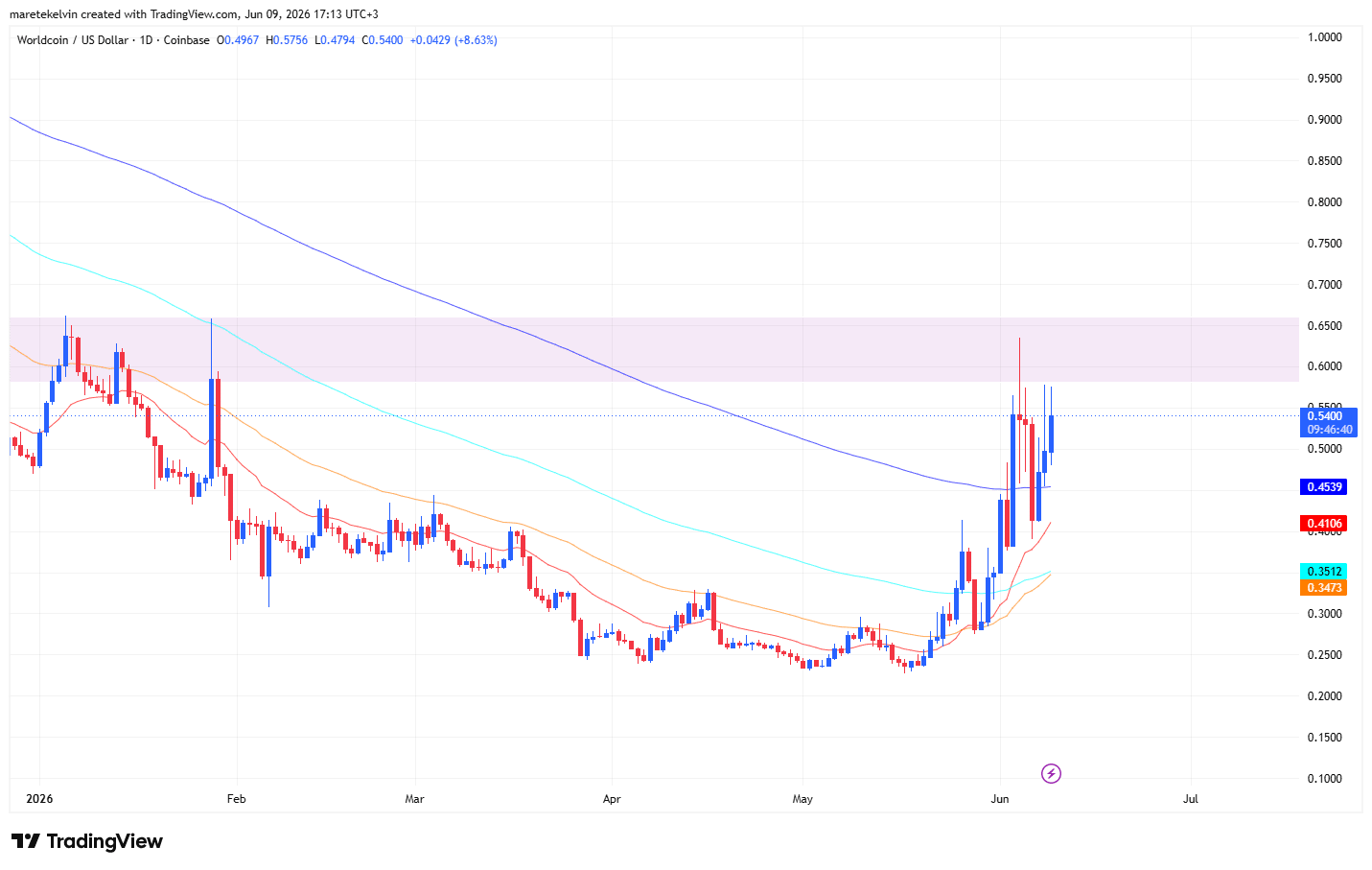
WLD emerged as among the stronger performers in the market today after posting notable gains over the last 24 hours. This, after the token’s prices  surged by 12% to $0.54.

This move came on the back of buyers become increasingly aggressive, helping the altcoin build on its recent momentum on the charts.

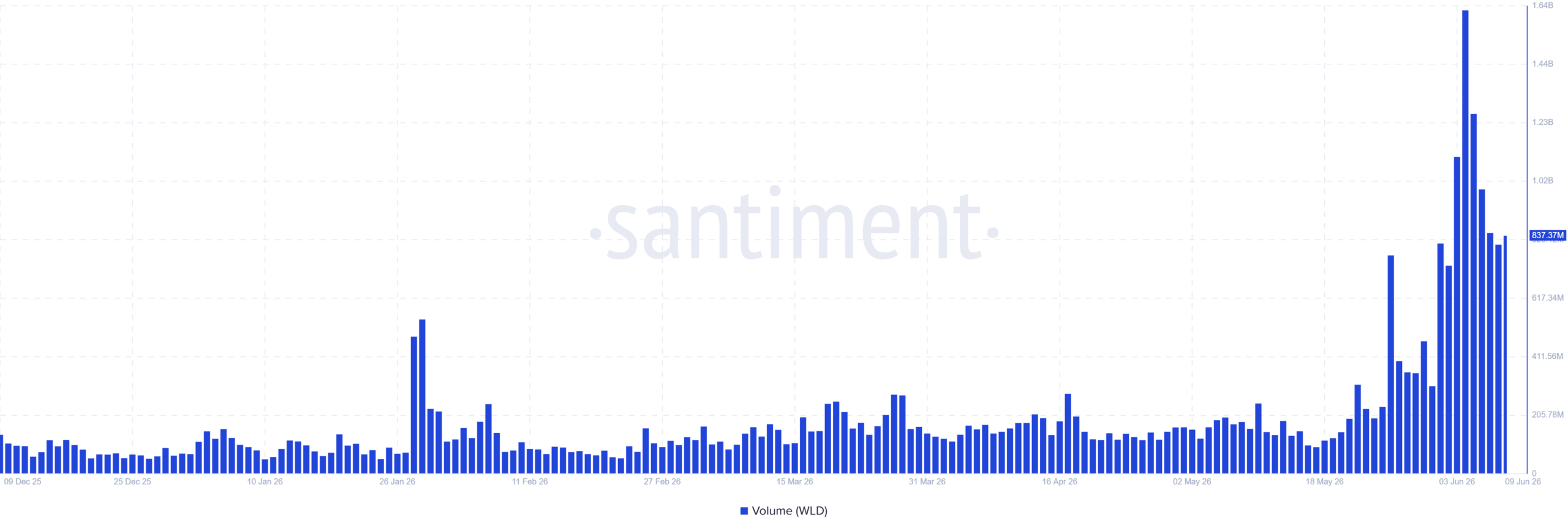
Trading volume also picked up sharply during the rally, suggesting the move may be attracting broader market attention rather than being driven by a handful of trades. The network’s trading volume recorded a 13% surge to $1.83 billion.

WLD trading Volume
Source: Santiment

Buyers are back in charge 

For much of the recent market weakness, sellers had little trouble pushing the prices lower. That dynamic might be changing though.

Recent order flow data revealed buyers taking a larger share of market activity. This might explain why Worldcoin [WLD] has been able to sustain its gains throughout the session. In fact, long positions accounted for 62% of the total market exposure at press time.

The rise in volume seemed to support that view too. More traders have been participating in the move, giving bulls a stronger foundation than they had during previous recovery attempts.

WLD long short ratioWLD long short ratio
Source: Coinalyze

Is institutional demand also on the rise?

At the time of writing, institutional dynamics appeared to be in support of the positive buyer sentiments. This, after a period of playing averse to the ongoing volatile market. 

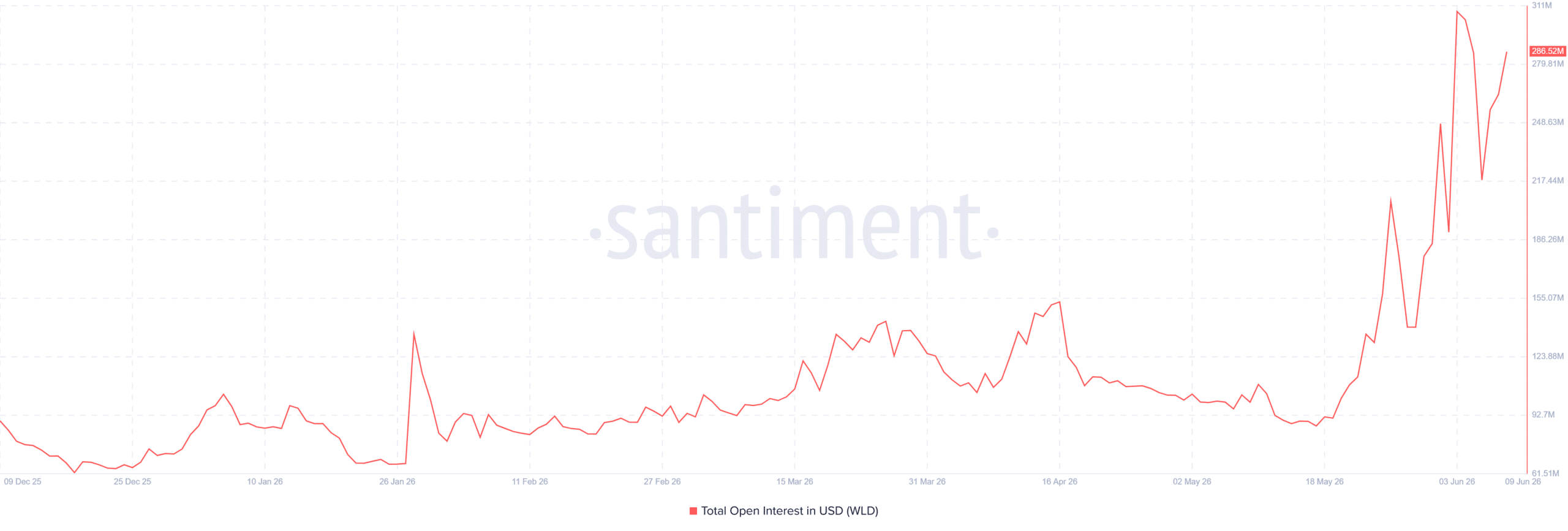
The network’s Total Open Interest, for instance, recorded a daily uptick of $70 million to hit a value of $286 million. 

WLD open interestsWLD open interests
Source: Santiment

Can WLD keep pushing higher?

The latest rally doesn’t automatically confirm a trend reversal, but it does show a clear shift in sentiment. At press time, the token was trading above a key EMA support with the demand zone between $0.58 to $0.65 the only key barrier ahead.

Buyers had momentum, volume was rising, and market participation seemed to be improving too. If those conditions remain in place, WLD could continue building on its recent gains in the sessions ahead.

All in all, WLD buyers showed up, volume followed, and WLD responded. That’s why the token is one of the market’s standout performers today.

WLD price analysisWLD price analysis
Source: TradingView

Final Summary


Source link

Live bitcoin updates: What next for bitcoin as it faces headwinds from Fed rates to Claude’s Mythos

0
Live bitcoin updates: What next for bitcoin as it faces headwinds from Fed rates to Claude's Mythos

Anthropic released Claude Fable 5 on Tuesday, its most capable public model running on Mythos, as it pursues a fall listing it has already filed for confidentially alongside OpenAI, which filed Monday, and SpaceX.

Mythos is Anthropic’s most advanced tier of artificial intelligence models, and Fable is the first publicly released version of this powerful underlying architecture but it comes with strict built-in safety filters.

Bitcoin has spent the past week trading as the high-beta arm of the Nasdaq, sliding with chipmakers and Asian tech as the AI trade unwound. An Anthropic listing, after its $65 billion round at a $965 billion valuation, would hand index funds and retail traders a single AI-lab stock to pile into. Crypto already moves with the AI trade, and giving that trade its own ticker only tightens its grip.

AI-linked tokens caught a modest bid on Fable’s launch while bitcoin barely moved, because model releases are narrative for the sector’s small caps while the majors now trade on what the AI trade does to risk appetite, not on the models themselves.


Source link

102-year-old fashion giant faces 400 store closures

0
102-year-old fashion giant faces 400 store closures


A major international retailer is preparing for a significant overhaul of its store network after warning that dozens of locations will close and hundreds more are under review.

The company’s latest results show a business facing growing profitability challenges despite continued revenue growth. Its performance reflects broader pressures across the apparel industry, where rising operating costs and softer discretionary spending have weighed on margins even as sales remain resilient.

Consumer shopping habits continue to evolve as online channels capture a larger share of retail spending. At the same time, shoppers remain selective with discretionary purchases, prompting many established brands to reassess their store networks while investing more heavily in e-commerce and omnichannel capabilities.

Founded in 1924, The Foschini Group (TFG) is a South Africa-based multinational retail company that owns 39 brands spanning apparel, footwear, jewelry, beauty, technology, and home goods.

TFG identifies hundreds of underperforming stores

TFG revealed plans to close at least 100 stores over the next fiscal year while reviewing approximately 300 underperforming locations across its portfolio.

However, the company stressed that permanent closures remain a last resort.

“Closing stores is absolutely the last resort after you’ve tried everything else,” said TFG CEO Anthony Thunström in an interview with the Sunday Times. “We look to see whether one of our other brands would perhaps trade better in that store, in that location.”

The retailer operates more than 4,900 outlets across 23 countries, with business segments across Africa, London, and Australia.

Rather than immediately shutting down locations, TFG is pursuing several initiatives to improve profitability. These include optimizing store space, reducing inventory purchases, and leveraging physical locations to support online fulfillment.

“Given the impact of a poor economy on store profitability and the extent of our online penetration, we are closing underperforming and marginal stores and sharpening our brand portfolio,” said Thunström in the company’s latest earnings call.

The retailer also plans to convert portions of select stores into fulfillment hubs for online orders as digital sales continue to grow. Management expects tighter inventory controls and improved product mix decisions to help support higher gross margins in the coming year.

Why TFG is closing stores

The retailer’s restructuring efforts come after a challenging financial year.

According to TFG’s fiscal 2026 annual results, group revenue increased 7.2%, but profitability declined sharply. Group operating profit fell 22.1%, while headline earnings per share dropped 33.5%.


Source link