For all the focus on bitcoin’s order flow, the event that decides the next move might just be sitting in equities.
Major market-maker Wintermute said in a Tuesday note that a catalyst for bitcoin and the broader crypto market is SpaceX’s stock market debut on June 12.
The listing is gauge of retail and risk appetite. If investors absorb the deal well, it reads as a good sign for crypto. Wintermute said, that points to exhaustion across risk assets and would be bearish for the whole complex.
Wintermute said last week’s drop was about a missing bid, not Strategy’s bitcoin sale.
On its over-the-counter desk, where large trades happen off exchanges, retail had been selling for a while and moving into stocks. US institutions were offloading the bitcoin they bought a month ago.
Wintermute added some of the recent selling in AI stocks looks like investors raising cash for a run of huge IPOs, with SpaceX first. The money going into those deals has to come from somewhere, and right now some of it is leaving crypto and tech.
There is also no chart to lean on, however. Bitcoin never traded much between $50,000 and $59,000 on the way up in 2024, so there are no real support levels underneath.
Bitcoin traded near $63,000 on Tuesday, according to CoinDesk data, down about 14% over the past week. SpaceX prices on June 11 and begins trading the next day.
Is DOCN a good stock to buy? We came across a bullish thesis on DigitalOcean Holdings, Inc. on Investment Management Academy’s Substack. In this article, we will summarize the bulls’ thesis on DOCN. DigitalOcean Holdings, Inc.’s share was trading at $151.91 as of May 28th. DOCN’s trailing and forward P/E were 66.63 and 147.06 respectively according to Yahoo Finance.
DigitalOcean Holdings, Inc., through its subsidiaries, operates an agentic inference cloud platform in North America, Europe, Asia, and internationally. DOCN is presented as a rapidly re-rating cloud infrastructure company benefiting from accelerating AI inference adoption across its developer and mid-market customer base. The company operates a usage-based cloud platform serving developers, startups, and scaling businesses, with strong traction in higher-value cohorts now driving the investment case.
DigitalOcean’s digital banking, retail-like cloud simplicity model is less relevant; main is AI inference cloud positioning under its Gradient platform, enabling predictable deployment of AI applications. Bull case centers on customers expanding spend, with net dollar retention reaching 102% for $100K+ users, 106% for $500K+, and 115% for $1M+ accounts, contradicting the SMB churn narrative. Management argues AI-native workloads are shifting from training to inference, a structurally recurring demand layer aligned with DigitalOcean’s cost-efficient infrastructure.
The stock has already re-rated sharply, trading around $87 versus a March 2026 initiation at $52.93, exceeding the $78.04 base target (+32%) and approaching the $93.66 upside case (+58%). Revenue growth is expected to accelerate toward 21% in FY26 and 30% in FY27 with expanding Scalers+ adoption. Margin expansion and operating leverage support a potential Rule of 50 profile by 2027 under upside conditions.
Key catalysts include Q1 2026 AI adoption metrics, GPU usage, and product launches such as Gradient Agent Kit and OpenClaw deployments. Risks include hyperscaler pricing pressure and capacity timing, though retention and enterprise-grade AI workloads mitigate downside. Overall, DigitalOcean is increasingly viewed as a credible AI inference cloud winner with asymmetric upside if AI-driven ARPU expansion sustains over the long term outlook.
Previously, we covered a bullish thesis on DigitalOcean Holdings, Inc. (DOCN) by Rene Sellmann in May 2025, which highlighted SMB-focused cloud, improving upmarket expansion, and rising customer cohorts. DOCN’s stock price has appreciated by approximately 427.09% since our coverage. Investment Management Academy shares a similar view but emphasizes AI inference-driven re-rating, accelerating NDR, and Gradient-led growth narrative.
Strategy is back to buying Bitcoin [BTC] after selling a small part of its holdings last week. Interesting timing, because long-term Bitcoin holders have been seeing much lower profits than before lately.
Needless to say, this puts Bitcoin in a tricky zone.
Strategy adds 1,550 BTC
According to former CEO Michael Saylor’s announcement, Strategy acquired 1,550 BTC for about $101 million. That takes its total Bitcoin reserves to 845,256 BTC.
The purchase came shortly after last week’s sale of 32 Bitcoin. This sale raised too many eyebrows because the company is widely known for steadily accumulating.
Alongside this new purchase, Strategy also increased its USD reserves by $100 million, bringing it to $1 billion.
LTH MVRV falls, long-term holder profits slow down
Again, the timing here is pretty notable because long-term holders have been feeling the heat.
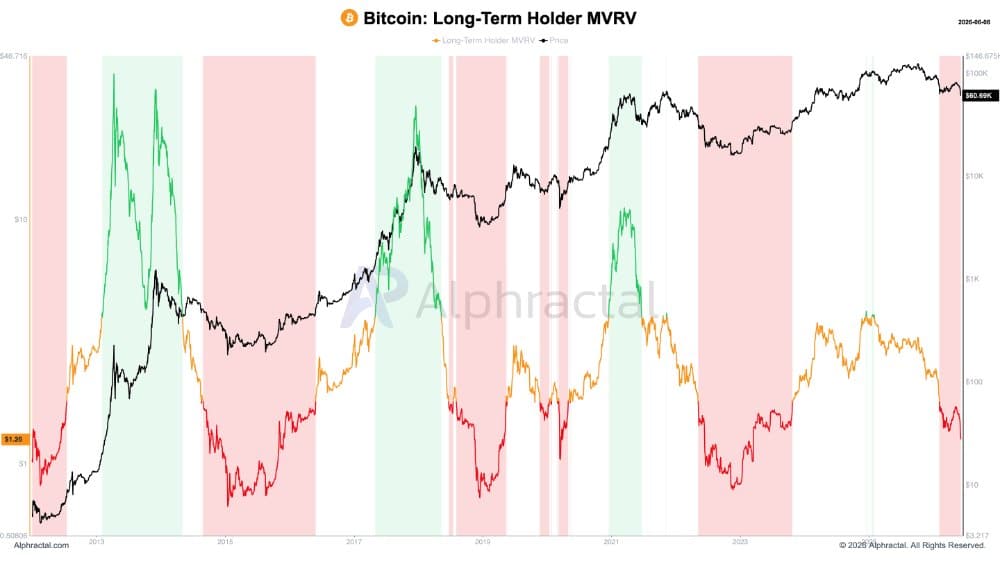
Bitcoin’s Long-Term Holder MVRV ratio dropped to 1.26, according to data from Alphractal. This suggested that this group has been sitting on modest unrealized profits on average.
Source: Alphractal
These readings usually come around difficult phases. In the past, the metric stayed low for weeks or even months before a clearer trend came about. So, this does not guarantee a breakout.
Bitcoin may be moving closer to a buying area, but the market still needs to confirm it.
Bitcoin holds near $63K
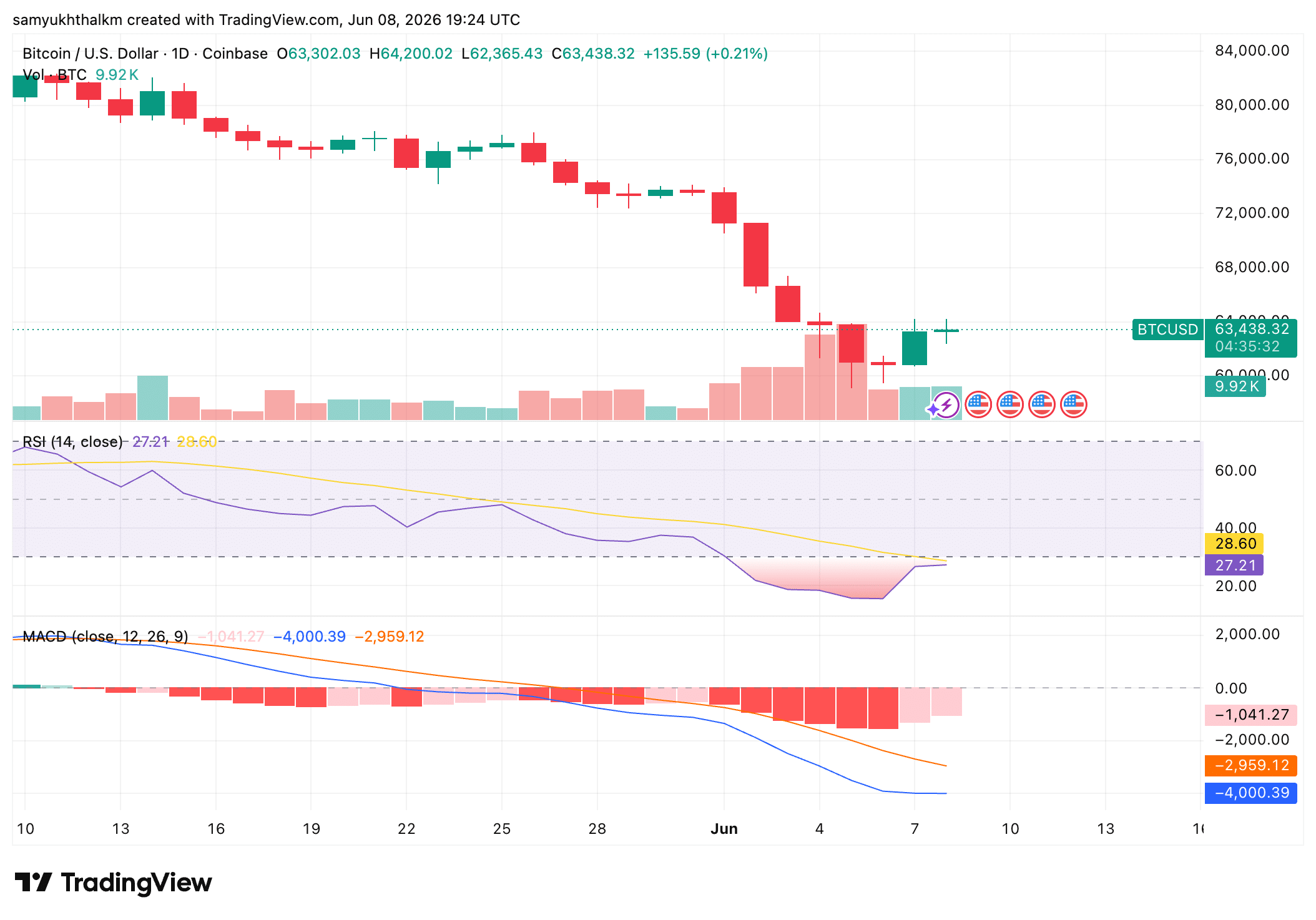
At press time, the price chart also revealed why the market is not out of the woods yet. Bitcoin was trading near $63K after a fall, and the short-term trend seemed heavy.
AMBCrypto previously reported that whale activity picked up near the $60K-zone. One large holder bought BTC near $59.7K and later moved it to Binance for a quick profit.
Here, it’s worth noting that quick whale profit-taking can create resistance even when Bitcoin attempts to recover.
Source: TradingView
The RSI indicated oversold conditions. While that can sometimes lead to a relief bounce, it does not confirm a full recovery.
The MACD was also negative, meaning that the bearish pace hadn’t gone away either.
Final Summary
Strategy added 1,550 BTC worth $101 million.
Bitcoin’s trend retained its weakness as the LTH MVRV fell to 1.26.
While bitcoin BTC$63,712.70-holder listed firm Strategy’s chairman Michael Saylor blamed the AI boom for last week’s bitcoin selloff, crypto investment firm Arca is pointing the finger squarely at Saylor himself.
“The selling pressure last week was clearly due to the Saylor/MSTR news,” wrote Arca’s Chief Investment Officer Jeff Dorman in his weekly note, pushing back on what he called “gaslighting from MSTR and other Bitcoin bulls.”
Bitcoin, the leading cryptocurrency by market value fell nearly 14% to $60,000 last week. The sell-off happened after Strategy on June 1 disclosed that it sold 32 BTC in the preceding week. Strategy still holds 845,256 BTC worth billions of dollars.
Saylor attributed the sharp slide to AI infrastructure spending absorbing capital at historic scale.
“The AI buildout is absorbing capital at a historic scale, creating temporary pressure across global markets. That does not weaken Bitcoin. It strengthens the case for scarce, liquid, digital capital. Bitcoin remains the premier asset for the long term,” Saylor said.
Arca isn’t buying it.
Dorman’s argument is straightforward. What crashed the market waqs not the amount of BTC sold, which was just 32, worth roughly $2.5 million, but the realization of what that sale implied: that Strategy may need to sell significantly more bitcoin to meet the cash dividend obligations on its preferred shares, including STRC.
In Arca’s view, Saylor has made a series of missteps over the past three weeks. He used his only cash to pay off zero-coupon debt, then rattled markets by teasing a $2.5 million bitcoin sale, which is barely enough to cover one month’s preferred dividends. Strategy currently has roughly five months of cash flow remaining, Dorman noted, leaving the market to wonder what comes next.
The bullish scenario
Dorman says there is one scenario that could stabilize things quickly. If Saylor announces via 8-K filing that Strategy has raised $2 to $4 billion by selling MSTR stock and bitcoin, enough to cover preferred dividends through September 2028, Dorman believes markets would rally sharply. That buffer would remove the forced-seller overhang and give bitcoin room to breathe.
But Dorman doesn’t think Saylor will do it.
“Saylor is basically addicted to buying Bitcoin,” he wrote, suggesting the more likely outcome is continued drip selling, just enough each month to cover the dividend, which keeps steady pressure on the market.
“When the world’s biggest buyer becomes a forced seller, the market will keep pressing until there is blood,” Dorman wrote.
The bright spot
Last week’s BTC selloff was initially confined to Bitcoin itself and did not immediately spill over into the wider market, a bright spot that points to growing market sophistication, according to Dorman.
BTC’s dominance rate, or its share of the total crypto market, fell for the second consecutive week, hitting lows under 58% for the first time since September.
He noted that early in the week, bitcoin fell on its own idiosyncratic news while other crypto assets held steady. This, he said, was a clear sign that investors are now assessing each digital asset on its individual risk profile rather than indiscriminately selling everything when the market leader weakens.
“If BTC can move lower on its own idiosyncratic bad news without taking down the whole market, this would be yet another sign that digital asset market participants are becoming more sophisticated,” he added.
By week’s end though, BTC’s selloff became too intense and most assets joined the downtrend.
HIVE Digital Technologies Ltd. (NASDAQ:HIVE) is one of the top penny stocks to buy in investors’ stock portfolio. On June 1, co-founder and executive chairman Frank Holmes reiterated that 2026 is turning out to be a defining year for HIVE Digital Technologies Ltd (NASDAQ:HIVE).
HIVE-insidermonkey-1700971883257.jpg
The sentiment comes as the company becomes the first publicly traded Bitcoin miner to diversify its footprint by investing in GPU cloud computing and AI infrastructure. In addition, the company has expanded its platform, resulting in a significant increase in Bitcoin mining hashrate from 6.5 EH/s to 25.1 EH/s and a growing contracted HPC ARR to $35 million.
The significant hashrate increase resulted in solid full-year fiscal 2026 results, with revenue up 158% to $297.8 million and gross operating margin increasing 329% to $107.9 million. Adjusted EBITDA reached $72.9 million for the full fiscal year 2026. Digital currency revenue was up 164% in the year to $278.3 million as HIVE Digital Technologies mined 2,885 Bitcoin, up 104%. High-performance computing (HPC) revenue was up 94% year over year to $19.5 million.
“Looking ahead, HIVE sits at the intersection of two powerful technology trends: Bitcoin and AI. Our mandate remains unchanged: disciplined, high-ROIC growth powered by 100% green energy. We believe the investments we have made over the past several years position HIVE for one of the most significant growth periods in our history,” Holmes said.
HIVE Digital Technologies Ltd. (NASDAQ:HIVE) is a digital infrastructure company that builds and operates green-energy-powered data centers for cryptocurrency mining and high-performance computing (HPC) to support Artificial Intelligence (AI) workloads.
While we acknowledge the potential of HIVE as an investment, we believe certain AI stocks offer greater upside potential and carry less downside risk. If you’re looking for an extremely undervalued AI stock that also stands to benefit significantly from Trump-era tariffs and the onshoring trend, see our free report on thebest short-term AI stock.
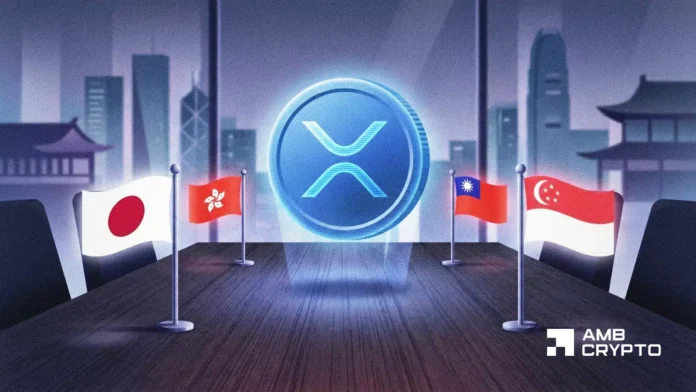
Across Asia, regulators continue to tighten stablecoin rules as governments aim to control risk and improve payment efficiency. Japan, Singapore, and Hong Kong enforce licensing, reserve backing, and redemption standards to make digital tokens behave like regulated financial instruments.
At the same time, the Ripple [XRP] ecosystem records steady activity. It processes 1.83 million daily transactions and holds 7.3 million addresses, which signals consistent network use rather than speculative spikes.
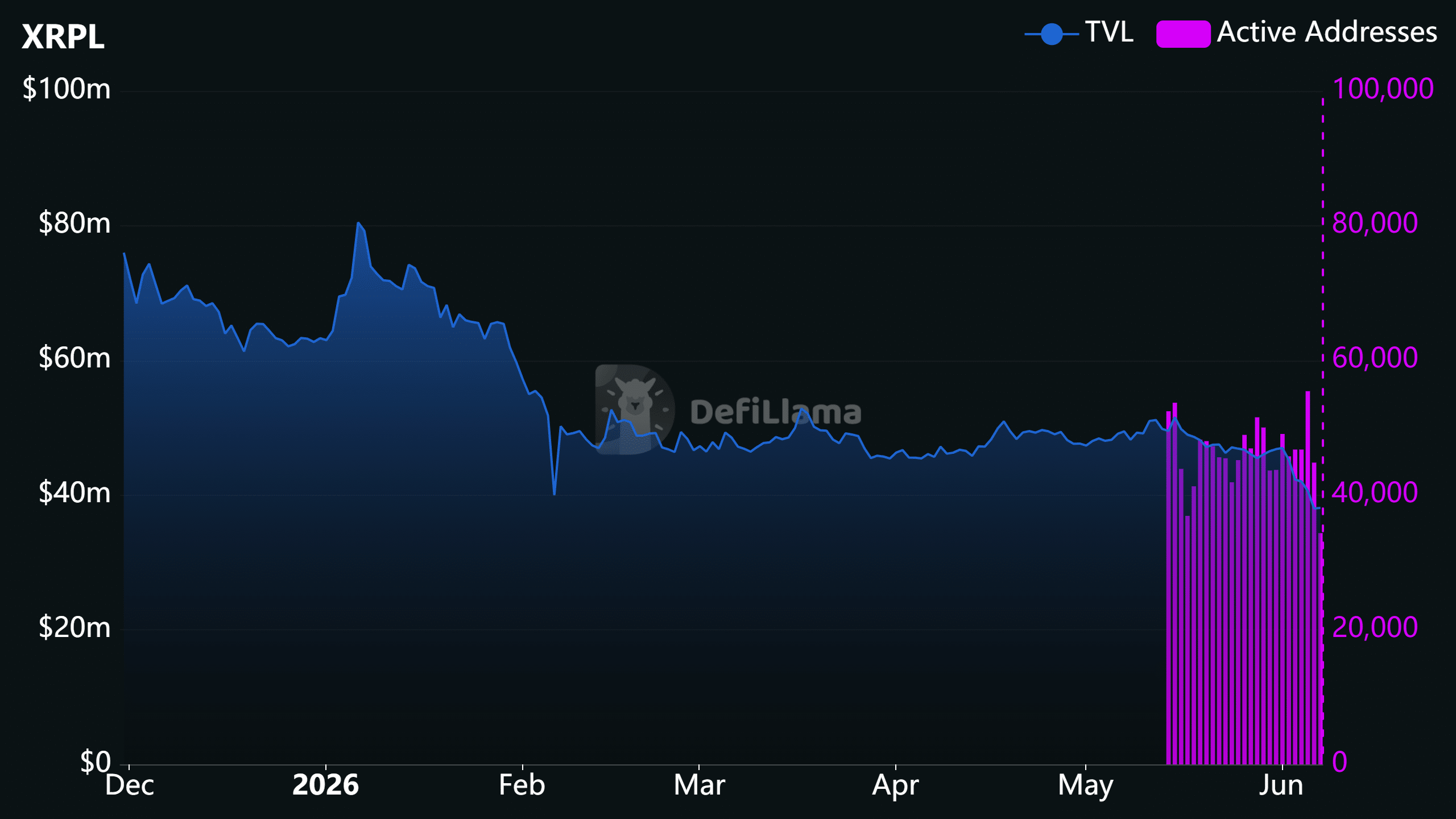
Meanwhile, stablecoin value on XRPL rose above $760 million, while active addresses stayed near 35,000. As a result of clearer regulations, investors and developers are shifting focus toward infrastructure instead of short-term trading.
Source: DeFiLlama
In fact, Brinc and Ripple are funding startups in Hong Kong that build payment and settlement tools on XRPL. This shift shows Asia moving toward regulated settlement rails that connect blockchain systems directly with traditional finance.
Japan advances Stablecoins and ETF rules
Japan has moved to formalize stablecoin settlement and crypto ETF rules as it responds to shifting global financial dynamics.
On the 1st of June, a ruling party panel urged the government to expand yen-based stablecoin use for Asian settlement while also creating a legal framework for crypto ETFs.
Source: Reuters
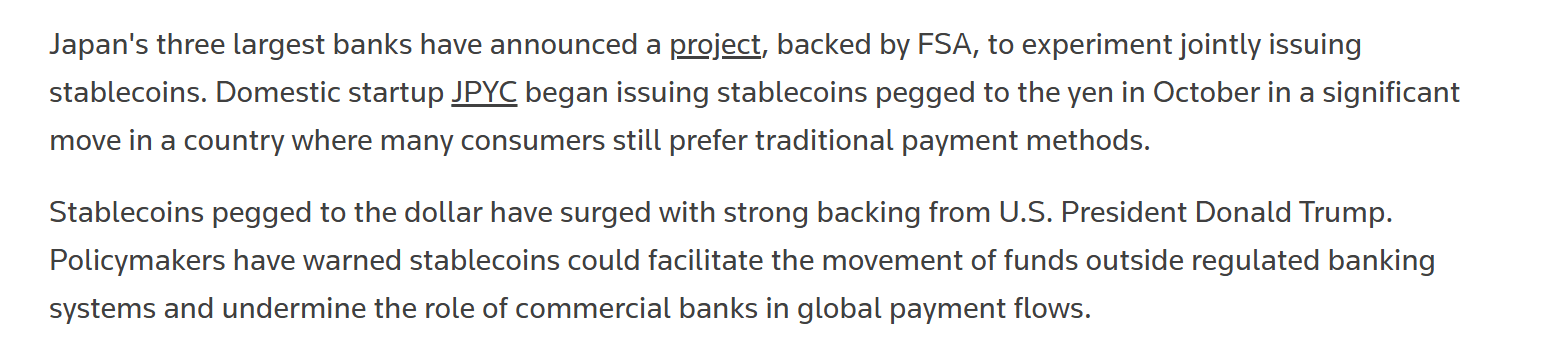
The proposal aimed to structure adoption as dollar stablecoins dominate cross-border liquidity and pressure increases for local alternatives. Meanwhile, Japanese banks test joint stablecoin issuance, and JPYC circulates yen-pegged tokens in limited use within a cash-heavy economy.
Source: Reuters
In parallel, the FSA supports blockchain pilots focused on internal efficiency. Overall, Japan channels crypto into regulated financial instruments.
In fact, Bank of Japan Deputy Governor Ryozo Himino advocated a balanced monetary system approach, cautioning against relying solely on CBDCs or stablecoins in future financial design.
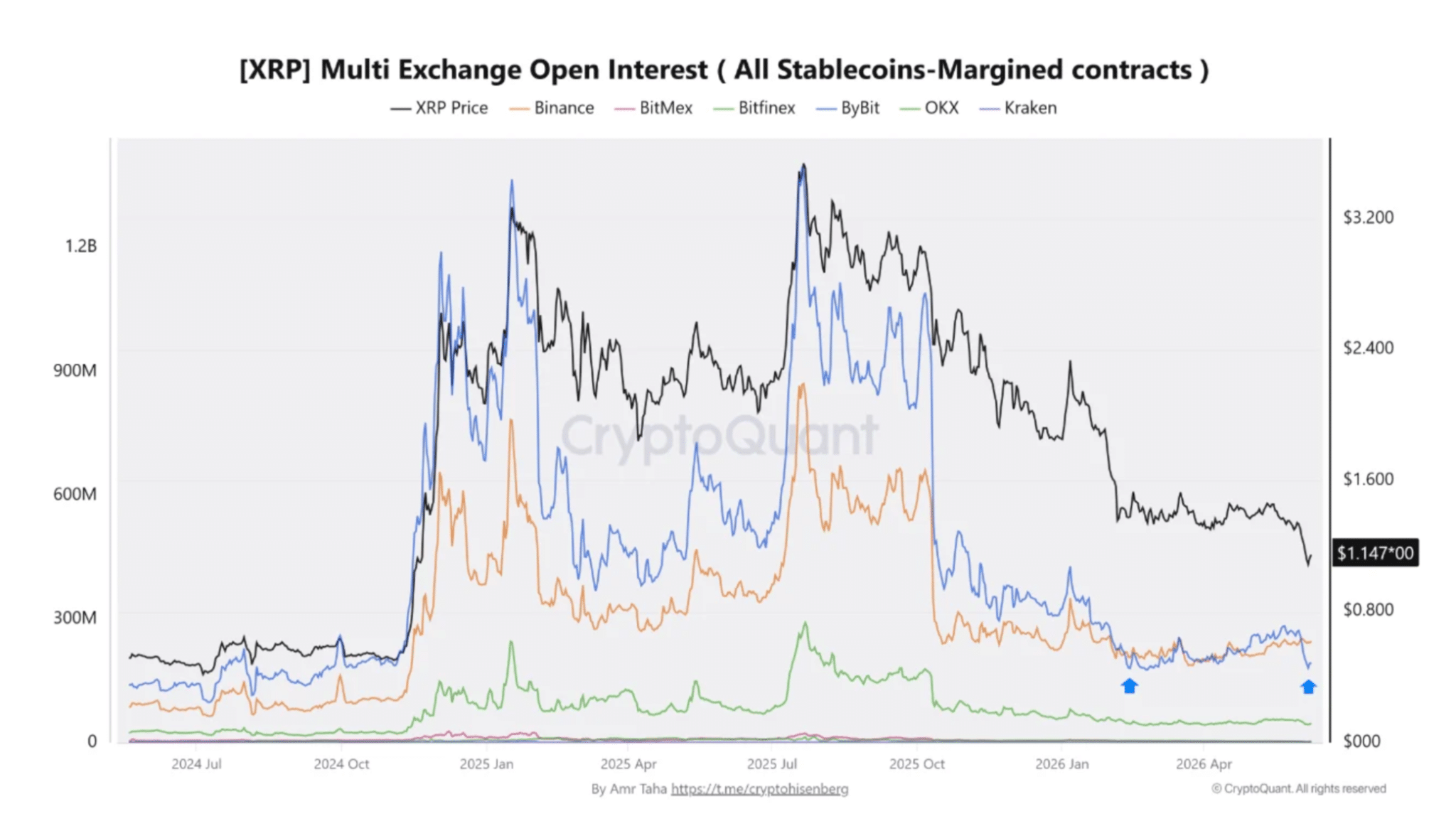
That said, XRP Open Interest across major exchanges has pulled back after earlier spikes.
On Bybit, positions fell sharply by 36% from a May peak of $283 million to around $181 million, marking a clear reset driven by deleveraging during the recent sell-off and long liquidations.
Source: CryptoQuant
Binance, however, has remained relatively stable. Open Interest only eased slightly to $246 million, just 2.4% below its June high of $252 million, keeping it dominant in futures activity.
At the same time, XRP rebounded above $1.14 after dipping to $1.055, posting gains of over 8%.
All together, one side of the market has flushed leverage, while the other still holds elevated positioning that could shape the next directional move.
Final Summary
Ripple [XRP] shows steady network usage and rising XRPL stablecoin flows as Asia tightens regulatory settlement frameworks.
Asia regulation accelerates XRP adoption into institutional settlement systems and broader blockchain infrastructure integration.
Brian Schimpf, CEO of defense tech company Anduril, says that the nature of modern armed conflict has fundamentally shifted—and that the U.S. military’s supply chain is dangerously unprepared for it.
“The U.S. and Israel did something like ten times as many strikes in the first month of the war as they did in the entire Gulf War,” Schimpf said at Fortune‘s Brainstorm Tech conference in Aspen on Monday. “This is the new normal of what these conflicts are going to look like.”
Schimpf’s remarks opened on a pointed note: back in March, when he was interviewed for a profile of Anduril in Fortune, he predicted that the Strait of Hormuz could still be blocked by the time the Brainstorm Tech conference rolled around. It was.
For Schimpf, that’s not an anomaly, it’s the new blueprint. Modern conflicts, he argued, are no longer primarily about destroying military assets; they’re about strangling economies. Data centers, oil refineries, and shipping lanes are the targets now, and low-cost drones have made striking them cheaper than ever. “The economic warfare that is effectively the Strait of Hormuz, this is the new normal of what these conflicts are going to look like,” he said.
For the U.S. he said, the new reality is a particularly tricky problem. It’s “essentially impossible to inflict economic pain on China without catastrophic economic pain on the U.S.,” Schimpf said.
That logic flows directly into how he thinks about Anduril’s business. Schimpf was especially candid about supply chain fragility. He noted that the U.S. fired through roughly 850 Tomahawk missiles in four weeks of conflict with Iran—burning through a stockpile that the Pentagon had been replenishing at a rate of about 90 per year.
His proposed solution is not just redesigning weapons to be more manufacturable—it’s moving upstream into raw materials. “We’re looking at how do we secure supply of germanium years out,” he said, pointing to China’s systematic acquisition of critical minerals, including rare earth magnets and copper film suppliers, as a strategic stranglehold the U.S. has been slow to counter.
The CEO was equally as candid speaking about the current defense tech valuation frenzy—where some companies are raising at 50x or even 100x forward revenue. “I do think there is a bit of a bubble.” He invoked the Uber-and-Lyft dynamic, arguing that in any hot category, roughly 90% of returns accrue to the top two players, and that companies chasing stratospheric valuations are setting themselves up for an impossible growth bar. Anduril has been deliberate about its own pricing, he said, but acknowledged the temptation is real.
An Anduril listing on the public markets is a long-running subject of speculation. Schimpf, when pressed on the IPO question, declined to give a timeline. In March, the company raised a $5 billion Series H raise at a $61 billion valuation, led by venture capital firms Thrive Capital and Andreessen Horowitz. Last week, Anduril cofounder Trae Stephens told Fortune he saw the company ideally going public in the next couple of years.
Schimpf, however, made an argument for the advantage of remaining private. “Right now, we’re in a hype-y time. We’re growing like crazy. Why would we go out right now? We don’t need to, he said.” Schimpf laid out a simple 3-point framework for contemplating an IPO: If you go public in the middle of a “hype cycle,” when growth is slowing, or when you’re more than two years from profitability, and you’ll have a bad three-year stock return. Anduril checks at least one of those boxes, he said, citing the current industry-wide hype cycle, and therefore sees no rush.