Home Blog Page 82

Why tokenization is an ETF-style market structure revolution

0
Why tokenization is an ETF-style market structure revolution

In the 1990s, exchange-traded funds (ETFs) were a novel idea. Many saw them simply as a new wrapper for traditional assets – a convenient repackaging of mutual funds. In reality, ETFs triggered a market structure revolution. By introducing creation/redemption mechanisms and arbitrage-driven liquidity, ETFs fundamentally changed how markets functioned and how investors accessed assets. ETFs blurred the line between primary and secondary markets and turned arbitrage into the mechanism for holding the system together.

How does tokenization mirror the ETFs market structure revolution? In almost every key aspect.

A robust tokenized asset isn’t simply “issued” once like a stock or bond – it typically can be minted or burned on demand against some pool of underlying assets or rights. For example, when a token represents shares of a fund or stock, authorized participants (or smart contracts acting as such) should be able to deposit the underlying and mint new tokens or redeem tokens for the underlying assets.

If the token trades above the value of its underlying holdings, arbitrageurs will mint new tokens (injecting supply) until prices realign; if it trades below, they will redeem tokens (reducing supply) until the discount closes. The economic principle is identical to ETFs. The token is a wrapper on the same assets, and arbitrage keeps its price honest.

With respect to both ETFs and tokenization, the wrapper is simply a liquid representation of a basket of economic exposures. An ETF share is not the underlying securities themselves, but a standardized claim on a basket that trades efficiently because creation and redemption keep it aligned with the underlying assets. Tokenization follows the same logic. The token becomes the liquid instrument, while the underlying assets remain the economic anchor. What matters is not the form of the wrapper, but the strength of the arbitrage link between wrapper and basket.

ETFs already represented a major leap in transparency by making baskets of assets trade continuously on-exchange, with visible prices, intraday liquidity, and alignment with underlying value through arbitrage. Tokenization builds on this foundation. Where blockchains can go further is in making issuance, transfers and outstanding supply observable in near real time, potentially widening visibility into how the wrapper evolves relative to the underlying basket.

One of the most important features of tokenized markets is their ability to trade continuously, even when underlying markets are closed. For anyone who has traded ETFs globally, this is not new but a familiar and highly valuable market‑structure capability. Continuous trading outside local market hours allows prices to incorporate new information as it emerges, rather than waiting for the next open, and enables investors across time zones to transfer risk when they actually need to. These prices reflect informed expectations — built using correlated instruments, futures, FX, and broader market signals — in the same way international and cross‑timezone ETFs have operated for decades.

U.S.-listed ETFs that hold European or Asian equities already demonstrate how credible pricing can exist when the underlying cash market is closed. Those ETFs continue to trade during the U.S. session even after Europe or Asia has shut, and their market price naturally reflects updated expectations — based on futures, FX, ADRs, macro news and other correlated signals — rather than stale closing prints. In practice, authorized participants and market makers continuously estimate an “intrinsic fair value” for the ETF, including an expected next-open price for holdings in closed markets, and quote around that to keep the ETF’s market price anchored to that fair value.

The same concept can be applied to tokenized Apple stock, for example, which can trade on Saturday based on the evaluation of Apple’s likely next trading price come Monday. If big news broke on Saturday, you’d see the token react immediately. Liquidity providers would quote a price that factors in that news, likely hedging with any related instruments, such as Nasdaq futures, if available. By Monday’s open, Apple’s real stock price would likely catch up to wherever the token traded over the weekend. In effect, the token becomes a leading indicator for the underlying stock.

Market participants (especially across different time zones) don’t all operate on U.S. Eastern Time. A European investor holding a tokenized U.S. bond fund might love the ability to adjust positions at 8 p.m. CET on a Friday, rather than waiting until Monday. While providing liquidity 24/7 raises the “cost of carry” or the risk of holding a position when underlying markets are closed. In practice, this just means spreads might be a bit wider during purely off-hour trading, as they are, say, in currency markets on a holiday – but the key difference is that the digital asset market stays open. And as more participants join and risk management tools improve, these costs diminish. In the long run, a 24/7 market should become as natural as the 24/5 FX market is today.

The current tokenization dialogue closely resembles the early days of ETFs: initial skepticism, early traction in niche segments and increasing institutional involvement. That same pattern ultimately transformed ETFs into a $10+ trillion market.

I firmly believe tokenization is on the same path, because the structural forces pushing it forward are the same ones that made ETFs successful. The relevant test is not technological novelty, but whether it improves efficiency, access and system-level robustness. Where those conditions are met, tokenization is not merely comparable to the ETF evolution — it represents its logical continuation.


Source link

Morgan Stanley to plug stock-plan platforms with external AI agents – report

0
Morgan Stanley to plug stock-plan platforms with external AI agents – report


Morgan Stanley is set to reportedly open its key stock administration platforms, ShareWorks and Equity Edge, to autonomous AI agents from thousands of corporations.

The move marks one of the earliest moves by a major Wall Street bank to grant external AI tools direct access to its systems, reported CNBC.

The initiative allows clients’ AI agents to pull data and insights directly from the platforms, bypassing traditional human interfaces, according to Mark Mitchell, chief product officer of Morgan Stanley at Work.

“In the future state, our corporate clients will not be logging into ShareWorks or Equity Edge,” Mitchell said.

Instead, they will use agentic AI tools within their own companies to interact with Morgan Stanley’s platforms in a purely agent-to-system manner.

The bank has already provided early access to a small group of clients and plans to roll it out to all 3,400 administration clients by next year, as per the report.

While rivals such as JPMorgan and Goldman Sachs are deploying AI agents internally for tasks like code writing, they have not yet publicly announced direct external agent access to their systems.

Morgan Stanley has transformed the administration of employee stock compensation plans into an entry point for its wealth management division, holding $7.35tn in client assets.

Through the 2019 acquisition of Solium Capital and the 2020 purchase of E-Trade, the firm now serves stock plans for nearly half of S&P 500 companies and eight of the 10 largest unicorn startups.

The strategy converts employees into wealth management clients as their equity wealth grows.

Mitchell said fast-growing tech and biotech companies seek to manage increasingly complex stock plans without expanding human resources teams. AI agents can handle much of the workload.

The same logic applies internally, enabling Morgan Stanley to scale customer support, plan administration, and the wealth funnel without adding “thousands and thousands” of employees, added the report.

The bank is implementing the change through the Model Context Protocol, an open-source standard that lets AI models connect to data sources.

A partner with OpenAI since 2022, Morgan Stanley views the shift as a major inflection point.

“The companies that are going to survive in the future are the ones who have proprietary data and business logic, which is the foundation of our offering,” Mitchell said.

US banking majors are increasingly pivoting towards AI.

In May, JPMorgan chief Jamie Dimon said the bank is expected to recruit more workers with AI expertise and “fewer” conventional bankers as the technology becomes more widely used, according to a report by Bloomberg.

In April, Citigroup technology head Tim Ryan told Reuters the bank is deploying AI to shorten account-opening times and help phase out older software.

“Morgan Stanley to plug stock-plan platforms with external AI agents – report” was originally created and published by Retail Banker International, a GlobalData owned brand.


The information on this site has been included in good faith for general informational purposes only. It is not intended to amount to advice on which you should rely, and we give no representation, warranty or guarantee, whether express or implied as to its accuracy or completeness. You must obtain professional or specialist advice before taking, or refraining from, any action on the basis of the content on our site.


Source link

Dodgers’ Dave Roberts Offers 4-Word Response On Trading For Tigers’ Tarik Skubal

0
Dodgers’ Dave Roberts Offers 4-Word Response On Trading For Tigers’ Tarik Skubal


The Los Angeles Dodgers entered the 2026 season with one of the most talented rosters in baseball, yet injuries have continued to test the organization’s pitching depth. Despite significant investments in their rotation, the club has spent much of the season searching for ways to reinforce one of the most important areas of a championship contender.

Those circumstances have fueled speculation about whether the Dodgers could once again become major players ahead of the upcoming trade deadline. And few names generate more intrigue than Detroit Tigers ace Tarik Skubal, one of the most dominant starting pitchers in the sport.

ForbesMets’ Former Third-Round Draft Pick Sees MLB Debut After Rapid Rise With New Team

Los Angeles Dodgers Linked To Trade For Detroit Tigers Superstar Tarik Skubal

The speculation exists for a reason as the Dodgers seem to continuously reinforce their star-studded roster with blockbuster talent at virtually every opportunity. Plus, the team seems to have a real need at the front of the rotation.

“Despite leading baseball with a stellar 3.07 team ERA entering June, Los Angeles continues to battle injuries throughout its rotation,” Ryan Anderson noted for the New York Post. “Blake Snell and Tyler Glasnow remain on the injured list, while the club has leaned heavily on Shohei Ohtani, Yoshinobu Yamamoto and a rotating cast of contributors to maintain its dominance. Adding Skubal would give the Dodgers arguably the most intimidating rotation in baseball and further cement their status as World Series favorites.”

Skubal has emerged as one of the game’s premier starters, with back-to-back Cy Young Awards and a career 3.06 ERA in seven seasons with the Tigers. As Detroit falls out of playoff contention and with Skubal facing free agency at the end of the season, trading the remainder of his season away for some valuable prospects in return could make sense.

ForbesBrewers 2-Time All-Star Issues Apology For ‘Distraction’ After MLB Punishment

Los Angeles Dodgers Manager Dave Roberts Sends ‘Ballistic’ Message On Trading For Detroit Tigers Superstar Tarik Skubal

For the Dodgers, any pursuit of Skubal would likely require a massive package of prospects and young talent. And manager Dave Roberts recently acknowledged that Los Angeles possesses the organizational depth to make such a deal possible.

When asked about the possibility of his team trading for Skubal, Roberts offered a four-word response about how the rest of the baseball world would react.

“They would go ballistic,” Roberts told USA Today’s Bob Nightengale. “But we would have the prospect capital to do that. We are one of the teams that could do that with the Tigers.”

The comments underscore how the Dodgers remain connected to virtually every superstar who becomes available. And if Skubal ever does reach the trade market, Roberts made it clear that Los Angeles has the resources to at least enter the conversation.


Source link

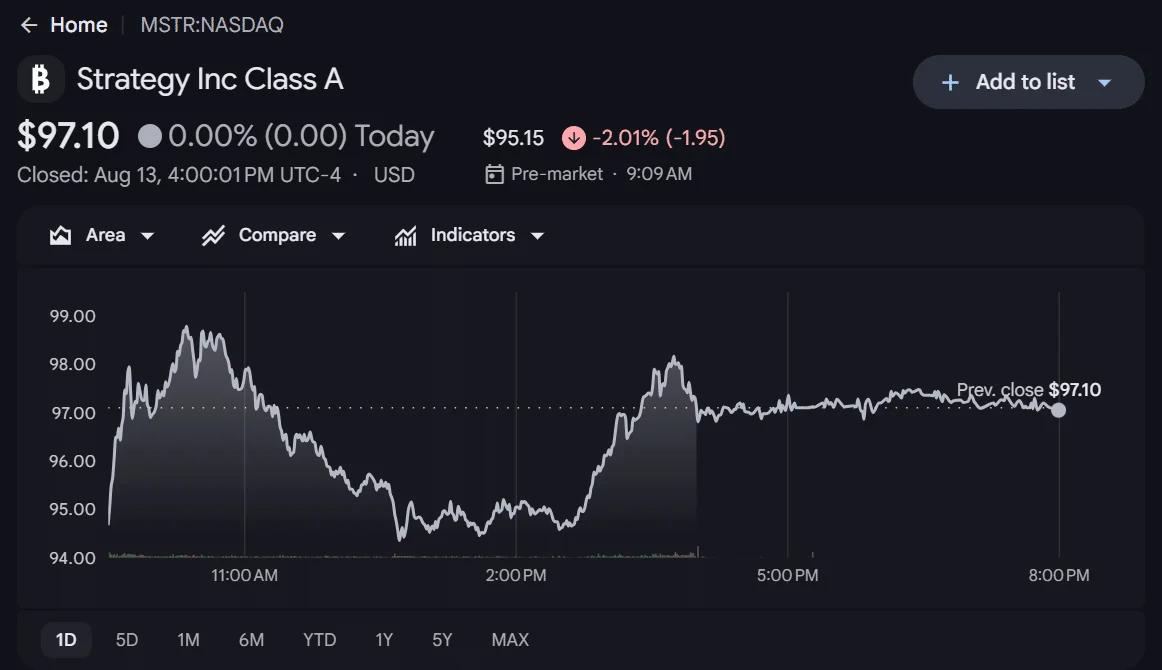
Bitcoin (BTC) isn’t broken, says Strategy’s (MSTR) Saylor

0
STRC slips below par as Strategy's (MSTR) cash reserves face growing scrutiny

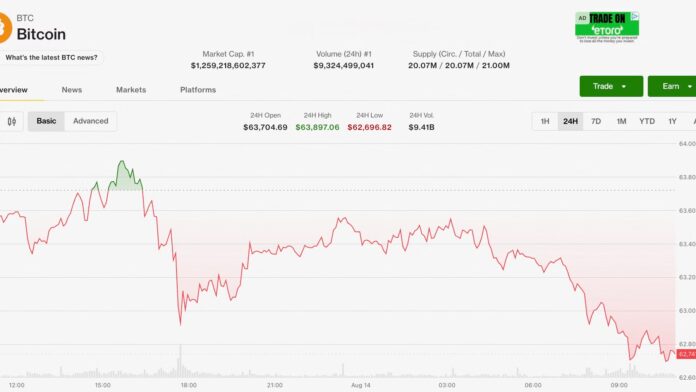
Bitcoin has tanked over 14% in one week and 22.7% in four weeks. Strategy Chairman Michael Saylor has a simple explanation for the decline: It’s capital rotation, not impairment.

In a post on X, Saylor pointed to the historic pace of AI infrastructure funding to the tune of approximately $400 billion deployed over the past six months while noting the $4 billion in outflows from the U.S.-listed spot ETFs since mid-May.

In essence, he argued that institutions are pulling money out of bitcoin and deploying into AI, leading to weakness in the top cryptocurrency. This matters because rotation implies temporary weakness, driven by capital chasing a hot theme before it eventually finds its way back.

“Volatility creates opportunity,” Saylor said, a characteristically bullish framing from the most prominent corporate bitcoin holder on the planet.

Saylor’s Strategy recently sold 32 BTC, a move, analysts say, added to the bearish sentiment in the market, deepening the price selloff. The publicly listed firm still holds 843,706 BTC.

While some analysts have flagged the AI boom as a headwind for bitcoin, most bears have drawn a darker conclusion from the recent selloff: that crypto is simply broken.

“Bitcoin just looks broken at this point Even Saylor is selling now,” pseudonymous trader QE Infinity said on X.

Their case probably rests on a confluence of concerning signals: Saylor’s surprise sale of 32 BTC, weeks of heavy ETF outflows, and the striking fact that almost every major asset class, from equities to commodities, is trading at or near record highs while bitcoin languishes.


Source link

Solana hits 2023 lows amid panic selling: Is a 7% dip just the start of SOL’s pain?

0
Solana hits 2023 lows amid panic selling: Is a 7% dip just the start of SOL's pain?


Solana is experiencing one of the largest price crashes amid a broader crypto market downturn. The altcoin breached the $70 support and dropped to a low of $66 before rebounding.

Solana has not dropped to such levels since December 2023. As of this writing, Solana traded at $70.4, down 7.3% on the daily charts, adding to its 13% weekly decline. 

As a result of this price dip, SOL fell below both short-term and long-term moving averages, signaling strong downward pressure.

Solana faces panic exits across the market

With the price decline, liquidation levels for both shorts and longs have accelerated. Total liquidations rose to $83 million, with $78.25 million worth of longs liquidated, reflecting strong downside risk. 

Solana liquidation
Source: Coinglass

With Solana [SOL] under strong downward pressure, market participants across Spot and Futures panicked and closed their positions. 

On the Futures side, rising liquidation levels have pushed many traders to close out to avoid being liquidated. CoinGlass data showed that sellers have dominated the Futures market over the past week. 

Solana futures Solana futures
Source: CoinGlass

In fact, over the past 24 hours, $3.09 billion flowed out of the Futures market compared to $2.8 billion in inflows. As a result, NetFlow dropped to -$281 million. 

On longer timeframes, $10.82 billion has flowed out of the Futures market, reflecting heightened bearish pressure. 

On the Spot side, market sentiment remains unchanged, and investors have continued to dump SOL. Over the past 4 hours, for example, Spot Inflow jumped to $115.9 million while Outflow dropped to $92 million. 

Solana spot netflowSolana spot netflow
Source: CoinGlass

The Exchange Netflow rose 309% to $22.9 million. This market behavior also holds on daily charts, with Netfow rising 1165% to $6.88 million. 

Such selling activity suggests that most active participants panicked and exited, fearing more losses. In doing so, the market weakened further, resulting in additional losses on price charts. 

Is SOL at risk of more losses?

Solana’s downside momentum intensified as traders panicked and sold. As a result, the altcoin’s Relative Strength Index (RSI) dropped deeper into oversold territory, hitting a three-year low of 22.

At such extremely low levels, RSI suggested that sellers have taken total control of the market. Traditionally, seller dominance has preceded the emergence of an extended market structure, often leading to lower prices.

Solana RSI & EMASolana RSI & EMA
Source: TradingView

If the current market sentiment persists, the altcoin is likely to see further losses. As such, SOL will fail to hold $70 and most likely breach $60.

To invalidate this bearish outlook, dip buyers need to set up and absorb the pressure, and reclaiming $80 will help avoid further slip.


Final Summary

  • SOL breached the $70 support and dropped to $66, levels last recorded in December 2023. 
  • Solana experienced massive panic selling across all market participants, risking further losses. 


Source link

Ardelyx Eyes $500M+ Revenue as IBSRELA Growth Puts Profitability Within Reach

0
Ardelyx Eyes $500M+ Revenue as IBSRELA Growth Puts Profitability Within Reach


Ardelyx (NASDAQ:ARDX) executives said at the Jefferies Global Healthcare Conference that the company is focused on expanding demand for its commercial products, IBSRELA and XPHOZAH, while continuing to invest in its pipeline and positioning the business for sustainable profitability.

Chief Financial Officer Sue Hohenleitner said Ardelyx expects its two commercial products to generate more than $500 million in top-line revenue this year. IBSRELA, the company’s treatment for irritable bowel syndrome with constipation, or IBS-C, represents the largest portion of that outlook, with guidance of $410 million to $430 million. XPHOZAH, used for patients on dialysis with hyperphosphatemia, is expected to contribute $110 million to $120 million.

Palantir’s Drone Tailwind Puts Its Defense AI Story Back in Focus for Investors

Hohenleitner outlined four strategic priorities: increasing IBSRELA demand, sustaining XPHOZAH momentum, advancing the company’s pipeline and maintaining strong financial performance, including top-line growth and a healthy cash position.

IBSRELA Remains Ardelyx’s Main Growth Driver

Chief Commercial Officer Eric Foster said IBSRELA is positioned as an option for IBS-C patients who need something different after treatment with GC-C agonists such as LINZESS or Trulance. He said Ardelyx research indicates that about 77% of patients continue to have symptoms or are not satisfied on a GC-C agonist.

Best Buy’s AI Laptop Boost Sparks Hope for a BBY Turnaround

Foster said IBSRELA benefits from a unique mechanism of action as an NHE3 inhibitor, along with clinical efficacy and safety data. Ardelyx is targeting about 14,000 health care providers, including high-prescribing gastroenterologists, primary care physicians and advanced practice providers, who represent roughly half of the total prescription market the company is focused on.

Foster said IBSRELA grew 73% year over year in 2025 and 58% year over year in the first quarter compared with the prior-year period. He attributed the growth to several factors, including a larger sales force, more targeted physician engagement, improved prescription fulfillment through the IBSRELA Pharmacy Network and patient activation efforts.

3 Up-and-Coming Stocks That Could Be the Next NVIDIA

The company doubled the size of its IBSRELA sales force in late 2024 and is adding about 20 representatives, bringing the total to 144. Foster said the new representatives are expected to be in the field by July 1. Ardelyx is also adding field reimbursement managers to help physicians navigate payer requirements.

Specialty Pharmacy Network Seen as Key Lever

Foster said Ardelyx is steering more IBSRELA prescriptions through a limited specialty pharmacy network because retail pharmacies are often less suited to manage prior authorizations and other steps needed for branded products. He said prescriptions sent through the network have higher fulfillment rates and, on average, about one additional refill per year. He said average refills are around five or six annually.

“The worst thing that can happen is a physician write a prescription for a product and the patient not get it,” Foster said, describing the network as one of the company’s main growth levers.

On patient awareness, Foster said Ardelyx plans to continue investing in digital and social channels. Hohenleitner said the company is not planning a broad traditional direct-to-consumer television campaign, though Foster said targeted streaming media could be considered later this year. Hohenleitner said operating expenses are expected to rise about 25% year over year, to as much as $520 million, driven in part by high-return commercial programs and research and development spending.

Company Reiterates Longer-Term IBSRELA Ambition

Hohenleitner said Ardelyx’s goal of reaching $1 billion in IBSRELA revenue in 2029 implies about a 38% compound annual growth rate from the current guidance range, which she described as achievable based on recent growth trends. Foster said the IBS-C market remains sizable and is growing at double-digit rates, while the competitive landscape appears open over the next several years.

Ardelyx is also studying IBSRELA in chronic idiopathic constipation, or CIC. Hohenleitner said the company has dosed the first patients in a Phase 3 trial, with all pre-specified sites up and running. The trial is expected to enroll about 700 patients in a placebo-controlled, double-blind study with three active arms plus placebo. She said full enrollment is expected by the end of this year, with the trial taking about 26 weeks.

Foster said the CIC market is two to three times larger than IBS-C, though much of it is treated over the counter. He said a CIC indication could increase the overall value of IBSRELA and potentially strengthen physician confidence in the molecule. Hohenleitner also said Ardelyx recently received an Orange Book-listed formulation patent for tenapanor that extends to November 2042, complementing existing composition-of-matter and method-of-use patents.

XPHOZAH Growth Continues Despite Reimbursement Disruption

Hohenleitner said XPHOZAH guidance of $110 million to $120 million would represent growth of about 6% to 16% from the prior year. She said paid writers grew about 19% in the first quarter, while total prescriptions grew about 32%.

Foster said the hyperphosphatemia market has been disrupted during the TDAPA period, which ends at the close of 2026, but Ardelyx believes XPHOZAH will be well positioned in 2027. He said the product is indicated for use in addition to a phosphate binder and noted that many dialysis patients continue to have elevated phosphorus levels despite binder therapy.

Hohenleitner said Ardelyx continues to stand by its longer-term expectation for XPHOZAH to reach $750 million before loss of exclusivity. She said that outlook does not assume restoration of Medicare Part D coverage. The company is operating under a “business as usual” reimbursement assumption while awaiting further developments, she said.

Profitability Described as “Right Around the Corner”

On profitability, Hohenleitner said Ardelyx is not yet issuing formal profitability guidance because management wants confidence that profitability would be sustainable once achieved. She said that, depending on where revenue falls within the guided ranges, profitability could be possible this year, but the company is not ready to guide to a specific quarter.

“When we say we’re profitable, we’re profitable from here out,” Hohenleitner said. She added that the company has already laid out a capital allocation strategy focused on investing in IBSRELA, advancing its current pipeline, considering opportunistic deals and strengthening the balance sheet.

Hohenleitner also discussed Ardelyx’s preclinical compound 10531, describing it as highly soluble and potent. She said the company is evaluating it across several areas and has not yet determined whether it will become a next-generation tenapanor product or pursue another adjacent opportunity.

About Ardelyx (NASDAQ:ARDX)

Ardelyx, Inc (NASDAQ: ARDX) is a clinical‐stage biopharmaceutical company focused on discovering, developing and commercializing targeted small molecule drugs for cardio‐renal and gastrointestinal diseases. The company’s lead marketed product, tenapanor (sold under the brand name XPHOZAH in the United States), is approved for the treatment of hyperphosphatemia in patients with chronic kidney disease on dialysis. Ardelyx’s proprietary approach targets epithelial transporters in the gastrointestinal tract, offering localized activity with limited systemic exposure.

Beyond tenapanor, Ardelyx’s development pipeline includes treatments designed to address other complications in kidney disease and related metabolic disorders.

This instant news alert was generated by narrative science technology and financial data from MarketBeat in order to provide readers with the fastest reporting and unbiased coverage. Please send any questions or comments about this story to contact@marketbeat.com.

The article “Ardelyx Eyes $500M+ Revenue as IBSRELA Growth Puts Profitability Within Reach” was originally published by MarketBeat.

View MarketBeat’s top stocks for June 2026.


Source link

Bitcoin supply in loss overtakes profit, a hallmark of bear-market bottoms

0
Bitcoin supply in loss overtakes profit, a hallmark of bear-market bottoms


The amount of bitcoin supply in loss reached a key bear-market threshold, surpassing 10 million BTC, more than half of the total in circulation.

According to Glassnode data, at a one-hour resolution, the number peaked at about 10.5 million BTC as the price fell to as low as $61,300 on Thursday. Total circulating supply is roughly 20 million BTC, so more than half of all coins are currently held at an unrealized loss.

At the same time, supply in profit has declined to around 9.8 million BTC. This is the first time during the current market cycle that the amount of bitcoin held at a loss has exceeded the amount held in profit.

Historically, this transition has occurred only during deep bear-market conditions, and it has often coincided with major market bottoms.

Previous cycles provide some context.

During the 2015 bear market, supply in loss and supply in profit remained near equilibrium for almost a year before the market recovered. In 2019, the period lasted roughly six months. The Covid-driven capitulation in March 2020 was shorter, lasting around one month, and the 2022 bear market saw this condition persist for about six months.

The takeaway is that while this signal has historically aligned with bear-market lows, the duration of these periods has varied significantly, making it difficult to estimate how long bitcoin could remain at depressed levels.

Adding to the significance of the recent decline, bitcoin touched its 200-week moving average of around $61,300. The measure is a long-term trend indicator that calculates bitcoin’s average price over the previous 200 weeks. It has historically acted as a major support level during every bear market cycle.

Should bitcoin drop below the psychologically important $60,000 level, the next major support zone is around $54,000, which corresponds to the realized price. The realized price represents the average acquisition cost of all bitcoin in circulation based on the price at which each coin last moved onchain. Bitcoin has traded below its Realized Price during every major bear market.


Source link