
Around 9 pm UTC on the 29th of October, a Binance hot wallet on Ethereum sent 63 ERC-20 tokens and 167,464 ETH in a single transaction. The same exploiter address received another 28,006 ETH in a second transaction from a second Binance hot wallet on Ethereum, along with funds from Arbitrum [ARB], Optimism [OP], and Avalanche [AAVE].
In response, the Aave markets across all networks were frozen, stopping everyone, including the exploiter, from opening new supply or borrow positions.
The broader market has reacted bearishly, with Bitcoin [BTC] and Ethereum [ETH] down 3.46% and 3.93% in the past 24 hours, compared to Aave’s 5.67%. The crypto market witnessed over $1.50 billion in liquidations, with a majority being long liquidations.
Is the long-term AAVE trend bullish?
From June to September, the DeFi token rallied by 214.2%, from $60 to $188. Since making this local high, the altcoin has retraced by 32.9% to fall to $125.8.
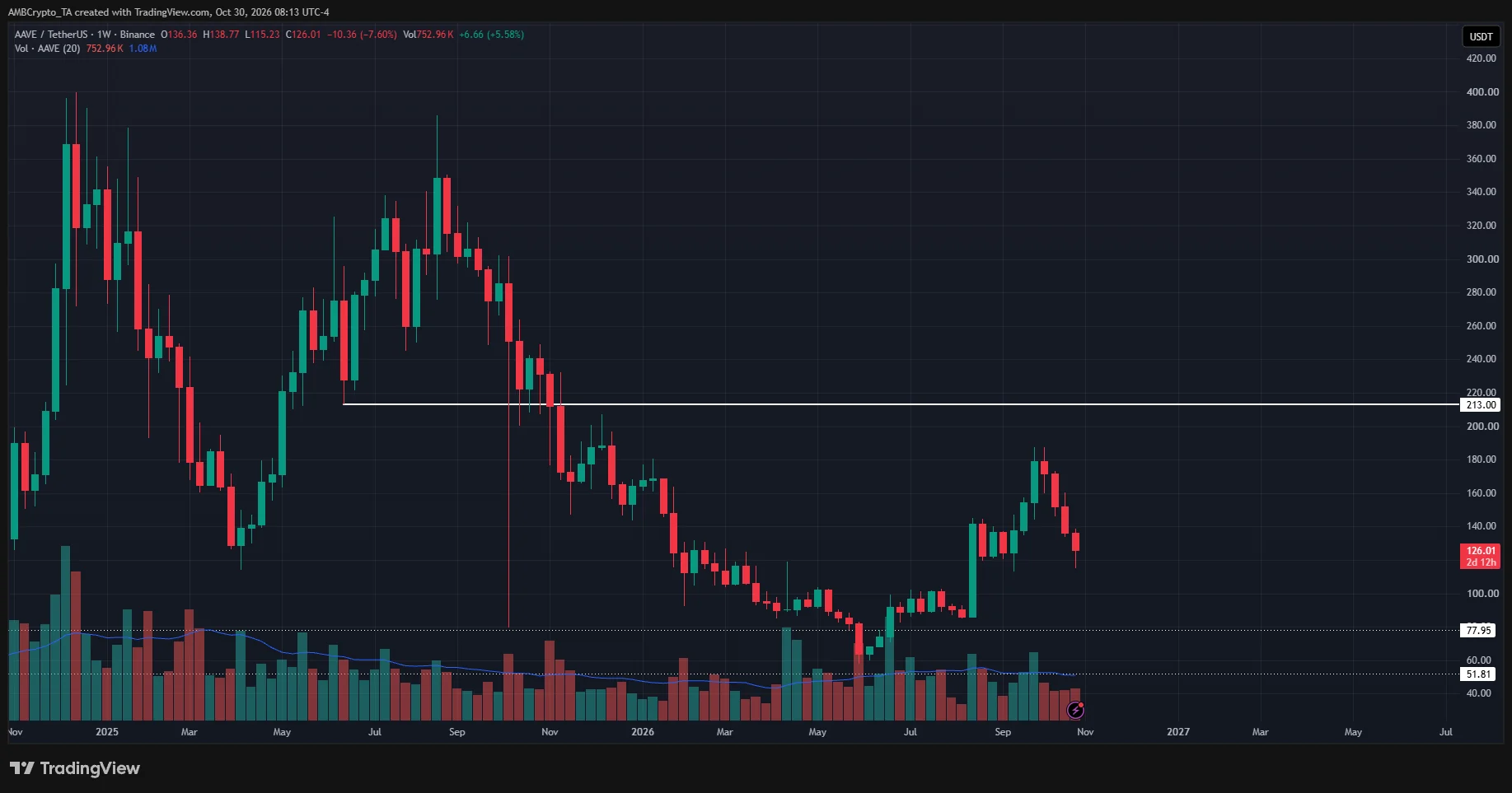
The weekly trend was bearish, but there is some hope for the bulls that the current retracement could go towards $213-$240, provided the weekly session does not close below $113.4.
Swing traders looking to buy can do so in line with the daily chart, but should remember that the long-term trend was not in their favor.
Why AAVE traders must stay cautious!
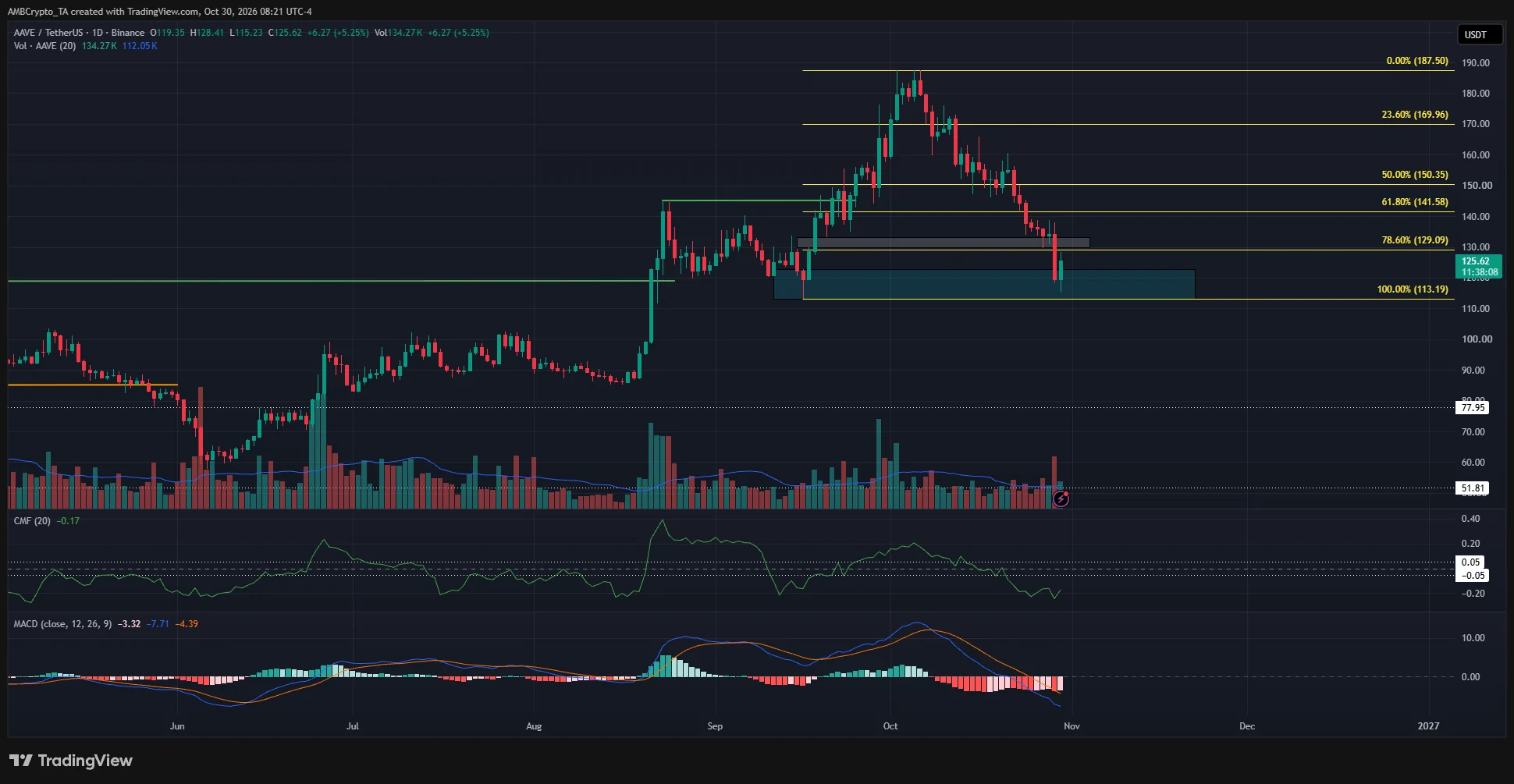
The $140 support zone has been breached. The technical indicators on the daily timeframe were firmly bearish. At the same time, the swing structure was just about bullish.
The fair value gap around the 78.6% Fibonacci retracement level (white) at $129 was breached, and the bullish order block around $115 was being tested.
If the market-wide selling continues, it is highly likely Aave’s price structure would take a bearish shift. As things stand, swing traders can wait for a sign of demand, maybe in the form of heavy demand or a price move back above $120, to consider going long.
Final Summary
- The Aave response to the Binance heist was to freeze their v3 and v4 markets, which was effective but also put selling pressure on the DeFi token and other related assets.
- In this environment of fear, going long is risky. Swing traders can wait for a clearer conditions before looking for trading opportunities.