
Aave is betting on a new plan to attract more institutions into the DeFi space. The proposal, called custodied collateral lending, seeks to allow institutions to borrow stablecoins on Aave.
The collateral backing the loan will be held by a regulated custodian, in this case, Anchorage. According to Aave, the plan would reach what it describes as the “currently unreachable collateral asset.”
The integration onboards a class of collateral that is currently unreachable for Aave: assets held with a regulated custodian by institutional borrowers who cannot or will not self-custody.
To achieve this, Aave wants to solve key bottlenecks.
Unpacking Aave’s custodied collateral lending
The lending protocol noted that while institutions wish to use their assets held at a regulated custodian for on-chain lending and collateral, it’s currently impossible to do so. The friction is due to a lack of communication between institutional custody and on-chain lending.
Currently, regulated institutional custody, such as Anchorage, is an independent system from on-chain lending firms like Morpho or Aave. To bridge this, Aave wants institutional players who want to stay within the regulated system to move assets to Anchorage.
Afterwards, the custodied assets will be represented on-chain via Chainlink’s CustodySync and Custodied Collateral Tokens (CoCTs). Think of it as receipts of the assets held by Anchorage. This is what Aave will use to support its lending activity for the institutions.
In a nutshell, the actual BTC does not exit Anchorage. The CoCTs are deposited on Aave to borrow stablecoins (USDC). After the final repayment, which comes with interest, the CoCTs are burnt, and the BTC is unlocked from Anchorage and returned to the institutional player (e.g., a hedge fund).
At the moment, the best way to do that is to change the assets to alternatives like wrapped Bitcoin (WBTC) before seeking leverage and DeFi lending opportunities. But this comes with smart contract risk and other related risks (compliance, security, etc.).
Will it boost Aave’s growth?
For his part, Aave founder Stani Kulechov called the proposal “first-of-its-kind.”
A first-of-its-kind proposal to enable institutions to borrow stablecoins on Aave V4 against collateral held with a qualified custodian, accessing liquidity directly from Aave V4 markets.
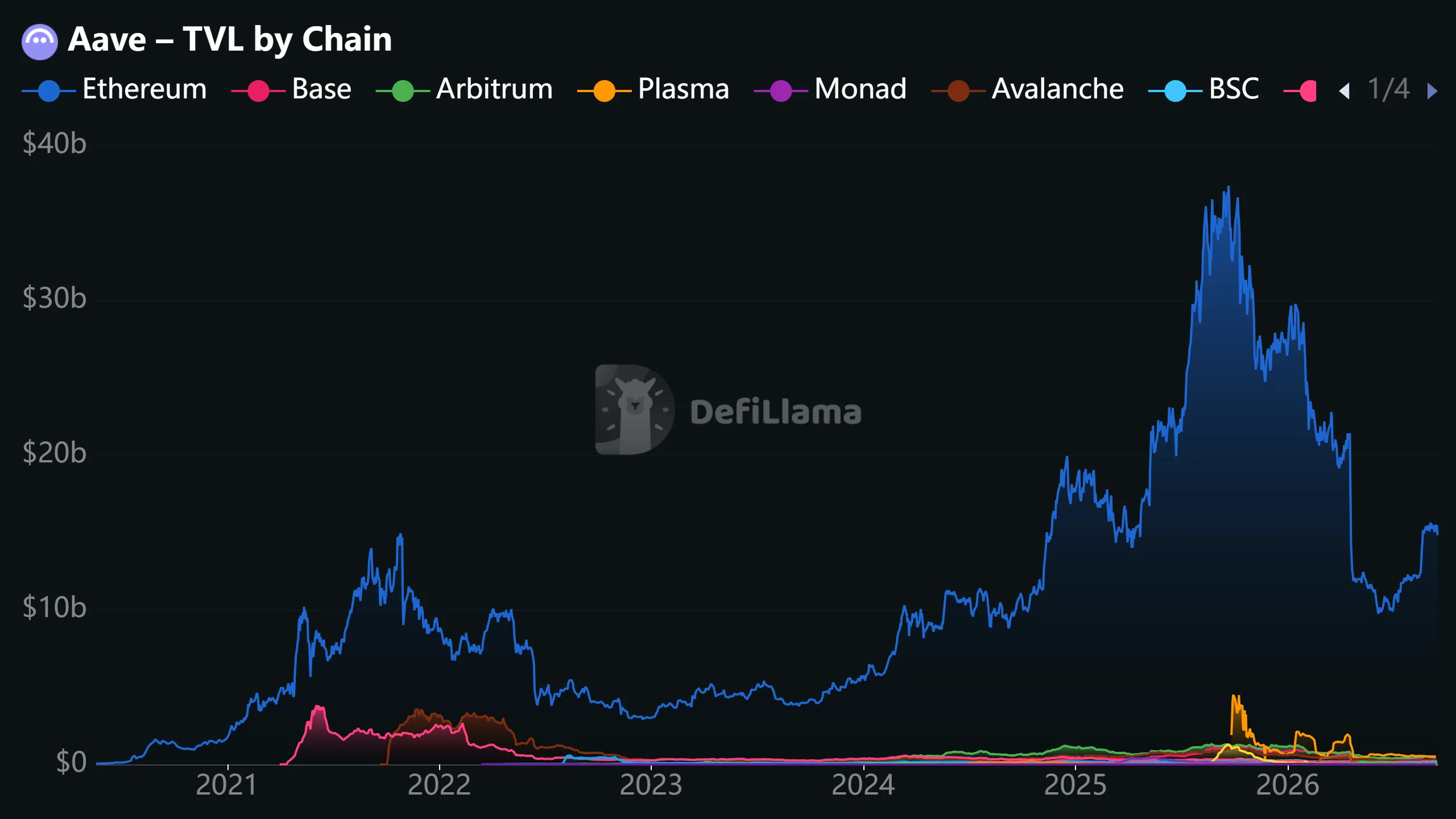
Put differently, this could be a massive unlock for institutional capital. So far, Aave has a total value locked (TVL) of $19B. This was a rebound from $12.5B in June, signalling a 52% recovery and appetite for on-chain loans in Q3.
If the proposal gets enough backing and positive sentiment, it will move into Snapshot after months of voting. If voted and approved, the final step will be execution of the proposal.
Whether this will force other lending players such as Morpho and Kamino to adapt remains to be seen.
Final Summary
- Aave wants to unlock institutional assets stuck in regulated custodians into DeFi lending with its latest proposal
- Aave traction grew 52% in Q3 to $19B, and the latest plan could unlock more institutional capital