Table of Contents
Topline
Researchers at the Minneapolis Federal Reserve have found that massive artificial intelligence demand on memory and computer hardware has driven up core inflation as much as the tariffs President Donald Trump imposed early last year.
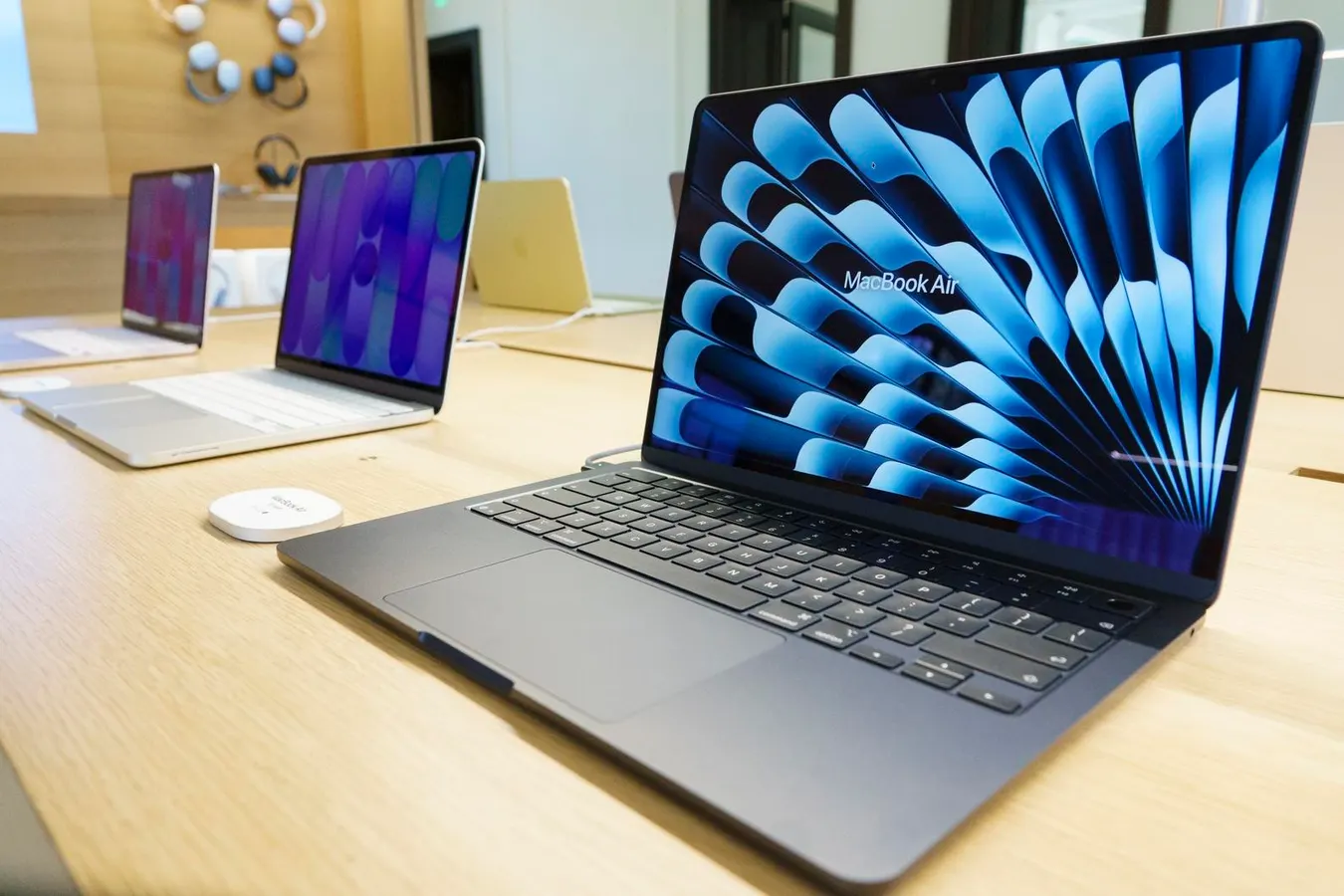
An Apple MacBook Air laptop.
Getty Images
Key Facts
Tariffs, the impacts of which are just starting to materialize in consumer prices, now account for 0.2 to 0.4 percentage points of core personal consumption expenditures inflation as of July, according to a Minneapolis Fed analysis published Friday.
Core PCE inflation, which excludes often volatile prices for food and energy, reached 3.3% year-over-year through July—the highest since 2023 and, outside the pandemic, the highest since the early 1990s.
Clothing and footwear prices surged from 0.3% annual inflation in December 2025 to 3.5% by July, one of the clearest signs that tariff costs are now reaching consumers.
AI-driven demand for memory and computer hardware has pushed up prices for video and information processing equipment a staggering 12.2% year-over-year through July, adding roughly 0.4 percentage points to core PCE inflation—comparable to the entire tariff contribution.
What to watch for
Further tariff-driven price increases are likely still in the pipeline. Some heavily tariffed sectors, like new cars, have not yet fully passed through cost increases, and recent surveys show businesses plan to implement additional tariff-related price hikes.
SURPRISING FACT
Researchers said that even without tariffs, core PCE inflation would still be one percentage point above the Fed’s 2% target.
BIG NUMBER
6.5%. That’s the annual rate at which prices for video and information processing equipment were falling from 2015 to 2019, making the category’s 12.2% price hike an extraordinary reversal driven by AI hardware demand.
KEY BACKGROUND
The AI-driven price spikes noted in the Minneapolis Fed report, colloquially called “chipflation,” stem from a tight supply-demand squeeze across the technology sector. All of the world’s major tech companies (think Microsoft, Google, Meta and Amazon, among others) are investing in their AI business at shocking speed—and they all need the same hardware to do so. Building and training high-performance AI models requires central processing units, graphics processing units, video RAM, storage, cooling systems and other hardware at a massive scale, and prices for those items have subsequently surged, even at the individual consumer level. Apple raised its MacBook and iPad prices by 15% to 25% in June, and other companies like Lenovo, Dell and HP did the same. Smartphone makers and gaming console companies have also raised prices.