
The Digital Asset Treasury (DAT) playbook appeared bulletproof during bull runs. Corporations would amass massive amounts of Bitcoin [BTC] and Ethereum [ETH], see their stock prices skyrocket, and leverage the attention to raise even more funds.
Unfortunately, the recent market volatility in crypto has subjected corporate treasuries to a real-life stress test, one where falling token prices have significance beyond the accounting implications alone.
Table of Contents
How DeFi code replaces bank managers
Traditionally, corporate loans make it possible for an executive to walk up to a human bank manager and request an extension. However, that is not the case here as decentralized finance (DeFi) operates using automated code.
One such example is BTCS, a Nasdaq-listed company, depositing 46,676 ETH (around $99.3 million) into the Aave lending protocol and borrowing $64.1 million in stablecoins. Since Aave sets a liquidation threshold of 80%, falling token prices pushed BTCS dangerously close to the point where intelligent contracts automatically liquidate collateral to repay debt.
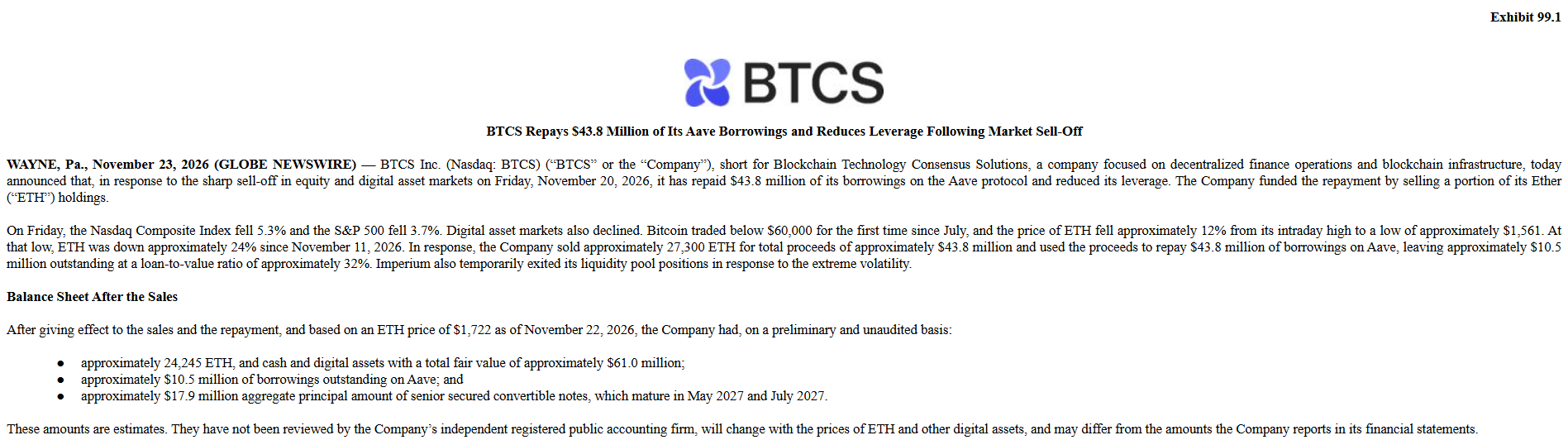
BTCS scrambled to bring its Aave debt down to $54 million to avoid a forced liquidation. In a filing with the SEC, it later admitted that debt levels are not fixed and future liquidations are not guaranteed.
Why negative returns force a shift in capital allocation
For giants like Strategy, the challenge is not on-chain smart contract technology, but traditional capital markets.
At the peak of their enthusiasm, investors were paying a premium for Strategy’s shares over the Bitcoin it actually owned. The company used that premium to issue new shares and buy cheap coins. Recently though, Strategy’s valuation ratio (mNAV) fell below 1x to 0.96x with 850,849 BTC holdings, pushing its 2026 BTC yield to -4.6%.
Without that premium, it’s inefficient to issue stock to buy more Bitcoin. Strategy only spent $33.4 million buying Bitcoin during its recent equity raise, while burning $206 million just repurchasing expensive preferred shares to repair its balance sheet.
Reaffirming this shift in strategy, on 19th November, Michael Saylor noted,
We intend to keep buying STRC below $100. Repurchases facilitate liquidity and lower dividend obligations. We believe they strengthen the credit and benefit common shareholders.
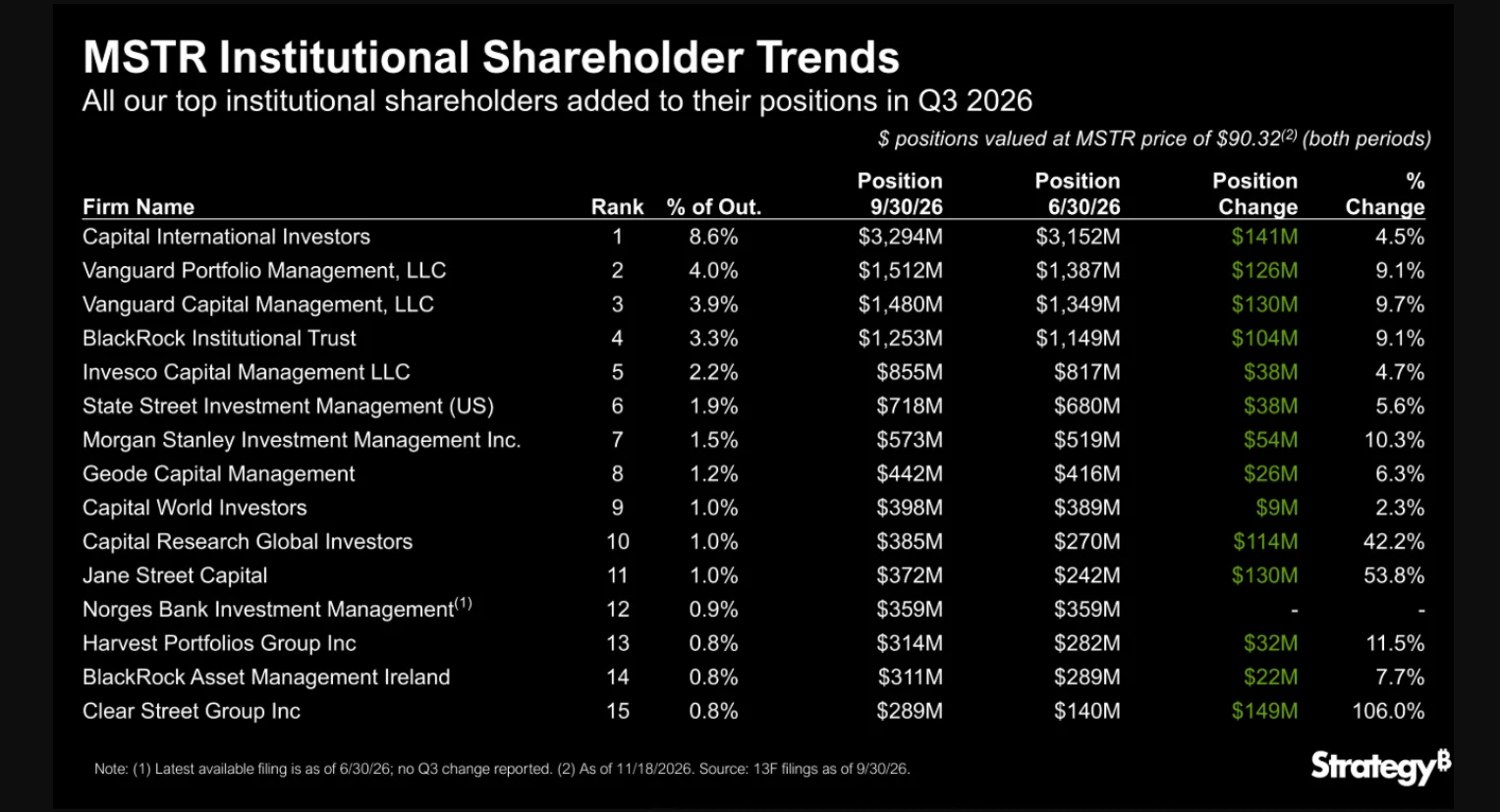
But there is a catch — institutional investment firms have increased their share of MSTR stock in Q3 2026. Notably, fifteen top investment firms hold about 33% of all issued stocks, indicating that major institutional investors are still keen on investing in MSTR.
Wall Street exclusion and liquidity drain
The third danger stems from passive index funds.
In November’s review, the international index compiler, MSCI, dropped Strategy, Metaplanet, and Yellow Cake out of the ACWI IMI index following their classification as non-operating holding companies. De-listing from an index is no trivial matter. These funds must, by law, divest themselves of the stock when it is de-listed.
Strategy estimated this move could result in sales totaling around $2.8 billion in stocks, putting significant downward pressure on the stock price despite the technology of Bitcoin.
Furthermore, these stress points in the corporate sector align with an overall pullback from institutional investors too.
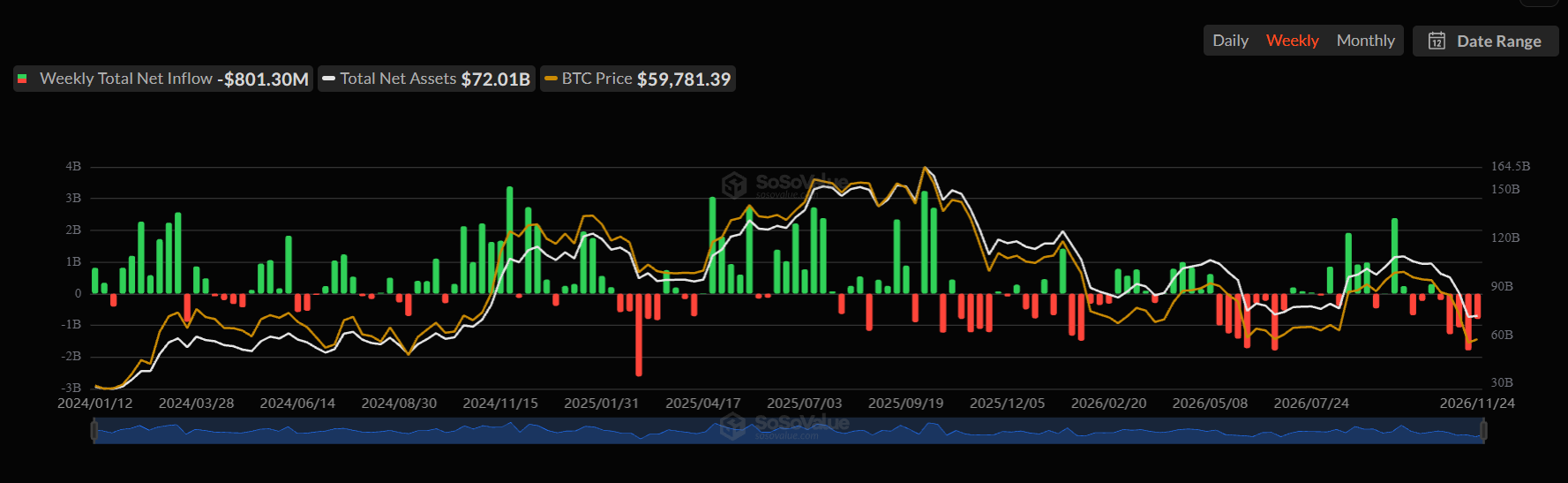
Finally, SoSoValue data seemed to allude to a trend of redemptions for Spot Bitcoin ETFs, with the same seeing their fourth week of net outflows worth $1.79 billion. Ethereum ETFs have also seen six weeks of net outflows worth $314 million.
So, what’s next for DATs?
This market downturn is not just about falling coin prices; it is a real capital structure stress test. Fortunately, not every digital asset treasury is doomed. Companies funded with patient equity, healthy cash reserves, and active staking revenues can comfortably absorb steep market drops.
However, firms relying on automated crypto debt, vanishing valuation premiums, or benchmark index flows are reaching their limits.
Going forward, long-term survival will not simply be about boasting the largest coin stash. It will come down to balance sheet discipline, healthy liquidation buffers, and structural flexibility when market tailwinds disappear.
So, the bottom line is, in crypto, smart financial frameworks will always beat hype.
Final Summary
- Automated DeFi debt and falling prices expose corporate treasuries to liquidation.
- Index exclusions and negative yields are forcing firms to restructure capital allocation.