
At the United Nations General Assembly, Iran proposed an agreement to reopen the Strait of Hormuz, a major oil chokepoint disrupted by the war, for a seven-day period and pause fighting, followed by broader negotiations on issues.
Trump, however, rejected the proposal, saying that Iran is looking for a deal because it was under heavy pressure. Trump also stressed on Truth Social that Iran “cannot have a nuclear weapon.”
This lingering geopolitical uncertainty has stoked inflation fears since the war began in early March, lifting Treasury yields. The 10-year yield has risen by 127 basis points to 5.20%, the highest since 2007, amid inflation fears, Fed rate-hike bets and debt concerns.
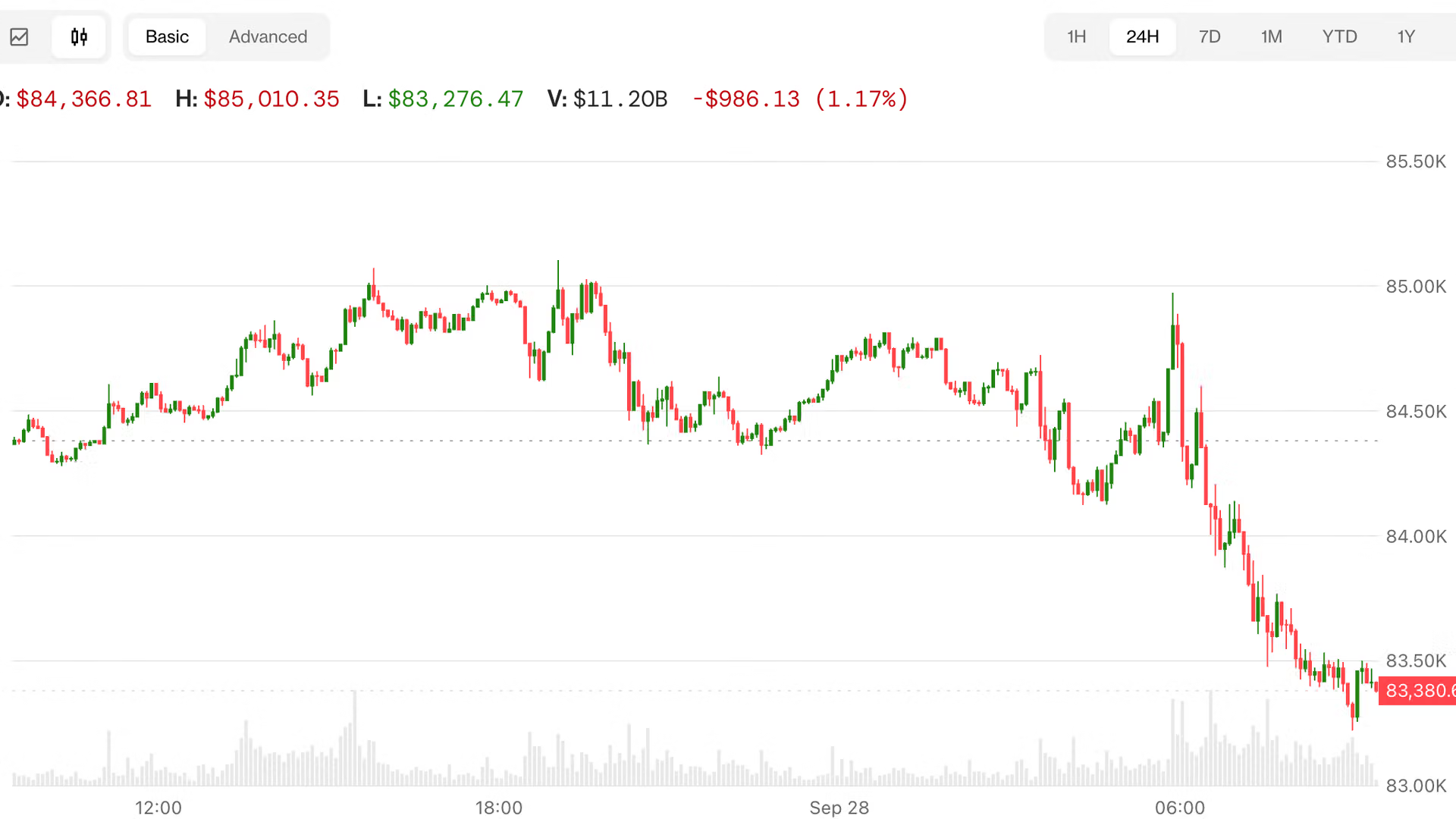
Bitcoin fell early this year, but has bounced back strongly in the third quarter, shrugging off these uncertainties. Prices are up 42% in three months, outperforming every major asset, including Nasdaq and gold.
Analysts are now watching incoming data for cues about the next move in the cryptocurrency.
“For investors, the 83,800-84,000 zone is an important near-term support. The 85,000-85,800 area is the immediate resistance zone. It would be prudent to avoid chasing the rally at current levels,” Vikram Subburaj, CEO of India-based Giottus exchange, said in an email.


