Bitcoin’s [BTC] rally to $80,000 represents an upward trend rather than a short-term breakout.
Since mid-June, buyers have consistently increased the market’s floor with each downward swing. The initial swing was at the bottom of the $60,000 level, then the second swing was above the $77,000 mark later in August.
As of late, sellers attempted to push prices down into the $75,000-$77,000 zone multiple times. However, at each attempt, buyers were able to absorb selling pressure and push the price back up.
That response has gradually shifted support higher, reducing the market’s reliance on the earlier $60,000–$65,000 range.
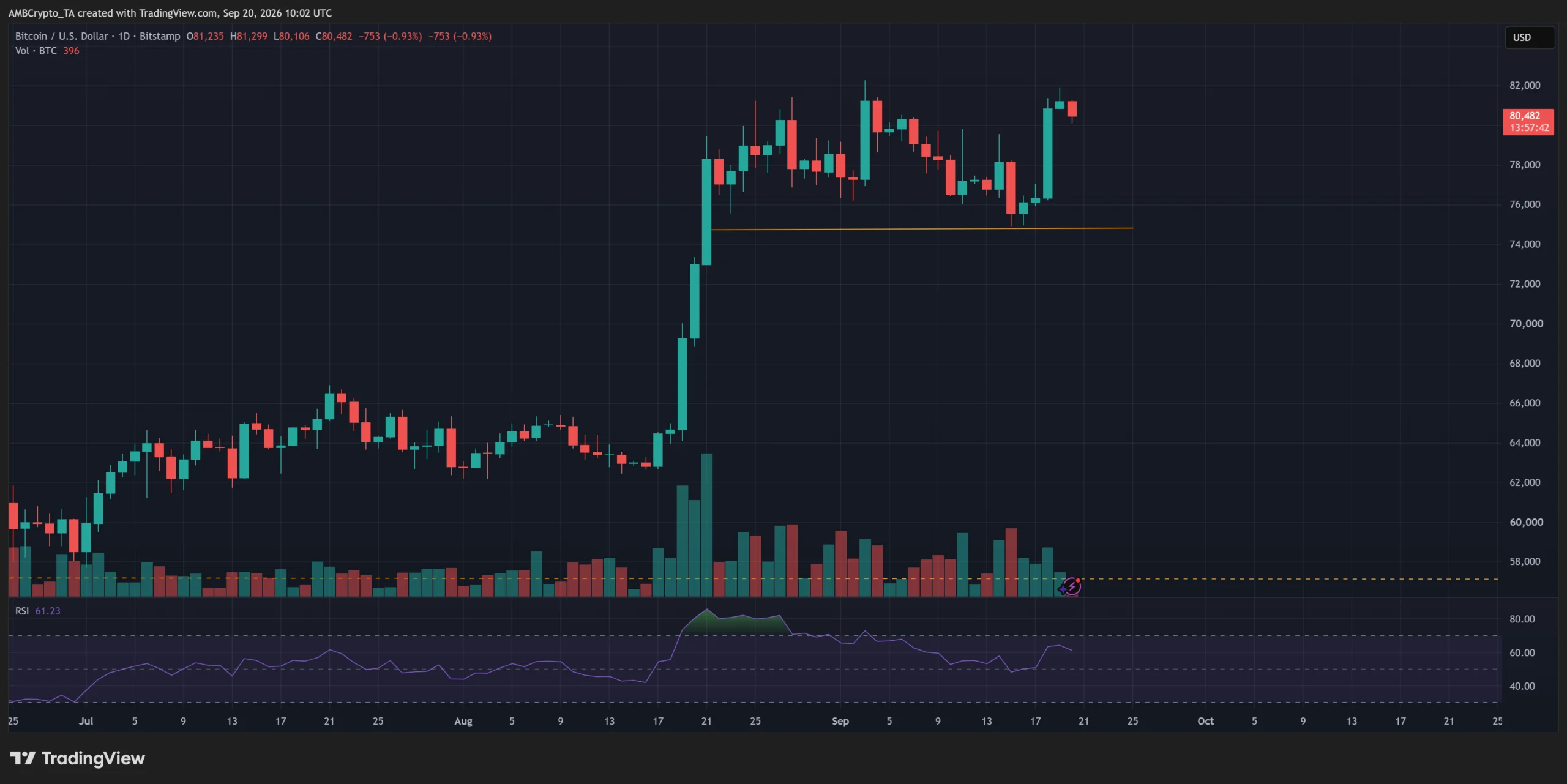
BTC peaked at $80,402 on the 20th of September, or approximately 25.6% greater than ninety days prior. Therefore, this is more than just price appreciation.
It also demonstrates that buyers are becoming increasingly strong after each pullback while support continues to increase as well. Holding these levels could help Bitcoin maintain its broader upward structure.
Bitcoin supply moves into profit
That stronger price floor is also changing Bitcoin’s holder profitability. With the increase in price since June lows, the percentage of supply in profit increased from approximately 45% to 71%.
Therefore, this implies that there is more opportunity for holders to realize their profits, especially after Bitcoin reached the $80,000 area.
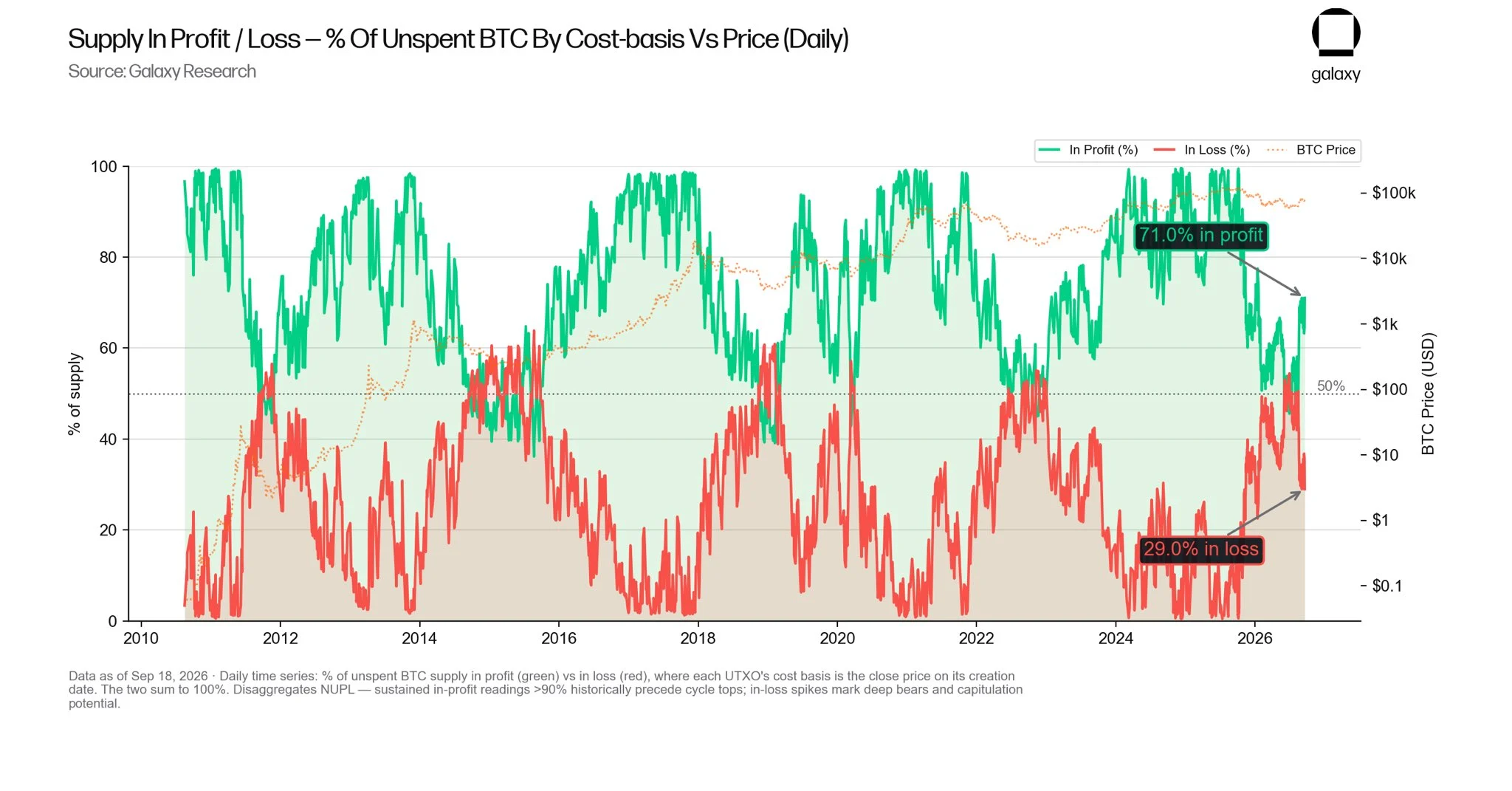
Although 29% of that is still underwater, it limits the potential for large-scale immediate profit-taking throughout the market. In addition to that, the 71% reading falls short of the 75-90% zone, a zone previously linked with heavier distribution in past cycles.
This puts Bitcoin in a middle ground where gains have certainly increased. However, for now, this supports the broader recovery while keeping profit-taking as a growing risk.
Korean demand turns negative
Bitcoin’s strong recovery is now meeting weaker regional demand, adding a new source of pressure beneath the rally. The Korea Premium Index moved from positive territory earlier in September into negative territory, reaching -1.46%.
That shift signals that South Korean exchanges are pricing Bitcoin lower than foreign markets and represents weakening domestic buying pressure.
This development becomes even more significant given that Bitcoin is currently trading at approximately $80,400, just shy of recent highs.
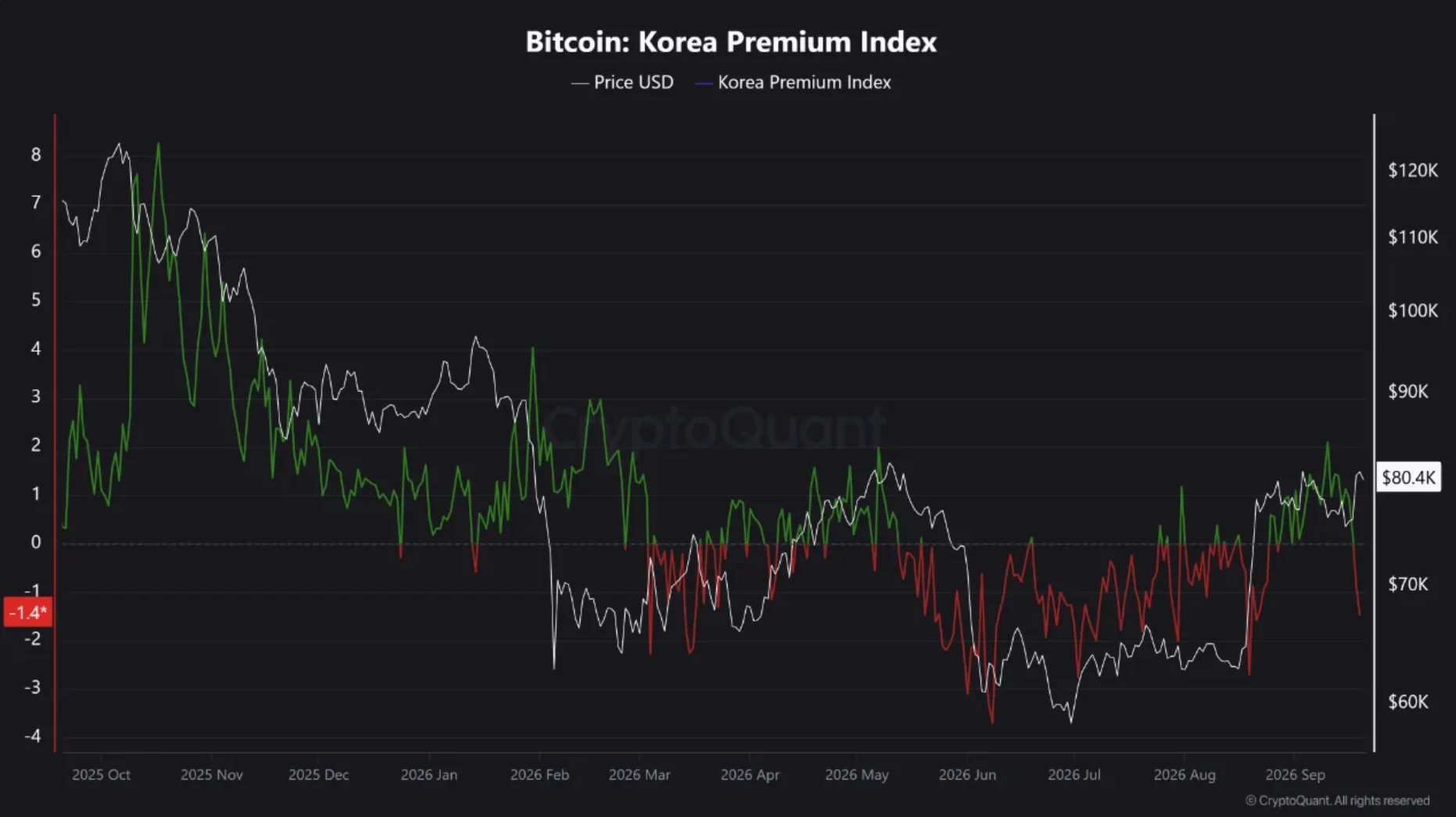
Instead of adding demand at elevated prices, Korean markets are offering less support for the advance. Moreover, the premium’s decline followed months of weaker readings after June, when it stayed mostly below zero.
This divergence could limit Bitcoin’s upside momentum, especially if exchange inflows continue rising and global demand fails to compensate.
Final Summary
- Bitcoin reached $80,402 as higher support strengthens the recovery.
- BTC faces rising profit-taking and weaker Korean demand near $80,000.