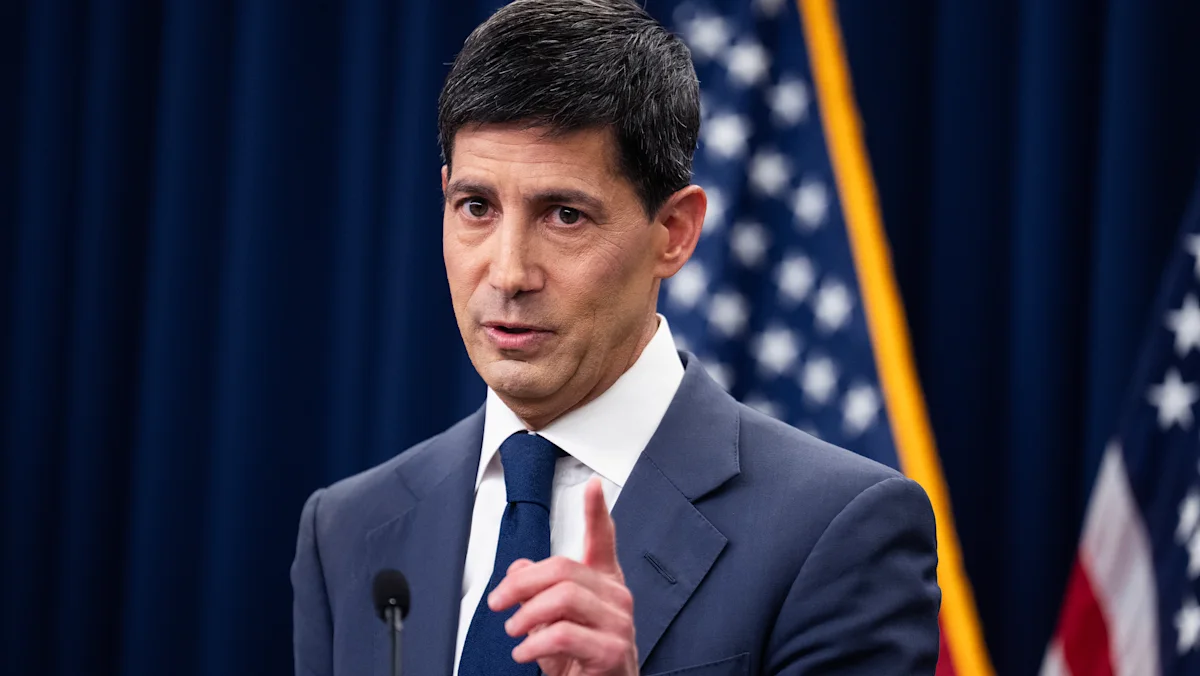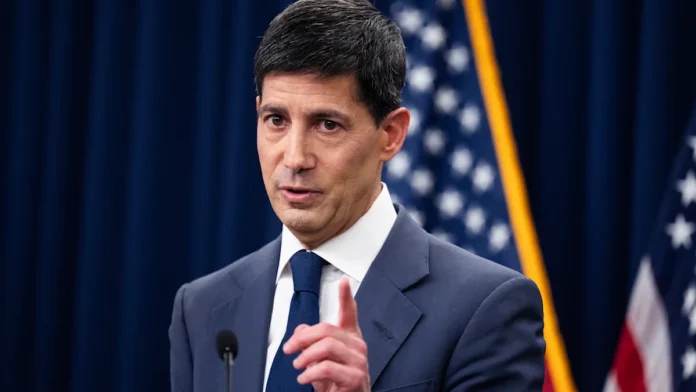
Kevin Warsh has wasted no time making his mark on the Federal Reserve. In his first meeting as chairman, the new Fed chief held rates steady but signaled sweeping changes to the way America’s central bank operates.
Warsh made his first appearance as chairman on June 17, when the central bank announced it would hold rates steady for the fourth consecutive meeting, leaving the benchmark lending rate between 3.5% to 3.75% (1). During the press conference, Warsh also announced the creation of new task forces dedicated to “each of five areas that are central to the broad conduct of monetary policy.”
Must Read
Perhaps most significant, though, was his decision to withhold any projections. The Fed released its standard dot plot, where 19 central bank policymakers can offer their forecasts anonymously. It did not include Warsh’s projection.
Warsh has publicly criticized the dot plot in the past, saying the Fed should provide less guidance and communication on where interest rates may go.
“Stop talking so much,” he advised the Fed last year. (2) “More thinking, less talking.”
The chair has long argued that the Fed should limit its communication with the public, saying the markets fixate on the central bank’s forecasts and should instead be left to do more of the heavy lifting.
“I think financial markets perform best when they react to incoming data,” Warsh said. “I think financial markets work less efficiently when they ask a question, ‘How will the Federal Reserve react to that incoming information?'”
The future of the Fed
While Warsh appears keen to enact change, he will have to appeal to the Federal Open Market Committee’s 12 members, who also vote on significant moves.
“The other members of the Federal Open Market Committee (FOMC) will likely act as a brake on any quick shift in monetary policy under Warsh,” Michael Feroli, chief U.S. economist at J.P. Morgan, said in a statement. (3)
Feroli added that changes to analysis, like the dot plot, would require a vote from the committee. Though he said he believes the plot is favored by many on the FOMC, despite mixed reviews from the public.
The chief economist also said Warsh’s dovish stance on the economy is at odds with America’s economic outlook and that he’d need to build consensus among other committee members, many of whom are more hawkish.
Read More: About 1 in 5 Americans over 50 has zero retirement savings. Here’s why it’s not too late
What it means for investors
Markets are still navigating what the Warsh era will look like. Following June 17’s meeting, stocks fell, short-term bond yields rose, and the U.S. dollar strengthened.
“Markets will have to get used to a difficult transition to the new Fed era,” Krishna Guha, vice chairman at Evercore ISI, said in a note. (4)
Warsh says financial markets should act on their own when reading the economy, rather than trying to anticipate how the bank will act. (5) The statement from the Fed and the subsequent press conference were both much shorter than usual. Warsh has also hinted at fewer news conferences in the future.
The immediate market reaction suggests investors are responding to this shift. The changing of the guard could continue to trigger fractious markets as traders learn what impact Warsh’s leadership will have and what his view on inflation, the economy and the bank’s role will lead to.
For investors, this could be a time of uncertainty, but experts are warning against any drastic moves.
“Diversification has been the best antidote to volatility so far in 2026, and we believe that will continue as investors position themselves for uncertainty for the path of rates moving forward,” Phil Camporeale, J.P. Morgan chief investment strategist, said in a statement. (6)
It’s important to avoid dramatic reallocations or panic selling. However, investors should be prepared for the possibility of increased market volatility, as Wall Street adjusts to the changes. Favoring companies that are consistently profitable and limiting exposure to stocks particularly sensitive to interest rates can help protect investments.
The possible volatility also means high-quality stocks could trade at a discount if the markets overreact to the Fed’s moves.
You May Also Like
Join 250,000+ readers and get Moneywise’s best stories and exclusive interviews first — clear insights curated and delivered weekly. Subscribe now.
Article Sources
We rely only on vetted sources and credible third-party reporting. For details, see our ethics and guidelines.
U.S. Federal Reserve (1); The Wall Street Journal (2); JPMorgan Chase (3); NBC News (4); CNN (5); Chase (6)
This article originally appeared on Moneywise.com under the title: Economists say the Fed committee will ‘act as a brake’ on Kevin Warsh’s ‘regime change’. Investors take heed
This article provides information only and should not be construed as advice. It is provided without warranty of any kind.
Source link
Post Views: 104