Validators would still be paid the same way for doing the same work, and they keep all the transaction fees and tips they earn from building blocks. Only the newly created ETH gets burned. The deduction from validator rewards arrives slowly, phasing in over 18 months, with about six months before that while the upgrade ships, so roughly two years to adjust.
The current curve never switches off. The proposed one hits zero at 50%. (Shaurya Malwa/CoinDesk)
Six researchers signed the proposal, including Justin Drake of the Ethereum Foundation. It landed days before the deadline for smaller changes to be considered for Hegotá, Ethereum’s next network upgrade.
The problem, as the authors see it, is that staking never stops paying. Even if every ETH were staked, the yield would still sit near 1.5%, so there is always a reason to add more.
Jérôme de Tychey, one of the proposal’s authors, projects more than 70 million ETH staked by January 2028 if nothing changes. Past a certain level, the proposal states, extra stake makes Ethereum less secure rather than more, because the ETH ends up held by exchanges and staking providers instead of its owners, while small individual stakers get squeezed out.
About 41 million ETH is staked today, or close to 34% of supply. Another 2.5 million sits in the queue waiting to be activated, trackers show, a wait of six weeks or more, and nobody is queuing to leave.
Ethereum is 16 points from the level the proposal treats as a ceiling. (Shaurya Malwa/CoinDesk)
Ethereum limits how fast validators can join or leave, so both directions form a line. The cap exists so a large bloc can’t enter or exit fast enough to destabilize the network. Entry queue is ETH waiting to start staking, exit queue is ETH waiting to stop. Currently about 57,600 ETH a day can activate.
O’Reilly Automotive, Inc. (NASDAQ:ORLY) recently reported solid financial results for the second quarter of 2026. For the quarter ended June 30, 2026, sales increased by $367 million, or 8%, to $4.89 billion from $4.53 billion in the same period last year. Gross profit also increased 8% to $2.52 billion compared to the same period one year ago, while the gross margin remained unchanged at 51.4% of sales.
Analysts Stay Bullish on O’Reilly (ORLY) Despite Cutting Price Targets After Q2 Results: Is the Stock a Buy?
Despite the strong quarterly performance, some Wall Street analysts lowered their price targets on O’Reilly Automotive, Inc. (NASDAQ:ORLY) while keeping their positive ratings on the stock. Morgan Stanley cut its price target from $112 to $108 and maintained its Overweight rating. The research firm said the company’s second-quarter results were broadly in line with expectations and believes its underlying earnings power remains intact.
DA Davidson also reduced its price target on O’Reilly Automotive, Inc. (NASDAQ:ORLY) to $106 from $114 while keeping its Buy rating. The firm noted that the company indicated it is not pursuing a deal with GPC, with both companies now stepping away from the transaction. According to DA Davidson, the market had not reacted favorably to the potential deal.
Bull Case
DA Davidson noted that O’Reilly Automotive, Inc.’s (NASDAQ:ORLY) selling, general, and administrative expenses pressure have reached their peak, which should support stronger incremental margins. The firm also pointed out that the company’s implied guidance for the second half of 2026 could prove to be conservative even as it navigates margin pressure.
The company’s latest results showed continued operational strength. Net income increased 7% year-over-year to reach $715.1 million, even though net margin slightly dropped down to 14.6% from 14.8%. Interest expense increased from $57.3 million to $69.9 million, partially offsetting higher operating profit.
O’Reilly Automotive, Inc. (NASDAQ:ORLY) also raised its outlook for 2026 and now expects revenue of $18.9 billion to $19.2 billion with operating margins ranging between 19.3% and 19.8%.
The company continued to expand its stores and return capital to shareholders. O’Reilly Automotive, Inc. (NASDAQ:ORLY) has opened 110 net new stores across North America so far in 2026 and remains on track to achieve its goal of opening 225 to 235 net new stores this year. During the second quarter, the company repurchased 16.7 million shares of its common stock at an average price of $90.40 per share, investing a total of $1.51 billion.
Bear Case
While O’Reilly Automotive, Inc.’s (NASDAQ:ORLY) latest results and higher guidance support its near-term outlook, investors still face some risks as the investment case for the stock depends on steady demand for aftermarket parts, disciplined store expansion, and effective cost management.
If the company can deliver on its updated 2026 revenue and margin guidance, it could be the biggest near-term catalyst. However, rising wage costs, tariffs, and increasing supply chain complexity could continue to pressure margins.
The company also remains exposed to potential tariff or sourcing changes that could pressure product costs. In addition, inflation-driven increases in store-level wages and occupancy expenses remain key risks that investors should look out for.
Hedge fund interest in O’Reilly Automotive, Inc. (NASDAQ:ORLY) has also slightly weakened recently. According to Insider Monkey’s database of elite hedge funds, 67 hedge funds held positions in the company in the first quarter of 2026, down from 69 funds in the fourth quarter of 2025. Its competitor, AutoZone, Inc. (NYSE:AZO), saw an even larger decline in hedge fund ownership, with the number of hedge funds falling from 74 to 63 over the same period.
Short interest points to a relatively more favorable view of O’Reilly Automotive, Inc. (NASDAQ:ORLY). As of July 15, 2.79% of the company’s float was sold short, compared with 3.40% for AutoZone, Inc. (NYSE:AZO). The lower level of short interest indicates that investors are placing fewer bearish bets against O’Reilly Automotive, Inc. (NASDAQ:ORLY) than against its rival.
Overall, O’Reilly’s strong comparable sales, higher guidance, store expansion, and aggressive buybacks support the bull case. However, the key question is whether this growth can translate into stronger incremental margins in the second half of the year.
While we acknowledge the potential of ORLY to grow, our conviction lies in the belief that some AI stocks hold greater promise for delivering higher returns and have limited downside risk. If you are looking for an AI stock that is more promising than ORLY and that has 100x upside potential, check out our report about the cheapest AI stock.
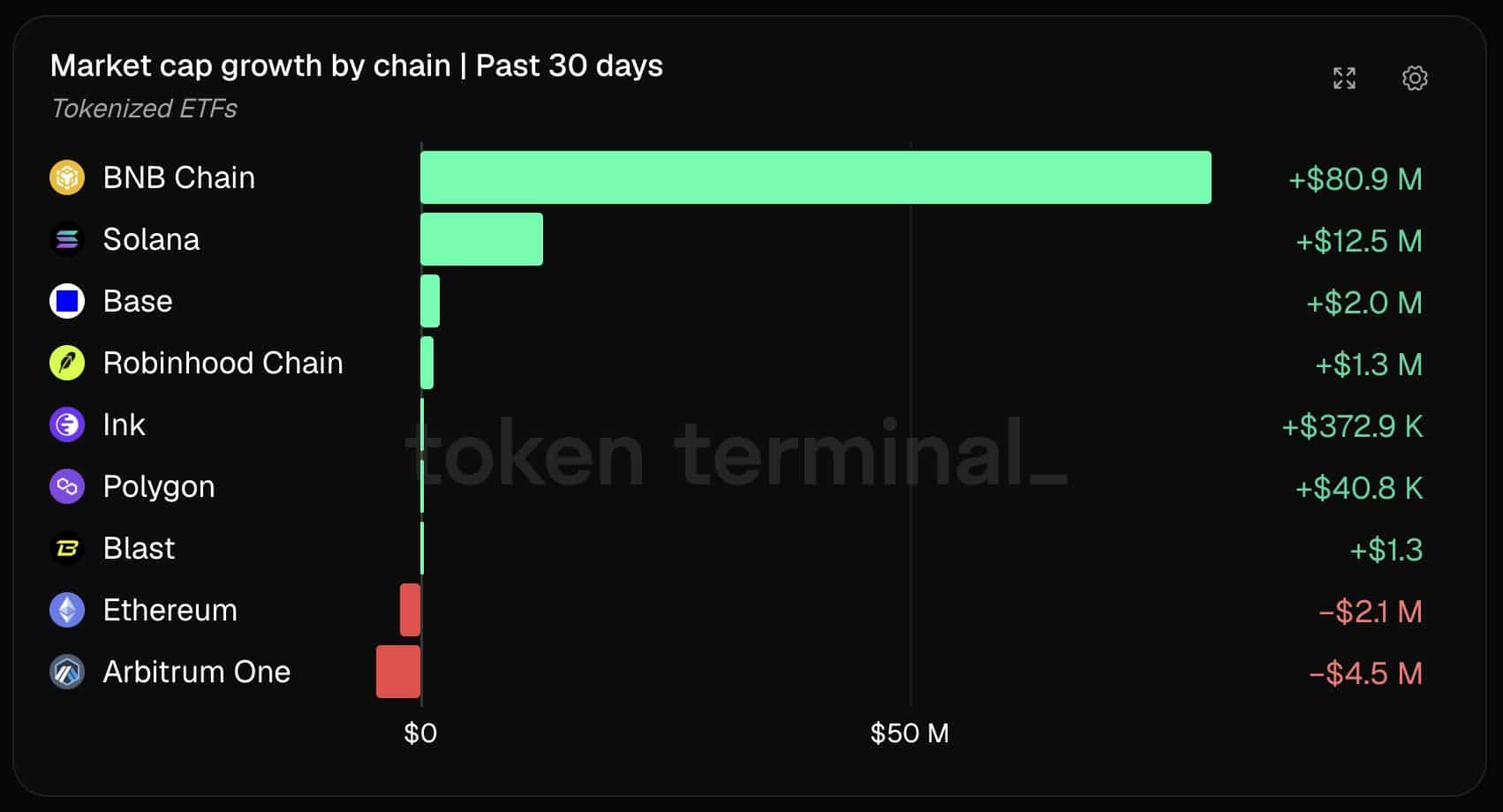
Token adoption of ETFs has accelerated over the last 30 days. However, growth has been uneven across blockchain networks. In fact, at the time of writing, BNB Chain led the way with $80.9 million in market value added.
This uptick seemed to clearly outpace Solana’s [SOL] $12.5 million value growth, reinforcing BNB Chain’s growing leadership.
Source: oken Terminal
Smaller increases on Base and Robinhood chains also hinted at the broader expansion of the market. On the contrary, Ethereum [ETH] and Arbitrum [ARB] both recorded net declines of $2.1 million and $4.5 million, respectively.
Worth pointing out, however, that adoption remains somewhat concentrated rather than spread evenly.
This divergence means that issuers now increasingly favor faster-growing ecosystems. It is also evidence of greater competition for the issuance of token ETFs. If BNB Chain maintains this momentum, it could strengthen its position as a leading provider of infrastructure. Competing networks may need issuance activity to reclaim market share.
Tokenized treasuries extend their lead
Token ETFs that have tokens have seen competition across blockchains. However, at press time, token U.S treasuries seemed to underline a different pattern. Institutional capital has been flowing to leading issuers, rather than spreading evenly throughout the market.
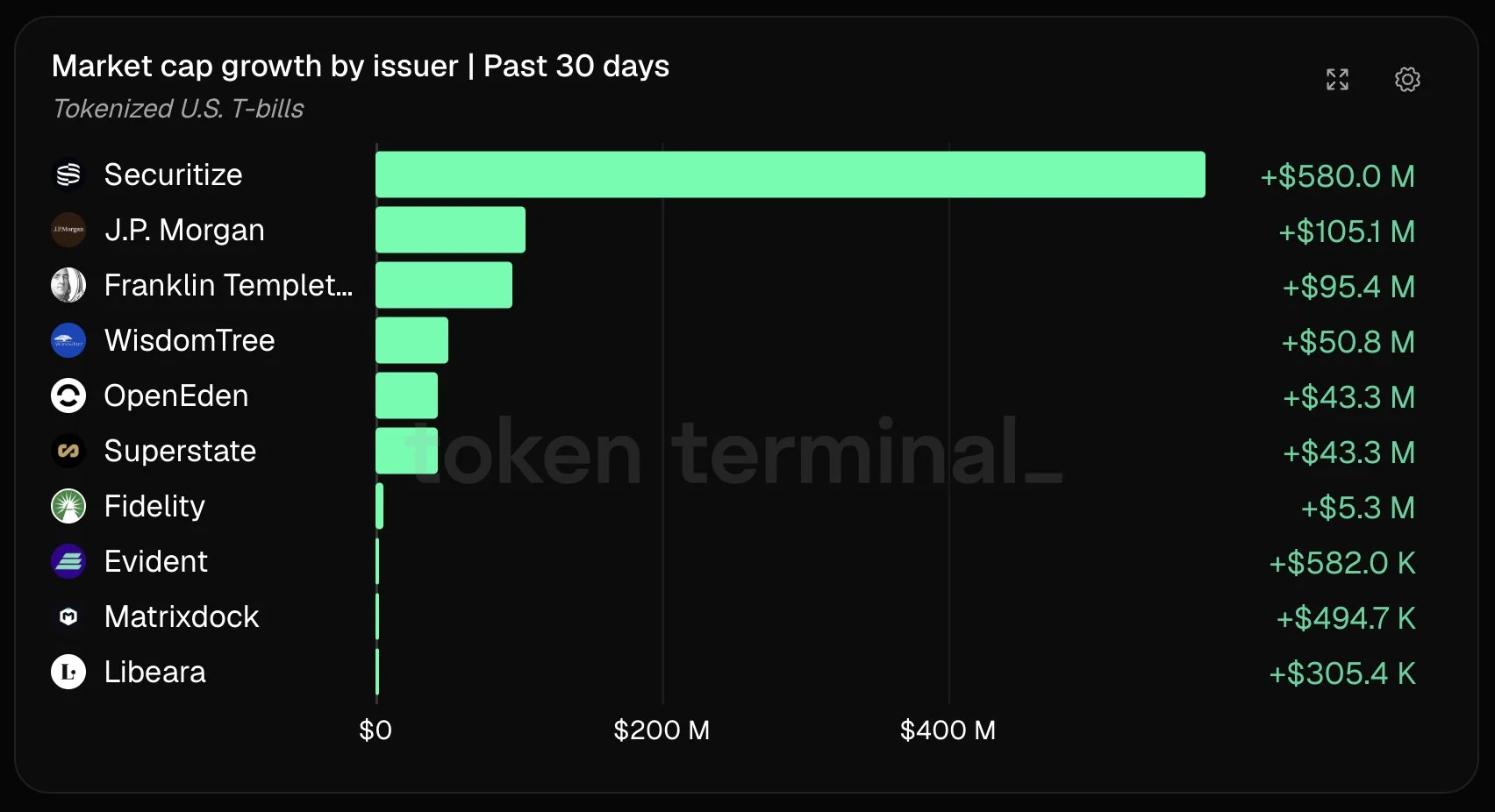
For instance, institutional capital has continued to flow towards established leaders such as Securitize, who added $580 million in the last 30 days alone.
However, in comparison, the total contributions made by JP Morgan and Franklin Templeton were $105.1 million and $95.4 million, respectively.
Source: Token Terminal
This gap means that institutions still value scale, liquidity, and operational maturity when allocating capital on the blockchain. This trend also lines up with Securitize’s overall dominance supported by nearly $5 billion locked and BlackRock’s $3.5 billion BUIDL fund.
If this trend continues, tokenized treasuries could remain the main way institutional investors adopt real-world assets.
Expansion of tokenization
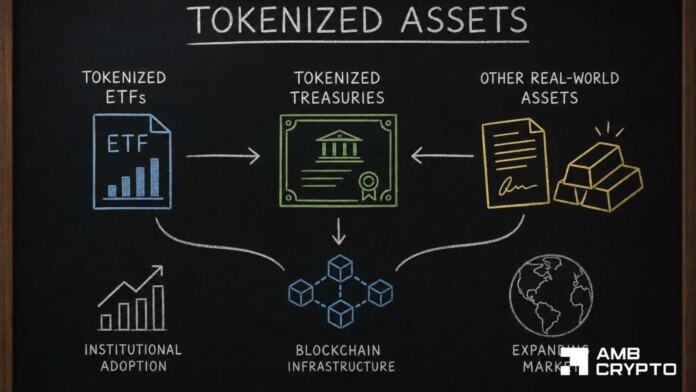
That leadership is also reshaping the broader tokenized asset market. Rather than concentrating capital in just one segment, institutions are gradually branching out into additional asset classes. Equity and ETF tokens now total about $1.9 billion, while private credit and commodities are also gaining more interest.
In fact, the active RWA market has grown to between $29 billion and $37 billion. Broader participation means institutions increasingly see tokenization as financial infrastructure and support sustained expansion of the market beyond relying solely on government debt.
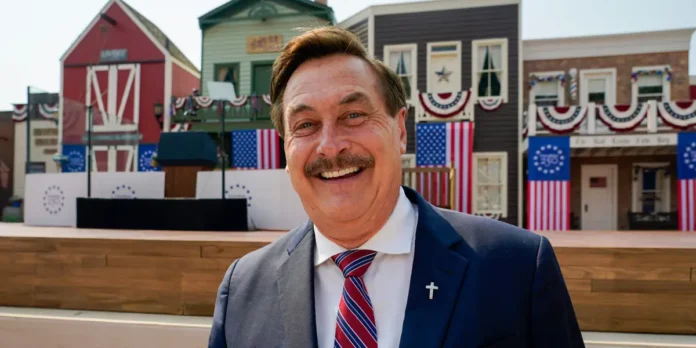
Lindell, a Trump ally, said on Facebook on Tuesday that he’d made one of the “biggest decisions” of his life: stepping down as CEO to dedicate all his “time and energy” to his campaign for Minnesota governor.
“Minnesota deserves my full attention, and that’s exactly what I’m giving it. I’m all in, and I can’t wait to earn your vote,” Lindell said on Facebook.
James Furlong, who was MyPillow’s president from 2004 to 2019, is the company’s new CEO. MyPillow said in a press release on Tuesday that Lindell’s ownership has been reduced to a minority stake — but he’ll stay on the company’s board.
“The current team with Jim will be the best at moving forward and expanding MyPillow,” Lindell told Business Insider on Tuesday night.
Lindell founded MyPillow in Minnesota in 2004, after a dream he had about the company’s name, logo, and a foam pillow that could hold its shape.
According to Lindell’s 2019 memoir, “What Are the Odds? From Crack Addict to CEO,” Lindell and his son experimented with making the pillows’ foam filling by hand.
Every time Cheryl publishes a story, you’ll get an alert straight to your inbox!
Stay connected to Cheryl and get more of their work as it publishes.
Lindell then built the business by marketing the products at trade shows and kiosks, scaling the company up during the 2000s infomercial boom.
He told Business Insider that what he would miss most about being CEO is his employees.
“They are like family,” Lindell said.
Minnesota’s primary elections are scheduled for August 11. The election will be held on November 3, when voters will elect Minnesota’s next governor.
Lindell has spent years — and millions of dollars — trying to prove voter fraud in the 2020 election.
He also spent years embroiled in a billion-dollar defamation lawsuit filed in 2021 by the voting machine company formerly known as Dominion Voting Systems. The company, now known as Liberty Vote, settled the lawsuit with Lindell in July for an undisclosed amount.
That’s because the ability to write messages is tied to a quirky Bitcoin feature called OP_RETURN, which lets anyone attach a small text string to a transaction. The text gets permanently timestamped into the blockchain alongside the transfer of money. The function exists for technical purposes; mainly, developers use it to timestamp documents or embed small proofs. That said, users can use the function to leave personal notes.
The Coldcard hardware wallet exploit, first detected on July 30, has snowballed into a major self-custody breach, with confirmed losses now topping $100 million.
What people are actually writing
The plea that opened this article isn’t the only one. Several similar messages have surfaced, according to on-chain tracker Arkham Intelligence.
One reads “Please Please Please” alongside an address; another bluntly asks for “80% of my 5 BTC” back. Whether these come from genuine hack victims or opportunists capitalizing on the sympathy wave is difficult to verify.
Other messages are opportunistic rather than sympathetic.
One reads, “I clean btc, do kyc and cashout. I take 10%,” complete with a Telegram handle — a laundering pitch hoping to land the hacker as a client. Another begs, “1 BTC for my Bitcoin journey,” which is entirely unrelated to the hack. The sender seems to be using the hacker wallet’s spotlight to solicit money from strangers.
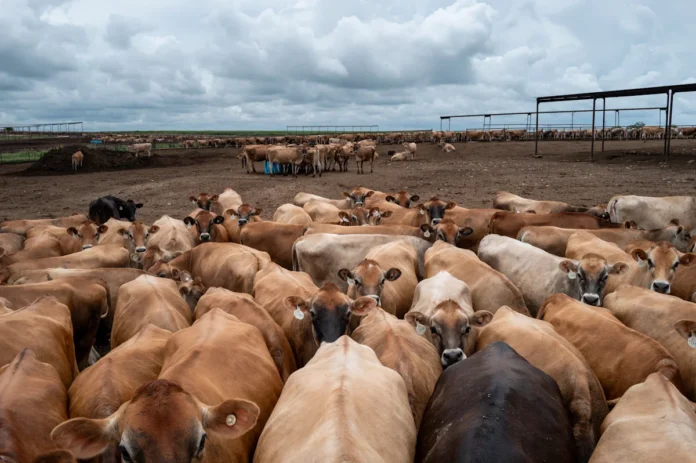
A cattle shortage in the US could get some relief with the reopening of the Mexican border, but Tyson Foods CEO Donnie King said it won’t make up the losses entirely this year, as a long list of factors weighs on beef supply.
Beginning Aug. 24, the US Department of Agriculture (USDA) will reopen the Douglas, Ariz., port of entry for cattle trade before opening two other ports in New Mexico, which together account for more than half of imports.
The USDA suspended cattle imports through the southern border, which historically sent roughly 1.2 million cattle into the US per year, in November 2024 and again in mid-2025 due to concerns about the spread of the New World screwworm.
Cattle are herded in a stable on June 5, 2026, in Hamilton, Texas. (Brandon Bell/Getty Images) ·Brandon Bell via Getty Images
“Every animal entering the United States through these ports will undergo a full USDA inspection to ensure it is free of any signs of New World screwworm,” the USDA said, addressing ranchers’ concerns about the parasite.
The US cattle herd is at its lowest level in 75 years, according to the USDA, driving consumer beef prices to record highs. In Tyson Foods’ fiscal third quarter, beef volume dropped 15.9% while prices rose 12.1%.
“To be clear, the reopening of the Mexican border will not solve the entire gap of beef losses we are currently seeing,” King, who is expected to retire in October, told investors on Tyson’s earnings call on Monday.
“We are not waiting passively for the cattle cycle to turn, and we continue to focus on improving the variables within our control,” King added.
Tyson COO Wes Morris said it could take up to a year for the industry to see a positive impact from the reopening of the border. First, younger cattle will need to go to grass and then to feed yards.
Due to timing, the border reopening won’t have a material impact on the remainder of this fiscal year, which ends in September, though it could provide the potential for improvement in 2027 and after.
The company lowered its outlook for 2026 adjusted operating income due to challenges around beef. It now expects its annual operating profit range to be between $2.1 billion and $2.3 billion, down from the previous range of $2.2 billion to $2.4 billion. For the beef segment, Tyson expects an operating income loss of $500 million to $650 million.
It’s not just Tyson Foods feeling the pinch of a tighter cattle supply — many restaurant chains are feeling it too.
In a note to clients, TD Cowen analyst Andrew Charles said Texas Roadhouse (TXRH) is the biggest beneficiary of the border reopening, due to beef representing 50% of its cost of goods, followed by Chipotle (CMG), LongHorn Steakhouse owner Darden Restaurants (DRI), Chili’s parent Brinker International (EAT), and Shake Shack.
Blockchain-based prediction markets platform Polymarket is looking to raise fresh capital at a $20 billion valuation, Bloomberg reported Tuesday, citing people familiar with the matter.
According to the person, the company closed a funding round at a $15 billion valuation in April which included a $600 million investment from the Intercontinental Exchange, the owner of the New York Stock Exchange.
In June, Polymarket told CNBC that its annualized revenue had climbed well above $1 billion even after the platform saw a decline in trading volumes in April and May which were offset by record highs during the World Cup.
Polymarket founder and CEO Shayne Coplan has long argued Polymarket should be viewed as an information platform rather than a betting site. In a March appearance, he said prediction markets let people “put your money where your mouth is” when they disagree with consensus, describing the platform as “a very useful thermometer of the world” that helps people assess the likelihood of future events. He also said his long-term vision is to expand beyond headline events into a broader “almanac for the future” covering a much wider range of markets.