Home Blog Page 145

Forget robots on assembly lines. Foundational Industries wants AI to run the entire factory

0
Forget robots on assembly lines. Foundational Industries wants AI to run the entire factory

His startup, Foundational Industries, just raised a $25 million seed round, Fortune learned exclusively, to build factories where AI runs the whole operation rather than bolting automation onto an old assembly line. The round was led by BoxGroup and Zigg Ventures, with Abstract Ventures, Adverb Ventures, Buckley Ventures, and Offline Ventures participating. 

Rather than retrofitting a factory with a robot arm here and a vision sensor there, Foundational makes physical products, starting with data-center hardware, using factories designed from scratch to be run by software. 

Winer, who spent 25 years at Alphabet’s Sidewalk Infrastructure Partners deploying over $1 billion in capital, told me the seed money isn’t meant to fund a giant factory yet. “What this is allowing us to do is to sort of build a minimum viable product,” he said. “We’ve actually built the entire factory in software already using software emulators.”

Foundational’s first customers are data-center developers, neoclouds, and chipmakers who need custom rack enclosures now that new AI silicon runs at different voltages and cooling requirements. They declined to disclose customer names.

But Winer’s real argument is about China. The common wisdom in Washington is that China’s manufacturing dominance is built on cheap labor and lower-quality copying. Winer says that’s outdated. “Many of their factories are some of the most advanced automated factories in the world, and they are increasingly using not just international industrial automation, but also homegrown and home produced solutions,” he told me. China has poured over $1 trillion into advanced manufacturing over the past decade, backed by state subsidies and what Winer calls “a really dense industrial ecosystem” that lets new products get designed and launched fast.

That density is precisely why he thinks a head-on copy of China’s approach won’t work. “We just don’t have the people or the skill sets to do it,” he said. “And even if we did, it’s probably not economically competitive to China.”

So Winer’s thesis is to skip that fight entirely and build a different kind of factory. His argument rests on two American advantages: sophisticated AI models and researchers (which is now a shrinking talent gap) and far more AI compute. That combination, he says, lets Foundational’s system take a customer’s “product intent” and almost instantly generate a bill of materials and manufacturing process (a step that traditionally took months of manual design work). 

There’s also a structural weakness in China’s model that Winer is betting against. He argues China’s factories, however advanced, are still built around older-style automation that needs constant utilization to justify state subsidies. “They kind of need to feed the beast now,” he said. His wager is that AI-native factories—cheaper and faster with each one built—can give the U.S. a much-needed edge. 

See you tomorrow,

Lily Mae Lazarus
X:
@LilyMaeLazarus
Email: lily.lazarus@fortune.com
Submit a deal for the Term Sheet newsletter here.

Joey Abrams curated the deals section of today’s newsletter. Subscribe here.

VENTURE DEALS

CAIS, a New York City-based alternative investment platform for independent financial advisors, raised $170 million in Series D funding. Vista Equity Partners led the round and was joined by AllianceBernstein and others.

Eliyan, a Santa Clara, Calif.-based developer of connectivity technologies designed for AI compute, memory, and networking systems, raised $145 million in Series C funding. Seligman Ventures led the round and was joined by Cisco Investments and Lumentum

Onyx Security, a Tel Aviv, Israel and New York City-based AI control company, raised $113 million in Series B funding. Bessemer Venture Partners led the round and was joined by Cyberstarts, TCV, Conviction, FirstMark, Vintage, QuantumLight, and G Squared.

groundcover, a Tel Aviv, Israel-based observability platform, raised $100 million in Series C funding. One Peak led the round and was joined by Morgan Stanley Expansion Capital and existing investors Zeev Ventures, Angular Ventures, Heavybit, and Jibe.

ChipAgents, a Santa Clara, Calif.-based agentic AI platform for semiconductor design, raised $60 million in Series A2 funding from B Capital, Bessemer Venture Partners, Micron, and others.

P-1 AI, a San Mateo, Calif.-based developer of an AI mechanical and electrical engineer designed for industrial teams, raised $50 million in Series A funding. New Enterprise Associates led the round. 

Terminal, a Toronto, Canada-based provider of a unified telematics-integration platform for insurance, fleet-management, and logistics companies, raised $20 million in Series A funding. Battery Ventures led the round.

Centralize, a San Francisco-based relationship intelligence platform for enterprise revenue teams, raised $19 million in funding. NEA led the round and was joined by Salesforce Ventures, Y Combinator, 20SALES, Ritual Capital, and others.

Henry AI, a New York City-based AI platform automating back-office knowledge work for commercial real estate teams, raised $16.5 million in Series A funding. FirstMark Capital led the round and was joined by Thomson Reuters Ventures and existing investors.

UnitAI, a Boston, Mass.-based physical AI company developing warehouse-automation technology, raised $12 million in seed funding. Prologis Ventures, Dynamo Ventures, and Ground Up Ventures led the round and were joined by eGateway Capital, Recursive Ventures, Think + Ventures, ZEP Fund, and Crosscourt.

Pangram Labs, a Brooklyn, N.Y.-based AI detection platform, raised $9 million in funding. Menlo Ventures led the round and was joined by Haystack, ScOp Venture Capital, Script Capital, and Cadenza.

Mirae, a New York City-based AI-driven continuous care platform for autoimmune disease and other complex chronic conditions, raised $5.4 million in funding. Oxford Science Enterprises led the round.

FAST Metals, a Stamford, Conn.-based mining technology company, raised $4.3 million in pre-seed funding. New Climate Ventures led the round.

CopySight, a Los Angeles, Calif.-based AI IP governance company, raised $3 million in seed funding. Mucker Capital led the round and was joined by Taisu VC, Flint Capital, and Yellow Rocks!

MASAJ, a London, U.K.-based bodywork brand, raised £1.5 million in funding. FIGR Ventures and Sorven Capital led the round.

Dimension, a Los Angeles, Calif.-based social commerce tech company, raised $1.7 million in seed funding from Science Inc., UpscaleX, OpenSky, and others.

PRIVATE EQUITY

CHAOS Industries, backed by Valor Equity Partners, acquired Atropos Group, a New York City-based defense technology company specializing in autonomous aircraft systems. Financial terms were not disclosed.

Lafayette Instrument, backed by Branford Castle, acquired Avisoft Bioacoustics, a Glienicke/Nordbahn-based bioacoustics company. Financial terms were not disclosed.

Vista Equity Partners agreed to acquire Quantios, a London, U.K.-based provider of SaaS solutions to the trust and corporate services industry. Financial terms were not disclosed. 

FUNDS + FUNDS OF FUNDS

Jump Capital, a Chicago, Ill.-based venture capital firm, raised $350 million for its eighth fund focused on tech companies.


Source link

SharpLink earns 420 ETH from staking in a week – What it means

0
SharpLink earns 420 ETH from staking in a week - What it means


In the past week, Sharplink made an extra 420 ETH just by staking its current Ethereum [ETH] holdings, without purchasing any more ETH. With this, its total staking rewards have now reached 24,338 ETH. 

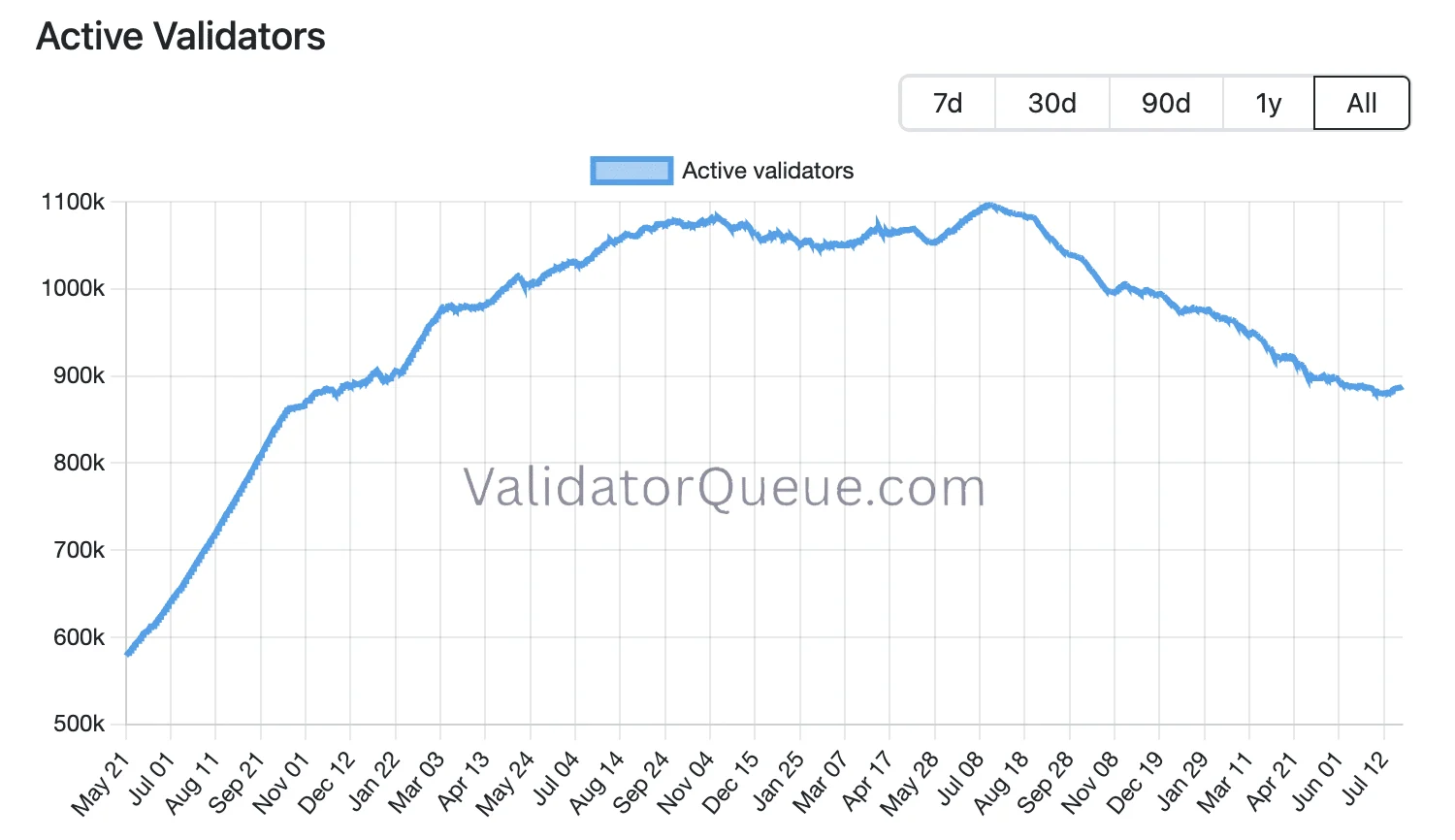
This occurs as Ethereum’s staking dynamics have undergone a significant change. The number of active validators for Ethereum continued to decline at the start of July, going from about 886,000 to a low of about 880,000. 

However, by mid-July, the trend began to shift. Interestingly, by the month’s end, the number of active validators had increased steadily from about 880,000 to between 887,000 and 888,000. Despite its modest size, the increase is noteworthy because it represents the first long-term recovery following several months of declines. 

Active validators drop
Source: Validator Queue

Is ETH’s staking ecosystem gaining strength?

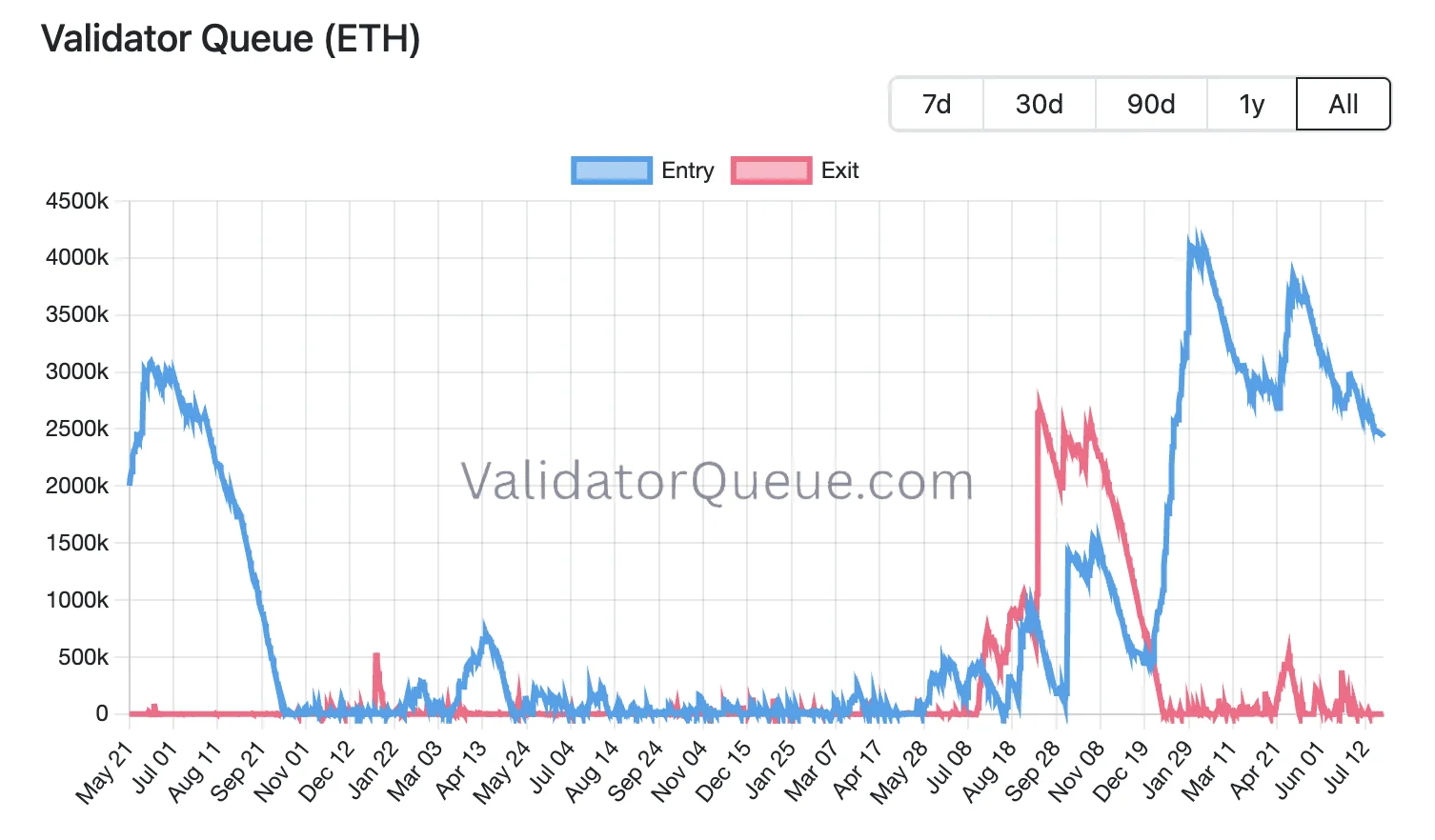
At the start of July, roughly 2.8 to 2.9 million Ethereum were waiting in the “Entry” queue. By the end of July, that number had gradually declined to between 2.4 and 2.5 million ETH.

Yet this does not indicate a decline in demand but suggests that the Ethereum network was processing new validators more quickly than more staking requests were being made. 

Validators queue ethValidators queue eth
Source: Validator Queue

The “Exit” line, meanwhile, remained almost at zero for the entire month, except for a few brief spikes. This indicates that there was little selling pressure or profit-taking from current stakers, as suggested by the small number of validators trying to withdraw their staked ETH.

Given that there were significantly more Ethereum seeking to enter staking than leave it in July, the high entry queue and small exit queue collectively indicate a strong net inflow into the staking ecosystem. 

This setting also further explains why businesses like Sharplink, which actively stake their ETH treasury, keep accruing staking rewards because more money is still being invested in protecting the network rather than leaving it.

Sharplink vs. Bitmine

However, if compared with Bitmine, the biggest Ethereum DAT, the latter has 4,917,189 ETH already staked through its institutional staking platform, MAVAN (the Made in America VAlidator Network), which accounts for roughly 85% of its holdings.

In terms of holdings, Sharplink owns 868,699 ETH worth $1.65 billion, while Bitmine has 5,787,414 ETH worth $11.8 billion. However, at press time, Sharplink’s stock price was up 0.94% at $6.44, and Bitmine’s stock price was down 1.95% at $17.57.

All this happened as ETH traded near $1,903.99, following a 1.47% increase over the previous day. In addition, the ETH ETF was also seeing more inflows than it did during the recent nine weeks of outflows.


Final Summary

  • Sharplink increased its staking rewards and now has 24,338 ETH in total rewards but lags BitMine.
  • The entry queue, exit queue, and the active validators of the Ethereum validator queue further clarified why Shaprlink was staking ETH. 


Source link

Rollercoaster bitcoin, ether price action leads to $286 million liquidations

0
Rollercoaster bitcoin, ether price action leads to $286 million liquidations

Major cryptocurrencies are unchanged over 24 hours. But masking the calm are erratic back-and-forth price swings around the Fed meeting that flushed out leveraged futures bets, triggering heavy liquidations.

About $286 million in positions were liquidated across 87,294 traders in 24 hours, according to CoinGlass. Longs accounted for $186 million of the damage and shorts $100 million, the signature of a market that moved hard in both directions and settled back where it started.

Bitcoin’s data show that both bulls and bears have borne the brunt of liquidations. Roughly $57 million in bitcoin positions were cleared, and the balance was nearly even, with about $28 million in longs against $29 million in shorts. The price swung between $63,247 and $64,660 during the window, a range of barely 2%, which was enough to clear traders positioned either way.

The single biggest liquidation was a $2.9 million bitcoin position on Binance.
Ether recorded the largest total at about $58 million, tilted toward longs, as prices ranged between $1,850 and $1,920. As of this writing, bitcoin traded at around $63,900, roughly where it was 24 hours ago. The same is true for ether (ETH), which traded at $1,900.


Source link

Trading Day: A show of resilience  

0
Trading Day: A show of resilience  


By Jamie McGeever

ORLANDO, Florida, July 28 (Reuters) – European and U.S. stock markets on Tuesday shrugged off a deep slump in Asia earlier in the day, following another sharp fall in oil prices and growing optimism around peace talks between the U.S. and Iran, while investors also awaited key tech earnings and the ‌Federal Reserve’s policy decision.

In my column today, I look at whether high and rising bond yields will slam the brakes on Wall Street. Intuitively, there’s a good ‌chance. But if rising borrowing costs are a reflection of stronger nominal growth and a healthy economy, then not necessarily.

If you have more time to read, here are a few articles I recommend to help you make sense ​of what happened in markets today.

1. Bar to Fed rate hike this week remains high even as markets see a chance

2. U.S. bond market avoids big rate bets as inflation dims Fed outlook

3. Central banks can’t “see through” this many inflationary risks: Mike Dolan

4. Market warning signals flare again as tech, inflation fears intensify

5. Asian chip stocks slide as China competition fears rattle AI trade

Today’s Key Market Moves

• STOCKS: South Korea tanks 11%, Japan -4%. Europe +0.4%, UK +0.9%. Dow +1% to within 1% of its record high.

• SECTORS/SHARES: Seven sectors on the S&P 500 rise, four fall. “SOX” chip index -4.5% to 3-month low. Healthcare, ‌consumer staples +2%. Sherwin-Williams +8%, Coca-Cola and Boeing +5%; Apple market cap briefly tops $5 ⁠trillion; Sandisk -14%, now -55% in a month.

• FX: Dollar hits 1-month high but ends slightly lower. NOK -0.5%, CLP +1%.

• BONDS: U.S. yields down 3-4 bps across the curve; another weak U.S. auction, this time 7-year.

• COMMODITIES/METALS: Oil -5% to 2-week low, WTI and Brent both down 16-18% since Thursday. Gold -1%.

Today’s Talking ⁠Points

* AI CDS

The cost of insuring against many of the biggest of the Big Tech firms defaulting is soaring to the highest in years. In some cases, like Meta, Oracle, Nvidia and Amazon, the highest on record. Granted, some of these companies had no debt on their books at all until recently, but the speed and magnitude of the move is quite something.

Will these firms ever default? Unlikely. Despite ​the ​growing debt load to fund AI spending, they’re still massive cash-generating enterprises. Microsoft has a triple-A credit rating, ​higher than the U.S. federal government. But the signal CDS traders ‌are sending is clear — AI capex is reaching bubble territory.

* Rotation, rotation, rotation

The U.S. semiconductor index is technically in a bear market, down 25% from its high on June 22. Yet the Dow is less than 1% from its record high, and the S&P 500 is 2% away from its peak. The resilience is impressive, especially considering the churn and selling is most pronounced in the sectors and megacap names that have powered Wall Street’s rally until recently.

Rotation has kept the main U.S. indices afloat. Financials and healthcare hit record highs on Tuesday, while industrials, consumer staples, utilities and materials are performing strongly. The Russell 2000 small-cap index, only 3% off its record high from earlier this month, is up 19% so far this year. Earnings ‌growth expectations, however, are still heavily skewed towards tech and related sectors. They could still exert a strong ​downward force on the broader market if they disappoint.

* Fighting the good family fight

We’re less than 24 hours ​from one of the most uncertain Fed rate decisions in years. The probability of ​the Fed staying on hold vs raising rates has shifted to 70-30 from 60-40 on Monday, but even pricing a 30% chance of a ‌hike on the eve of the decision is pretty extraordinary.

That’s one consequence ​of abolishing forward guidance and wanting to make every ​meeting “live”. Fed Chair Kevin Warsh said the debate around the FOMC table in June was like a “good family fight” — a robust, frank and no-holds-barred exchange of views can be expected again, although whether they all still love each other at the end of it is an open question.

What could move markets tomorrow?

• Australia inflation (June, Q2)

• South ​Korea’s SK Hynix earnings (Q2)

• European earnings, including Arm Holdings, UBS, Deutsche ‌Bank

• U.S. interest rate decision

• U.S. earnings, including Microsoft, Meta, Lam Research, Procter & Gamble, Qualcomm, Starbucks

Want to receive Trading Day in your inbox every weekday morning? ​Sign up for my newsletter here.

Opinions expressed are those of the author. They do not reflect the views of Reuters News, which, under the Trust Principles, ​is committed to integrity, independence, and freedom from bias.

(Reporting by Jamie McGeever; Editing by Nia Williams)


Source link

Bitcoin analysts agree the Fed’s hold was hawkish. They don’t agree on what happens next.

0
Bitcoin analysts agree the Fed's hold was hawkish. They don't agree on what happens next.

The hawkishness wasn’t subtle. The Federal Open Market Committee held rates at 3.5%-3.75%, but three policymakers – Cleveland Fed president Beth Hammack, Minneapolis Fed president Neel Kashkari, and Dallas Fed president Lorie Logan – dissented in favor of a hike, pushing the decision through on a 9-3 vote. Warsh then opened his press conference saying “there is no soft inflation target,” reiterating that any inflation print above 2% is unacceptable to him.

“This is the Fed telling markets it will not tolerate inflation above target even at the cost of a growth scare,” Grachev said. “For digital assets, that’s the least favorable outcome on the table this cycle.”

His reasoning simple. “Tighter policy, less liquidity, [means] more expensive carry.” Tighter liquidity makes leveraged and carry-funded crypto positions more expensive to hold, which can pressure bitcoin’s price. Grachev expects the shift in positioning to happen immediately, not gradually. “Institutional positioning should shift defensive immediately, and risk-on assets will take the biggest hit, he said.

He gave bitcoin some credit for resilience so far, but not much comfort looking ahead: “Bitcoin has held up through a hawkish stretch already, but a fresh hawkish surprise would negatively impact prices.”

Can-Luca Köymen, investment strategist at Sygnum Bank, took a nearly opposite view, largely because he’d already priced in the hawkish hold.


Source link

UPS shift away from Amazon shows bigger payoff

0
UPS shift away from Amazon shows bigger payoff


United Parcel Service parcel volumes fell during the second quarter as it completed the phase out of low-margin Amazon business, but revenue per piece and profits increased behind a focus on premium shipments, efficiency gains, and strong pricing amid ongoing economic volatility.

The integrated parcel and logistics giant on Tuesday reported revenues of $22.8 billion, up 7.6% year over year, with adjusted operating profit increasing 12% to $2.1 billion, or $1.76 per share, delivering a modest beat of analyst expectations. Management raised full-year guidance 2% for revenue, now expected at $91.2 billion, and adjusted operating profit plus 0.5% to $8.6 billion. 

UPS (NYSE: UPS) has worked with Amazon over 18 months to eliminate unprofitable shipments from its network, which accounted for half the volume tendered by the retail marketplace — its largest customer. In total, UPS eliminated 2 million pieces per day of Amazon volume and $4.5 billion in related expenses. The drawdown, along with slower overall parcel demand, led UPS to initiate a network reconfiguration aimed at aligning capacity with market demand. The initiative involved closing 150 parcel sort facilities, eliminating 30,000 positions and 50 million labor hours, and adding technology to improve the throughput of existing distribution stations. 

The company closed 45 buildings in the first half of 2025, with several additional closures planned in the second half, CFO Brian Dykes said on a conference call with analysts. By the end of June, 68.5% of U.S. volume flowed through an automated facility compared to 64% the year prior. The cost per piece in an automated handling facility is about 28% lower than a conventional facility with mechanical systems, which spreads out unit costs and drives operating leverage.

“That gives us confidence in the productivity that we should continue to deliver going forward,” he said.

Management previously identified a total of 51 facility closures this year.

Amazon is still responsible for about 9% of UPS revenue, down a point from last year from 13% during the Covid e-commerce boom. The goal now is to optimize the remaining Amazon volume across the various air and ground modes. 

“This reconfiguration was never the destination. It was the foundation. We now have a leaner, more automated, more agile network that will deliver operating leverage as volume grows. And importantly, incremental volume today carries materially better economics than before because of the structural changes we’ve made,” CEO Carol Tomé emphasized.

UPS shares closed down 6.5% to $105.53 at market close, suggesting investor wariness about the below-consensus second-half guidance heading into peak season, along with lower domestic margins versus the second quarter and larger-than-expected volume losses. But the price turned slightly positive in after-hours trading.

Analysts said long-term risks to the stock’s growth include growing competition from Amazon and other last-mile couriers, Amazon pulling remaining volumes, and a looming negotiation with the Teamsters union on a new contract for 2028.

Packages move through a UPS parcel sorting system. (Photo: UPS)

UPS Supply Chain Solutions posted a 7.8% increase in revenue to $2.86 billion, highlighting the company’s continued activity in contract logistics as rival FedEx prepares to sell its supply chain unit to Ceva Logistics.

Results were weighed down by an $891 million charge for employee separation costs associated with a voluntary program that encouraged 7,500 drivers to leave the company as part of the company’s network streamlining effort. About 80% of participating drivers departed the company in the second quarter.

Stronger pricing came from a combination of higher base rates and broad application of fees and surcharges. The TD/Cowen Freight Index quantified how fuel surcharges, higher billed weight per parcel and other fees increased prices for ground and expedited shippers at FedEx and UPS during the quarter. UPS officials maintained that higher fuel costs negated most of the revenue increase from fuel surcharges, with international margins more impacted by fuel because there is more air volume flying longer distances, making it a larger portion of the cost base. 

Domestic package revenue increased 6%, driven by a 9.3% increase in revenue per piece, while volume declined 3.3%. When adjusting for the exit from Amazon and other low-yield delivery accounts, average daily volume actually grew in the second quarter.

International

International package revenue increased 12.5% with a 19% increase in revenue per piece as volume fell 5.8%. But international operating profit slipped 7.2% to $623 million because of higher fuel costs and extra expenses associated with having to adjust the air network to avoid the Middle East conflict zone, including contracting with third-party cargo airlines with existing permissions to fly to new destinations in the region. 

The decline in international volume was led by domestic declines in Europe, with cross-border volumes decreasing 4.2% year over year. On a positive note, volumes grew on the China-U.S. trade lane as the effects from last year’s U.S. cancellation of duty-free access for de minimis e-commerce shipments reset the market, CFO Brian Dykes said.

Earlier this month, UPS opened a new operations center in Kaohsiung to support growing customer demand for premium international logistics services in southern Taiwan. The new facility doubles the size and package processing capacity of UPS’s operations, providing customers in Gangshan Industrial Park, Gangshan Beizhou Industrial Park, Nanzi Technology Park and Renwu Industrial Park — where semiconductor and technology manufacturers are concentrated — with better access to UPS’s end-to-end global logistics network. They also benefit from an up to three-hour extension in pickup cutoff times for exports to the United States, according to a company news release.

In March, UPS opened its largest logistics center in Asia Pacific, in Taiwan which features advanced automation technology and sophisticated storage and warehouse management solutions. 

Go premium

UPS, like FedEx, is ceding ground in last-mile delivery for large e-commerce retailers to focus on premium segments that require more complex logistics actions and command higher yields, such as small-and-medium businesses, healthcare, industrial and automotive. In the second quarter, B2B volume represented 44% of total U.S. volume. 

A key to retaining and winning higher-margin customers is the development of capabilities that enable UPS to provide differentiated service rather than competing on price, executives explained. 

Small-business package volumes grew 4.3% during the quarter and the Digital Access Program generated $1.4 billion in global revenue, marking the third consecutive quarter of producing more than $1 billion. DAP is a partnership between UPS and shipping platforms like Shopify and EasyPost that extends UPS’s discounted, enterprise-level rates, typically reserved for high-volume shippers, to businesses of any size without complex contracts or big monthly commitments.

Healthcare logistics revenue topped $3 billion for the second quarter in a row, putting the run rate at $12 billion for the year. FedEx, by comparison, had about $10 billion in revenue from healthcare-related services during the fiscal year ended May 31. In the past two years, UPS invested $48 million to open 27 refrigerated truck cross-dock facilities around the world to meet rising demand from pharmaceutical companies, medical labs and biotech companies for temperature-controlled transport and storage of sensitive products.

Management said its continued investment in radio frequency identification and artificial intelligence technology will drive future growth, and attract new customers, by allowing it to mine sensor data and map it against digital twins of vehicles, aircraft, facilities and package flow, allowing managers to immediately adapt to weather delays, updated volume forecasts or other changing conditions. 

In April, UPS said it had completed installation of RFID sensors on every package van, following deployment in last-mile terminals and UPS Store locations, becoming the first major logistics provider to roll out RFID technology at scale across an integrated network. The company said then that it will begin outfitting regional sortation hubs with the tracking technology, which eliminates the need for workers to use handheld scanners to capture package movements. 

Tomé said UPS is now rolling out RFID to international facilities and enabling customers with RFID printers to print RFID labels.

“We believe RFID is the most significant package visibility advancement in a decade,” she said.

The CEO described how UPS was able to capture a high-end retailer from a competitor because of the ability to provide RFID labeling at origin. 

“Why? Because at the previous carrier’s location, they had to have security guards watch every scan occur as packages were being loaded onto the package carrier vehicle. At our location, we don’t need security guards any longer. And we have visibility from the point of origin to the point of destination. That allowed us to win that high end jeweler,” she said. 

Other capabilities that help UPS stand out include cold chain logistics, time-definite delivery and managing returns through subsidiary Happy Returns and the UPS Stores, Tomé added, downplaying any potential threat from Amazon’s recent evolution into a provider of third-party, end-to-end logistics solutions

“If we do a side by side comparison, where they have strengths would be on lightweight short-zone urban delivery. Where we have strengths is every other place. We’re going to lean into the parts of the market capabilities that we will do better than anybody else,” she stressed. 

Segment outlook

Management expects U.S. domestic operating margin for the full year to reach 8.8%, reflecting margin growth in the back half. International is poised to see revenue growth in the mid-single digits year over year, with operating margin in the mid-teens. Supply Chain Solutions is projected to have low-double digit revenue growth with operating margin of about 10.5%. 

Click here for more FreightWaves/American Shipper stories by Eric Kulisch.

Write to Eric Kulisch at ekulisch@freightwaves.com.

DHL eCommerce to acquire Baltic parcel carrier Venipak

UPS explores outsourcing UK parcel delivery to third-party couriers

UPS upgrades service level for US-Mexico industrial shippers

The post UPS shift away from Amazon shows bigger payoff appeared first on FreightWaves.


Source link

Ethereum turns 11: Will record 40.2M staked ETH fuel a rally?

0
Ethereum turns 11: Will record 40.2M staked ETH fuel a rally?


Ethereum’s [ETH] 11th anniversary is here, and everyone wants to come to the party. Many are choosing to buy ETH, and more ETH is locked in staking too. 

Is this just a short-term buzz play, or the start of a big move up for the token?

Ethereum takes the spotlight

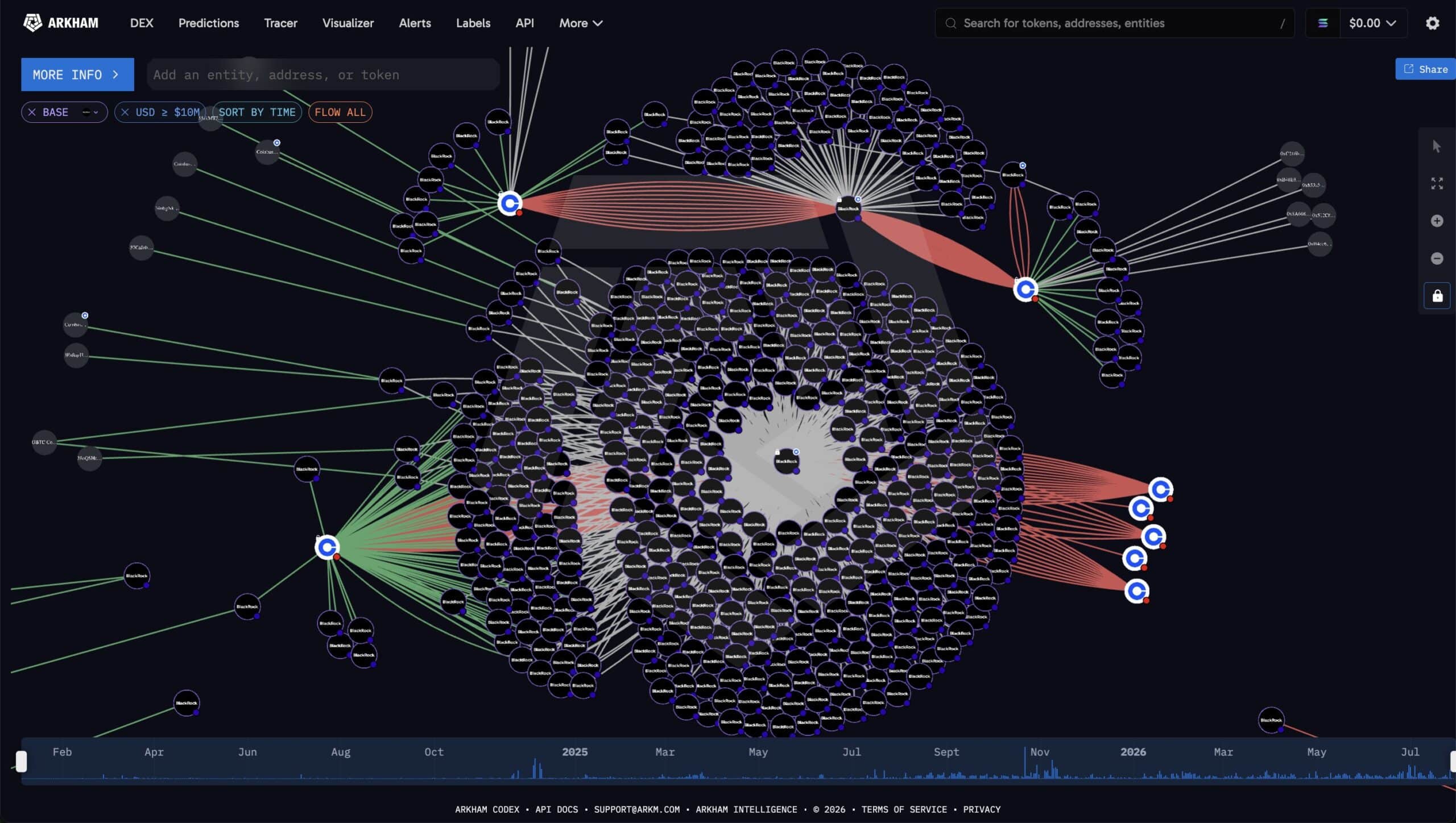
So far this week, BlackRock clients have recorded $60 million in net outflows from the company’s IBIT Bitcoin [BTC] ETF. Over the same period, they reportedly purchased more than $20 million worth of ETH. The contrast between the two flows is hard to ignore.

ethereum
Source: Arkham Intelligence

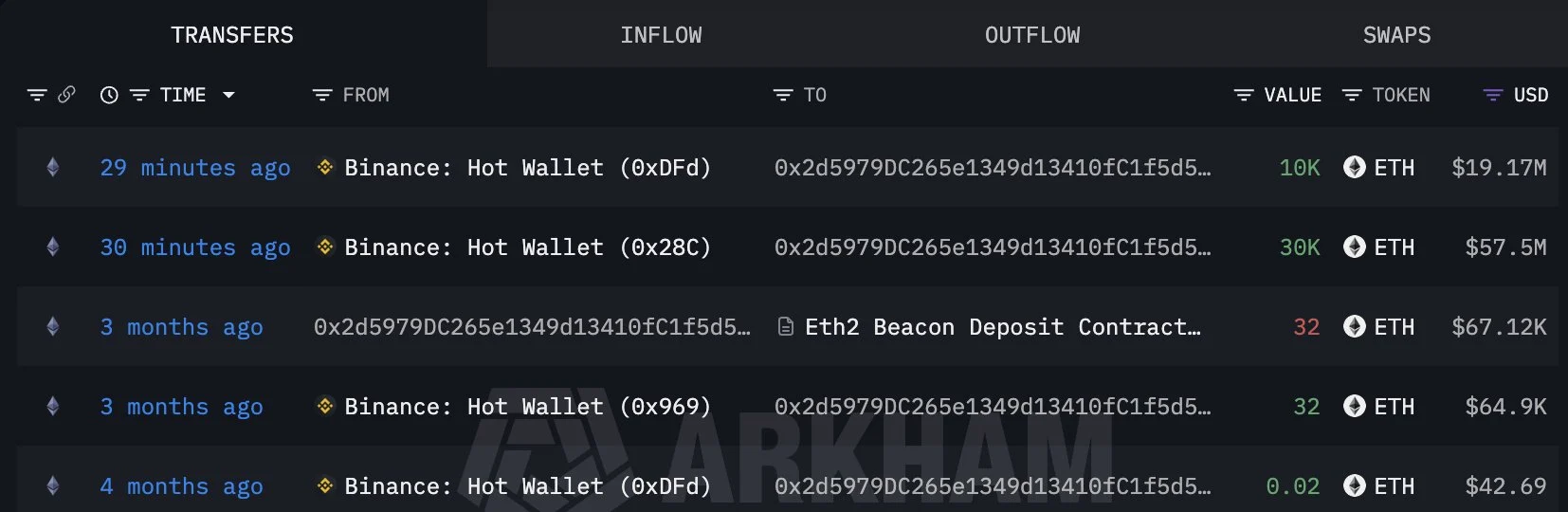
Whale activity is adding to the story. A wallet identified as 0x2d59 recently withdrew 40,000 ETH, worth approximately $76.58 million, from Binance.

Source: Lookonchain

Large exchange withdrawals are often viewed as a good indicator because the assets are moved away from trading. However, this wallet owner’s exact intention remains unknown.

Source: Bitwise

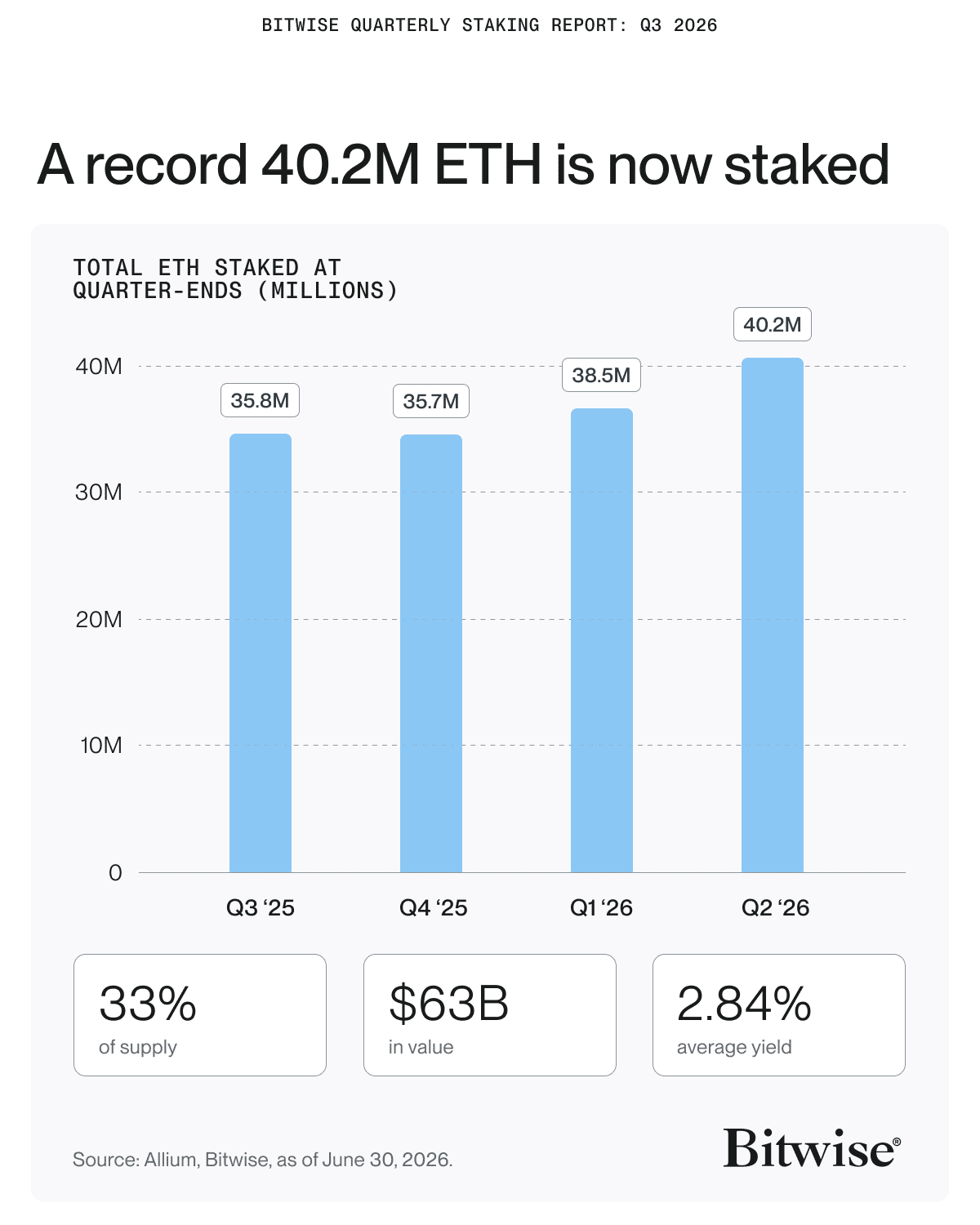
Ethereum staking has also hit a new high. In Q2 2026, the amount of staked ETH climbed to a record 40.2 million ETH, around 33% of the total supply and worth over $63 billion.

Belief in Ethereum is growing among both large holders and those that are here for the long run.

11th anniversary increasing hopes of an ETH rally?

Investors may be positioning for possible gains ahead of Ethereum’s 11th anniversary. None of the above numbers guarantees a rally, but their timing has certainly added to the bullish mood.

About the network’s progress over the years, Raj Karkara of ZebPay told AMBCrypto,

Ethereum has evolved from an ambitious vision of a programmable blockchain into the foundation of a thriving digital ecosystem.

He also believes the transition to Proof-of-Stake and scalability improvements have “strengthened the network’s long-term sustainability.”

The anniversary gives investors a reason to look beyond daily price movements and focus on Ethereum’s progress. If demand and staking continue to rise, the milestone could become more than a symbolic moment.

However, lasting gains will happen only if the pace continues long after the celebrations end.


Final Summary

  • BlackRock clients added over $20 million in ETH.
  • Ethereum staking reached a record 40.2 million ETH as well; whale activity added to hopes of an anniversary rally.


Source link