Home Blog Page 154

Fed meeting could matter more for the Nasdaq than bitcoin, analysts say

0
Crypto Week Ahead


Markets are split on whether the Federal Reserve will hike rates or stay on hold on Wednesday, but analysts say bitcoin may be less vulnerable than AI-driven tech stocks.

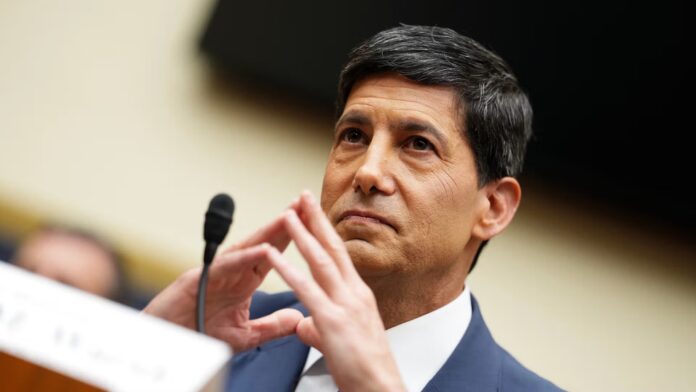
Bitcoin recovered from its intra-day losses to trade flat just below $64,000 on Tuesday, while AI-linked technology stocks stumbled again ahead of one of the most uncertain Fed meetings in years.

Markets currently price a 70% probability that the Fed leaves rates unchanged on Wednesday and a 30% chance of a surprise 25-basis-point hike, CME FedWatch data shows. The split reflects Chair Kevin Warsh’s reduced use of forward guidance, leaving investors with less clarity on the central bank’s next move, according to derivatives analytics firm Block Scholes.

“Tomorrow’s FOMC meeting, Kevin Warsh’s second as chairman of the Fed, is one of the most uncertain in years,” said Thahbib Rahman, research analyst at Block Scholes. Looking at every Fed meeting since 2015, he noted that only two have seen markets more divided over the outcome.

Signs of decoupling

Even with that uncertainty hanging over markets, bitcoin has largely held its ground in July while chipmakers and other AI favorites have come under pressure, raising the possibility that crypto is beginning to diverge, at least at the margin, from traditional risk assets.


Source link

How Going Live on YouTube Turns Viewers Into Loyal Customers

0
How Going Live on YouTube Turns Viewers Into Loyal Customers


Opinions expressed by Entrepreneur contributors are their own.

Key Takeaways

  • Live streaming is one of the most effective ways to reach your target audience and build a real, lasting connection — and therefore a loyal customer or viewer.
  • Ever since I started going live on YouTube, I’ve built relationships with entrepreneurs around the world, connected with amazing clients and created opportunities that simply wouldn’t have existed otherwise.

As a business owner, I’ve spent years helping entrepreneurs, brands and professionals increase their online visibility. Recently, one of the most effective tools I’ve added to my strategy has been going live on YouTube through my channel, Fix Your Search, where I teach business owners how to get found in Google, AI search results and across the internet.

What started as an experiment quickly became one of the best decisions I’ve made for my business.

I didn’t go live because I wanted to become a YouTuber. I went live because I wanted to connect with people, answer questions and help entrepreneurs understand how the digital landscape is changing. What surprised me most was how quickly those live streams began creating trust, relationships and new business opportunities.

If you’re a business owner who’s been thinking about going live, here are 10 reasons why I believe now is the perfect time to start.

1. People get to know the real you

Your website can explain what you do, and your social media can showcase your work, but live video allows people to experience who you are. They hear your voice, see your personality and get a sense of what it would actually be like to work with you.

One of the comments I hear most often from people who watch my live streams is, “I feel like I already know you.” That’s a powerful advantage in business because trust often starts long before a sales call ever happens.

2. Trust builds faster

In business, trust is everything. People want to know they’re working with someone who understands their challenges and genuinely cares about helping them succeed.

When I go live on Fix Your Search, I answer questions in real time and share strategies that business owners can immediately use. There are no scripts, no perfect edits and no filters. It’s simply a conversation. That authenticity helps people see that there’s a real person behind the business, and that connection builds trust much faster than traditional marketing.

3. You position yourself as an expert

One of the easiest ways to demonstrate expertise is to teach.

Every time I go live, I share insights about AI search, Google visibility, press, content strategy and personal branding. By helping people understand these topics, I’m naturally demonstrating my knowledge without having to constantly tell people I’m an expert.

The more you share what you know, the more people begin to see you as the authority in your industry.

4. You create real conversations

One of the things I love most about live streaming is the interaction. Instead of talking at an audience, you’re talking with them.

Viewers ask questions, share their experiences and often spark conversations that lead to even more valuable insights. Some of my favorite live streams have taken unexpected turns because of questions from viewers, and those moments often become the most memorable and impactful parts of the broadcast.

5. Great clients start finding you

This has been one of the biggest surprises for me.

As I’ve continued going live, I’ve attracted incredible business owners who align perfectly with the work I do. Many of them watched several live streams before ever reaching out. By the time we connected, they already understood my approach, trusted my expertise and felt comfortable working with me.

Instead of chasing prospects, I found that live streaming often helps the right people find you.

6. Your content keeps working for you

One of the best things about YouTube is that your content doesn’t disappear after the live stream ends.

The replay remains online, continues showing up in search results and keeps introducing new people to your business. I’ve had viewers discover a live stream weeks after it aired, watch multiple videos and eventually become clients.

7. It helps you get found in AI search results

As someone who teaches AI visibility, this is one of my favorite benefits.

AI platforms are increasingly looking for credible sources, expert content and consistent online activity when determining which businesses to surface in search results. By creating regular live content, you’re building a library of expertise that search engines and AI systems can discover and reference.

8. It humanizes your brand

We live in a world filled with automation, AI-generated content and endless marketing messages. While technology is important, people still want human connection.

Going live allows your audience to see the person behind the brand. They get to hear your stories, understand your passion and see your personality. Those human moments are often what create lasting relationships and loyal customers.

9. You learn what your audience actually wants

One unexpected benefit of going live is that your audience tells you exactly what they need help with.

Every question becomes market research. Every comment reveals a challenge someone is facing. Every conversation gives you insight into what content, services and solutions people are looking for.

Many of the topics I now teach regularly came directly from questions people asked during my live streams.

10. You don’t need to be perfect

Many business owners delay going live because they’re waiting for the perfect camera, perfect lighting or perfect setup. The reality is that people care far more about the value you provide than the equipment you’re using.

Some of the most successful live streams I’ve done were simple conversations where I showed up, shared what I knew and focused on helping people. Your audience isn’t looking for perfection. They’re looking for answers, guidance and someone they can trust.

Final thoughts

Going live on YouTube has become one of the most rewarding things I’ve done for my business. I’ve built relationships with entrepreneurs around the world, connected with amazing clients and created opportunities that simply wouldn’t have existed otherwise.

More importantly, it’s allowed me to help people and that to me is the best feeling in the world. 

Key Takeaways

  • Live streaming is one of the most effective ways to reach your target audience and build a real, lasting connection — and therefore a loyal customer or viewer.
  • Ever since I started going live on YouTube, I’ve built relationships with entrepreneurs around the world, connected with amazing clients and created opportunities that simply wouldn’t have existed otherwise.

As a business owner, I’ve spent years helping entrepreneurs, brands and professionals increase their online visibility. Recently, one of the most effective tools I’ve added to my strategy has been going live on YouTube through my channel, Fix Your Search, where I teach business owners how to get found in Google, AI search results and across the internet.

What started as an experiment quickly became one of the best decisions I’ve made for my business.

I didn’t go live because I wanted to become a YouTuber. I went live because I wanted to connect with people, answer questions and help entrepreneurs understand how the digital landscape is changing. What surprised me most was how quickly those live streams began creating trust, relationships and new business opportunities.


Source link

Influencer sells 2 Ferraris to buy Bitcoin dip

0
Influencer sells 2 Ferraris to buy Bitcoin dip


Social media influencer and investor Carl Runefelt is best known on the internet for posting crypto-focused content and showcasing his lavish lifestyle.

Known online as “The Moon,” he claims he dropped out of high school and worked as a supermarket cashier in Sweden before investing in Bitcoin (BTC). He attributes much of his wealth to crypto investments and other business ventures.

Related: Exclusive: Tether co-founder says Bitcoin volatility proves why stablecoins have already won

On July 24, Runefelt revealed on his The Moon Show podcast that he sold two Ferraris worth a total of $2.5 million to buy Bitcoin. The crypto influencer said the leading cryptocurrency is entering the “most reliable” signal in the cycle.

Pointing to Bitcoin’s 200-week moving average (MA), he said the current dip offers an opportunity to accumulate more Bitcoin. He gave several previous instances when Bitcoin traded around the 200-week MA before its price surged significantly.

For instance, Bitcoin fell below $4,000 during the coronavirus pandemic panic selling in March 2020, but it reached $64,860 more than a year later in April 2021.

More News:

While several traders buy a large position at once, the investor said he has placed multiple limit orders throughout the support zone to build an average entry to buy Bitcoin.

At the same time, Runefelt warned against taking highly leveraged Bitcoin positions around such long-term indicators as the cryptocurrency can very well decline below the support level before its price action reverses.

A sharp drop in Bitcoin’s price can trigger stop-loss orders and force leveraged traders to sell, especially if the price falls below the 200-week moving average. This often happens just before the market rebounds.

BTC/USD, Source: Decibel

Bitcoin was trading at $64,410 at the time of writing as per Decibel.

Disclaimer: This article is for informational purposes only and does not constitute financial advice. Cryptocurrency investments are highly volatile and risky. Always conduct your own research before making any investment decisions.

This story was originally published by TheStreet on Jul 27, 2026, where it first appeared in the MARKETS section. Add TheStreet as a Preferred Source by clicking here.


Source link

AAVE faces $100 test after Revolut’s $6.44M transfer: Can buyers stay in control?

0
AAVE faces $100 test after Revolut's $6.44M transfer: Can buyers stay in control?


Revolut transferred more than $6.44 million worth of AAVE from its cold wallets to Coinbase within a single day, shifting away from its previous pattern of selling through hot wallets.

The change revived concerns over fresh exchange-bound supply and tested the market’s ability to absorb large transactions. 

However, this transfer alone did not trigger an immediate breakdown in price structure. Instead, traders continued evaluating whether the movement represented profit-taking or routine treasury management. 

The scale of the deposits still attracted attention because cold wallet transfers often signal a stronger intention to move assets toward exchanges. 

Funding Rates reflect sustained bullish conviction

Derivatives traders also maintained a constructive outlook throughout the session. 

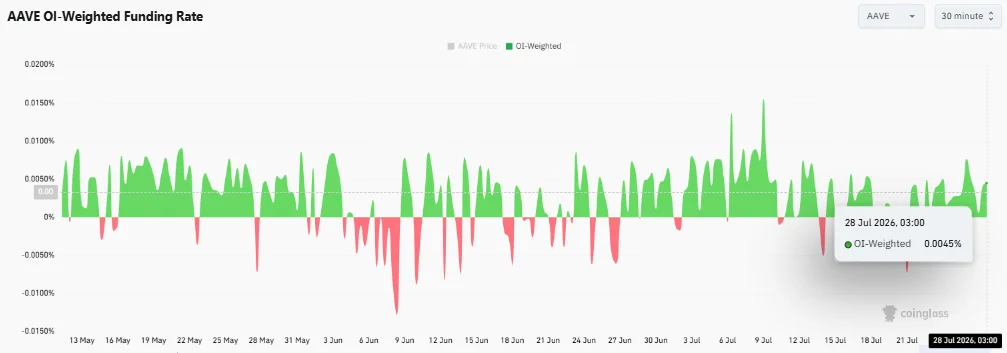
OI-Weighted Funding Rates stayed positive at 0.0045%, showing that long-position holders continued paying a premium to maintain their exposure. The reading suggested bullish positioning remained dominant instead of shifting toward defensive short exposure. 

Although funding fluctuated during previous weeks, the latest reading confirmed leveraged traders still favored higher prices. However, the premium remained relatively modest, reducing concerns that the Futures market had become excessively overheated. 

The combination of positive funding and resilient spot demand reinforced the broader bullish narrative despite renewed selling concerns. 

If derivatives positioning remains stable, leveraged participants could continue supporting AAVE’s recovery rather than accelerating downside volatility.

Source: CoinGlass

AAVE defends trendline while challenging resistance

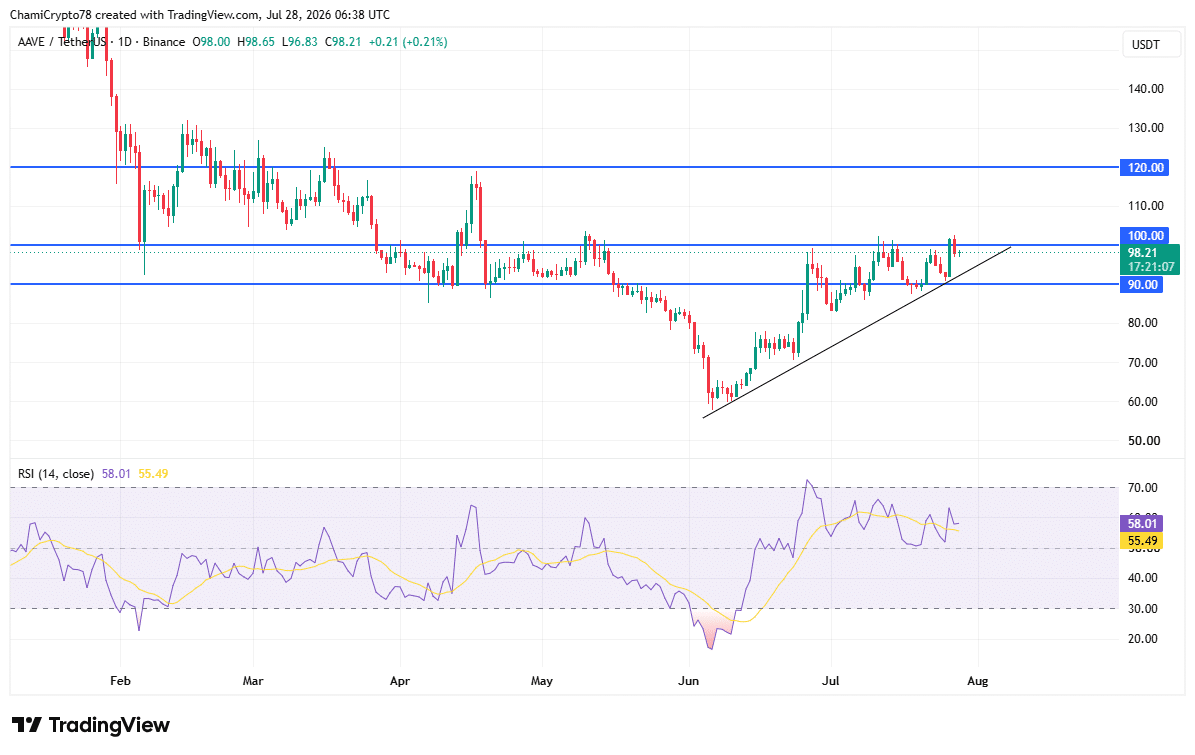
At the time of analysis, Aave [AAVE] traded near $98.21 after repeatedly respecting its rising trendline from the June lows. 

The asset also challenged the $100 resistance area without producing a decisive breakout. 

Meanwhile, the Relative Strength Index (RSI) printed 58.01, remaining comfortably above the neutral 50 level and reflecting healthy buying strength without entering overbought territory. The RSI moving average also stood at 55.49, supporting the broader recovery structure. 

Price continued forming higher lows along the ascending trendline, showing buyers consistently defended pullbacks instead of surrendering control. 

If AAVE closes above $100, buyers could target the next resistance around $120. 

However, another rejection would likely shift attention back toward the $90 support, where the current uptrend would face its next important validation.

AAVE price actionAAVE price action
Source: TradingView

Final Summary

  • Revolut’s exchange transfers increased supply concerns, yet buyers continued absorbing available AAVE liquidity.
  • AAVE still defended its uptrend, with the $100 resistance remaining the immediate focus.


Source link

RWA tokenization news: Ondo drops blockchain plans for private, high-speed trading network

0
RWA tokenization news: Ondo drops blockchain plans for private, high-speed trading network

Tokenized asset specialist Ondo Finance has abandoned plans to build a conventional layer-1 blockchain, instead introducing a trading network it says is better suited for the next wave of onchain financial assets.

Dubbed Ondo Network, the system marks a shift from the company’s February 2025 vision for Ondo Chain, a blockchain for institutional finance and tokenized real-world assets. After building its new perpetual futures platform, Ondo Perps, the firm said it concluded that a traditional blockchain wasn’t the best tool for handling the speed and privacy institutional trading requires.

Ondo Perps is the first application using the network, with plans to offer tokenized assets as collateral for trading.

The pivot comes as tokenization gathers momentum across Wall Street. Tokenization — the process of representing traditional assets such as stocks, bonds and funds as blockchain-based tokens — is gaining traction as firms look to modernize capital markets with faster settlement and around-the-clock trading. At the same time, perpetual futures, once largely confined to crypto markets, are expanding to traditional assets such as stocks and commodities like oil and gold.

Beyond issuing tokenized assets

Ondo has emerged as one of the sector’s largest issuers, with about $2.6 billion in tokenized U.S. Treasury products across OUSG and USDY and roughly $850 million in tokenized equities, according to rwa.xyz. The firm’s broker-dealer obtained last week FINRA approval to launch regulated markets and services for tokenized securities.


Source link

Hormel Foods Earnings Preview: What to Expect

0
Hormel Foods Earnings Preview: What to Expect


Hormel Foods company on stock exchange chart background By Piter2121

Austin, Minnesota-based Hormel Foods Corporation (HRL) is a prominent food company that develops, manufactures, markets, and distributes a wide range of meat and packaged food products. Valued at $13.9 billion by market cap, the company serves retail, foodservice, and international customers, with a portfolio spanning refrigerated foods, grocery products, turkey, and value-added protein offerings.

The diversified food giant is expected to announce its fiscal third-quarter earnings for 2026 in the near future. Ahead of the event, analysts expect HRL to report a profit of $0.36 per share on a diluted basis, up 2.9% from $0.35 in the year-ago quarter. The company surpassed the consensus estimates in three of the last four quarters while missing the forecast on another occasion.

More News from Barchart

For the current year ending in October 2026, analysts expect HRL to report EPS of $1.50, up 9.5% from $1.37 in fiscal 2025. Its EPS is expected to rise 3.3% year over year to $1.55 in fiscal 2027. 

www.barchart.com

HRL stock has significantly underperformed the S&P 500 Index’s ($SPX) 16.5% gains over the past 52 weeks, with shares down 13.6% during this period. Similarly, it notably underperformed the State Street Consumer Staples Select Sector SPDR ETF’s (XLP) 3.4% gains over the same time frame.

www.barchart.com

Hormel Foods has trailed the broader market over the past year as persistent demand and margin pressures weighed on investor sentiment. Shrinking sales volumes signaled soft consumer demand, while its relatively thin margins and declining earnings despite flat revenue raised concerns about the company’s ability to restore profitable growth.

Analysts’ consensus opinion on HRL stock is cautious, with an overall “Hold” rating. Out of 10 analysts covering the stock, two advise a “Strong Buy” rating, and eight give a “Hold.” HRL’s average analyst price target is $26.75, indicating a potential upside of 5.7% from the current levels. 

On the date of publication, Kritika Sarmah did not have (either directly or indirectly) positions in any of the securities mentioned in this article. All information and data in this article is solely for informational purposes. This article was originally published on Barchart.com


Source link

DRW CEO says regulators are getting crypto’s biggest trading innovation all wrong

0
DRW CEO says regulators are getting crypto’s biggest trading innovation all wrong

Perpetual futures have become one of crypto’s defining financial products, but DRW CEO Don Wilson says much of what people think they know about them is wrong.

In a series of posts on X, Wilson argued that perpetual futures — or “perps” — are simply futures contracts without an expiration date. The features often associated with crypto perpetuals, such as high leverage, auto-deleveraging (ADL) and around-the-clock trading, are characteristics of how some crypto exchanges chose to implement the products, not the contracts themselves.

“Most of what people think they know about ‘perps’ … has nothing to do with the contract itself,” Wilson wrote.

His comments come as interest in bringing perpetual futures into regulated U.S. markets continues to grow. Several exchanges and market participants have explored launching perpetual futures beyond crypto, though questions remain over how the products should be regulated and whether they fit within existing futures or swaps frameworks. Kalshi, which saw perps trading explode shortly after launching, recently submitted a proposal with regulators to expand its offerings to precious metals.

Unlike traditional futures markets, crypto exchanges like Hyperliquid operate continuously, use digital collateral and can calculate margin requirements in real time. Those technological differences allowed exchanges to offer products with higher leverage and alternative liquidation mechanisms, including ADL, which automatically reduces winning positions when losing traders cannot cover their losses.

Wilson said those design choices should not be confused with perpetual futures themselves.

“I’m not a fan of ADL,” he wrote, adding that there is “no reason it needs to be used for perps.”

Instead, Wilson argued that digital payment rails create opportunities to improve risk management. Traditional clearinghouses generally calculate margin once a day, with market participants often having until the following business day to post additional collateral. Because markets can move significantly during that window, clearinghouses require relatively large initial margin buffers.

With real-time settlement, however, exchanges can recalculate margin continuously and require traders to post collateral immediately, reducing the need for large upfront margin requirements while maintaining the same level of protection, Wilson said. Whether exchanges choose to translate those efficiencies into higher leverage is a business decision, not a defining feature of perpetual futures.

Wilson said the real innovation of perpetual futures is that they eliminate the need for investors to repeatedly roll expiring contracts, reducing transaction costs, market impact and roll slippage while allowing positions to more closely track the front of the futures curve.

He also urged regulators to focus on economic substance rather than legal labels.

“There’s no reason to treat perpetuals as swaps simply because they don’t expire,” Wilson wrote. “Economically, they’re futures.”

Wilson concluded by calling for perpetual futures to be available across a broader range of markets, including commodities, securities and crypto, arguing that they should be viewed as another tool for price discovery and risk management rather than as a crypto-specific innovation.


Source link