Home Blog Page 192

Brookfield to acquire Aypa Power from Blackstone for $7bn

0
Brookfield to acquire Aypa Power from Blackstone for $7bn


Brookfield has agreed to purchase Aypa Power from funds managed by Blackstone Energy Transition Partners, assigning an enterprise value of around $7bn and an equity value of $3bn to the transaction.

According to Brookfield, the deal will mark its entry into the North American battery energy storage market.

Aypa Power operates a portfolio comprising roughly 6.5GW of operating, under-construction and contracted battery storage capacity across the US and Canada.

The company is described as the largest stand-alone battery storage developer in North America, with a development pipeline that exceeds 20GW.

Its assets are located in regions where transmission and capacity constraints are present.

As part of the agreement, Brookfield will acquire Aypa’s project portfolio as well as its development operations and a team of approximately 200.

Brookfield energy group chief investment officer Jehangir Vevaina said: “We are excited to partner with Aypa to deliver on the company’s scale growth pipeline.

“Battery storage is increasingly critical to the reliability and resilience of today’s energy systems, and bringing together this leading platform with Brookfield’s broad capabilities across technologies and geographies further strengthens our ability to deliver integrated energy solutions to the world’s largest buyers of power.”

The acquisition will help advance Aypa’s next phase of growth and expand Brookfield’s ability to provide integrated energy solutions.

According to Brookfield, 95% of Aypa’s operating and under-construction assets are secured under long-term contracts with investment-grade clients, with these agreements having an average of 17 years remaining.

Aypa Power founder and CEO Moe Hajabed said: “This is an extraordinary achievement for the team that built Aypa. Over the past six years, with Blackstone’s partnership, we grew Aypa into the largest and most valuable storage-focused independent power producer in North America.

“Together, we helped establish battery storage as critical infrastructure, essential to a more reliable and resilient grid. I look forward to seeing Aypa flourish further under Brookfield’s ownership.”

Completion of the transaction is subject to customary regulatory approvals.

Aypa and Blackstone were advised by Cantor Fitzgerald & Co. as lead financial adviser, with additional financial advice from BofA.

Legal counsel was provided to both parties by Kirkland & Ellis, while Brookfield received legal advice from White & Case.

“Brookfield to acquire Aypa Power from Blackstone for $7bn” was originally created and published by Power Technology, a GlobalData owned brand.


Source link

Bitcoin faces longest 5% Treasury-yield stretch since 2007 – Details

0
Bitcoin faces longest 5% Treasury-yield stretch since 2007 – Details


The crypto market has increasingly followed U.S. macroeconomic conditions, often falling alongside equities during periods of tightening liquidity. That relationship now faces another test from the U.S. 30-year Treasury yield.

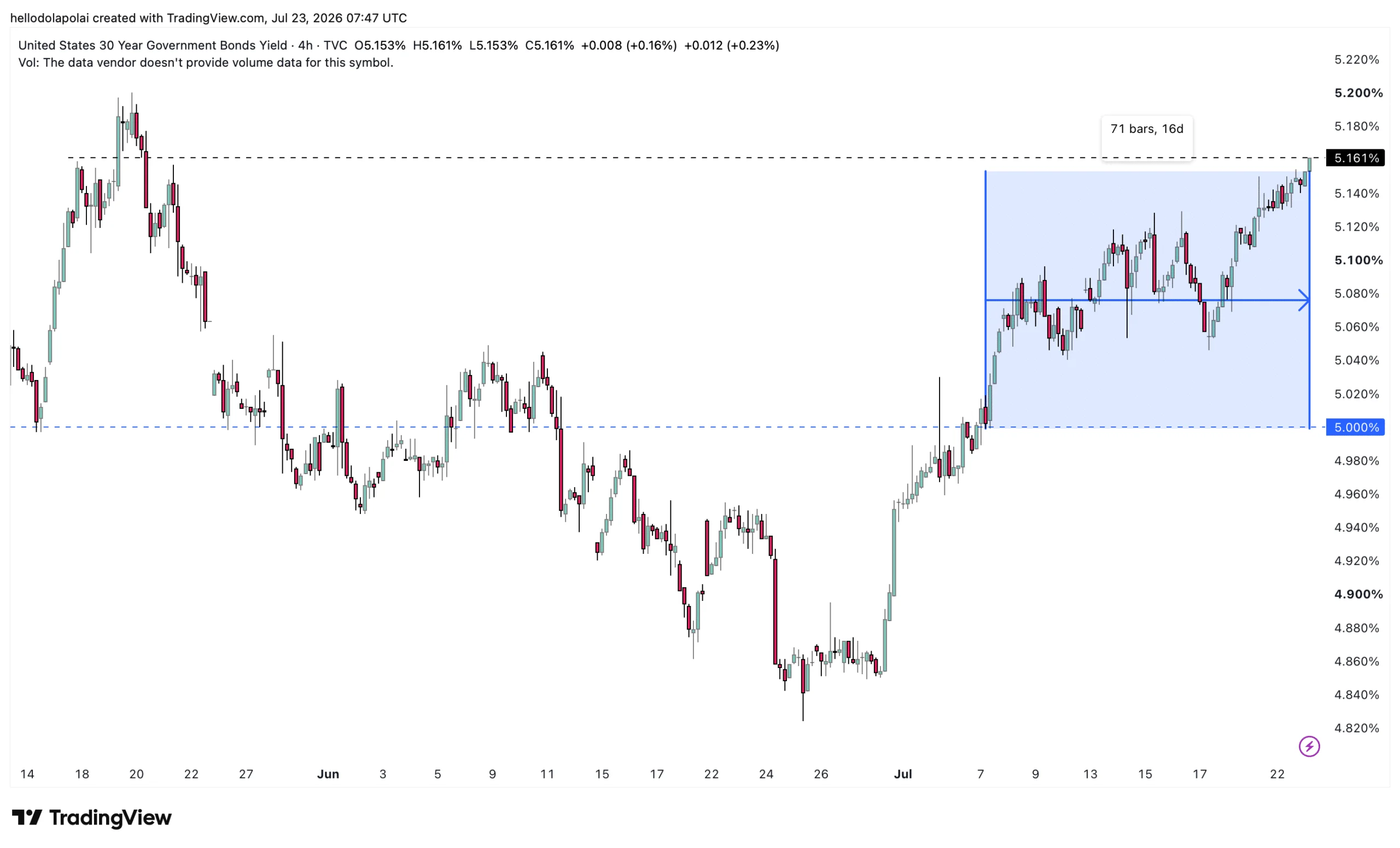
The yield reached 5.16%, raising concerns about borrowing costs and the returns investors demand from risk assets.

Why does the 30-year yield matter?

The U.S. 30-year Treasury yield crossed 5% on the 7th of July and remained above it for 16 days. According to The Kobeissi Letter, this marked its longest sustained stretch above 5% since 2007.

U.S. 30 year bond yield
Source: TradingView

Long-term yields reflect several forces, including inflation expectations, Treasury supply, fiscal concerns, and demand for government debt. Their current rise suggests investors expect interest rates and borrowing costs to remain elevated.

Higher Treasury yields can pressure crypto by making lower-risk assets more attractive and increasing the return expected from speculative investments.

However, the yield does not prove that investors are directly rotating from crypto into government debt.

Bitcoin [BTC] previously responded positively after the Consumer Price Index [CPI] came below expectations. A sustained move above 5% could weaken that recovery by reviving concerns about inflation and tighter financial conditions.

Is the Hormuz crisis driving yields?

Oil disruption from the Middle East conflict has added to inflation concerns, particularly around the Strait of Hormuz. Iran said it had closed the waterway, while the U.S. continued efforts to protect commercial transit.

That disruption lifted energy prices, strengthening concerns that higher fuel costs could slow inflation’s decline.

Crypto analyst DarkFost said:

This is where Trump will need to ease tensions with Iran.

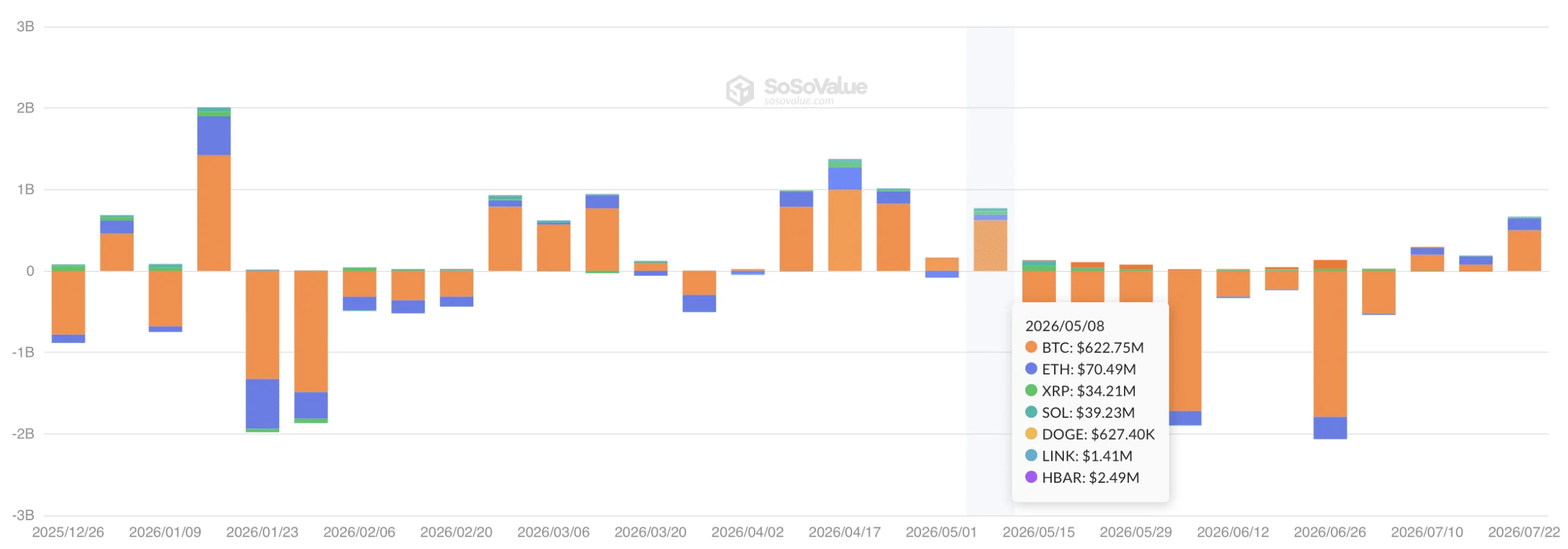
U.S. spot crypto ETF net inflow. U.S. spot crypto ETF net inflow.
Source: SoSoValue

However, de-escalation remains the analyst’s expectation rather than a confirmed policy outcome.

Despite the Treasury warning, U.S. crypto exchange-traded funds continued attracting capital. SoSoValue data showed $667.32 million in Net Inflows across tracked crypto ETFs during the current week.

This was the strongest total since the week beginning the 8th of May, when inflows reached approximately $771.2 million.

The divergence suggests institutional crypto demand has remained resilient despite pressure from long-term yields.

De-escalation around the Strait of Hormuz could reduce oil supply concerns and ease part of the inflation pressure.

Lower energy prices may support risk appetite, particularly if Treasury yields retreat alongside inflation expectations.

U.S. M2 reached $23.05 trillion in May, according to Federal Reserve data.

However, this money supply cannot be treated as capital waiting to enter crypto. For now, ETF inflows show resilience, while the 30-year yield remains a warning against assuming a full risk-on shift.


Final Summary


Source link

The KIDS Act is way worse than digital carding — it is a mass surveillance system

0
The KIDS Act is way worse than digital carding — it is a mass surveillance system

Disclosure & Polices: CoinDesk is an award-winning media outlet that covers the cryptocurrency industry. Its journalists abide by a strict set of editorial policies. CoinDesk has adopted a set of principles aimed at ensuring the integrity, editorial independence and freedom from bias of its publications. CoinDesk is part of Bullish (NYSE:BLSH), an institutionally focused global digital asset platform that provides market infrastructure and information services. Bullish owns and invests in digital asset businesses and digital assets and CoinDesk employees, including journalists, may receive Bullish equity-based compensation.


Source link

First look: Union Pacific earnings

0
First look: Union Pacific earnings


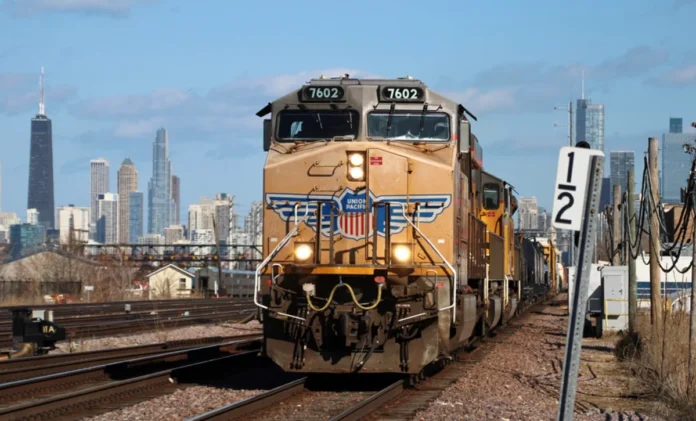
Union Pacific delivered a better second quarter in 2026, reporting higher profit and earnings per share Thursday as the railroad continued to benefit from stronger underlying performance.

The Omaha-based company (NYSE: UNP) said net income increased 6% year over year to $2.0 billion, while diluted EPS improved 7% to $3.36.

On an adjusted basis, the results looked even stronger. Adjusted net income climbed 12% to $2.0 billion, and adjusted diluted EPS advanced 13% to $3.41, suggesting that core operating trends outpaced the headline comparison.

For investors, the key takeaway is that Union Pacific appears to have entered the second half of 2026 with healthy earnings momentum. The company scheduled an early morning call with analysts.

Subscribe to FreightWaves’ Rail e-newsletter and get the latest insights on rail freight right in your inbox.

Read more articles by Stuart Chirls here.

Read more:

First look: CSX earnings

Street flip: Intermodal rail charges ahead in latest data

Peak fatigue? Intermodal slows in latest data

WATCH: Hellish wildfire overtakes CN train, crew in Canada 

Norfolk Southern conductor struck, killed by train in Indiana

The post First look: Union Pacific earnings appeared first on FreightWaves.


Source link

Wilbur Ross: Trump former commerce secretary on Iran war and oil prices

0
Wilbur Ross: Trump former commerce secretary on Iran war and oil prices

The U.S.-Iran war is not going fantastically well for either side. President Trump has been unable to conduct the negotiations he had hoped for and reach a final deal over the Strait of Hormuz. And Iran’s military infrastructure—and a great deal of its economic infrastructure—have been reduced to rubble.

Looming over the conflict is a timeline both sides are aware of: The midterms.

For Trump, that means the Middle East conflict needs to reach a palatable point for voters before November. For Iran, it means making life difficult for the Oval Office and waiting out the president in the hopes he will lose some of his political firepower.

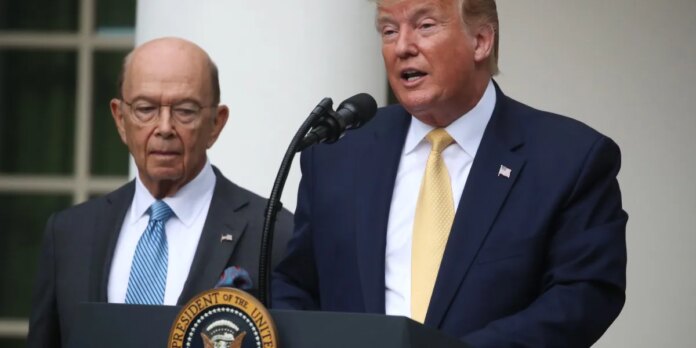
That’s the current state of play according to Wilbur Ross, Trump’s former commerce secretary in his first administration. Speaking exclusively to Fortune, Ross said the president has a balance of risks to strike: Either face the wrath of voters if oil prices remain high due to the Iran conflict, or withdraw from the region and risk that being used against him.

Of course, there will be other forces shaping voters’ perceptions in the run-up to the midterms—Ross highlights immigration issues as chief among them—but there is no denying that “affordability” has become a political lightning rod, and was the issue that Trump made key promises on during his election run.

Ross underlined that, in the grand scheme of wars, the Iran conflict is thus-far relatively short-lived. However, it has dragged on in the eyes of Wall Street and voters, given that Trump’s rhetoric at the outset was that it would be over within a matter of weeks.

“We’re about to go into the midterm elections, and so there’s an unusual political factor which I’m sure both sides are aware of. The Iranians seem to be betting that they can outlast the president, and that has been a characteristic theory of their prior discussions,” Ross explained. “The war itself, in a kind of technical sense, is over. Iran has no air force, they have no real navy, they have no air defense, so in that sense, it’s over. The question is, can we win the peace? And that’s what Hormuz is about.”

Consumers are already paying for the re-escalation in the Middle East because Iran borders the Strait of Hormuz, a vital waterway for oil exports from the Persian Gulf to the rest of the world. With ships reluctant to travel down the Strait—despite Trump insisting it is controlled by the U.S.—supply is stalling while demand remains at the same level, pushing prices up. And in the last 24 hours, the Houthis—a Yemen-based terror group that acts on Iran’s behest—have begun attacking ships in the Bab al-Mandab Strait on the other side of the Arabian Peninsula.

The biggest political risk facing Trump in the run-up to the midterms is oil, Ross adds: “If oil gets back up to $5 a gallon at the pump, that’s gonna make the midterms very, very difficult. And, if he loses both houses in the midterms, he will be impeached.”

If there’s a split—potentially with the Democrats controlling the House and the Republicans the Senate, then Trump would face a shift in power, meaning his prerogative to make or conduct war could be restricted, Ross said.

On the other hand, Ross adds, “If he pulled out without this being resolved, and [Iran] do impose some huge fines or what have you on Hormuz, then the Democrats have a very nice storyline: ‘What was the war all about? Look what we got for it: We’ve got the high oil prices, and we don’t have peace.’ People saying ‘Oh, he’s gonna have to pull out before the midterms,’ I’m not so sure that’s true.”

Even if Trump was motivated to withdraw from the conflict by the midterms, that doesn’t automatically mean prices come down. “I can’t imagine if he pulled out the Iranians, suddenly saying, ‘Well, we’ve decided to play nice, then there won’t be any constraints on Hormuz,’” Ross explained. “That’s not gonna happen. The midterms are a factor, [but] I think it’s probably influencing the Iranians more than it is the Americans.”

 The Big Oil option

President Trump has also begun turning up the temperature on his former allies in the Big Oil world. In a Truth Social post last month, the president wrote that despite oil prices “dropping like a rock … the big oil companies are not dropping their price at the pump commensurate with the sharply lower prices they are paying for oil.”

Consumers are being “gouged,” the president added, and as such: “I have instructed the DOJ to immediately start looking into this. Gasoline prices better start going down a lot faster than what I’m seeing!”

Ross said Big Oil can expect the president to keep up the pressure to bring down prices, highlighting that as soon as any military action occurred, prices at the pumps also leapt, adding: “The pump price isn’t really justified to go up the same day because the oil hasn’t found its way through.”

“I would expect that [Trump] would be putting increasing pressure on them to do two things,” Ross explained. “One, not to expand the margins of the gas stations themselves, and two, to produce more. They’ve been relatively constrained in the amount of increase in their production.”

Data from the U.S. Energy Information Administration released earlier this month show that the U.S. is producing an average of 13.8 million barrels a day in 2026, only slightly higher than a year ago at 13.6 million barrels a day.

Source link

Bitcoin consolidates below $66,000 as a 13% July recovery runs out of steam

0
Bitcoin consolidates below $66,000 as a 13% July recovery runs out of steam

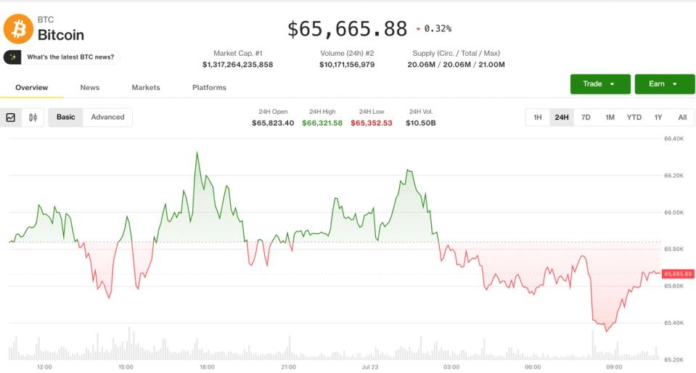
The crypto market is consolidating on Thursday, with bitcoin a modest 0.62% lower since midnight UTC at $65,674 as it settles into a range between $64,000 and $66,800 that has held for the past week.

The price action reflects a market catching its breath. Bitcoin has rallied more than 13% since its July 1 low of $57,750, and after failing to convincingly break above the $66,000 level of resistance on Tuesday, the path of least resistance in the short term appears to be sideways rather than sharply in either direction.

Traditional markets are offering little direction. Nasdaq 100 and S&P 500 futures are both marginally lower by around 0.3%, the dollar index (DXY) is broadly flat, and gold and silver are both pulling back after yesterday’s safe haven rally, leaving crypto without a clear macro catalyst to lean on in either direction.

Derivatives positioning

  • Period of stasis: The crypto futures market appears to be in a state of stasis, with 24-hour trading volumes down just 1% at $147 billion and open interest (OI) holding steady around $111 billion. The 24-hour long-short ratio, which tracks taker volume, is nearly balanced. Taker volume refers to buy and sell trades executed immediately at ongoing market prices, and the current equilibrium suggests a lack of aggressive directional conviction among traders.
  • Open interest shifts in major assets: Bitcoin’s futures open interest has slipped back to 743K BTC from the highs of over 760K BTC seen early this week. This decline indicates an unwinding of existing bets as the price rally stalls and valuations pull back slightly. A potential silver lining for bulls is that the drop in OI suggests the price weakness is being driven by long liquidations rather than the entry of fresh shorts betting on a deeper decline. In contrast, ETH’s OI has ticked up during the overnight price drop. However, the price action is still being led by buyers using market orders rather than passive limit orders, as evidenced by ETH’s positive 24-hour OI-adjusted cumulative volume delta (CVD).
  • Mixed sentiment in altcoins: The broader market shows a split in aggressive leadership. Several coins, including ZEC, HBAR, LTC, AVAX, and SUI, are currently posting positive CVDs, indicating taker-buy pressure. However, there are just as many prominent names on the opposite side of the fence showing negative CVDs, including BTC, XLM, DOGE, and SHIB, signaling that aggressive sellers remain active in those specific markets.
  • Rising volatility signals potential caution: Bitcoin’s 30-day implied volatility index, BVIV, has now increased for the fifth straight day. Traders may want to keep a close eye on this metric because, since the launch of spot ETFs, the correlation between Bitcoin’s spot price and the BVIV has been consistently negative. Under this regime, an upswing in the BVIV often serves as a warning of an impending price drop. Meanwhile, ether’s volatility index, EVIV, remains relatively stable.
  • Options flows and evaporating fear: Flows across the Deribit exchange and the OTC desk Paradigm featured notable demand for the BTC $70,000 call option expiring Aug. 7. While some traders were positioned for upside, others simultaneously picked up longer-duration puts as a downside hedge. Ethereum options have also seen a general demand for upside exposure. Broadly speaking, market fear appears to be evaporating as put-call skews for both BTC and ETH slip toward zero. Notably, ETH’s one-week skew briefly turned negative yesterday, marking a temporary bullish shift in sentiment where calls became more expensive than puts.

Token talk

  • was the standout mover on Thursday, surging 12.18% to $0.063. The Donald Trump family-linked token has now recovered to a $2 billion market cap, though it remains deep in the red from its all-time high.
  • extended its recent run, rising nearly 4% to $1.989, keeping it among the more consistent AI outperformers of the past fortnight.
  • Ethena (ENA) added 2% to $0.092, continuing a quiet rehabilitation that has seen it outperform most DeFi peers over the past week despite sitting more than 90% below its September 2025 peak.
  • Lighter (LIT) continued to slide, falling 2.96% as profit-taking weighs on the token for a third consecutive session following its 200%-plus rally between May and early July.
  • CoinMarketCap’s altcoin season indicator holds at 51/100 as the market waits for bitcoin to make a decisive move.


Source link

Verus-Ethereum Bridge hit by second hack as $7.54M vanishes

0
Verus-Ethereum Bridge hit by second hack as $7.54M vanishes


The Verus-Ethereum Bridge has been hacked… again. The latest attack reportedly exploited the same weakness used before, which raises the question: is the bridge truly safe?

Verus-Ethereum bridge drained of $7.54M 

Blockchain security firm Blockaid detected a new attack on the Verus-Ethereum Bridge on the 23rd of July. According to the firm, the attacker exploited the bridge’s import process to release funds without depositing matching assets on the source chain.

verus-ethereumverus-ethereum
Source: Blockaid

On-chain data shows that the exploit occurred at 03:45 UTC. Around 1,137 Ethereum [ETH], along with tBTC, USD Coin [USDC], Tether [USDT], EURC, Maker [MKR], and Savings crvUSD [scrvUSD], were transferred to an attacker-controlled wallet. Etherscan valued the main outflows at approximately $7.54 million at the time.

Blockaid noted that although the attacker used a different wallet and transaction, they still targeted the same bridge contract, entry path, and likely bug category as in the May breach. 

Attack similar to May’s $11.58 million exploit


Source link