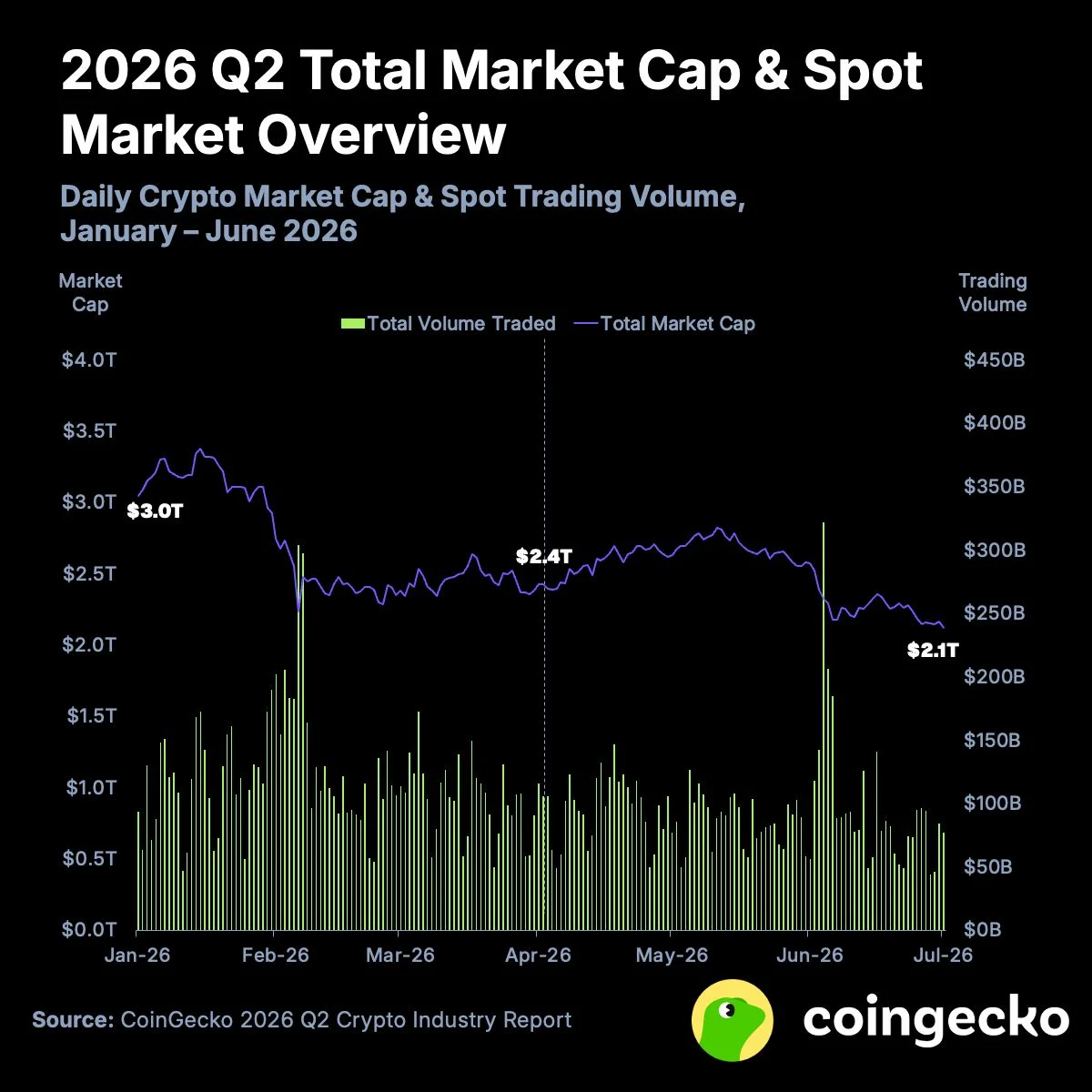
The crypto market has remained bearish since the October 10 crash, despite brief recovery phases. For instance, at the start of 2026, the total market cap rallied and traded above the $3 trillion mark. However, as the second quarter unfolded, the market turned sharply lower.
April, though one of the year’s strongest months, also marked the beginning of the steep decline. Crypto hacks also peaked in April, contributing to the downtrend. Currently, the total market cap, volume traded, and market structure of Bitcoin [BTC] suggest further pain could be ahead.
Total market cap, spot volume, and stablecoin cap decline
As per CoinGecko, the total crypto market lost about 12.6% in capitalization, reaching around $2.1 trillion in the second quarter of the year (Q2). However, from a broader perspective, the cap was down more than 52% from its peak of over $4 trillion in October 2025.
On top of the capital lost, the total spot trading volume declined by 20.9% quarter-on-quarter (QoQ) to around $93.10 billion. June saw the highest single-day volume, but it was on the sell side, as the market cap dropped, from about $2.60 trillion to $2.10 trillion.
Source: CoinGecko
Moreover, buying power and new investor exposure to crypto also declined. Usually, stablecoins are used to expose new investors to crypto as well as in buying and taking profit.
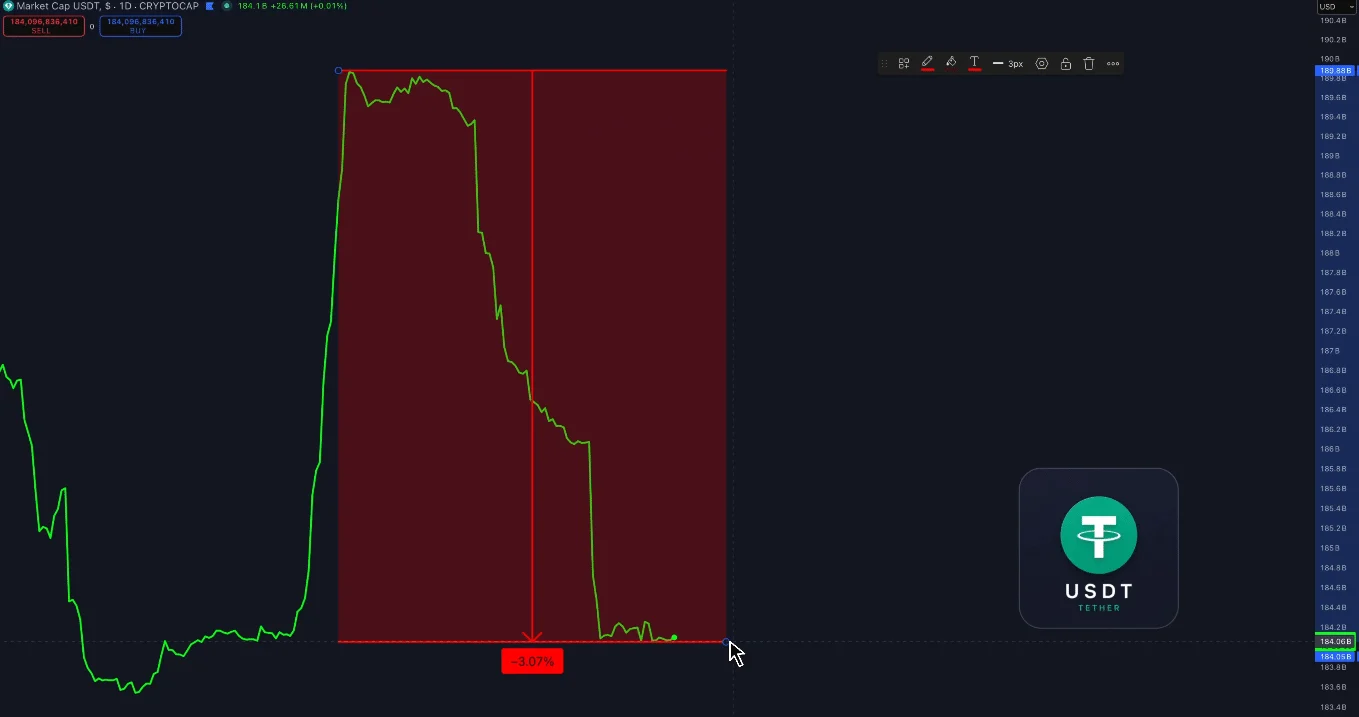
Therefore, the market cap of all stablecoins fell by 3% after losing over $5 billion, from over $189 billion to $184 billion. Notably, USDT took the biggest hit.
Source: TradingView
As such, these data points suggest that further declines may be anticipated in crypto, now that even buying power is reducing.
Is Bitcoin market structure a reflection of what to expect?
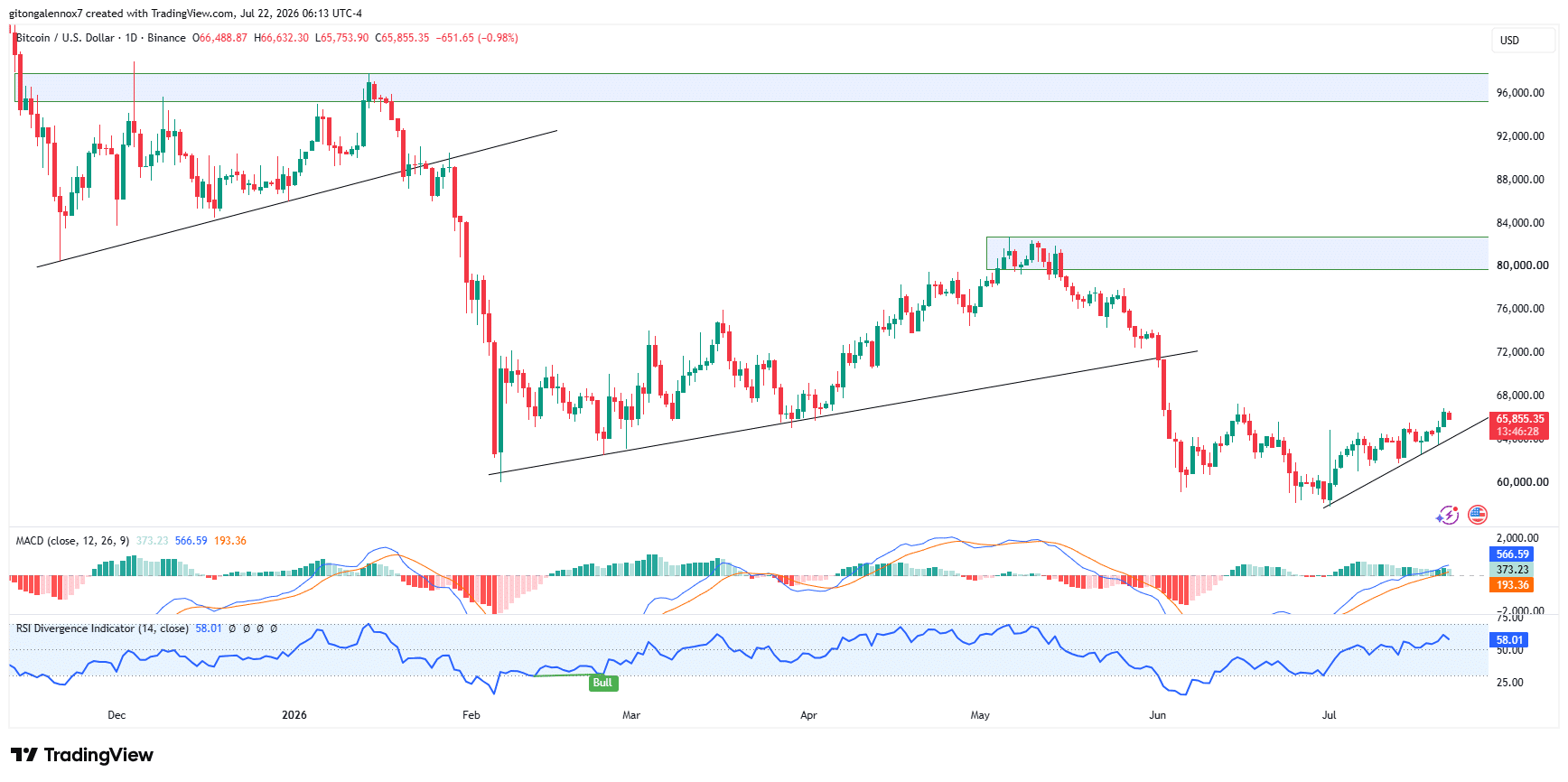
Technically, Bitcoin market structure reinforced this prediction. BTC price has been forming lower highs since last October, breaking every trendline support formed.
With the new trend, it is more likely BTC would break the recent trendline. The effect would be to push the entire crypto market further down, as BTC sets the market sentiment for the whole sector.
Source: BTC/USDT on TradingView
More signs of further decline were emerging when looking at other financial markets.
For instance, Korea’s KOSPI lost 5.24%, equivalent to $250 billion, from its day high. Additionally, a 2.4% drop in Japan’s Nikkei erased more than $210 billion.
However, these metrics do not guarantee further downside. Crypto and financial markets tend to reverse to the upside during periods of capitulation like these. Furthermore, the volume crunch indicates low volatility, which suggests a potential bullish reversal.
Final Summary
Total crypto market cap declined 12.6% in Q2, and volume sank 20.9% QoQ, while stablecoin cap declined by 3%.
Bitcoin’s market structure alongside Asia’s stock market decline suggests a more bearish trend for crypto.
Bitcoin (BTC-USD) opened at $65,214.10 on Tuesday, July 21, 2026, 0.8% higher than Monday’s opening price. As of 9:30 a.m. ET this morning, the price of bitcoin moved up to $66,398.15.
Ethereum (ETH-USD) opened at $1,903.35 on Tuesday, July 21, 2026, up 1.7% from Monday’s opening price. The price of ethereum moved higher this morning to $1,935.99 as of 9:30 a.m. ET.
Bitcoin and ethereum opened higher this morning. Investors’ appetite for risk has returned momentarily; strength in crypto coincided with an uptick in the tech-heavy Nasdaq-100 (^NDX) this morning.
The trend may be more than a one-day blip. According to SoSo Value data, the last week marked the second consecutive week bitcoin ETFs had positive net inflows, for the first time since May. The inflows did not cover the outflows over the past several weeks.
Volatility in crypto will continue, as investors process news on the U.S.-Iran war and await continued second-quarter earnings reports.
Current price of bitcoin and ethereum
Bitcoin
The price of bitcoin this morning was 0.8% higher than Monday’s opening price. Here’s a look at how the opening bitcoin price has changed versus last week, month, and year:
One week ago: +4.8%
One month ago: +1.5%
One year ago: -45.7%
The all-time high for bitcoin was $128,198.07 on Oct. 6, 2025. The all-time low value for bitcoin was $0.04865 on July 14, 2010.
Ethereum
The price of ethereum this morning was 1.7% higher than Monday’s open. Here’s a look at how the opening ethereum price has changed versus last week, month, and year:
One week ago: +7.3%
One month ago: +9.4%
One year ago: -49.4%
The all-time high for ethereum was $4,953.73 on Aug. 24, 2025. The all-time low value for ethereum was $0.4209 on Oct. 21, 2015.
Ethereum is the blockchain, while ether is the cryptocurrency that runs on it. When people say they’re “buying ethereum,” they’re usually buying ETH — the digital asset used to run applications and store value.
Some investors trade short-term, others accumulate their holdings slowly, and still others focus on earning a yield by locking up their ETH to help run the network — a process known as staking.
How to buy Ethereum
Ether, the native cryptocurrency used on the Ethereum platform, remains significantly more volatile than the S&P 500 for many investors. But it’s no longer a moonshot — it’s a foundational piece of a modern digital portfolio.
Whether you’re brand new to tracking the value of bitcoin and ethereum or a more seasoned crypto investor, Yahoo Finance’s price-of-ethereum chart below shows a visual history of how the currency’s value continues to move and evolve.
Tesla (TSLA) held its bitcoin BTC$65,878.64 holdings unchanged during the second quarter, maintaining its treasury of 11,509 BTC as the cryptocurrency’s price declined 14% over the three-month period.
The electric vehicle maker reported an after-tax impairment loss of $112 million on its digital asset holdings, according to its latest earnings release. Tesla has neither bought nor sold any bitcoin since 2022.
Bitcoin fell from about $83,000 at the start of the second quarter to roughly $58,000 by the end of June amid broader macroeconomic uncertainty and volatility across risk assets. The cryptocurrency was recently trading at $65,840.
Tesla remains one of the largest publicly traded corporate holders of bitcoin, though its holdings are significantly smaller than those of firms such as Strategy (MSTR), which has continued to aggressively accumulate the cryptocurrency.
The company’s crypto update came alongside mixed second-quarter financial results. Tesla reported non-GAAP earnings per share of $0.33, missing analyst expectations of $0.55. Revenue came in at $28.2 billion, topping consensus estimates of $27.6 billion.
Gross margin was 16.8%, while GAAP net income totaled $1.11 billion. The company also reported negative free cash flow of $1.1 billion for the quarter.
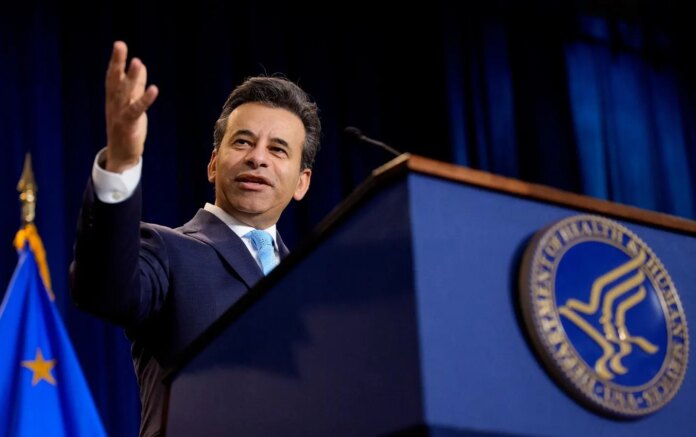
WASHINGTON, DC – APRIL 22: Food and Drug Administration Commissioner Marty Makary speaks during a news conference at the Health and Human Services Department on April 22, 2025 in Washington, DC. Makary and Health and Human Services Secretary Robert F. Kennedy Jr. spoke about the intent of the FDA “to phase out the use of petroleum-based synthetic dyes in the nation’s food supply.” (Photo by Andrew Harnik/Getty Images)
Getty Images
FDA Commissioner Marty Makary resigned in May 2026. If you’ve followed the goings-on at the FDA, you know that the year-and-a-half since his nomination has been marked by several controversies. But that noise should not overshadow the fact that under Makary’s leadership, the FDA enacted a large number of major reforms. These reforms—especially those related to drug approval timelines and artificial intelligence—will well outlast his time in office.
The noise and the signal
“Please accept my resignation, effective today,” Makary wrote on May 12 in a message shared by President Trump on Truth Social. “I announced 50 major FDA reforms…I’m extremely proud that we have reduced drug review times from a year to 1–2 months, wrote new guidance to advance psychedelics, introduced a new ‘plausible mechanism’ pathway for rare disease drugs, and changed estrogen labels to tell women the truth about menopausal hormone replacement.”
According to multiplereports, the precipitating factor was Makary’s opposition to the Trump administration’s desire to confer marketing approval to fruit-flavored e-cigarettes. Makary’s concern—echoing that of Scott Gottlieb, Trump’s first FDA commissioner in his first term—was that fruit flavors attract minors to vape, a problem that concerned both leaders.
There were other controversies as well, which have been amply coveredelsewhere. But I thought it would be useful to dig beneath the headlines. I’ve known Makary professionally for a decade due to his bestsellingwriting and reform efforts on high health care costs; prior to his joining the FDA, he served on the advisory board for the think tank I co-founded in 2016, the Foundation for Research on Equal Opportunity. So let’s dig in. Is Makary right that the FDA enacted “50 major reforms” under his watch?
I went through the FDA’s press releases and rulemaking activity over Makary’s tenure, and here’s my take: individually, whether each reform is “major” or “minor” depends on the eye of the beholder. But there’s no doubt that taken as a whole, they represent the most significant improvement and modernization of the FDA’s regulatory approach in a long time.
In particular, Makary did a lot to reduce unnecessary mandates relating to drug clinical trials, reducing the risks and costs of pharmaceutical innovation. He also deployed artificial intelligence to improve FDA review times, enabling life-saving drugs to reach patients faster. And for the first time in memory, the FDA is nudging food producers away from processed and artificial ingredients.
Below is my compiled list of Makary’s reforms. It’s a long read, but it may shed light into the less controversial—but highly productive—actions that Makary’s FDA got done.
Lower drug prices
To address rising prescription drug costs, the FDA made a set of moves aimed squarely at drug prices. Most importantly, it increased generic drug approvals by 20 percent. More generics mean more price competition.
Second, Makary went after the high cost of biologics, which account for 51 percent of U.S. drug spending. He eliminated onerous clinical-trial requirements for biosimilars—the “generic” versions of biologics—a change that cuts roughly $200 million and years off development time and lets more of them reach the market.
The agency also made interchangeability easier, enabling a patient and pharmacist swap an expensive biologic for its cheaper biosimilar equivalent, with less red tape.
Third, the agency made affordability a qualifying criterion for the accelerated national priority review program. And finally, it launched an initiative to move more drugs over the counter, where they’re cheaper and easier to get.
Bringing the FDA into the AI era
Under Makary, AI transformed the FDA’s traditional 60-day filing check that every drug application had to clear. The new tool does it in minutes—which means, in principle, every drug can be approved two months sooner. The agency also published the FDA’s internal checklist so sponsors can see exactly what’s required, part of a broader streamlining push that was long overdue.
The FDA took on its tangle of clunky, siloed databases with a mass consolidation: seven adverse-event systems collapsed into one, 40 application portals into one, three drug-safety systems into one, with a reported $120 million a year in savings. It also built a new tool that improves the ability of the public to look up adverse events themselves.
The FDA began the unglamorous but essential job of eliminating paper, digitizing seven warehouses of paper applications—the precondition for any serious machine learning in future drug development.
An overhaul of drug review times
Under a new National Priority Review Program, Makary’s FDA cut a subset of drug review times from roughly a year to one or two months. Twenty-three promising drugs got vouchers for the expedited path. In some cases, the FDA now starts reviewing parts of an application before the clinical trial even reads out, using time that used to sit idle. It set the new benchmark by clearing the expanded-access application for the pancreatic cancer drug daraxonrasib in two days.
The agency found a way to reduce the need for animal testing, too, replacing older requirements with computational modeling and organ-testing technology that can predict toxicity better than animals can. FDA believes it can shave six to twelve months off the drug R&D timeline, along with pleasing animal lovers.
In the same spirit, Makary’s FDA launched the first real-time clinical trial. As much as 45 percent of drug development time is dead time, paperwork logged while no active trial is running. Under the new real-time approach, regulators can watch what’s happening to patients live, on a dashboard, as it happens: an infection, a tumor response, a safety signal, and the like. This reform alone could cut years of dead time out of the process, getting drugs to patients faster.
Significantly, the FDA changed the default requirement for new drugs from two pivotal (usually phase III) trials to one larger one. Under the new rules, the bar for statistical significant stays exactly as high; the reform simply lowers R&D costs without cutting corners by reducing the extra bureaucracy of a second trial.
To stem the exodus of trials to China and elsewhere, the agency instituted reforms for phase I trials and new guidance for investigational new drug applications. The new rules limit new requirements to safety and standing up a call center, so sponsors can actually reach a human being. Paired with the move away from slow, costly animal testing, these changes get cures to patients faster and cheaper.
For rare diseases, the FDA introduced new manufacturing flexibilities for cell and gene therapies and launched the Plausible Mechanism Pathway for ultra-rare disease treatments. The FDA advanced Bayesian statistics—the approach statisticians have spent decades urging the agency to adopt over the blunt, binary p-value for rare-disease and pediatric trials. And it stripped the onerous REMS requirements off CAR-T therapies. There was a deregulatory thread running through all of it—but a disciplined one, grounded in the science.
On the mental health side, the agency issued priority reviews for promising psychedelic medications and oversaw the first investigational new drug clearance for a noribogaine compound.
The traditional scorecard tells the same story. In 2025 the FDA approved 67 new drugs—more than its 5-, 10-, 15-, and 20-year averages. Within a year the agency hit 100 percent compliance with its PDUFA decision deadlines.
Prior to Makary joining the FDA, the U.S. DOGE Service, led by Elon Musk, enacted sweeping FDA staff cuts, resulting in a ton of turnover. But hitting PDUFA deadlines requires scientists and staff. Makary responded to the DOGE cuts by launching a mass hiring of 3,000 new scientists and staff. Staff turnover fell from 1 percent a month just before Makary arrived to a historic 0.16 percent—below the baseline of prior decades. In order to enhance recruitment, the Makary raised scientist pay and created a bonus program for completing reviews early.
Hormone replacement therapy
Makary, in his book Blind Spots, highlighted the fact that for 23 years, flawed clinical data steered a generation of women away from hormone replacement therapy, a treatment with real short-term benefits and profound long-term ones, including lower risk of heart attacks and bone fractures. The FDA removed the black box warnings on hormone replacement therapy for post-menopausal women.
The agency also started the process to make vaginal estrogen available over the counter, part of a broader push to move more safe drugs off the prescription pad. The FDA also expanded testosterone treatment options for men, while beginning to strip out the old testosterone black box warnings that, like the HRT warnings, weren’t based on modern data.
Increased transparency for negative clinical data
When I was a professional biotech investor, a problem I often ran into was that companies would misrepresent the responses they’d received from the FDA on their drug applications. The FDA now makes its decision letters public, including the rejection letters. Not only is this better for market transparency, but it helps scientists at other companies understand how the agency’s reviewers actually think, reducing guesswork for future applications.
The Makary FDA also went after undisclosed clinical trials—the ones that don’t flatter a drug and quietly never see daylight, so doctors never learn from them. The FDA treated it as the scientific issue it is, using its bully pulpit to call on drug makers to publish missing data on thousands of trials.
In May 2026 the FDA issued new guidance to improve the collection of pregnancy safety data—an evidence gap that has historically gone unaddressed.
The FDA also tightened enforcement of the rules on drug advertising, sending more than 100 enforcement letters after the agency sent zero in 2024. Makary argued in a pointed New York Times op-ed that online pharmacies, social influencers, and others were skirting traditional drug advertising rules.
On a related note, the FDA removed chronic-pain misinformation from opioid labels, including OxyContin. Remarkably, until the FDA acted, prescription opioid labels still listed “chronic pain” as an indication, even though no FDA-certified study has ever supported the claim.
The FDA expanded the warnings on ADHD drugs taken by millions of children every year.
Bringing manufacturing home
Makary introduced an “America First” approach to drug application user fees, pushing for lower fees on companies that develop and make their drugs in the United States. The agency also launched Pre-Check, an incentive program to speed inspection of new domestic manufacturing plants. With competition abroad intensifying, these are the kinds of moves the agency should have made years ago.
The FDA launched a new one-day inspection—a safety screening—to replace some two-week inspections at facilities an FDA AI tool has flagged as low-risk, freeing inspectors to spend their time where the risk actually is.
The FDA challenged its own inspection playbook, shifting from announced to surprise inspections overseas. If the FDA wants to know what a foreign plant really looks like, it probably shouldn’t call ahead.
Medical devices
The FDA cleared more devices in Makary’s first year than in each of the prior three years. The agency issued new guidance allowing real-world evidence to support device approvals, with plans to extend it to drugs.
The FDA also issued new guidance for wearables and clinical decision-support software, drawing a clear line between what medical claims require FDA regulation and what doesn’t—clarity the AI software industry badly needed. It was part of a wider set of reforms for safely approving AI in medical devices.
To get new devices to patients sooner, the agency launched the TEMPO program, which lets companies with select products collect data as the device is used in the real world.
And it partnered with the Centers for Medicare and Medicaid Services to launch the RAPID program, guaranteeing immediate CMS coverage for breakthrough de novo devices. This is the fix for the “valley of death,” where a novel device could wait more than a year for a payment decision after approval.
Healthier food
Weeks into the job, Makary announced a plan to remove artificial food dyes from the U.S. food supply—dyes that have been linked to behavioral disorders in children. This was surprisingly smoothly executed. Food makers lined up to commit to the timeline, and companies including General Mills, the cereal maker, have already hit the new FDA target.
The FDA also issued new dietary guidelines and a new food pyramid. It was an open secret that the old pyramid was a lobbyist-driven mess. The replacement is built on current nutrition science and points people toward real food over ultraprocessed food, with an emphasis on protein.
Building on that, the agency launched a new school lunch program to cut pesticides in school meals. The preliminary data is encouraging: pesticides down more than 50 percent, heavy metals down more than 80 percent.
The FDA worked with food makers and scientists to develop a consensus definition of ultra-processed food. The definitions matter, because labeling of children’s food determines which products can be bought with tax dollars through SNAP (i.e., food stamps) and for schools and military bases. Definitions sound like paperwork. This one moves money.
Thousands of chemicals are legal in American food that Europe and much of the world ban outright. Most industrialized countries require safety to be shown before an artificial additive goes in your food. The FDA challenged the relevant regulation, known as Generally Recognized as Safe—GRAS—which let food companies simply declare their own new chemicals safe.
Beyond the dyes, the FDA began a systematic review of food chemicals.
On infant formula, Makary convened the world’s leading experts to modernize and expand the ingredient lists—called monographs—that the agency uses to regulate the products.
The FDA fixed the outdated orange juice regulations that had been hurting American growers, lowering the sugar requirement so more U.S. producers could actually get their juice to market. Growers had been asking for this fix for decades.
And while the FDA was restructuring parts of the agency, it made food safety a priority, raising domestic food inspections in 2025 by 24 percent over the prior year.
Vaping and opioids
On childhood vaping, the FDA issued enforcement actions, announcing major seizures of illegal Chinese vapes and calling public attention to the youth-vaping epidemic.
The FDA formally initiated the process to schedule a new opioid, 7-hydroxymitragynine—better known as 7-OH—as a controlled substance; and launched a public-awareness campaign against the synthetic opioid now sold in vape shops. At one point Makary wrote a “dear doctor” letter to every doctor in the country to warn them about it.
Children’s health
The FDA assembled the world’s experts on peanut and food allergies to develop reforms to food labeling, investigate causes, and raise awareness. Nearly one in twelve American children now has a food allergy—a dramatic jump from a generation ago.
The FDA restricted fluoride tablets for infants, whose antibacterial effect has been shown to alter the microbiome—the bacterial lining of the gut that governs digestion and metabolism.
And the FDA challenged the use of talc in children’s candy and medications, asking manufacturers to switch to cost-neutral alternatives after an expert roundtable at the agency.
Sunscreen
Finally, the FDA expanded the list of approved sunscreen ingredients, opening the door to new products and real innovation. It was a genuine turn for the agency: for two decades, the monograph of allowed ingredients had gone essentially unchanged, which is why there are many kinds of sunscreen available in Europe that are illegal in the U.S.
What should Makary’s successor do?
This article took a long while to compile, and if you made it this far, I’m very impressed. A lot of what the FDA did right over the last year is the stuff that isn’t controversial. That’s why it attracts less attention. And that’s why I thought it was worth writing about.
One thing I’ve learned about regulatory reform is that it takes persistence. Makary’s successor will need to build on and maintain the reforms that the FDA has embarked upon over the last year. In particular, the use of AI to reduce FDA review times shows great promise.
A lot of people in biotech and pharma land are worried about the shift of R&D energy to China. Many of the reforms the FDA has undertaken over the past year are designed to maintain American competitiveness for pharmaceutical R&D.
Some of my libertarian friends squirm at the Makary FDA’s approach to artificial and processed food ingredients. But what they don’t appreciate is that it was the federal government that created the mess in the first place, by pursuing a misguided effort in the 70s and 80s to move people away from saturated fats into vegetable oils. The FDA’s reforms promise to give Americans greater choice at the grocery store.
Most importantly, a more efficient regulatory process will bring more prescription drugs to market, which will lead to more competition, which will lead to lower prices for patients. This is the biggest challenge America faces on health care, and the FDA under Makary has done its part to address it.
Movement Labs, the developer behind the Movement blockchain, has filed for Chapter 11 bankruptcy protection in the U.S. after months of turmoil triggered by its controversial token launch and a failed effort to revive the project.
Court filings show MVMT Labs filed for Chapter 11 protection in the U.S. Bankruptcy Court for the District of Delaware on July 15.
The company is seeking to restructure under court supervision while continuing operations. Initial hearings have already been held, with creditors required to file claims by Sept. 14.
The bankruptcy follows a turbulent year for the project, which was rocked by allegations surrounding its market-making arrangements during the launch of its MOVE token.
In May 2025, Movement Labs suspended co-founder Rushi Manche after announcing an independent investigation into a market-maker agreement linked to Rentech and Web3Port.
Binance later said the market maker rapidly sold 66 million MOVE tokens, or about 5% of the total supply, contributing to a sharp decline in the token’s price. Coinbase also suspended MOVE trading after saying the token no longer met its listing standards.
Movement later sought to rebuild investor confidence.
Trending on TheStreet Roundtable:
In June 2026, the project rebranded around a new strategy focused on cross-border payments, stablecoin settlement and financial infrastructure for emerging markets, shifting away from its original Ethereum scaling ambitions. The project also announced token buybacks and investor realignment efforts as part of the overhaul.
Those measures, however, failed to prevent the bankruptcy filing. MOVE has continued to trade near record lows despite the strategic pivot.
The token changes hands at about $0.011, according to CoinGecko, down roughly 99% from its all-time high of $1.45 reached in December 2024 and about 94% over the past year.
According to the Chapter 11 petition, MVMT Labs reported between $100,001 and $1 million in assets, $1 million to $10 million in liabilities, and between 200 and 999 creditors.
The voluntary bankruptcy case remains open in the U.S. Bankruptcy Court for the District of Delaware under Judge Thomas M. Horan.
Bitcoin [BTC] spot ETF net flows have measured a cumulative $930.39 million since July 14. Data from SoSoValue showed that the BTC spot ETFs have seen net inflows since the 14th of the month.
It was the first time since May that the inflows streak was maintained for over five successive days.
Pessimism reigns supreme despite ETF flow shift
Technical indicators flashed a long-term buy signal for Bitcoin. Yet, liquidity posed a serious challenge to any attempt at recovery, AMBCrypto reported.
A price breakout without fresh liquidity in the form of stablecoin netflows was not indicative of a macro bottom for BTC.
Source: CryptoQuant
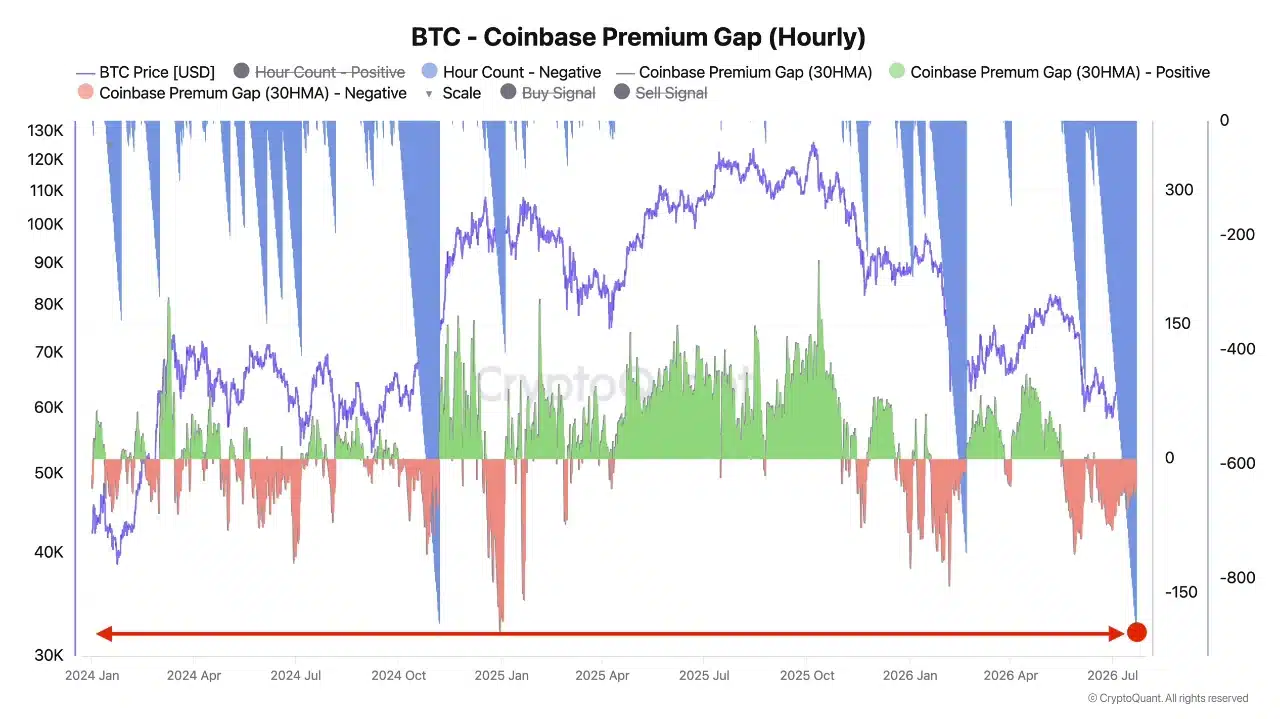
Crypto analyst Darkfost observed that the Coinbase Premium Gap has been negative since the 6th of May. This represented the highest level of pessimism in two years.
Coinbase premium refers to the difference in Bitcoin prices between Coinbase Advanced, where institutions and professionals trade, and Binance, which is retail-dominated.
A negative trend implies steady selling pressure from smart money, despite the attempted rallies toward $70k over the past month.
The analyst concluded that investors would choose to limit risk when macroeconomic or geopolitical factors were unstable, as they have been in recent months.
Leverage is gradually leaving the Bitcoin market
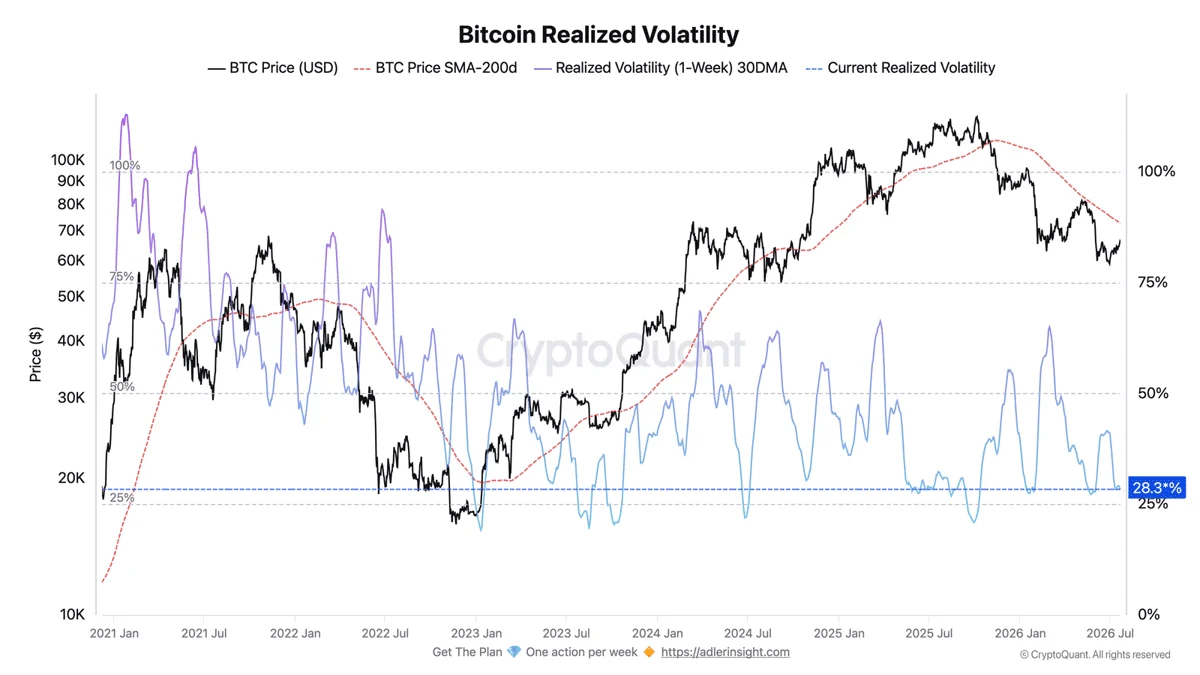
The price of Bitcoin has gradually been rising since July 1, when the price reached a swing low of $57,800. The gains since then have been accompanied by a decline in realized volatility.
Source: Axel Adler Jr.
Crypto analyst Axel Adler Jr. used the 1-week realized volatility, smoothed by the 30DMA, compared to Bitcoin’s price and its 200DMA.
Since 2016, 92% of trading days have seen higher realized volatility than the current levels.
The falling realized volatility alongside rising prices meant that the most recent price bounce came without any sharp price swings.
Source: Axel Adler Jr.
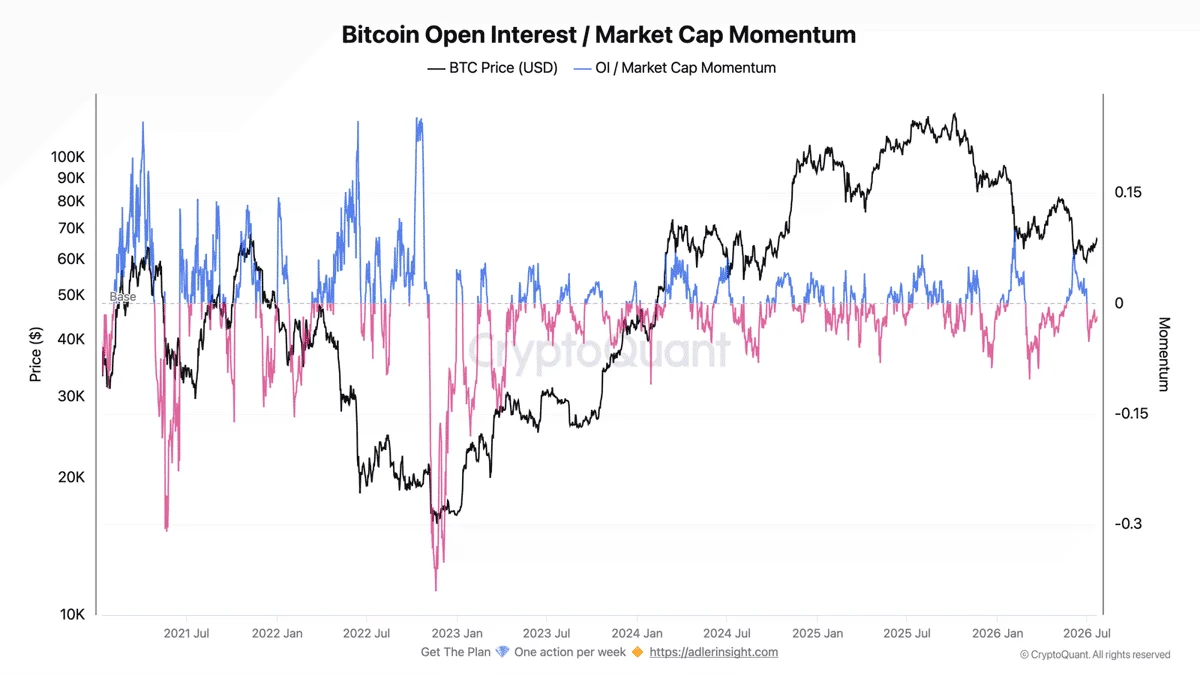
The Open Interest to market capitalization ratio measures if the derivatives share is rising or falling compared to price trends. It shifted negatively in early July and has been negative for 21 consecutive days.
The decline suggests derivatives leverage has continued falling even as Bitcoin recovered, reducing the immediate risk of a large liquidation-driven move. Compared to a month ago, the threat of a liquidation cascade was lower due to these factors.
The analyst concluded that the market is in a low-activity phase. A sustained price move beyond $66k-$72k, alongside further derivatives reduction, is needed to give a major signal of market recovery.
Final Summary
Bitcoin ETF inflows were improving, and its realized volatility was falling.
The derivatives leverage was in decline as prices advanced higher, but a breach of $66k-$72k is needed to majorly reduce the threat of further bearishness in the long-term.
Crypto-friendly digital bank Revolut has been valued at $115 billion in a secondary share sale, lifting the company’s valuation by 53% in less than a year.
The company priced shares at $2,017 each, according to an internal message from CEO Nik Storonsky reported by The Wall Street Journal. The transaction allows employees and other existing shareholders to sell stock rather than raising new capital for Revolut.
The valuation has more than doubled from $45 billion in 2024 and makes Revolut Europe’s most valuable private company, representing a major rise from the $75 billion valuation seen in November last year.
It also puts the firm above rival banking giants like Barclays’ roughly $95 billion market value, though with the caveat that Revolut’s price is based on a private transaction whose size has not been disclosed.
The company’s main app lets its users trade more than 200 crypto tokens, transfer assets to external wallets and stake holdings, while the firm also manages its own standalone crypto exchange called Revolut X.