Home Blog Page 197

Revolut hits $115 billion valuation in employee share sale: WSJ

0
Revolut hits $115 billion valuation in employee share sale: WSJ

Crypto-friendly digital bank Revolut has been valued at $115 billion in a secondary share sale, lifting the company’s valuation by 53% in less than a year.

The company priced shares at $2,017 each, according to an internal message from CEO Nik Storonsky reported by The Wall Street Journal. The transaction allows employees and other existing shareholders to sell stock rather than raising new capital for Revolut.

The valuation has more than doubled from $45 billion in 2024 and makes Revolut Europe’s most valuable private company, representing a major rise from the $75 billion valuation seen in November last year.

It also puts the firm above rival banking giants like Barclays’ roughly $95 billion market value, though with the caveat that Revolut’s price is based on a private transaction whose size has not been disclosed.

Revolut reported $2.3 billion in pre-tax profit for 2025, up 57%, as revenue rose 46% to $6 billion. Its customer base has since passed 75 million.

The company’s main app lets its users trade more than 200 crypto tokens, transfer assets to external wallets and stake holdings, while the firm also manages its own standalone crypto exchange called Revolut X.


Source link

What are stock options, and how do they work?

0
What are stock options, and how do they work?


Options can be confusing, complex, and risky. Still, they’re popular among investors who understand their mechanics. Why? Because options can produce gains and income. They’re also widely used to protect against losses in a portfolio.  

Stock options are legal contracts that grant the right to buy or sell a security, like a stock or ETF, at a specific price before a certain date. The contract specifies:

  • Whether the contract allows shares to be bought or sold

  • How many shares can be transacted under the agreement

  • The price at which the shares can be transacted, called the strike price or exercise price

  • The expiration date when the contract expires with no value

  • Whether the option is American or European, which affects exercise timing (American options can be exercised anytime before expiration, and European options can only be exercised at expiration) 

There are two parties to an options contract: a buyer and a seller. The buyer, known as the option holder, purchases the contract by paying a nonrefundable premium to the seller, who is called the option writer. The rights and obligations of option holders and writers differ based on the type of contract. The two main types are calls and puts.  

Holders don’t have to exercise their options. For example, the holder of a call option wouldn’t proceed with the transaction if the market price of the stock is less than the strike price. In that case, the better strategy is to do nothing and let the option expire. Alternatively, the holder can sell the option to a third party before expiration.

Option writers have fewer choices. If the holder exercises the option, the writer must fulfill the transaction.

Note that writers can sell covered or uncovered positions. Covered options are backed by owned shares or cash collateral, depending on the contract type. Uncovered, or naked, options are not backed and have much higher risk potential.

To buy or sell an option, you should have a strong opinion about a stock price’s future. Let’s use Apple (AAPL) as an example. Suppose the current share price is $340 and you predict it will rise to $360 in the next month. You could act on that prediction by purchasing a call to buy 100 shares at $350 each.

A reasonable premium might be $5 per share or $500 for 100 shares. Once the premium is paid, three things could happen:

  • The stock price could rise above the strike price, which puts the contract “in the money” for the holder. An in-the-money contract is valuable, because it grants the right to buy the stock for less than market value. The holder can sell the contract for a gain or exercise the options and purchase the stock to hold or resell.

  • The stock price could rise to the strike price. At this point, the contract is “at the money.”

  • The stock price could remain below the strike price. The term for this is “out of the money.”

At-the-money and out-of-the-money contracts are only valuable to investors who believe the share price will rise above the strike price before expiration. If the stock price remains too low, the market value of these contracts declines as the expiration date nears — a dynamic called time decay.

Should the contract expire without value, the holder’s loss is the premium of $500.

Holders use options to generate leveraged capital gains, and writers use options to generate income. Both holders and writers may also trade options to protect against potential losses in their portfolios.

Capital gains occur when an option holder sells an in-the-money options contract for more than the premium paid. Alternatively, the holder can exercise the options and resell the underlying shares for a profit.

Options are considered leveraged assets because holders can transact many shares for a small premium cost. Returning to the Apple example above, it only takes $500 for access to gains on 100 shares of AAPL. If you preferred to buy shares outright, the cash outlay is much higher at $34,000, or $340 per share times 100 shares.

Option writers generate income by collecting premiums.

Selling covered calls is a popular way to use an existing portfolio to produce income. If the underlying security’s price never exceeds the strike price, the writer keeps the shares and the premium. If the share price does rise, the writer’s gain is capped by the strike price. Any gains above that go to the holder.  

Investors also use options to hedge or protect against losses. Say you worry that a position you own is headed for a correction. You could buy a put option on that security, using the strike price to set a floor for your loss potential on those shares.

Options have a deserved reputation for being complex and risky, but they’re also powerful. You can buy stock options to control large blocks of shares for a budget-friendly price, or write them for extra income on the shares you already own.

Want to learn more about options? Subscribe to AlphaSpace.

A call option gives the holder the right to buy shares at the strike price before the contract expires. A put option gives the holder the right to sell shares at the strike price before the contract expires.

Exercising an option means moving forward with the transaction outlined in the contract. On a call option, this would involve buying shares at the strike price. On a put option, the holder would sell shares at the strike price.

Options are a type of derivative because their value comes from another asset. The value of an options contract hinges on the market value of the underlying security relative to the strike price, type of contract, and time remaining until expiration.


Source link

New Clarity Act emerges that’s a start on the final draft, makes ethics rule temporary

0
The GENIUS Act turns 1: State of Crypto

Republican senators met with Trump about it last week. By Monday, the Republicans had fixed on an accord. A White House official told CoinDesk on Monday that Trump had “agreed to the most comprehensive and wide-ranging ethics provision in history.”

The legislation would give regulators a year to implement the new ethics constraints. It’s not yet clear when such limits might be effective for Trump, nor is it clear what he’d do about them in regard to his many crypto business ties, including an ownership stake in World Liberty Financial.

Meanwhile, the bill’s most dedicated proponents, such as Senator Cynthia Lummis, have defended Trump and the legislation.

“It’s time to land this plane,” Lummis, a Wyoming Republican who leads the digital assets subcommittee in the Senate Banking Committee, said in a recent interview on Fox Business. “This is about helping law enforcement fight illicit finance, passing consumer protections and keeping these markets onshore in the U.S.”

In 16 days (including weekends) the Senate is set to leave Washington for its long summer break. While there is some floor time again in September, the lawmakers will be increasingly focused on November’s midterm elections. So, the first week of August is widely considered the last moment that the Clarity Act could advance from the Senate in the normal course of business.


Source link

Is ADA underpricing the risk from SecondFi’s $2.4 million exploit?

0
Is ADA underpricing the risk from SecondFi’s $2.4 million exploit?


Cardano [ADA] is in the middle of new security concerns after a mammoth SecondFi exploit worth $2.4 million. However, ADA traders don’t seem shaken at all!

SecondFi shuts down after 16.1 million ADA theft

SecondFi is winding down after attackers stole 16.1 million ADA, worth about $2.4 million, from 374 wallets. The breach came from a flaw in the wallet’s transaction-signing software.

The flaw allowed attackers to derive private key material from transaction-signing data, giving them access to affected wallets. Importantly, the Cardano network was not breached, and hardware wallet users were unaffected.

…given the gravity of this event and as previously announced, we have made the difficult decision to wind down SecondFi and Yoroi wallet.

SecondFi patched the vulnerability and secured 129 million ADA before attackers could reach it, but the service will not return to normal operations. It plans to release wallet export tools in early August, followed by a zero-knowledge recovery portal later that month.

Blockchain intelligence firm Groom Lake found signs that may point to North Korea’s Lazarus Group, but no link has been confirmed. A separate attacker also targeted other wallets during the same period.

ADA holds, derivatives traders keep positions open

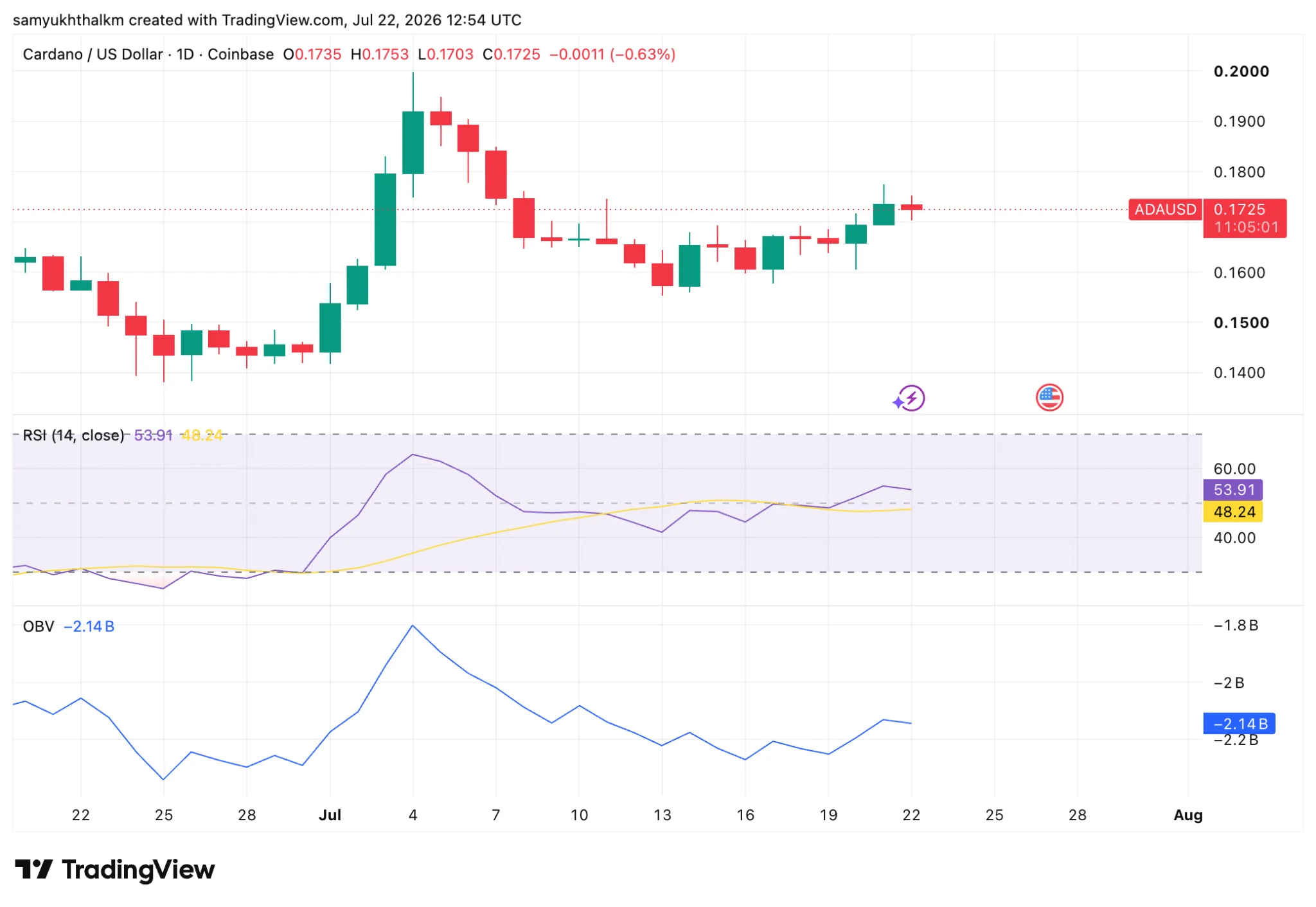
ADA was trading near $0.17 at the time of writing, with no notable sell-off after news of the SecondFi wallet theft. On the daily chart, the token was at $0.1725, down only slightly during the session. ADA had already pulled back from its early-July rise toward $0.19, but has since recovered and stayed steady.

The RSI indicated balanced pace, with a modest positive tilt.

cardano
Source: TradingView

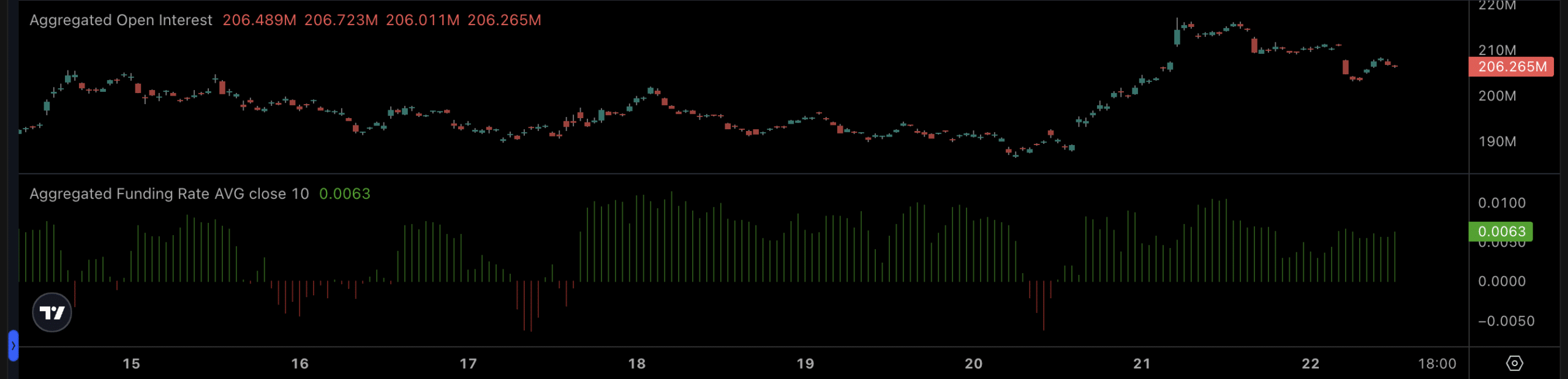
The derivatives numbers look similarly unbent. Aggregated Open Interest rose to above $210 million before settling near $206.3 million. Meanwhile, the Average Funding Rate proved that long traders were still willing to pay to keep their positions open.

cardanocardano
Source: Coinalyze

Traders have not rushed to reduce leveraged exposure following the exploit; however, they seem measured in their approach.

Just an isolated wallet issue?

The exploit exposed private key material, affected 374 wallets, and led SecondFi to shut down. The involvement of a second attacker and the possible [but unconfirmed] Lazarus Group link add to things.

While there is no evidence that the vulnerability extends beyond SecondFi, the incident highlights the importance of continued security reviews across the wider Cardano wallet ecosystem.


Final Summary

  • SecondFi is shutting down after a signing flaw led to the theft of 16.1 million ADA.
  • ADA held its price, there was no broad bearish reaction.


Source link

BWX Technologies (BWXT) Lagged Despite Strong Nuclear and Defense Growth Prospects

0
BWX Technologies (BWXT) Lagged Despite Strong Nuclear and Defense Growth Prospects


Polen Capital, an investment management company, released its second-quarter 2026 investor letter for “Polen 5Perspectives Small-Mid Growth Strategy”. A copy of the letter can be downloaded here. Polen 5Perspectives Small-Mid Growth Composite Portfolio returned 28.4% gross and 28.2% net of fees, respectively, compared to the 24.0% return of the Russell 2500 Growth Index. Markets rebounded strongly during the quarter as concerns over economic growth, trade policy, and the durability of AI investment eased, helping SMID-cap growth stocks deliver one of their strongest quarterly performances in the past 25 years. The firm highlighted that continued investment by hyperscalers and enterprise customers reinforced confidence in the AI infrastructure cycle, while growing electricity demand supported opportunities across power generation, grid infrastructure, and electrification. Aerospace and defense modernization also remained key long-term secular growth themes. In addition, please check the Strategy’s top five holdings to know its best picks in 2026.

In its second-quarter 2026 investor letter, Polen 5Perspectives Small-Mid Growth Strategy highlighted BWX Technologies, Inc. (NYSE:BWXT). BWX Technologies, Inc. (NYSE:BWXT) manufactures and sells nuclear components in the United States and internationally. On July 21, 2026, BWX Technologies, Inc. (NYSE:BWXT) closed at $173.09 per share. One-month return of BWX Technologies, Inc. (NYSE:BWXT) was -14.21% and its shares gained 22.02% over the past 52 weeks. BWX Technologies, Inc. (NYSE:BWXT) has a market capitalization of $15.86 billion with a 52-week trading range between $140.98 – $241.82.

Polen 5Perspectives Small-Mid Growth Strategy stated the following regarding BWX Technologies, Inc. (NYSE:BWXT) in its Q2 2026 investor letter:

BWX Technologies, Inc. (NYSE:BWXT) supplies nuclear components and services primarily for the U.S. Navy, while also expanding its presence in commercial nuclear power and advanced reactor technologies. Shares lagged during the quarter despite solid fundamentals, as investor enthusiasm shifted toward higher-beta Al and technology-related beneficiaries during the market rally. While the stock underperformed in the period, we continue to view BWX as well positioned to benefit from growing investment in nuclear. energy and defense modernization.”

BWX Technologies, Inc. (NYSE:BWXT) is not on our list of the 40 Most Popular Stocks Among Hedge Funds. As per our database, 61 hedge fund portfolios held BWX Technologies, Inc. (NYSE:BWXT) at the end of the first quarter which was 64 in the previous quarter. While we acknowledge the potential of BWX Technologies, Inc. (NYSE:BWXT) as an investment, we believe certain AI stocks offer greater upside potential and carry less downside risk. If you’re looking for an extremely undervalued AI stock that also stands to benefit significantly from Trump-era tariffs and the onshoring trend, see our free report on the best short-term AI stock.


Source link

The Fraudster Behind a $100M Deli Stock Scam Is Going to Prison

0
The Fraudster Behind a $100M Deli Stock Scam Is Going to Prison


A convicted fraudster who helped make a New Jersey deli worth $100 million on paper is now heading to prison, again. James Patten was sentenced to 21 months for his role in manipulating shares of Hometown International, the parent company of Your Hometown Deli in Paulsboro, New Jersey, CNBC reports. Patten and co-conspirators Peter Coker Sr. and Peter Coker Jr. inflated Hometown’s stock by 939%.

The scam was designed to make the companies attractive shells for reverse mergers with private companies looking to go public. But the plan fell apart after hedge fund manager David Einhorn flagged the deli’s bizarre valuation to clients in 2021, joking, “The pastrami must be amazing.” A CNBC investigation connected Patten’s history of prior fraud convictions to the deli’s ownership.

Patten’s co-conspirators already served their sentences, six and 40 months respectively. The deli itself, run by a high school wrestling coach who had no idea he was part of the scam, stopped selling pastrami back in 2022.

A convicted fraudster who helped make a New Jersey deli worth $100 million on paper is now heading to prison, again. James Patten was sentenced to 21 months for his role in manipulating shares of Hometown International, the parent company of Your Hometown Deli in Paulsboro, New Jersey, CNBC reports. Patten and co-conspirators Peter Coker Sr. and Peter Coker Jr. inflated Hometown’s stock by 939%.

The scam was designed to make the companies attractive shells for reverse mergers with private companies looking to go public. But the plan fell apart after hedge fund manager David Einhorn flagged the deli’s bizarre valuation to clients in 2021, joking, “The pastrami must be amazing.” A CNBC investigation connected Patten’s history of prior fraud convictions to the deli’s ownership.

Patten’s co-conspirators already served their sentences, six and 40 months respectively. The deli itself, run by a high school wrestling coach who had no idea he was part of the scam, stopped selling pastrami back in 2022.


Source link

U.S. seeks forfeiture of $25 million in crypto tied to romance and investment scams

0
U.S. seeks forfeiture of $25 million in crypto tied to romance and investment scams

Federal prosecutors filed five civil forfeiture complaints seeking more than $25 million in cryptocurrency that investigators say came from international romance and investment scams targeting people in the U.S. and Canada.

The complaints, filed in U.S. District Court for the District of Columbia, stem from separate Secret Service investigations.

Agents traced funds through hundreds of wallet addresses and frozen crypto linked to more than 270 suspected investment scam transactions, more than 200 romance scam victims and several victims in the Washington area, according to the U.S. Attorney’s Office.

The two largest cases seek about $12.1 million tied to online romance schemes and $10.4 million linked to fraudulent investment platforms. Another three complaints seek roughly $1.23 million, $2.39 million and $285,000.

In one case, scammers cut off contact after a victim tried to withdraw money from what appeared to be a crypto investment account. In another, fraudsters contacted someone who had already lost money and claimed they could recover it for a fee in what’s known as a recovery scam.

The cases are part of the Scam Center Strike Force, which launched in November 2025. The U.S. Attorney’s Office said the task force has recovered more than $800 million.


Source link