Home Blog Page 278

RUN Stock Alert: What to Know as Sunrun Unveils AI Data Center Pilot

0
RUN Stock Alert: What to Know as Sunrun Unveils AI Data Center Pilot


3D Graphics Concept Big Data Center by Gorodenkoff via Shutterstock

Sunrun (RUN) remained in focus on July 8 as the company officially entered the edge computing space with a distributed artificial intelligence (AI) data center pilot program. 

The initiative places compute nodes directly into customer homes equipped with Sunrun solar and battery networks to handle AI inference workloads.

More News from Barchart

The announcement arrives at a time when investors desperately need a reason to stick with RUN stock, which is down about 36% year-to-date as of writing. 

www.barchart.com

What the Pilot Program Means for Sunrun Stock

The new pilot program shifts AI workloads from massive data centers into residential properties, utilizing Sunrun’s expansive infrastructure of more than 1.1 million solar and battery storage systems. 

By installing localized compute nodes inside customer homes, the clean energy company will sell modular artificial intelligence inference capacity directly to enterprise buyers. 

This unique decentralized layout leverages existing home batteries for backup power, enabling data processing to continuously run through local blackouts. 

For homeowners, the initiative acts as an economic incentive, offering financial compensation for hosting the nodes.

Meanwhile, Sunrun shares will benefit from a new high-margin revenue stream, given McKinsey estimates AI inference demand to grow at a compound annualized rate of a whopping 35%.

Is It Worth Buying RUN Shares Today?

RUN’s initiative effectively bypasses the lengthy grid interconnection queues and land acquisition bottlenecks that plague traditional data center buildouts.

Plus, it complements the company’s recent 16-gigawatt clean energy partnership with Tesla (TSLA) and Renew Home as well. 

If this multi-month pilot hits its milestones, it could transform Sunrun stock from a pure-play solar utility into a notable picks-and-shovels AI infrastructure name. 

Investors should also note that RUN is currently trading at a forward price-to-earnings (P/E) ratio of nearly 12x, which represents a meaningful discount not just to its historical multiple, but to its rivals like Enphase Energy (ENPH) as well. 

What’s the Consensus Rating on Sunrun?

Crucially, Wall Street analysts remain convinced that RUN shares’ year-to-date decline has gone a bit too far.




Source link

Harry Styles fans flew to Amsterdam, paid a 21% premium for hotels—and sent inflation soaring

0
Harry Styles fans flew to Amsterdam, paid a 21% premium for hotels—and sent inflation soaring

Inflation has remained stubbornly elevated across the United States and Europe, driven by everything from energy costs to geopolitical tensions in the Middle East. But in the Netherlands, central bankers pointed to an unlikely contributor: a Harry Styles concert residency that sent thousands of Gen Z and Millennial fans rushing to Amsterdam.

The pop superstar’s Together, Together tour made Amsterdam its only mainland European stop, with a 10-day residency between May 16 and June 5. The concerts drew fans from across Europe—and even the United States—fueling a surge in demand for hotel rooms.

In May alone, hotel prices in the Netherlands surged 21% on average, contributing 0.4 percentage points to the country’s monthly inflation rate—more than half the increase from April, according to Bas ter Weel, director of monetary affairs at the Dutch central bank. Overall inflation rose from 2.8% in April to 3.5% in May.

The spike was notable enough that the European Central Bank, led by Christine Lagarde, cited “concert-related hotel prices in the Netherlands” when discussing the acceleration in services inflation, though it did not mention Styles by name. The comments came ahead of the ECB’s June decision to raise its benchmark interest rate by 0.25 percentage points to 2.4%.

Other blockbuster tours—including those by Bruce Springsteen and Taylor Swift— have delivered noticeable boosts to local economies across Europe. But ter Weel said Styles’ residency produced one of the largest tourism-driven price spikes the Netherlands has seen in years. 

“Harry Styles really breaks everything,” ter Weel told Dutch radio outlet BNR.

Gen Z spent thousands on hotels—and even houseboats—but proved their economic might

The surge in hotel prices was most apparent to young fans scrambling to find affordable places to stay. Some concertgoers, lured by some ticket prices dropping to as low as €50 ($57), quickly discovered that getting into the show was far cheaper than finding a place to sleep.

One TikTok user said she and her friend ended up spending 10 days on a canal houseboat—and were forced to shower offsite—after hotel prices climbed beyond her budget.

“When you secured the Harry opening night tickets but couldn’t afford an Amsterdam hotel,” she wrote.

Another fan posted on TikTok that she paid €900 (about $1,030) for five nights in what she described as a tiny “box” of a room.

The sticker shock reflects a broader spending pattern among younger consumers. One-third of Gen Z have said they believe they’ll never own a home—and many expect to delay or forgo other traditional milestones—but they’ve continued to prioritize experiences such as travel and live music, even as costs rise. At the same time, the generation has struggled significantly with financial literacy, scoring the lowest among all age groups in TIAA’s most recent financial literacy report.

Still, splurging on a concert trip doesn’t necessarily mean young people are neglecting their finances outright. Separate research has found the average Gen Zer began saving for retirement roughly 15 years earlier than baby boomers, suggesting many are balancing long-term financial planning with spending on experiences they value. 

Ter Weel said there are two sides to the story from an economic standpoint. While the surge in hotel prices temporarily lifted inflation, it also boosted economic activity. Likewise, while many fans may have spent more than planned on the trip, the episode underscores how Gen Z’s spending power can have an outsized impact on the broader economy.


Source link

Live updates: Bitcoin ETFs bleed again while ether funds snap a five-day inflow streak

0
Live updates: Bitcoin ETFs bleed again while ether funds snap a five-day inflow streak

U.S. spot bitcoin ETFs lost a net $95 million on Thursday, per SoSoValue data, while ether ETFs shed about $52 million, ending a five-day inflow run that had been the steadier side of the market.

Fidelity’s FBTC drove the bitcoin outflow with roughly $63 million, followed by ARKB at about $40 million. BlackRock’s IBIT was flat, neither adding nor losing money, and VanEck’s HODL and Morgan Stanley’s MSBT were the only funds in the green. Total bitcoin ETF assets sit near $77 billion.

Ether’s reversal was broader. Fidelity’s FETH lost about $34 million and BlackRock’s ETHA roughly $13 million, with Bitwise and BlackRock’s second fund also negative. No ether fund posted an inflow, and net assets held at about $9 billion.

The flows are lagging the tape. Bitcoin rose 3.5% on Friday to nearly $64,000 and is up 4.2% on the week, recovering everything it lost when Trump warned that strikes on Iran could intensify.

Ether added 2.6% to $1,760. The rally came out of Asia, where South Korea’s Kospi jumped 4% on renewed AI-demand optimism and SK Hynix priced $26.5 billion of American depositary shares.

Institutional money has now sat out most of a month in which bitcoin has traded between roughly $59,000 and $66,000 without breaking either way.


Source link

BofA lowers its Price Target on Madrigal Pharmaceuticals, Inc. (MDGL)

0
BofA lowers its Price Target on Madrigal Pharmaceuticals, Inc. (MDGL)


Madrigal Pharmaceuticals, Inc. (NASDAQ:MDGL) is one of the 10 Best Under-the-Radar Stocks to Invest In.

On June 11, BofA lowered its price target on Madrigal Pharmaceuticals, Inc. (NASDAQ:MDGL) to $542 from $550. It maintained a Neutral rating on the stock. The firm said Rezdiffra’s launch in MASH has impressed, but debate has shifted to whether that momentum can continue. The analyst reduced the firm’s 2028 Rezdiffra revenue forecast to $2.6 billion from $2.7 billion after discussions with key opinion leaders and prior management feedback.

Separately, on July 1, Ribo and Madrigal Pharmaceuticals, Inc. (NASDAQ:MDGL) achieved the first candidate drug nomination milestone under their siRNA collaboration for MASH. Ribo said the partnership consists of multiple preclinical assets targeting liver diseases.

BofA lowers its Price Target on Madrigal Pharmaceuticals, Inc. (MDGL)

Li Ming Gan, Ribo’s co-CEO and Global R&D President, said the companies reached the milestone within months. It combined Madrigal’s clinical expertise in MASH with Ribo’s siRNA discovery and delivery capabilities. Both partners plan to speed up development of the novel therapy.

Madrigal Pharmaceuticals, Inc. (NASDAQ:MDGL) is a biopharmaceutical company. It delivers novel therapeutics for metabolic dysfunction-associated steatohepatitis in the United States.

While we acknowledge the potential of MDGL as an investment, we believe certain AI stocks offer greater upside potential and carry less downside risk. If you’re looking for an extremely undervalued AI stock that also stands to benefit significantly from Trump-era tariffs and the onshoring trend, see our free report on the best short-term AI stock.

READ NEXT: 33 Stocks That Should Double in 3 Years and Cathie Wood 2026 Portfolio: 10 Best Stocks to Buy.

Disclosure: None. Follow Insider Monkey on Google News.


Source link

Here’s why Uniswap is betting on execution over higher LP incentives

0
Here's why Uniswap is betting on execution over higher LP incentives


Competition among decentralized exchanges is increasingly forcing protocols to rethink the incentives that originally fueled DeFi’s rapid expansion. In fact, Uniswap [UNI] has become the latest to test that transition after proposing a reduction of up to 33% in V4 liquidity provider fee incentives. 

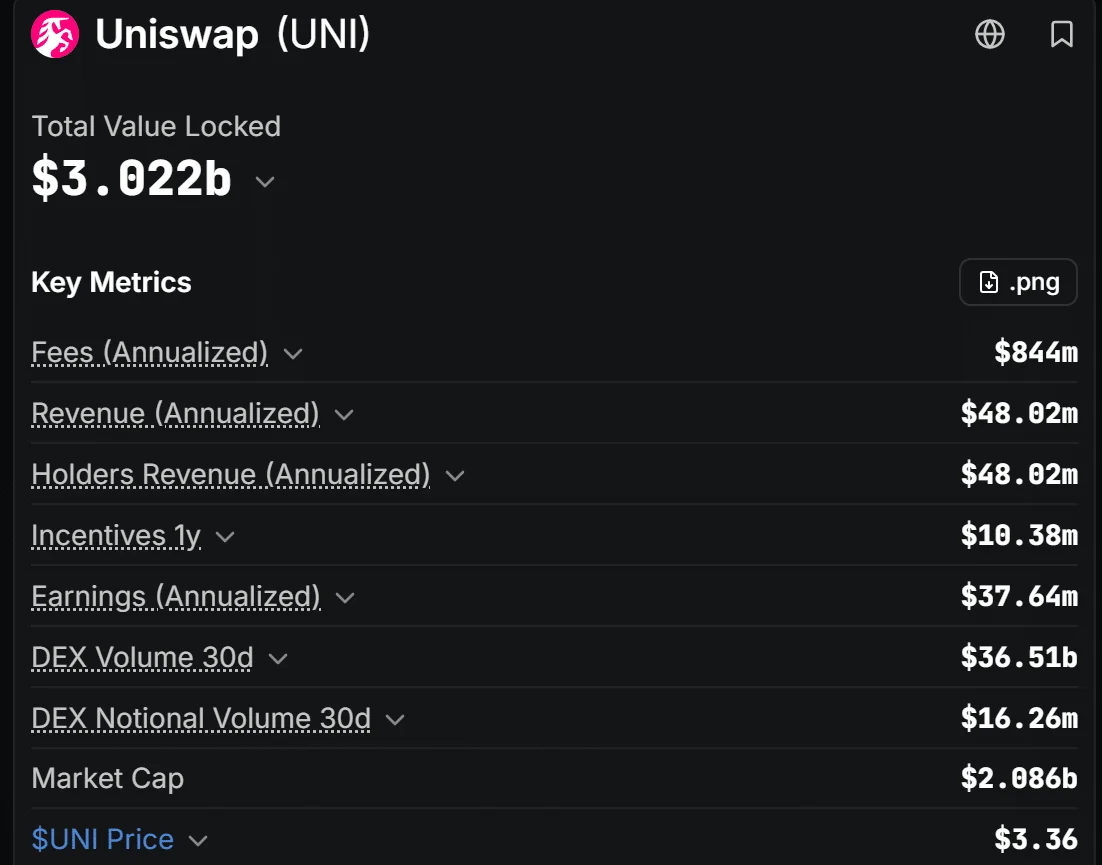
More importantly, Uniswap’s TVL stood at $3.02 billion while its monthly volume hovered near $36 billion at press time. This hinted at strong market leadership, despite intensifying competition from rival decentralized exchanges.

Source: DeFILlama

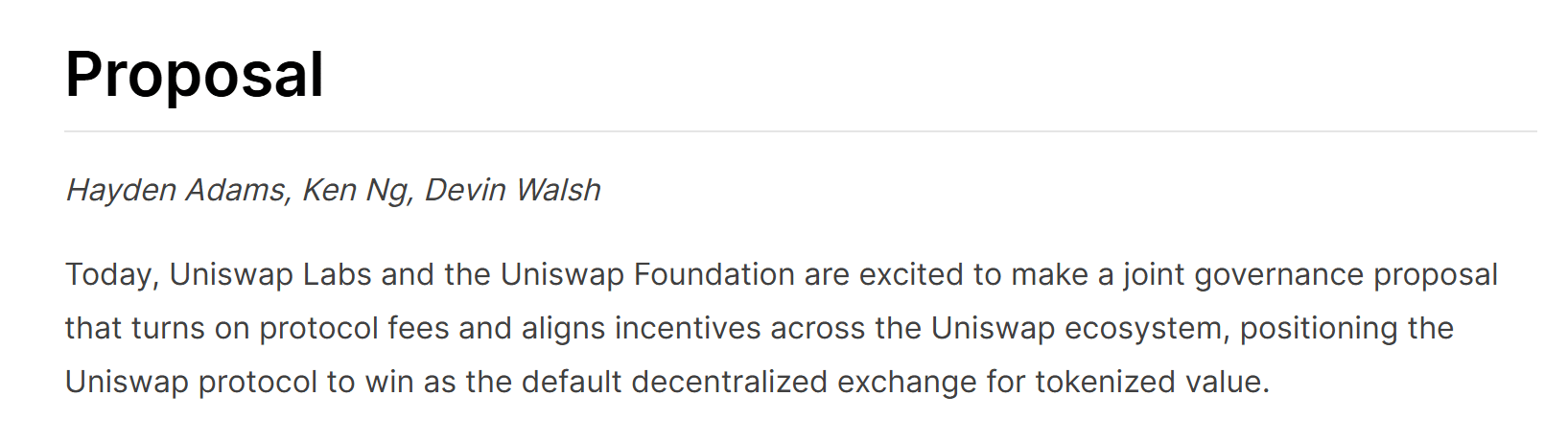
The proposal marks a clear departure from previous models. The V3 model used much higher percentages of each trade to incentivize early liquidity providers to quickly capitalize on its platform.

Instead, the protocol believes that a lower cost of trading, tighter spreads, and better capital usage will result in a sufficient increase in volume to offset reduced LP returns.

Source: Gov. Uniswap

That calculation carries meaningful risk. This, because liquidity providers can easily move capital to competing protocols offering stronger yields. If trading activity rises fast enough, the new model could strengthen Uniswap’s long-term competitiveness. 

And yet, weakening LP participation may pressure liquidity depth and reshape incentive structures across the wider DeFi ecosystem.

Uniswap strengthens stablecoin liquidity

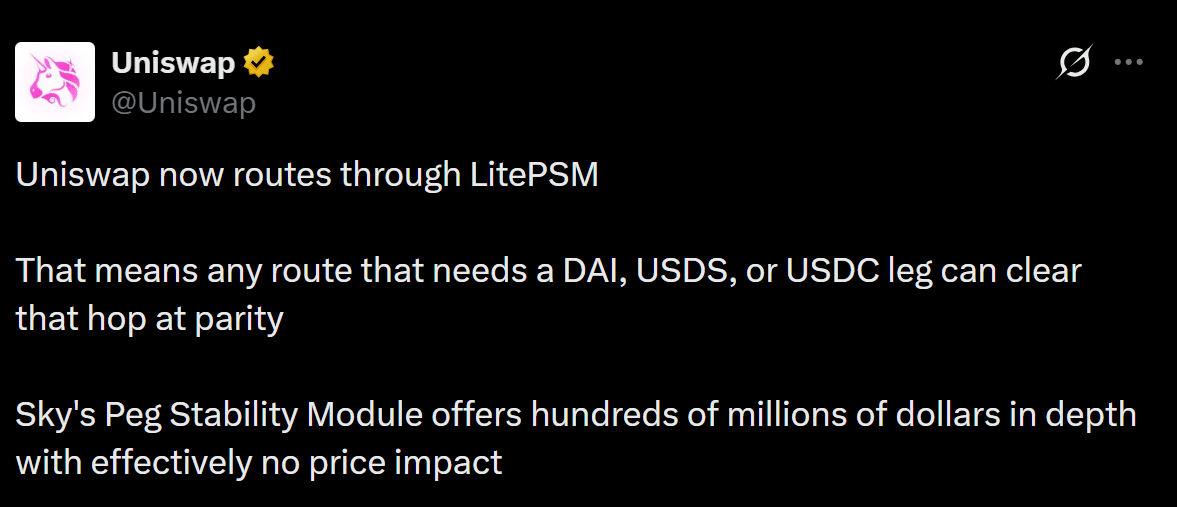
That strategy is already taking shape through Uniswap’s integration of Sky’s LitePSM.

Rather than relying solely on liquidity provider rewards, the peg stability module enables zero-slippage routing between USDS, DAI, and USDC. The integration deepens liquidity, reduces execution costs, and allows larger trades to settle with minimal price impact.

Source: Uniswap on X

Also, it enhances Sky’s FX Layer by converting parity-based stablecoin routing into operational infrastructure. While these enhancements improve competitive positioning for Uniswap, infrastructure alone may not be sufficient to generate greater trading volumes.

However, lasting success will ultimately depend on whether lower execution friction attracts enough users and volume to offset reduced liquidity provider incentives.

Still, the real test for Uniswap now lies in market adoption rather than protocol design. Success will depend on whether stronger execution and higher trading volumes offset lower liquidity provider rewards.

If traders embrace the model, Uniswap could reinforce its leadership. Otherwise, rival DEXs may attract liquidity through more competitive incentives instead.


Final Summary

  • Uniswap [UNI] has proposed prioritizing execution over higher liquidity incentives.
  • Uniswap’s success now depends on trading volume, not liquidity incentives alone.


Source link

BTC, ETH price news: What next as bitcoin zips to nearly $64,000

0
BTC price news: Bitcoin retakes $63,000, reversing end-June losses

“Once liquidations begin to drive price action, the market can move faster than real demand would justify,” said Shawn Young, chief analyst at MEXC Research, who is watching how bitcoin trades inside the $60,000 to $63,000 band now that the first recovery is in.

MSCI’s Asia Pacific equities gauge climbed 1.4% as investors moved back into semiconductor shares on renewed optimism over AI demand, cutting the week’s loss to under 1%.

South Korea’s Kospi, a bellwether for AI investment, jumped 4%. SK Hynix was among the winners after pricing $26.5 billion of American depositary shares, one of the largest share sales of the year.

Gains were further extended as yen strengthened 0.6% and long-dated Japanese government bond yields fell after Finance Minister Satsuki Katayama said the government wants pension funds to increase their holdings of domestic assets. Bloomberg’s dollar gauge declined and is heading for a second consecutive weekly drop.

Nothing crypto-native moved bitcoin this week. There was no ETF flow of any size, no protocol event and no exchange failure. Bitcoin absorbed an oil shock, a global bond selloff, a hawkish repricing of Fed expectations and two rounds of U.S. strikes on Iran, and finished up 4.2% because Korean memory chips are in demand and the dollar is losing ground.


Source link

JPMorgan to pursue smaller deals in latest growth push

0
JPMorgan to pursue smaller deals in latest growth push


JPMorgan Chase (JPM) is well known for advising some of the world’s biggest companies on their most significant deals. Now the country’s largest bank is looking to get a piece of the smaller pies.

The banking giant said Wednesday it’s launching a dealmaking team catering to small-cap companies valued between $100 million and $500 million, according to an internal memo shared with Yahoo Finance.

The move expands JPMorgan’s middle-market investment banking group that targets companies between $500 million and $1 billion and currently includes a little under 400 bankers.

The new small-cap group will be based in key US cities, including New York, Los Angeles, Dallas, Chicago, and Atlanta. It’ll initially focus on companies in diversified industries, consumer and retail, and business services with plans to hire more than 75 bankers in over the near term.

The team will be led by new hire Michael Flynn, a veteran investment banker who formerly served as a managing director for middle-market investment banking boutique G2 Capital Advisors. 

The Wall Street Journal earlier reported the move.

The group will work with JPMorgan’s commercial bank and private bank, as well as its investment banking team focused on midcap private equity firms. That gives the new team access to JPMorgan’s existing banking relationships with smaller corporate clients.

It comes as JPMorgan and other big banks are pushing for growth amid a period of regulatory freedom and mega deals fueled by the AI frenzy.

JPMorgan remains deeply entrenched in the biggest end of Wall Street dealmaking. The bank has been among the biggest beneficiaries of this year’s capital markets boom. It has worked on major equity and M&A transactions tied to AI and infrastructure, such as SpaceX’s IPO last month and NextEra Energy Inc.’s merger with Dominion Energy Inc. earlier this year. 

But this latest push puts the country’s largest lender further into a territory that has traditionally been the domain of boutique firms and regional lenders.

Next week, JPMorgan and its big bank rivals will kick off earnings, with a key question being how durable Wall Street’s deal boom looks following the second quarter.

David Hollerith is a senior reporter at Yahoo Finance covering the cryptocurrency and stock markets. Follow him on X at @DsHollers.

Click here for in-depth analysis of the latest stock market news and events moving stock prices

Read the latest financial and business news from Yahoo Finance


Source link