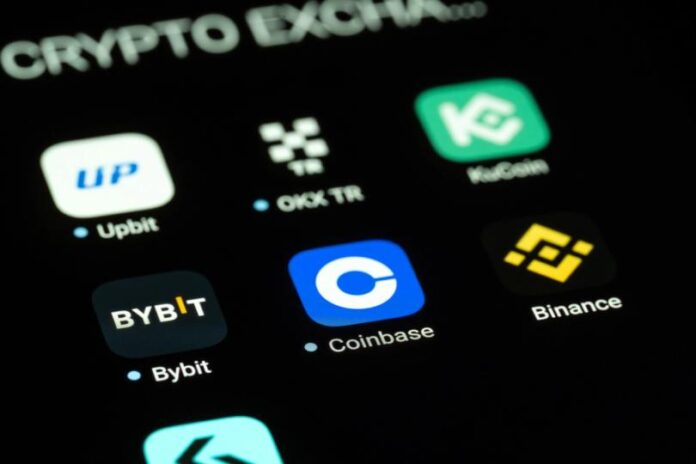
The company is simultaneously broadening its derivatives business. New products include perpetual futures tied to thematic baskets such as artificial intelligence, defense and Chinese equities, as well as pre-IPO perpetual futures that provide exposure to private companies including SpaceX (SPCX), which went public earlier this month. Coinbase said contracts tied to OpenAI and Anthropic, which are anticipated to go public later this year, are expected to follow.
The exchange is also betting heavily on prediction markets, an area that has grown rapidly across crypto and traditional finance. New offerings include short-term crypto prediction contracts and bundled wagers that allow traders to combine multiple forecasts into a single position.
A major focus of the update is artificial intelligence.
Coinbase introduced Coinbase Advisor, which it described as one of the first SEC-registered AI-powered investment advisory tools. Initially available to Coinbase One subscribers in the U.S., the service aims to provide portfolio recommendations, tax-loss harvesting guidance and market analysis.
The announcements reflect CEO Brian Armstrong’s long-term vision of turning Coinbase into a full-service financial platform that combines trading, payments, lending and asset management. Competition continues intensifies across crypto and traditional finance, with exchanges increasingly racing to become the primary destination for trading stocks, digital assets and tokenized financial products from a single account.
By Suzanne McGee, Caroline Valetkevitch and Shashwat Chauhan
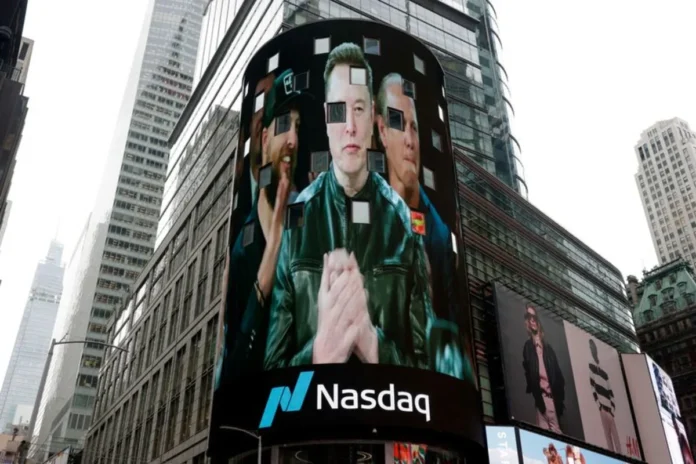
NEW YORK, June 15 (Reuters) – The SpaceX IPO went off with a bang. Now investors turn their attention to a jam-packed calendar ahead for Elon Musk’s rocket, internet and AI firm that may bring volatility.
Just in the next two months, the sixth-largest U.S. listed company by market value will have a handful of events – ranging from the listing of options to the expiration of investor holding periods to index inclusion – that could help dictate trading in its shares and the broader market.
Friday’s launch of the largest-ever IPO was well managed from start to finish, investors said, drawing strong orders from retail and institutions alike and benefiting from Musk’s reputation for the Midas touch. But debate continues over what the right price for the stock is and to what extent SpaceX’s savvy marketing matches with its fundamentals.
“You have to look at it this way: are people actually investing in SpaceX or trading SpaceX? I am of the belief, and this is also other money managers that I’m talking to, that it’s the latter,” said Todd Schoenberger, chief investment officer at Crosscheck Management in Washington, D.C.
Here are some events that could help shape that argument over coming weeks:
OPTIONS TRADING
Options on SpaceX are set to begin trading as soon as Tuesday, with early activity expected to be heavy, volatile and likely expensive.
Options, which give holders the right but not the obligation to buy or sell shares at a predetermined price within a certain period, offer investors a low-cost way to play a company’s stock. If SpaceX behaves like Musk’s Tesla, it would be almost twice as volatile as the average stock, likely driving heavy options activity.
STOCK SALE RESTRICTIONS END
SpaceX plans to allow a large portion of its shares to become eligible for resale before the usual six-month restriction period post-IPO, under a staged system linked to the company’s performance, a company filing showed.
The approach, designed to avoid a large wave of shares hitting the market at once, helps make post-IPO trading more orderly – but at the cost of potential volatility spread across the six-month period rather than a single day. Some brokers are also imposing holding periods for shares acquired on Friday.
“We got shares of SpaceX for some of our clients (on Friday), and there’s a 31-day minimum holding period,” said Jake Dollarhide, chief executive officer of Longbow Asset Management in Tulsa, Oklahoma. “So I think once some of those minimum holding periods end, you could see some selling pressure.”
THE GREEN SHOE
The IPO includes a so-called greenshoe option, a standard feature of most large U.S. stock market listings that acts like a safety valve that keeps the stock price from going crazy one way or another in its first month.
SpaceX gave Morgan Stanley the option to purchase an additional 15% of its stock at the IPO price of $135 a share for up to 30 days – or about 83 million in additional shares on top of the 555.6 million SpaceX already sold.
Those additional shares, however, have not yet been issued by the company, so the bank has to effectively sell them on the open market through a short position and buy them from the company later.
EARNINGS
SpaceX has not set a date for its next earnings report but the event, expected in the next few months, will likely renew the discussion of whether a company with a $4.94 billion loss last year on $18.7 billion of revenue can justify a $2 trillion valuation.
“You can make a lot of arguments that SpaceX is severely overvalued. … SpaceX is valued based on Elon Musk’s reputation,” Dollarhide said.
INDEX INCLUSION
The company is due to be added this month to indexes such as the Nasdaq 100 and some MSCI and Russell indexes tracking large-cap stocks. Some funds will be required to buy, once that happens, and investors are expecting those additions to drive share-price gains.
A related debate centers on whether so-called passive investors appreciate the risks of these decisions and how that may play out for the indexes down the road.
“Most people will end up owning SpaceX without ever deciding to, through a Nasdaq or Russell fund, a target-date fund, or the index sleeve of their 401(k). That’s the real democratization here,” said Kevin Moss, co-creator of the Private Shares Fund. “A name that used to be walled off in private rounds shows up in mainstream retirement accounts. The flip side is you own it whether or not you have a view on the valuation.”
(Reporting by Caroline Valetkevich, Suzanne McGee and Shashwat Chauhan; Editing by Colin Barr and Will Dunham)
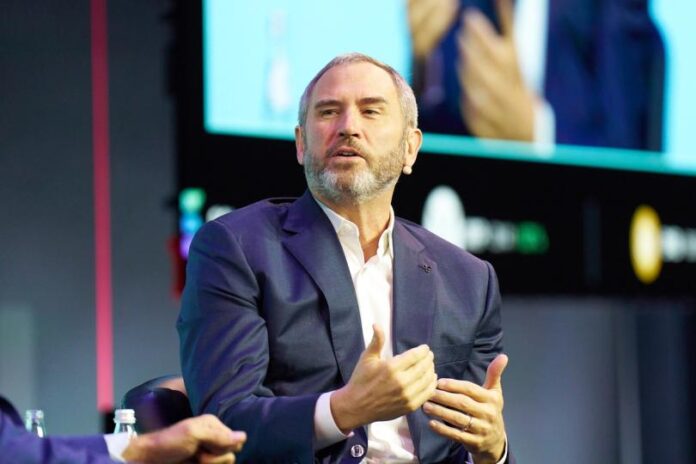
Ripple, the blockchain firm closely associated with the XRP Ledger (XRP) network, invested in African payments company Flutterwave as part of its Series E funding round, a deal centered on expanding the use of stablecoins for cross-border payments.
Flutterwave said Tuesday that the funding round values the company at $3.2 billion. Financial terms of Ripple’s stake were not disclosed.
The deal will integrate Ripple’s U.S. dollar-backed stablecoin, RLUSD, into Flutterwave’s payments infrastructure, allowing businesses to settle some international transactions using digital dollars rather than relying solely on traditional banking networks.
Flutterwave will also connect to Ripple Payments, Ripple’s global payments network, and use the XRP Ledger blockchain to process transactions.
The companies said the goal is to make it easier and cheaper for businesses across Africa to send and receive money internationally.
The deal points to the growing role of stablecoins in international payments, one of the digital asset industry’s fastest-growing use cases. While cryptocurrencies are often associated with trading, stablecoins are increasingly being used by businesses and everyday people to move money across borders and manage U.S. dollar liquidity in regions where access to foreign currencies can be limited.
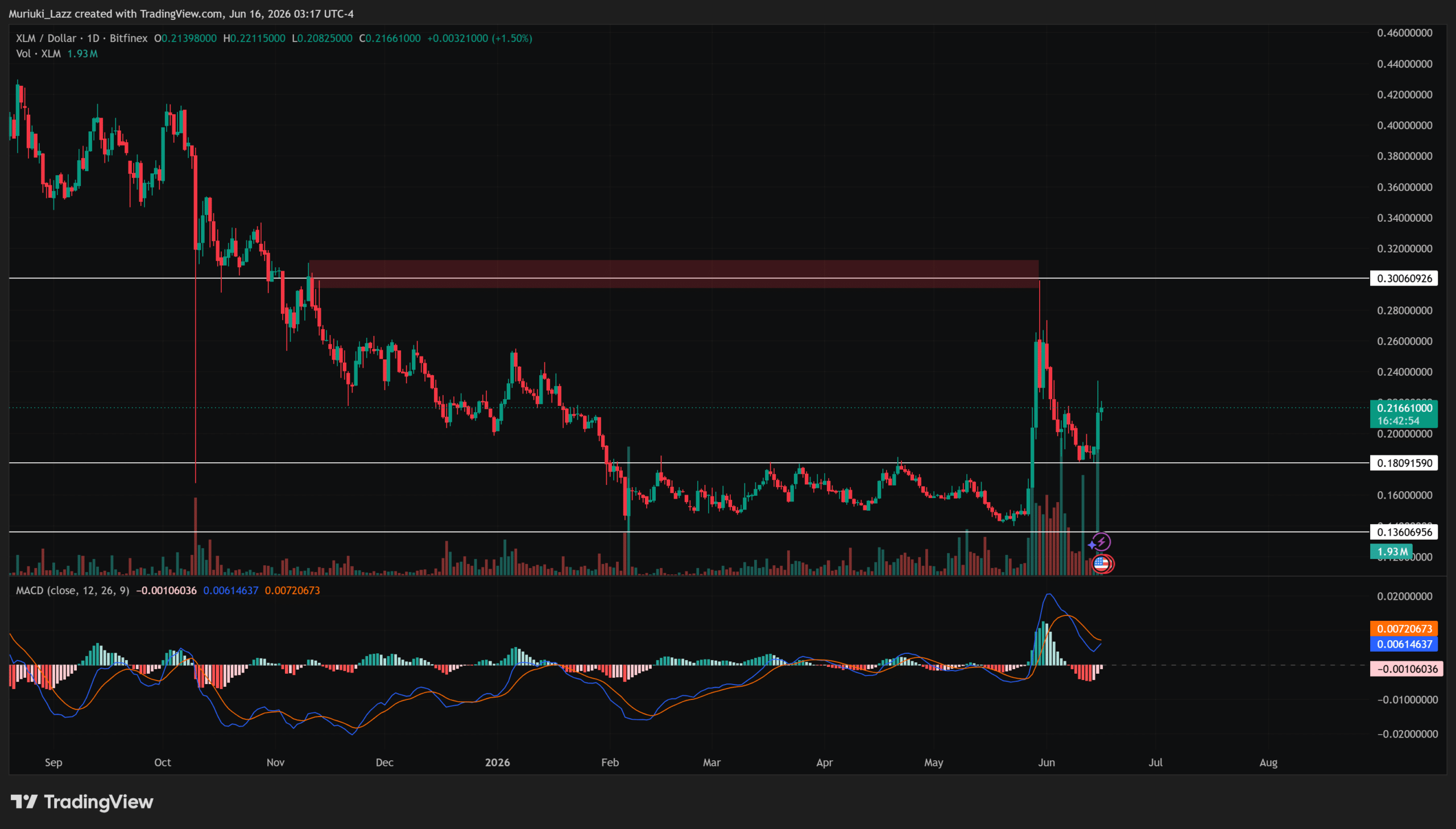
After months of persistent weakness, Stellar [XLM] is attempting to stabilize above a key breakout area. Earlier this month, buyers pushed the price from the mid-$0.15 region to nearly $0.30, ending a lengthy consolidation phase between $0.136 and $0.19.
The daily timeframe structure portrays a market transitioning from accumulation toward a potential trend reversal, though confirmation remains incomplete.
However, the rally quickly encountered supply near the $0.30 resistance zone, triggering aggressive profit-taking that pulled XLM back toward $0.18. Since then, buyers have defended the $0.20 region and lifted the price back to around $0.217.
Source: XLM/USD on TradingView
This recovery keeps the breakout structure intact, though the market remains at an important test. While the MACD line remains above the signal line, the histogram has shifted into negative territory.
That divergence suggests bullish momentum is fading even as price attempts to recover, raising the possibility of consolidation or another retest of support. A decisive move above $0.23 would indicate buyers are regaining control and reopen the path toward $0.26-$0.30.
However, failure to hold above $0.20 would strengthen the case for a deeper retracement toward the $0.18-$0.136 range.
XLM’s recovery momentum meets overhead resistance
While the daily timeframe shows XLM building a broader recovery, the 4-hour structure focuses on whether buyers can maintain that momentum.
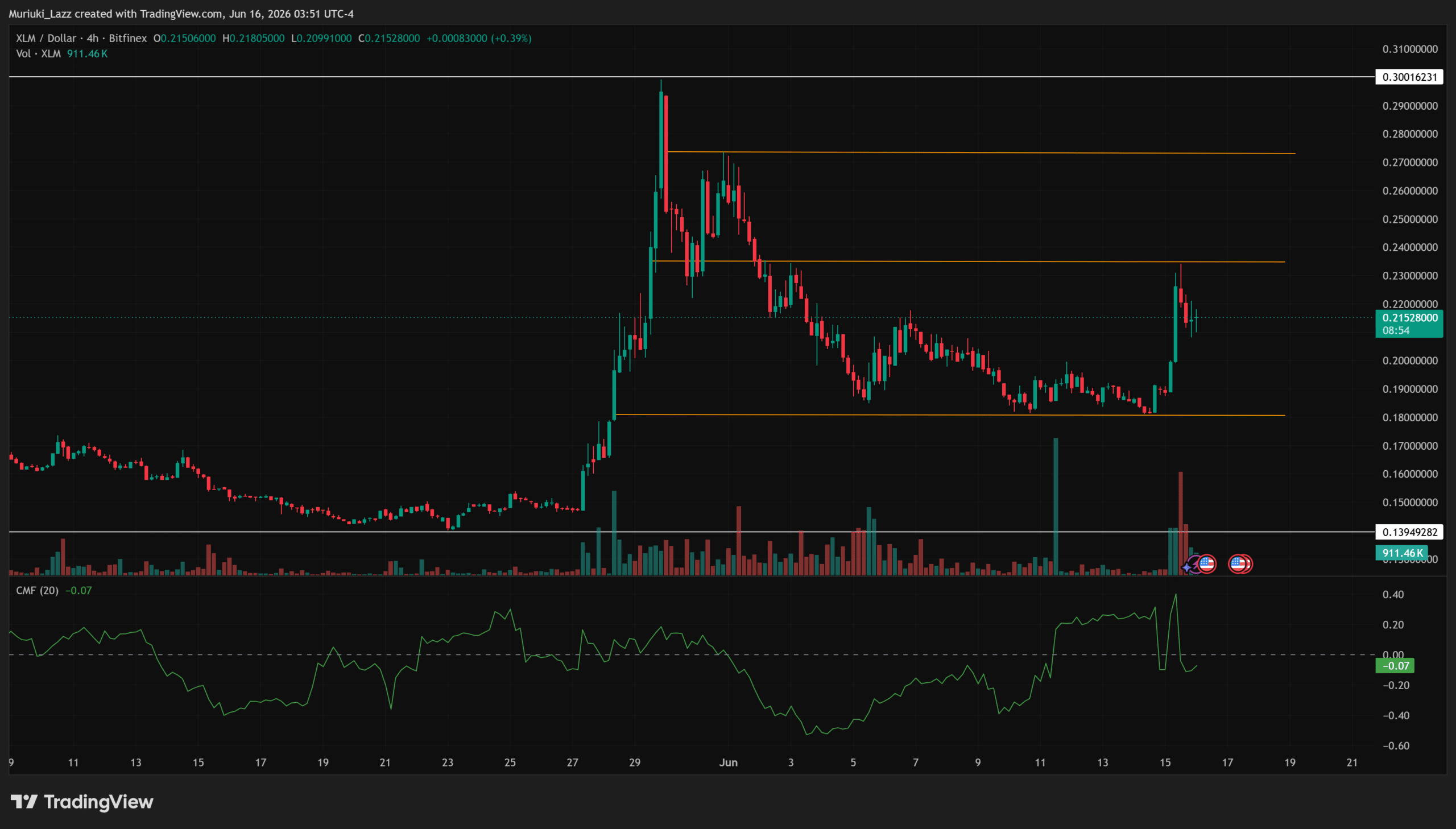
The altcoin was trading at $0.216 at press time, up 12% in the last 24 hours, outperforming the broader market.
After rebounding from the $0.185 support zone, XLM climbed back toward $0.235 and briefly tested a level that previously acted as support before turning into resistance. Sellers responded quickly, pushing the price back toward $0.216.
Source: XLM/USD on TradingView
Even so, the pullback has remained relatively controlled. Volume has eased during the decline, suggesting selling pressure is weakening rather than accelerating.
Meanwhile, CMF has slipped back to around -0.07 after its earlier surge, showing capital inflows have slowed but not collapsed.
This leaves XLM at a critical short-term test. A move above $0.235 would suggest buyers are regaining control and could reignite upward momentum toward $0.27.
However, if price loses the $0.21 area, attention could quickly return to the $0.185 demand zone where the latest recovery began.
Final Summary
Stellar [XLM] remains above key breakout support, but reclaiming $0.23 is essential to strengthen reversal prospects.
XLM recovery momentum is improving, though weakening inflows and overhead resistance still demand caution.
Truly great companies have an uncanny ability to evolve and expand, replicating what made them successful at one thing, and turning that into excellence at something else. Axon Enterprise (NASDAQ: AXON) made its name with TASER, a non-lethal electric weapon used by law enforcement to incapacitate suspects. Then it expanded into body cameras, dominating the U.S. market.
Now Axon is taking to the skies. The company has entered the law enforcement drone and robotics market, which it estimates is a $20 billion opportunity. It’s a perfect fit into what has become a hardware ecosystem, tied together by Axon’s cloud software offerings.
Will AI create the world’s first trillionaire? Our team just released a report on the one little-known company, called an “Indispensable Monopoly” providing the critical technology Nvidia and Intel both need. Continue »
Here’s why this new opportunity makes Axon stock a buy, especially while it is trading 49% below its August 2025 all-time high.
Image source: Getty Images.
The war in Iran is putting drones on the map at home
The war in Iran showcased drones as a major player in modern warfare. In today’s digital world, there are countless videos and articles about how drones are becoming a primary tool in battle. The war also illustrates how difficult drones can be to defend against, opening up security vulnerabilities that U.S. law enforcement could invest more in to address.
Axon has already spent years laying the foundation for its drone business. It partnered with Skydio in 2021 to sell its drones through Axon Air, the company’s comprehensive drone hardware and software solution. Axon then acquired Dedrone in late 2024, a leader in smart airspace security and counter-drone systems. It’s fantastic timing, positioning Axon to supply the technology to protect stadiums and other public spaces that may be susceptible to hostile drones.
Drones are an obvious win for a company that already has exciting growth prospects
Axon already works extensively with most public agencies throughout the United States. Having that existing relationship makes cross-selling much easier. For example, Axon has started offering artificial intelligence (AI) solutions. Revenue from AI grew by over 700% in the first quarter of 2026.
The key advantage here is that Axon sells both the hardware and the software that ties everything together. It’s a complete ecosystem at this point, and drones are just as simple a tie-in, just as body cameras were after agencies were already using TASER. Axon’s future bookings currently stand at $14.3 billion, near its all-time high from the prior quarter, and customers have a net revenue retention rate of 125%, meaning existing customers continue to spend more.
Wall Street analysts currently estimate the company will grow earnings by an average of 30% annually over the next three to five years. Axon’s 4% decline has dropped the stock’s valuation to about 54 times 2026 earnings estimates. That’s still quite a lofty earnings multiple, but it’s a price worth paying given the company’s strong growth outlook.
Should you buy stock in Axon Enterprise right now?
Before you buy stock in Axon Enterprise, consider this:
The Motley Fool Stock Advisor analyst team just identified what they believe are the 10 best stocks for investors to buy now… and Axon Enterprise wasn’t one of them. The 10 stocks that made the cut could produce monster returns in the coming years.
Consider when Netflix made this list on December 17, 2004… if you invested $1,000 at the time of our recommendation, you’d have $440,440!* Or when Nvidia made this list on April 15, 2005… if you invested $1,000 at the time of our recommendation, you’d have $1,303,950!*
Now, it’s worth noting Stock Advisor’s total average return is 959% — a market-crushing outperformance compared to 211% for the S&P 500. Don’t miss the latest top 10 list, available with Stock Advisor, and join an investing community built by individual investors for individual investors.
Justin Pope has no position in any of the stocks mentioned. The Motley Fool has positions in and recommends Axon Enterprise. The Motley Fool has a disclosure policy.
Charlie Smith thinks a lot of the fear around AI is overblown.
“When machines came along, we got new jobs. When computers came along, we got new jobs. And I really believe that we’re going to enter a new era of creativity,” with the help of AI, he said during an interview on Business Insider’s “CMO Insider” podcast.
In particular, Smith, who is the chief brand officer of consumer-tech company Nothing, said his interest in AI accelerated after joining Nothing in January and sitting next to the company’s founder, Carl Pei, whom he described as “a massive vibe coder.”
Likewise, Smith has embraced vibe-coding in his everyday routine and recently designed multiple apps that have reshaped how he organizes his workday, manages travel, and communicates.
“That’s what I find so empowering about AI,” he said. “Now, if you have an idea for an app and it’s literally only relevant to you, it doesn’t matter because you can build it in a few hours and then load it onto your phone.”
In Smith’s view, the most interesting part of AI isn’t hypothetical superintelligence. It’s the fact that people can already use it to automate small frustrations and build tools tailored to their own lives.
Apps he built are changing how he works and thinks
Courtesy of Nothing
Smith recently vibe-coded several personal apps, including one that combines his emails, appointments, weather updates, and news coverage into a daily dashboard, and another that organizes his flight and boarding information.
“That’s been a game changer for me,” Smith said.
He added that AI-powered voice tools are also changing how he captures ideas throughout the day.
For example, Nothing recently launched a suite of AI-powered tools, including “Essential Voice,” a dictation tool that removes filler words and restructures spoken thoughts into cleaner written text.
“I really have stopped typing since using Essential Voice,” Smith said.
Why Nothing calls its AI products ‘essential’
Nothing’s AI strategy is focused less on futuristic language and more on utility, Smith said. The company intentionally avoids heavily emphasizing the term “AI” in its product positioning, he added.
“We’re calling our AI-powered products essential because it’s more about what they do,” Smith said.
Nothing’s long-term vision is based on the belief that devices will become “AI native” over the next several years, he added.
Smith predicts that computing could gradually shift away from app-based interfaces and toward systems that automatically surface information based on a user’s needs.
“We’re going to move from this kind of app world to a more agentic world,” Smith said.
The fear around AI is a ‘branding problem’
Even as Smith embraces AI tools personally, he acknowledged that the technology faces growing skepticism, particularly among younger consumers.
He believes much of that backlash comes from how AI companies market the technology.
“I really do think it’s a branding problem,” Smith said.
According to Smith, some AI executives have focused heavily on messaging around artificial general intelligence and job displacement.
“I think a lot of these leaders in tech of these AI companies are really talking up AGI and the fact that AI is going to take over our jobs in order to inflate the valuation of the company and get more funding,” he said.
Smith said he does not believe AI will eliminate human creativity or replace all jobs. Instead, he sees AI primarily as a productivity tool that can automate repetitive administrative work.
“We are trying to automate everything that we can so that these business-as-usual tasks of analytics and optimization and data reporting can all basically be done no longer manually,” Smith said of Nothing’s marketing operations.
That, he said, could free workers to spend more time developing ideas and solving problems creatively.
“How much time do we all waste on email and general admin that could be better spent doing other things?” Smith said.
Coinbase (COIN) said it plans to introduce tokenized stocks backed one-for-one by underlying U.S. equities, joining the growing competition among crypto firms and traditional financial companies to bring stocks onto blockchain networks.
In a post on X on Tuesday, the exchange said “the first real, 1:1 backed tokenized stocks are coming,” allowing users to own, trade, hold and redeem the securities onchain while automatically receiving dividends.
The announcement comes ahead of a product event scheduled for 3 p.m. ET Tuesday, in which the company, best known as a crypto exchange, is expected to unveil a series of offerings spanning trading and financial services.
“For the first time, these are real 1:1 backed tokenized stocks you can trust,” CEO Brian Armstrong said in a statement. “You own an actual piece of the company onchain.”
Armstrong said the products differ from many existing tokenized stock offerings, which are often structured as derivatives or synthetic exposures rather than direct ownership interests.
“Other current solutions are some form of derivative or IOU — not real ownership,” he said. “Our tokenized stocks will give all the benefits of true ownership (e.g. dividend upside), with all the benefits of tokenized assets.”