Home Blog Page 352

American taxpayers have spent $33 billion on sports stadiums. They got fewer seats—and higher prices

0
American taxpayers have spent $33 billion on sports stadiums. They got fewer seats—and higher prices

When the Buffalo Bills open their $2.2 billion Highmark Stadium this September, they’ll be opening the NFL’s smallest venue: 60,108 seats, down from the 71,608 the old stadium held. And to make that happen, New York State and Erie County paid $850 million in public funds, resulting in 11,500 fewer seats, with personal seat licenses (the mechanism allowing holders the right to buy season tickets) running as high as $50,000 per seat. Get-in prices on opening night have already listed at $663 on the resale market.

The stadium was built, in significant part, with the money of the fans being priced out of it. New York State contributed $600 million; Erie County contributed $250 million, which collectively is the largest public subsidy ever committed to an NFL facility. But the Bills Mafia’s new stadium isn’t unique in this funding: In deal after deal across American sports, it’s the same playbook in which the public funds a venue, and the owner uses it to serve a wealthier, smaller crowd.

‘Market rates’ to blame

On the first day the FIFA World Cup opened, FIFA President Gianni Infantino held a press conference in Mexico City and offered this defense of his tournament’s sky-high ticket prices: “If we are doing something wrong, everyone in North America is doing something wrong.” It was his more forward argument following his comments at the Milken conference in April, in which he blamed the U.S. market’s design for encouraging these exorbitant prices. “We have to look at the market—we are in the market in which entertainment is the most developed in the world, so we have to apply market rates.”

Between 1970 and 2020, state and local governments spent $33 billion in public funds on major-league sports arenas across the U.S. and Canada—with the median public contribution covering 73% of construction costs. That number has only accelerated: In 2024 alone, more than $13 billion in taxpayer subsidies were proposed by teams across professional sports for new construction and renovations.

“No one has ever built a new stadium and provided more affordable tickets after that new stadium has opened,” said Victor Matheson, a professor of economics at the College of the Holy Cross who has studied sports subsidies for nearly 30 years. “It’s, in fact, exactly the opposite.”

The shrinking stadium

Individual teams in most leagues don’t have to share revenue from premium seats and luxury boxes with the rest of their league—while TV and merchandise revenue is pooled. That incentive pushes every owner in the same direction: Rip out the cheap seats, build suites, constrain supply, and extract maximum value from the fans with the deepest pockets.

Average NFL ticket prices nearly tripled from 2015 to 2025, up 173% after adjusting for inflation. The new Chiefs stadium is expected to have roughly 15% fewer seats than Arrowhead. New stadiums across the NFL, NBA, and MLB consistently follow the same pattern: fewer general seats, more luxury suites, higher prices throughout.

“The money is in super premium experiences, not in actually putting people in the seats,” Matheson told Fortune. “The old model was: Build an 85,000-seat stadium and sell cheap bleacher tickets and hopefully they buy some peanuts and Cracker Jack. That’s not the way anyone sells things anymore.”

“We make stadiums and arenas smaller, but we make them nicer,” Matheson continued. “You tear out a bunch of bleacher seats, and you put in a box with a handful of seats but a super-premium experience, because you can make a lot more money on a few seats to the right people than a lot of seats to the working class.”

The incentive structure reinforces itself: Teams don’t have to share premium revenue with the league, making it the one revenue stream they can maximize entirely on their own terms.

FIFA raised prices on more than 90 of the 104 World Cup matches between October 2025 and April 2026, with the three main ticket categories rising an average of 34%. FIFA claims it received 500 million requests for the 7 million World Cup tickets on offer. Infantino offered 130,000 tickets at $60—out of a total of six to seven million—and called it the “right thing to do.” The Football Supporters Europe coalition filed a formal complaint accusing FIFA of abusing its monopoly position. The New York and New Jersey attorneys general subpoenaed FIFA over alleged seat-location misrepresentation and artificial price inflation.

Taxpayer dollars at auction

The stadium subsidy race has a direct parallel in the broader economy in terms of cities competing with each other using public money to offer companies better tax incentives and bring their businesses there.

In 2018, Amazon solicited bids from 238 cities for its second headquarters. New Jersey offered $7 billion if Amazon located in Newark. Maryland pledged $8.5 billion. New York ultimately offered $3.5 billion in tax incentives—less than half of Newark’s package, yet Amazon still chose New York. Amazon executives said the decision was based primarily on where employees wanted to live, not on incentives, meaning Newark’s $7 billion was never really in the running, and eventually, New York pulled out of the deal due to community opposition.

Economists say these cities, already with the structural advantages to win regardless, are essentially throwing money into the void because these companies and stadium owners were always going to pick them. Buffalo was never realistically going to lose the Bills. The $850 million was, in effect, a ransom paid to prevent a departure that was never truly on the table.

We’re seeing an auction play out with data centers. States have been offering hundreds of millions in tax breaks to attract the AI infrastructure boom, and the costs are exploding beyond any projection. Ohio’s data center tax exemption, initially projected to cost $136 million in fiscal 2025, came in at nearly $1.6 billion—more than 11 times the estimate. The state has since suspended the program. Illinois followed, with Gov. JB Pritzker pausing data center tax incentives after the legislature failed to make facilities pay for their own electricity costs, arguing as one of many voices in the debate that the buildings bring few jobs relative to their footprint, consume enormous power and water, and face growing community opposition.

A hidden market problem

Judd Kessler, a professor of business economics at the Wharton School and author of Lucky by Design, said the stadium subsidy dynamic is a hidden market failure at the structural level. When public money builds a venue that an owner then deliberately constrains and ups the amenities and premiums, the taxpayer is funding the creation of a scarcity they will personally be priced out of. When venues price below what the full market would bear, the surplus moves sideways into bots, queues, and resale platforms. And when there, between 25 and 35% gets extracted in fees on every transaction.

“We as customers and fans should look at those fees and be annoyed by them,” Kessler told Fortune, “the same way—potentially even more so—than we are annoyed by very high initial ticket prices.” That fee structure was central to the Ticketmaster-Live Nation antitrust case, in which a jury ruled in April that Live Nation held an illegal monopoly over the live events industry. It’s one reason, Kessler argues, innovation in ticket market design has stalled: too many players in the system profit from the opacity.

The pattern surfaced in sharp relief at Madison Square Garden this week. Mayor Zohran Mamdani paid close to $1,000 for a standing-room-only ticket to Game 3 of the NBA Finals while simultaneously announcing a free watch party for 5,000 fans at Bryant Park who couldn’t afford to attend. The same dynamic played out in Central Park on Monday, where the state of New York spent $6 million to host a free watch party for 50,000 residents who cannot afford a World Cup ticket at MetLife Stadium less than 10 miles away across the river.

The return that never comes

Every new stadium deal is sold with some version of the same promise: jobs, tourism, civic pride, economic revitalization. The economic literature is nearly unanimous that those promises don’t materialize. A 2017 survey found 80% of economists believe the costs of stadium subsidies outweigh the benefits.

“This profit-maximizing concept, when you’re simultaneously asking for handouts from regular taxpayers, is appalling,” Matheson said. “Asking blue-collar workers to pay higher taxes so the wealthy and upper-middle class can go see games in shiny new stadiums is absolutely one of the worst pieces of public policy out there.”



Source link

SpaceX (SPCX) raises $75 billion in largest-ever IPO

0
SpaceX (SPCX) raises $75 billion in largest-ever IPO

SpaceX has priced its shares at $135, according to a filing with the U.S. Securities and Exchange Commission on Thursday, setting the stage for one of the most closely watched public market debuts in recent years.

The company sold 555.6 million shares at that price, raising $75 billion, making it the largest IPO ever, easily topping Saudi Aramco’s $30 billion in 2019.

The Elon Musk-led aerospace and satellite company is expected to begin trading on Nasdaq on Thursday under the ticker SPCX, giving public investors their first opportunity to buy shares. Based on the offering price, SpaceX will enter the public markets with a fully-diluted valuation of roughly $1.8 trillion.

The valuation is a pricey one, given SpaceX produced roughly $19 billion in revenue last year, driven by launches, government contracts and its rapidly growing Starlink satellite internet business.

Also notable is the company’s sizable bitcoin holdings. SpaceX held 18,712 bitcoin as of March 31. That would be valued at just under $1.2 billion at BTC’s current price around $63,500.


Source link

Is Las Vegas Sands Stock Outperforming the S&P 500?

0
Is Las Vegas Sands Stock Outperforming the S&P 500?


Candle stick graph chart with indicator by Vintage Tone via Shutterstock

With a market cap of $33.7 billion, Las Vegas Sands Corp. (LVS) is one of the world’s largest developers and operators of integrated resorts, combining luxury hotels, casinos, convention and exhibition facilities, shopping malls, entertainment venues, and fine dining experiences. The Las Vegas, Nevada-based company owns and operates premium resort properties in Macau and Singapore, including The Venetian Macao, The Londoner Macao, The Parisian Macao, and Marina Bay Sands. 

Companies valued more than $10 billion or more are generally considered “large-cap” stocks, and Las Vegas Sands fits this criterion perfectly. Las Vegas Sands continues to invest heavily in expanding and upgrading its properties, particularly in Singapore and Macau, while also exploring opportunities in new regulated gaming markets. Its strategy emphasizes attracting high-value leisure travelers, business conventions, and premium mass-market customers rather than relying solely on VIP gaming.

More News from Barchart

Shares of the company have declined nearly 26.7% from its 52-week high of $70.45. Over the past three months, its shares have decreased 4.2%, compared to the S&P 500 Index’s ($SPX) 8.7% rise.

www.barchart.com

LVS stock has fallen 20.7% on a YTD basis, lagging behind SPX’s 7.9% rise. However, shares of the casino operator have climbed 23.3% over the past 52 weeks, exceeding SPX’s 23% rise over the same time frame. 

The stock has been trading below its 50-day and 200-day moving averages since early January and early March, indicating a downtrend. 

www.barchart.com

Las Vegas Sands’ strong share-price performance over the past year has been driven by the continued recovery in Asian tourism and gaming activity, particularly in Macau and Singapore. Robust visitor volumes, higher gaming revenue, and strong demand at its flagship properties helped the company deliver better-than-expected earnings and profit growth. In addition, the company has enhanced shareholder returns through sizeable share repurchases and dividend payments, while maintaining strong cash generation and liquidity. 

Key rival, Wynn Resorts, Limited (WYNN), has decreased 10.7% on a YTD basis and has gained 26.9% over the past 52 weeks, outpacing LVS. 


Source link

BEAT rockets 692%, prints 9 green candles – Is Audiera’s rally unstoppable?

0
BEAT rockets 692%, prints 9 green candles – Is Audiera’s rally unstoppable?


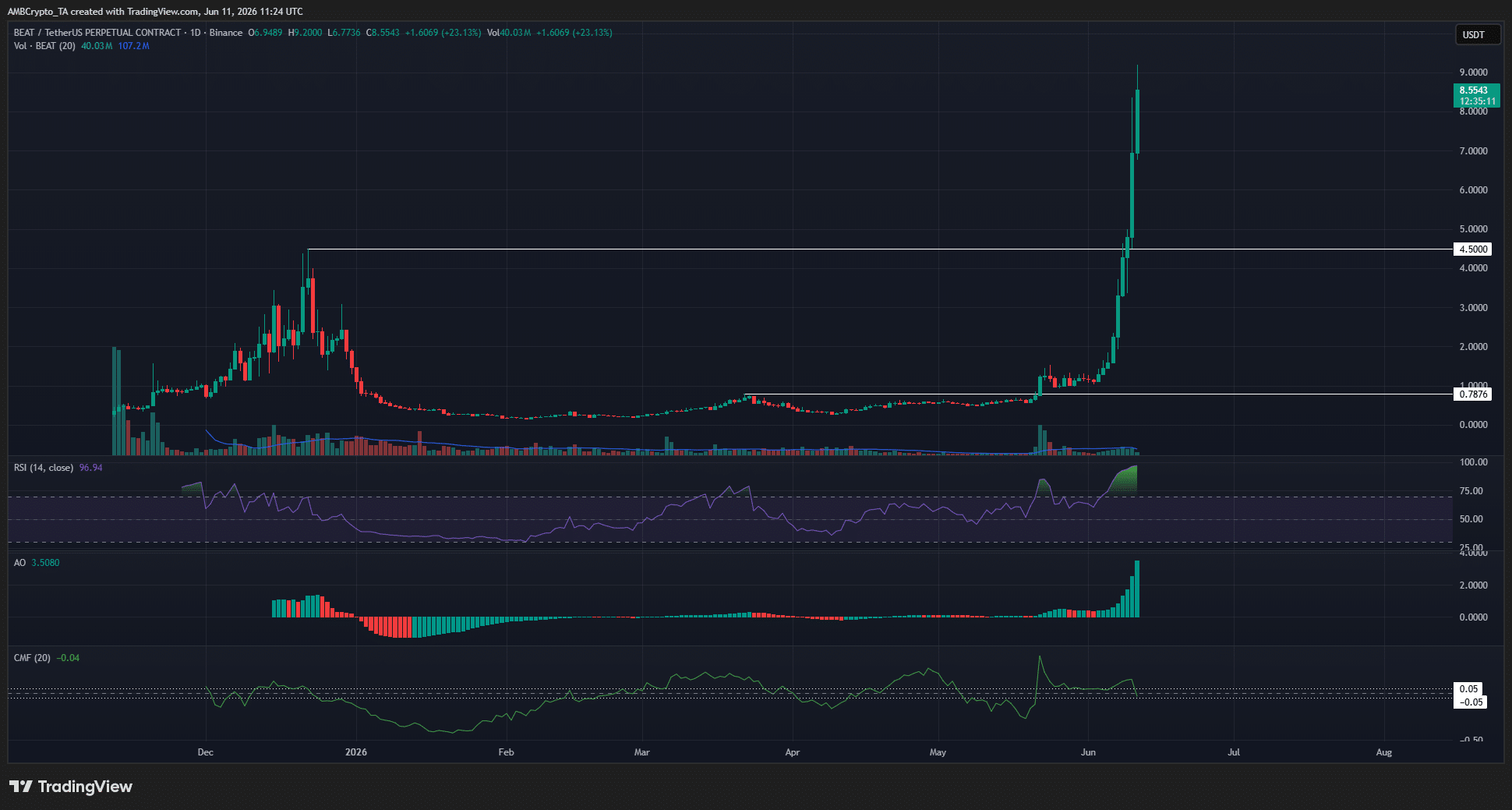
Audiera [BEAT] has obliterated overhead resistance levels and put fear in bears who thought that the rally was overextended. The altcoin has posted only green trading days since Wednesday, the 3rd of June.

It has gained 692% since then, and was up by 60.6% in just the past 24 hours. This kind of rally was not expected.

In a recent report, AMBCrypto noted that BEAT had bullish potential, provided it can overcome the $1.5 local supply zone. A week later, this local resistance has been demolished alongside many others as the altcoin neared the $10 mark.

Traders have reason to remain bullish until the eventual sell-off, but they should remember that this musical chairs game ends when sentiment and capital flows dry up.

BEAT bulls dance to their own tune

Bitcoin [BTC] has been up by 6.80% since the low at $59,141, made on Friday, the 5th of June. The rest of the altcoin market’s market cap has only climbed by 5.03% since the recent lows.

By comparison, BEAT was up 480% since the low made on the 5th of June. The contest was not even close.

BEAT 1-day Chart
Source: BEAT on TradingView

The RSI and Awesome Oscillator indicators were heavily overbought, but did not show a noticeable divergence yet. The consecutive green days must end sometime, but until it does, any short-selling would be as dangerous as trying to catch knives.

It might be better to wait for a lower timeframe exhaustion signal.

On a different note, the Audiera token’s circulating supply is only 28.8% of a maximum supply of 1 billion tokens. The altcoin was already at a $2.46 billion valuation.

Investors should remember the recent pump and dump sagas that coins such as RaveDAO [RAVE] witnessed recently.

Bearish divergence can see a BEAT setback

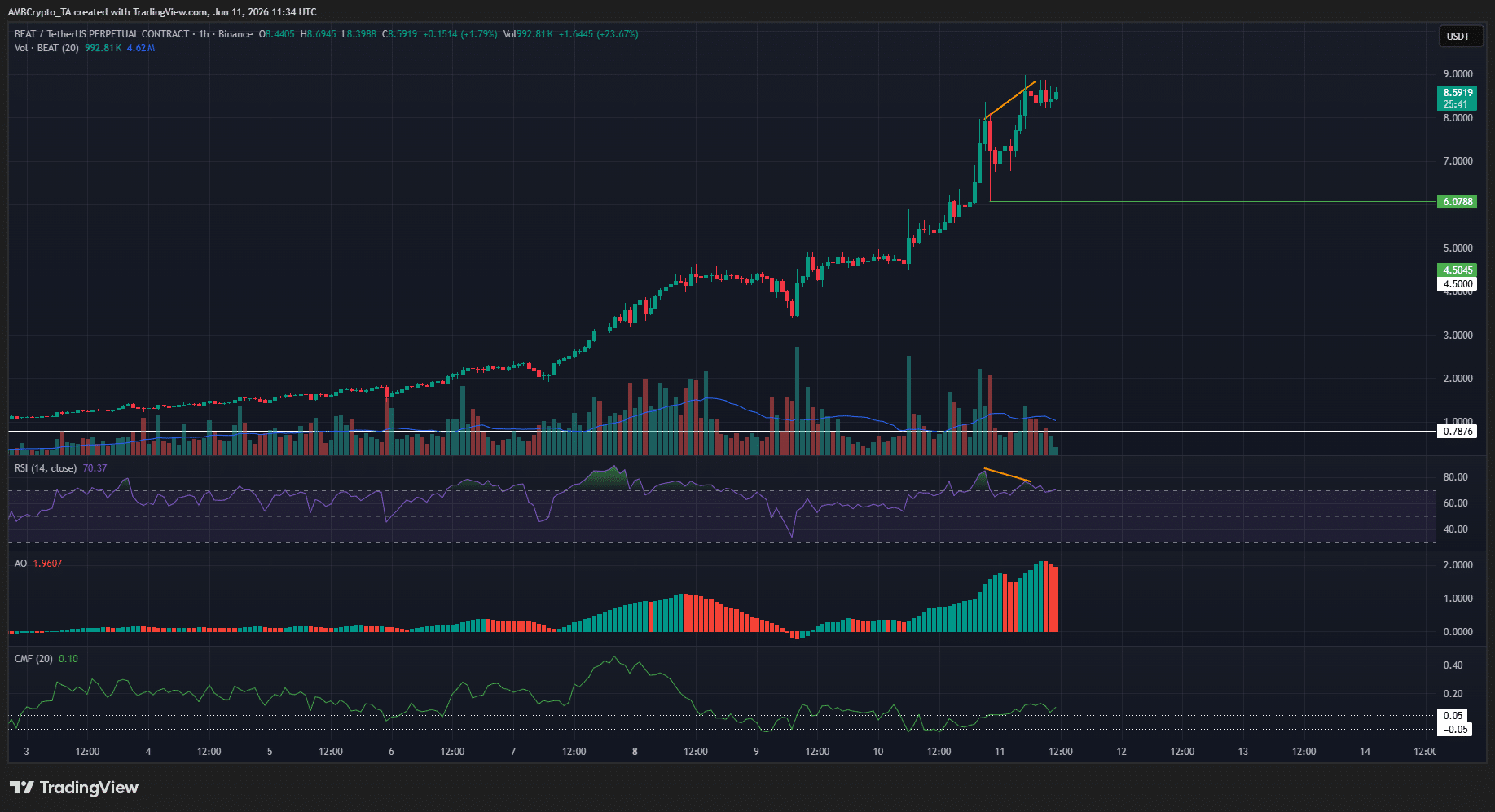
BEAT 1-hour ChartBEAT 1-hour Chart
Source: BEAT on TradingView

The RSI on the hourly chart made a lower high while the price advanced higher (orange). This classic divergence signal suggested that momentum was overextended.

A word of caution to traders. The market does not always react to divergences, especially when the momentum refuses to slow.

It might be better if traders stayed long instead of trying to sell. Staying sidelined if not already in a position would also be ideal.


Final Summary

  • Audiera has posted nine consecutive green days of trading candles so far.
  • Green streaks eventually break, but traders shouldn’t try to catch the correction before it comes about.


Source link

Coinbase (COIN) news: new AI agent accounts that can trade and spend on your behalf

0
Coinbase (COIN) news: new AI agent accounts that can trade and spend on your behalf

Coinbase has launched a new product called Coinbase for Agents, a platform that allows artificial intelligence agents such as ChatGPT and Anthropic’s Claude to connect directly to users’ Coinbase accounts and carry out financial transactions on their behalf.

The product, which went live on Wednesday, enables AI agents to trade cryptocurrencies, access market data, pay for online services and eventually make purchases, all within user-defined spending and risk limits.

Coinbase said the platform gives agents access to its advanced trading tools through natural language commands, allowing users to authorize tasks ranging from portfolio rebalancing to automated strategy execution. At launch, agents can trade spot crypto and derivatives markets, with support for equities and prediction markets planned for the future.

The company is also integrating support for x402, an open machine-to-machine payments protocol developed at Coinbase, which allows agents to make small payments for services such as premium research, data APIs and computing resources without subscriptions or manual checkout processes.


Source link

Prediction: NextEra Energy’s $67 Billion Dominion Acquisition Could Spur More Utility Deals. This Tie-Up Could be Next.

0
Prediction: NextEra Energy's $67 Billion Dominion Acquisition Could Spur More Utility Deals. This Tie-Up Could be Next.


Major mergers and acquisitions within the utility sector are relatively rare; most of the dealmaking in this business to-date has been for fairly small, affordable names that easily “bolt on” to existing operations. That’s what makes NextEra Energy‘s (NYSE: NEE) recently announced intention of acquiring fellow power provider Dominion Energy (NYSE: D) so interesting.

Both companies are already among the biggest names in the business. Combining them — assuming regulators allow it — will create the world’s biggest utility company by a country mile.

Missed Nvidia in 2009? This Rare Signal Is Flashing Again. In 2009, a “Double Down” signal flashed for a little-known chipmaker called Nvidia. For the first time in years, that same “Total Conviction” signal is flashing for a company 1/100th the size of Nvidia. Continue »

And this begs the question, now that other utility names have good reason to fear missing out on an acquisition opportunity, what name might be the next target? For that matter, which name might be the next buyer?

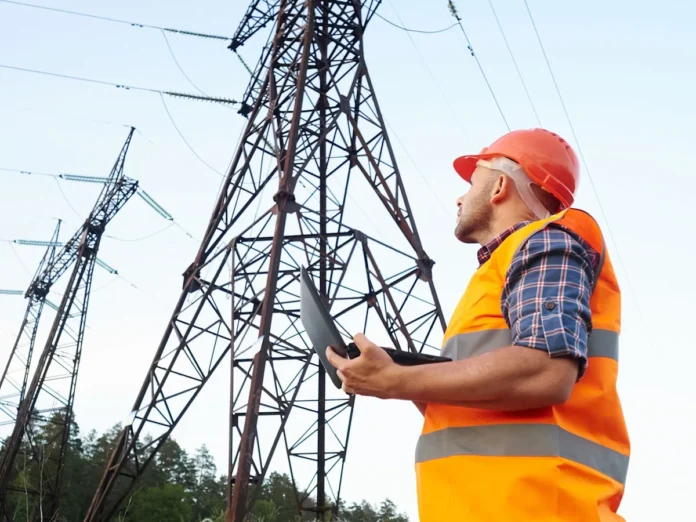
Image source: Getty Images.

Not the first, but certainly the biggest (and for a good reason)

NextEra Energy’s $67 billion effort to own Dominion isn’t actually the first one of these mega mergers, even if it’s the biggest. In March, Global Infrastructure Partners and EQT Infrastructure unveiled their plans to jointly buy AES Corp. Constellation Energy (NASDAQ: CEG) recently closed on a deal largely to combine its nuclear fleet with Calpine’s geothermal and natural gas operations. Google parent Alphabet is even getting in on the action, deciding late last year to shell out nearly $5 billion for Intersect, which specializes in powering artificial intelligence (AI) data centers.

That’s the chief driver for most of this recent dealmaking, of course — the artificial intelligence industry needs more electricity than the nation’s utility industry is capable of producing. Indeed, Goldman Sachs believes U.S. data center electricity consumption will double within a year. Providing it has become a very lucrative business, or in the case of Alphabet’s purchase of Intersect, it helps assure you have it when needed.

That’s also the chief reason NextEra is interested in Dominion, even if neither party explicitly said it. Dominion’s core market is Virginia, which is home to roughly 700 data centers.

That’s an important detail to keep in mind when predicting the next likely acquisition target within the utilities business.

The top prospective buyer and buyee

All predictions about any aspect of the stock market should be taken with a BIG grain of salt. Nobody has access to a functioning crystal ball. There’s still value in the thought exercise, however, if only to compare and contrast different companies.

To this end, Vistra (NYSE: VST) is arguably the next — or at least one of the next — likely acquisition targets within the utility sector.

It’s not exactly a major household name, mostly because it’s not much of a consumer-facing company. Through a handful of other brands, it directly serves approximately 5 million residential and business utility customers. The core of its business, however, is wholesaling electricity generated by its own fleet of natural gas, coal, nuclear, and renewable power plants to other utility companies. All told, it’s got enough capacity to generate up to 44,000 megawatts of electricity. That’s enough to power about 30 million homes, or, of course, several hundred data centers.

The crux of the bullish argument is simply that it’s ready and able to create and deliver power to grids in Texas, California, and to most of the northeastern United States today, leveraging its long-established presence as a wholesaler with access to key portions of the nationwide grid.

Vistra operates in California, Texas, and most of the northeast United States.
Image source: Vistra’s Q1-2026 slide deck.

That’s how it was able to secure direct deals with Amazon and the Facebook parent Meta Platforms to help both parties power their next-generation centers, ultimately justifying and supporting the establishment of new nuclear power facilities that could serve future customers beyond these two big ones.

The kicker: Vistra shares remain reasonably affordable at around 15 times this year’s projected per-share earnings of $9.08, while the company’s market cap itself is a fairly modest $50 billion. That’s within reach for most prospective suitors.

To this end, which player might actually be interested enough to pull this trigger? Again, take any such prediction with a grain of salt. Nobody really knows.

If there was any outfit that would gain from such a deal simply because it doesn’t have — and can’t necessarily build — what Vistra brings to the table, it’s the aforementioned Constellation Energy, which already has the biggest nuclear power fleet in the United States. In fact, it generates more nuclear power than the rest of the United States’ utility companies combined, accounting for more than 80% of its total power production. It can most definitely find some synergies with Vistra’s nuclear power development plans.

It’s also worth noting that, following the Calpine tie-up, Constellation has a strong presence in Texas, California, and much of the Northeast, where Vistra also does. To the extent geography matters, the company would have little trouble integrating Vistra with its other operations, and vice versa, perhaps gaining access to a grid or connection it might not otherwise have.

Combined with Calpine, Constellation Energy has a strong presence in Texas, California, and the northeast -- particularly in and around Viginia.
Image source: Constellation Energy/Calpine acquisition conference call slide deck.

There’s also no denying that, as the nation’s fifth-largest utility (by market cap and revenue), Constellation is better positioned financially than most to get such a deal done.

The one to beat

Once again, it can’t be stressed enough that this is strictly a well-reasoned guess. This tie-up may or may not ever materialize. Others might materialize first. Anything’s possible. And of course, betting on an acquisition alone is a lousy reason to own any stock.

This particular pairing does make a great deal of logical and logistical sense, though. It’s a prospect that will be tough to top with any other proposed combination of utility companies anyway.

Should you buy stock in Vistra right now?

Before you buy stock in Vistra, consider this:

The Motley Fool Stock Advisor analyst team just identified what they believe are the 10 best stocks for investors to buy now… and Vistra wasn’t one of them. The 10 stocks that made the cut could produce monster returns in the coming years.

Consider when Netflix made this list on December 17, 2004… if you invested $1,000 at the time of our recommendation, you’d have $442,220!* Or when Nvidia made this list on April 15, 2005… if you invested $1,000 at the time of our recommendation, you’d have $1,230,114!*

Now, it’s worth noting Stock Advisor’s total average return is 926% — a market-crushing outperformance compared to 203% for the S&P 500. Don’t miss the latest top 10 list, available with Stock Advisor, and join an investing community built by individual investors for individual investors.

See the 10 stocks »

*Stock Advisor returns as of June 11, 2026.

James Brumley has positions in Alphabet. The Motley Fool has positions in and recommends Alphabet, Amazon, Constellation Energy, EQT, Goldman Sachs Group, Meta Platforms, and NextEra Energy. The Motley Fool recommends Dominion Energy and Vistra. The Motley Fool has a disclosure policy.

Prediction: NextEra Energy’s $67 Billion Dominion Acquisition Could Spur More Utility Deals. This Tie-Up Could be Next. was originally published by The Motley Fool


Source link

Is Bitcoin setting up for rebound as $190mln whale accumulation grows?

0
Is Bitcoin setting up for rebound as $190mln whale accumulation grows?


Bitcoin attracted notable accumulation activity as large holders removed substantial amounts of BTC from exchanges. 

As reported by Lookonchain, a whale withdrew 2,341 BTC worth approximately $144.68 million from OKX over five days. 

In addition, three newly created wallets accumulated another 737.7 BTC valued at roughly $45.6 million from BitGo. 

Combined, the purchases exceeded $190 million, highlighting renewed interest from deep-pocketed investors despite Bitcoin’s recent correction. 

The timing of these withdrawals attracted attention because they coincided with BTC trading near multi-month lows. 

Rather than moving coins toward exchanges, these entities transferred holdings into private wallets. 

As a result, the activity suggested reduced selling intentions and reflected growing confidence among large investors seeking exposure during the market downturn.

Bitcoin exchange reserves continue shrinking

Beyond the whale transactions, broader exchange flow data also pointed toward persistent accumulation behavior. 

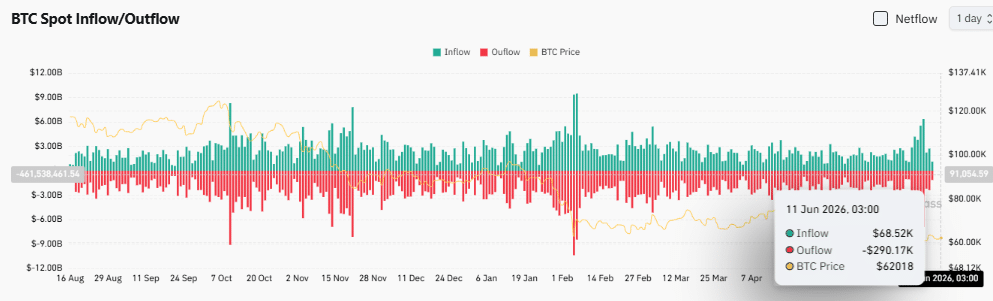
On the 11th of June, Spot Inflows reached just $68.52K while outflows climbed to $290.17K, producing a net negative balance. 

This imbalance extended a trend that had persisted for several sessions as more Bitcoin left trading venues than entered them. 

Such conditions often reduce the immediately available supply because fewer coins remain accessible for sale on exchanges. 

While price performance remained weak during the period, investors continued withdrawing assets instead of depositing them. 

The divergence strengthened the accumulation narrative already visible in whale wallet activity. 

Furthermore, sustained outflows frequently reflect improving long-term conviction, especially when they appear alongside large-scale withdrawals from major custodians and exchanges.

Source: CoinGlass

Can Bitcoin reclaim lost ground?

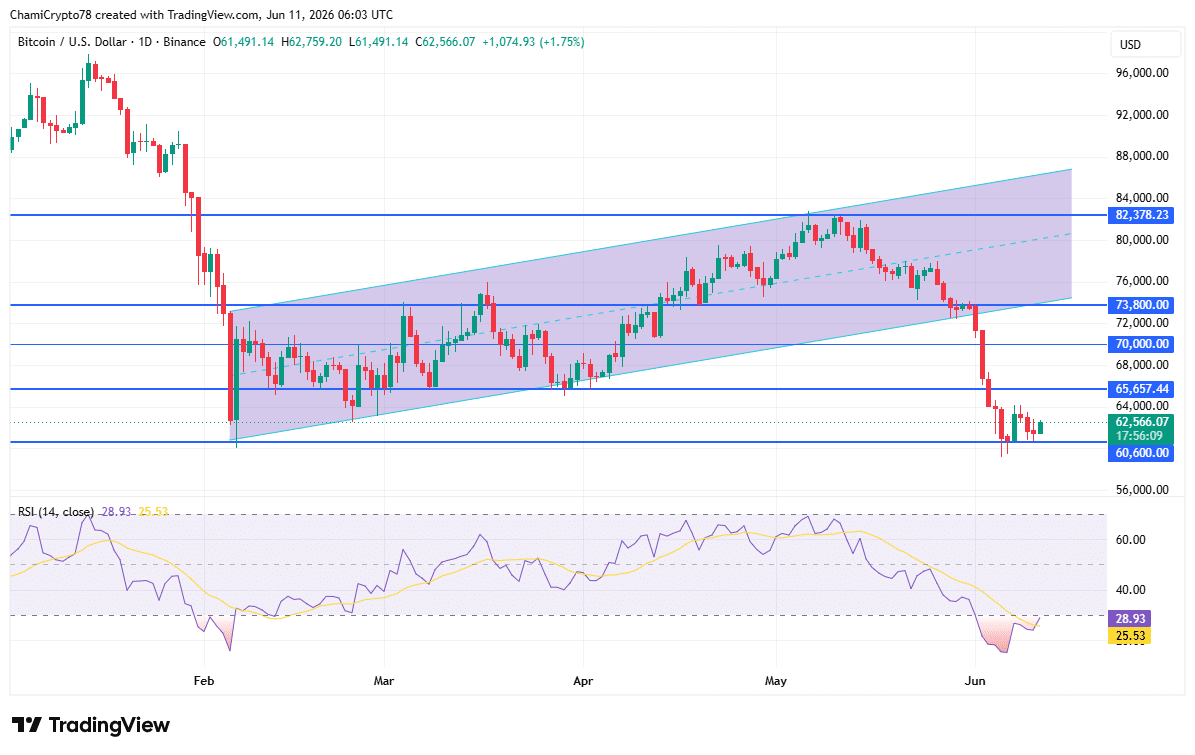
Bitcoin [BTC] experienced heavy selling pressure after breaking below its ascending channel structure that had guided price action for several months. 

The decline pushed BTC through the important $73,800, $70,000, and $65,657 levels before buyers responded near the $60,600 support zone. 

Following that sharp drop, the asset stabilized and recovered toward $62,566 at the time of observation. 

Although the rebound offered some relief, Bitcoin still traded beneath former support levels that had now turned into resistance. 

The Relative Strength Index fell to 28.93, placing the indicator firmly within oversold territory after spending weeks in decline. 

Such readings historically reflected exhausted selling pressure and often preceded short-term recovery attempts. 

Any sustained recovery would likely require buyers to reclaim $65,657 before challenging the $70,000 area again. 

Meanwhile, the $60,600 support remained critical because another breakdown could expose BTC to deeper downside pressure and invalidate the current stabilization attempt.

Bitcoin technical analysisBitcoin technical analysis
Source: TradingView

Long traders hold firm despite weakness

Derivatives traders maintained a cautiously bullish stance even as Bitcoin struggled to regain higher price levels. 

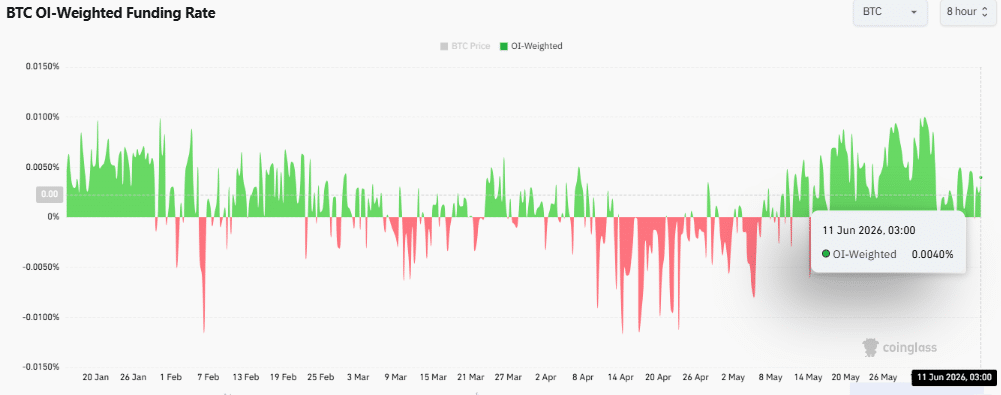
The OI-Weighted Funding Rate remained positive at approximately 0.0040%, indicating that long-position holders continued paying premiums to keep exposure open. 

This positive reading persisted despite the recent correction, suggesting that market participants had not fully abandoned expectations of a rebound. 

In addition, the Funding Rate recovered significantly from the deeply negative readings recorded during April and early May. 

The shift reflected improving sentiment across the futures market. 

When combined with persistent exchange outflows and whale accumulation, the funding data paint a picture of traders positioning for stabilization rather than continued capitulation. 

If demand strengthens further, leveraged participants would likely continue supporting a gradual recovery.

Source: CoinGlass

Final Summary

  • Whale wallets accumulated over $190 million as exchange balances continued declining.
  • Bitcoin stabilized above $60,600 while oversold conditions hinted at recovery potential.


Source link