Home Blog Page 362

5 corruption gaps Congress must close in the Clarity Act

0
5 corruption gaps Congress must close in the Clarity Act

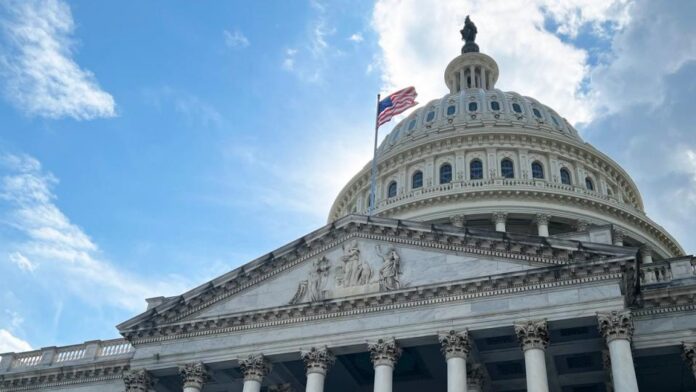
The Digital Asset Market Clarity Act, which cleared the Senate Banking Committee on May 14, will set the rules of the road for an industry that has grown faster than the laws meant to govern it.

Almost everyone agrees that crypto regulation is overdue. But as the bill moves toward a vote on the Senate floor, it contains five gaps that threaten to undermine the very structure and stability the legislation otherwise hopes to deliver.

The Decentralized Finance or “DeFi” gap

A platform or intermediary that moves, exchanges, conceals, or otherwise facilitates the transfer of value should not be able to avoid oversight simply by calling itself “decentralized.” North Korean hackers have repeatedly exploited mixers and other virtual asset laundering infrastructure to move stolen crypto and help fund the regime’s weapons programs. Treasury has found that Tornado Cash was used to launder more than $455 million stolen by the Lazarus Group, and U.N. experts have reported that North Korea later laundered another $147.5 million through the same platform. These are exactly the blind spots Congress needs to close: when a digital asset platform or intermediary performs financial functions, it should be subject to appropriate anti-money laundering and sanctions safeguards.

The so-called “Tornado Cash” loophole gap

Some crypto tools are designed to keep operating automatically, even when it becomes clear they are being used to launder money. When anti-money laundering rules attach to a person but evaporate the moment software performs the same task, the result is not a safeguard — it is a workaround written into the law. The urgency is not hypothetical. This past May, FinCEN warned U.S. banks that Iran’s Islamic Revolutionary Guard Corps had built a multi-jurisdictional shadow banking network — combining digital asset infrastructure with front companies and exchange houses — to launder oil proceeds and finance weapons procurement and terrorism. Congress should give the Treasury Department’s Office of Foreign Assets Control (OFAC) the explicit authority it needs to act against anonymizing tools used to evade sanctions.

The stablecoin gap

The GENIUS Act, passed earlier this year, established the core framework for stablecoin issuers, but allowed illicit actors to circumvent that framework via DeFi protocols, offshore platforms, mixers, or other services that move stablecoins without meaningful controls. Sanctioned Russian entities have already used stablecoins, including through platforms that impose no identity verification requirements, to move funds and sustain financial networks. The Clarity Act should require stablecoin issuers to implement reasonable ecosystem-wide monitoring to identify and report suspicious activity. Without that broader visibility, stablecoins risk becoming the preferred rail for sanctions evasion, fraud, ransomware, trafficking, and corruption-related money laundering.

The jurisdictional gap

A platform that serves American customers or routes activity through the U.S. financial system should not be able to shed its anti-money laundering and sanctions obligations simply by registering its headquarters abroad. The Justice Department recently charged a Venezuelan national with allegedly laundering approximately $1 billion through a network that used bank accounts, cryptocurrency exchange accounts, private wallets, shell companies, and transactions into and out of the United States. Cross-border flows like that are precisely what slip through the cracks when platforms get to pick the jurisdiction with the lightest scrutiny. If a platform or intermediary facilitates illicit finance, it should be cut off from the legitimate financial system.

The ethics and conflict of interest gap

Four days before the 2025 inauguration, a member of President Trump’s immediate family reportedly signed a deal to sell a 49% stake in their crypto venture, World Liberty Financial, to an Abu Dhabi-backed entity for half a billion dollars. According to The Wall Street Journal, the Trump Administration later approved giving the UAE access to 500,000 of the world’s most advanced AI chips, overcoming longstanding national security objections. The Clarity Act is now advancing under an administration whose family has direct financial stakes in the very same digital asset ventures that the bill would govern. No impartial crypto framework can be built on that foundation. The Clarity Act must bar public officials and their immediate family members from owning, promoting, sponsoring, endorsing, or soliciting investment in digital asset ventures while the official is in office.

These five gaps are not abstract concerns. Each one maps onto an activity that is already happening: sanctioned states moving money, foreign officials laundering bribes, hostile actors funding weapons programs, and a sitting president’s family selling stakes in the industry the legislation is meant to regulate. Congress has the opportunity to write rules that protect the integrity of the U.S. financial system. It also has the opportunity to write rules that quietly accommodate those who would exploit it. The version of the Clarity Act now moving toward the Senate floor does not yet distinguish clearly enough between the two.

The choice before the Senate is not whether to regulate crypto. It is whether the rules Congress writes will be strong enough to do what regulation is supposed to do: protect consumers, defend U.S. national security, and ensure that public office cannot be used for personal or family profit. Five gaps stand between this bill and that standard. They can and must be closed.


Source link

Nasdaq falls 3% as chip stocks sell off, Iran deal hopes fade

0
Nasdaq falls 3% as chip stocks sell off, Iran deal hopes fade


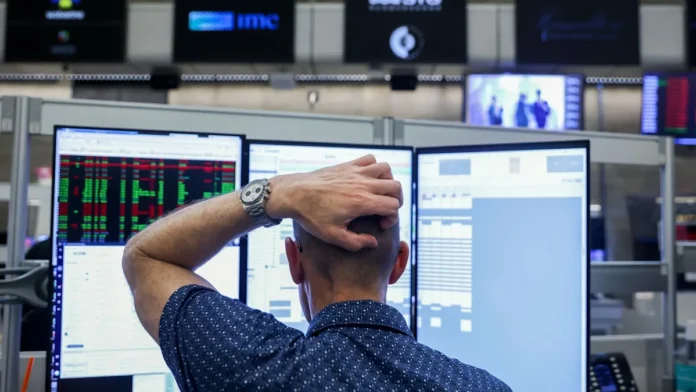
U.S. stocks fell sharply on Tuesday, with the Nasdaq Composite dropping 3% and the S&P 500 losing 1.7%, as a one-day rebound in chip stocks reversed course and optimism over a possible U.S.-Iran deal gave way to fresh uncertainty, according to CNBC.

The Dow Jones Industrial Average shed roughly 354 points, or 0.7%. Markets had opened higher as oil prices retreated and President Donald Trump told reporters on Monday that the two sides were “very close to having a good strong powerful deal” that could reopen the Strait of Hormuz, according to The Wall Street Journal. Trump later said Tuesday that the U.S. “must respond” to Iran, contributing to the reversal in stocks.

West Texas Intermediate crude futures fell more than 5% to trade below $90 a barrel. U.S. Energy Secretary Chris Wright said Strait of Hormuz ship traffic is “rising very meaningfully.”

Chip stocks led the decline. After staging a 6% recovery on Monday, the iShares Semiconductor ETF reversed sharply, falling nearly 7%. The PHLX Semiconductor Index fell 7%. Marvell Technology stock dropped 14%, Micron Technology stock fell about 8%, and Broadcom stock lost 5%. Apple, Intel, and AMD stock each fell 3% or more.

Both stocks had suffered severe losses earlier in the week: Micron’s two-day slide last week totaled around 20%, with Friday accounting for a 13% plunge, while Broadcom endured a comparably punishing stretch over the same period.

Late Monday, OpenAI submitted a confidential IPO filing, adding another marquee name to a busy week for markets. Friday’s expected stock market arrival of SpaceX — valued at $1.75 trillion and widely seen as a hybrid space-and-AI enterprise — would set a record as the biggest public offering in history. Analysts have pointed to the imminent listing as a possible reason investors are trimming positions in established tech names to make room for the new entrant, according to the Journal.

Jay Hatfield, CEO of Infrastructure Capital Advisors, said he thinks the SpaceX listing may have contributed to Friday’s initial sell-off. “I think everybody’s a little nervous,” Hatfield said. “I think we’re going to be choppy until we get that behind us.”

Tehran’s foreign ministry said that Iran had stood down its military campaign against Israel on Monday, though it reserved the right to restart strikes should Israeli operations in Lebanon press on. Netanyahu pushed back on any suggestion the fighting was finished, saying Monday evening that the standoff with Iran and Hezbollah remained unresolved.


Source link

Chainlink eyes a breakout as non‑micro wallets reach 535K – Will LINK surge?

0
Chainlink eyes a breakout as non‑micro wallets reach 535K - Will LINK surge?


Despite the prolonged weakness in the crypto market, demand for Chainlink, especially from retailers, has remained steady. 

Chainlink’s standard-sized wallets rebounded to the highest level since December 2022. According to Santiment, Chainlink’s wallet holdings of at least 1 LINK surged to 535K wallets. 

Chainlink non-micro
Source: Santiment Intelligence

The current network growth stands out particularly because it occurs amidst extended market weakness. This implies that users have continued to adopt Chainlink even as LINK trades significantly below cycle highs. 

Historically, a sustained surge in wallet numbers has indicated network adoption and asset accumulation. During periods of weakness, such a shift has encouraged other users to jump in, thereby boosting asset performance. 

Chainlink network holds healthy

In addition to sustained growth in non-micro wallets, Chainlink’s total number of active users and holders has continued to grow. 

According to Santiment data, the total number of holders increased through 2026, hitting a YTD high of 879k at press time. This growth signals strong network adoption and accumulation across all market participants. 

Chainlink total holders and addressChainlink total holders and address
Source: Santiment

At the same time, the network’s Active Addresses (30D) have averaged around 570k, a massive jump from 50k in April. This growth signals increased network participation and adoption and suggests that new participants are entering the ecosystem. 

Historically, higher wallet counts have been associated with stronger fundamentals and a healthy network, a recipe for stronger market performance.

What about LINK?

Amid continued network growth, LINK also showed a recovery in upward momentum on its price charts. In fact, after breaching $7 and then falling to $6.90, LINK rebounded to a local high of $8.10.

As of this writing, Chainlink [LINK] traded at $7.9, up 1.8% on the daily charts. Before these slight gains, LINK had been on a strong downtrend.

With the recent gains, the altcoin’s Stochastic Momentum Index (SMI) formed a bullish crossover and rose to -32, reflecting a recovery in bullish momentum. This suggests that if the demand holds, the altcoin will see more gains.

LINK SMI & MALINK SMI & MA
Source: TradingView

To validate the uptrend, the SMA needs a jump above the negative zone. Currently, LINK is testing its short-term moving averages, with a 9-day MA at $8.04.

A successful retest of the MA, followed by a close above it, will confirm a recovery in demand and trend strength, paving the way for further gains. In doing so, LINK will target $8.7 in the short term, with $9 as the medium-term resistance.

However, the SMI remains negative, suggesting bullish pressure is minimal. Therefore, if the momentum fails to hold and retake the market, Chainlink will drop below $7 again.


Final Summary

  • The Chainlink network saw wallets holding at least 1 LINK rebound to 2022 highs of 535k. 
  • LINK showed slight bullish pressure, defending $7 and jumping to $8, although the momentum remains weak. 


Source link

U.K.’s FCA moves to allow mutual funds 10% exposure to crypto ETNs

0
U.K.'s FCA moves to allow mutual funds 10% exposure to crypto ETNs

The U.K.’s financial regulator, the Financial Conduct Authority (FCA), proposed allowing certain retail investment funds to hold up to 10% of their assets in cryptocurrency exchange-traded notes (ETNs).

The financial regulator made the suggestion for UCITS (“Undertakings for Collective Investment in Transferable Securities”) schemes and some non-UCITS retail schemes (NURS) to invest in crypto ETNs in its latest quarterly consultation paper.

UCITS and NURS are similar to mutual funds in the U.S. in that they are regulated, open-ended structures that pool money from retail investors into managed portfolios.

“Our proposed 10% limit for UCITS and NURS would also mitigate the risk of significant impacts arising from crypto ETN exposure,” the FCA wrote.

The FCA’s proposal marks another step on the road to wider acceptance of crypto exchange-traded products (ETPs) in the U.K. under the ETN banner. The regulator first allowed retail investors to access such funds in October 2025, lifting a ban that had been in place since 2021.

Investment vehicles that allow users to gain exposure to cryptocurrency without having to buy and custody the assets themselves have been at the forefront of mainstream adoption of crypto for several years. The regulatory hurdles to their wider use in the U.K. have drawn criticism from commentators who say it risks placing the country at a disadvantage compared to its peers.


Source link

Digi’s UK consumer fibre debut is cheap and cheerful, but too small to matter – yet

0
Digi’s UK consumer fibre debut is cheap and cheerful, but too small to matter – yet


Digi has parachuted into the UK with a new symmetrical fibre offer, but the operator has barely unpacked. After buying a 51% stake in local network builder Whyfibre in March 2026, Digi has switched on a residential fibre broadband pilot around Luton, just north of London.

“Pricing follows Digi’s usual cutthroat approach,” says Natasha Rybak, Principal Analyst – Telecoms Practice, Technology at GlobalData. “£15 a month for 1 Gbps up to £25 for symmetrical 10Gbps, on simple rolling monthly terms, sold online with minimal bells and whistles. The question is whether this is the start of real disruption or just a low-cost local landgrab.”

According to GlobalData, the UK broadband market is large but highly impacted by regional dynamics, with different providers and network coverage depending on postcode. Digi’s initial footprint in Bedfordshire and Hertfordshire is so limited that, for now, the competitive impact is close to zero outside a small commuter-belt pocket.

Still, the pricing is hard to ignore. GlobalData’s review of indicative UK fibre tariffs in June 2026 shows most major brands charge £30+ for near-gigabit broadband, usually tied to longer contracts and complex deal mechanics. Digi’s no-frills, “no sudden price hikes” message is also fine-tuned to a UK audience tired of mid-contract increases and teaser discounts. If Digi can expand coverage quickly, it has a ready-made wedge to win value-conscious households.

“Digi has run this playbook before, with mixed results,” Rybak adds. “The challenger made its biggest waves in Spain, helped by shifting market conditions, but in Belgium, Digi’s limited fixed-line reach blunted momentum beyond cheaper mobile pricing manoeuvres. The key difference in the UK is that Digi is starting with unadorned fibre only, without a broader bundle of services that can help attract and lock in customers.

For now, there is little for competitors to do other than monitor Digi for sudden changes: new build plans, partnerships, acquisitions, or the addition of mobile services. Digi’s expansion pattern can be stop-start and opportunistic, which means today’s quiet pilot could still be tomorrow’s abrupt push, if the circumstantial stars, economics, and timing align.

“Digi’s UK consumer fibre debut is cheap and cheerful, but too small to matter – yet” was originally created and published by Verdict, a GlobalData owned brand.


Source link

I Spent 12 Hours in Singapore Airlines’ First Class; Worth It

0
I Spent 12 Hours in Singapore Airlines' First Class; Worth It


After nearly 12 hours in the air, our arrival was the only part of the trip that felt less premium.

Immigration lines at Narita International Airport felt long and chaotic — a reminder that even the best onboard experience eventually gives way to standard airport realities.

That said, the flight itself was excellent: comfortable, polished, and thoughtfully executed from start to finish.

Service was attentive, the seat delivered where it mattered most for sleep, and the overall experience felt cohesive in a way that some competitors don’t always achieve.

The ground experience at LAX was among the most seamless I’ve had. I’m also grateful I was able to sleep comfortably for several hours, which is ultimately what matters most on a long-haul flight like this.

At full price, though, this is a difficult ticket to justify. A $14,000 one-way fare puts it firmly in competition with some of the world’s best luxury travel experiences.

For me, the value came through points. I transferred 128,000 American Express Membership Rewards points and paid only a few dollars for my ticket.

At that level, this flight is an easy yes and a reminder that, for those who know how to use them, points can unlock experiences like this at a fraction of the cash cost.


Source link

Bernstein sees AI trade, not quantum fears, behind bitcoin’s (BTC) weakness

0
Bernstein sees AI trade, not quantum fears, behind bitcoin's (BTC) weakness

Bitcoin’s recent weakness is being driven by softer capital flows rather than concerns over quantum computing or other risks, according to Wall Street broker Bernstein.

Growing concerns that future quantum computers could eventually break the cryptography underpinning Bitcoin have become a recurring topic in crypto markets, especially after recent research from Google suggested the computational resources needed to crack key blockchain security systems may be far lower than previously thought.

Bitcoin treasury companies and exchange-traded funds (ETFs) have attracted about $12 billion of inflows this year, down sharply from $60 billion in 2025, the broker said. ETFs have seen roughly $2.6 billion of net outflows from a $75 billion asset base, with most new demand coming from corporate buyers led by Strategy (MSTR).

Bernstein analysts attributed the slowdown largely to retail investors chasing AI-related opportunities, noting that the strongest-performing areas of crypto this year have been tied to tokenized equities and commodities.

“Bitcoin still may offer some diversification from the unusual singular AI driven momentum markets we have experienced this year,” analysts led by Gautam Chhugani wrote in the Monday report.

Still, the analysts views the modest scale of ETF outflows as encouraging, arguing that bitcoin ownership is becoming less dependent on momentum-driven retail flows.

Bitcoin has endured a difficult stretch in recent months, falling from roughly $82,000 in early May to around $63,000 today, a decline of more than 20%. The cryptocurrency briefly dropped below $60,000 last week, its lowest level since October 2024, and remains about 50% below its October 2025 record high near $126,000.

Persistent ETF outflows, weakening investor risk appetite and a shift in capital toward AI-related stocks and high-profile equity offerings have been cited as key drivers of the downturn.

Unlike previous cycles dominated by retail traders, today’s market includes ETFs, corporate treasuries, wealth-management platforms, pension funds and sovereign investors, creating a more diversified and resilient ownership base, the analysts argued.

While bitcoin has lacked the excitement of AI trades this year, Bernstein argued that “being boring” does not weaken its long-term store-of-value thesis and may ultimately reflect a healthier market structure.

Spot bitcoin ETF flows explain roughly 45% of weekly BTC price moves and remain the best gauge of investor adoption, Citi said in a report last week.

The world’s largest cryptocurrency was trading around $62,600 at publication time.

Read more: Bitcoin’s dearth of fresh investors matters more than Strategy’s sale, Citi says


Source link