Bearish bets on privacy-focused zcash (ZEC) climbed to a record as the token slumped as much as 50% in 24 hours after a now-plugged vulnerability in its Orchard pool was disclosed.
ZEC recorded roughly $118 million in forced liquidations over the period, CoinGlass data shows.
That is remarkably small for a token whose price halved, suggesting the selling came mostly from spot held tokens rather than a futures-driven move. Only about 14% of zcash’s leveraged positions got wiped out; the number would have been far larger if a leverage cascade had driven the slide.
In comparison, about $335 million in bitcoin BTC$62.083,00-tracked futures were liquidated over the same window even though the largest cryptocurrency fell only a few percent. Ether slipped a similar amount and liquidated $278 million.
Open interest — the total value of unsettled futures bets — rose to a record high in ZEC terms, suggesting traders opened new positions rather than closing them.
The long/short ratio, the number of traders betting on an increase versus a decline, shows those positions skewed bearish. On Binance, the ratio sat below 1 across retail investors at 0.77, whale accounts at 0.80 and whale positions at 0.85. Traders on OKX were more bearish, with retail at 0.67 and whale accounts at 0.72. Only Bybit’s retail traders leaned long, at 1.49.
Short investors sell securities they don’t actually own, betting the price will drop before they need to close out their positions and they’ll profit from the difference. Long investors own the securities to benefit from any increase.
The ratio indicates zcash is heavily shorted after a spot-led drop. If the selling slows and the price steadies, those shorts could be forced to buy to cover their positions, fueling a sharp bounce.
It’s worth remembering that ZEC, even after losing more than half its value in two weeks, is still up roughly 490% over the past year.
No way of knowing
The catalyst for the price drop was the disclosure by nonprofit Zcash developer Shielded Labs of a vulnerability in Zcash’s Orchard privacy pool that, if exploited, could have let an attacker create counterfeit ZEC that no one could detect.
The Orchard flaw had been live since the pool debuted in May 2022, going unnoticed for four years. It was found only last week by security engineer Taylor Hornby using Anthropic’s Opus 4.8 model and patched in an emergency fix by June 1.
The damage is less about the bug itself, which is now closed, than what Shielded Labs admitted alongside it. Because of the way Orchard’s privacy works, there is no cryptographic way to prove whether anyone exploited the flaw before it was fixed.
The firm said it probably was not, but it cannot be sure, and that uncertainty hangs over the token’s entire supply.
Arthur Hayes, the chief investment officer of Maelstrom, said he sold his entire zcash position as a result.
Acquisitions Strengthens Red Cat Holdings Inc. (RCAT) Outlook as one of the Most Shorted Mid Cap Stocks to Buy
The research firm remains bullish on the company’s long-term prospects, as it provides a full range of drone, robotic, and maritime defense systems. It develops American-made hardware and software for supporting military, government, and public safety operations across air, land, and sea. The recent acquisition of Apium Swarm Robotics and Canada-based Quaze Technologies has also strengthened its prospects around wireless power.
While operating as an independent unit, Quaze is to continue developing and scaling its wireless power architecture for integration across Red Cat’s Family of systems. The integration seeks to address the remaining barrier to true robotics autonomy.
On the other hand, Red Cat’s maritime division is also ramping into full-rate production of the Variant 7 unscrewed surface vessel, an autonomy platform designed and built for the US and allied defense missions.
Red Cat Holdings Inc. (NASDAQ:RCAT) is a drone technology company that develops and supplies uncrewed systems, software, and robotics for military, government, and public safety operations. Their American-made hardware operates across all domains—air, land, and sea.
While we acknowledge the potential of RCAT as an investment, we believe certain AI stocks offer greater upside potential and carry less downside risk. If you’re looking for an extremely undervalued AI stock that also stands to benefit significantly from Trump-era tariffs and the onshoring trend, see our free report on thebest short-term AI stock.
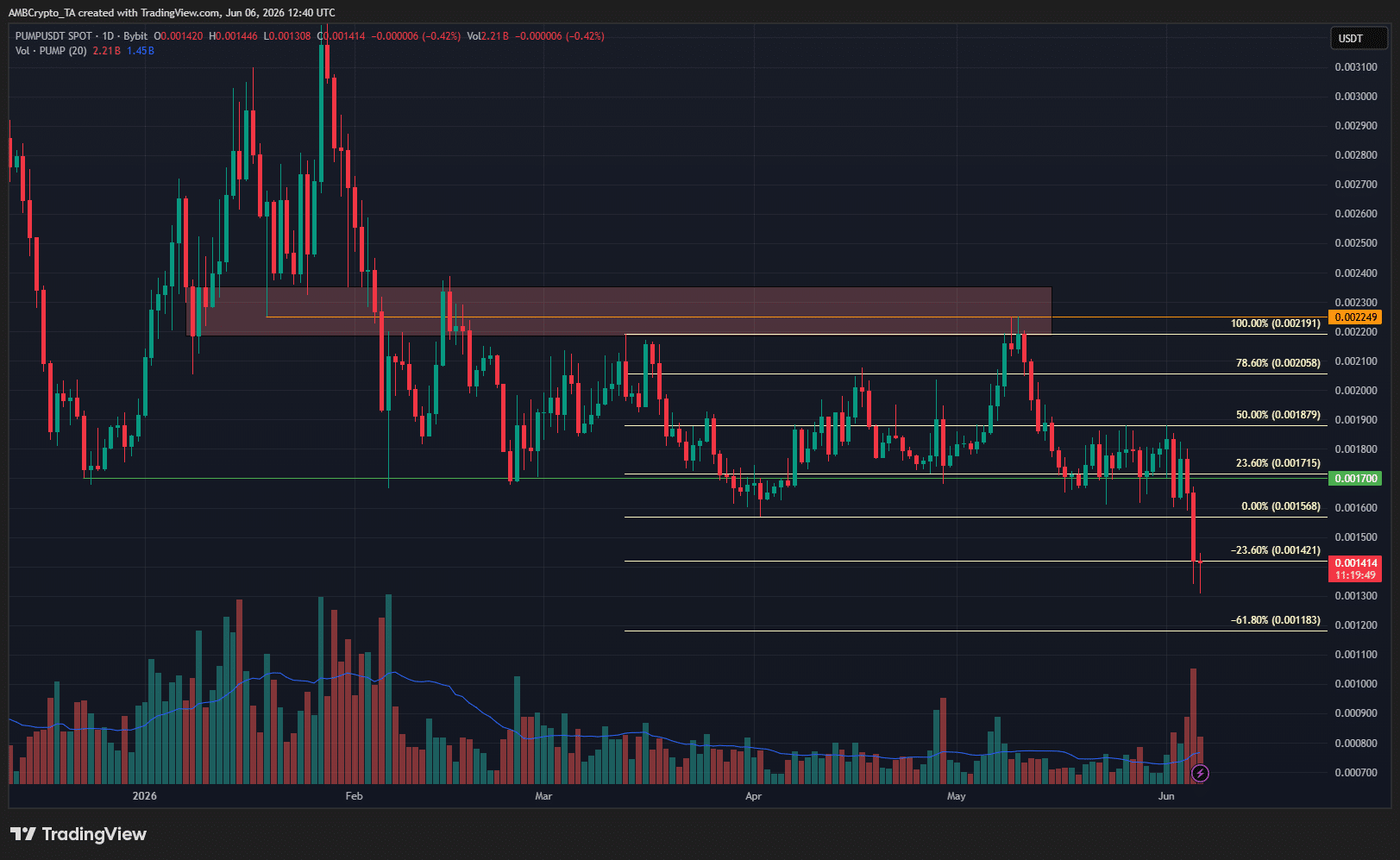
The price of the utility token of Pump.fun [PUMP] took a heavy hit on the 5th of June. It shed 14% on the day, falling from $0.00165 to $0.00142. From a technical perspective, the altcoin was already in a downtrend in the higher timeframes.
Since December 2025, the $0.0017 support level has been resolutely defended. Over the past three weeks, the bears have had some success pushing prices marginally below this level.
This had put them in an advantageous position. All that was needed was a catalyst to set the prices rolling southward.
How did Pump.fun’s GO platform tank sentiment?
In a post on X, Pump.fun announced the launch of the GO platform, a Solana [SOL]-based bounty marketplace. “Pay ANYONE to do ANYTHING,” the post read. It was already attracting attention for the wrong reasons.
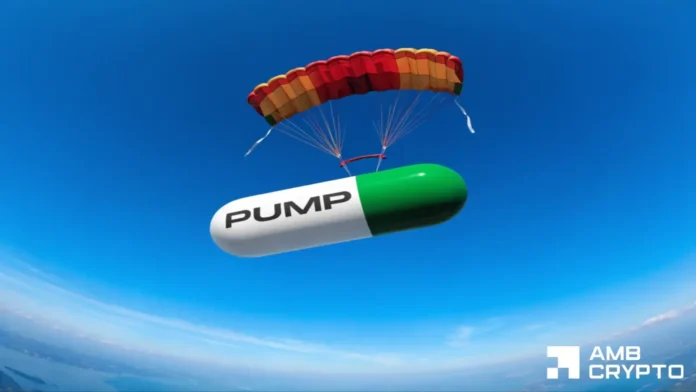
One of the highest‑paid listings, at $57,000, required a skydive into a World Cup match dressed as a memecoin mascot. Other promotional and degrading acts were also included. X user Fabiano.sol reviewed several of these tasks, remarking that the experience resembled Squid Game, the South Korean survival thriller on Netflix.
Pump.fun faced reputational and regulatory risks due to the wording of the launch and the tasks on the bounty board, according to CoinMarketCap.
Plotting PUMP’s bearish price targets
Source: PUMP/USDT on TradingView
After testing the local highs at $0.00219 in early May, PUMP resumed its bearish trend. The inability to close above this swing high reinforced seller dominance. Recently, the $0.0017 support level, which has held, for the most part, throughout 2026, was smashed aside.
The bears have been threatening to do that since late March and have finally succeeded in making the move happen. It also occurred on increasingly high trading volume, which showed buyer exhaustion and seller triumph lately.
The weak buyers meant PUMP slid to the 23.6% extension level at $0.00142 easily. The 61.8% extension level at $0.00118 is the immediate price target.
Final Summary
The Pump.fun GO launch drew severe criticism, and its wording exposed the parent platform to potential regulatory scrutiny.
Meanwhile, PUMP, already under heavy selling pressure and struggling to hold the $0.0017 support level, broke down on Friday.
Talks to extend the ceasefire between the U.S. and Iran are dead in the water, but traffic through the Strait of Hormuz is anything but.
The number of ships transiting the contested waterway remains just a fraction of pre-war levels, but fresh reports indicate activity is busier than previously thought.
In the last two months—roughly the time that the ceasefire has been in place—U.S. forces have counted nearly 1,000 commercial vessels going in and out of the strait, sources told Bloomberg, adding that most were large cargo and container ships.
That translates to about 17 ships per day. While that is well below the daily rate of more than 100 ships before the U.S. and Israel launched their war on Iran on Feb. 28, that’s significantly more than other reports show.
For example, U.S. Navy data published by the Joint Maritime Information Center tallied 558 cargo ships and oil tankers crossing the strait during the three-month period from March 1 to June 3. And maritime data company Kpler counted 895 ships between March 1 and May 19.
The Islamic Revolutionary Guard Corps established its lane soon after the war started. Since then, the IRGC has charged tolls on ships that have been granted permission and attacked any that tried to cross unauthorized.
To bypass the IRGC-controlled lane, the U.S. Navy began mine-clearing operations in April and sent two destroyers through the strait to re-establish freedom of navigation near Oman’s coast. That was followed by Project Freedom last month, which aimed to get more ships out with U.S. help, but it ended after only a few days.
Central Command has insisted that it’s not escorting ships. Instead, it’s offering advice to commercial vessels in the region.
The U.S. military keeps an eye on traffic with radar, drones and other tools to help ships transit safely, while also advising them on when to turn off AIS and how to respond to Iranian threats, according to the Wall Street Journal.
The alternate lane has become even more important as global oil markets are poised to head off a cliff in a matter of weeks, when crude reserves are expected to reach critically low levels.
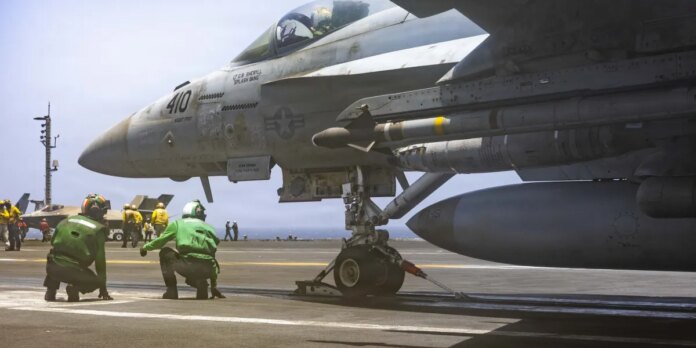
Nimitz-class aircraft carrier USS Abraham Lincoln (CVN 72) sails in the Arabian Sea, May 29, 2026.
U.S. Navy
But Iran’s ability to stop Hormuz traffic has emerged as its key source of leverage over the U.S., and the regime will not relinquish it, turning the Persian Gulf into more of a combat zone recently despite the ceasefire.
Last month, the IRGC launched attacks into the Gulf and attempted to lay new underwater mines. The U.S. responded by destroying Iranian boats and bombing missile sites in Iran that tried to shoot down U.S. aircraft.
Last weekend, the U.S. disabled a ship attempting to breach its naval blockade by firing a missile into the engine room. Also last weekend, the U.S. conducted “self-defense strikes” in Goruk, Iran, and Qeshm Island.
After Iran shot down a U.S. drone, fighter aircraft destroyed Iranian air defenses, a ground control station, and two attack drones that threatened ships in transit, Central Command said.
Then on Friday, Central Command said U.S. forces shot down Iranian missiles and drones launched toward the Strait of Hormuz and Gulf neighbors, while hinting again at its protective role over commercial ships.
“The attack drones posed an immediate threat to regional maritime traffic,” it said in a statement. “U.S. forces subsequently struck Iranian coastal surveillance radar sites in Goruk and on Qeshm Island to defend against further maritime attacks.”
Lloyd’s List reported on Wednesday that nearly 40 non-Iranian linked vessels have exited the Gulf in the past three weeks, bringing total departures of once-stranded ships since March to 142.
It attributed the steady wave of Hormuz transits to “quiet U.S. naval overwatch” and a growing willingness among ship operators to finally exit despite the risks.
Shipowners recently told Bloomberg that Iranian fast boats approached a group of vessels transiting through the strait, but turned away after helicopters suddenly appeared.
The report didn’t identify the helicopters, and Central Command declined to comment when asked if they were from the U.S. military.
The continued flow of Hormuz traffic through U.S. and Iranian routes in the face of persistent attacks could help establish a new normal where the world adapts to the reality of the vital chokepoint remaining at risk.
“While it’s hard to imagine a world in which the Strait never reopens, it’s also hard to imagine the world economy ever again depending on the region for 20% of its oil and gas needs,” Christopher Smart, a former trade adviser and Treasury official in the Obama administration, wrote in a New York Times op-ed on Thursday.
“Desperate buyers always manage to find new sellers when the old ones can’t deliver. The longer the world lives without the Gulf’s supplies, the easier it gets,” he added.
A CMV-22B Osprey, attached to Fleet Logistics Support Squadron (VRM) 30, lands on the flight deck of Nimitz-class aircraft carrier USS Abraham Lincoln (CVN 72), May 28, 2026.
Bitcoin BTC$61,798.91 tumbled below $60,000 on Friday, breaking the lows of the early February crypto crash and reaching its weakest level since October 2024.
The largest cryptocurrency is down nearly 20% in just the past week, and now has lost more than 52% since its October peak above $126,000.
Bitcoin (BTC) price on June 5 (CoinDesk)
Several headwinds have converged over bitcoin recently — the most important being its largest single buyer, Michael Saylor’s Strategy, having turned seller. Additionally, spot bitcoin ETFs suffered persistent outflows as investors pulled capital from the sector, instead allocating it to the red-hot artificial intelligence trade and related stocks.
Stubbornly elevated inflation and a hot labor market report Friday also prompted investors to rethink the path of U.S. monetary policy. Markets that earlier this year expected rate cuts have now fully priced in the Federal Reserve’s next move as a rate hike.
With that, U.S. stocks have lost momentum after a powerful run to record highs, weighing on risk appetite across markets. The Nasdaq is lower by more than 2% Friday.
Crypto investors have also been grappling with renewed concerns about whether artificial intelligence and quantum computing could expose weaknesses of crypto protocols. Privacy-focused cryptocurrency Zcash (ZEC) plunged more than 40% overnight after a critical vulnerability was discovered with the help of Anthropic’s latest Opus 4.8 AI model.
Tuya Inc. (NYSE:TUYA) is one of the most promising penny stocks according to Wall Street analysts. On May 11, Tuya reported total revenue of $80.9 million for Q1 2026, representing an 8.3% year-over-year increase. Growth was driven primarily by its Platform-as-a-Service/PaaS segment, which rose 9.8% to $59.0 million, and its “AI application & others” division, which grew 16.9% to $11.6 million. While the company saw improved GAAP operating and net margins (reaching 9.2% and 19.5% respectively), the overall gross margin experienced a slight decline to 46.9%.
Operating results remain anchored by a robust developer ecosystem, with the number of registered AI developers growing to over 1.97 million. The company is actively rebranding its segments to better reflect a strategic pivot toward AI-integrated software and AI-enabled consumer hardware, such as home robotics and smart security systems. This shift is intended to accelerate the commercialization of its “Physical AI” capabilities and subscription-based value-added services.
Here is Why Tuya (TUYA) is One of the Most Promising Penny Stocks According to Wall Street Analysts
Financially, Tuya remains in a strong position, maintaining over $1.0 billion in cash and liquid investments as of March 31. Management emphasized that this liquidity provides the necessary flexibility to continue investing in global expansion and AI-driven product innovation, despite ongoing regional market uncertainties. Tuya Inc. (NYSE:TUYA) expects to continue utilizing its platform efficiency to drive further commercial scale throughout the remainder of the year.
Tuya Inc. (NYSE:TUYA) provides AI cloud platform services in the People’s Republic of China. The company has a partnership with Shanghai Luobo Intelligent Technology Co., Ltd. for the development of an AI companion powered by cellular connectivity.
While we acknowledge the potential of TUYA as an investment, we believe certain AI stocks offer greater upside potential and carry less downside risk. If you’re looking for an extremely undervalued AI stock that also stands to benefit significantly from Trump-era tariffs and the onshoring trend, see our free report on thebest short-term AI stock.
SKYAI staged a notable recovery over the past 24 hours, climbing 15% to trade near $0.205 after enduring weeks of persistent selling pressure.
The rebound emerged from the $0.147 support zone, which previously halted the token’s decline and attracted fresh buying interest.
However, trading activity moved in the opposite direction. Volume dropped 33.95% to roughly $24.4 million, suggesting that participation remained below levels seen during earlier rallies.
Even so, buyers regained short-term control and pushed price higher despite the reduced activity.
Exchange outflows keep shrinking available supply
Beyond the price recovery, exchange flow data continued highlighting a different development.
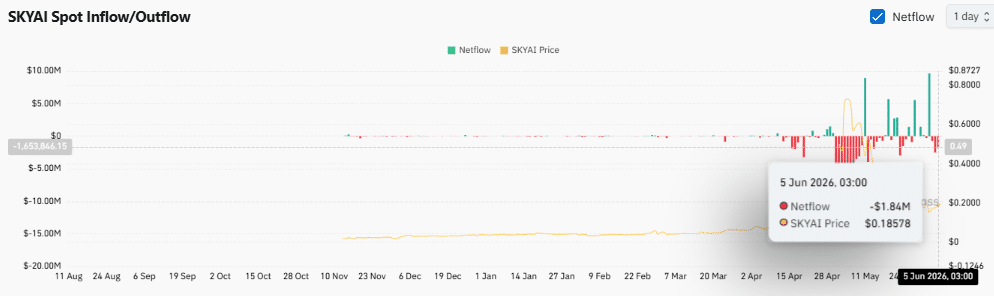
SKYAI recorded a net outflow of approximately $1.84 million on the 5th of June, extending a broader trend of negative netflows observed throughout recent weeks.
These outflows indicated that more tokens left exchanges than entered them.Such behavior often reflected accumulation rather than distribution, especially when investors transferred assets into private wallets.
Although exchange outflows alone did not guarantee a sustained rally, they continued supporting the constructive narrative surrounding SKYAI’s recovery.
Source: CoinGlass
Can SKYAI escape its descending channel?
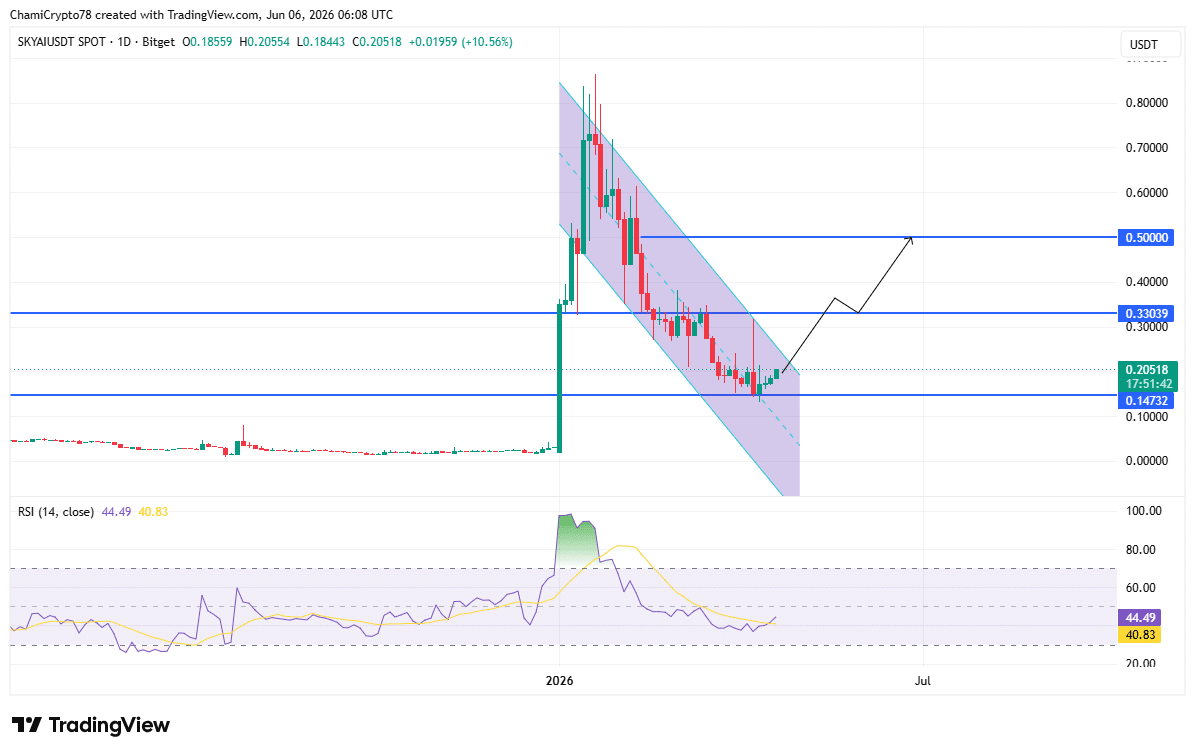
A look at the daily chart shows price action remained technically interesting as SKYAI attempted to break away from a descending channel that had contained the market since its January peak.
The recent bounce developed near channel support and pushed price toward the upper boundary, signaling that bearish control had started weakening.
The RSI indicator recovered to 44.49 after spending weeks near oversold territory, while its moving average stood at 40.83. This crossover suggested improving buying strength and a gradual shift in sentiment.
However, SKYAI remained below major resistance at $0.330. If buyers reclaim this level, the price could target the next resistance near $0.500.
However, failure to overcome channel resistance would likely keep the asset trapped within its broader corrective structure.
Source: TradingView
Funding Rates stay positive despite volatility
Derivatives traders continued favoring the bullish side despite the market’s recent turbulence.
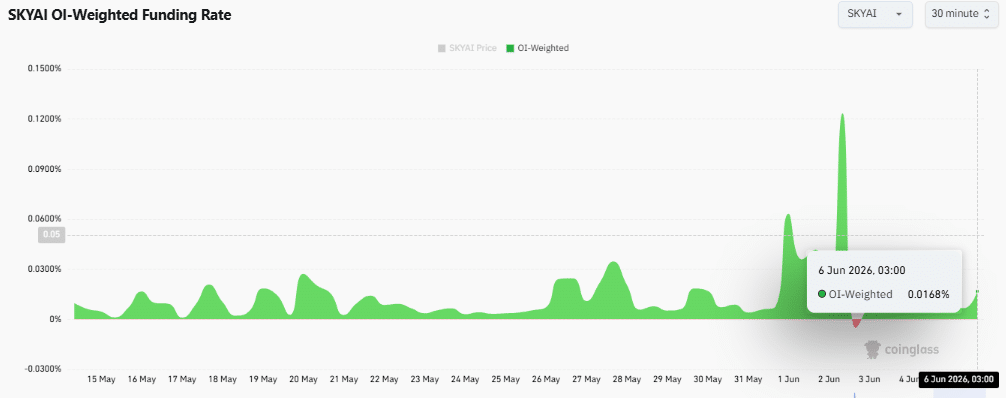
SKYAI’s OI-Weighted Funding Rate remained positive at 0.0168%, indicating that long-position holders still paid a premium to maintain exposure.
Positive Funding Rates generally reflect optimistic expectations, particularly when traders anticipate further upside.
Unlike earlier periods marked by aggressive deleveraging, the latest funding data suggested that speculative interest had started stabilizing.
As long as funding remains positive, derivatives positioning would continue offering a favorable backdrop for buyers attempting to extend SKYAI’s rebound.
Source: CoinGlass
Final Summary
SKYAI rebounded sharply while exchange outflows continued reducing sell-side supply.
Positive Funding Rates and a channel breakout attempt supported the recovery outlook.