Home Blog Page 384

Investors Are Fleeing to South Korean and Taiwan ETFs for Diversification. If You Do That, You’re Still Just Chasing AI Chip Stocks.

0
Investors Are Fleeing to South Korean and Taiwan ETFs for Diversification. If You Do That, You’re Still Just Chasing AI Chip Stocks.


Whenever the U.S. stock market gets top-heavy, Wall Street’s marketing machine gets cranking. The cycle turns back to a favorite narrative: geographical diversification.

Retail investors are urged to dump their concentrated domestic shares and buy single-country ETFs to capture untapped, uncorrelated growth cycles abroad.

More News from Barchart

There’s no crystal ball in investing. At least there shouldn’t be, and we should run from anyone who promises they have one. But through five months of 2026, the global scoreboard displays some eye-popping performance numbers.

The question I ask myself about any ETF or market segment that is not tied to one of the benchmark indexes is am I buying true diversification, or am I just riding the coattails of the S&P 500 Index ($SPX) and Nasdaq-100 Index ($IUXX) up moves in a different package? That is, a different ticker.

So before we swap our SPDR S&P 500 ETF Trust (SPY) or Invesco QQQ Trust (QQQ) exposure for foreign tickers, we need to understand the realities driving these returns in non-U.S. stocks, particularly when we view them by country instead of in a catch-all international or global ETF.

More often than not, a single-country ETF isn’t actually a bet on a country — it’s just a highly concentrated, expensive bet on a single sector or industry in disguise. That’s because while the U.S. has a bit of everything and a ton of technology stocks, the rest of the world’s national stock markets tend to be narrow by comparison.

That does not mean I ignore them. But it does mean I use them as proxies for whatever their equivalent might be in the U.S. market. I track scores of single-country, regional, and specialized international ETFs. Based on year-to-date performance through last Friday, May 29, here are the leaders. I’ll discuss those and then move on to the laggards.

www.barchart.com

The single-country equity landscape this year is defined by two massive, tech-driven spikes and a spectacular regulatory crash.

The absolute king of global equities this year is South Korea (EWY). The index has more than doubled in 2026, driven by a violent, multi-month short squeeze and unprecedented global demand for high-bandwidth memory chips. Taiwan (EWT) is up 67%. Riding the same hardware wave, Taiwan’s equity index has surged as hyperscalers continue to stockpile advanced chip architectures.

Source link

Bitcoin enters extreme fear at 11 – Is recovery possible post SpaceX IPO?

0
Bitcoin enters extreme fear at 11 – Is recovery possible post SpaceX IPO?


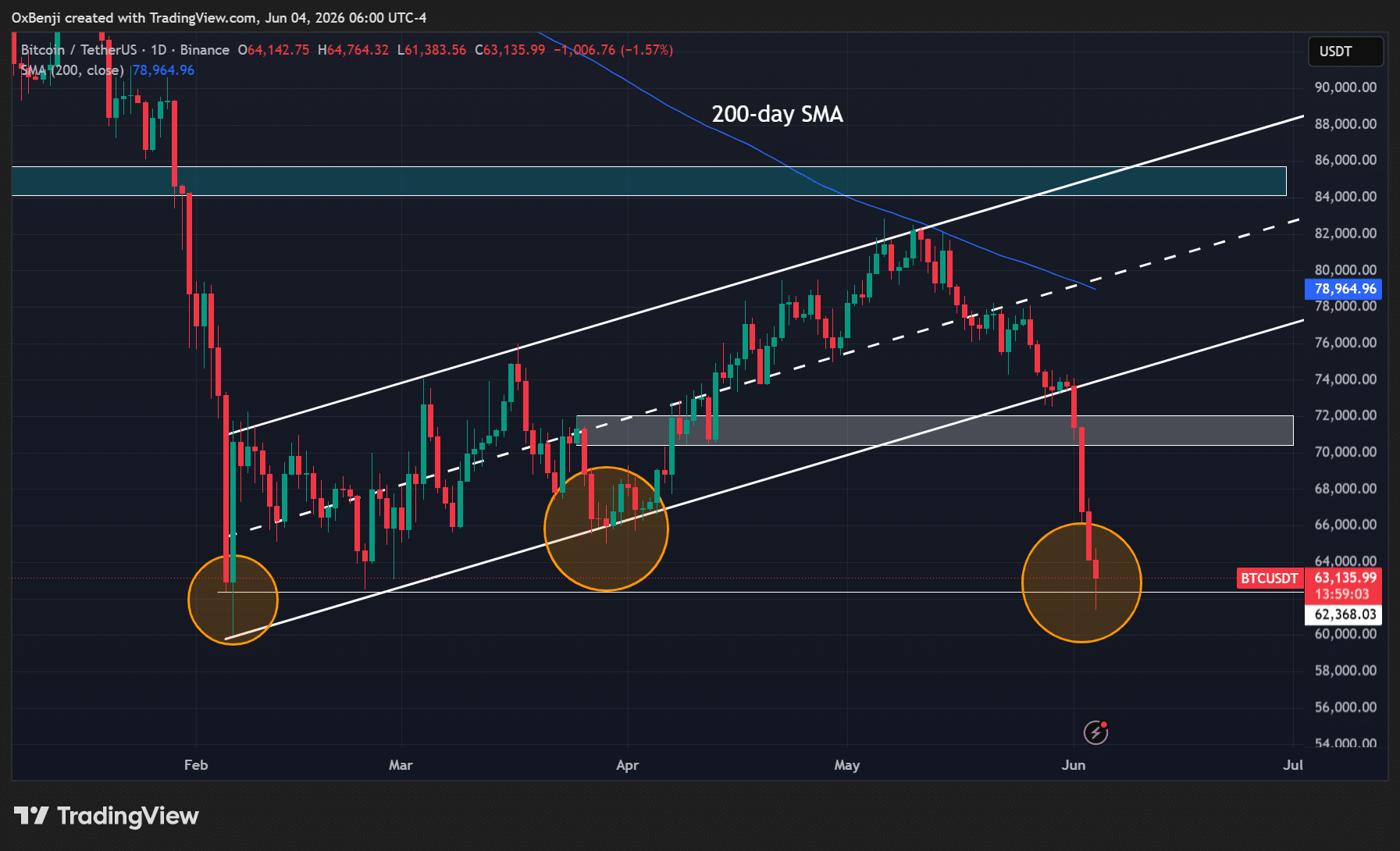
Bitcoin has dropped nearly 15% in June, an accelerated plunge following the reports of Strategy’s BTC sell-off. 

And market fears intensified as the community speculated that the recent Strategy’s dump could be just the beginning of a much bigger sell-off. As of writing, Strategy founder Michael Saylor had not confirmed or dispelled these fears. 

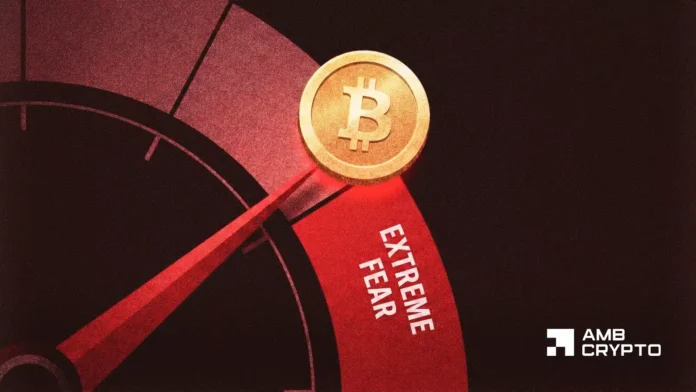
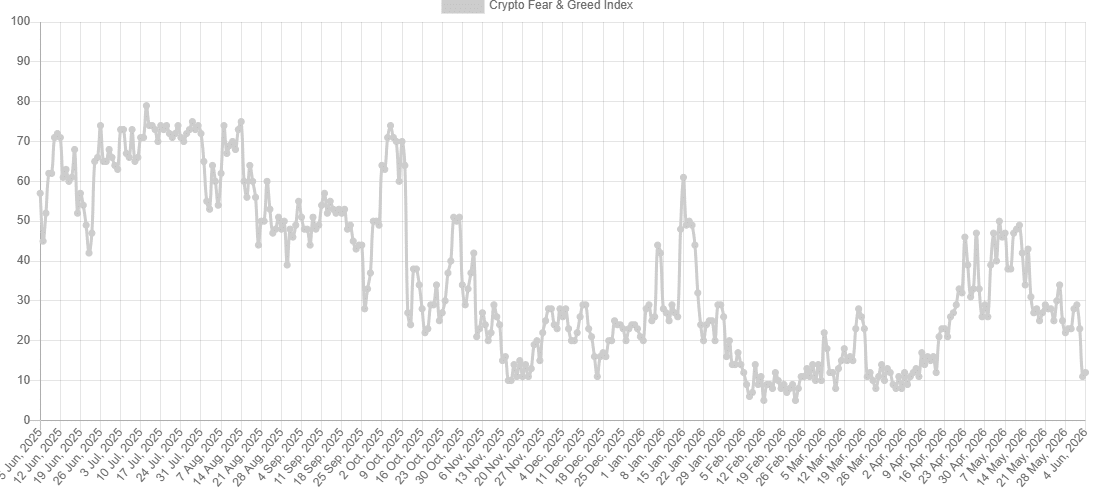
On this backdrop, the Crypto Fear and Greed Index reading dropped to an ‘extreme fear’ level of 11 as BTC dipped to $61.2K. 

Bitcoin fear
Source: Alternative

When will the Bitcoin price recover?

Interestingly, the current market fear levels also marked the local bottoms in February and March.  But analysts projected that a sharp rebound may not happen instantly. 

Bitcoin fearBitcoin fear
Source: BTC

Following the extended drop to its February low, analyst Peter Brandt said the next bottom may happen in October. 

As I see it, Bitcoin has met its initial target at the Feb low. This does not mean that BTC cannot work lower or have a terminal wash-out. I do not see a tradable low until October.

Worth pointing out that as BTC slipped lower and deepened year-to-date (YTD) losses to 25%, the stock market rallied.

On when the crypto asset could front a true recovery, Wintermute’s head of OTC trading, Jake Ostrovskis, said, 

What we need to get people interested in crypto and Bitcoin again is probably some of the air coming out of the AI trade.

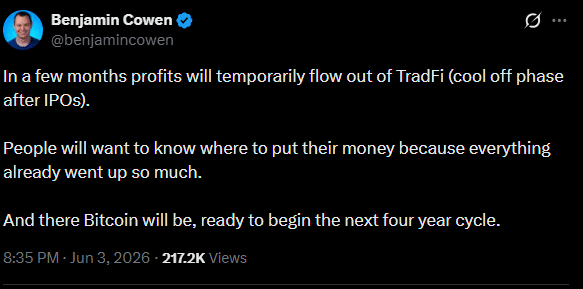
Another analyst, Benjamin Cowen, echoed a similar sentiment, noting that such rotation could mark the true beginning of BTC’s next four-year cycle run. 

So far, Elon Musk’s SpaceX is expected to go public (initial public offering, IPO) on the 12th of June. For Anthropic (parent firm behind Claude), its public debut is expected in September, while OpenAI could also follow suit later in 2026. 

Bitcoin fear Bitcoin fear
Source: X

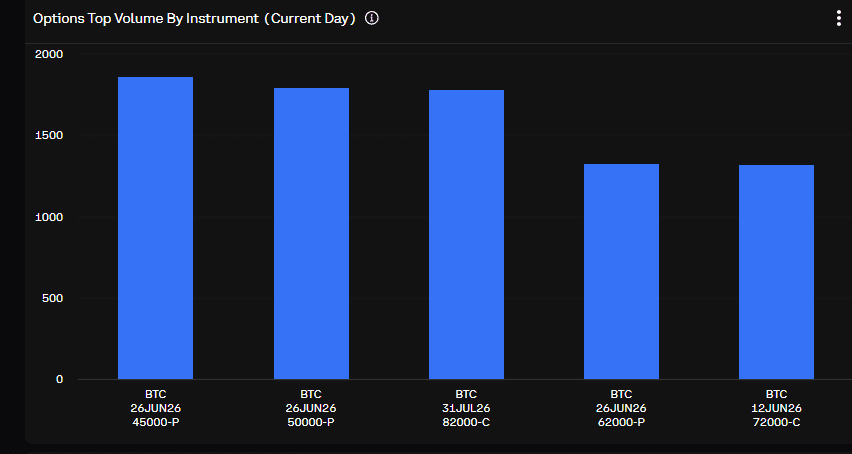
Sophisticated investors were also actively hedging for such an AI trade and its impact on BTC. 

According to Deribit, Options traders, mostly institutional investors, were increasingly hedging against a potential dip to the $50K and $45K area. In the past 24 hours, these levels were the most traded put contracts for the end of June expiry. 

Bitcoin fearBitcoin fear
Source; Deribit

Final SummaryThe The

  • Bitcoin fear index is at levels last seen in February and March lows
  • However, analysts cautioned that BTC’s recovery could remain elusive until expected AI IPOs are over


Source link

Crypto Clarity Act in spotlight for bad-actor provisions as Senate process grinds forward

0
Crypto Clarity Act in spotlight for bad-actor provisions as Senate process grinds forward

Though there’s no new sign of progress on the U.S. Senate’s Digital Asset Market Clarity Act, the crypto industry’s Blockchain Association held an online event Thursday with involved lawmakers continuing to make the case for support — especially in the law enforcement community — as the bill’s advocates contend with a narrow Senate window.

Throughout the months of Clarity Act negotiations, the legislation’s provisions that contend with cryptocurrency abuse in illicit finance have remained among the top concerns of Democratic lawmakers, and a number of Democrats who’ve worked on the bill have so far held back their support while some law-enforcement groups have been hesitant to embrace the bill.

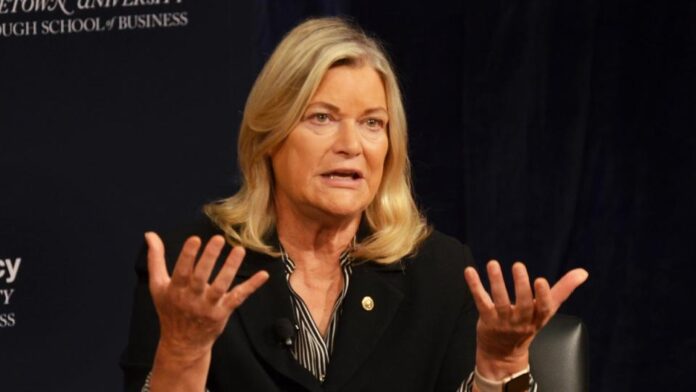
The current version recently advanced by the Senate Banking Committee is “the most highly negotiated bipartisan — or nonpartisan — sophisticated piece of a regulatory framework for digital assets that’s ever been presented to the public in this country,” said Senator Cynthia Lummis, who spoke at the event. Lummis, who heads the panel’s digital assets subcommittee and has been a leading Republican negotiator on the legislation, highlighted that the “current status quo is that digital asset exchanges are subject to lower Bank Secrecy Act and anti-money laundering and sanctions requirements today than they would be if Clarity passes.”

As advocates seek the necessary 60 yes votes it’ll need to pass the Senate, Lummis argued that the timing is urgent.

“If we don’t get it done this year, we’re probably looking at about 2030 before this bill could ever have a shot again of being considered,” she said. The Senate has fewer than eight weeks of floor time available on its calendar before a summer break that will begin the midterm elections season in earnest.

Though the association produced a pro-Clarity Act letter from 160 former law enforcement officials this week and then set up meetings for some of them with Senate lawmakers, the Revolving Door Project — an organization that targets improper ties between the government and corporate interests — accused the Blockchain Association of trying to “hoodwink senators” with its list of former officials, pointing out many of them work for crypto companies. And the Revolving Door Project also contends the crypto organization disregarded “honest concerns expressed by the National Sheriffs’ Association and a host of other law enforcement associations in early May.”

“The cryptocurrency industry is so assured of its complete control over the U.S. Senate that it believes this farce is sufficient to assuage the concerns of senators who were alerted to the flaws of the Clarity Act by actual law enforcement officials,” said Jeff Hauser, the Revolving Door Project’s executive director.

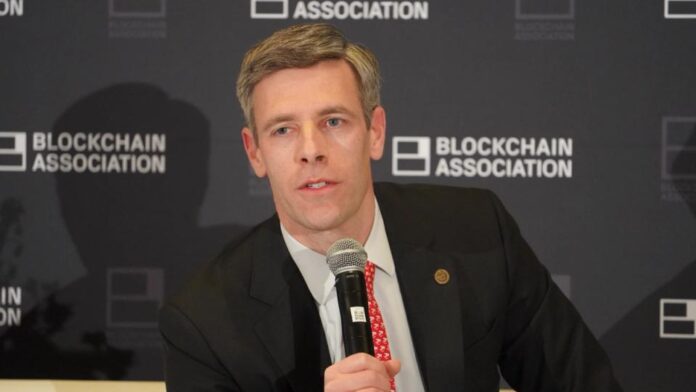
But Patrick Witt, the White House’s chief adviser on crypto, said during Thursday’s online event, “We’re putting real regulatory constraints on businesses and actors that currently live in a state of uncertainty.”

His message to reluctant law enforcement officials: “You should be the biggest cheerleaders for this bill, because this is really what is missing.”

Clarity proponents are walking a tightrope to insist on strong illicit-finance protections while also saying it won’t target crypto developers. Lummis said the bill “allows law enforcement to prosecute bad actors who publish code with the specific intent — and that’s the key — with the specific intent that their code be used to facilitate money laundering.”

Read More: Amid the Clarity Act fanfare is some worry over how a last-minute deal may punch DeFi


Source link

How Is Zoetis’ Stock Performance Compared to Other Healthcare Stocks?

0
How Is Zoetis’ Stock Performance Compared to Other Healthcare Stocks?


New Jersey-based Zoetis Inc. (ZTS) is the world’s leading animal health company, focused on advancing the care of animals through innovation and science. With nearly 75 years of experience, the company develops products and solutions that help predict, prevent, diagnose, and treat diseases in both companion animals and livestock.

Serving veterinarians, pet owners, and livestock producers in more than 100 countries, Zoetis combines scientific research, advanced manufacturing capabilities, data-driven development, and commercial expertise to deliver a broad portfolio of medicines, vaccines, diagnostics, biopharmaceuticals, and digital health solutions. With a market capitalization of approximately $32.03 billion, Zoetis comfortably falls into the large-cap category, which generally includes companies valued at $10 billion or more.

More News from Barchart

Yet despite its leadership position in the animal healthcare industry, the stock has faced a challenging period on Wall Street. Shares have fallen roughly 55.7% from their 52-week high of $172.23 reached in June last year. The decline has accelerated in recent months, with the stock plunging about 40.8% over the past three months. In comparison, the State Street Health Care Select Sector SPDR Fund (XLV) has declined a much more modest 7.8% during the same period.

www.barchart.com

The longer-term picture has been equally difficult for shareholders. Over the past year, Zoetis stock has lost nearly 55% of its value, and shares are down another 39.3% so far in 2026. By contrast, the broader healthcare sector has held up far better, with XLV gaining 10.3% over the past 12 months and slipping only 5.4% year to date.

From a technical standpoint, Zoetis has been flashing warning signs for months, with the stock consistently trading beneath both its 50-day and 200-day moving averages since July last year, underscoring the strength of the ongoing bearish trend.

www.barchart.com
www.barchart.com

Zoetis has come under pressure as demand for higher-priced pet healthcare products has softened in the U.S., with increasingly cost-conscious pet owners delaying veterinary visits and discretionary treatments. Those concerns came to a head on May 7, when the company released its fiscal 2026 first-quarter results. The report missed Wall Street’s expectations on both revenue and earnings, triggering a brutal 21.5% one-day selloff and sending the stock sharply lower.

The fallout didn’t stop there. Shares continued to slide in the days that followed, eventually touching a 52-week low of $72.38 on May 15. Adding to investor concerns, management significantly lowered its full-year 2026 outlook, citing weaker demand in the U.S. companion animal market along with intensifying competition in its dermatology and pain-management businesses.

The disappointing earnings report and reduced guidance dealt a major blow to investor confidence, raising fresh questions about the company’s near-term growth trajectory. The company’s underperformance becomes even more apparent when compared to industry peer Viatris Inc. (VTRS). While Zoetis has been under pressure, Viatris has been a standout performer, rallying 80.6% over the past year and adding another 26% gain year to date.

Despite the stock’s prolonged slump, Wall Street hasn’t completely given up on Zoetis. In fact, analysts remain broadly optimistic about its long-term prospects, with the stock currently carrying a consensus “Moderate Buy” rating. Among the 18 analysts covering ZTS, the average price target stands at $125.33, implying a potential upside of 64.1% from current levels.

On the date of publication, Anushka Mukherjee did not have (either directly or indirectly) positions in any of the securities mentioned in this article. All information and data in this article is solely for informational purposes. This article was originally published on Barchart.com


Source link

OCC chief says Democrats applying sole political pressure in World Liberty charter choice

0
OCC chief says Democrats applying sole political pressure in World Liberty charter choice

The crypto firm tied to President Donald Trump, World Liberty Financial Inc., was again a focus of political scrutiny in a congressional hearing in which the chief of the U.S. Office of the Comptroller of the Currency suggested the only political pressure his agency feels on its decision of whether or not to give the firm a bank charter comes from Democrats, not Trump.

Comptroller of the Currency Jonathan Gould’s rebuttal had come in response to Representative Gregory Meeks, a New York Democrat, who asked during the Thursday hearing whether Gould is “working for the American people or working as a Trump fixer, which is it?”

“Your attempts to continue to pressure me are the only political pressure I’ve felt from anyone other than your Senate colleagues,” Gould said, referring to similar questions he’d heard from Democrats including Senator Elizabeth Warren. “That is very unfortunate and unprecedented,” he added, insisting that his agency will do its job under the statute governing charters.

Democrats continue to argue that World Liberty’s connection to foreign investors and crypto partners that have been previously associated with illicit behavior — including global exchange Binance — suggest that it’s not fit for a U.S. banking charter, and they’ve argued it’s inappropriate for a Trump appointee to be deciding whether to give such a benefit to a business partially owned by the president and his family.

Amid Thursday’s verbal sparring, Gould said his agency is following ethics laws in the application for a national trust-bank charter for World Liberty Trust Company.

The Trump-tied business is also a stablecoin issuer, which was a central topic of the hearing of the House Financial Services Committee, at which the U.S. supervisors of the banking and credit union industries explained where they’re at on implementing the Guiding and Establishing National Innovation for U.S. Stablecoins (GENIUS) Act.

The regulators have already issued several proposed rules to put the new law into place, and Federal Deposit Insurance Corp. Chairman Travis Hill said another is coming soon, saying his agency and others will propose a rule requiring “customer identification programs” for stablecoin issuers “in the very near future.”

Kyle Hauptman, chairman of the National Credit Union Administration, touted the U.S. rise of stablecoins in his testimony.

“As stablecoins are more widely adopted, we Americans may no longer be made fun of for speaking about how many ‘business days’ a payment will take to settle. Every day is a business day with stablecoins,” he said. “Tax refunds may eventually arrive on Sundays or holidays. And if we ever have a repeat of the COVID outbreak in March 2020, Americans should be able to receive emergency stimulus funds in a more timely and secure manner.”

But Representative Brad Sherman, a California Democrat who routinely speaks against the risks of crypto, said, “I can’t think of a worse idea” than allowing government payments in stablecoins. “It would sanctify an alternative to the U.S. dollar, an alternative designed to facilitate a tax-evasion economy.”

Sherman also argued that the GENIUS Act “requires that there be no interest paid on stablecoins,” and he contended that “the smartest, or at least the best-paid lawyers in the country” are trying to figure out ways to evade that prohibition, so the regulators need to “write regulations that withstand that.”

Also at the hearing, a lawmaker asked Federal Reserve Vice Chair for Supervision Michelle Bowman about the Fed master account granted to crypto exchange Kraken.

Bowman said the approval granted only “very limited access to the payments system” and for an initially narrow duration of 12 months, during which she said the Fed will be watching it closely to educate itself in preparation for formal rules for providing such accounts. The rest of the crypto industry is also keenly interested in the outcome of the Fed’s policy work on opening such access to the central bank’s payments system and services, commonly known as “skinny” master accounts.

Read More: U.S. Senator Warren rebuffed on delay of World Liberty bank charter over Trump ties


Source link

Challenger: AI Isn’t a ‘Jobpocalypse,’ but Still Leads Layoffs

0
Challenger: AI Isn't a 'Jobpocalypse,' but Still Leads Layoffs


AI may not be a complete disaster for jobs yet, but companies are citing it more than any other reason when announcing layoffs, according to a new report from Challenger, Gray & Christmas.

The global outplacement firm’s latest report said AI accounted for 40% of 97,006 job cuts by US-based employers in May, the highest monthly total since Challenger began tracking AI as a reason for layoffs in 2023. So far in 2026, Challenger says 87,714 cuts have been attributed to AI, far surpassing the total of 54,836 in 2025.

“AI isn’t yet the jobpocalypse some predicted,” Andy Challenger, labor and workplace expert and chief revenue officer of Challenger, Gray & Christmas, said in a statement accompanying the report. “Like spreadsheets and email before it, the technology will ultimately make workers more productive, but our data shows companies are already acting on it, citing AI for more cuts than any other reason.”

Overall, Challenger found that May 2026 saw the highest number of layoffs since 2020, when 397,016 job cuts were announced during the height of the global COVID-19 pandemic. Technology remains the leading sector for layoffs by “a wide margin,” the report said.

The extent to which AI is to blame for layoffs is highly contested, including, not surprisingly, by those whose companies are directly involved in the AI boom. OpenAI CEO Sam Altman recently said companies were “AI washing” their layoffs, blaming the nascent technology for their decisions when other business factors were at play.

Elsewhere, Apollo Global Management’s chief economist Torsten Sløk wrote last week that he sees “zero evidence of job losses because of AI,” citing the ADP National Employment Report.

Outside of AI, Challenger’s report found that so far this year, the next biggest reasons attributed to layoffs are “market and economic conditions,” which have been cited for 69,645 cuts; “closings,” which have been cited for 66,733 cuts; and “restructuring,” which has been attributed to 52,249.


Source link

JST retraces 20% after $0.1 rejection – Has JUST’s 3-month uptrend broken?

0
JST retraces 20% after $0.1 rejection - Has JUST’s 3-month uptrend broken?


JUST [JST] has rallied strongly since February.

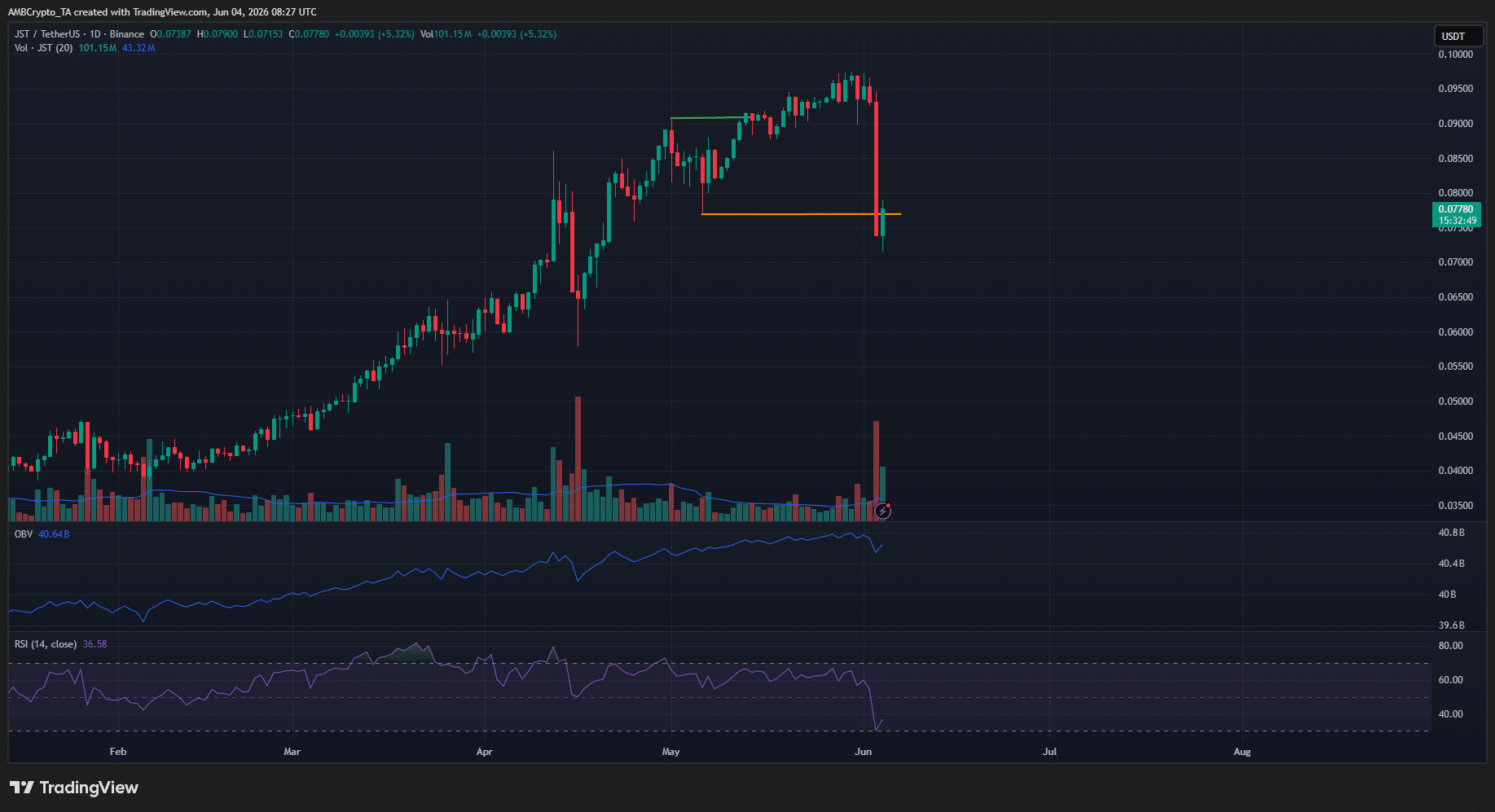
After flipping the $0.046 level to support, at a time when widespread panic ruled the crypto market, JST began to trend higher. It rallied from $0.046 to $0.097, a 112% move in three months.

In the past 24 hours, it saw a sizeable retracement in its uptrend. The token prices were down 10.7% in 24 hours, but the daily trading volume surged by 150%.

These price and volume trends suggested distribution instead of a mere retracement. Is it too early to conclude that the uptrend is ending?

JST’s 20.7% fall in a day has shaken bullish confidence

Over the past two weeks, Bitcoin [BTC] has been falling from the $82k resistance zone.

The leading crypto is operating within a longer-term bearish trend. Its quick losses have turned the altcoin market’s sentiment firmly bearish.

However, it had not been enough to halt JUST token’s uptrend that lasted till the end of May. It should be noted that a similar JST rejection from the $0.091-$0.10 area has also happened in September 2021 and April 2022

In April, the DeFi ecosystem on the TRON [TRX] blockchain announced the completion of the third JST buyback and burn of 271.3 million JST tokens. The burn events had helped sentiment and kept the uptrend going.

JST 1-day Chart
Source: JST/USDT on TradingView

The 1-day timeframe showed the higher low at $0.0769 (orange) breached on the 3rd of June. The high volume wipeout appeared to end the uptrend, since the formerly bullish structure has been cleanly breached.

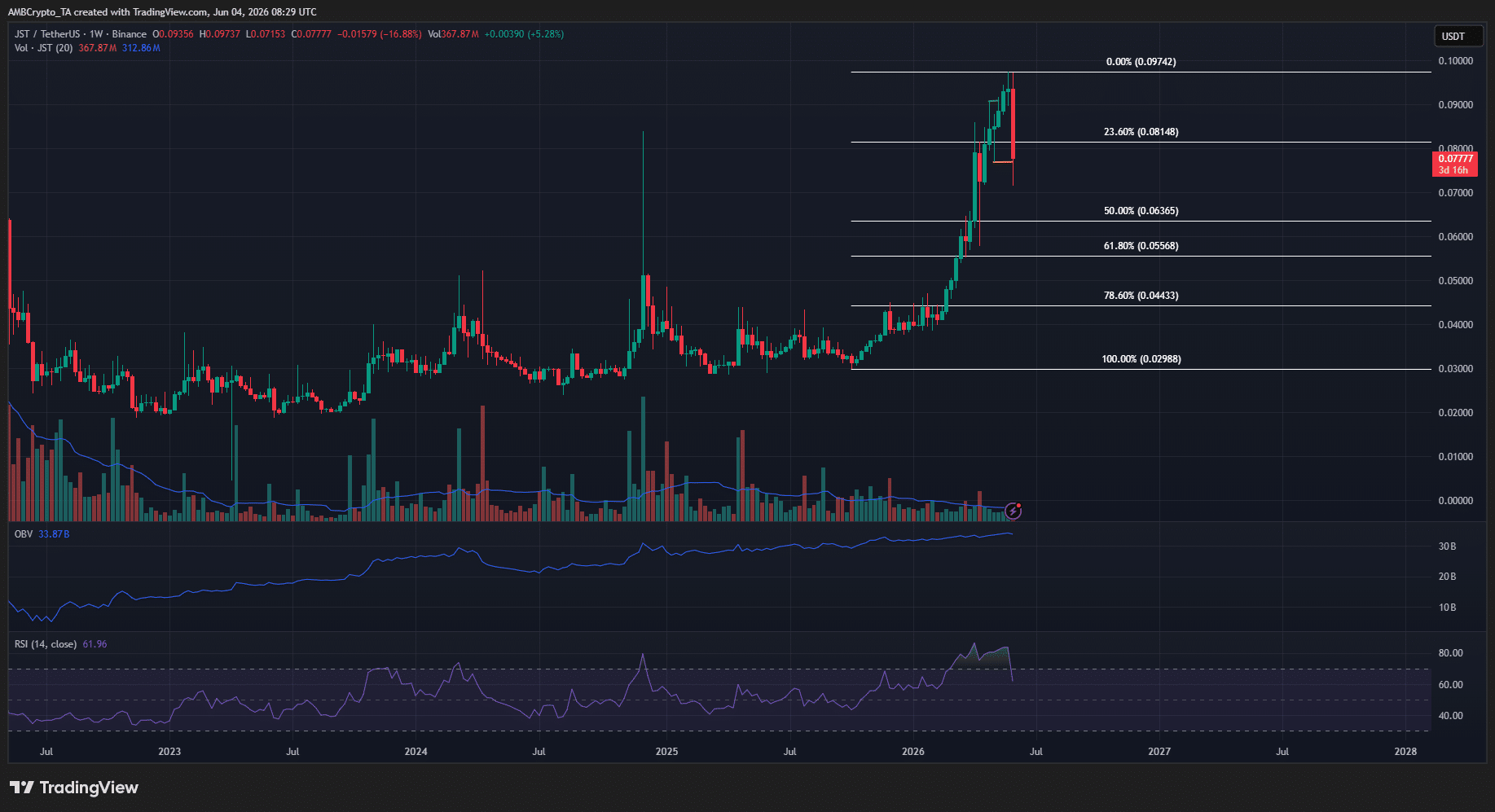
JST 1-week ChartJST 1-week Chart
Source: JST/USDT on TradingView

For context, despite the daily timeframe’s structure break, the higher timeframe trend remained bullish. As things stand, a retracement to $0.044-$0.055 appeared likely.

Traders’ call to action- Sell the bounce

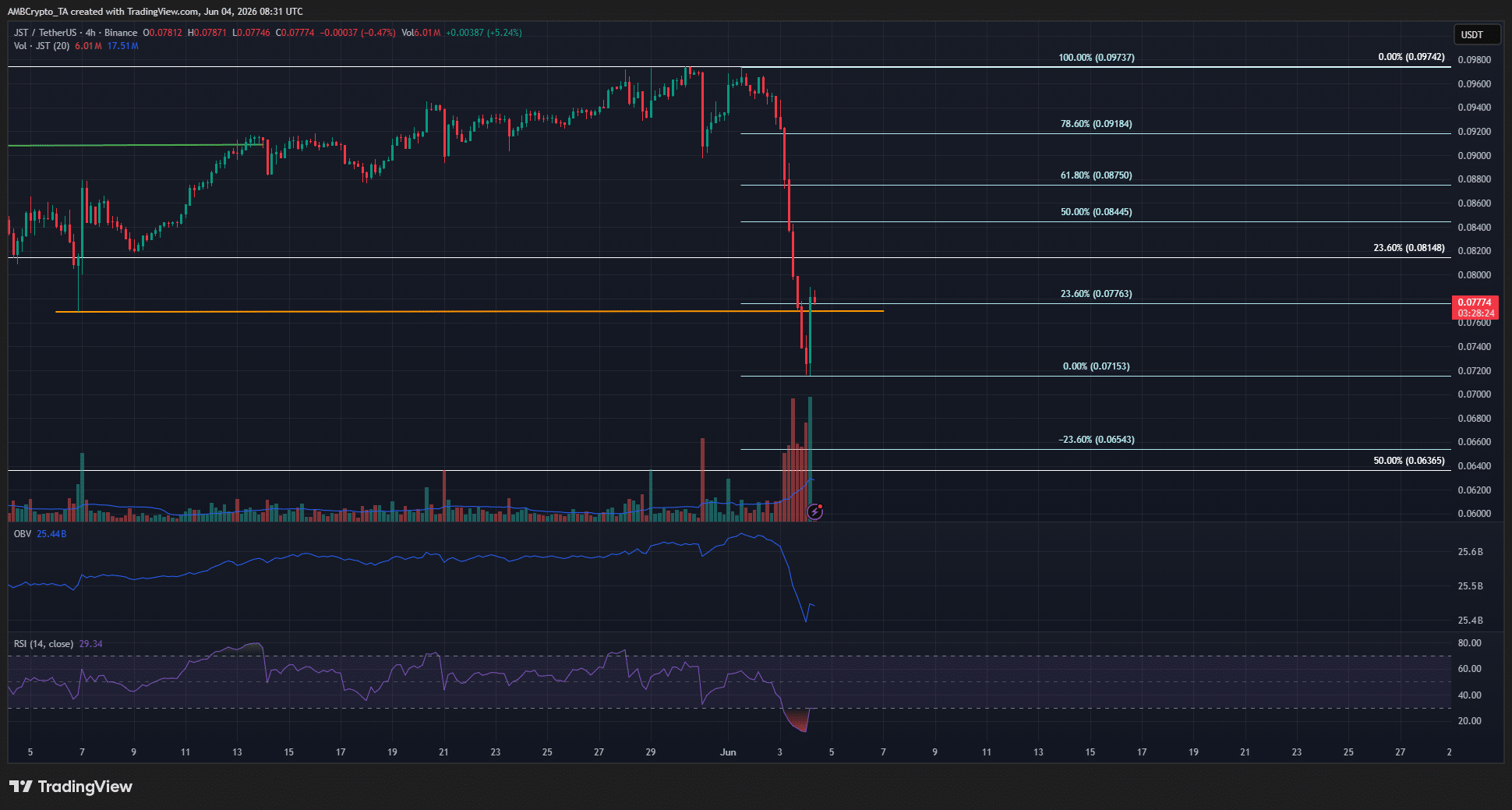
JST 4-hour ChartJST 4-hour Chart
Source: JST/USDT on TradingView

JST could bounce to the $0.087-$0.091 golden pocket before continuing its higher timeframe retracement toward $0.044-$0.055. Therefore, traders can wait for such a bounce before selling.

It is possible that the bounce might struggle to clear even the $0.084 level. It depends on bearish conviction and when the next wave of selling commences. Traders need to be nimble, but can maintain a “sell the bounce” stance.


Final Summary

  • JUST token buybacks and burns helped sustain the uptrend while most of the crypto altcoins failed to trend sustainably higher.
  • The recent structural shift could see a bounce toward $0.091 before continuing its fall toward $0.05.


Source link