Home Blog Page 388

America’s $28 trillion problem: The Fed just said foreign investors now own way more of the US than it owns of them

0
America's $28 trillion problem: The Fed just said foreign investors now own way more of the US than it owns of them


Moneywise and Yahoo Finance LLC may earn commission or revenue through links in the content below.

“Easy money” is getting harder to come by.

That’s a major implication in the Federal Reserve Bank of New York’s latest research showing a $28 trillion gap between what the U.S. owns in overseas assets versus what foreign investors hold. Currently, the U.S. has $41 trillion in foreign assets, but overseas investors have a much larger $69 trillion in U.S. assets (1).

Top Picks

For perspective, the Fed wrote that this $28 trillion deficit represents 90% of the nation’s current GDP, which stands at $31.82 trillion per the Joint Economic Committee’s May 28 release (2).​

The baffling thing is that this setup has worked for the U.S. for a long time. America had been earning more from its investments abroad (such as profits, dividends and interest) than it paid out to foreign investors on U.S. assets.

​In the Fed’s terminology, this “rate of return advantage” helps explain how the “U.S. income balance has seemed to defy gravity” even as liabilities grew, according to the initial report.

The worry today is that this income surplus is shrinking.

Back in 2019, the Fed noted a “surplus [of] $260 billion.” All of that wiggle room was wiped out to “near zero in 2024 and 2025.”​

These scary trends led the Fed researchers to conclude that payouts on U.S. assets have become a “servicing burden for the U.S. economy.” Instead of those foreign dividends or profits working in favor of Americans, it’s all going to this Everest-sized mountain of debt.

​How America’s financial cushion crumbled

There are multi-layered reasons why the U.S. landed in this mess, but the Fed specifically pointed to two.

First: The sharp rise in interest rates after the COVID-19 pandemic.

As the Fed aggressively raised rates to fight inflation, the cost of paying income to foreign investors rose alongside them. That’s a big deal because foreign investors own such enormous amounts of U.S. debt and interest-paying assets, like Treasury bonds and corporate securities.

When rates were near zero, those payments stayed relatively manageable. Higher rates changed the math very quickly.

As the Fed authors wrote, “The U.S. position in interest-bearing assets … has generated large income deficits since prior to the 2008 financial crisis.” For instance, the interest balance took out $450 billion from the income surplus in 2025 alone.

The second reason the Fed mentioned was the “continued net sales of U.S. assets to foreign investors.”

On this point, the Fed noted a few factors, including the wide trade deficit as the U.S. brings in far more than it sends out. That imbalance between imports and exports alone amounts to $5.5 trillion in “deterioration.”

The raging bull run for U.S. equities is also helping to inflate overseas portfolios. Apollo Global Management recently found that foreign investors control 18% of the U.S. stock market (3).

All these factors put together mean one simple thing: The world owns far more of the U.S. than the U.S. owns of the rest of the world. But what does that mean for the average American?​

Read More: Here’s the average income of Americans by age in 2026. Are you falling behind?

How overseas debt hits home

All this talk about international investment accounts can feel detached from day-to-day life, but it does affect everyone’s financial realities.

As America’s obligations to the rest of the world become more expensive, the entire system is extra sensitive to the slightest pressures. That likely means consumers won’t catch a break anywhere anytime soon.

Higher mortgage rates

We already see plenty of signs of this strain on U.S. families. For instance, mortgage rates aren’t likely to fall. Quite the opposite: the average contract interest rate for 30-year fixed-rate mortgages roared to 6.56% in late May (4) — the highest level since August 2025. That’s a far cry compared to the sub-3% rates many homeowners locked in during 2020 and 2021 (5).​

But there are ways to save. The key is not to accept the first offer on the table — shop around and get quotes from at least two to three lenders. Research shows borrowers who take the time to compare offers and secure the best available rate can save an average of $62,572 over the life of a 30-year fixed mortgage (6).

And platforms like Mortgage Research Center make it easy for you to shop around from the comfort of your home for free.

Here’s how it works: Enter some basic information about yourself, such as property type and zip code in which it is located, total cost, desired down payment and your annual income and credit score. From there, Mortgage Research Center then matches you with lenders best suited to your needs.

You can then set up a free, no-obligation consultation to further assess whether they’re the right fit for you.

Persistent inflation

Then there’s the ever-present boogeyman of inflation. A rising federal debt and larger interest payments increase the need for borrowing, which means there’s still a persistent upward pressure on the prices for goods.

At the same time, economic uncertainty remains elevated. With the conflict involving Iran now in its third month, concerns about energy markets, global trade and broader economic stability have weighed on consumer confidence, pushing consumer sentiment to record lows (7).

In an environment where purchasing power is under constant pressure, investing in assets with the potential to generate returns that outpace inflation over time may be beneficial.

Bet on inflation-proof assets

Gold, in particular, has long been viewed as a popular inflation hedge because it doesn’t move in lockstep with stocks or bonds. When equities stumble amid inflation, geopolitical tensions, or broader economic uncertainty, investors often turn to gold as a store of value.

One way to invest in gold that also provides significant tax advantages is to open a gold IRA with the help of Priority Gold.

This way, you can hold physical gold or gold-related assets within a retirement account, which combines the tax advantages of an IRA with the protective benefits of investing in gold.

If you opt for Priority Gold’s platinum package, you can get free account setup and insured shipping and storage for up to five years. Plus, you can also roll over your existing IRA or 401(k) into a precious metals IRA with Priority Gold — tax and penalty-free.

And when you make a qualifying purchase with Priority Gold, you can receive up to $10,000 in precious metals for free. Just keep in mind that gold is often best used as one part of a well-diversified portfolio.

Real estate offers another avenue for inflation protection. As building costs, labor expenses, and land prices rise, property values often move higher as well. Rental income also tends to increase over time, giving you a potential stream of cash flow that keeps pace with rising living costs.

The good news is you don’t necessarily need to buy a rental property outright to gain exposure. You can invest in shares of single-family rental homes nationwide through platforms like mogul.

Founded by former Goldman Sachs real estate investors, mogul handpicks the top 1% of single-family rental homes nationwide for you. This way, you can invest in institutional-quality offerings for a fraction of the usual cost — while receiving monthly rental income, real-time appreciation, and tax benefits.

The team at mogul carefully vets each property, requiring a minimum 12% return even in downside scenarios. Across the board, the platform features an average yearly return of 18.8%. Their cash-on-cash yields, meanwhile, average between 10% to 12% annually. With investments typically ranging between $15,000 and $40,000 per property, offerings often sell out in under three hours.

Getting started is a quick and easy process. You can sign up for an account and then browse available properties. Once you verify your information with their team, you can invest like a mogul in just a few clicks.

Rising household debt

In a way, the foreign debt burden mirrors how reliant everyday Americans are becoming on debt to fuel their lives. The Fed reported that U.S. household debt reached a record of $18.8 trillion in 2026 (8). According to KPMG, that’s up about 32% since the COVID-19 pandemic (9).

For those carrying balances across multiple credit cards or other high-interest loans, that debt can become increasingly difficult to manage as interest charges pile up month after month.

If high-interest debt has become difficult to manage, debt consolidation may be worth exploring.

You can combine multiple balances into a single personal loan through platforms like Credible.

This way, instead of juggling multiple monthly payments, you’ll have one predictable payment to manage each month.

You can find personal loans starting at 5.96% APR. Credible also offers a best rate guarantee — and if you close with a better rate than you prequalify for on the platform, you’ll get a $200 gift card.

— With files from Eric Esposito

You May Also Like

Join 250,000+ readers and get Moneywise’s best stories and exclusive interviews first — clear insights curated and delivered weekly. Subscribe now.

Article Sources

We rely only on vetted sources and credible third-party reporting. For details, see our editorial ethics and guidelines.

Federal Reserve Bank of New York (1); U.S. Senate Joint Economic Committee (2); Apollo Academy (3); Reuters (4); Federal Reserve Bank of St. Louis (5); LendingTree (6); CNBC (7); Federal Reserve Bank of New York (8); KPMG (9)

This article provides information only and should not be construed as advice. It is provided without warranty of any kind.




Source link

Tom Lee’s Bitmine (BMNR) to offer preferred stock with 9.5% dividend, following Strategy’s playbook

0
Tom Lee's Bitmine (BMNR) to offer preferred stock with 9.5% dividend, following Strategy's playbook

BitMine Immersion Technologies (BMNR), an Ethereum treasury company led by Fundstrat co-founder Tom Lee, is borrowing a page from Strategy’s financing playbook and launching a $300 million preferred stock offering as crypto treasury firms search for new ways to secure funding.

According to a Wednesday filing with the U.S. Securities and Exchange Commission (SEC), the company is offering 3 million shares of its Series A Perpetual Preferred Stock at a stated value of $100 per share. The securities carry a 9.5% annual dividend rate, with dividends paid weekly in cash if declared by the company’s board.

The preferred shares will be listed on the New York Stock Exchange (NYSE) under the ticker BMNP, subject to approval, BitMine said.

The offering comes as digital asset treasury firms, recently under pressure from the downturn in crypto prices, explore new funding sources. Strategy (MSTR), the largest corporate holder of bitcoin, introduced various classes of preferred equities. Bitcoin treasury peer Strive (ASST) also issued dividend-paying preferred stock SATA.

Bitmine is aiming to bring that playbook to its Ethereum treasury strategy, according to the filing.

The firm has been among the most aggressive buyers in the sector, accumulating more than 5.3 million ETH worth roughly $10 billion and controlling about 4.5% of Ethereum’s circulating supply over the past year. That ETH bet is currently sitting at an estimated $9 billion unrealized loss as ETH prices fell below $1,800 from around $5,000 in October.

Bitmine’s preferred stock can be redeemed by the company at premiums ranging from 10% to 0% depending on when the redemption occurs. Holders will also have repurchase rights if certain fundamental corporate changes occur. The filing did not specify how Bitmine intends to use the proceeds.

The timing is notable given the growing pressure on Strategy’s preferred equity funding model. The firm’s STRC preferred stock fell 5% below its $100 par value on Wednesday as investors debate whether the company can comfortably maintain its dividend payments while bitcoin prices slide. Strive’s SATA also fell below $97, trading 3% below its pat value, underscoring the pressure on the funding model of digital asset treasuries.


Source link

Ethena’s USDe will be ‘available for Coinbase’s 100m+ user base’ next week – ENA jumps 28%

0
Ethena's USDe will be 'available for Coinbase's 100m+ user base' next week - ENA jumps 28%


Ethena has partnered with crypto exchange Coinbase to power their U.S. dollar savings product. The integration will involve Ethena’s USDe and will go live next week, according to the founder, Guy Young. He added, 

The upcoming integration next week will be the first time Ethena products are available for their (Coinbase) 100m+ user base.

According to Young, the deal will involve USDe leveraging Coinbase’s idle balances and direct yield on them. 

Coinbase Ethena
Source: X/Guy Young (G Ethena)

Will the deal boost Ethena and USDe?

USDe is largely positioned as a stablecoin, but in practice, it is more of a yield product that directly competes with Sky Dollar (USDS, formerly DAI) or Ondo Finance’s USDY.

Traditionally, it has been a rival to the U.S. Treasury bill that offers interest. However, it relies on delta-neutral strategies to generate the yield. And since the strategy heavily fluctuates with crypto market phases, this has hampered Ethena’s growth. 

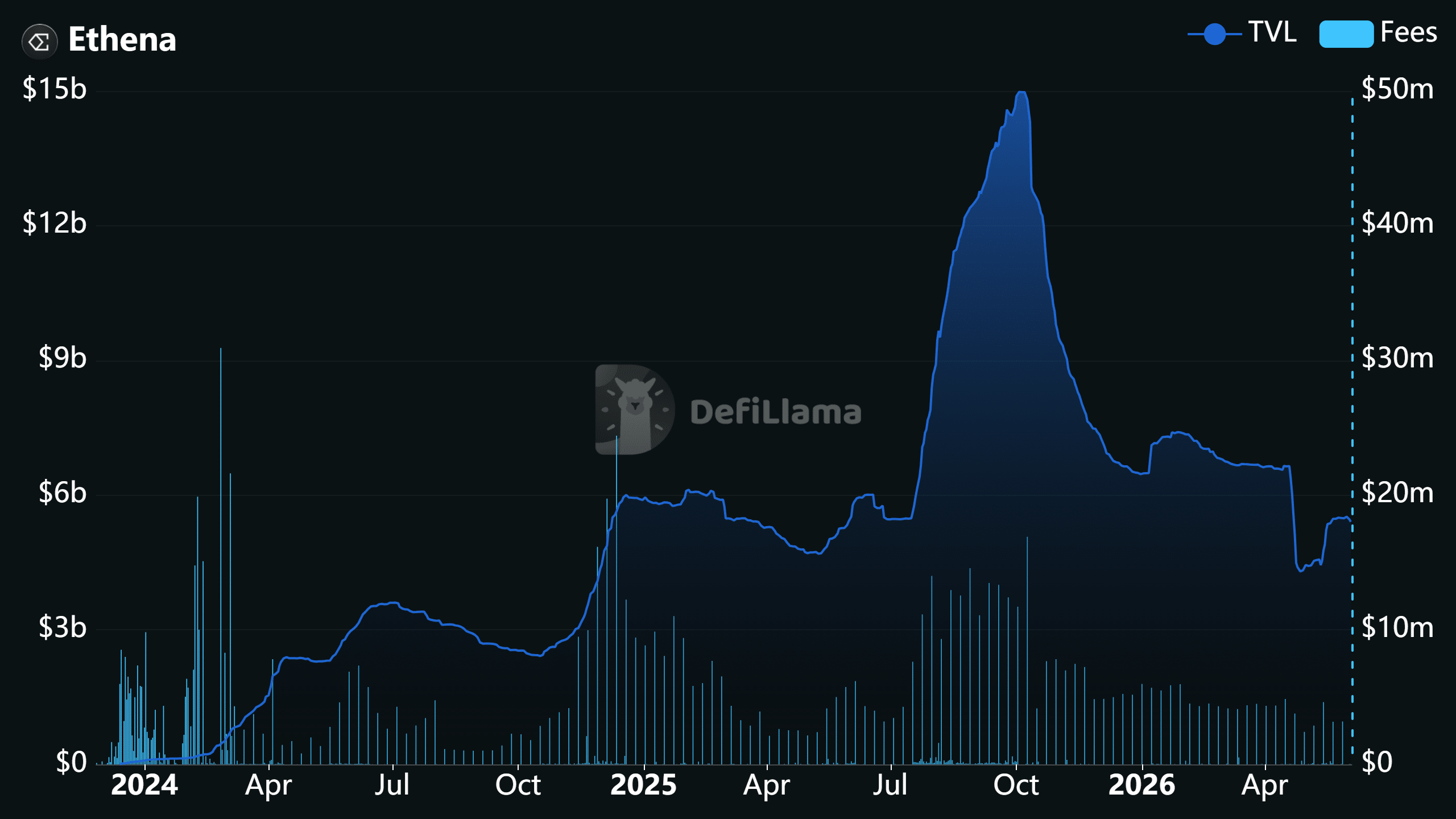
In fact, since the crypto downturn began last October, Ethena’s TVL (total locked value) dropped 3x from nearly $15B to a low of $4.2B. The slump was primarily driven by USDe redemption after the Binance-driven liquidation cascade. 

Coinbase Ethena Coinbase Ethena
Source: DeFiLlama (Ethena TVL) 

The bear market meant low funding rates, effectively grounding its delta-neutral strategy to a halt. Even rivals offered better yields with less risk, further stifling demand for the USDe. 

As part of its broader pivot, Ethena decided to go beyond crypto and targeted booming tokenized assets and other alternatives to scale its yield-generating strategy.  

That said, Coinbase said it purchased ENA, the native token of the Ethena protocol, in the open market as part of the deal. Lately, Coinbase deals have triggered bullish rallies like those seen with HYPE after the Hyperliquid USDC deal. 

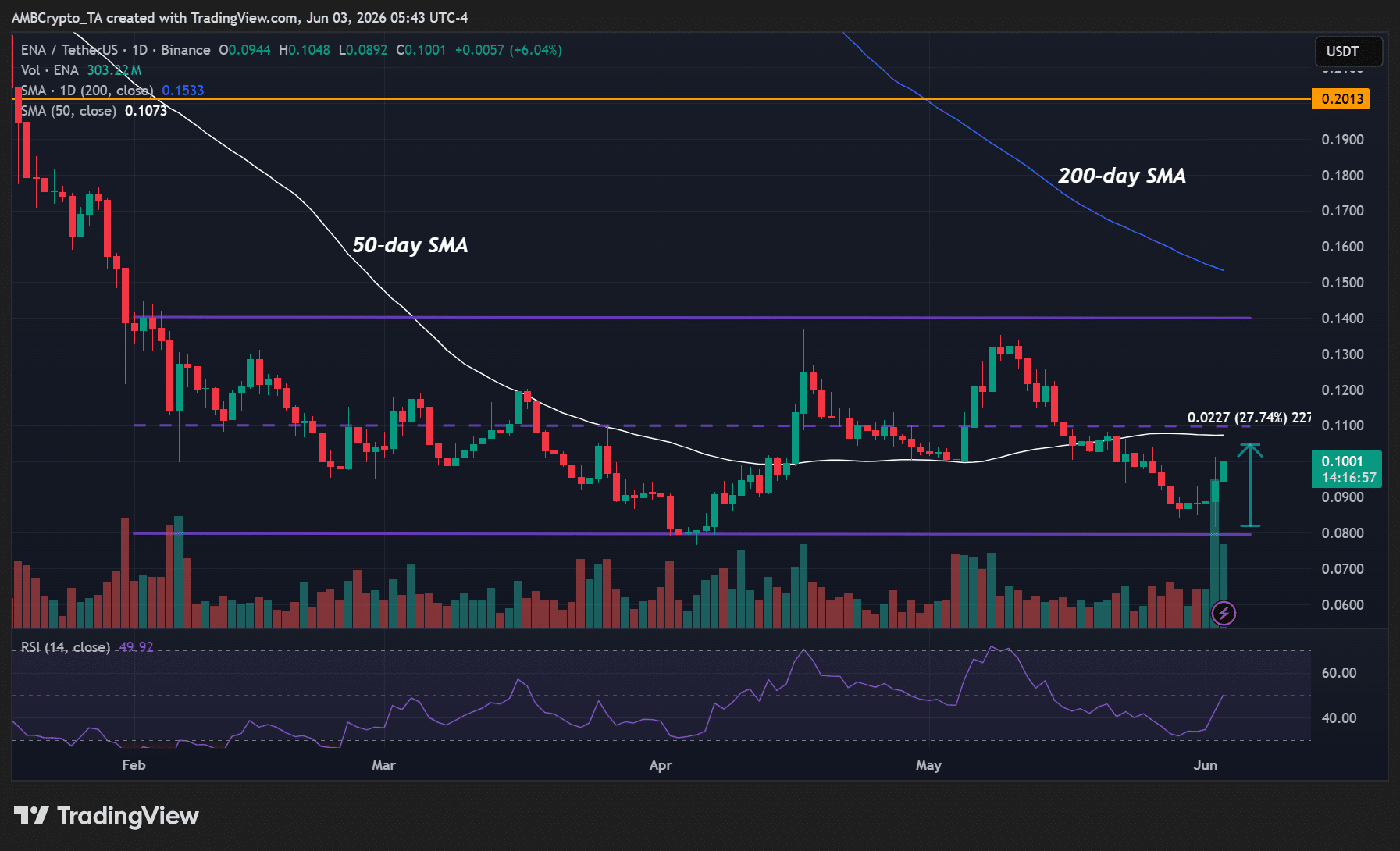
Similarly, ENA’s mooned nearly 28% after the update and defied broader market contraction. The altcoin surged from $0.08 to $0.10, but was just shy of the 50-day SMA (white), which has acted as both resistance and support in the past. 

Ethena CoinbaseEthena Coinbase
Source: ENA/USDT, TradingView 

If ENA bulls falter at the 50-day SMA, a price rejection at the level could drag the altcoin back to the range-low near $0.80. 

On the contrary, flipping the 50-day SMA into support could allow bulls to use the level as a springboard towards the range-high at $0.14. 


Final Summary

  • Coinbase has tapped Ethena to drive yield on idle US dollar balances for its users. 
  • The deal sparked ENA’s 27% rally in the past 48 hours, but it was unclear whether the momentum would extend. 


Source link

Cigna Stock: Is CI Underperforming the Healthcare Sector?

0
Cigna Stock: Is CI Underperforming the Healthcare Sector?


With a market cap of $72.5 billion, The Cigna Group (CI) is a prominent health services company that provides medical, pharmacy, behavioral health, dental, and supplemental insurance products, as well as healthcare management services. Headquartered in Bloomfield, Connecticut, the company serves millions of customers, employers, government agencies, and healthcare providers across the United States and internationally.

Companies valued at $10 billion or more are generally classified as “large-cap” stocks, and Cigna fits this criterion perfectly. Its market leadership lies in its integrated healthcare ecosystem, combining health insurance, pharmacy benefit management, specialty pharmacy, and care delivery services under one umbrella.

More News from Barchart

Shares of the company have slipped 19.1% from its 52-week high of $338.89. CI stock has declined 5.4% over the past three months, compared to the State Street Health Care Select Sector SPDR Fund (XLV), which has dipped 7.7% over the same time frames.

www.barchart.com

Longer term, CI stock is down marginally on a YTD basis, outperforming XLV’s 4.5% decrease. However, shares of the health insurer have decreased 13.4% over the past 52 weeks, trailing the ETF’s 11.5% rise over the same time frame.

CI shares are currently trading below both their 50-day and 200-day moving averages, signaling weak technical momentum.

www.barchart.com
www.barchart.com

Cigna has trailed the broader market over the past year as investors weighed ongoing challenges in the health insurance and pharmacy-benefit management (PBM) industries. Sentiment has been pressured by concerns over regulatory scrutiny of PBMs, rising healthcare costs across the insurance sector, and Cigna’s transition to a rebate-free pharmacy pricing model, which is expected to compress margins in the near term. Additionally, the company’s divestiture of its Medicare Advantage business and plans to exit the Affordable Care Act marketplace have raised questions about future growth opportunities.

In contrast, rival UnitedHealth Group Incorporated (UNH) has outperformed CI stock, climbing 15.1% on a YTD basis and 25.8% over the past 52 weeks.

Nevertheless, analysts remain strongly optimistic about its prospects. The stock has a consensus rating of “Strong Buy” from 23 analysts in coverage, and the mean price target of $343.14 is a premium of 25.1% to current price levels.

On the date of publication, Kritika Sarmah did not have (either directly or indirectly) positions in any of the securities mentioned in this article. All information and data in this article is solely for informational purposes. This article was originally published on Barchart.com


Source link

SpaceX targets record $75 billion IPO as bitcoin treasury and liquidity risks draw focus

0
SpaceX targets record $75 billion IPO as bitcoin treasury and liquidity risks draw focus

SpaceX is planning to set the price of its initial public offering at $135 per share in a deal that would raise a record $75 billion and value the company at $1.75 trillion, the company said in a filing with the U.S. Securities and Exchange Commission.

The aerospace company plans to sell 555.6 million shares as part of the offering, according to the filing. If completed at the proposed size, the IPO would rank among the largest public listings ever and mark a major milestone for Elon Musk’s privately held rocket and satellite business.

The offering would also have implications for the crypto market.

SpaceX held 18,712 bitcoin with a fair value of $1.29 billion as of March 31, making it one of the larger known corporate holders of the cryptocurrency. A public listing would bring those holdings into public markets, giving investors indirect exposure to bitcoin through ownership of SpaceX shares.

The company’s bitcoin position has drawn increased attention amid reports that Musk has explored combining SpaceX and electric vehicle maker Tesla (TSLA). Tesla already holds one of the largest corporate bitcoin treasuries among publicly traded companies, with over 11,500 BTC.

If Tesla and SpaceX were ultimately merged, Musk could gain control over one of the largest corporate bitcoin holdings in public markets. Neither company, however, has announced a formal merger plan.

The IPO may also test whether crypto can continue to attract capital amid a crowded market for risk assets. SpaceX’s planned June listing, combined with anticipated fundraising from AI firms OpenAI and Anthropic, is estimated to attract more than $240 billion by year-end, potentially siphoning liquidity from technology stocks, AI investments and digital assets as both retail and institutional investors reallocate capital.

Because bitcoin and other digital assets often compete for the same risk-on investment dollars as high-growth companies, a surge in demand for shares of SpaceX and other high-profile issuers could weigh on crypto prices in the short term.


Source link

What Scott Pelley Once Told Me About ‘60 Minutes’ And The Future Of News

0
What Scott Pelley Once Told Me About ‘60 Minutes’ And The Future Of News


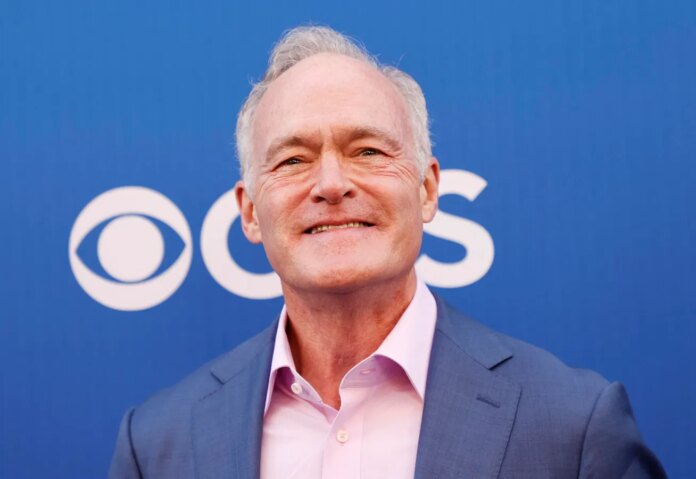
Hours after CBS fired longtime 60 Minutes correspondent Scott Pelley on Tuesday, following a tense and widely reported clash with the show’s newly installed executive producer Nick Bilton one day prior, I found myself thinking back to a phone conversation I once had with Pelley as he was on his way to JFK Airport to fly out for a story.

He was headed to Europe, and we eventually got around to talking about the show itself. When I asked at one point why 60 Minutes still matters today, Pelley didn’t hesitate: In an age of fragmented information, misinformation, and evaporating trust from viewers, he insisted that the program’s mission had never been more important. The show “must exist today,” he told me, “because the quality of information has become so poor. People are getting information in tiny fragments. People are getting disinformation fed to them from all corners.

“And 60 Minutes is a place where you can go still today, thank god, where you can see a story that is well-researched, well-edited … So I think 60 Minutes’ reason to be has never been greater in its entire history.”

A tumultuous week for ‘60 Minutes’

His remarks to me then obviously stand in contrast to his assertion to Bilton earlier this week that CBS News boss Bari Weiss is “murdering” 60 Minutes at the behest of the Trump administration — and also under the auspices of David Ellison, the Trump-aligned CEO of Paramount, which owns CBS News.

Pelley’s abrupt firing, one of the biggest stories in media right now, comes amid a sweeping overhaul of CBS News that’s already seen a wave of departures, layoffs, and resignations. 60 Minutes itself has also lost executive producer Tanya Simon, executive editor Draggan Mihailovich, and correspondents Sharyn Alfonsi and Cecilia Vega, while Anderson Cooper departed the program earlier this year.

And while Pelley was unavailable for comment, he did release a statement after his firing that blasted the current leadership of CBS News for “incompetence and unprofessionalism” and for working “to curry favor with the Trump administration.”

Setting aside the fact that Bilton now has quite a task before him — with less than four months or so before an expected launch of 60 Minutes’ new season in September, along with multiple editor and correspondent roles to fill — one of the many noteworthy things that stands out about the show and internal drama is the messaging around it.

Pelley’s comments to me about 60 Minutes’ relevance, for example, track the show’s own marketing verbiage, with its social media channels touting that 60 Minutes ended its 58th season in May “breaking records.” It remains, among other things, the #1 news program in the U.S. for the 52nd consecutive year, with 2.5 billion video views across social media — a 185% increase from the prior season, according to the show.

60 Minutes also averaged 9.1 million TV viewers last season, up 9%. The program, in other words, certainly looks like it’s found a formula that works.

That said, notwithstanding those metrics or the sense of urgency and mission articulated by a correspondent like Pelley — who worked for CBS News for nearly 37 years, and for more than 20 of those years at 60 Minutes — the show’s current management sees a TV property that’s actually sliding inexorably toward irrelevance.

“Broadcast,” Bilton reportedly noted during this week’s contentious meeting with staff, “is an iceberg that’s melting.” And in a welcome note to the show’s employees, he elaborated about how “the world we are reporting on, and the world we are reporting to, where people consume their news, has moved. And if we don’t move with it, in the ways that matter, we won’t be here for the next sixty years.”

Speaking at an all-hands town hall to CBS News employees earlier this year, Weiss reportedly stressed that dramatic change was needed across the board at the network’s news division. Because “we are not producing a product enough people want.”

In other words: It can feel at times, certainly to anyone on the outside, like the key people involved with 60 Minutes are all talking about a different TV show whenever they communicate about the program. It’s either as relevant as ever, a record-breaking success, or doomed for irrelevance and sorely in need of change, depending on who you ask.

As for the staffers who remain, NBC News reported Wednesday that many feel “completely adrift” and a sense of “great uncertainty.”


Source link

A $5 Billion Reason to Buy Salesforce Stock Now

0
A $5 Billion Reason to Buy Salesforce Stock Now


Sometimes, the smartest investment wins happen behind closed doors long before the opening bell rings on Wall Street. Artificial intelligence (AI) heavyweight Anthropic confidentially filed for a U.S. initial public offering (IPO) on Monday, June 1, beating rival OpenAI to the punch in the scramble toward public markets.

Fresh off a late May funding round that valued the Claude Code creator at $965 billion post money, Anthropic now sits ahead of OpenAI in the valuation pecking order. If Anthropic reaches Wall Street with a $1 trillion valuation, the debut could rank among the most significant stock market arrivals in years.

More News from Barchart

A $1 trillion debut would place Anthropic among the world’s most valuable companies overnight while likely securing the second or third largest IPO in history behind SpaceX and Saudi Aramco. This possibility places Salesforce (CRM) directly in the spotlight as it first backed Anthropic during its Series C funding round in early 2023.

The software giant doubled down during every subsequent round, including Anthropic’s latest Series G financing in February 2026. The relationship has remained intact from day one and the repeated investments now give Salesforce a stake worth roughly $5 billion in Anthropic.

The journey which began with an investment of about $50 million in early 2023, has now grown into a position large enough to turn heads across the market. CRM stock, which was down 20.9% year-to-date (YTD), gained 9.7% on June 1 alone owing to Anthropic’s IPO plans.

So let us debrief if the rapidly appreciating investment can become a meaningful catalyst for CRM stock.

About Salesforce Stock

Based in San Francisco, California, Salesforce has built its reputation as a leader in cloud software and customer relationship management solutions. Its platform helps businesses bring sales, service, marketing, commerce, and analytics under one roof.

The company’s growing AI ecosystem includes Agentforce, Data 360, Informatica, and Slack. Together, these tools help organizations automate workflows, unlock the value of their data, and deepen customer engagement across global markets.

The nearly $171.67 billion market cap company has endured a rough stretch over the past year. Shares dropped 23.11% during the last 52 weeks.


Source link