Home Blog Page 398

This Tiny Space Stock Just Exploded 100%. Here’s Why Investors Are Piling In.

0
This Tiny Space Stock Just Exploded 100%. Here’s Why Investors Are Piling In.


Space stocks are suddenly back in favor, and Momentus (MNTS) is one of the names catching the lift. The trigger is the same one pushing other small space names higher: growing excitement around SpaceX’s planned initial public offering (IPO) and a new wave of attention on the broader space economy. SpaceX is reportedly targeting a valuation around $1.75 trillion, and the buzz has helped send space-related stocks sharply higher this past week.

Momentus joined the move with a huge rally on May 26. Investors are treating the SpaceX IPO like a rising tide for the entire industry, especially smaller public companies tied to launches, satellites, and orbital services.

More News from Barchart

Momentus Is Riding a Massive Trend

Momentus is a tiny commercial space company, but it does not try to do everything. The firm focuses on satellite buses, hosted payloads, in-space transportation, and “last-mile” delivery services through its Vigoride orbital service vehicle. Put simply, it helps move customer payloads around in space after launch, and it also works on government and commercial missions. That gives the company a niche role in a market that is suddenly getting much more attention.

MNTS stock has been wild. On May 26, shares closed at $15.48 — up almost 110% in a single session — and then traded as high as $18.90 after hours. The next day, it touched a high of $22.20, but shares have since settled back down near the $17 level. Currently, Barchart shows a market capitalization of $204 million and a 52-week range of $3.11 to $43.55, which tells you just how fast this name can move.

More importantly, MNTS stock is up 246% year-to-date (YTD) in 2026, despite a very rough stretch over the last year. The rally has been driven by SpaceX hype, broad sector momentum, and the kind of speculative trading that often shows up in small, thinly traded stocks.

From a valuation standpoint, Momentus looks expensive. With $204 million in market value and roughly $4 million in trailing revenue, the stock trades at roughly 51 times sales. That is a big number for any company, but especially for one in aerospace and defense, where the sector median price-to-sales (P/S) ratio is closer to 3 times.




Source link

Vitalik proposes liquidation-free synthetic assets amid stablecoin censorship concerns

0
Vitalik proposes liquidation-free synthetic assets amid stablecoin censorship concerns


Vitalik Buterin has proposed a new model for decentralized synthetic assets that could reduce crypto’s dependence on centralized stablecoins and liquidation-heavy DeFi systems.

The proposal arrived as Ethereum developers and privacy advocates debated censorship resistance following a recent incident involving a confidential USDC contract freeze.

In a new research paper, Buterin explored how synthetic assets could be structured using paired options-based systems instead of traditional overcollateralized debt models that rely heavily on liquidations and price oracles.

The broader goal is to create more resilient decentralized financial infrastructure while reducing reliance on centralized issuers and fragile liquidation mechanics.

Stablecoin freeze debate reignites censorship concerns

Discussion intensified after developer Rand said a confidential USDC contract appeared to have been frozen after being “caught in a crossfire of another case.”

The incident quickly sparked debate across Ethereum circles about whether privacy-preserving protocols can remain censorship resistant while still relying on centrally issued stablecoins.

Ethereum researcher Andy Guzman responded by arguing that:

compliance != censorship resistance.

He also suggested the ecosystem may need a new generation of censorship-resistant stablecoins rather than simply combining compliant tokens with privacy layers.

That broader debate formed the backdrop to Buterin’s latest proposal.

Vitalik wants synthetic assets without forced liquidations

Most decentralized stablecoin systems today depend on users locking collateral and borrowing against it.

When collateral values fall too quickly, protocols often trigger forced liquidations to maintain solvency.

Buterin argued these systems depend too heavily on:

  • real-time price feeds,
  • oracle reliability,
  • and liquidation infrastructure during periods of extreme volatility.

His proposal instead explores paired synthetic structures built around options contracts.

Under the model, two counterparties take opposite sides of future price exposure. Because gains and losses offset directly between the paired positions, the system avoids some of the cascading liquidation risks common in existing DeFi designs.

As Buterin summarized in the paper:

P + N = 1. Hence, there is no possibility of liquidation.

The proposal also seeks to reduce dependence on rigid fiat pegs by focusing more broadly on stability and hedging.

Proposal builds on wider criticism of crypto “corposlop”

The paper also connects to Buterin’s broader criticism of crypto’s growing focus on speculative trading products.

In a February post discussing prediction markets, Buterin warned that parts of crypto were drifting toward what he called “corposlop,” where platforms increasingly optimize around gambling-style activity and short-term speculation.

At the time, he argued that crypto infrastructure should instead focus on:

  • hedging,
  • coordination,
  • and long-term financial utility.

He also suggested prediction markets and synthetic financial systems could eventually help reduce dependence on fiat-backed stablecoins altogether.

The latest proposal appears to extend that vision into stablecoin and synthetic asset design.

Debate shifts toward resilience and decentralization

The discussion reflects growing tension inside crypto between regulatory compliance and decentralization.

As stablecoin regulation tightens globally, centralized issuers are increasingly expected to maintain the ability to freeze or restrict assets under certain circumstances.

That reality has pushed some Ethereum researchers and developers to explore financial systems that rely less on centralized intermediaries while still preserving price stability and usability.


Final Summary

  • Vitalik Buterin proposed a liquidation-free synthetic asset model as debate grows around stablecoin censorship resistance.
  • The proposal follows a confidential USDC freeze incident that reignited concerns about relying on centralized issuers inside decentralized finance.


Source link

Dishes You Should Always Order at Korean BBQ and What to Skip

0
Dishes You Should Always Order at Korean BBQ and What to Skip


With a plethora of meats, appetizers, and sides to sample, trying to narrow down your order is never an easy task at a Korean barbecue restaurant.

That’s why we asked chef Samuel Kim of Baekjeong to help.

Kim expanded Baekjeong, which currently has eight locations across California and Washington, to bring Korean barbecue to more Americans. And after revealing the red flags to look out for at a KBBQ restaurant, he was happy to share the dishes he always orders — and which ones to skip.

When it comes to meat, don’t only order beef


Korean BBQ at Baekjeong

Baekjeong is a popular Korean barbecue chain. 

Courtesy of Baekjeong


Kim always orders beef at Korean barbecue — he’s partial to brisket and short rib — but the chef also makes sure to get pork.

“Some people will just go for beef, but pork is such an important animal to grill for us at Korean barbecue,” he told Business Insider. “Especially pork belly. Always the pork belly.”

Kim said he also orders pork jowl whenever he spots it on the menu.

“It lends really well to the hot quick grill, and it’s just a delicious cut of meat,” he added.

Make sure to include Korean pancakes and stew


Kimchi stew at Baekjeong

The kimchi stew at Baekjeong. 

Courtesy of Baekjeong


From calamari to kimchi, every Korean barbecue place puts its own spin on the classic Korean pancake dish.

“Everyone has their own recipe,” Kim said. “Korean food is a lot like Italian food, where everyone’s mom thinks they make it the best — and that’s how the pancakes are as well.”

Kim said it’s also important to have some kind of soup or stew (known as jjigae) when you’re having Korean barbecue to help “push the flavor of the protein.”

He recommends trying one with soybean or kimchi.

If you drink alcohol, soju and beer are an essential part of KBBQ


Soju

Soju is the national drink of Korea. 

4kodiak/Getty Images/iStockphoto


The grain-based spirit soju is the national drink of Korea. Kim said he always drinks some when enjoying Korean barbecue.

“It’s a key part of the whole experience,” Kim said. “I get some people don’t drink alcohol, but if you do, give it a shot.”

Just remember to follow the Korean custom and never pour your own drink — it’s considered bad luck!

Stay away from grilled fish

While Kim loves a seafood stew or pancake with his Korean barbecue, the chef told Business Insider he’d never order grilled or braised fish.

“When we decide to go out to eat in Korea, we don’t decide on the restaurant we want to eat at — we decide the dish we want to eat,” Kim explained. “So you figure out that dish, then you go to the restaurant that specializes in that dish.”

“If you’re going to a Korean barbecue restaurant to eat meat, I don’t know why you’d eat seafood,” he added. “Personally, I never order any fish.”

And skip the udon noodles

“Sometimes, you’ll see Korean barbecue restaurants that try to be a jack-of-all-trades, and their menu is 30 pages long,” Kim said. “So, if you ever see udon noodles or anything like that at a Korean barbecue restaurant, I’d stay away.”


Source link

Saylor’s Strategy (MSTR) sold bitcoin (BTC). These crypto treasuries are still buying

0
Saylor's Strategy (MSTR) sold bitcoin (BTC). These crypto treasuries are still buying

Strategy (MSTR), the company whose bitcoin accumulation strategy inspired a new generation of so-called digital asset treasury firms, sold BTC for the first time since December 2022, offloading roughly $2.5 million worth of tokens.

The move came as the scheme has faced major headwinds since gaining popularity last year.

Dozens of companies raised capital through stock and debt offerings to buy bitcoin, ether (ETH) and other cryptocurrencies, aiming to replicate Michael Saylor’s playbook. The model worked for a while last year as crypto prices surged and treasury stocks traded at premiums to their underlying values.

However, that all changed as crypto markets peaked in October. As token prices fell and treasury stocks slipped below net asset value, many firms lost the ability to raise capital on attractive terms, and some stocks fell more than 90% from their peak. Some stopped buying, while others turned into sellers.

Through all that, Strategy held strong and kept buying as its Executive Chairman, Michael Saylor, continued to advocate for buying and holding.

But that didn’t hold for long. Strategy first alluded to a potential sale earlier in May and then finally reported the first sale on Monday, June 1. With Strategy breaking its accumulation streak and many peers stepping aside, some might think it’s the final nail in the coffin for the treasury firms, as the list of active buyers has now narrowed considerably.

Still buying

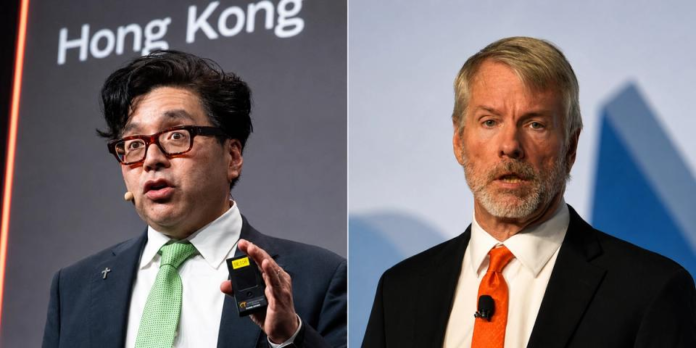
However, a few remaining companies continue to buy. Among them is Bitmine (BMNR), Tom Lee’s Ethereum treasury company.

The company purchased roughly $53 million worth of ETH last week and accumulated over 338,000 tokens through May, worth roughly $665 million at current prices. It holds more than 5.4 million ETH, making it the largest corporate holder of the token.

However, Tom Lee said the firm plans to slow its accumulation pace as it approaches its goal of owning 5% of the ETH supply.

Another Ethereum-centric Bit Digital (BTBT) returned to the market in May, buying $20 million worth of ETH. That was the company’s first purchase since October.

Some bitcoin-focused firms are still buying.

Strive (ASST) disclosed acquiring roughly 1,944 BTC in May, spread across multiple purchases, at a cost of about $150 million. Japan’s Metaplanet also reported a purchase in early April, when it acquired 5,075 BTC.

Hyperliquid Strategies (PURR), the treasury firm focused on buying HYPE, the native token of red-hot Hyperliquid blockchain-based exchange and its ecosystem, said it spent $216 million to buy 7.3 million tokens between early December and the end of April. Given HYPE’s surge to record highs, the return on that investment has more than doubled since then.

Despite last week’s sale, Strategy remained one of the largest sources of bitcoin demand through May, purchasing more than 25,000 BTC for over $2 billion.

The sellers

On the other hand, several firms have been reducing crypto holdings recently.

Nakamoto Holdings (NAKA), the bitcoin treasury company led by David Bailey, sold 284 BTC in March, about 5% of its holdings. Empery Digital sold 370 BTC in April to repay a term loan. Genius Group (GNS) said in April it liquidated its remaining 84 BTC to pay down $8.5 million of debt.

Meanwhile, others have abandoned the treasury model entirely.

Forum Markets, formerly known as ETHZilla, shifted its focus to tokenization earlier this year after selling roughly $114 million worth of ether.

VivoPower, which had planned to build an XRP-focused treasury, pivoted to data center and AI infrastructure in February, divesting its Ripple-related investments and XRP holdings.

Read more: Digital asset treasuries must now earn their keep


Source link

Here’s why Wall Street is so chuffed about Trump investing $2 billion in quantum computing companies

0
Here's why Wall Street is so chuffed about Trump investing $2 billion in quantum computing companies


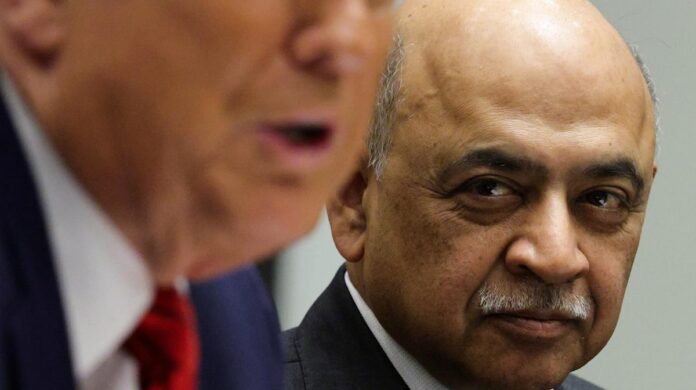
Shares of quantum computing companies popped after the U.S. government announced it would provide $2 billion in grants to nine firms under the CHIPS and Science Act. The Wall Street Journal was first to report (1) the news.

Quantum computing could eventually play a major role in areas like national defense, energy systems and biopharmaceuticals, among others. The new government grants will be used to “strengthen America’s position in this critical frontier technology,” according to the National Institute of Standards and Technology (NIST (2)).

Must Read

The NIST also said it would take a minority, non-controlling stake in each company. And this has Wall Street excited, with shares of quantum-computing companies jumping as high as 33% after the announcement.

Shares of IBM (NYSE: IBM) — which received the largest grant — rose 12%. D-Wave rose 33%, Infleqtion rose 31% and Rigetti rose 30%. Even quantum firms that weren’t part of the announcements saw gains (3).

But, while the government is dipping its toes into quantum, individual investors may still want to exercise caution.

Which quantum firms will benefit

While still a Letter of Intent, IBM would be the largest beneficiary, receiving a $1 billion grant, while GlobalFoundries would receive $375 million. Both companies will use the grant money to help establish domestic manufacturing capacity for advanced chips used in quantum systems.

While the grant money is a drop in the bucket for a tech giant like IBM, the move is a direct intervention in the quantum space by the government, showing confidence in the technology’s future potential.

IBM, for its part, will use the CHIPS incentive to support a new IBM company called Anderson (4), which will operate as America’s first pure-play quantum foundry. IBM will also contribute $1 billion of its own money to match the grant.

“It will help the nation solidify its leadership at the center of a thriving new quantum industry that is estimated to generate up to $850 billion in economic value by 2040 and spur American economic growth while also bolstering national security,” IBM said in a release (4).

Other beneficiaries include D-Wave Quantum, Rigetti Computing, Infleqtion, Atom Computing, PsiQuantum and Quantinuum, receiving about $100 million each. Australian startup Diraq, would receive around $38 million.


Source link

Crypto funds suffer second-largest outflows of 2026 while XRP and HYPE attract inflows

0
Crypto funds suffer second-largest outflows of 2026 while XRP and HYPE attract inflows

Crypto investment products recorded their second-largest weekly outflow of 2026 by the end of May, with investors pulling $1.67 billion from digital asset funds as geopolitical tensions and a broader risk-off mood weighed on markets, according to a report from CoinShares.

The withdrawals marked the third consecutive week of net outflows and brought total redemptions over the past three weeks to $4.21 billion. CoinShares said concerns surrounding Iran had overwhelmed any positive sentiment generated by recent progress on the CLARITY Act, a U.S. crypto market structure bill.

Assets under management across digital asset investment products fell to $141 billion from $148 billion the previous week, their lowest level since early April.

The latest outflows coincide with a sharp decline in crypto prices. Bitcoin fell close to the $70,000 mark on Monday after reports that Iran had halted talks with the United States in protest over Israel’s continued incursions into Lebanon. The move coincided with Strategy (MSTR), the largest holder of bitcoin, selling some of its stack after years of its executive chairman Michal Saylor vowing he wouldn’t do so. The largest cryptocurrency dropped about 3% over the past 24 hour period, adding pressure to digital asset investment products.

The United States accounted for nearly all of last week’s withdrawals, with investors pulling $1.63 billion from crypto funds. Germany, which had largely avoided earlier bouts of selling, recorded $25.7 million in outflows. Sweden and Hong Kong posted withdrawals of $6.6 million and $4.5 million, respectively.

Bitcoin investment products saw the largest share of the selling, losing $1.44 billion during the week. According to CoinShares, that was the largest weekly bitcoin outflow of 2026, surpassing both the previous week’s record and the peak reached during January’s selloff. Year-to-date bitcoin inflows have fallen sharply to $1.19 billion, down from $2.6 billion a week earlier and $3.9 billion two weeks ago.

Ethereum (ETH) funds also came under pressure, recording $257.3 million in outflows. Meanwhile, investor appetite for alternative cryptocurrencies weakened considerably. CoinShares noted that only five digital assets attracted more than $1 million in inflows, down from 11 assets three weeks ago. XRP (XRP) led with $20.3 million in inflows, followed by Hyperliquid (HYPE) at $10.8 million and Near at $7.6 million.

Despite the recent pullback, crypto investment products still hold roughly $142 billion in assets globally, underscoring how much institutional capital remains invested in the sector even as market sentiment deteriorates.


Source link

CFTC streamlines product filings as crypto perpetual futures market expands

0
CFTC streamlines product filings as crypto perpetual futures market expands


The U.S. Commodity Futures Trading Commission announced new technical upgrades to its product self-certification system on June 1. The move could simplify how exchanges submit listings for innovative derivatives products, including crypto-related contracts.

Under the updated system, exchanges can now submit a single consolidated filing covering multiple comparable contracts instead of repeating identical certification documents across separate submissions.

The CFTC said the changes are designed to reduce duplication and improve efficiency as the number of new derivatives products continues to grow.

“In light of the rapid rise of numerous new and innovative products, the Commission must continue to streamline its processes for receiving and reviewing product self-certifications,” CFTC Chairman Michael Selig said in a statement.

Filing changes arrive after Bitcoin perpetual futures approval

The update comes just days after the CFTC approved Kalshi’s BTCPERP product as the first regulated Bitcoin perpetual futures contract in the United States.

The Commission also recently:

  • issued broader guidance on perpetual contracts,
  • clarified treatment of certain crypto perpetuals as foreign futures,
  • and released no-action relief tied to Coinbase and Deribit perpetual trading infrastructure.

Together, the moves suggest the regulator is increasingly adapting both policy and operational infrastructure for a growing crypto derivatives market.

CFTC aims to reduce duplication for exchanges

According to the agency, the new filing system allows exchanges to group similar product certifications together in a single submission.

The CFTC said the changes would:

  • save time,
  • reduce repetitive documentation,
  • and improve responsiveness for exchanges launching new products.

Jessica Harris, Director of the Division of Data, said the updated process would allow exchanges to focus more on innovation rather than procedural duplication.

The Commission also linked the changes to broader federal efforts aimed at reducing administrative inefficiencies across government systems.

Crypto derivatives market continues evolving

The filing update may appear technical on the surface, but it comes amid rapid growth and regulatory change in crypto derivatives markets.

Perpetual futures have historically dominated offshore crypto trading venues because they allow traders to maintain leveraged exposure without fixed contract expirations.

The recent approval of regulated Bitcoin perpetual futures products in the U.S. now signals a broader shift toward bringing parts of that market into regulated domestic infrastructure.

The CFTC’s latest system upgrades could help exchanges process future crypto-related product filings more efficiently as the sector expands.


Final Summary

  • The CFTC launched a streamlined filing system allowing exchanges to submit grouped product certifications in a single filing.
  • The changes arrive days after major regulatory developments involving Bitcoin perpetual futures and crypto derivatives infrastructure.


Source link