Home Blog Page 430

Is Trump’s IRS Immunity Deal A Way For Him To Pardon Himself?

0
Is Trump’s IRS Immunity Deal A Way For Him To Pardon Himself?


Topline

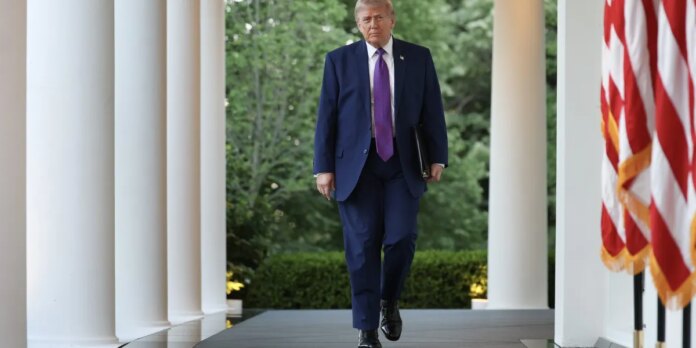
President Donald Trump’s settlement with the IRS was updated Tuesday to include a provision that appears to bar the government from prosecuting Trump and his family for certain crimes and end any IRS audits against him, a sweeping move that Democrats and legal experts have criticized as a way for the president to get around restrictions on him pardoning himself.

Key Facts

Trump and the government first announced the settlement of his $10 billion lawsuit against the IRS on Monday, saying he was dropping the case in exchange for the creation of a $1.8 billion “anti-weaponization” fund, but an addendum to the settlement agreement was added Tuesday.

That addendum says the U.S. is “forever barred” from prosecuting or bringing civil claims against Trump, his two oldest sons, the Trump Organization and other “affiliated individuals” for actions that already happened by the date of the settlement, both tied to the IRS suit and for “any matters currently pending or that could be pending” before other government agencies.

Legal experts have interpreted the provision to mean the government must drop any ongoing tax audits for Trump, his oldest sons and the Trump Organization, and more broadly cannot prosecute Trump or sue him in civil court for tax and many other types of charges.

The updated settlement has been criticized as amounting to a “get-out-of-jail-free card” or a “pardon” for the president, as the issue of whether Trump could more straightforwardly just pardon himself for crimes has been a legal grey area—but it’s widely believed he cannot.

Former federal prosecutor Joyce Vance said Tuesday that Trump “seems to have found a way around the likely legal rule that a president can’t pardon himself,” while House Democrats described the updated settlement as a “Super-Pardon” in a letter Wednesday to Trump administration officials.

The Justice Department has not yet responded to a request for comment on the updated settlement, but Acting Attorney General Todd Blanche testified to Congress on Tuesday, before the updated settlement was made public, that Trump did not play a role in negotiating the IRS settlement.

Crucial Quote

“Donald Trump just got the one thing that most experts agree—even with the expansive power he has as president—that he can’t do for himself, and that’s give himself a pardon,” Vance told MS Now on Tuesday about the updated settlement agreement. “This would seem to say that he’s off scot-free.”

Can Presidents Pardon Themselves?

Legal experts have long debated whether presidents have the power to pardon themselves, and no president has ever tested the system by trying—though Trump has previously suggested he could. The DOJ’s Office of Legal Counsel issued a 1974 memo during Richard Nixon’s presidency and the Watergate scandal that determined presidents cannot pardon themselves, pointing to “the fundamental rule that no one may be a judge in his own case.” While there could be ways around that prohibition—like using the 25th Amendment to temporarily step down from the presidency and then have the vice president pardon the president—presidents could not straightforwardly issue a pardon to themselves, the Nixon-era DOJ wrote. Lawyers have long pointed to that memo to say presidents can’t pardon themselves, but the guidance isn’t legally binding. That means Trump or any future president could still try to pardon themselves, and it would likely ultimately be up to the Supreme Court to determine whether or not that’s allowed.

What Can Trump Still Be Investigated For?

The updated settlement agreement applies only to actions that have occurred before Trump settled the IRS case this week, and to tax returns that have already been filed. The DOJ has confirmed that means the IRS could still audit tax returns Trump files in the future. The language in the updated settlement agreement is fairly vague, so the full scope of the crimes Trump can or cannot be prosecuted for may ultimately have to be tested in court, if a future presidential administration takes legal action against the ex-president or his family.

How Does This Differ From The Supreme Court’s Immunity Ruling?

The Supreme Court in 2024 gave Trump widespread relief from federal prosecution, as justices ruled current and former presidents cannot be criminally prosecuted for their “official acts” in office. Presidents still can be prosecuted for actions they take as private citizens that are separate from their job, however—but Tuesday’s settlement agreement now appears to immunize Trump from many unofficial acts that could potentially still be prosecuted, such as issues with his personal tax filings. It also appears to cover possible crimes involving the president and his oldest sons’ business interests, as his sons Eric and Donald Trump Jr. and the Trump Organization—who were plaintiffs in the IRS case—are also covered by the settlement.

Key Background

Trump sued the IRS in January, asking for $10 billion because the IRS allegedly violated his privacy when a contractor leaked details of his tax returns to news outlets. The IRS never actually responded to the lawsuit, and the judge in the case expressed concerns about it moving forward, questioning whether Trump and the IRS—a federal agency he ultimately controls as president—were actually on opposing sides, as is required for litigation to proceed. Trump settled the case before the judge could rule on whether or not to throw it out, however, sparking widespread criticism not only about the settlement itself, but also the optics of Trump getting a 10-figure fund out of a lawsuit that was potentially never valid to begin with. The first part of Trump’s IRS settlement created a $1.776 billion “anti-weaponization” fund for those who feel they’ve been victimized by the Justice Department, though the pool of money has been widely criticized by Democrats and ethics experts as being a “slush fund” for Trump’s political allies to get taxpayer funds, including those convicted for participating in the Jan. 6 riot. Former Trump official Michael Caputo became the first person to officially request relief through the fund late Tuesday, asking for $2.7 million in compensation, and Capitol police officers who defended the Capitol during the riot sued the government Wednesday over the fund’s legality.
Further Reading

ForbesTrump Shielded From IRS Audits As Controversial Settlement Deal ExpandsForbesBlanche Denies Trump Helped Create $1.8 Billion Fund—But New Report Suggests IRS Lawyers Opposed SettlingForbesTrump Gets $1.8 Billion Payday With ‘Anti-Weaponization’ Fund As He Drops IRS Case


Source link

Warren Buffett sits on a record $397B in cash while Michael Burry shorts AI for $1B, betting it’s 1999 all over again

0
Warren Buffett sits on a record $397B in cash while Michael Burry shorts AI for $1B, betting it's 1999 all over again


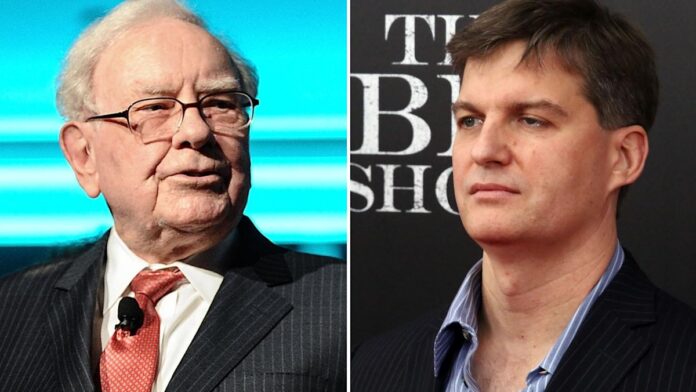
While investors pour into the market, riding the updraft of wildly successful artificial intelligence stocks, two men wait for it all to come crashing down. These men are Warren Buffett, one of the most successful investors, and Michael Burry, who predicted the 2008 housing crash. And neither investor is impressed by today’s market.

“We’ve never had people in a more gambling mood than now,” Buffett told CNBC (1). “Absolutely non-stop AI. Nobody is talking about anything else all day,” said Burry in a recent Substack post.

Must Read

Both billionaires are putting their money where their mouth is. Berkshire Hathaway, where Buffett remains chairman, has refused to dish out its massive cash pile, which has risen to nearly $400 billion. In 2025, Burry reportedly shorted the AI boom for $1 billion by purchasing puts against Nvidia and Palantir (2). What do they see that the rest of the market can’t?

It’s boomtown in bust county

Both investors think the market is in for a bad time.

Buffett is notorious for sitting on piles of cash. Unlike many money managers, the longtime Berkshire Hathaway leader is content to do nothing when the market is going up. He told CNBC that of the sixty years he’s been in business, only five have offered juicy opportunities to buy (3). When the opportunity isn’t there, Buffett doesn’t buy.

Meanwhile, Burry compared the current market to the 1999-2000 dot com bubble.

“Stocks are not up or down because of jobs or consumer sentiment,” Burry wrote (4). “They are going straight up because they have been going straight up.”

SEC filings indicate Burry’s fund, Scion Asset Management, bought $187.6 million in puts on Nvidia, along with $912 million in puts on Palantir, in 2025 (2). Both stocks have been massive beneficiaries of the AI wave, skyrocketing in valuation (5). And optimism remains high; as of writing, Palantir’s trailing twelve-month price-to-earnings ratio is over 150 (6).

What this means for investors: two of the world’s most successful investors think a market crash is inevitable, and AI stocks may be smashed the hardest.

Read More: Non-millionaires can now hoard property like the 1% — how to start with as little as $100

Why patience is key

Patience is perhaps the investor’s greatest defense against market crashes, and a killer edge when it comes time to buy.

Buffett is famous for saying “be fearful when others are greedy, and be greedy when others are fearful.” The second half is key: the billionaire has a massive appetite for stocks once a bubble has popped. At the height of the 2008 financial crisis, Berkshire Hathaway invested $5 billion in Goldman Sachs preferred stock at a 10% annual dividend, plus warrants to buy another $5 billion in common shares at $115 each (7).

In 2011, Goldman redeemed the preferred shares, handing Berkshire roughly $3.7 billion in profit (8). The lesson: investors might be better off withholding AI money and loading up cash in preparation for what could be an epic market crash.

That’s not to say AI companies are worthless. Many internet companies that suffered during the dot com bust went on to dominate the digital market and are worth trillions today. Amazon alone is worth $2.9 trillion (9), while Nvidia, which IPO’d in 1999, is now the world’s most valuable public company at over $5 trillion (10).

The question may be one of choice and timing: what companies hold durable value? And when is the best time to buy shares?

Investors could do worse than follow the moves of Berkshire Hathaway’s former CEO and current chairman. Buffett’s commitment to staying within his “circle of competence (11)” means he’s unlikely to be swayed by the AI hype, a storm that could sweep away impatient shareholders.

You May Also Like

Join 250,000+ readers and get Moneywise’s best stories and exclusive interviews first — clear insights curated and delivered weekly. Subscribe now.

Article Sources

We rely only on vetted sources and credible third-party reporting. For details, see our ethics and guidelines.

CNBC (1), (4); Futurism (2); Fortune (3); Yahoo Finance (5), (6), (8), (9), (10); Goldman Sachs (7); Wealest (11).

This article originally appeared on Moneywise.com under the title: Warren Buffett sits on a record $397B in cash while Michael Burry shorts AI for $1B, betting it’s 1999 all over again

This article provides information only and should not be construed as advice. It is provided without warranty of any kind.


Source link

The bond market is firing a warning shot in the direction of Washington, D.C.

0
The bond market is firing a warning shot in the direction of Washington, D.C.


The guiding hand of the bond market is moving once again, with yields at multi-year highs around the world. Investors know the White House will be watching these shifts closely—Treasury Secretary Scott Bessent has said the bond market is ultimately the most important. 

In the past, hiccups in the bond market have led to policy developments from the Oval Office, such as concerns about tariffs. But tensions in the Middle East aren’t so easily remedied, points out UBS’s Paul Donovan in a note to clients this morning. 

Bond investors increasingly appear to believe sticky inflation isn’t going away anytime soon—and are preparing for the possibility that rates stay higher for longer. It’s not what President Trump wants to hear, but the data is getting harder to argue with.

ONE BIG THING

The AI industry’s biggest names are investing billions in ‘world models,’ writes Fortune’s Sharon Goldman.

Unlike existing models, these AI systems are designed not just to recognize patterns in text or images, but also to simulate how the physical world behaves. By training on millions of hours of video, these models can build an accurate internal picture of how the world works, physics and all—a crucial capability for a wide range of technologies, whether it’s to help a self-driving car predict what happens if a child runs into the street; help a home robot learn how to fold clothes; or simulate surgical procedures before a single incision is made.

Key players are betting big: Google recently unveiled a research preview called Project Genie, which can generate interactive, photorealistic environments from simple prompts—then predict how those worlds evolve and respond to a user’s actions, while “AI godmother” Fei-Fei Li and “AI godfather” Yann LeCun have each raised roughly $1 billion for separate startups developing world models.

“There’s a huge amount of excitement and investment in physical AI right now,” Ming-Yu Liu, a vice president at Nvidia’s Cosmos Lab, tells Fortune, adding that a “ChatGPT moment” is near. “I do believe that people are gradually figuring out the right recipe.”

IRAN

Tensions fraying once again

The truce between Iran and the U.S. seems more fragile than ever, with Iran’s foreign minister, Abbas Araghchi, warning late last night that “with lessons learned and knowledge we gained, return to war will feature many more surprises.” 

It came after President Trump struck a firmer tone on reaching a deal to get the Strait of Hormuz reopened, normalizing global oil supply as a result. Trump suggested yesterday that the Iranian regime has a matter of days to come to the negotiating table and agree on terms for good. 

“They’re begging to make a deal,” Trump told reporters yesterday. “I hope we don’t have to do the war but we may have to give them another big hit. I’m not sure yet, you’ll know very soon.” 

ASIA

K-shape isn’t just in the U.S.

Michael Smith, CEO of storied developer Hongkong Land, sat down with Fortune editor Nick Gordon, as the company rides high on a share price that’s up more than 55% over the past 12 months, having passed its previous all-time high in January. 

Hongkong Land is the largest commercial landlord in Hong Kong’s Central district, spanning 4.8 million square feet of prime office space and retail property in the heart of the city’s commercial area, Exchange Square. 

But the K-shaped economy (when high earners drive growth while the fortunes of lower earners fall behind) isn’t constrained to the U.S.—Smith is reacting with a bet on downtown resurgence as a result. His reasoning is that prime real estate outside of contained financial hubs will grow more valuable as companies compete for talent and capital flows toward quality.

“What we like are ecosystems in the middle of a city where infrastructure and transportation connect,” he says. “I wouldn’t advocate going to any market and buying just one office building. Makes no sense to me.”

MORE FROM FORTUNE

CHART OF THE DAY

Why aren’t markets in worse shape?

Deutsche Bank’s Henry Allen is asking the same question as many investors: How is the stock market staying so stable in the face of oil supply shocks? 

In a research note seen by Fortune, the Deutsche team breaks down why markets are seeing the Iran issue as a temporary shock as opposed to a lasting threat to the economic outlook

Comparisons to past oil shocks are useful, he highlighted, because they often coincide with rapid data downturns. In 1973, the shock was followed by an immediate rise in the unemployment rate and, in 1990, U.S. payrolls saw their biggest contraction in seven years. 

“This time, the story has been very different. In the U.S., payrolls grew more than 100k in both March and April, marking the first back-to-back readings above 100k since 2024. Moreover, the Atlanta Fed’s GDPNow estimate for Q2 is currently pointing to an annualized pace of +4,” Allen writes.

NUMBER OF THE DAY

44%

More than one in four employees say they hide in the bathroom at work for a bit of peace and quiet.

Career tool Kickresume surveyed nearly 2,000 workers worldwide and found the majority of those who escape to the restroom are only doing so for a couple of minutes, but 10% said they spent more than 10 minutes at a time taking a break in the stalls. 

Many respondents also suggested they were too busy to orchestrate breaks—53% saying they don’t just pretend to be busy, they actually are.

THE FRONT PAGES TODAY

ONE MORE THING

Pet ownership is the cat’s meow

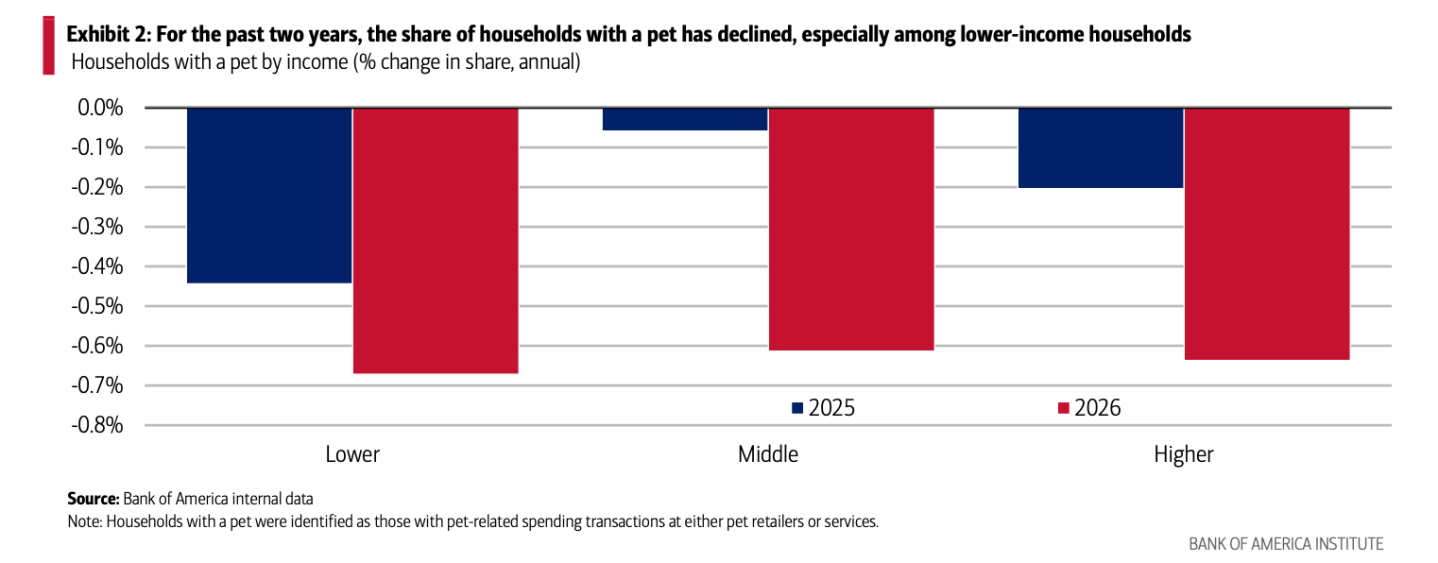
It can be surprising to uncover the lifestyle choices considered a luxury in times of economic strain. In 2026, it seems owning and caring for a four-legged friend is one expense some families are cutting out. 

Taylor Bowley at the Bank of America Institute has been crunching the numbers when it comes to “pet parenting,” and found that prices for vet services rose nearly 6% YoY in April. Pet adoptions, particularly for dogs, have slowed since the pandemic. Lower-income homes, in particular, are less likely to have a pet in 2026 than they were even a year ago. 

As well as opting out of ownership, consumers are also shopping differently for their furred or feathered friends. In April, spending growth by younger generations on pet products declined, especially among lower-income households. The variation reflects “selective spending” with households adjusting their outlays on discretionary categories (like toys, accessories, and supplies), as well as buying pet food from local grocery stores more frequently than specialty pet stores.


Source link

Manulife WAM names new head of global investment products

0
Manulife WAM names new head of global investment products


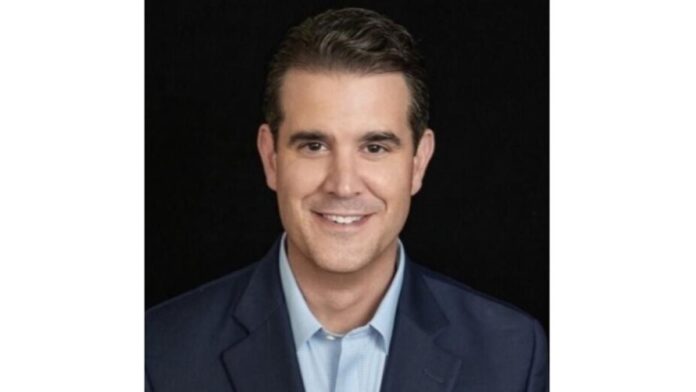
Manulife Wealth & Asset Management (WAM) has named Jeffrey M. Kellogg as Head of Global Investment Products.

Kellogg is set to run the company’s global investment products unit, with oversight of strategy, product development and implementation across its retail, institutional, retirement and wealth distribution businesses worldwide.

His responsibilities will cover global product governance and lifecycle management, as well as efforts to speed up innovation and raise efficiency across the product platform.

The role is intended to support the firm’s delivery of investment products for clients across its international operations.

Kellogg commented: “Manulife Wealth & Asset Management has built a strong, globally integrated investment platform.

“I’m excited to join the firm and work with the team to build and deliver differentiated, innovative products and solutions that leverage our diverse global investment management capabilities on behalf of our millions of clients.”

Before joining Manulife, Kellogg was at Franklin Templeton, where he most recently held the post of senior vice president, head of corporate investment strategies.

There, he oversaw seed capital and investments tied to product development, launches of new offerings and commercial expansion.

He also chaired Franklin Templeton’s global product committee, which was responsible for global product governance.

Earlier in his career at the firm, he led its global investment services and global product management teams, covering global product management, product specialists, portfolio solutions services and global investment marketing.

He will report to Paul Lorentz, President & CEO of Manulife WAM.

Lorentz said: “Jeff is a proven product leader and innovator with the experience and perspective we need as we continue to scale our global platform.

“By elevating accountability for Global Investment Products, we’re strengthening how we build and deliver products – leveraging the full capabilities of our investment platform across public markets, alternatives, and private markets – to deliver future‑ready investment solutions that meet the evolving needs of clients around the world.”

“Manulife WAM names new head of global investment products ” was originally created and published by Private Banker International, a GlobalData owned brand.


The information on this site has been included in good faith for general informational purposes only. It is not intended to amount to advice on which you should rely, and we give no representation, warranty or guarantee, whether express or implied as to its accuracy or completeness. You must obtain professional or specialist advice before taking, or refraining from, any action on the basis of the content on our site.


Source link

Prediction Markets Face a Ban in One State, but the Fight’s Not Over

0
Prediction Markets Face a Ban in One State, but the Fight's Not Over


Minnesota has become the first state to ban prediction markets, but the fight over these platforms’ right to operate is far from over.

On Tuesday, Minnesota Gov. Tim Walz signed and approved a state ban on prediction markets. Per the bill, any person who creates, operates, or advertises a prediction market that involves wagers on events such as sports, elections, and government actions will be guilty of a felony.

The ban is set to go into effect on August 1.

Hours after the bill was passed, the US Commodity Futures Trading Commission, or CFTC, filed a lawsuit against Minnesota and Walz to block the ban.

The agency said it regulates trades in prediction markets, such as Kalshi and Polymarket, and Minnesota cannot criminalize them under state law. It added in a Tuesday press release that Walz’s legislation will “undermine the federal regulatory regime set up by Congress more than 50 years ago.”

“This Minnesota law turns lawful operators and participants in prediction markets into felons overnight,” said Michael Selig, the CFTC’s chairman.

He added that Minnesota farmers have relied on hedges against weather and crop events for decades to mitigate their risks.

“Governor Walz chose to put special interests first and American farmers and innovators last,” Selig said.

Prediction markets allow users to place “yes” or “no” wagers on events, and hinge upon speculation in sports, politics, pop culture, and other fields. They have seen strong criticism from several lawmakers in recent months, who warn that the markets enable insider trading.

In response, Kalshi said in March that it would preemptively block politicians and sportspeople from placing bets on its markets. Polymarket has also put in guardrails prohibiting trades on illegal tips and confidential information and ensuring that traders cannot influence the outcome of the event.

If allowed to go through, Minnesota’s outright ban will be the toughest prediction-market legislation in the country. Several lawmakers have introduced bills, such as California Sen. Adam Schiff and Utah Sen. John Curtis’ “Prediction Markets Are Gambling Act,” but none have been passed yet.

Representatives for Walz and the CFTC did not respond to requests for comment from Business Insider.


Source link

Philadelphia Phillies Rolling With Zack Wheeler Leading The Rotation

0
Philadelphia Phillies Rolling With Zack Wheeler Leading The Rotation


The Philadelphia Phillies are a different team with right-hander Zack Wheeler on the mound.

Following thoracic outlet decompression surgery (TOS), Wheeler, 36, returned to the Phillies rotation April 25 agains the Atlanta Braves,

The return of Wheeler makes the Phillies rotation even more lethal, and gives the team one of the best starting five in the game.

Having Wheeler back on the mound has certainly energized the Phillies, who are on a roll in the very competitive National League East Division.

Philadelphia Phillies Zack Wheeler’s Surgeries:

The thoracic outlet decompression surgery (TOS) required the removal of Wheeler’s right rib.

Wheeler’s injury dates back to August 2025. At that time, Wheeler had surgery to remove a blood clot near his throwing shoulder.

Following that initial surgery, Wheeler had that complex decompression surgery in late September last year.

At the time of his initial surgery, then Phillies manager Rob Thomson to news10.com, “It’s disappointing, but everybody knows it’s out of our control.”

Wheeler is 6-4, 195 pounds, making Wheeler’s surgical situations even more compelling.

In a study described on doaj.com of pitchers who have had thoracic outlet surgery (TOS) and those who have not, the study found no difference in postoperative performance compared with the control group (non-surgical pitchers.)”

Wheeler is showing that to be true in his case.

Philadelphia Phillies Wheeler Finds Success Right Away:

It is never clear if a pitcher can return to normal form after thoracic outlet surgery.

But Wheeler has been his same old self in his first five Phillies appearances of the season.

Wheeler made his first 2026 Phillies start on April 25. He went 5 innings against the Braves in a game the Phillies won, 8-5. Wheeler did not get a decision in the game.

Wheeler then threw six innings against the Miami Marlins May 1, in a 6-5 Phillies win. He earned his first win of the year.

He then defeated the Athletics May 6, getting no decision in that game.

Wheeler’s fourth start was against the Boston Red Sox on May 12. He went 7.1 innings, yielding six hits, and one run, with four strikeouts, and no walks. He got a win in the game.

Then, in a highly anticipated rivalry matchup with National League 2025 Cy Young Award winner Paul Skenes on May 17, Wheeler out dueled the Pittsburgh Pirates All Star. They defeated the Pirates in a 6-0 Phillies shutout.

In his victory over the Pirates, Wheeler clearly out pitched Skenes. Wheeler got the win in the game.

Wheeler went 7 innings, yielding four hits and no runs, while walking one and striking out eight. It took Wheeler 98 pitches to get through seven innings. He got his third win in that game.

Skenes went five innings, yielding six hits, five runs, one walk and seven strikeouts.

Wheeler has now thrown five outstanding games in his return to the Phillies mound.

Wheeler’s win over Pittsburgh followed a masterful performance by Phillies left-hander, Christopher Sanchez, who shut out the same Pirates club May 16.

Sanchez threw a complete game shutout, yielding six hits, walking none, and striking out 13.

In two weekend games against the Pirates, Wheeler and Sanchez yielded one run, and 12 hits in 16.1 innings of brilliant pitching.

In five starts, Zack Wheeler has three wins, has thrown 31.2 innings, allowed seven earned runs, and has struck out 30. He has walked only seven.

The return of Wheeler now gives the Phillies a formidable rotation of Sanchez, Wheeler, right-hander Andrew Painter, lefty Jesus Luzardo, and righty Aaron Nola.

More About Philadelphia Phillies Zack Wheeler:

In a recent article about Wheeler’s return, mlb.com had these things to say after the Red Sox game:

“1-Wheeler’s velocity has continued to improve as he ramps up, though there is still room for improvement.

2- When Wheeler described feeling a bit off last week, he noted that applied ‘especially with the sweeper and curveball.

3- One of the many things that made Wheeler arguably the best pitcher in the Majors over the past half-decade in his pinpoint command. In his first three starts, however, that hasn’t quite been there.”

After the Pirates game, it seems all the issues are in the rear-view mirror.

Wheeler throws five different pitches in his repertoire during the month of May 2026. Those pitches include:

four-seam fastball at 94.90 miles per hour (31.9 % of his pitches)

sinking fastball at 94.44 miles per hour (19.35%)

slider at 80.79 miles per hour (14.7%)

curveball at 79.79 miles per hour (7.17%)

cutter at 90.90 miles per hour (12.19%

split finger at 86.64 (14,7%)

Conclusion About Philadelphia Phillies Zack Wheeler:

The Philadelphia Phillies ace right-hander, Zack Wheeler is back from injury, and pitching as well as ever.

The Phillies rotation is rolling with Zack Wheeler back on the mound.


Source link

Wolfe Research Names DoorDash (DASH) As its Top Picks

0
Wolfe Research Names DoorDash (DASH) As its Top Picks


​DoorDash, Inc. (NASDAQ:DASH) is one of the Best Stocks to Invest in For 5 Years According to Billionaires. On May 15, Wolfe Research released its internet sector research report and named DoorDash, Inc. (NASDAQ:DASH) as one of its top picks over the next 12 months.

​The firm noted that while the market situation is uncertain due to the geopolitical landscape, Wolfe sees opportunity in the internet sector for select companies. The firm highlighted that its top picks are companies that have potential for upward revisions, a clear product catalyst, macro resilience, and potential for revenue acceleration.

​Regarding DoorDash, Inc. (NASDAQ:DASH), the firm finds the recent pullback following the Q1 2026 earnings to be overdone. Moreover, Wolfe also sees potential for significant upside for the company, driven by healthy revenue growth and improvement in unit economics for international and retail business.

​DoorDash, Inc. (NASDAQ:DASH) operates a commerce platform connecting merchants, consumers, and delivery drivers across the United States and international markets.

While we acknowledge the potential of DASH as an investment, we believe certain AI stocks offer greater upside potential and carry less downside risk. If you’re looking for an extremely undervalued AI stock that also stands to benefit significantly from Trump-era tariffs and the onshoring trend, see our free report on the best short-term AI stock.

READ NEXT: 10 Best Stocks to Buy While the Market Is Down and 14 Stocks That Will Double in the Next 5 Years. 

Disclosure: None. Insider Monkey focuses on uncovering the best investment ideas of hedge funds and insiders. Please subscribe to our free daily e-newsletter to get the latest investment ideas from hedge funds’ investor letters by entering your email address below.


Source link