Home Blog Page 705

Arla-DMK merger to proceed after EU green light

0
Arla-DMK merger to proceed after EU green light


Denmark-headquartered Arla Foods and Germany’s DMK Group are moving forward with their plans to merge after securing EU approval for the deal.

The two cooperatives confirmed receiving the green light in a joint statement after the European Commission “unconditionally approved” the deal yesterday (28 May).

Brussels concluded the transaction would raise no competition concerns in the European Economic Area (EEA).

The merger, first announced in April last year, is set to take effect on 1 June. Until an expected two-year integration process is completed, the companies will continue to operate as two independent entities.

Arla Foods’ chair Jan Toft Nørgaard said: “This is a landmark day for our cooperatives, for the next generation of dairy farmers and for European food production.

“We can move forward together to secure the necessary scale, long-term economic resilience and investment capability required to contribute to shaping a food sector with a reduced impact on climate and nature.”

The merger will create “the largest dairy cooperative in Europe”, bringing together 11,200 dairy farmers across seven European countries.

The combined group will have a milk pool of 19.4 billion kg a year and pro-forma revenue of more than €20bn ($23.2bn).

It will operate under the Arla name and employ around 28,800 people globally.

The companies said the tie-up is intended to secure “stable dairy farming and production” in Europe and “strengthen their ability” to deliver value to people worldwide via global dairy brands.

They described the combination as “vital” for European food security amid “geopolitical and economic shifts”.

DMK Group CEO Ingo Müller said: “The merger will sharpen our technological edge, accelerate innovation, and open new opportunities for growth and collaboration, powered by our shared brands, deep category expertise, and the complementary strengths of DMK and Arla.

“With a collaborative culture and a strengthened position in our markets, we will be even more a pillar of strength in ensuring the secure supply of food for people in Europe and globally.”

The merged cooperative will be headquartered in Viby J in Denmark.

Nørgaard will serve as chair, and Arla Foods’ chief executive Peder Tuborgh as CEO. Once the integration process is completed, DMK’s Müller will join Arla’s executive management team as executive vice president.

Meanwhile, both co-ops have been investing to expand production in recent months.

Earlier this month, Arla Foods’ venture in Australia struck a deal to acquire Australian cottage cheese producer Brancourts.

The company also announced a €300m ($353.5m) investment this year to set up a new facility in Sweden to increase cheese production.

DMK Group recently invested around €55m to “significantly” expand its dairy plant in Edewecht, Germany.

In 2025, the German firm generated revenue of €5.3bn, up from €5.1bn a year earlier. However, the company’s net profit slipped 2.4% to €24m.

The same year, Arla Foods posted revenue of €15.1bn versus €13.8bn a year earlier. Net profit rose to €415m from €401m.

“Arla-DMK merger to proceed after EU green light” was originally created and published by Just Food, a GlobalData owned brand.


The information on this site has been included in good faith for general informational purposes only. It is not intended to amount to advice on which you should rely, and we give no representation, warranty or guarantee, whether express or implied as to its accuracy or completeness. You must obtain professional or specialist advice before taking, or refraining from, any action on the basis of the content on our site.


Source link

Anthropic leapfrogs OpenAI with a record $965 billion valuation, says Mythos is coming soon

0
Anthropic leapfrogs OpenAI with a record $965 billion valuation, says Mythos is coming soon

Anthropic is having a busy week. On Thursday, the San Francisco-based AI lab announced it had raised $65 billion in a new funding round that valued the company at $965 billion, making it the most valuable AI startup in the world.

On the same day, it also shipped Claude Opus 4.8, a new AI model that Anthropic says is less likely to deceive users or cooperate with misuse than its predecessors. In the same announcement, Anthropic said it expects to bring its Mythos-class models to all customers “in the coming weeks.”

Mythos, the existence of which was first reported by Fortune in March, is notable for its coding and cyber capabilities, including the ability to find vulnerabilities in existing software and chain these vulnerabilities together to execute sophisticated cyber attacks. The model has raised concerns that it could allow hackers to easily compromise the networks and software that control critical infrastructure, from financial systems to electric grids, and Anthropic has so far allowed only a select group of users to access the model in order to find vulnerabilities in their own software and patch them. It said it would not release the model more widely until it had developed safeguards to make it more difficult for hackers to exploit its capabilities for malicious purposes.

The spate of news comes as Anthropic races toward one of the most anticipated IPOs of the year, with the company reportedly quietly working on public market preparations even as it continues to raise at record-breaking private valuations. 

In February, Anthropic was valued at $380 billion after closing its Series G. Since then, the company has gained significant momentum: it has seen a surge in consumer users, widespread adoption of its coding tool, Claude Code, by businesses, and the debut of its powerful Mythos model in a limited preview. The company’s enterprise sales growth has been particularly strong. By May, the company said its annualized run-rate revenue had crossed $47 billion, up from just $10 billion at the end of 2025—a rate of growth that is unprecedented for a company of this size.

Anthropic’s most recent funding round, its Series H, was led by Altimeter Capital, Dragoneer, Greenoaks, and Sequoia Capital, with Capital Group, Coatue, D1 Capital Partners, GIC, ICONIQ, and XN co-leading. Of the $65 billion total, $15 billion represents previously committed investment from hyperscalers, including $5 billion from Amazon.

The numbers are impressive even by the skyrocketing valuations of the current AI boom—it also leapfrogs rival OpenAI’s most recent valuation of $852 billion, set when the company closed its own record funding round in March.

Anthropic’s CFO Krishna Rao said the new funding would help the company serve the new “historic demand” the company was experiencing. The company has previously acknowledged it was struggling to serve the new demand for Claude, telling Fortune that its computing infrastructure had been stretched to meet the unprecedented growth, particularly at peak hours. The company has signed new compute deals since then, including a reported $1.25 billion a month agreement with Elon Musk’s xAI running through May 2029.

Opus 4.8

On Thursday, Anthropic also released a new frontier model from its Opus tier, just over a month since it released Opus 4.7. Anthropic’s own evaluations found that Opus 4.8 shows rates of misaligned behavior (including deception and cooperation with misuse) that are “substantially lower than Opus 4.7” and comparable to Claude Mythos Preview, the company’s most advanced model.

The company says 4.8 is around four times less likely than 4.7 to let flaws in its own code pass unremarked—possibly a response to recent users complaints about sloppy code generated by Claude Code—and that it “reaches new highs on our measures of prosocial traits like supporting user autonomy and acting in the user’s best interest.”

On benchmark evaluations from Cursor, Artificial Analysis, and Anthropic’s own Super-Agent benchmark the model outperforms its predecessor, 4.7, on agentic coding and long-horizon tasks.

However, the reception from users and other evaluators has been mixed.

Andon Labs found that 4.8 performance was worse than 4.7 on certain tests of business task and on so-called “adversarial benchmarks” which are designed to probe the model’s weaknesses rather than its strengths, characterising the model as more cautious and “scared of getting caught.” Some users online have also complained about the model being restrained and combative, refusing to comply with even straightforward and benign requests.

Pricing for the new model is the same $5 per million input tokens and $25 per million output tokens as for its predecessor 4.7. But “fast mode”—a different API configuration that generates tokens from Anthropic’s Claude Opus models much faster, but which also cost users more per token—is now three times cheaper than it was for 4.7, which may soften the overall cost for high-volume users.


Source link

Mass deployment of AI agents is a disaster waiting to happen, says CertiK CEO

0
Mass deployment of AI agents is a disaster waiting to happen, says CertiK CEO

The global rush to deploy autonomous AI agents across the internet, enterprise networks and consumer applications is creating a catastrophic security debt, according to the chief of blockchain security auditor Certik.

While corporations ambitiously market these tools as productivity miracles, the crude reality is that it can be a very, very risky thing to do. Unisolated, unvetted AI agents are a massive security disaster waiting to happen, Ronghui Gu, the co-founder and CEO of CertiK, told CoinDesk.

Gu warned that users are potentially exposing their most sensitive files, local credentials and money accounts to autonomous systems that can be easily manipulated, hijacked and openly scammed.

“Right now, agents are no longer just answering questions in a chat window,” Gu told CoinDesk on the heels of CertiK’s landmark deep-dive report into widespread agent infrastructure. “They are beginning to call external tools, read local files, trigger workflows, and interact with financial infrastructure. But if you do not isolate the execution environment and scan these tools first, you are handing a compromised identity broad internal access to your entire network.”

The fundamental flaw in the current AI agent boom is a mistaken trust model, according to Gu.

Charles Hoskinson, founder and CEO of Cardano’s Input Output, said that by 2035 they will become more relevant than humans on the internet. Coinbase CEO Brian Armstrong, recently said “very soon there are going to be more AI agents than humans making transactions” and Binance Founder Changpeng Zhao, predicted they “will make one million times more payments than humans.”

Ultimate inside threat

Gu said many popular, open-source AI applications are built under the assumption that because they run locally on a user’s computer or connect via standard chat apps like WhatsApp, they are safe from external threats.

The reality is entirely the opposite, he noted. The moment a user grants an AI agent permission to read local system storage, view execution histories or manage personal email and business database credentials, that agent becomes the ultimate inside threat.

CertiK’s recent analysis of early-state, rapidly growing agent structures uncovered a staggering accumulation of security vulnerabilities, including hundreds of critical security advisories, unpatched common vulnerabilities and exposures (CVEs) and other massive exposures of local credentials and session memories resulting from completely inconsistent boundary checks.

More alarming yet is how easily these autonomous systems can be completely redirected at the reasoning layer without a single line of malicious code ever being written, Gu emphasized.

Through basic “prompt injection” attacks, a bad actor can embed hidden natural language instructions inside a benign webpage, a PDF document, or an incoming email, he added.

When the unisolated AI agent reads that file to process a task for the user, it fails to separate trusted system commands from the untrusted external data, Gu explained. The agent then silently overwrites its original rules, obeys the malicious instruction, and can be forced to exfiltrate data or trigger unauthorized fund transfers.

Hyperfast exploits

Gu revealed that CertiK discovered hundreds of malicious skills, fake installers, and lookalike dependency packages sitting directly on open agent utility hubs. Because these malicious plug-ins use standard natural language to subtly influence the agent’s behavior and change its goals, they completely bypass legacy, signature-based antivirus software.

“The scam apps use natural language to influence behavior, making them totally resistant to traditional antivirus scans,” Gu explained. “And right now, it is even easier to scam the machine than it is to scam a human.”

In what Gu describes as a bizarre evolution of financial crime, CertiK’s telemetry has observed an explosion of onchain, automated scams that run for only 10 minutes or a few hours before completely vanishing.

These hyperfast, ephemeral exploits are specifically designed by hackers to target and scam other autonomous AI trading bots and automated agent systems, executing machine-on-machine financial drainage before any human even realizes a compromise has occurred.

Gu states that the software engineering industry must completely abandon its reliance on trust-based interactions and move immediately toward an isolated, “Zero Trust” architecture where every command and dependency is continuously verified.


Source link

Down 30% From Its Highs, SoFi Is Speeding Toward Aggressive Long-Term Profits

0
Down 30% From Its Highs, SoFi Is Speeding Toward Aggressive Long-Term Profits


Quick Read

  • SoFi Technologies (SOFI) reported Q1 2026 revenue of $1.10B beating consensus by 5%, with net income more than doubling, loan originations hitting a record highs, and membership growing 35% as share price falls, creating an opportunity.

  • SoFi’s deposit-funded model, expanding network effects, and management guidance for 30%+ adjusted revenue growth through 2028 contrasts sharply with its beaten-down valuation, creating a disconnect between accelerating fundamentals and depressed price.

  • Act now: the analyst who called NVIDIA in 2010 just named his top 10 AI stocks — and SoFi Technologies didn’t make the cut. Grab the names FREE today.

When a high-quality fintech name retraces sharply while its fundamentals accelerate, the gap between price and performance becomes the story. SoFi closed Friday at $16.97, down 35.18% year to date from a December close of $26.18, even as the company posted record loan originations and triple-digit net income growth last month. For retail investors scanning headlines, that disconnect is the entire reason to look at fintech disruptors trading under $20 right now.

With that in mind, here is one stock under $20 that the data suggests has been mispriced against its long-term earnings trajectory.

SoFi Technologies runs an all-in-one digital finance platform spanning lending, banking, brokerage, credit cards, crypto, and the Galileo technology stack that powers other fintechs.

Act now: the analyst who called NVIDIA in 2010 just named his top 10 AI stocks — and SoFi Technologies didn’t make the cut. Grab the names FREE today.

At $16.97, SoFi sits well below the $32.73 52-week high and just above the $16.70 50-day moving average. The $21 analyst consensus price target implies a meaningful step up from here, and the stock already rebounded 8.43% in the past week, hinting that the post-earnings flush has found a floor.

The fundamentals support that view. Q1 2026 revenue hit $1.10 billion, beating consensus by nearly 5%, with EPS of $0.12 meeting expectations. Net income jumped 134.45% year over year to $166.73 million, operating income climbed 150.12%, and adjusted EBITDA reached $339.9 million at a 31% margin. Loan originations set an all-time record at $12.18 billion, up 68% year over year. The forward P/E sits around 27, which is reasonable for a business guiding to roughly 30% adjusted net revenue growth in 2026.

The bull case is straightforward. SoFi has evolved into a deposit-funded digital bank with $40.24 billion in deposits funding over 90% of liabilities, a 48 basis point cost-of-funds tailwind, and a Galileo technology platform serving roughly 133 million global accounts. Members grew 35% to 14.7 million, products rose 39%, and 43% of new products are now opened by existing members, a clear network-effect signal. New initiatives like the SoFiUSD stablecoin, the Mastercard settlement partnership, and Big Business Banking extend the platform further. CEO Anthony Noto framed it directly: “We had an excellent Q1 delivering another quarter of durable growth and strong returns.” Management’s medium-term targets call for at least 30% compounded adjusted revenue growth and 38-42% EPS CAGR through 2028.

The risks are real and worth respecting. Technology Platform revenue fell 27% on a large client departure, personal loan charge-offs ticked up to 3.03% from 2.80% sequentially, and net interest margin compressed 63 basis points. With a beta of 2.13, expect more chop. None of that derails a business compounding revenue and members at 30%-plus.

For investors willing to hold through volatility, SoFi under $20 looks like a long-duration growth story trading at a cyclical discount.

The Bottom Line

SoFi’s drawdown reflects genuine concerns about Technology Platform softness, credit normalization, and macro uncertainty. At the same time, a stock under $20 with accelerating earnings, expanding margins, and a deposit-funded balance sheet deserves a closer look than a quick scroll past the ticker. Do your own research, size positions against your own risk tolerance, and weigh the long-term compounding story against the near-term volatility the chart has already shown you.

Act now: the analyst who called NVIDIA in 2010 just named his top 10 AI stocks — and SoFi Technologies didn’t make the cut. Grab the names FREE today.


Source link

Grayscale’s bold claim amid third Hyperliquid ETF filing: ‘Bigger than NASDAQ!’

0
Grayscale's bold claim amid third Hyperliquid ETF filing: 'Bigger than NASDAQ!'


Hyperliquid’s [HYPE] price has been trending higher for the past week thanks to the capital inflows from its ETFs. Bitwise and 21Shares issued the two HYPE ETFs that fueled this rally.

Bitwise’s HYPE ETF [BHYP] was already pulling an average trading volume of $19 million per day. The total inflows over the 10 trading days were at $100 million from 1.72 million HYPE bought.

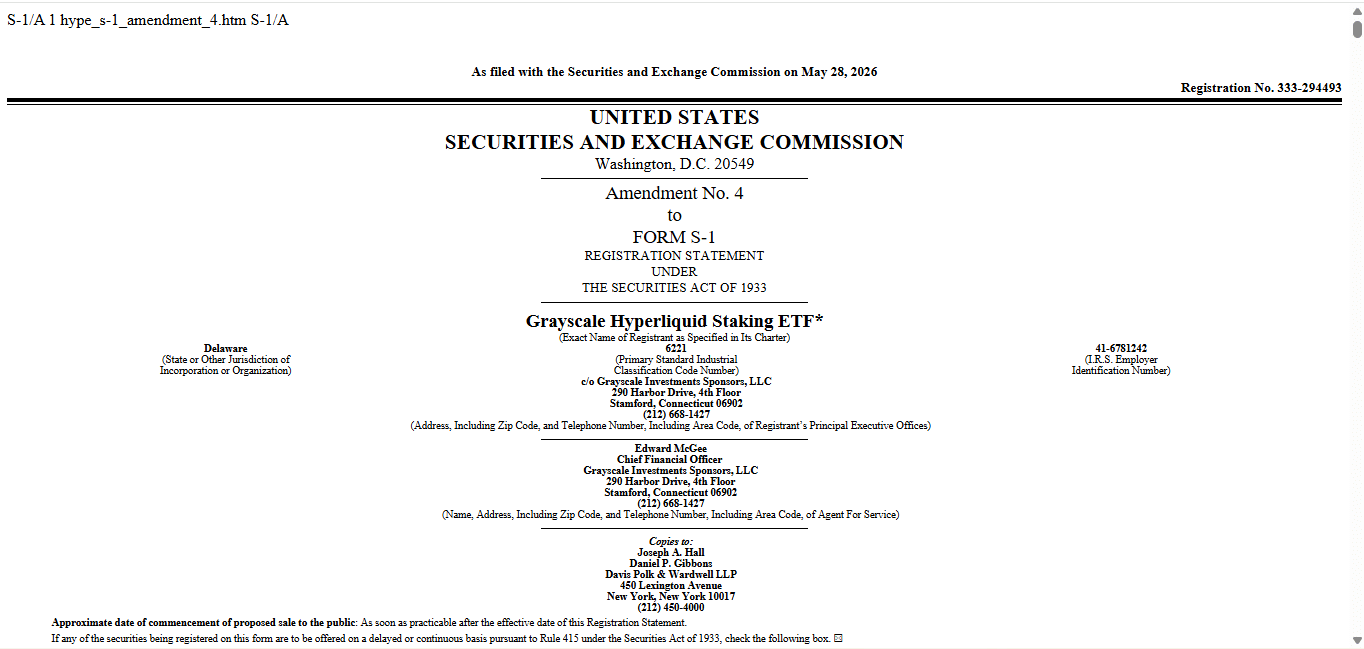
Notably, the third Hyperliquid ETF is getting closer, with Grayscale filing their fourth amendment with the SEC on the 28th of May.

Grayscale Hyperliquid Staking ETF launch gets closer

Grayscale’s update for their HYPE ETF would include a staking feature. However, the fees were yet to be determined, which usually signals the product is about to be launched.

The most important change to the filing was the seed capital investment of 2 million HYPE tokens, currently valued at $113 million. The capital in exchange for HYPE would be channeled to Hyper Holdings Global LP.

Grayscale Hyperliquid Staking ETF
Source: sec.gov/Archives

Grayscale tipped Hyperliquid to be a financial powerhouse, referencing its perp Futures growth, buybacks, and other factors. The two factors showed strong usage and capital returns in the Hyperliquid ecosystem.

This growing number of ETFs is stemming from the massive backing in the Hyperliquid project.

Bitwise and NYSE backing HYPE’s growth

For instance, Jeffrey Sprecher, the founder and executive chairman of ICE, the parent company of the NYSE, backed the Hyperliquid project, especially on the revenue front.

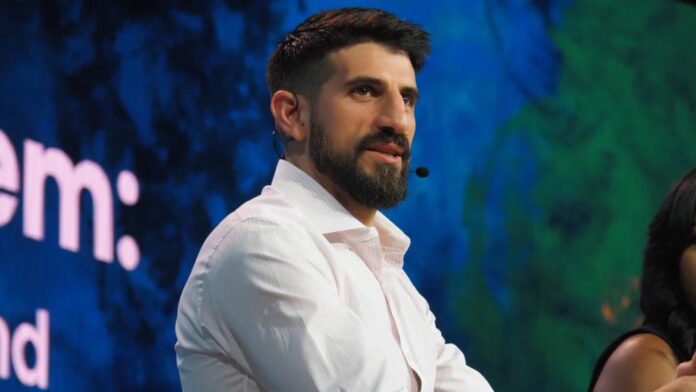
According to Jeffrey, Hyperliquid could be bigger than Nasdaq. He said,

By the way, the number of billionaires that are being created doing this. This Hyperliquid that we’re talking — if you haven’t heard about it, it’s bigger than NASDAQ, okay? It’s 11 people. You look at it, you’re like, wow, that’s pretty something.

Hyperliquid had the highest revenue-to-employee ratio across all global companies. Its $59.65 million revenue per employee was 32 times higher than second-placed Robinhood.

Source: X

The Head of Research at Bitwise, Ryan Rasmussen, echoed the growing demand in HYPE ETFs. He echoed the capital inflows, saying,

We stake in-house at Bitwise, so investors realize more of the overall rewards. A dollar in means a dollar into Hyperliquid, that’s really the best way to think about it.

Institutions taking profits

However, after 10 trading days of the HYPE ETFs, large investors, institutions, and some retailers were taking their profits at around $60.

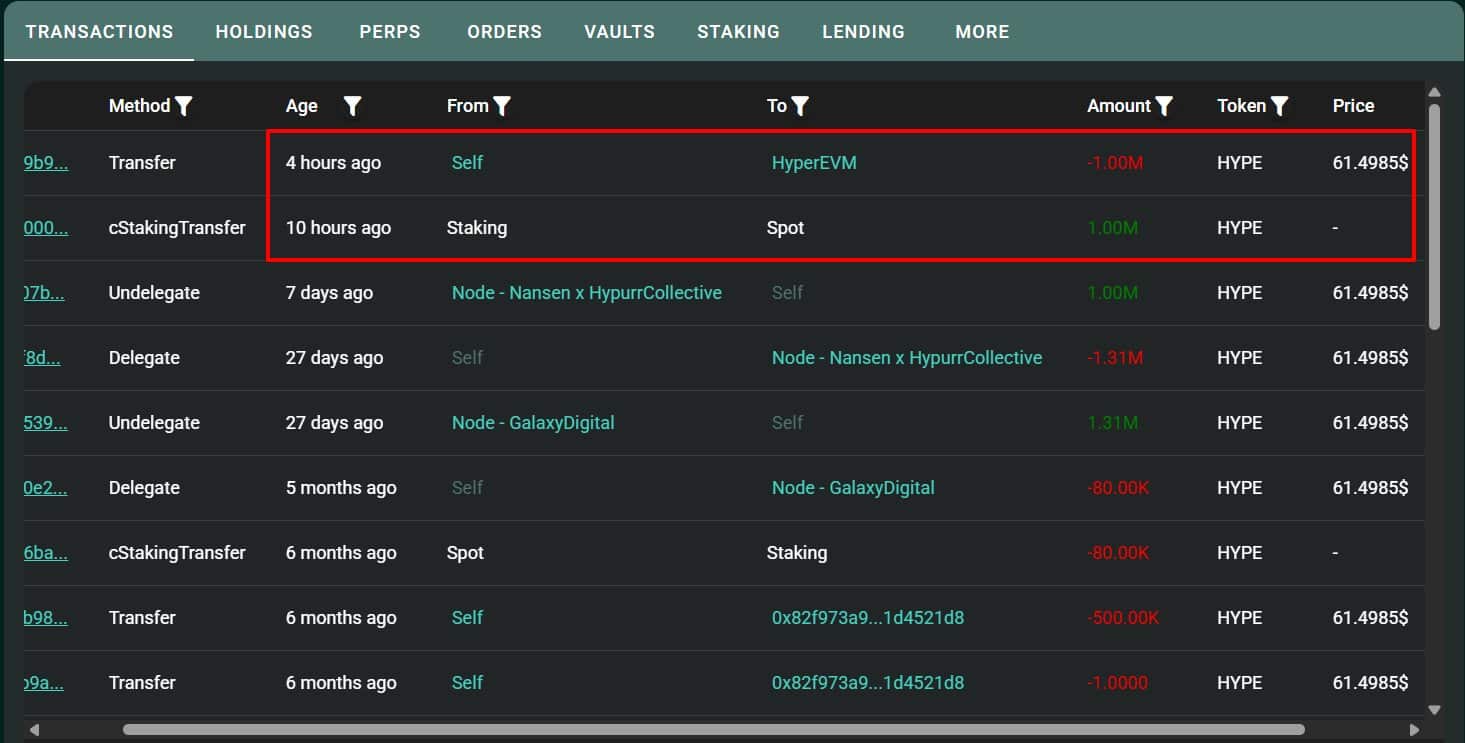
For instance, Galaxy Digital unstaked 1 million HYPE worth $61.5 million and sent half of the amount to exchanges. According to Arkham, 500K HYPE, worth $30.36 million, was deposited into Bybit and OKX, potentially for sale.

Hyperliquid HYPEHyperliquid HYPE
Source: Onchain Lens

Therefore, as HYPE ETF hype continues to drive the altcoin’s price, traders should be wary of institutions dumping on them.

However, with such backing from industry leaders, HYPE remains bullish on a long-term scale.


Final Summary

  • Grayscale Hyperliquid Staking ETF is nearing launch, with the fourth amendment including seed capital. 
  • Major industry leaders backed the Hyperliquid project, but some institutions took profits after HYPE surpassed $60. 


Source link

Paxos wins SEC approval to clear U.S. stocks on blockchain

0
Paxos wins SEC approval to clear U.S. stocks on blockchain

Paxos Securities Settlement Company, LLC (PSSC) has received full registration to provide clearing and settlement services by the U.S. Securities and Exchange Commission (SEC).

Stablecoin issuer Paxos said the regulatory milestone makes its subsidiary the first blockchain firm authorized to operate as a central securities depository (CSD) for traditional equities in the U.S., positioning it alongside legacy post-trade frameworks like the Depository Trust & Clearing Corporation (DTCC).

The approval clears a bottleneck for Paxos’ goals for institutional tokenization of real-world assets (RWAs), providing market participants with a pipeline to clear and settle digital asset trades involving traditional equities, per SEC’s response to Paxos on March 11.

Paxos, which already holds licenses from the OCC in the U.S., Singapore’s MAS, and Europe’s FIN-FSA. said the central clearinghouse designation also allows it to bundle regulated stock clearing with its existing white-label infrastructure tools used by PayPal and Mastercard.

The SEC first granted Paxos no-action relief in 2019, allowing the firm to develop a live settlement pilot in February 2020, which allowed it to integrate traditional finance (TradFi) giants such Bank of America, Credit Suisse and Societe Generale to clear daily U.S. equities transitions.

Paxo’s newly registered status enables it to bypass legacy settlement infrastructure entirely. With blockchain as the clearing rail, PSSC can settle eligible securities on a same-day or nearly instantly, eliminating the traditional settlement window and freeing up locked capital for institutional participants.

In traditional capital markets, stock trades execute in milliseconds, but final settlement, the actual exchange of cash for legal asset ownership, is processed through a centralized clearing house, typically, the DTCC.

While the U.S. equity markets transitioned to a T+1 (one business day) standard settlement cycle in 2024, legacy financial plumbing continues to be restrained to structural delays, trapped collateral and counterparty risks.


Source link

Bitcoin and ethereum prices today, Friday, May 29, 2026: Prices open lower, despite news of U.S.-Iran truce

0
Bitcoin and ethereum prices today, Friday, May 29, 2026: Prices open lower, despite news of U.S.-Iran truce


Bitcoin (BTC-USD) opened at $73,525.74 on Friday, down 1.1% from Thursday’s opening price. The value of bitcoin fell further to $73,381.81 by 7:42 a.m ET.

Ethereum (ETH-USD) opened at $2,006.97 on Friday, down 0.7% from Thursday’s opening price. The value of ethereum ticked lower to $2,003.66 as of 7:42 a.m. ET.

The prices for both bitcoin and ethereum opened at their lowest levels all week, but the stage is set for the cryptocurrencies to rise in value today and this weekend after reports that a 60-day truce extension with Iran is on the president’s desk awaiting his signature.

Investors appeared to have less of a risk appetite this week as tensions between the U.S. and Iran grew following the news that the U.S. military launched defense strikes against Iranian drones and a drone-launching site.

Any sign of progress towards a meaningful agreement to reopen the Strait of Hormuz is likely to compel more investors back into crypto.

Current price of bitcoin and ethereum

Bitcoin

The price of bitcoin this morning was down 1.1% from Thursday’s opening figure. Here’s a look at how the opening bitcoin price has changed versus last week, month, and year:

  • One week ago: -5.2%

  • One month ago: -3.7%

  • One year ago: -31.8%

The all-time high for bitcoin was $126,198.07 on Oct. 6, 2025. The all-time low value for bitcoin was $0.04865 on July 14, 2010.

Ethereum

The price of ethereum this morning was down 0.7% compared to Thursday’s open. Here’s how the opening ethereum price has changed versus last week, month, and year:

  • One week ago: -5.8%

  • One month ago: -12.3%

  • One year ago: -25.2%

The all-time high for ethereum was $4,953.73 on Aug. 24, 2025. The all-time low value for ethereum was $0.4209 on Oct. 21, 2015.

Bitcoin, ethereum, and other cryptocurrencies are rapidly evolving. Follow the latest developments from Yahoo Finance and others here.

Can you buy your next house with crypto?

So, you put a little mad money into bitcoin a few years ago. Now, your crypto-fueled profit means you have a sweet nest egg to put toward a house.

But can you buy a house with crypto rather than using cash or a traditional mortgage loan? What are the roadblocks? And what about taxes?

President Trump wants the United States to be “the crypto capital of the world.” In that spirit, in late June, Director of the Federal Housing Finance Agency (FHFA) William J. Pulte ordered Fannie Mae and Freddie Mac to “prepare their businesses to count cryptocurrency as an asset for a mortgage.”

The FHFA supervises Fannie Mae and Freddie Mac, the government-sponsored companies that fund a major portion of the mortgage industry.

Pulte said the housing system “needs a massive upgrade,” adding, “I want people who own cryptocurrency to be able to buy homes like everyone else. I believe cryptocurrency is an asset. I believe Americans should be able to use their crypto if they want to. It’s time the housing system caught up.”

This signals what could be a fundamental change to how cryptocurrency may be used to qualify for a mortgage.

Learn more: Want to buy a house with crypto? Here’s what to expect. 

Bitcoin and ethereum price charts

Whether you’re brand new to tracking the value of bitcoin and ethereum or a more seasoned crypto investor, Yahoo Finance’s price-of-bitcoin chart and price-of-ethereum chart below show a visual history of how the currencies’ value continues to move and evolve.

More information on crypto from the Yahoo Finance team: 


Source link