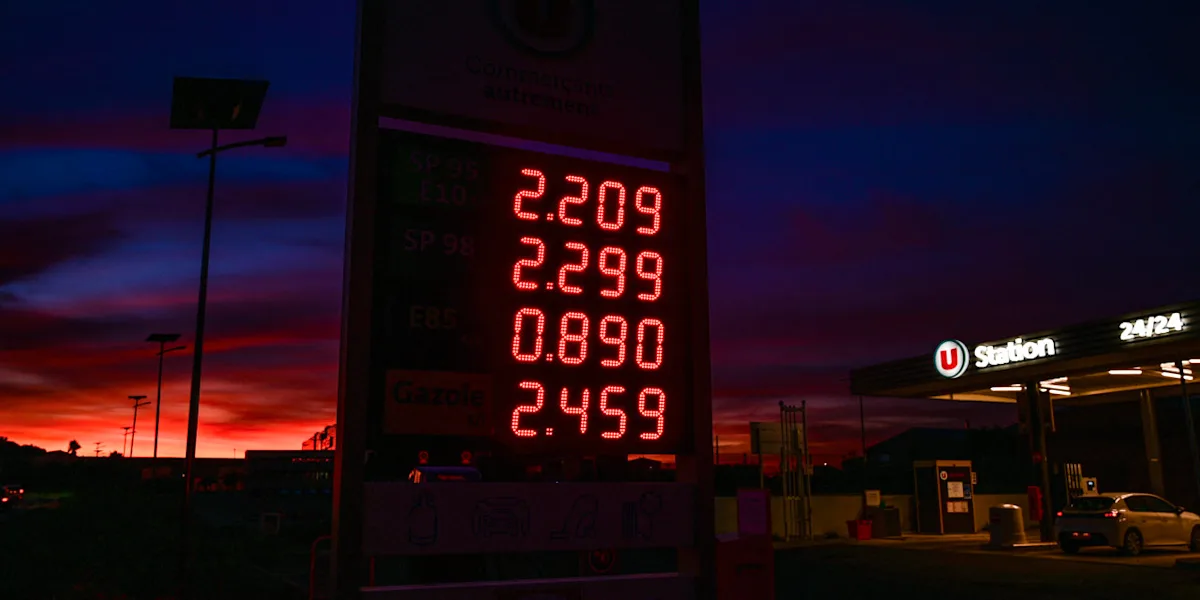
Oil prices reversed initial losses on Wednesday amid persistent Middle East supply risks, as investors weighed the prospect of improved Saudi export flows and U.S.-Iran diplomacy against the potential for further disruptions.
Brent crude futures rose 0.9% to $100.09 a barrel in early afternoon European trading, while West Texas Intermediate edged 0.1% higher to $90.60 a barrel. They were down 0.2% and 0.9% respectively earlier in the session.
Most Read from The Wall Street Journal
Bank of America raised its Brent forecast for the second half of the year to $95 a barrel from $83, citing the large disruption to crude and refined-product supplies. Continued skirmishes through year-end are now its most likely scenario, while alternative routes and escorted shipments through the Strait of Hormuz have mitigated some of the shortfall, Francisco Blanch of BofA Global Research said.
Damaged infrastructure and geopolitical tensions make a rapid normalization unlikely, he added.
Meanwhile, Saudi Arabia has begun testing its East-West pipeline for structural integrity and pressure, a step toward restoring oil flows after attacks knocked out the route earlier this month. Crude exports from the Red Sea port of Yanbu could restart within a couple of days if the tests are successful, The Wall Street Journal reported, citing people familiar with the matter.
U.S. envoy to the Middle East Steve Witkoff said in a post on X that American officials engaged in lengthy talks with the Iranian delegation through mediators on the sidelines of the United Nations General Assembly. The mediators shuttled between the two sides throughout the day and completed a round of discussions that the U.S. hopes will prove constructive and promising, he said.
President Trump said in his speech before the U.N. General Assembly that he expects Iran to reach a deal with the U.S. after the November midterm elections, adding that an agreement would send oil prices below prewar levels. Trump said he had a “big decision to make” over whether to reach an agreement that would allow Iran to rebuild or further escalate the conflict.
Qatar said it is working with Pakistan to de-escalate tensions between Iran and the U.S., safeguard freedom of navigation through the Strait of Hormuz and promote peace and stability across the region, according to the Qatari Foreign Ministry.