
S&P Global Ratings assigned a score of 5 to Tether’s USDT, the weakest in its five-point stablecoin stability scale. What’s more surprising here is the fact that the assessment, which was published on the 18th of November, 2026, has remained unchanged since November 2025.
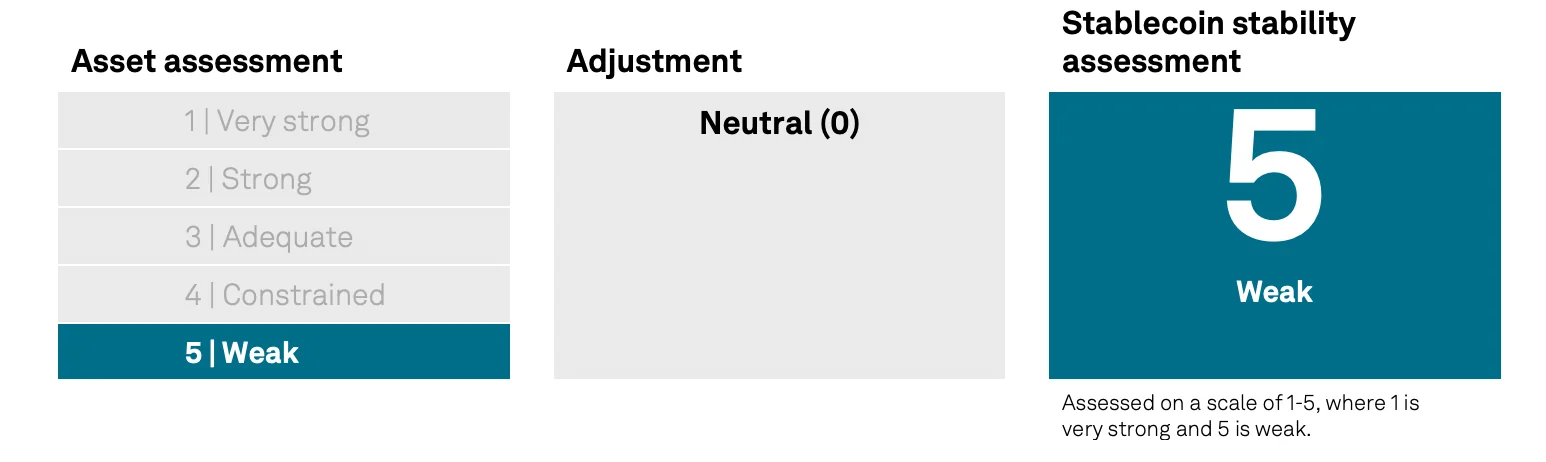
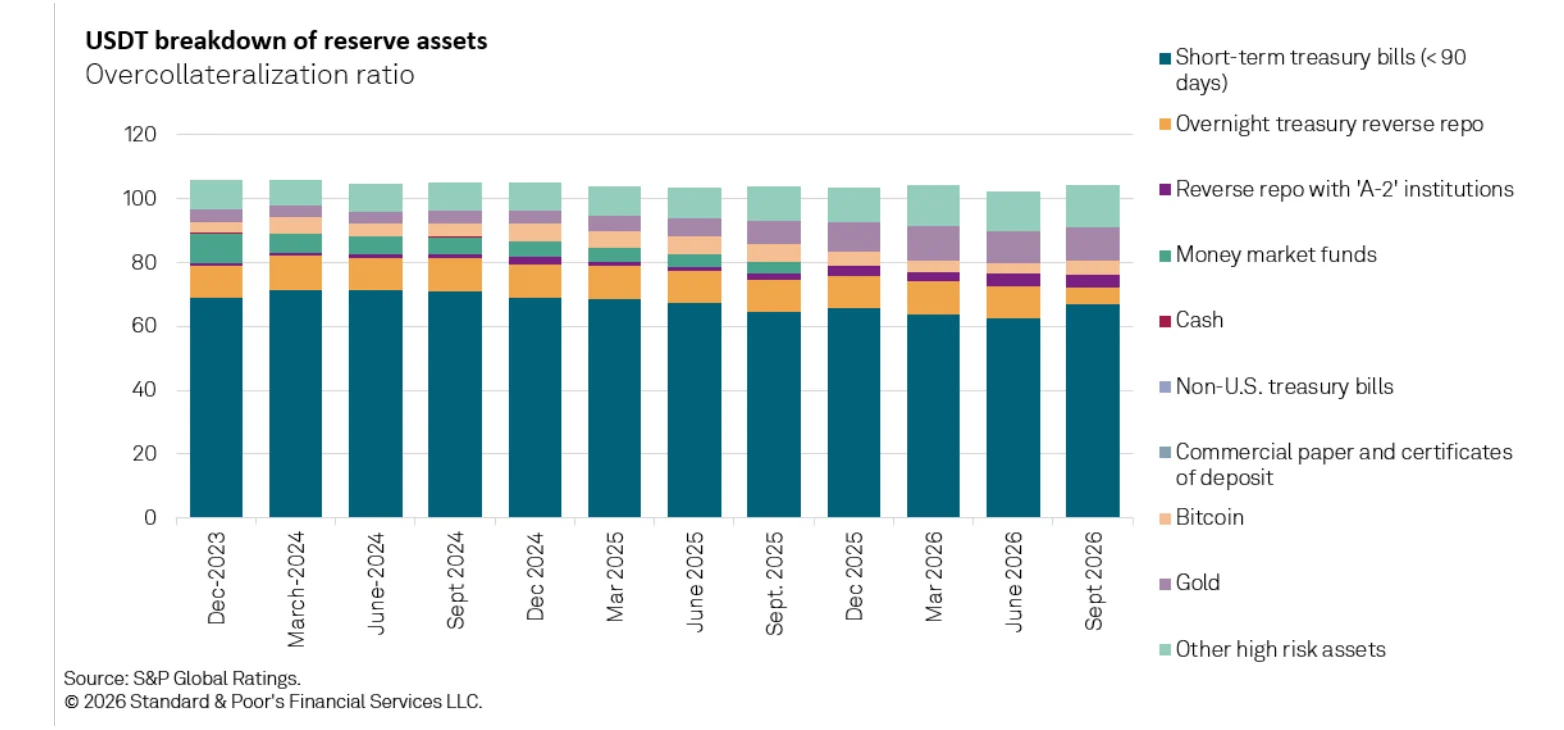
This was mainly because there was a growing proportion of higher-risk assets in Tether’s reserves. According to S&P Global, these assets accounted for 28% of circulating USDT as of the 30th of September 2026, compared with 24% in 2025.
Notably, the agency also warned that a significant decline in their market value could erode Tether’s reserve surplus and potentially leave it undercollateralized.
Tether’s performance over the year
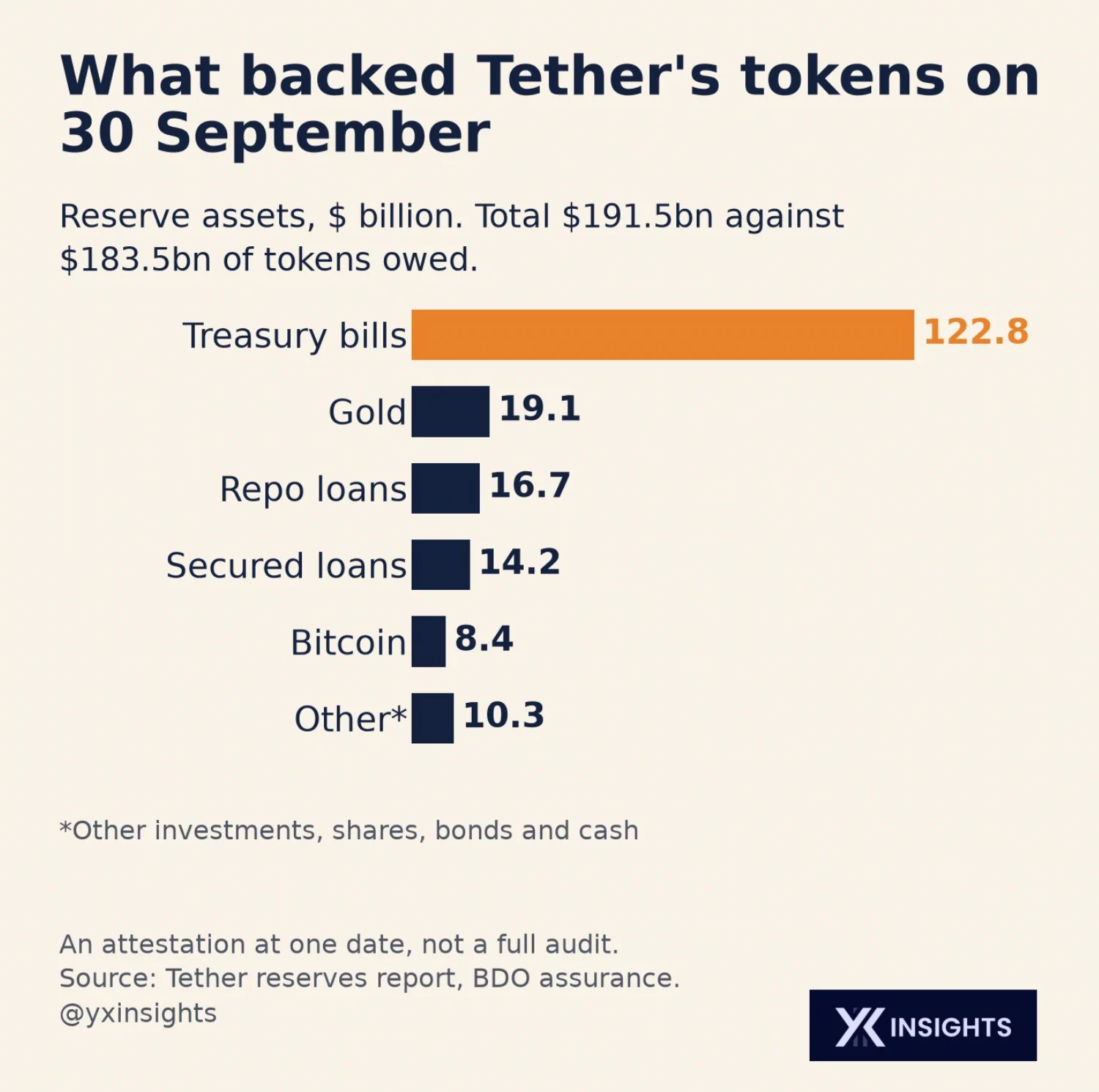
That said, Tether’s reserve composition has also shifted over the past year, with gold holdings rising from $12.9 billion in September 2025 to $19 billion in September 2026. Meanwhile, the company also added $4.2 billion in publicly traded equities, while its Bitcoin holdings declined from $9.9 billion to $8.4 billion.
Yet, despite the growing exposure to riskier assets, Tether reported $191.45 billion in reserves against $183.50 billion in liabilities as of the 30th of September. This in turn left a reserve buffer of approximately $7.95 billion and a collateralization ratio of 104.3%, up from 103.9% in 2025.
What’s more?
Still, above all of this, USDT traded close to its $1 peg over the past year, while its market capitalization grew from $158 billion to approximately $184 billion between September 2025 and September 2026.
However, according to a recent AMBCrypto report, Tether’s market capitalization dropped by $6.6 billion over the course of sixty days, ending on the 7th of November.
Final Summary
- Assets in Tether’s reserves accounted for 28% of circulating USDT as of 30th September.
- Tether’s reserve composition shifted over the past year, with a rise in gold holdings and a drop in Bitcoin holdings.