For many Americans, turning 18 marks the beginning of adulthood. For thousands of young people in foster care, it means aging out of the foster care system and losing access to support. With little preparation and financial resources, it can be a difficult transition.
According to the National Foster Youth Institute, more than 23,000 children will age out of the U.S. foster care system every year, and only 1 out of every 2 foster kids will have some form of employment by the age of 24 — 20% of the children who were in foster care will become instantly homeless.
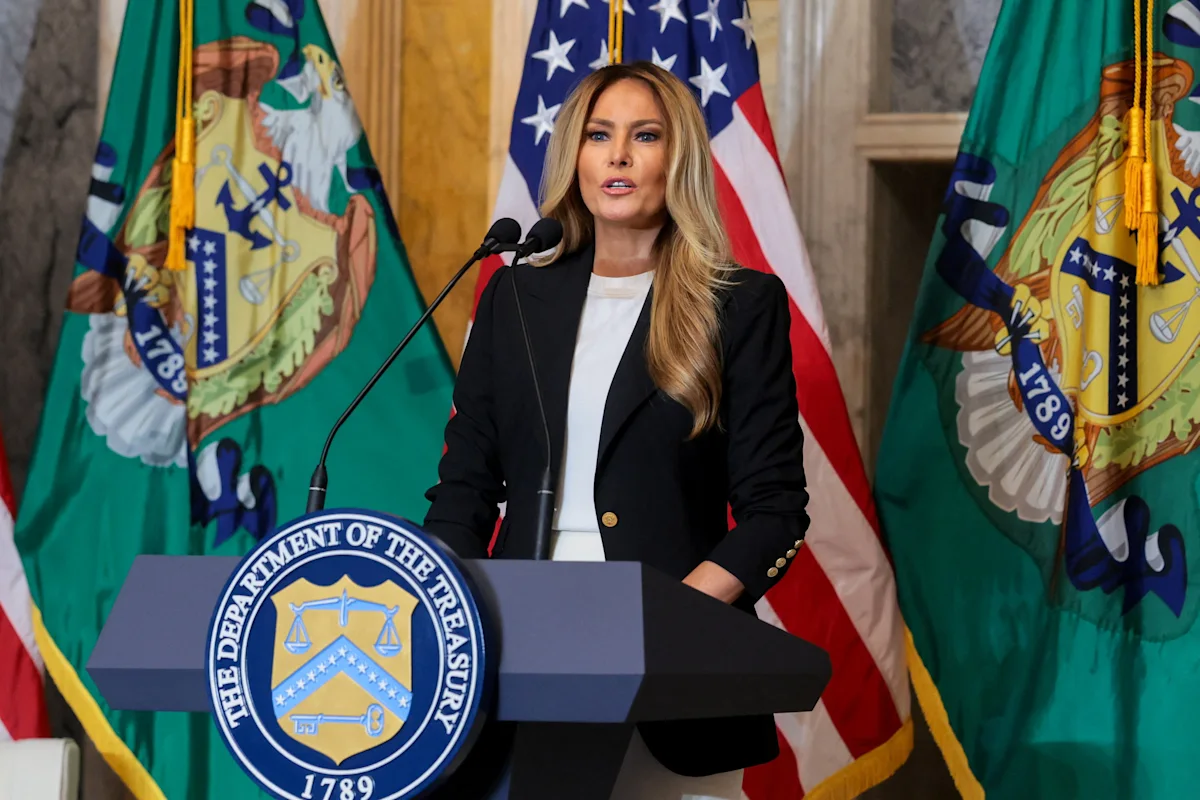
Last week, first lady Melania Trump unveiled a new initiative designed to give eligible foster children access to Trump accounts, a tax-deferred savings account created under the One Big Beautiful Bill Act.
Read more: Trump accounts explained: How they work, who qualifies
‘Fostering the Future’ initiative — explained
The “Fostering the Future Accounts” are not entirely separate from Trump accounts. Instead, the initiative expands access to the accounts for eligible children in foster care.
The standard Trump account requires that a parent, legal guardian, adult sibling, or grandparent open the account on behalf of an eligible U.S. child. However, this initiative allows a child welfare agency of a state, territorial, or tribal government that is the legal guardian of a child with a Social Security number to open an account for that child.
Eligible children (those born between Jan. 1, 2025, and Dec. 31, 2028) will then receive a one-time deposit of up to $1,000 that will be held in a tax-deferred investment account. Once they turn 18, the account functions similarly to a traditional individual retirement account, and withdrawals are generally taxed as ordinary income.
To create an account, agencies must follow state-specific procedures to complete, sign, and submit Form 4547, which serves as the formal election to create an initial account.
“Fostering the Future Accounts give foster children the same chance for asset ownership and long-term wealth building as every other American child. By investing in our foster youth now, we help strengthen America’s workforce, communities, and economic future,” the first lady said.
So far, only 23 governors have pledged to open these types of accounts for foster children in their states.
The pros and cons of the accounts
The most obvious benefit of these accounts is that foster children have a gateway to asset ownership and to building long-term wealth.
It may not seem like a large sum of money, but $1,000 in a tax-deferred account over 18 years with an estimated 5% rate of return can more than double in that time, even with no additional contributions.
While this may not be enough to cover living expenses for an extended period, it can provide young adults with a financial cushion as they transition into adulthood.
“The biggest benefit is early asset ownership and access to financial resources upon adulthood,” Farah Saleh, CPA and founder of Lumen Tax Resolution, said. “A foster youth who may otherwise enter adulthood with little family financial support could have an invested account available for education, housing, career development, or longer-term retirement savings.”
“There is also market risk because the accounts are invested, not guaranteed savings accounts,” Saleh said.
Financial experts have also raised concerns about exactly how this initiative will work in cases where a foster child has a change in guardianship, as well as how it will be adopted across states so that foster children aren’t excluded based on where they live.
Read more: Trump accounts vs. IRAs and 529s: How do they stack up?
The tax implications of these accounts
Once the foster child reaches adulthood, the Fostering the Future Accounts operate like a traditional IRA. This means that any distributions will generally be considered taxable income when withdrawn.
If they withdraw funds early or use the account without understanding the rules, they could trigger taxable income and possibly penalties depending on the distribution rules in effect, Saleh said.
“The planning point is they should be able to convert the accounts to a self-directed Roth IRA in the future, which would imply tax-free distributions instead,” Saleh said.
The initiative does boast “expanded access to financial education” and “enhanced financial literacy education” as part of its objectives; however, it’s still unclear exactly what this will look like and how foster youth can access these resources.
Also read: These are all the companies pledging matching funds to Trump accounts