President Donald Trump’s latest financial disclosure signals a fundamental shift in his business empire. This comes after his cryptocurrency investments overtake traditional ventures as his largest revenue source.
That transition stems from the rapid expansion of family-backed crypto projects, which generated more than $1.4 billion in reported income during 2025.
Of that, nearly $600 million came from the sale of tokens by World Liberty Financial [WLFI]. And even though the price of Official TRUMP [TRUMP] memecoin fell from $74.24 at its peak to $1.67 at one point, it still managed to generate approximately $636 million.
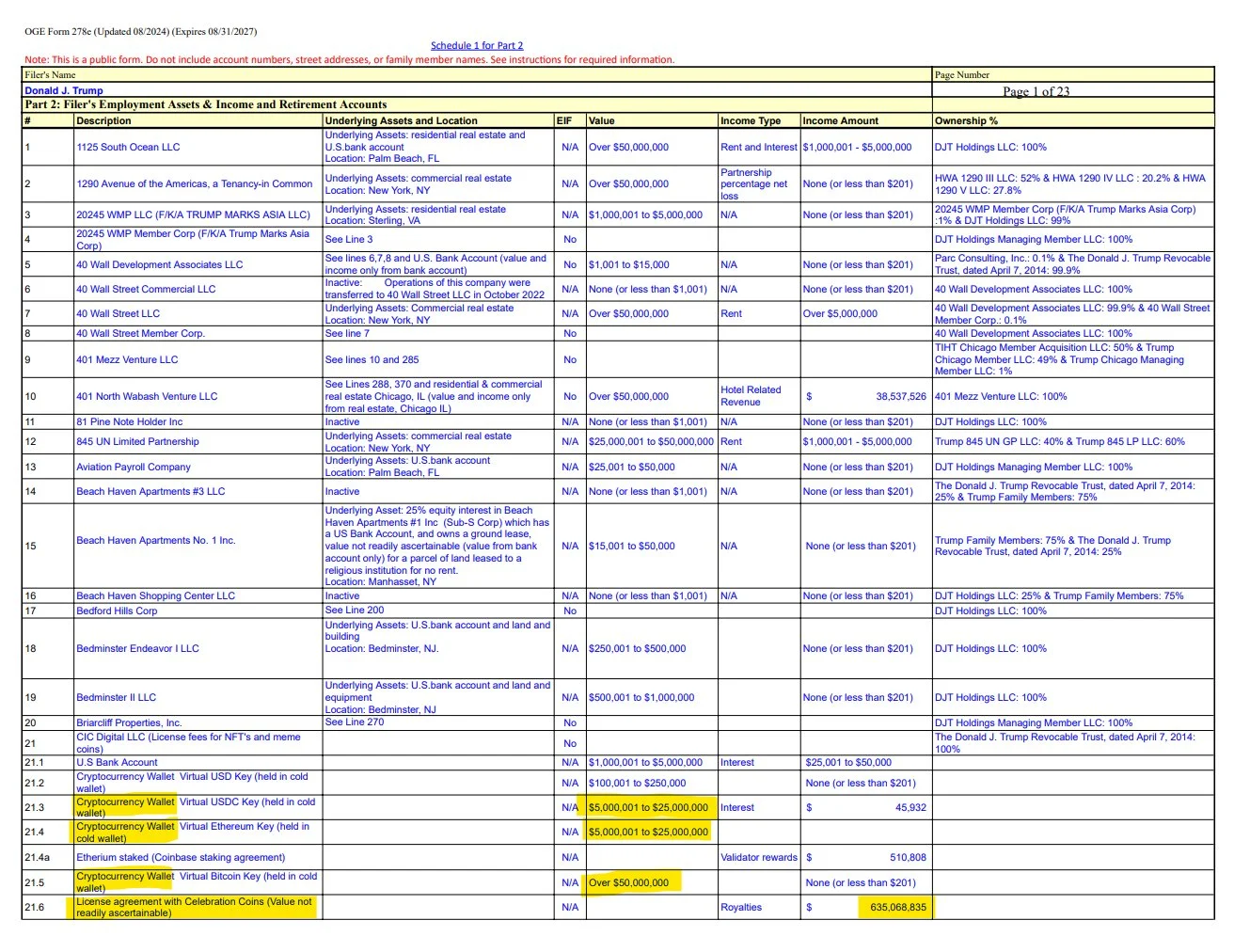
Other types of equity sales furthered crypto earnings. Altogether, the data points to the conclusion that earning money is no longer dependent solely upon the value of his crypto assets.
Rather, the main drivers of Trump’s increasing digital assets include license agreements, token sales, and equity transactions.
Crypto wealth and policy collide under growing scrutiny
Trump’s crypto success has now shifted attention beyond profits toward policymaking. That focus emerged because his business interests expanded alongside major regulatory reforms.
Meanwhile, the administration also created an executive order, the GENIUS Act. It was followed by the CLARITY Act, and both acts support clearer rules for stablecoins, as well as a larger digital asset marketplace.
Those disclosures have since become central to the debate, as they link the president’s commercial interests to an industry undergoing significant regulatory reform.
That overlap intensified concerns because friendlier regulations could strengthen businesses tied to the president. AMBCrypto earlier reported that Trump leverages the CLARITY Act in broader negotiations, stalling its 4th of July passage amid housing bill disputes.
As scrutiny increased, lawmakers proposed stronger ethics safeguards and disclosure requirements. This will result in increasing oversight of the policies and laws regarding cryptocurrency going forward.
Markets test the impact of crypto policy shifts
Political scrutiny has now shifted toward how regulators oversee the cryptocurrency industry. Beginning in 2022, the political spotlight began focusing on regulators’ supervision of the digital assets sector.
At that time, enforcement activities were decreasing rapidly due to increasing activity for rule-making from U.S. federal agencies.
According to Cornerstone Research, enforcement by the SEC regarding cryptocurrencies decreased approximately 60 percent in 2025, with CFTC enforcement action for virtual currencies dropping to almost zero.
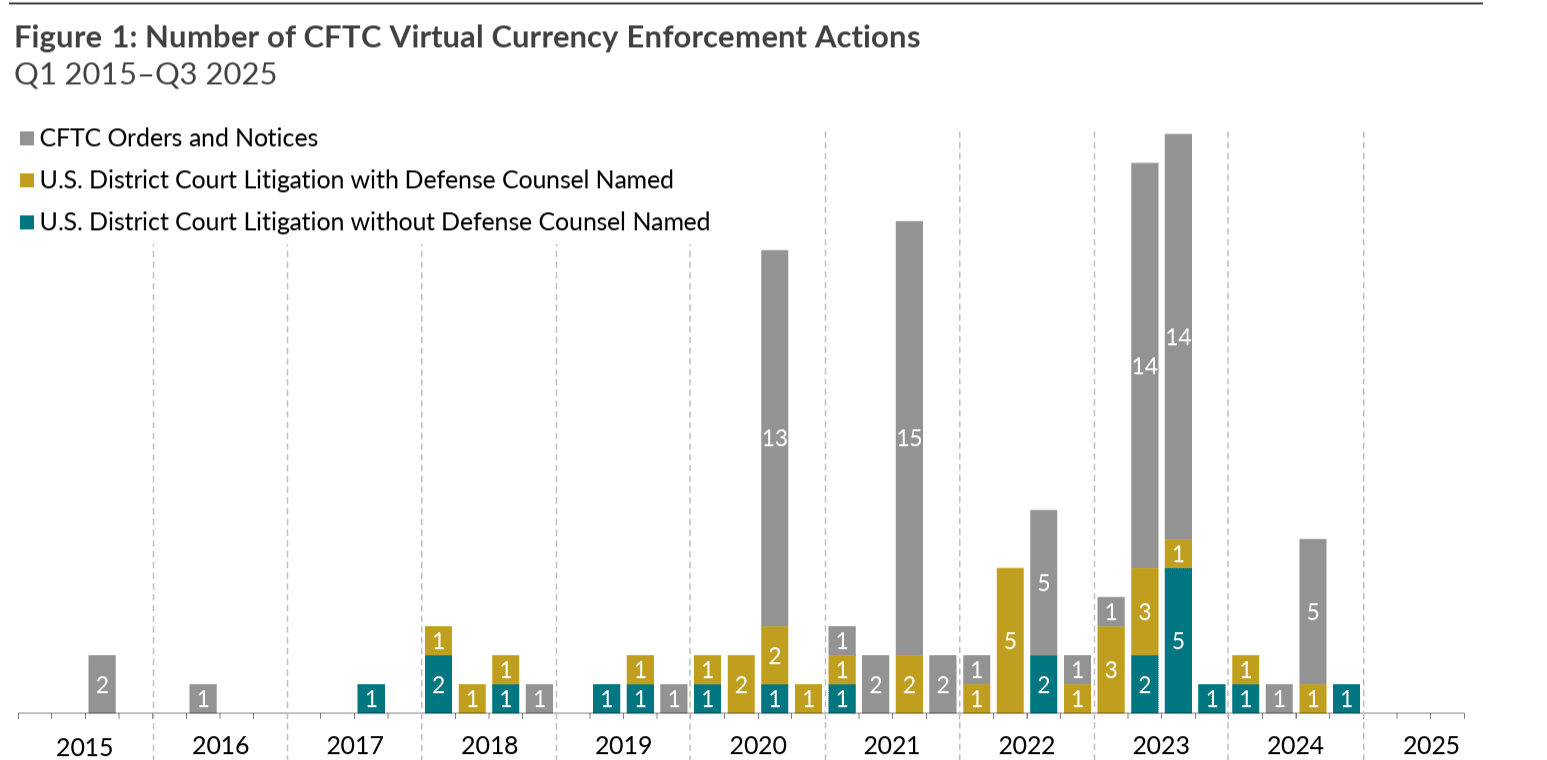
The transition in both areas was reflective of an emerging focus for regulators on developing frameworks for stablecoins and implementing structural changes in digital asset markets.
However, investors largely continued following interest rates, ETF flows, and broader macroeconomic conditions instead. That distinction suggests markets still prioritize fundamentals over politics.
Going forward, mounting ethics scrutiny could reshape regulatory standards and strengthen institutional accountability across future crypto oversight.
Final Summary
- Trump’s crypto empire now extends beyond business into U.S. digital asset policy.
- Crypto regulation now faces greater scrutiny as ethics and innovation increasingly collide.