For decades, “longevity” was a word serious drug makers avoided. It conjured images of supplement gurus, Silicon Valley biohackers, and anti-aging hucksters — not legitimate medicines backed by clinical trials.
That shifted last weekend.
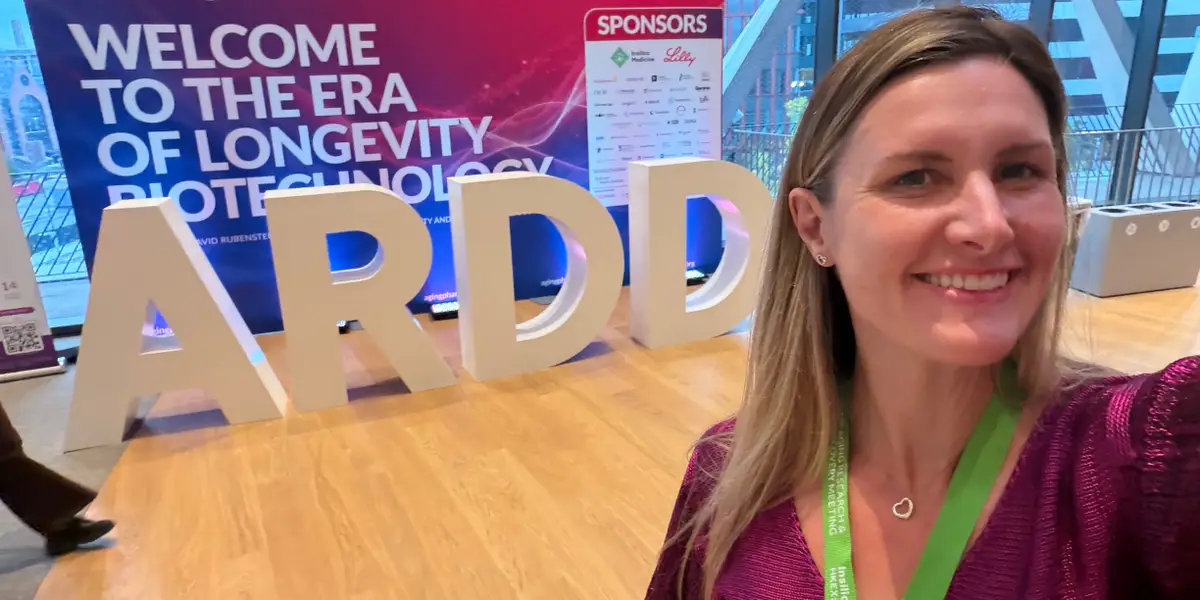
The 2026 Aging Research and Drug Discovery (ARDD) meeting — the most important longevity conference of the year — landed in the US. After more than a decade in Europe, it was held in Boston, the center of the US biotech industry.
US regulators, executives from big pharma, and longevity upstarts came together for three days to discuss how drugs to combat age-related declines could become a reality, sooner rather than later. Executives from major drugmakers, including Pfizer, GSK, AstraZeneca, Novartis, and Eli Lilly, enthusiastically discussed their approach to “longevity drugs.”
“We think it’s an important space to be in, because that’s where the patients are going to be,” Eli Lilly’s associate vice president of healthy aging, Thomas Marron, said at the 13th annual conference, which was held for the first time this year with leaders from the US Food and Drug Administration joining the conversation.
There was a breathlessness in the air, a can-you-believe-this tone from the longevity researchers who’ve spent their careers studying how we age, but hit a wall when it came to formulating actual therapies. Could their dreams of a future longevity pill be coming true?
Donis Perkins for ARDD
A couple of years ago, scientists were still arguing over whether aging was a disease, and lamenting that the FDA didn’t have an approval pathway built for them.
Now, they’re starting to build the frameworks and discuss the data that the FDA will need to review to assess whether their longevity drugs can work. Here’s what everyone was buzzing about on the ground.
Table of Contents
Panic is setting in about our aging population
Wealthy countries are going gray. Governments around the world are panicking, including in the US.
“The basic idea is to move medicine away from asking ‘what disease does this person have?’ towards asking ‘what is this person still capable of doing, and how do we measure it?'” said Andrew Brack, program manager for the federal government’s $144 million healthy aging and longevity drug trial initiative, started in 2024, called PROactive Solutions for Prolonging Resilience (PROSPR).
Pharmaceutical companies are realizing they need to adjust their strategy to address aging patients who increasingly want preventative therapies that will keep them agile, able, and sharp for years to come.
Why chase fixes for diseases that develop through the course of decades, when you could use all those years to preserve health and function instead?
New blood tests can now measure aging in real time (kind of)

Stefania Pelfini la Waziya/Getty Images
Until recently, we didn’t have a good way to measure whether a drug was actually slowing down aging, in real time. New blood tests — often called biological age or organ “clocks” — are giving researchers a way to estimate whether someone’s blood vessels, skin, heart, or entire body is aging slower or faster than expected.
There are also new genetic screening tools that can identify our unique vulnerabilities to diseases like Alzheimer’s and sensitivities to different foods or medicines.
All of this new bloodwork is moving regulators and drugmakers towards a potential action plan for aging, as prevention becomes the preferred approach in healthcare and wearables become routine for tracking steps, heart rate, and sleep scores.
In a historic move, the FDA took the stage on the first day of the conference, promising to release new clinical trial guidance next year.
“We’re the umpire and not the coach,” FDA clinical pharmacologist Justin Penzenstadler said on stage at the conference, encouraging longevity drugmakers to come together and agree on how to design trials and present data. “You guys work out the cookbook.”
The Ozempic boom changed the game

Viktoriya Skorikova/Getty Images
Finally, there are new medicines showing signs they could help slow aging in humans, not just mice or dogs. Chief among them: the blockbuster GLP-1 drugs from Eli Lilly and Novo Nordisk.
Both drugmakers presented data at ARDD this year on how their injectable weight loss drugs may slow aging, using blood test data.
Lilly found that tirzepatide (sold as Zepbound and Mounjaro) may slow down aging in many internal organs, especially the heart, brain, liver, and kidneys.
Novo’s data was more impressive. The company analyzed blood samples from over 10,000 patients in semaglutide trials (Ozempic, Wegovy, and Rybelsus) over several years. Compared to people not on the drug, people on semaglutide saw their heart age drop 2 to 4 years, while their kidney, brain, lung, and pancreas ages decreased an extra 1 to 4 years.

Donis Perkins for ARDD
Regulators will need to see much more than this early data to approve a new drug for aging.
The big question remains: can these GLP-1s be beneficial for people without diabetes or obesity? A new PROSPR longevity trial, funded earlier this year, aims to answer that question by giving healthy older adults semaglutide prescriptions and seeing what happens.
Ultimately, researchers want to know if the drugs can functionally improve a person’s overall health as they age.
The financial opportunity is huge
The payoff for improving human longevity ranges from big to enormous, depending on how you define the category.
Bankers at TD Securities put the current longevity market at over $250 billion, including fitness, mobility, nutrition, lifestyle, and screening tests, a figure that doesn’t account for the $560 billion-plus market for traditional age-related disease care, including cardiology, cancer, and neurodegenerative health.
HSBC private bank thinks even bigger, imagining that healthcare advances like new drugs, coupled with more healthy years of labor force participation, could add up to a longevity-fueled “12.5 trillion global GDP uplift” by 2050.
Any way you stack it, the opportunity is huge and growing.
That’s why it was quite a feat for me to squeeze in a chat with Kevin Duffin, Eli Lilly’s vice president of aging research, at the conference — after several hours, we managed to find a quiet place to sit away from the crowds of researchers and startup founders who want face time with the most valuable pharmaceutical company in the world.
The question now isn’t whether these companies should pursue longevity drugs, it’s whether they can prove theirs actually work.