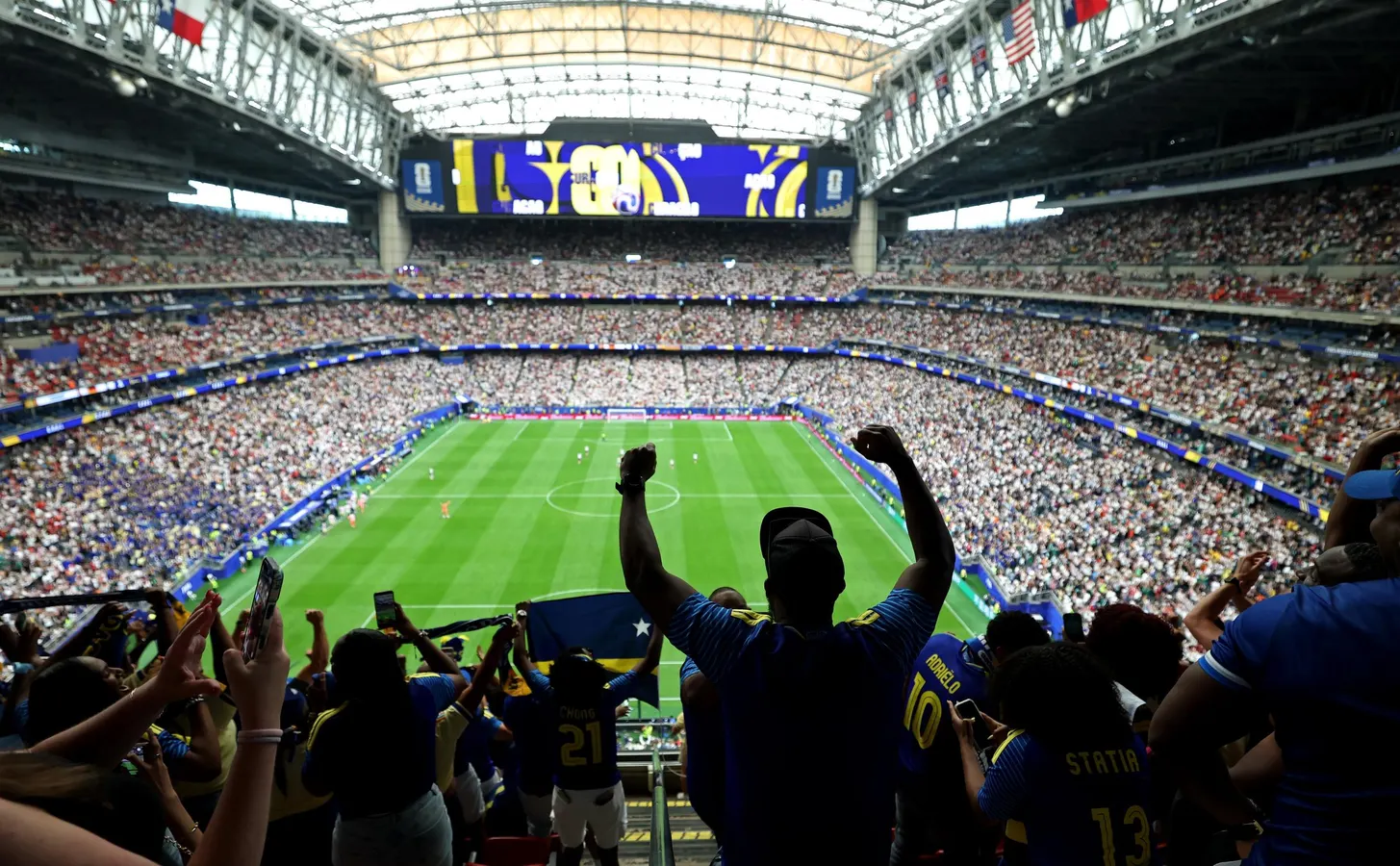
HOUSTON, TEXAS – JUNE 14: Curacao fans cheer after the first goal by Livano Comenencia #8 during the FIFA World Cup 2026 Group E match between Germany and Curacao at Houston Stadium on June 14, 2026 in Houston, Texas. (Photo by Sebastian Widmann – FIFA/FIFA via Getty Images)
FIFA via Getty Images
The FIFA World Cup is off to a strong economic start, generating a significant boost for host cities.
New data from Bank of America reveals that consumer spending has increased as a result of millions of fans attending matches across North America.
Bank of America’s latest consumer spending analysis, which tracked card-based purchases in the tournament’s 16 host cities, found that overall spending has increased 6.3% compared with the same period a year ago.
The biggest gains, however, have come from visitors traveling into those markets, which include New York, Los Angeles, Dallas and Kansas City. Consumer spending by non-local visitors is up a staggering 16.7% year over year, suggesting that fans traveling from other places are driving much of the increase in economic activity.
The data provides an early indication that one of the world’s largest sporting events is delivering on expectations of increased economic activity. It also highlights the role tourism plays during major sporting events, with travelers spending on hotels, restaurants, transportation, entertainment and shopping before and after matches.
Bank of America, who is also an official 2026 World Cup sponsor, offers one of the earliest snapshots of how consumer behavior is changing as the World Cup unfolds. While economists have long debated the lasting economic impact of hosting mega sporting events, the early World Cup numbers suggest host communities are experiencing an immediate boost in consumer activity.
World Cup studies typically highlight the economic activity generated by the event, but often overlooks the taxpayer-funded costs of hosting it, including security, transportation, venue preparation and other public services.
In fact, the World Cup is often portrayed as a cash machine, but its economic impact isn’t driven by a single financial engine. Instead, it operates through two systems: FIFA’s revenue model and the regional economy of each host city. Together, they shape the tournament’s financial out, but each one functions in different ways.
The 1994 World Cup, the last time the tournament was hosted by the U.S., has been widely deemed to be an economic success. Nonetheless, some researchers have argued that the economic benefits of the tournament’s host cities were modest relative to the costs they incurred. Economists Robert Baade and Victor Matheson estimated that the tournament’s financial impact fell between $5.5 billion and $9.3 billion short of projections.
As for the 2026 edition, the spending increases cited by Bank of America come as the World Cup enters its busiest stretch. The tournament’s 104 matches are being played in the United States, Canada and Mexico, drawing thousands of international visitors alongside domestic travelers following their national teams.
The tournament represents the largest FIFA World Cup in history, featuring an expanded field of 48 teams and a longer schedule than previous editions. This expanded format is expected to keep fans traveling throughout the tournament, potentially extending economic benefits for host communities over several weeks.
The increase in overall spending suggests many local businesses are benefiting from increased foot traffic generated by the tournament. The jump in spending by non-local consumers is particularly noteworthy because visitor spending often represents new money flowing into local economies rather than simply spending shifted from one business to another.
Travelers attending World Cup matches frequently extend their stays to explore host cities, creating additional opportunities for businesses across hospitality and tourism sectors.
Cities chosen to host World Cup matches have spent years preparing for the influx of visitors, investing in transportation, security, stadium operations and fan experiences. Local officials have projected that the tournament would generate billions of dollars in economic activity through visitor spending, job creation and increased tourism. The latest spending figures suggest those investments are beginning to pay dividends, although the tournament remains far from complete.
Consumer spending typically fluctuates during major events, with activity often peaking around marquee matchups, weekend games and knockout-round contests that attract larger crowds and longer visitor stays. As a result, economists and business analysts will continue monitoring spending patterns as the tournament progresses and the July 19 final draws nearer.
For now, the early numbers suggest the World Cup is accomplishing one of its most anticipated off-the-field objectives: Generating meaningful economic activity for the cities hosting the world’s biggest sporting event.
Clemente Lisi is the author of “The World Cup: A History of the Planet’s Biggest Sporting Event, 2026 Edition.”