Home Blog Page 165

ETHGas down 92%, hits all-time low – Can GWEI’s price recover?

0
ETHGas down 92%, hits all-time low - Can GWEI's price recover?


ETHGas [GWEI], which tracks the gas fees on the Ethereum [ETH] network, is down by more than 10% in the past 24 hours. It is a measure of the Ethereum ecosystem’s usage.

Notably, the daily trading volume was a reflection of this price decline, as it decreased by 49% to around $20 million. This decline confirmed the loss of trader interest in GWEI.

Hence, what were the specifics behind the decline in the price of ETHGas?

Why is the price of ETHGas falling?

Interest in GWEI declined because the token’s intrinsic value is linked to Ethereum gas fees, which were falling. This decline was occurring despite the ongoing Ethereum ecosystem upgrades.

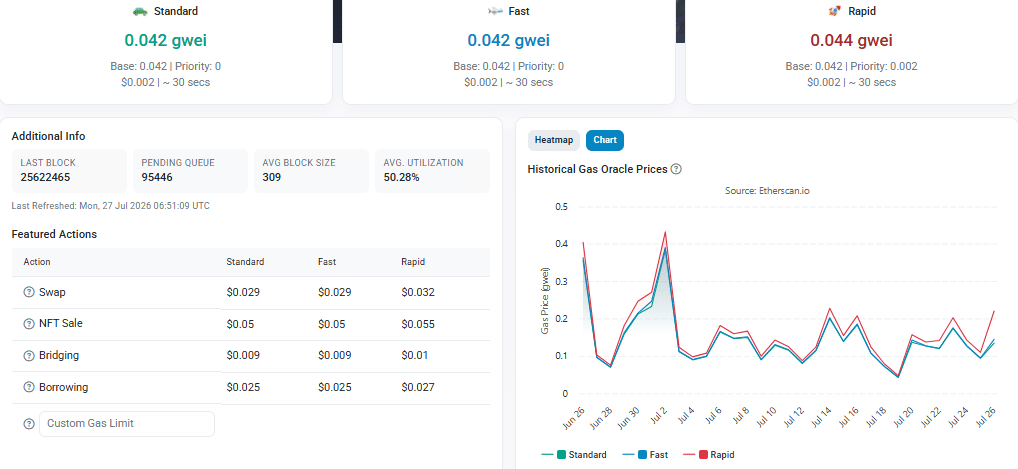
At press time, ETHGas was at its all-time low (ATL) of 0.042 GWEI, indicating minimal network congestion and user demand. When fees are this low, the token’s core utility and speculative demand evaporate.

Worth noting, high fees were on NFT sales, indicating demand on the Ethereum network leaned toward the sector.
GWEI
Source: Etherscan

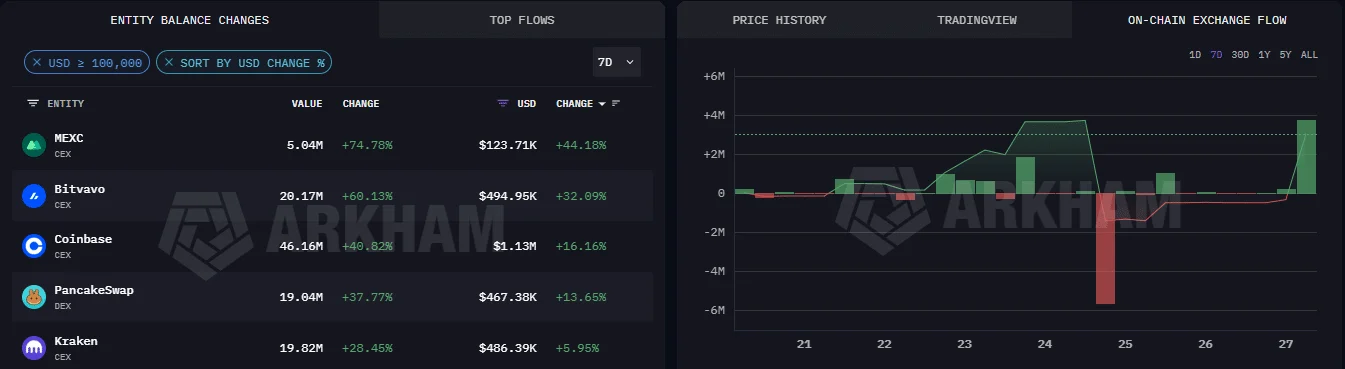
As fees traded at an ATL, both institutions and retailers were selling the token on CEXes and DEXes due to its low demand. For instance, retailers were mainly using PancakeSwap DEX, OKX, and Bitget to offload their holdings.

Moreover, KuCoin and Gate were moving their holdings from cold wallets to hot wallets. Gate moved 20 million GWEI worth $591K in two transactions, while KuCoin moved 30 million GWEI worth $800K in three transfers.

In total, well over 50 million GWEI valued at around $1.40 million were sold in 24 hours, excluding the retailers’ distribution.

Overall, exchange balances were going up, about 3.7 million tokens in 24 hours, affirming the intention to sell GWEI across the crypto divide.
ETHGasETHGas
Source: Arkham

Can GWEI bounce from its all-time low levels?

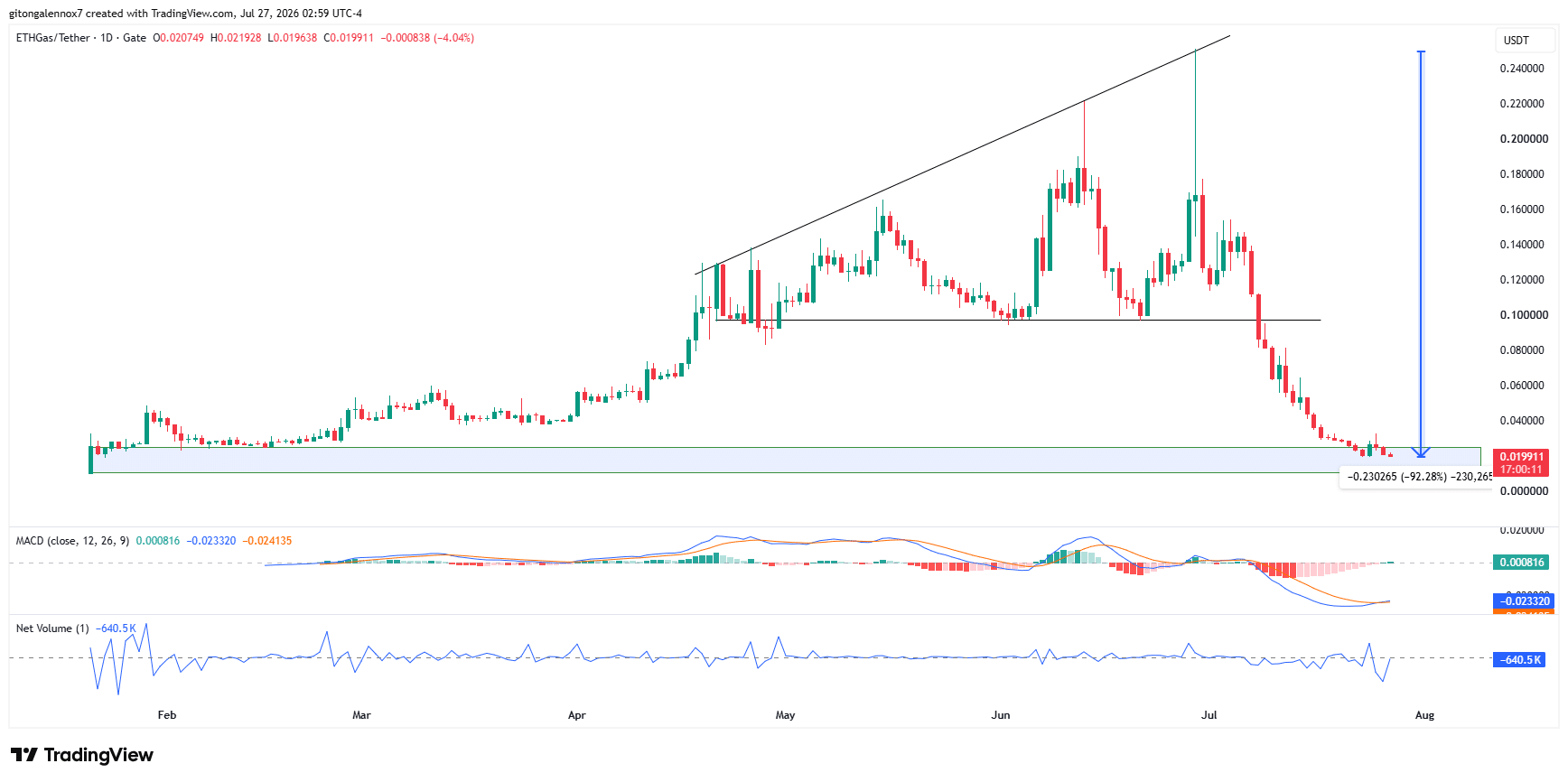
GWEI price action aligned with the low network demand. The token has dropped around 92% from its peak value of $0.2519 in late June.

The net volume showed a fall from 5.37 million to negative 9.15 million. This indicated a massive distribution event, though it was starting to stabilize.
GWEIETHGasGWEIETHGas
Source: GWEI/USDT on TradingView

While bears had forced a breakdown below a broadening wedge pattern, bulls were giving hints of potential price recovery.

In fact, the MACD was having a crossover with bars blinking green for the first time since the 7th of July. As such, this development could indicate that ETHGas was on track for a recovery.

Therefore, GWEI remains in a bearish market structure unless Ethereum’s high network usage and user demand return.


Final Summary

  • ETHGas declined by more than 10% in 24 hours due to Ethereum’s minimal network congestion and user demand. 
  • GWEI broke below a massive broadening wedge pattern and hit an ATL of $0.01892, but bulls were showing signs of a return. 


Source link

Bitcoin (BTC) price may fall to $52,000 as demand remains elusive, Nansen analyst says

0
Bitcoin (BTC) price may fall to $52,000 as demand remains elusive, Nansen analyst says

Kruger said bitcoin needs to clear $67,300 to break out of the multi-week consolidation that has capped prices since June. A move above that level could signal the next leg of higher, while ether (ETH) faces a similar test at $2,000.

Tom Lee, chairman of Bitmine and co-founder of Fundstrat, also noted ether’s recent outperformance relative to BTC as a bullish signal for crypto markets. The ETH-BTC ratio, which measures the price of ether in bitcoin, climbed to a three-month high on Monday.

Rally lacks demand amid macro risks

Still, not everyone is convinced about bitcoin’s strength.

Nansen senior research analyst Nicolai Sondergaard said the recent rebound lacks the buying conviction typically seen before sustained rallies.

“The market is holding range without strong buyers, not building toward a breakout,” Sondergaard said.

His base case remains a pullback toward $52,000-$58,000 unless market conditions improve.

While nearly 9,000 BTC left exchanges over the past week, open interest in bitcoin futures has fallen even as prices edged higher, suggesting traders are reducing exposure rather than adding fresh bullish bets. Order-book data also continues to point to net selling pressure, he said.

Sondergaard said the Fed’s rate decision and communication about it will likely set the tone for risk assets on Wednesday. Investors will also be watching Thursday’s core PCE inflation report, second-quarter GDP data and earnings from Microsoft, Meta, Apple and Amazon before Friday’s roughly $13-14 billion bitcoin and ether options expiry.


Source link

52-year-old international restaurant chain closing all locations

0
52-year-old international restaurant chain closing all locations


While markets data shows that the global market for dining out is projected to grow from $1.9 trillion now to more than $3 trillion by 2030, many individual chains that were popular in another era are struggling to survive amid changing consumer trends.

U.S. chains like Smokey Bones, Peet’s Coffee, and Joe’s Crab Shack have collectively closed dozens of locations this year. Meanwhile, over in the United Kingdom, Leon and The Real Greek both nearly halved their store locations in 2026 despite once going through a period of rapid expansion that made them well-recognized chains in the country’s major cities.

With the first location opening in the Greater London borough of Enfield in 1974, the restaurant chain Beefeater has, over several generations, earned a reputation for being a family-friendly steakhouse chain serving grilled steak cuts, burgers, and fish and chips at more accessible prices.

Beefeater to shut 106 restaurant locations across the UK

At its peak, the chain had approximately 140 standalone and Brewers Fayre brewery-attached locations in the United Kingdom and Ireland. But amid soaring operating costs the hotel and dining company Whitbread confirmed plans to shutter all remaining 106 restaurants by September.

Earlier in the year, Whitbread announced a restructuring plan that aims to bring down annual costs down costs by £250 million ($333 million USD).

The company’s largest holding is the hotel chain Premier Inn. The current strategy is to convert some locations into hotel rooms and others into integrated unbranded hotel restaurants. Still other locations will be sold for what the company estimates will free up £1.5 billion ($2 billion USD).

Related: The latest wave of Italian restaurants has come to NYC

“As you may have seen, we have recently announced changes to our business, which is resulting in the closure of our Branded Restaurants,” Whitbread said in a statement on the location closures. “This means that on Thursday 10 September 2026 your local Beefeater and all other UK Beefeaters will close.”

For customers who collected points through repeated visits, the Beefeater loyalty scheme will be shut down by Aug. 31.

Beefeater sold several steak cuts in a family-friendly setting.Shutterstock

‘We recognize the impact of this proposal on colleagues who work at the affected sites’: Whitehead on Beefeater closures

Approximately 3,800 employees have been registered as working for Beefeater as of 2026. While Whitbread said that some of these workers will be able to transfer to jobs with the hospitality portfolio and new hotel restaurants, it also acknowledged that the extensive closures will result in significant job losses.

“We recognise [UK spelling] the impact of this proposal on colleagues who work at the affected sites,” the letter sent to Beefeater rewards members reads further. “As a business which recruits around 15,000 people every year, we expect to be able to retain a significant proportion of those affected and will be looking to redeploy as many of our impacted colleagues as possible.”

More Travel News:

In operation for 54 years, Beefeater also held nostalgic connotations for many Brits who remembered going there for family outings or special occasions in a smaller town.

“Until I went to university the only restaurant I’d ever been to was a Beefeater,” one woman wrote of the closures on the social media platform Reddit. “We’d go for various family birthdays. I absolutely loved it.”

Related: 16-year-old chain restaurant quietly closes four locations

This story was originally published by TheStreet on Jul 27, 2026, where it first appeared in the Restaurants section. Add TheStreet as a Preferred Source by clicking here.


Source link

SpaceX and Tesla shed $1.2 trillion in July as Apple keeps the megacaps afloat: Chart of the Day

0
SpaceX and Tesla shed $1.2 trillion in July as Apple keeps the megacaps afloat: Chart of the Day


Elon Musk’s Tesla (TSLA) and SpaceX (SPCX) are having a brutal July. Apple (AAPL) is quietly having its best month in four years.

SpaceX, which already got cut in half recently, has lost nearly $800 billion in market value since the start of the month. Tesla has given back more than $400 billion.

Alphabet (GOOGL) is shedding more than $300 billion of its own. Those three account for almost all of the roughly $1.5 trillion in damage across the market’s 10 trillion-dollar companies, a group that is losing close to $600 billion on net for the month.

July market cap changes for the top 10 US stocks by market cap. Data as of July 27, 2026 midday. · Yahoo Finance analysis of AlphaSpace data

The rest of the club is holding up. Six of the 10 rose.

Microsoft (MSFT) added nearly $150 billion and Meta (META) more than $100 billion. Leave out Musk’s two stocks and the other eight are higher for July, by more than $600 billion.

Apple is doing most of the lifting.

Its roughly $700 billion gain is bigger than the entire club’s net loss, and the run carried the stock back to a record. Apple is nearing a $5-trillion market valuation and has already taken back the title of world’s most valuable company from Nvidia (NVDA) — which sits about 15% below the high it set in May.

Look past the biggest names and the market is steadier than the headline suggests. The equal-weight S&P 500 is up 1% in July while the standard, cap-weighted S&P 500 is down 1%. That means the typical stock is doing fine, even as some of the giants are weighing down the main index.

The money leaving the top hasn’t left the market.

Since the S&P 500’s July 15 interim high, energy, financials and the defensive corners have led, and the only sectors in the red are the three where the megacaps live — technology, communication services and consumer discretionary.

The cash is rotating out of the leaders and into nearly everything else.

The exception is chips. The Philadelphia Semiconductor Index (^SOX) is down nearly 20% this month and is back testing its July 17 low near 11,300.

PHLX Semiconductor Index (^SOX)
PHLX Semiconductor Index (^SOX) · Yahoo Finance AlphaSpace

Even there, the two chipmakers inside the trillion-dollar club, Nvidia and Broadcom (AVGO), are getting off easy. The selling has hit memory and equipment makers instead, with several of them — like Micron (MU) and Intel (INTC) — cut by a quarter to nearly half.

The stocks that have helped carry the market to records recently are on the back foot, while the rest of it grinds higher.

If the average stock keeps holding and the chip selling stays walled off in semiconductors, the damage continues to look contained. If the weakness spreads, the leaders’ stumble becomes everyone’s problem.

Jared Blikre is the global markets and data editor for Yahoo Finance. Follow him on X at @SPYJared or email him at jaredblikre@yahooinc.com.

Click here for in-depth analysis of the latest stock market news and events moving stock prices

Read the latest financial and business news from Yahoo Finance


Source link

Pump.fun reclaims $0.0020 – Can $414M in buybacks sustain PUMP’s rally?

0
Pump.fun reclaims $0.0020 - Can $414M in buybacks sustain PUMP's rally?


Pump.fun [PUMP] fell to a low of $0.001 two days ago but rebounded alongside the broader market on the 26th of July. The altcoin bounced back to reclaim the $0.0020 resistance level.

At press time, PUMP was trading around $0.00203 after rising by 13.02% on the daily charts. Over the same period, the altcoin’s trading volume surged 157% to $92 million, signaling strong market participation.

PUMP revenue flips Hyperliquid amid rising capital inflow

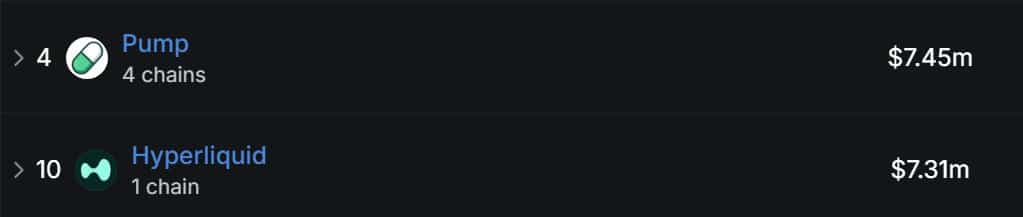
PUMP’s market sentiment was mostly strengthened by reports that PUMP finally surpassed HYPE in revenue.

According to Pump.fun Ecosystem, the protocol’s daily revenue jumped to $7.45 million, outpacing Hyperliquid [HYPE] at $7.31 million. The rising revenue implies that the ecosystem is generating significant income from its operations. 

Pump revenue
Source: Pump.fun ecosystem

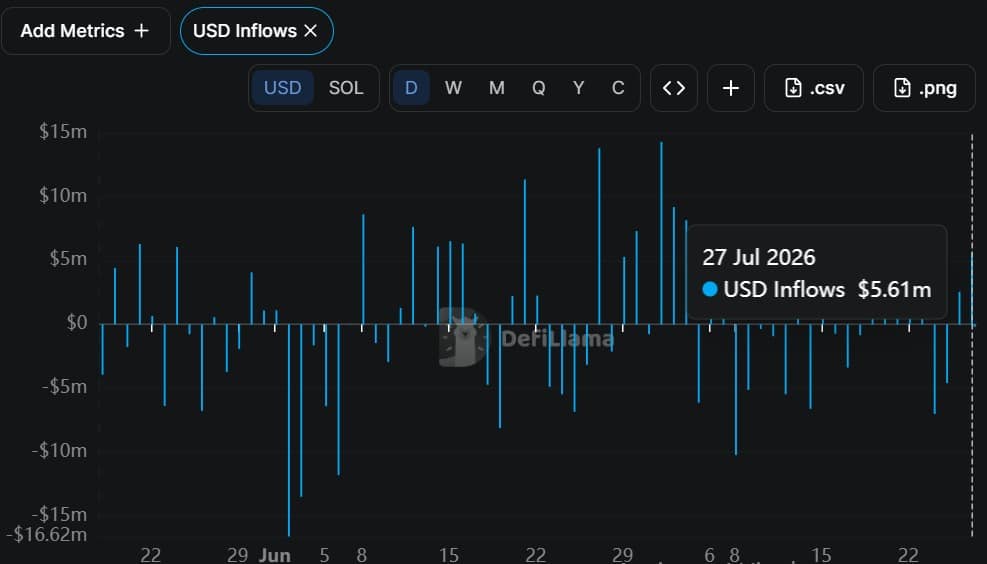
The protocol has generated $1 billion in fees with $448 million in annualized revenue. Additionally, daily capital inflow also remains steady.

PUMP USD Inflows PUMP USD Inflows
Source: Defillama

According to Defillama data, USD Inflows have jumped to $5.6 million as of writing, indicating that investors are actively engaged and continue to deploy capital into the protocol.

PUMP token buybacks continue 

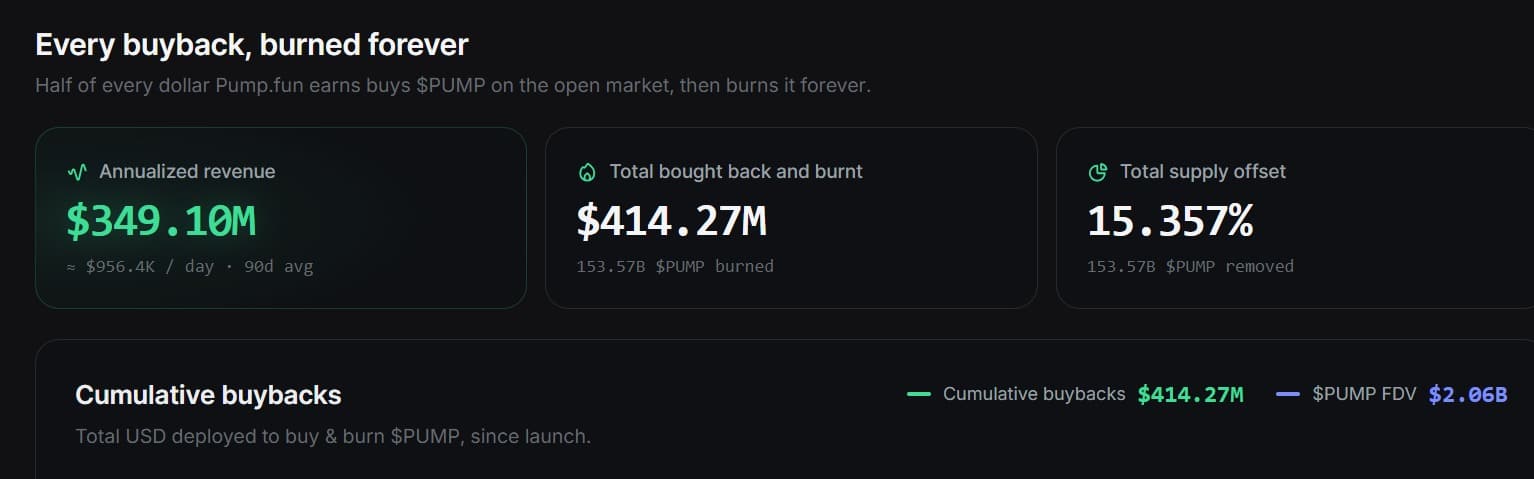
Notably, the project has spent a significant share of income generated by the network on token buybacks. In fact, the project has bought 154.57 billion tokens, worth approximately $414.27 million.

PUMP token buybacksPUMP token buybacks
Source: Pump.fun

In the latest purchase, the team acquired 216 million PUMP, according to Lbexplorer. In doing so, the team successfully removed 15.357% of the total supply. Such massive capital inflows show the team’s commitment to the project, especially during a period of extended weakness.

Recently, token buybacks have become one of the most embraced mechanisms by various protocols to reduce supply and market pressure. Often, this approach has provided short-term relief and boosted upward price momentum.

Can the upside momentum hold?

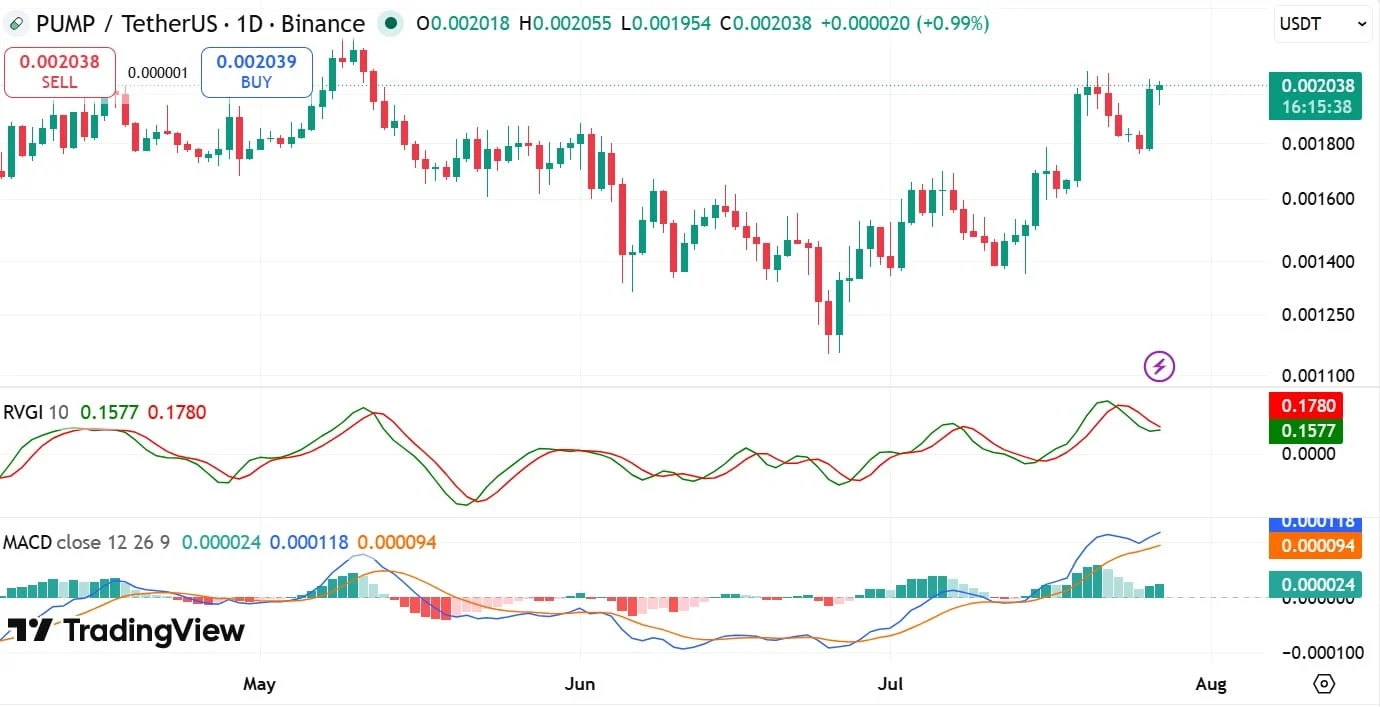
With protocol activity remaining steady, PUMP’s upside momentum is slowly strengthening. In fact, the altcoin’s MACD has remained on an upward trajectory, rising to 0.000118 as of writing.

PUMP MACD & RVGIPUMP MACD & RVGI
Source: TradingView

This signals buyers are gaining control, and the uptrend is likely to continue. To confirm the uptrend, the altcoin’s Relative Strength Vigor Index (RVGI) needs to make a bullish crossover.

The RVGI was rising while its signal line declined, which could clear a path for an upside crossover. If it happens, the altcoin will likely target $0.0022.

However, to achieve this, the altcoin must hold above $0.0020 or risk another drop towards $0.0017.


Final Summary

  • Pump.fun daily revenue flipped Hyperliquid, rising to $7.45 million, and bought back 216 million PUMP. 
  • PUMP surged 13% after successfully defending $0.002, as bulls target a move towards $0.0022. 


Source link

AI Should Not Be A Substitute For Thoughtful Leadership

0
AI Should Not Be A Substitute For Thoughtful Leadership


Everyone talks about how hard it is to find good people, but what about how hard it can be to hang onto them? We spend time and money recruiting talent, but we spend far less time talking about how easily we lose it. All too often, good people get caught in the crosshairs, and with the arrival of AI, more of them are being laid off.

According to a Forbes article by Ron Schmelzer published July 14, this January, Brookings researchers estimated that 37.1 million U.S. workers sit in the top quartile of occupational AI exposure. Most of those workers have a strong capacity to adapt, meaning they may have transferable skills, savings, credentials, or deep local job markets, the article says. A smaller group, 6.1 million workers, face both high exposure and low adaptive capacity. Brookings found that this vulnerable group is primarily located in clerical and administrative occupations, and 86 percent are women. They also found the risk is tied to local labor markets, including college towns, state capitals, and mid-sized regions with a large base of exposed office work. These people, some of them good workers, good people, are losing their jobs. They aren’t underperforming. They’re just caught in changing economic and value systems.

AI or Something Else?

Now, here’s the question more people are asking out loud: Is AI replacing workers or providing an excuse for job cuts? A New York Times article published in June reported that more than 150 technology companies had already cut at least 115,000 employees, according to Layoffs.fyi, which tracks job cuts in the industry.

The article goes on to report that a large body of research and analysis confirms that AI is frequently used as a convenient public scapegoat to justify corporate restructuring, to hide overhiring from previous years, and to appease Wall Street. Studies show that the technology is rarely the primary cause for widespread job replacement.

Writing for Forbes, Mary Whitfill Roeloffs quotes Jason Droege, CEO of AI infrastructure company Scale AI, who said CEOs are hiding behind the excuse of AI to reduce headcount and make cuts that would otherwise be considered ordinary “right-sizing.” Here’s the ugly part. Some of those “headcounts” are good people, high performers, who are simply caught in the slaughter. Firing, like hiring, requires discernment. We’re not supposed to play with people’s lives.

Early in my first CEO role, I promoted an individual who had everything needed to change performance and build a team that could get results. This individual understood their role, supported team members, and delivered results without question or worry. Furthermore, they lived the mission and values, encouraged feedback, and celebrated successes. Sounds too good to be true? It was true, but it didn’t matter when the financial realities hit.

We were losing far more money than we thought, and our revenue base couldn’t support our cost structure. Nor could we support the operating model (specifically, a robust matrixed service line structure) that our original strategy distinctly demanded. This individual was leading an area that fell off our adapted plan and new priorities, and they simply got caught up in the mess. If there is a happy ending in all this, the former employee is a CEO in their own right today, a position both earned and deserved. Still, really good people get caught up in these messes, and it’s not OK. Too many exceptional people become casualties of decisions that have little to do with their job performance.

Reversing the Trend?

According to CNBC, as of July 1, Ford is reportedly rehiring hundreds of experienced human engineers to address quality issues that automated systems couldn’t resolve. Furthermore, CNBC reported that Commonwealth Bank of Australia and IBM are also refocusing on human capital after making layoffs while investing in artificial intelligence technology. So, yes, the companies regretted their decisions to replace people with AI. They’ll find new people, and maybe some of the old ones will come back. The good people they terminated are gone forever, though.

We in corporate America are in love with the promise of AI, and we’re making decisions based on a promise, which is dangerous. Asking someone to leave is the most important decision you will make as a leader. Make sure it is well thought out.

Why don’t we start by doing what many of these companies are doing after the proverbial barn door is open? While we’re budgeting for tech, why don’t we invest in training or upskilling teams to prepare them to leverage AI? Why don’t we focus on collaboration versus replacement? Maybe then we won’t spend millions trying to recruit the very talent we chose to terminate.

AI is not an excuse for layoffs. I may have written the book on firing, but I believe wholeheartedly that it’s a tool that, in skilled and compassionate hands, can refocus and even save an organization. But there are times, and this is one of them, when it’s the wrong thing.


Source link

What are perps, anyway? Everything you need to know about crypto’s hottest trading instrument

0
What are perps, anyway? Everything you need to know about crypto’s hottest trading instrument

Perpetual swaps, also called perpetual futures or “perps” for short, are the dominant trading instrument in the crypto market, processing an estimated $40 to 50 trillion a year in volume. They dwarf spot trading, and they are the product that professional traders, hedge funds and retail speculators reach for when they want leveraged exposure to the price of bitcoin or tther without owning the underlying asset. Despite their ubiquity, the mechanics that make them work are not widely understood.

To understand perps, it helps to understand what came before them. In traditional finance, leveraged exposure to an asset typically comes through a futures contract, an agreement to buy or sell something at a set price on a specific date. When that date arrives, the contract expires and settles. Traders who want to maintain their position must roll it into the next contract.

In crypto’s early days, this practice created persistent problems. Futures traded at a premium to the spot price of bitcoin, a concept known as basis, which confused retail traders who wanted straightforward directional exposure. And every time a contract expired, positions closed regardless of whether traders wanted them to. BitMEX, the derivatives exchange founded by Arthur Hayes and Ben Delo in 2014, spent the better part of a year shortening contract durations trying to solve this, moving from quarterly to monthly to weekly to 48-hour to 24-hour expiries, but none of that was enough.

A contract that never expires

The perpetual swap, which Delo developed and BitMEX launched in 2016, resolved the problem by eliminating the expiry date entirely, creating a derivative contract that tracks the price of an asset indefinitely. There is no settlement date, no rolling and no expiry. Traders can hold a position for hours or years. This created an immediate structural challenge: without an expiry date to act as an anchor, nothing would naturally force the contract price back toward the spot price of the underlying asset. BitMEX solved this through a mechanism that has since become the industry standard.

Every eight hours, a payment is exchanged between traders on opposite sides of the market. If the perpetual swap is trading above the spot price, indicating excess demand for long positions, traders who are long pay traders who are short. If the perpetual swap is trading below spot, the payment runs the other way. The exchange takes no cut. The rate of this payment, known as the funding rate, is calculated based on how far the perpetual swap price has deviated from spot over the preceding eight-hour window. The further the deviation, the higher the rate. This creates a self-correcting equilibrium. When longs are being charged a substantial funding rate, it becomes expensive to hold the position, which reduces demand and pulls the price back toward spot. Market makers accelerate this process by shorting the perpetual swap and buying spot whenever a meaningful premium opens up, capturing the difference as profit. The funding rate mechanism is now used, in essentially the same form, by every major derivatives exchange in the world.

The role of leverage

The other defining feature of perpetual swaps is leverage. Most exchanges allow traders to control positions significantly larger than their deposited capital, with limits varying by platform and jurisdiction. At BitMEX in its prime, leverage of up to 100 times was available, meaning a 1% move in Bitcoin’s price would produce a 100% gain or loss on a fully leveraged position. To manage the risk this creates for the exchange, perpetual swap platforms use automated liquidation systems. If a trader’s losses approach the value of their deposited margin, the system closes the position before it can go negative, protecting the exchange from absorbing the deficit. The speed and reliability of that liquidation engine became a key competitive differentiator in the early years of the market, and remains central to how exchanges compete today.

Perpetual swaps are now the primary venue for price discovery in crypto. When bitcoin moves sharply, the move typically originates in perp markets before spreading to spot. The structure Delo built in 2016 has proven durable enough that regulators in the U.S. are now exploring its application to traditional assets, with the CME potentially listing perpetual swaps on equities. What began as a workaround for the limitations of crypto futures has become one of the most traded financial products in the world.


Source link