Home Blog Page 171

Wingstop Is Down 68% From Its All-Time High. Should You Buy Before July 29?

0
Wingstop Is Down 68% From Its All-Time High. Should You Buy Before July 29?


Inflation remains uncomfortably elevated, and that’s a drag on an array of consumer discretionary stocks, including Wingstop (NASDAQ: WING).

Ahead of its July 29 earnings report, shares of the fast-casual wing chain are off 43.5% year to date (as of July 23) and would need to more than triple to reclaim the record high. Analysts expect the Texas-based eatery to post earnings per share (EPS) of $1.02 on sales of $190.2 million. Given the stock’s weak state, if those estimates are missed or the company offers guidance that’s not to investors’ satisfaction, more declines could be in store.

Missed Nvidia in 2009? This Rare Signal Is Flashing Again. In 2009, a “Double Down” signal flashed for a little-known chipmaker called Nvidia. For the first time in years, that same “Total Conviction” signal is flashing for a company 1/100th the size of Nvidia. Continue »

A lot has to go right for Wingstop to rebound. Image source: Getty Images.

This fast-food stock has no margin for error, and a lot needs to go right against a challenging consumer backdrop. That’s not lost on Wall Street. On July 23, DA Davidson cut its price target on Wingstop to $200 from $230 while keeping a buy rating.

The new target implies upside of about 48% from the stock’s close on that day, but there’s some bad news. The research firm pared its second-quarter same-store sales forecast to a decline of 6% from a drop of 4%, citing stress on Wingstop’s core lower-income and younger customer base.

For risk-tolerant investors, there may be something to see here. Looking ahead, Wingstop is expanding rapidly, adding new locations across the U.S. Additionally, the stock has some support on Wall Street. Piper Sandler says the stock’s now lengthy decline has created a potentially favorable risk/reward scenario. At the same time, Guggenheim believes the shares can nearly double if the company returns to steady same-store sales growth.

Investors willing to take a flier on earnings may want to evaluate Wingstop’s commentary around its Smart Kitchens and its Club Wingstop loyalty program. Strength in those areas could contribute to a rebound down the road.

Should you buy stock in Wingstop right now?

Before you buy stock in Wingstop, consider this:

The Motley Fool Stock Advisor analyst team just identified what they believe are the 10 best stocks for investors to buy now… and Wingstop wasn’t one of them. The 10 stocks that made the cut could produce monster returns in the coming years.

Consider when Netflix made this list on December 17, 2004… if you invested $1,000 at the time of our recommendation, you’d have $377,990!* Or when Nvidia made this list on April 15, 2005… if you invested $1,000 at the time of our recommendation, you’d have $1,269,518!*


Source link

Aptos TVL falls 43% as capital flees – Can APT price recover?

0
Aptos TVL falls 43% as capital flees - Can APT price recover?


Aptos’ [APT] price action has been trending downward for the past 18 months. Last week alone, APT’s Total Value Locked (TVL) declined by about 43% as of writing, and the decline shows no signs of slowing.

Why is Aptos’ TVL crashing?

According to DefiLlama, TVL has been falling over the past two months. In early June, it was around $280 million but lost over $100 million by the end of the month.

In the past week, Aptos’ TVL tumbled from $156 million to $100 million, equivalent to about a 43% drop. Excluding active loans, double counts, staking, and liquid staking, the TVL stands at $63 million.

AptosAPT
Source: DefiLlama

One key factor behind last week’s sharp plunge was Echo Protocol pulling a significant amount of liquidity. As a Bitcoin [BTC]-focused bridge on Move chains, including Aptos, Echo’s exit hit APT the hardest.

This drop was an indication of low user activity. It was backed by the low Daily Active Addresses of around 40.5K. Additionally, earnings have declined by 72% from $366K to $103K, as per DefiLlama.

Such a decline could cause traders to pull out staked APT, viewing it as less profitable and potentially affecting the chain’s security. Notably, the decline in RWA TVL on Aptos should not be overlooked as it dropped 70% in the past thirty days.

AptosAptos
Source: rwa.xyz

Together, these factors led to capital flight from Aptos.

Is APT’s price responsible for the TVL drop?

Moreover, weak price performance played a part when measuring the TVL in terms of USD valuation. When the price of APT drops, the USD value of the TVL also drops.

At press time, APT was falling in a trend channel following a breakdown from a sideways range. This trend was reinforced by Open Interest (OI) crashing to around $42 million.

APTAPT
Source: APT/USDT on TradingView

Notably, APT was trading above the mid-level of the channel, a potential sign that bulls may be gaining strength in bear territory.


Final Summary

  • Aptos’s TVL crashed more than 43% in a week due to Echo Protocol pulling liquidity, RWA underperformance, low usage, and earnings. 
  • APT price was declining in a trend channel, with OI reinforcing that traders were not interested in the token. 


Source link

Netflix: Record Buybacks, Rising Margins, and a Slate in Need of a Refresh

0
Netflix: Record Buybacks, Rising Margins, and a Slate in Need of a Refresh


Netflix (NASDAQ: NFLX) shares fell 8% after its second-quarter report on July 16, yet the streaming giant is on pace for its most profitable year ever. The company spent nearly $5 billion on stock buybacks, its largest quarterly repurchase activity on record, and management reloaded its buyback authorization to $27 billion.

Missed Nvidia in 2009? This Rare Signal Is Flashing Again. In 2009, a “Double Down” signal flashed for a little-known chipmaker called Nvidia. For the first time in years, that same “Total Conviction” signal is flashing for a company 1/100th the size of Nvidia. Continue »

All of this comes at a time when investors appear disinterested, even as shares trade for less than 20 times earnings. The stock is down nearly 50% from last year’s high, weighed down by a valuation rerating and concerns that user engagement is softening against rising competition from short-form video, podcasts, gaming, and other streamers.

Image source: The Motley Fool.

A maturing model

Management argued on the earnings call last week that raw viewing hours don’t tell the whole story, and its Q2 shareholder letter described engagement as healthy. Management continues to expect revenue growth of 13% to 14% and an operating margin of 31.5% for the full year. That’s more than 1,000 basis points of margin expansion over the past three years.

The company’s cash flow profile is strengthening as revenue growth outpaces content spending growth. Free cash flow is expected to grow by more than 30% this year to $12.5 billion, up from previous guidance of $11 billion, as margins continue to expand. Given the stock’s performance of late, long-term Netflix shareholders are understandably left scratching their heads.

Management also noted that recent price increases in key markets, such as the U.S. and Mexico, have “gone well.” The $8.99 ad-supported subscription plan provides an affordable entry point, and the company expects ad revenue to roughly double to $3 billion in 2026. That’s still just 6% of revenue, but it carries higher incremental margins than the core subscription business, giving the margin story more room to run.

The battle for attention

Concerns surrounding user engagement were circulating heading into the report. On the earnings call, management pushed back on these concerns, arguing that engagement had improved slightly in the first half of the year. Still, the company’s decision to move its detailed engagement report from a semi-annual to an annual release raises questions, especially after it stopped reporting subscriber metrics last year.

The rising competition for eyeballs and content quality are factors that have weighed on the stock. According to Nielsen, YouTube now captures roughly 13.5% of U.S. television viewing, well above Netflix’s estimated 8% share. Netflix competes for viewing time, not only with other streamers, but with free alternatives like short-form video and podcasts.

More importantly, the consumer market for artificial intelligence (AI) is still in the early innings, creating further uncertainty around what the competitive landscape will look like in a few years.

That said, at 19 times forward earnings, the risk/reward has shifted. The stock hasn’t been this attractively priced in a long time. While the engagement story is far from settled, a high-quality platform like Netflix is worth investing in at a below-market multiple.

Should you buy stock in Netflix right now?

Before you buy stock in Netflix, consider this:

The Motley Fool Stock Advisor analyst team just identified what they believe are the 10 best stocks for investors to buy now… and Netflix wasn’t one of them. The 10 stocks that made the cut are built for long-term growth and could produce monster returns in the coming years.

Consider when Netflix made this list on December 17, 2004… if you invested $1,000 at the time of our recommendation, you’d have $377,990!* Or when Nvidia made this list on April 15, 2005… if you invested $1,000 at the time of our recommendation, you’d have $1,269,518!*

That performance is why people listen. With a track record of beating the S&P 500 by 4xStock Advisor offers a distinct advantage. Don’t miss the latest top 10 list, available with Stock Advisor, and join an investing community built for the long haul.

See the 10 stocks »

*Stock Advisor returns as of July 26, 2026.

Bryan White has no position in any of the stocks mentioned. The Motley Fool has positions in and recommends Netflix. The Motley Fool has a disclosure policy.

Netflix: Record Buybacks, Rising Margins, and a Slate in Need of a Refresh was originally published by The Motley Fool


Source link

Nuclear regulators no longer want to keep radiation exposure ‘as low as reasonably achievable’

0
Nuclear regulators no longer want to keep radiation exposure 'as low as reasonably achievable'

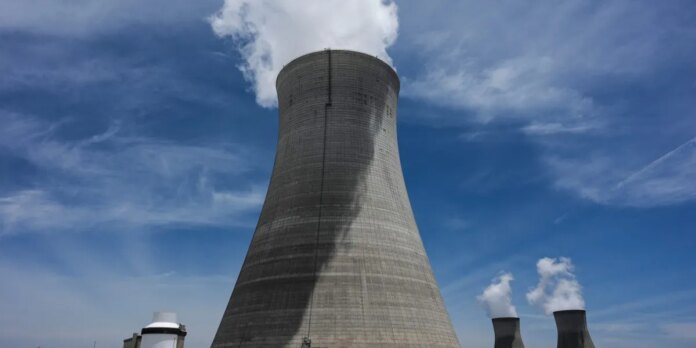
The Nuclear Regulatory Commission is proposing to eliminate a foundational safety principle that has for 50 years minimized the radiation people in the United States are exposed to and that has been adopted around the world.

Currently, facilities such as nuclear plants, hospitals or academic institutions that use radioactive materials must ensure radiation exposures are kept “as low as reasonably achievable” — the ALARA principle. The NRC proposal would abandon that philosophy while keeping a separate standard on maximum radiation exposure.

The two standards have worked together in radiation safety. Dose limits set the maximum amount of radiation the public and radiation workers can be exposed to, while ALARA kept radiation exposure as low as practical under those limits. Research shows radiation exposure increases a person’s chance of getting cancer, a risk that increases as the dose increases.

The dose limits are not changing. But the NRC, which regulates civilian nuclear energy technologies and radioactive materials, now wants to replace ALARA with a “graded approach” that includes several actions facilities must take depending on the potential dose of radiation to workers. More rigorous radiation protection measures would be required when approaching dose limits to ensure they aren’t exceeded.

This comes as President Donald Trump attempts to quadruple domestic nuclear energy production because of surging electricity demand amid a data center and artificial intelligence boom. Reforming the NRC is one way Trump is trying to speed up nuclear reactor development. He instructed the federal agency in an executive order last year to “ adopt science-based radiation limits.”

The Energy Department, which oversees national energy policies, has already stopped using ALARA. The NRC expects to finalize its radiation protection regulations in the coming months.

NRC Chairman Ho Nieh said the commission is not lowering the bar on safety.

“We’re just removing the ambiguity,” he said in a call with reporters. “But the standard for exposure to workers and the public, those are not changing. We’re just putting in place greater clarification.”

Nieh doesn’t expect major changes within the nation’s existing fleet of large, traditional reactors. But companies designing and building new, smaller reactors could move faster with a clearer picture of the radiation protection requirements, he said.

Without ALARA, could radiation doses creep closer to the limits?

The NRC said radiation exposure limits are set well below levels associated with health effects, and it expects remaining standards and industry practices to keep radiation doses far below the limits. There’s incentive to do so — it’s more expensive and time-consuming to work in areas with higher radiation because access must be restricted and more surveys are required.

The nuclear industry’s trade association agrees with the NRC.

“We will always continue to look at what can we do to reduce the dose to workers, and maintain our doses to the off-site public as low as possible,” said Doug True, chief nuclear officer at the Nuclear Energy Institute. “It’s not like we’re just going to throw open the doors and let everything run up to the limits.”

ALARA created a “moving target” for regulation, said Justin Friedman, a nuclear energy consultant who previously spent three decades at the U.S. Department of State. Getting rid of the rule would allow NRC scientists to make more rational decisions about appropriate levels of manageable risk, he added.

Some experts question the wisdom of eliminating ALARA

Edwin Lyman, director of nuclear power safety at the Union of Concerned Scientists, cautions that some parts of the NRC proposal could raise permissible radiation doses in certain cases, while still staying below the cap. Lyman highlighted a proposed revision to radionuclide emissions standards, in particular.

Radiation exposure to the general public is limited to 100 millirem per year. A typical dose of radiation from a chest X-ray is 10 millirem.

The NRC wants to increase its radionuclide emissions standards from a conservative 10 millirem per year dose to 25 millirem per year, based on a hypothetical person living in a house at the property line for a nuclear plant.

The NRC says actual doses to the public would remain far lower because, in reality, people live farther from nuclear sites and benefit from dispersion in air and water.

The NRC should improve, rather than eliminate, ALARA, Lyman said, to protect the public and workers. ALARA has become a political target because some people mistakenly believe radiation exposures have to be as low as possible no matter the cost, Lyman said. In reality, it allows tradeoffs.

Katy Huff, a former U.S. assistant secretary for nuclear energy, said in some cases, the requirement may be challenging to regulate. Additional clarity would improve the regulatory environment without harming the public, added Huff, a professor and department chair at the University of Wisconsin-Madison.

However, Huff said, she thought the NRC was going to clarify what reasonable means in ALARA without scrapping it. She said she’s open to being convinced the graded approach will be just as effective.

Radiation protection expert says proposal is a mixed bag

The National Council on Radiation Protection and Measurements, chartered by Congress to provide independent scientific guidance, has not formally weighed in yet. Council president Kathryn Higley said she personally likes some things in the 180-page document and thinks others are problematic.

The NRC should look at the whole picture for managing risk, she said. For instance, if a worker at a nuclear power plant were to enter an area where airborne radioactive materials are present, in keeping with ALARA, they might wear full personal protective equipment with respirators, said Higley, professor emeritus at Oregon State University. That makes them move slower, potentially subjecting them to heat stress that could hurt them more than a low dose of radioactivity, she said.

A concern with the proposal, Higley said, is that it maintains the current occupational dose limit for adult radiation workers at 5 rem, or 5,000 millirem, per year. With ALARA in place, the average dose to workers has been well below that cap.

The International Commission on Radiological Protection recommends an occupational dose of 2 rem per year on average. The NRC previously found it wasn’t justified to match that, because workers were exposed to less than that and changing regulations is costly.

Higley said the U.S. may need to align with the international community if ALARA is going away.


Source link

Why PEPE’s breakout hopes rest on THIS resistance after a 12% rally

0
Why PEPE's breakout hopes rest on THIS resistance after a 12% rally


The memecoin sector rebounded sharply in the past 24 hours, with market cap rising 13% to $25 billion. Reflecting this surge, Pepe [PEPE] gained over 12% at press time, trailing only Shiba Inu [SHIB], which recorded over 30% in daily returns.

Notably, the daily volume of PEPE aligned with the price surge as it exploded by 182%, reaching $305 million. The question now is whether PEPE will be able to overcome its resistance and lead the broader memecoin sector’s r

esurgence.

PEPE price attempts a resistance breakout

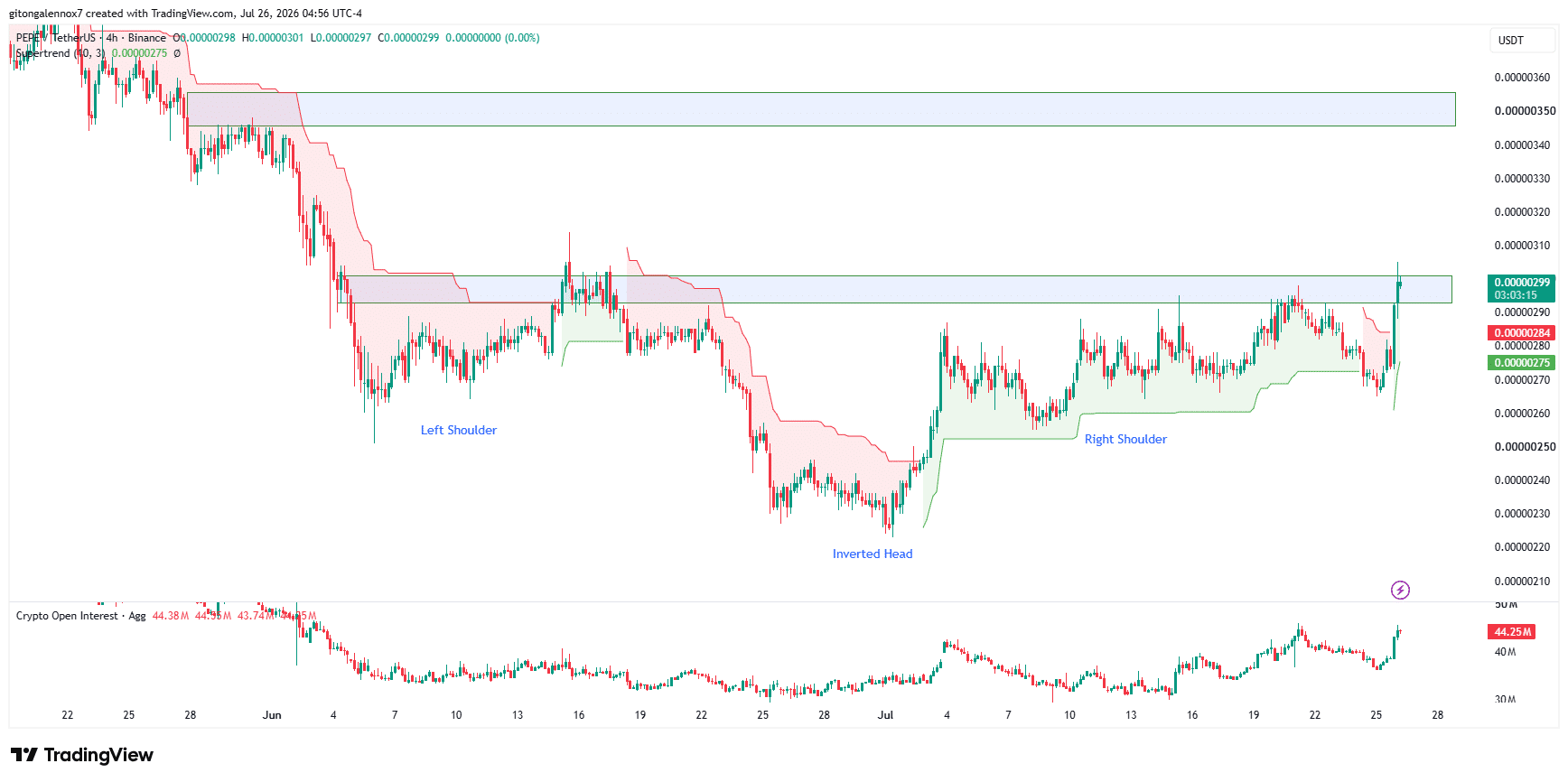
PEPE tested horizontal resistance at the $0.00000290-$0.00000300 zone, which formed at the neckline of an inverted heads-and-shoulders pattern.

The pattern hinted that bulls were gaining momentum, though bears challenged them at the neckline. Reinforcing the bullish strength, the SuperTrend indicator also flipped bullish.

Additionally, the Open Interest (OI) has been rising, though it pulled back over the past five days. On Binance, OI stood at $44.25 million. 

PEPE
Source: PEPE/USDT on TradingView

Therefore, for bulls to take control, PEPE must breach the neckline and stay above it. Otherwise, the rally may be considered a pullback within a larger bearish market.

Moreover, the bullish target past the neckline is at $0.00000350. If the breakout attempt fails, the bearish target remains at $0.00000250.

What’s behind PEPE’s uptick?

Aside from the strength in PEPE’s technical outlook, its chain activity was also thriving. The daily transaction amount increased by 11.34%, reaching $39.86 million, while holders rose by a mere 0.50%.

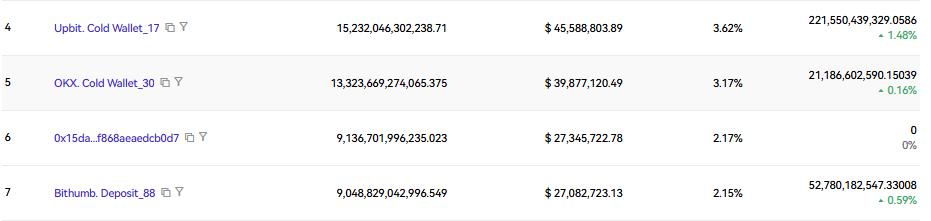
Moreover, institutions were accumulating PEPE. For instance, cold wallets of exchanges like Upbit, OKX, and Bithumb increased by over 2% collectively. Transfers to cold wallets hint at buying, while those to hot wallets signal potential distribution.

PEPEMeme coinsPEPEMeme coins
Source: OKLINK

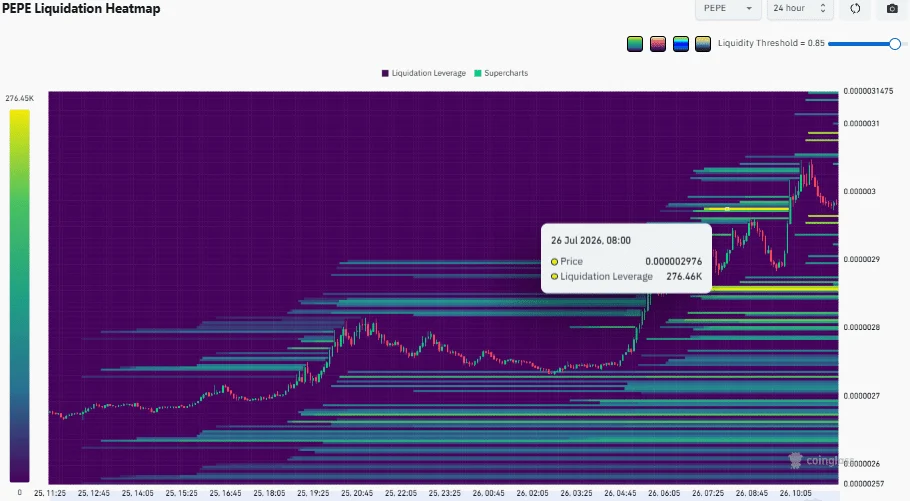
Moreover, over $2.80 million in short orders had been liquidated, amplifying the daily gains. This represented orders between $0.00000280 and $0.00000304, with the largest order liquidated worth $276K at $0.00000297.

PEPE MemecoinsPEPE Memecoins
Source: CoinGlass

Final Summary

  • PEPE surged 12% in the past 24 hours as transactions and short liquidations spike as the price rises. 
  • The memecoin market was rebounding strongly, but PEPE needs to turn the neckline into support to align with the broader sector rebound. 


Source link

U.S. regulator warns prediction markets against cutting corners in event contracts

0
U.S. regulator warns prediction markets against cutting corners in event contracts

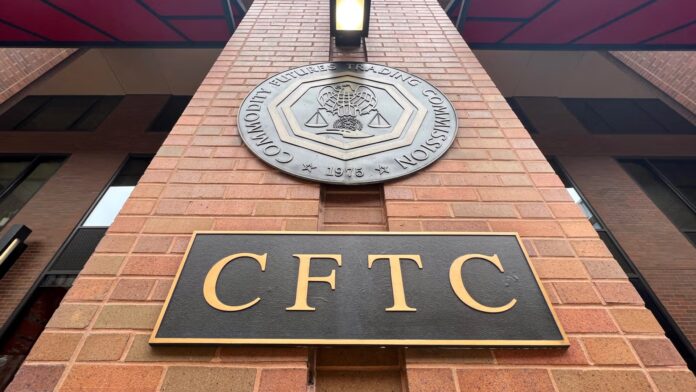
The U.S. Commodity Futures Trading Commission, which has claimed a role as the leading regulator of prediction markets firms run by companies such as Kalshi, Coinbase, Polymarket and Crypto.com, issued an advisory on Friday reminding the businesses that they shouldn’t cut corners with far-ranging contract certifications meant to encompass a wide array of events.

The agency said that “broad, template-style certifications should not be submitted,” marking the second time in recent months that the regulator has had to warn about overly generalized submissions.

Many of the “designated contract markets” regulated by the CFTC “continue to self-certify event contracts” (in other words, prediction market contracts) as broad templates “without supplying the terms and conditions of each proposed permutation and a concise explanation and analysis with respect to the product’s terms and conditions, the underlying commodity, and the product’s compliance,” the agency said.

The regulator said skirting the process can undermine its ability to work out whether the firm “has supplied all information, explanation and analysis required” and has “adequately evaluated the settlement methodology, data sources, and core-principles compliance of all permutations of the contract.”


Source link

2 Stocks to Buy Now as Google Raises Its AI Spending Forecast Yet Again

0
2 Stocks to Buy Now as Google Raises Its AI Spending Forecast Yet Again


Alphabet (Google) Image by Markus Mainka via Shutterstock

The artificial intelligence (AI) boom continues to fuel one of the biggest spending cycles the technology sector has ever seen, and Alphabet (GOOGL) is showing no signs of easing off the accelerator. 

The Google parent has once again increased its 2026 capital spending forecast to $195 billion to $205 billion, up from its earlier outlook of $180 billion to $190 billion, with most of that investment directed toward expanding AI infrastructure. 

More News from Barchart

While investors became cautious after free cash flow turned negative last quarter, the higher spending reinforced that demand for AI computing power continues to outpace supply. This news is expected to benefit Google suppliers Lumentum Holdings (LITE) and Celestica (CLS).

Lumentum is benefiting from rising demand for the optical networking components that move massive volumes of data across AI data centers. Meanwhile, Celestica supplies the advanced electronics manufacturing and networking infrastructure that hyperscale customers need to support their expanding AI deployments.

Not every AI supplier shared in the optimism. Broadcom (AVGO) holds concerns that it could lose some tensor processing unit business to MediaTek, even though Morgan Stanley (MS) recently described Broadcom as a “core AI winner.”

The market’s reaction shows investors are becoming more selective. As Google commits even more capital to AI, Lumentum and Celestica appear especially well positioned to benefit from the company’s next phase of infrastructure expansion.

Stock #1: Lumentum Holdings

Based in San Jose, California, Lumentum develops advanced optical and photonic technologies that power communications networks and a wide range of industrial applications. 

With a market cap of $64.9 billion, Lumentum’s portfolio spans high-performance laser systems used in semiconductor manufacturing, solar production, display technologies, electric vehicles (EVs), and battery manufacturing, giving it exposure to multiple long-term growth themes.

If AI has become the market’s favorite story, Lumentum has been one of its biggest beneficiaries. LITE stock has skyrocketed 665.7% over the past 52 weeks and gained 113.7% year-to-date (YTD), driven by surging demand for its optical networking components. 

As hyperscale data center operators increasingly swap copper connections for faster optical links, Lumentum has found itself in the sweet spot of the AI infrastructure buildout. 

www.barchart.com

Naturally, that kind of performance has come with a lofty valuation. LITE stock is currently trading at 101.26 times forward adjusted price-to-earnings. The figure sits well above the industry average and its own five-year historical multiple, showing that investors are willing to pay up.

The company’s latest quarterly results only reinforced the bullish narrative. On Tuesday, May 5, shares gained 1.88% after Lumentum reported Q3 FY2026 earnings that exceeded analyst expectations. Revenue increased 90.1% year-over-year (YOY) to $808.4 million, topping the $805.4 million analyst estimate. 

Robust demand across the Components and Systems business drove the growth, while laser chips and products such as pump lasers continued to benefit from AI-related spending and improving scale.

Delving deeper, gross margin expanded by 540 basis points, while operating margin improved by 700 basis points. Better execution, disciplined pricing, and a richer product mix boosted bottom-line growth. Adjusted EPS came in at $2.37, representing 315.8% YOY growth and surpassing analysts’ estimate of $2.24.

Wall Street expects the momentum to carry into the next quarter and beyond. Analysts project Q4 FY2026 EPS of $2.62, representing 718.8% YOY growth. For the full-year FY2026, EPS is estimated to rise significantly to $6.42, followed by another 159.7% jump to $16.67 in FY2027. 

Analyst sentiment is overwhelmingly positive, with Lumentum carrying an overall “Strong Buy” rating. Of the 22 analysts covering the name, 15 rate it a “Strong Buy,” two recommend a “Moderate Buy,” and five maintain “Hold” ratings.

The average price target of $1,098.45 represents potential upside of 31.8%, while the Street-High target of $1,400 signals a possible surge of 67.9% from current levels. 

www.barchart.com
www.barchart.com

Stock #2: Celestica

Headquartered in Toronto, Canada, Celestica delivers end-to-end design, engineering, manufacturing, and supply chain solutions for many of the world’s largest technology companies. 

With a market cap of $38.5 billion, it offers product design and development, new‑product introduction, engineering services, component sourcing, electronics manufacturing and assembly, testing, systems integration, and comprehensive supply‑chain management to customers worldwide.

The positioning has translated into exceptional shareholder returns. CLS stock has surged 92.3% over the past 52 weeks and gained 6.7% YTD, fueled by the relentless expansion of AI infrastructure. 

Demand for the company’s high-speed data center networking solutions, particularly its 800G products and next-generation 1.6T platforms, has accelerated sharply. Moreover, a streak of earnings beats and multiple upward revisions to full-year guidance make it clear why the stock has remained firmly in the market’s good graces.

www.barchart.com

Of course, quality rarely comes cheap. CLS stock is trading at 32.50 times forward adjusted price-to-earnings, a valuation that sits comfortably above both the industry average and the company’s own five-year average multiple. Investors have shown little hesitation because the company’s earnings have continued to justify the premium.

O Monday, April 27, Celestica reported its Q1 FY2026 results, and its shares climbed 2.93% as the company delivered another standout quarter, driven by robust AI-related demand in its Connectivity & Cloud Solutions (CCS) segment.

First-quarter revenue climbed 52.8% YOY to $4.05 billion, topping the $4 billion analyst estimate. Adjusted EPS came in at $2.16, while adjusted net earnings rose 78.1% to $249.5 million, underscoring the company’s ability to convert booming demand into meaningful profitability. 

For Q2 FY2026, Celestica projects revenue between $4.15 billion and $4.45 billion alongside adjusted EPS of $2.14 to $2.34. Looking further ahead, the company also lifted its full-year FY2026 outlook, now expecting $19 billion in revenue and adjusted EPS of $10.15.

Investors won’t have to wait long for the next update, as Celestica is scheduled to report Q2 FY2026 results before the market opens on Tuesday, July 28. Analysts anticipate Q2 FY2026 EPS to grow 68.3% YOY to $2.12. For full-year FY2026, EPS is forecasted to rise 71.8% to $9.57, followed by a 49% growth to $14.26 in FY2027. 

CLS stock has earned an overall “Strong Buy” rating. Out of 19 analysts covering the name, 17 have backed it with a “Strong Buy,” one maintains a “Moderate Buy,” while one carries a “Hold” rating. 

The average price target of $446.53 represents potential upside of 43.4%. For the more bullish among them, the Street-High target of $510 points to a possible rally of 63.8% from current levels.

www.barchart.com
www.barchart.com

On the date of publication, Aanchal Sugandh did not have (either directly or indirectly) positions in any of the securities mentioned in this article. All information and data in this article is solely for informational purposes. This article was originally published on Barchart.com


Source link