Home Blog Page 174

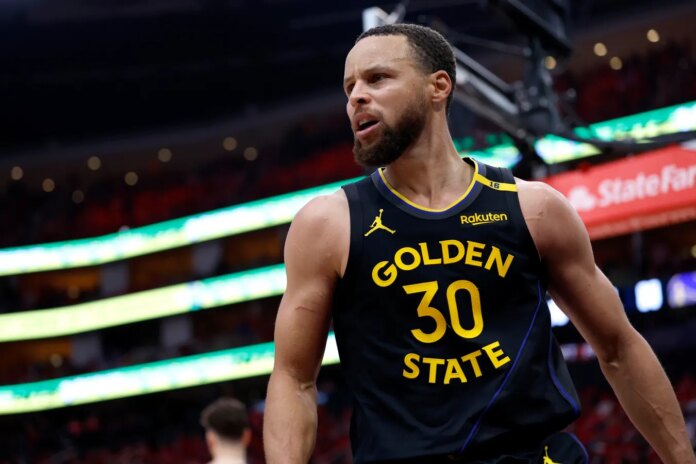
After LeBron James Miss, Can Warriors Maximize Stephen Curry’s Window?

0
After LeBron James Miss, Can Warriors Maximize Stephen Curry’s Window?


It was all a dream.

That LeBron James would join the Golden State Warriors after once facing them in four epic NBA Finals (2015-18). That James would play with Stephen Curry for something as memorable as the 2024 Paris Olympics gold-medal run. That James would also partner with Draymond Green, a former adversary, current friend and ally that delayed his free agency to give the Warriors additional cap space to secure James. That Steve Kerr’s bravado to a Warriors fan that they signed James was more than just the Warriors’ coach trolling playfully while sitting in traffic.

Instead, the Warriors struck out on their main free-agency target. After once causing league-wide envy for their dynastic run filled with four NBA championships, generational talent and strong organizational depth, the Warriors currently seem light years behind. That’s because their Plan B likely involves retaining their main roster that couldn’t advance past last season’s Play-In tournament. That’s because there aren’t many game-changing free agents available. That’s because they don’t have many assets beyond draft picks to make many significant moves.

Hence, the Warriors’ next pivot will likely entail the following scenarios. Hope that Curry will still provide elite shooting, playmaking and leadership. Retain Green, trust that he will still defend at an All-NBA level and that public trash talking with rookie Yaxel Lendeborg won’t lead into any serious tension. Lean on Kristaps Porzingis’ stellar passing, scoring versatility and spacing. Stay competitive until Jimmy Butler returns possibly midway through the season after rehabbing his right ACL since January. Foster Lendeborg’s intriguing upside with his two-way versatility. Try to acquire some decent talent through free agency (DeMar DeRozan) or trades (Trey Murphy). All while holding onto their draft capital for future deals. All while banking that their veteran-laden team can stay reasonably healthy.

It all seems like a flimsy house of cards.

The Warriors had a 25-19 record and the fourth-highest defensive rating (112.2) before Butler’s season-ending injury. That has convinced the Warriors they actually have a title-contending roster. But it seems foolish to bank on a 36-year-old Butler remaining just as effective after returning from an injury that has altered numerous NBA players’ careers, including former Warriors guard Klay Thompson. Porzingis has become a dependable plug-and-play complementary piece around star players, including his 2024 NBA title run with the Boston Celtics. But it seems naïve to think Porzingis can stay healthy consistently even when accounting for the Warriors’ strong medical staff and his own progress in recent years to improve his postural stability.

Lendeborg won’t face the same limitations as the Warriors’ failed draft picks in James Wiseman and Jonathan Kuminga. But even if Lendeborg makes a significant impact his rookie season, it’s unfair to expect he will become the main factor in elevating the Warriors’ season. Lastly, bank on Curry and Green’s enduring play, chemistry and relationship equity. But though both players have proven they can still keep the Warriors in the mix, they have not shown that’s enough to make a serious playoff push since last winning an NBA title four years ago.

Will the Warriors do enough to help Steph Curry?

Because of this backdrop, Warriors fans have become increasingly frustrated that the franchise has needlessly squandered Curry’s title window. Some believe Warriors majority owner Joe Lacob cares more about maximizing their long-term future following Curry’s eventual retirement than maximizing their current present with Curry still playing at an All-Star caliber level. It doesn’t help that the Sixers acquired both James and Jaylen Brown this offseason because of a familiar person. That would be Bob Myers, the president of the Sixers’ ownership group (Harris Blitzer Sports & Entertainment) after previously serving as the Warriors’ longtime general manager (2012-23).

It’s not clear to what extent the Warriors tried to acquire Brown when the Celtics dangled him in trade talks. But it seems doubtful the Celtics would have interest in Green or Butler along a handful of draft picks. Green has played a key role in the Warriors’ four NBA titles, but his value means more to the Warriors considering how well he complements Curry. Butler wouldn’t be available for at least half the season, and he likely wouldn’t be the best version of himself anyway. Thought the Celtics questionably banked on a 36-year-old Paul George to become consistent with his play and health, that move seems less risky than inheriting anything the Warriors could realistically offer.

As for James, he certainly found it enticing to play with Curry and Green out of respect for their basketball IQ and championship experience. James had initially floated that he hoped to be able to spend more time with his wife (Savannah) and daughter (Zuri), making it theoretically possible for James to stay in nearby Los Angeles during the team’s offdays. James would have loved to team up again with Anthony Davis, but the Wizards have not made him available in trade talks. The Warriors also didn’t consider it worth it to deal their first-round picks to Davis considering his injury history.

Therefore, it’s not about beating up on the Warriors for missing out on potential moves this summer with either Brown, James or both. This illustrates, though that the Warriors seem boxed in with their current circumstances. Three years after Kevin Durant left the Warriors as a free agent, the Warriors won an NBA title partly because they made the best of Durant’s departure. Myers oversaw the Warriors dealing Durant to Brooklyn in a sign-and-trade for D’Angelo Russell, which they flipped a season later to Minnesota for Andrew Wiggins and a first-round pick. The Warriors smartly drafted and groomed Jordan Poole. Myers oversaw the Warriors misfiring with their No. 2 pick in 2020 (Wiseman) and No. 7 pick in Kuminga (2022). But the Warriors still had enough with Curry and Green’s enduring excellence, Wiggins’ complementary role, Poole’s growth and Thompson’s somewhat promising return from injury.

The Warriors couldn’t sustain that championship play. Green’s pre-season punch toward Poole certainly didn’t help chemistry. But the Warriors eventually invested more in Green for his enduring defense and soured on Poole for his inconsistent play and team-oriented habits. Thompson no longer looked like the elite two-way player before his two season-ending injuries. Wiggins struggled to play as effectively both because of health and inconsistent play. Following a second-round exit to the Los Angeles in 2023, the Warriors dealt Poole to the Washington Wizards for Chris Paul and Thompson to the Dallas Mavericks in a sign-and-trade for Josh Green and two second-round picks. None of those moves materialized into anything. But the Warriors finally felt like they were back in the title mix after acquiring Butler from Miami with Wiggins as the centerpiece leading into 2025 trade deadline.

That helped the Warriors go 23-7 with Butler and sneak into the Play-In tournament as a seventh seed. They survived a seven-game first-round series against the second-seeded Houston Rockets. But they lost to the Wolves in five games mostly because Curry suffered a Grade 1 left hamstring strain in Game 1. The Warriors appeared ready to contend again last season up until Butler’s season-ending injury. That unraveled everything. They couldn’t entice the Bucks to listen to any trade offers for Antetokounmpo. The Warriors settled on acquiring Porzingis from the Atlanta Hawks for Kuminga and Buddy Hield. But without Butler, the Warriors could only win one Play-In game.

Two months later, the Warriors appear only slightly better simply because their main core has had time to heal this offseason. But what about when the season actually starts? The Warriors simply hope to stay competitive enough before finding a better market leading into the trade deadline. Then and now, the Warriors’ front office need to become more aggressive and creative out of respect for Curry, his enduring play and his graceful loyalty.

Source link

Southside Bancshares, Inc. Q2 2026 Earnings Call Summary

0
Southside Bancshares, Inc. Q2 2026 Earnings Call Summary


Southside Bancshares, Inc. Q2 2026 Earnings Call Summary – Moby

Strategic Performance and Market Dynamics

Our analysts just identified a stock with the potential to be the next Nvidia. Tell us how you invest and we’ll show you why it’s our #1 pick. Tap here.

  • Net income growth was primarily driven by increased non-interest income and disciplined expense management, offsetting a slight decrease in net interest income.

  • Loan balances remained flat as strong new production of $487 million was neutralized by $297 million in payoffs, heavily weighted toward commercial real estate and multifamily properties.

  • Management successfully reduced classified assets by $31 million, largely due to the resolution of specific CRE credits through open market sales and refinances.

  • Strategic expansion into North Texas accelerated with the early completion of the Fort Worth wealth management team and the commencement of a new branch in the Salina-Prosper area.

  • The loan portfolio mix shifted toward C&I and owner-occupied real estate, which now represents 17% of total loans, up from 16% at year-end 2025.

  • The bank maintains an asset-sensitive posture with 62% of loans being floating rate, positioning the institution to benefit from potential interest rate increases.

Strategic Outlook and Guidance Assumptions

  • Management reiterated a mid-single-digit loan growth target for 2026, supported by a healthy $1.47 billion pipeline and anticipated funding of recent construction originations.

  • Non-interest expense is projected to average approximately $40.5 million per quarter for the remainder of the year.

  • The bank expects to maintain the securities portfolio balance between $2.7 billion and $2.8 billion, reinvesting cash flows into mortgage-backed securities and bank sub-debt.

  • Guidance assumes the Fed funds rate remains flat for the rest of 2026, though management noted that any rate hikes would likely have a positive impact on net interest income.

  • Approximately $336.6 million in fixed-rate loans are scheduled to reprice or mature within 12 months, with yields expected to increase by approximately 200 basis points upon repricing.

Structural Shifts and Risk Factors

  • Net interest margin compressed by 11 basis points to 2.90%, driven by higher funding costs following the maturity of $245 million in cash flow hedges in the first quarter.

  • Wholesale funding sources were repositioned from brokered deposits into FHLB advances and Fed discount window borrowings to optimize for better rates and terms.

  • Non-interest income benefited from non-recurring BOLI death benefits and a 26.4% year-over-year increase in trust fees following the North Texas team expansion.

  • Management is actively evaluating M&A opportunities in the $1 billion to $4 billion range, specifically targeting fill-in geographies within Texas.


Source link

Inside the EU’s new country-level crypto ban — Here’s why HTX and 13 platforms were targeted

0
Inside the EU’s new country-level crypto ban — Here's why HTX and 13 platforms were targeted


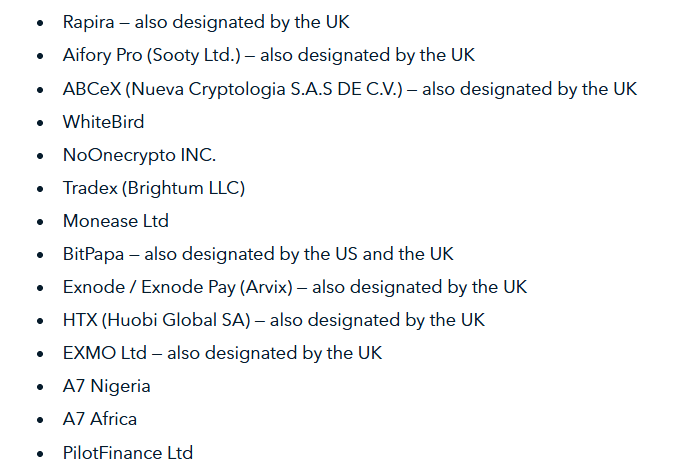
The European Union (EU) has widened its sanctions targeting Russia by banning Justin Sun-owned HTX and 13 other crypto platforms.

The platforms span the United Arab Emirates (UAE), Panama, Georgia, the Marshall Islands, Kyrgyzstan and Belarus. They include BitPapa, A7 networks and more.

EU crypto
Source: TRM Labs

According to the EU Council, these platforms have acted as conduits for blocked Russian entities to move funds and bypass existing sanctions. The transaction ban prohibits EU persons and firms from doing business with these crypto platforms. 

In particular, Justin Sun-owned HTX’s appearance on the sanctioned list is very noteworthy. The exchange was banned by the U.K in May.

To counter possible freezing of funds, HTX moved its reserves to an unknown third party and has been switching hot wallets, making it difficult to conduct sanction screening. 

However, the EU’s aggressive action to ban crypto services in a third country could exert more pressure and signal an evolution of crypto in sanction enforcement. 

What EU crackdown means for crypto industry

Russia resorted to crypto for oil exports and other international trade after being sanctioned and subsequently removed from SWIFT. It fast-tracked its crypto regulatory framework during this period.

Crypto’s touted non-sovereign status made it a popular alternative to move funds for most sanctioned countries. In fact, Venezuela and Iran also went the same crypto route to bypass Western sanctions. 

However, the EU’s new ability to ban offshore platforms, a third country, or even cut off an entire regional bloc, will likely become an effective regulatory pressure. According to Chainalysis,

For the crypto industry, this package signals a shift in how regulators view platforms’ role in sanctions enforcement.

The firm added,

Platforms that fail to prevent sanctioned entities from using their services are now targets themselves, and the third-country ban mechanism means entire jurisdictions could be cut off from European markets if they host platforms facilitating evasion.

EU crypto EU crypto
Source: TRM Labs

For the EU, the country-level ban is the new and most effective tool to deal with crypto-based sanctions evasion. 

It’s a strong deterrent to countries hosting platforms that help Russia evade EU sanctions.

Here, it’s worth noting that the U.S froze over $1B of crypto funds tied to Iran, as part of the tools to end the ongoing West Asia crisis. It also sanctioned several local crypto firms and their leadership.

In a nutshell, crypto is no longer a loophole or paradise for sanctioned entities and alleged criminal players. In fact, it is increasingly becoming a crucial chokepoint to aggressively implement sanctions. 


Final Summary

  • EU has extended the transaction ban across 14 crypto exchanges in a new move that could block an entire country for aiding sanctions evasion.
  • Analysts believe this is a new regulatory risk for crypto platforms and host countries with weak sanctions screening. 


Source link

Semiconductor Crossroads: Healthy Consolidation or Deeper Repricing?

0
Semiconductor Crossroads: Healthy Consolidation or Deeper Repricing?


This article was originally published on ETFTrends.com.

The semiconductor market, which has significantly outperformed the broader market in 2026 is seeing a pullback in July. The factors driving this rise include aggressive profit-taking, valuation concerns, and unwinding leveraged trades following a historic AI-fueled rally.

Key Takeaways

  • The recent semiconductor market pullback is fueled by institutional profit-taking amid record valuations, the unwinding of leveraged positions, and concerns regarding the sustainability of hyperscaler capital expenditures, which could threaten revenue if order volumes slow.

  • Despite significant drawdowns from June peaks, major sector ETFs like SMH and SOXX have continued to attract billions in new capital, potentially signaling persistent investor confidence despite the volatility.

  • With valuations stretched, Q2 earnings results and forward guidance have become a primary driver of semiconductor performance. Sustained growth from chip manufacturers is now essential to justify current pricing levels and avoid further repricing.

Drivers of the Market Correction

Following quarters of record gains, the market is seeing a recalibration of expectations, rather than a collapse in demand. The VanEck Semiconductor ETF (SMH) currently sits at a Price to Earnings ratio of 49.64, significantly higher than U.S. broad market funds such as the State Street SPDR S&P 500 ETF (SPY), with a P/E ratio of 22.70. With semiconductor firms trading at record valuations, investors began taking massive profits and trimmed overweight positions to reduce concentration risk.

Additionally, Mega-cap hyperscalers such as Amazon (AMZN), Google (GOOG), Meta (META), Microsoft (MSFT), and Oracle (ORCL) account for a large portion of semiconductor capital expenditures. As AI capital expenditures continue to increasingly compress free cash flows, investors are demanding to see strong revenues from these investments. If just one of these hyperscalers begins slowing semiconductor orders, it could lead to significant revenue declines for semiconductor manufacturers.

Furthermore, when the semiconductor market was surging, many investors turned to products like daily leveraged ETFs to amplify returns. When the sector began to stall, funds such as the Direxion Daily Semiconductor Bull 3X ETF (SOXL) were forced to sell heavily at the market close to maintain the fund’s target exposure, driving semiconductor companies stock prices lower.

ETF Performance Amid Market Volatility

The impact of this market pullback on semiconductor ETFs has been heavily dependent on the level of portfolio concentration. Concentrated pure-play semiconductor funds such as SMH and the iShares Semiconductor ETF (SOXX) have seen month to date declines of -8.54% and -10.63% respectively. Despite the declines, semiconductor funds have maintained strong inflows with SMH gaining $1.60 billion and SOXX pulling in $6.13 billion.


Source link

How to Turn Your Real-Life Experience Into Established Authority

0
How to Turn Your Real-Life Experience Into Established Authority


Opinions expressed by Entrepreneur contributors are their own.

Key Takeaways

  • The AIB Concept offers a clear, sophisticated and actionable blueprint for turning localized execution into international prestige and premium market dominance.
  • When your raw commercial expertise is translated into the universal, undisputed language of validated science, it effortlessly breaks through geographical, cultural and competitive barriers.
  • Traditional digital marketing can open the door for your business, but it is scientific validation that keeps that door open permanently.

For ambitious entrepreneurs, scaling past a certain threshold often reveals an invisible glass ceiling. You conquer your regional market, build a stellar track record of execution, and establish ironclad local trust. But the moment you attempt to break into premium market segments, attract institutional partners, or position your brand at a world-class tier, the rules of engagement change overnight.

Suddenly, your decade of hands-on experience is competing with endless digital noise. In an era of aggressive marketing campaigns and unverified commercial claims, “visibility” has lost its premium status. The modern global marketplace — flooded with self-proclaimed experts and repetitive sales pitches — has grown deeply skeptical.

Today, the ultimate currency for high-end market positioning and sustainable corporate growth is not just an increased marketing budget; it is scientific validation and intellectual thought leadership. To bridge this structural gap, forward-thinking business leaders are turning to a sophisticated, proprietary framework: The AIB (Academia-Industry Bridge) Concept.

The AIB Concept is a premium branding protocol that systematically decodes an entrepreneur’s practical, on-the-ground expertise and translates it into globally recognized, scientifically backed authority. Here is a deep dive into how this protocol serves as the ultimate marketing and branding catalyst for modern entrepreneurs.

Moving beyond surface-level marketing

When a business enterprise or an entrepreneur relies solely on traditional marketing funnels, their brand reputation remains entirely subjective. Testimonials, reviews and standard case studies are undoubtedly valuable, but they are increasingly viewed by sophisticated, high-net-worth clients as carefully curated anomalies.

Premium clients, institutional venture capitalists and multinational corporate partners do not just buy what you do; they demand to know the exact blueprint of how you do it. They actively look for standardized frameworks, structured methodologies and empirical, unassailable proof. In every high-stakes negotiation, they ask:

  • Is this operational process truly standardized, or is it reliant on individual luck?
  • Are these corporate results measurable, predictable and fully replicable?
  • Does this brand possess true intellectual sovereignty over its domain?

By implementing the strategic AIB Concept, you shift the business narrative entirely. You stop fighting in the crowded, low-margin arena of “who shouts the loudest” and enter the exclusive, high-value tier of “who defines the industry standard.”

The 4-step AIB branding protocol

To effectively transform raw, localized industry experience into an elite, scientifically validated brand identity, entrepreneurs must execute a deliberate, four-stage transition:

Every elite entrepreneur operates on implicit, internal systems — unique decision-making matrices, proprietary workflows and operational nuances that drive their daily success. However, this genius often remains uncodified. The first step of the AIB protocol is to isolate these invisible variables. By extracting your practical expertise and separating it from daily operational chaos, you transition from a skilled operator to a conceptual innovator. You begin to see your business not just as a revenue generator, but as a methodological breakthrough.

2. Scientific codification

Anecdotes inspire audiences, but empirical data convinces markets. Moving from localized commercial success to unquestioned global authority requires a strict academic and research methodology. Through the AIB framework, your proprietary industry methods are codified into structured research papers, comprehensive analytical case studies and peer-reviewed insights. When your business methodology is officially indexed on elite intellectual platforms, your authority becomes completely decoupled from your physical presence and geographic location.

3. Strategic brand transition

Once the empirical, scientific foundation is firmly laid, your outward marketing narrative must undergo a radical evolution. Before executing the AIB protocol, your branding likely focused on “years in business,” “customer satisfaction” or standard marketing rhetoric. Post-AIB, the narrative pivots entirely to “the proprietary protocol,” “evidence-based frameworks” and “measurable outcomes.” Your dialogue with the market elevates from a basic sales pitch (“Trust our experience”) to an authoritative statement (“Review our globally validated methodology”).

4. Institutionalizing the corporate legacy

True intellectual authority is not built through a one-time media campaign or a single press release; it is an ongoing feedback loop between the rigorous discipline of academia and the agile execution of industry. By consistently feeding your real-world industry insights into structured research environments, your corporate entity ceases to be viewed as a mere service provider or product manufacturer. Instead, it becomes an institutional industry benchmark — a reference point that competitors are forced to study.

The strategic power of a “scientist-entrepreneur”

In the realm of personal branding, the AIB Concept introduces a powerful psychological shift in market perception. It positions the founder not just as a standard business owner or CEO, but as a scientist-entrepreneur. This elite alignment perfectly mirrors the principles of “Quiet Luxury” — a sophisticated branding philosophy that rejects loud, aggressive self-promotion in favor of understated, undeniable authenticity and deep substance.

On a corporate level, an AIB-driven brand enjoys an unfair competitive advantage in the market. When your real estate, hospitality, financial, manufacturing or engineering projects are backed by documented scientific validation, your sales cycle shrinks dramatically. You are no longer wasting time convincing a skeptical client; your validated, peer-reviewed methodology does the heavy lifting for you during negotiations.

Furthermore, this intellectual positioning turns your company into an absolute magnet for top-tier, elite talent. High-performing professionals and industry innovators do not want to work for ordinary companies; they want to align themselves with organizations that operate at the cutting edge of global industry development and scientific thought.

The bottom line

In the hyper-competitive modern entrepreneurial landscape, the ultimate sustainable advantage belongs entirely to those who write the rules and define the metrics, not those who merely follow them.

The AIB Concept offers a clear, sophisticated and actionable blueprint for turning localized execution into international prestige and premium market dominance. When your raw commercial expertise is translated into the universal, undisputed language of validated science, it effortlessly breaks through geographical, cultural and competitive barriers. Traditional digital marketing can open the door for your business, but it is scientific validation that keeps that door open permanently.

Key Takeaways

  • The AIB Concept offers a clear, sophisticated and actionable blueprint for turning localized execution into international prestige and premium market dominance.
  • When your raw commercial expertise is translated into the universal, undisputed language of validated science, it effortlessly breaks through geographical, cultural and competitive barriers.
  • Traditional digital marketing can open the door for your business, but it is scientific validation that keeps that door open permanently.

For ambitious entrepreneurs, scaling past a certain threshold often reveals an invisible glass ceiling. You conquer your regional market, build a stellar track record of execution, and establish ironclad local trust. But the moment you attempt to break into premium market segments, attract institutional partners, or position your brand at a world-class tier, the rules of engagement change overnight.

Suddenly, your decade of hands-on experience is competing with endless digital noise. In an era of aggressive marketing campaigns and unverified commercial claims, “visibility” has lost its premium status. The modern global marketplace — flooded with self-proclaimed experts and repetitive sales pitches — has grown deeply skeptical.

Today, the ultimate currency for high-end market positioning and sustainable corporate growth is not just an increased marketing budget; it is scientific validation and intellectual thought leadership. To bridge this structural gap, forward-thinking business leaders are turning to a sophisticated, proprietary framework: The AIB (Academia-Industry Bridge) Concept.


Source link

Mirae plans to turn crypto exchange Korbit into something Korea hasn’t seen before

0
Mirae plans to turn crypto exchange Korbit into something Korea hasn't seen before

Korbit currently holds less than 1% of South Korea’s domestic crypto market, far behind giants Upbit and Bithumb. When asked directly about its strategy to compete, Mirae Asset stressed that the goal is not to overtake any other company or exchange, but to promote sustainable growth of the digital assets industry in South Korea.

“We intend to combine Mirae Asset’s extensive global investment expertise with Korbit’s digital asset capabilities to promote the sound and sustainable growth of the digital asset industry in Korea and globally.”

In other words, Mirae Asset isn’t trying to outdo Upbit or Bithumb, but to offer a one-stop shop that brings together institutional investment capabilities, research, education, and digital asset infrastructure under one roof.

The group also told CoinDesk it would strictly comply with AML, KYC, and fraud-detection standards across all areas, a signal that Digital X is being positioned for institutional clients as much as for retail traders.

Mirae Asset’s affiliate Mirae Asset Consulting recently increased its stake in Korbit to 97.15%, completing the acquisition after receiving regulatory approval from South Korea’s Fair Trade Commission.

“The acquisition was carried out through lawful procedures following a thorough review of the relevant laws and regulatory framework. Mirae Asset Consulting was selected as the acquiring entity after comprehensive consideration of each affiliate’s business purpose and role, as well as its potential synergies with the digital asset business,” the firm said.


Source link

How to Create Warren Buffett’s 90/10 Portfolio, But With an 11% Yield

0
How to Create Warren Buffett’s 90/10 Portfolio, But With an 11% Yield


Quick Read

  • Same allocation, different objective: This portfolio keeps Buffett’s 90/10 stock-and-cash framework while emphasizing high income instead of capital appreciation.

  • Tax-aware income strategies: Both SPYI and CSHI use SPX index options, Section 1256 tax treatment, tax-loss harvesting, and have historically classified a significant portion of distributions as return of capital.

  • Higher income comes with trade-offs: An 11.26% average distribution yield is attractive, but investors should expect higher fees and the potential to lag a traditional S&P 500 and Treasury bill portfolio during bull markets.

  • Don’t wait: the analyst who called NVIDIA in 2010 just revealed his top 10 AI stocks. See the full list FREE now.

Warren Buffett has been remarkably candid about his own mortality, and in doing so has offered some of the best investing advice for everyday investors. Buffett instructed that 90% of his estate be placed in a low-cost S&P 500 index fund and the remaining 10% in short-term U.S. Treasury bills after his death.

Alex Wong / Getty Images News via Getty Images

It’s an intentionally simple portfolio that combines long-term equity growth with a small allocation to highly liquid, low-risk assets. While it’s admittedly light on international diversification and heavily tilted toward U.S. equities, it’s inexpensive, easy to maintain, tax efficient, and backed by decades of evidence supporting index investing.

The trade-off is that the portfolio is designed almost entirely for capital appreciation. If you’re retired and want to generate income, you’re generally left with two choices: periodically sell shares or overlay an options strategy such as covered calls. Fortunately, there’s a third option.

By swapping Buffett’s underlying investments for a pair of ETFs from NEOS Investments, it’s possible to maintain the same 90/10 split between the S&P 500 and short-term Treasury bills while generating a weighted average distribution yield of roughly 11.26%. The trade-off is giving up some upside potential in exchange for substantially higher cash flow.

Don’t wait: the analyst who called NVIDIA in 2010 just revealed his top 10 AI stocks. See the full list FREE now.

NEOS S&P 500 High Income ETF (SPYI)

The NEOS S&P 500 High Income ETF (SPYI) serves as the portfolio’s equity allocation. Rather than simply owning the S&P 500, SPYI combines a portfolio of large-cap U.S. stocks with an actively managed options strategy that both buys and sells SPX index options. Using index options instead of options on individual ETFs creates several potential tax advantages within the fund.


Source link