Home Blog Page 189

He Moved to the US on a Green Card and Wouldn’t Do the Same on an H-1B

0
He Moved to the US on a Green Card and Wouldn't Do the Same on an H-1B


This as-told-to essay is based on a conversation with Mohamed Zeeshan, 32, an Indian national and green card holder, who lives in Arlington, Virginia. The following has been edited for length and clarity.

My parents are both Indian. I was born in Indonesia because my father’s job took him there, but we moved back to India when I was 7. In Indonesia, everyone knew me as the Indian kid, and in India, everyone knew me as the kid from Indonesia.

Since I’d spent my early life as a foreigner, I developed an interest in international affairs. That led me to the US, where I pursued a master’s in the field at Columbia in 2016.

The US drew me because I was enamored by Ivy League universities. I was also a huge fan of President Barack Obama, who I related to because he grew up in Indonesia and has spoken publicly about his identity across different cultures.


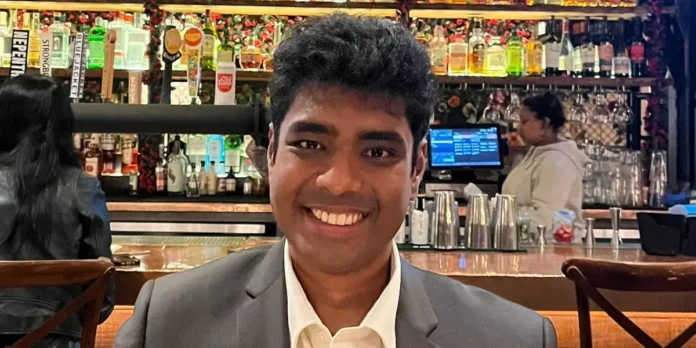
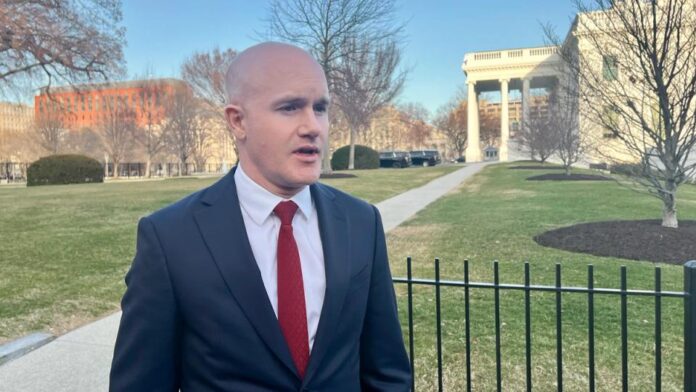
Mohamed Zeeshan is wearing a suit with a dark blue tie.

Zeeshan studied international affairs at Columbia. 

Courtesy of Mohamed Zeeshan


My family was apprehensive about my decision. I come from a family of engineers, doctors, bankers, and lawyers, and an education in international affairs was seen as foreign and unconventional, but we struck a bargain; I could do it if I secured some tuition assistance.

I graduated from Columbia in 2018 and secured a green card in 2023. I’m patriotic about American values and would like to become a US citizen. Recently, I’ve grown concerned that it’s becoming increasingly uncertain and unpredictable for immigrants to build a life here.

My path to a green card wasn’t linear

I wanted to stay in the US after graduating and find a job using my Optional Practical Training (OPT), a work authorization for international students.

After the 2016 election, changes to rhetoric around immigration policies created uncertainty. I felt that employers were unwilling to take a risk on an international student like me. Instead of relying on the OPT-to-H-1B pathway, as many students do, I left the US and went to the Middle East to work for a management consulting firm.

A few years later, in 2021, I pursued an alternative pathway to the US: self-petitioning for a green card from abroad.

I had to submit extensive evidence showing that my work was in the national interest. My background in research and my work in public-interest issues helped me build a strong portfolio.

I got it in 2023, and no longer needed a visa or employer sponsorship to work in the US. Today, my wife and I rent an apartment in Arlington, Virginia. Our family life is unconventional by Indian standards, since couples are expected to have kids immediately after marriage, and we haven’t yet.

We’re holding off because my wife is still waiting for her green card, and we want to minimize uncertainty about her situation before having kids.

I was drawn to America for its values, but today’s uncertainty is concerning

Economic upliftment wasn’t the reason I moved to the US. When I lived in Dubai, I paid no income tax, and earned more there than I did after I got my green card and first job in the US.


Mohamed Zeeshan

Zeeshan appreciates America’s free speech and entrepreneurial culture. 

Courtesy of Mohamed Zeeshan


Instead, I was drawn to American ideals of free speech — the ability to write and speak freely about issues, even if they’re controversial. India is a democracy, but it has a Hindu majority, and I’m Muslim.

I’ve written a book about India as an emerging power, and I care about improving policymaking there, but I’ve felt people have hated me for critiquing India’s policymaking in my writing.

In 2025, I started my own consulting firm. In the US, I feel like I can pursue my entrepreneurial ambitions with less bureaucratic regulation.

I think social and cultural reasons are a big part of why people still want to move to the US. My female friends from India have told me the US offers more freedom to build the careers and lives they want.

That said, I’m now also seeing relatives and friends look at other options like Germany and Australia because it’s become difficult to land a job and a visa in the US after graduating.

The H-1B temporary work visa was already an uncertain and inefficient route when I was graduating. Your visa is tied to an employer who can fire you at any time, and losing your job makes you vulnerable to having to leave the country. You’re always on edge.

Recent immigration changes, like the introduction of a $100,000 H-1B fee that was later struck down by a federal judge but remains tied up in court, have added to the uncertainty.

I try to tell other people that they do have options outside of the H-1B pathway, like the EB-1A visa for “extraordinary” individuals. That said, even these petitions seem harder to get, with data showing that EB-1A denial rates are increasing.

I wouldn’t come to the US on an H-1B today


Mohamed Zeeshan is sitting at a desk in front of a laptop

Zeeshan wants to become a US citizen. 

Courtesy of Mohamed Zeeshan


I intend to naturalize and become a US citizen, unless something makes that difficult. We can’t say what rule changes might happen.

I came to the US as a permanent resident, but if I had to rely on an H-1B visa to come here today, I don’t think I’d do it.


Source link

Bears tighten grip on AVAX as open interest rises alongside falling prices

0
Bears tighten grip on AVAX as open interest rises alongside falling prices


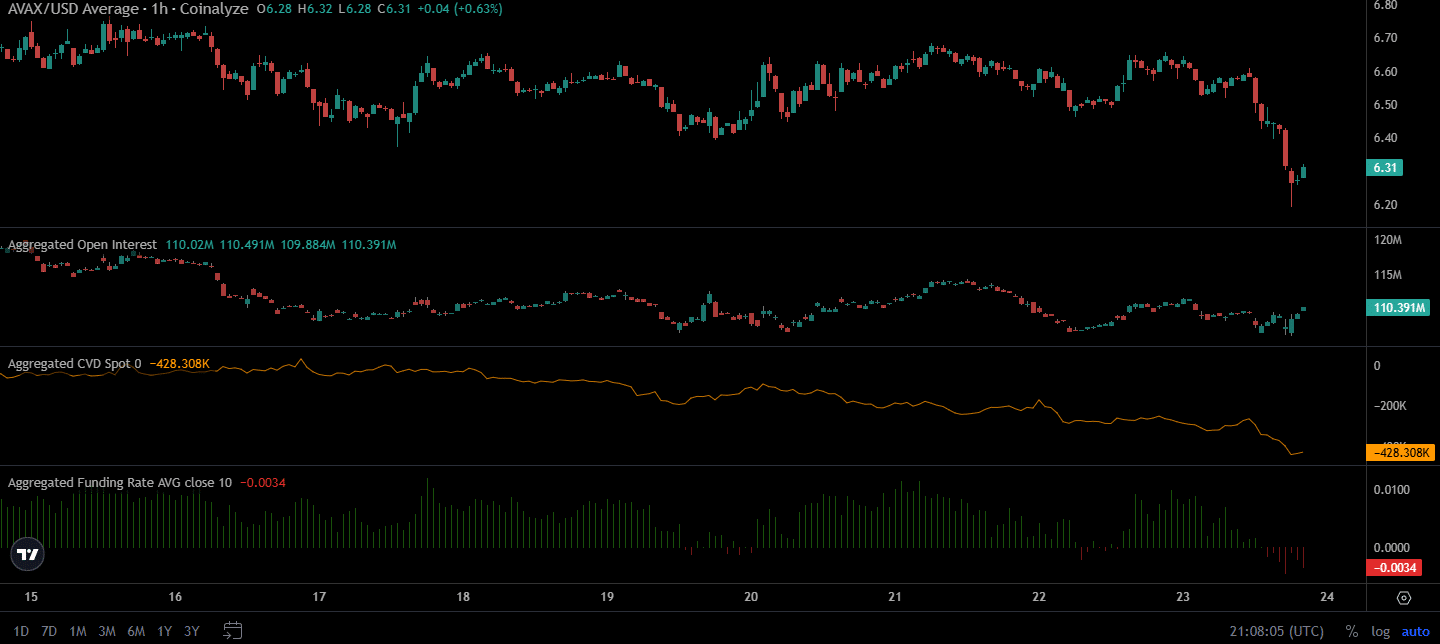
Avalanche [AVAX] token prices were down by 4.91% in the past 24 hours. This was among the biggest price drops for crypto assets in the top 35, by market capitalization, CoinMarketCap data showed.

Avalanche Coinalyze
Source: Coinalyze

The price drop came alongside an uptick in Open Interest in the past few hours, even as prices fell below the $6.50 local support zone. The spot CVD declined noticeably, and the funding rates also slipped into negative territory.

In other words, the short-term market expectations were firmly bearish. Let’s see what the price trends hold in store for AVAX bulls.

The Avalanche bulls’ struggles have centered around $7 recently

In a recent report, AMBCrypto detailed how the altcoin’s price trends were stalling even after a 20x surge in daily transactions onchain. The long-term price trend of Avalanche was pointed downward.

It did not help that in the past 24 hours Bitcoin [BTC] fell below the $65.5k local support zone and was trading below $65k too at the time of writing. If this selling persists, it could trigger a bearish market sentiment shift, dragging AVAX further south.

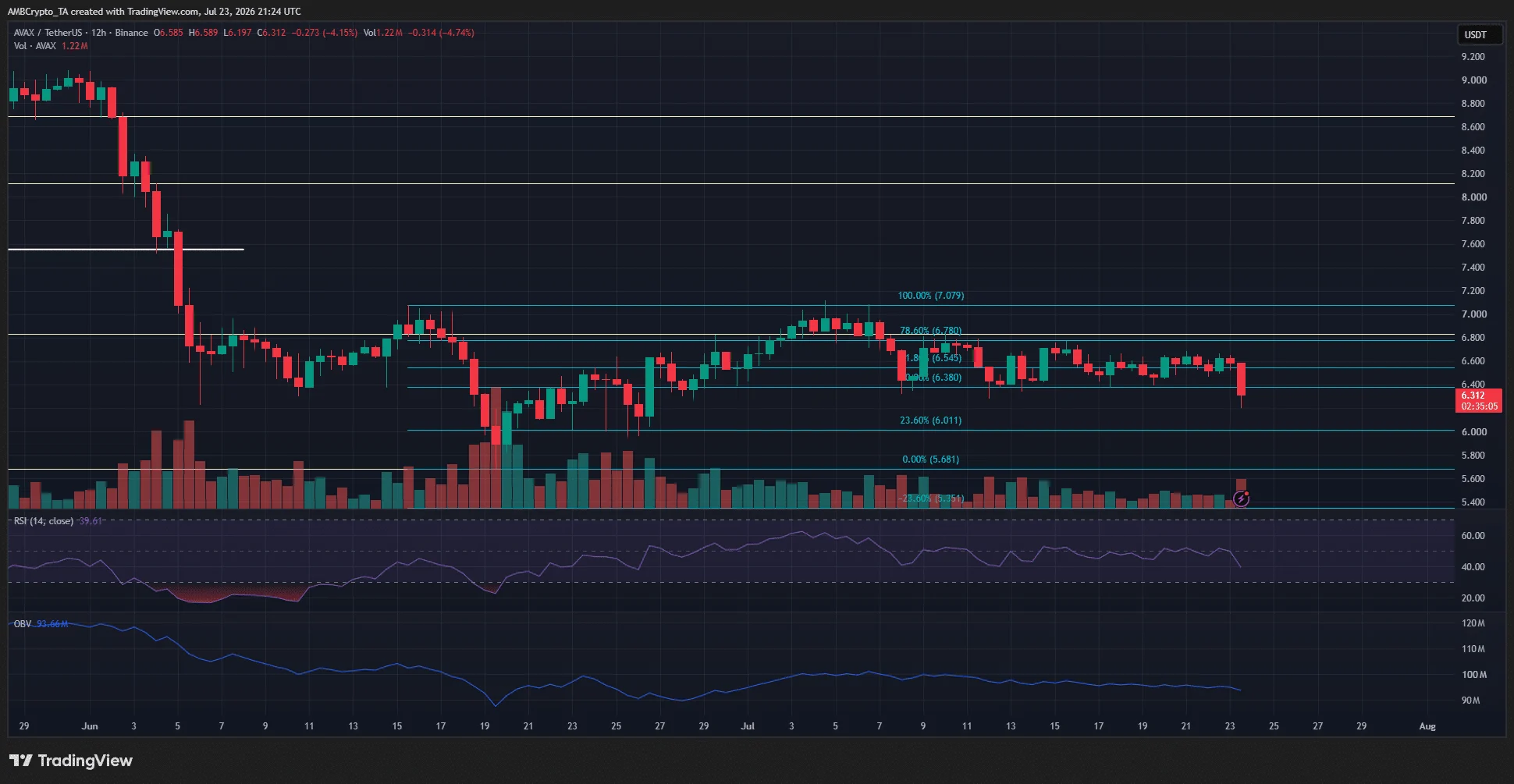
AVAX 12-hour ChartAVAX 12-hour Chart
Source: AVAX/USDT on TradingView

The longer-term downtrend saw a new swing low registered at $5.68. On the 12-hour timeframe price chart above, this has given rise to a bearish swing structure. A bullish structure would have come into play had the $7.08 swing high been broken.

It was tested in early July, but not broken. The subsequent rejection has dragged prices lower. Over the past two weeks, AVAX has traded between $6.38 and $6.78.

At press time, the band of support around $6.40 appeared to have been breached. This could accelerate the downtrend and drive prices toward $6 and below in the coming days.

Traders’ call to action- Maintain a bearish bias

As the Coinalyze data showed, short-selling was becoming popular. As bearish conviction takes root in the derivatives market, it could lead to a short squeeze.

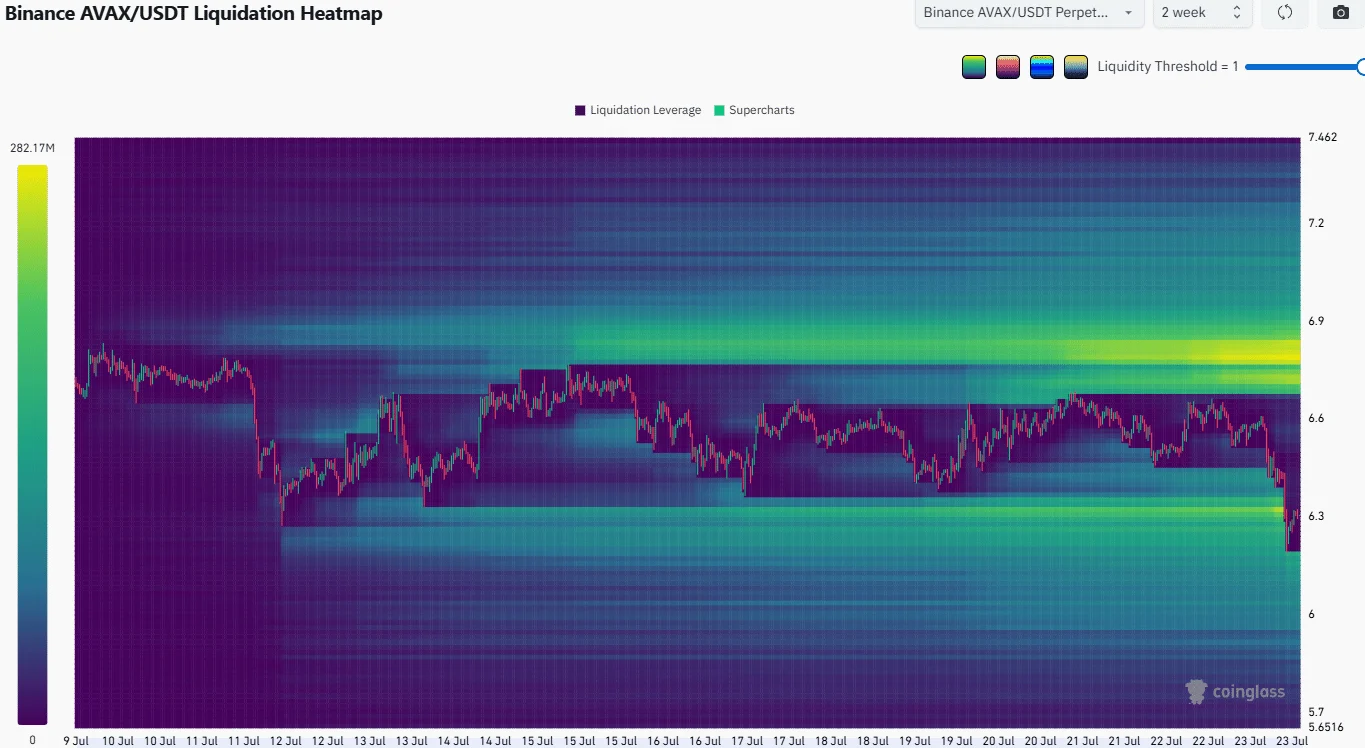
Avalanche Liquidation HeatmapAvalanche Liquidation Heatmap
Source: CoinGlass

The 2-week AVAX liquidation map underlined this threat precisely. To the north, the $6.70-$6.85 area had a dense cluster of short liquidations. This area can be a key magnetic zone that pulls prices upward briefly, before a continuation of the existing bearish trend.

Therefore, traders can maintain a bearish bias but also be wary of a short squeeze.


Final Summary

  • Avalanche witnessed steady spot selling, a slight uptick in Open Interest, and negative funding rates in recent trading hours- pointing to heightened short-selling.
  • The loss of the $6.50 support zone could push prices toward and below $6.0 next, but traders should beware of a potential short squeeze.


Source link

The SEC settles with Coinbase over its missing Gary Gensler texts

0
Coinbase and OKX try to lure in Binance’s users after it failed to secure a MiCA license

The U.S. Securities and Exchange Commission (SEC) agreed to pay $150,000 to settle a federal Freedom of Information Act (FOIA) lawsuit over its investigations into Ethereum, according to a joint status report filed July 22.

History Associates Inc. and the SEC asked the U.S. District Court for the District of Columbia to dismiss the case after reaching a settlement deal. Under the agreement, the agency will produce the remaining responsive documents and pay the flat fee to cover the plaintiff’s legal fees.

History Associates, which provides professional historical research, writing and archival services to government agencies, filed the lawsuit in June 2024. Working on behalf of Coinbase, the firm had submitted three public records requests the year before. Those filings sought documents on SEC investigations into Zachary Coburn and Enigma MPC, along with records on how Ethereum shifted to a proof-of-stake system.

The lawsuit compelled the SEC to hand over thousands of documents, with the court explicitly ordering the agency to prioritize all records and communications sent, received or evaluated by then SEC Chair Gary Gensler concerning Ethereum’s migration from a proof-of-work blockchain to a proof-of-stake network.


Source link

AI Worries Weighed on Jack Henry (JKHY) in Q2

0
AI Worries Weighed on Jack Henry (JKHY) in Q2


Upslope Capital Management, an investment management company, released its second-quarter 2026 investor letter. A copy of the letter can be downloaded here. Upslope aims to provide attractive, equity-like returns while reducing market risk and keeping low correlation with traditional equity strategies. The portfolio tailed in the speculative mania environment as investors broadly avoided boring, cash-flowing, non-AI stocks. The Fund returned -6.6% (net) in Q2 compared to +14.3% return for the S&P Midcap 400 ETF (MDY) and +10.3% gain for the HFRX Equity Hedge Index.  In addition, you can check the Fund’s top five holdings to determine its best picks for 2026.

In its Q2 2026 investor letter, Upslope Capital Management highlighted Jack Henry & Associates, Inc. (NASDAQ:JKHY). Jack Henry & Associates, Inc. (NASDAQ:JKHY) is a financial technology company that offers solutions and payment processing services for community banks and credit unions. On July 21, 2026, Jack Henry & Associates, Inc. (NASDAQ:JKHY) closed at $148.90 per share, reflecting a market capitalization of $10.58 billion. Jack Henry & Associates, Inc. (NASDAQ:JKHY) posted a one-month return of 16.27%, while its shares lost 17.52% over the past 52 weeks.

Upslope Capital Management stated the following regarding Jack Henry & Associates, Inc. (NASDAQ:JKHY) in its Q2 2026 investor update:

“The Fund also exited Jack Henry & Associates, Inc. (NASDAQ:JKHY), fintech business focused on core processing and payments for regional banks). This was disappointing, as the exit was largely due to risk management. Fundamentals remained solid, but shares were hit hard by AI worries. “Proving” the market wrong about these worries will simply take time (a lot of it) and, possibly, additional valuation compression. JKHY was not the only holding with this perceived risk and exiting was aimed at reducing broader exposure to a manageable level.”

Super Micro (SMCI) Launches Liquid- and Air-Cooled NVIDIA Blackwell Solutions for Large-Scale AI Workloads

Jack Henry & Associates, Inc. (NASDAQ:JKHY) is not on our list of 40 Most Popular Stocks Among Hedge Funds Heading Into 2026. According to our database, 38 hedge fund portfolios held Jack Henry & Associates, Inc. (NASDAQ:JKHY) at the end of the first quarter, compared to 37 in the previous quarter. While we acknowledge the potential of Jack Henry & Associates, Inc. (NASDAQ:JKHY) as an investment, we believe certain AI stocks offer greater upside potential and carry less downside risk. If you’re looking for an extremely undervalued AI stock that also stands to benefit significantly from Trump-era tariffs and the onshoring trend, see our free report on the best short-term AI stock.


Source link

Tassat wants to help smaller banks tap the stablecoin boom before big banks lock them out

0
Tassat wants to help smaller banks tap the stablecoin boom before big banks lock them out

The announcement comes as stablecoins move further into mainstream finance following the passage of the GENIUS Act. Wall Street firms and banks are expanding stablecoin initiatives, while Citi projects the market could reach roughly $4 trillion by 2030.

At that scale, Sussman said, concentrating reserves among a few institutions could create liquidity and deposit risks.

“If you assume stablecoins scale to $5 trillion or $10 trillion, then there has to be something that helps the market reach equilibrium,” Sussman said. “It can’t just live in a really small circle because that will compound the risk on both sides.”

The platform itself will not run on a blockchain, though Tassat plans to connect it with tokenized asset and deposit networks. Sussman said that approach lowers the technical burden for smaller banks.

“There is a real risk that vast swaths of the U.S. banking ecosystem get left out in the cold,” he said. “I don’t think that’s healthy politically for the United States. I don’t think it’s healthy economically.”


Source link

XRP withdrawals surge as exchange supply tightens – Can demand keep up?

0
XRP withdrawals surge as exchange supply tightens - Can demand keep up?


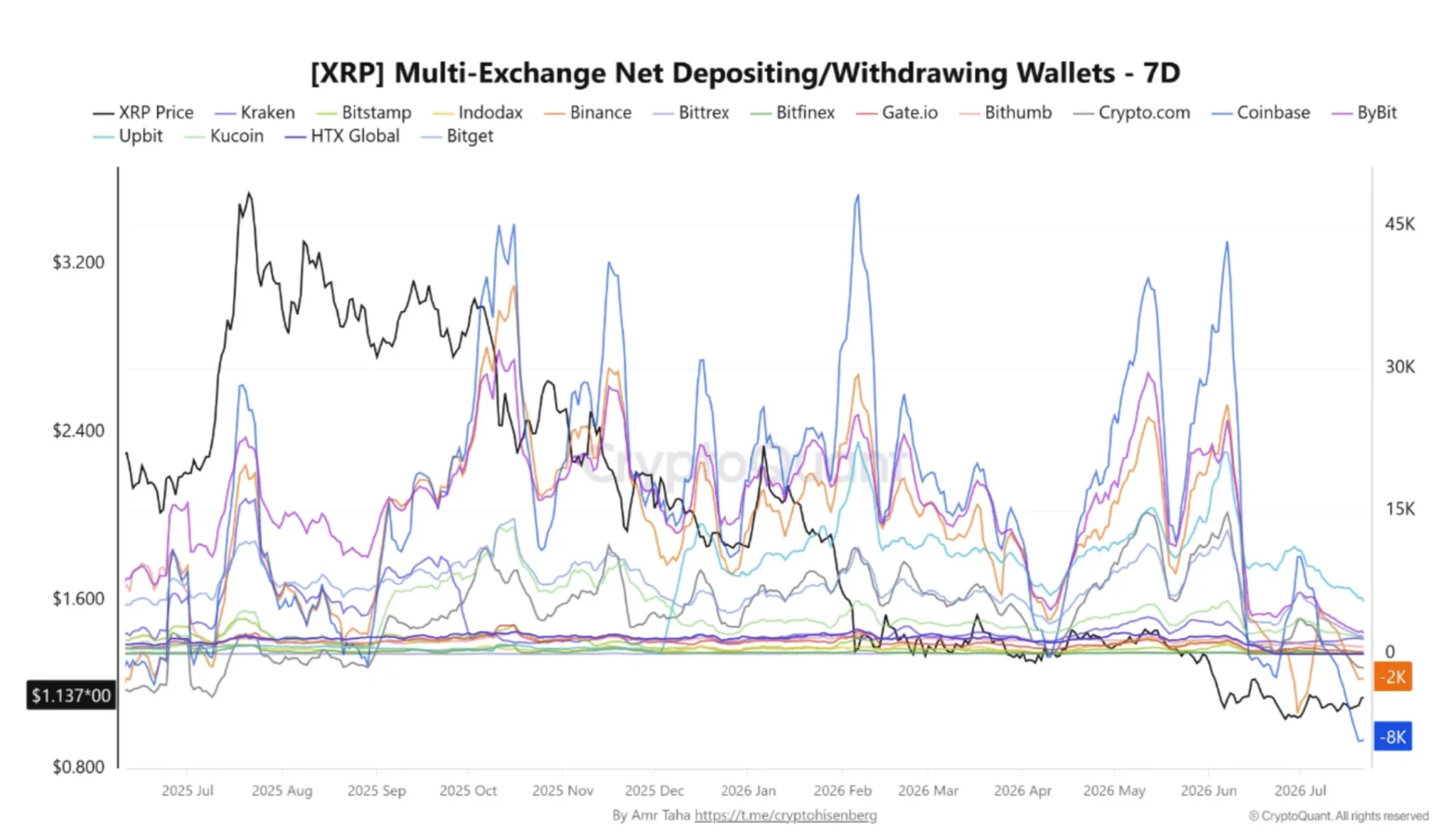
XRP wallet activity has shifted decisively toward withdrawals, suggesting investors increasingly prefer self-custody over centralized exchanges.

Over the past week, withdrawals have been greater than deposits across major platforms. As a result, the total number of wallets declined by roughly -13,026. Coinbase accounted for the largest shift with -8,900, while Binance followed at -2,626 and Crypto.com reached -1,500.

Source: CryptoQuant

Prior to the current withdrawal trend, large increases in deposits were seen in July and again in October 2025. Both times these trends led to declines of more than 65% for Ripple’s [XRP] price. At press time, XRP traded at $1.14, indicating easing seller pressure on the asset.

Therefore, exchange reserves, netflows, derivatives positioning, and broader market liquidity remain essential for confirming whether shrinking exchange supply can support sustained price strength.

Still, they may merely reflect temporary positioning before sentiment, demand, and capital flows improve across spot and derivatives markets simultaneously.

Can shrinking exchange supply push XRP higher?

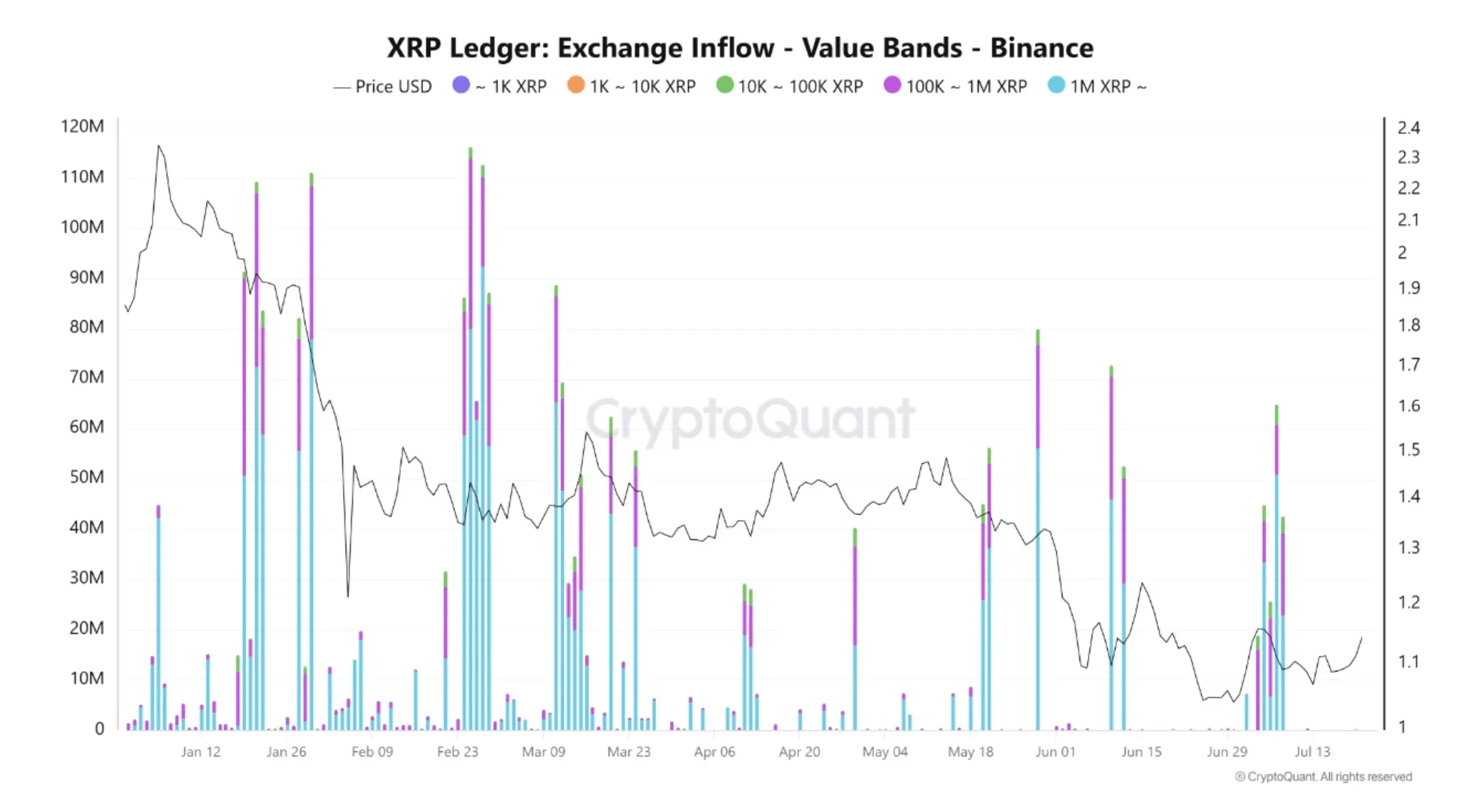
Despite withdrawals continuing to reduce the supply of XRP, broader markets lack convincing evidence of sustained spot accumulation. At press time, Binance’s balance stood at 2.6 billion XRP and has been declining steadily from above 3.1 billion.

Source: CryptoQuant

This trend reduces the immediate supply of sellers. Meanwhile, inflows from whales have remained subdued. Still, transfers bound for exchanges have dropped to roughly 140 XRP after major spikes earlier this year.

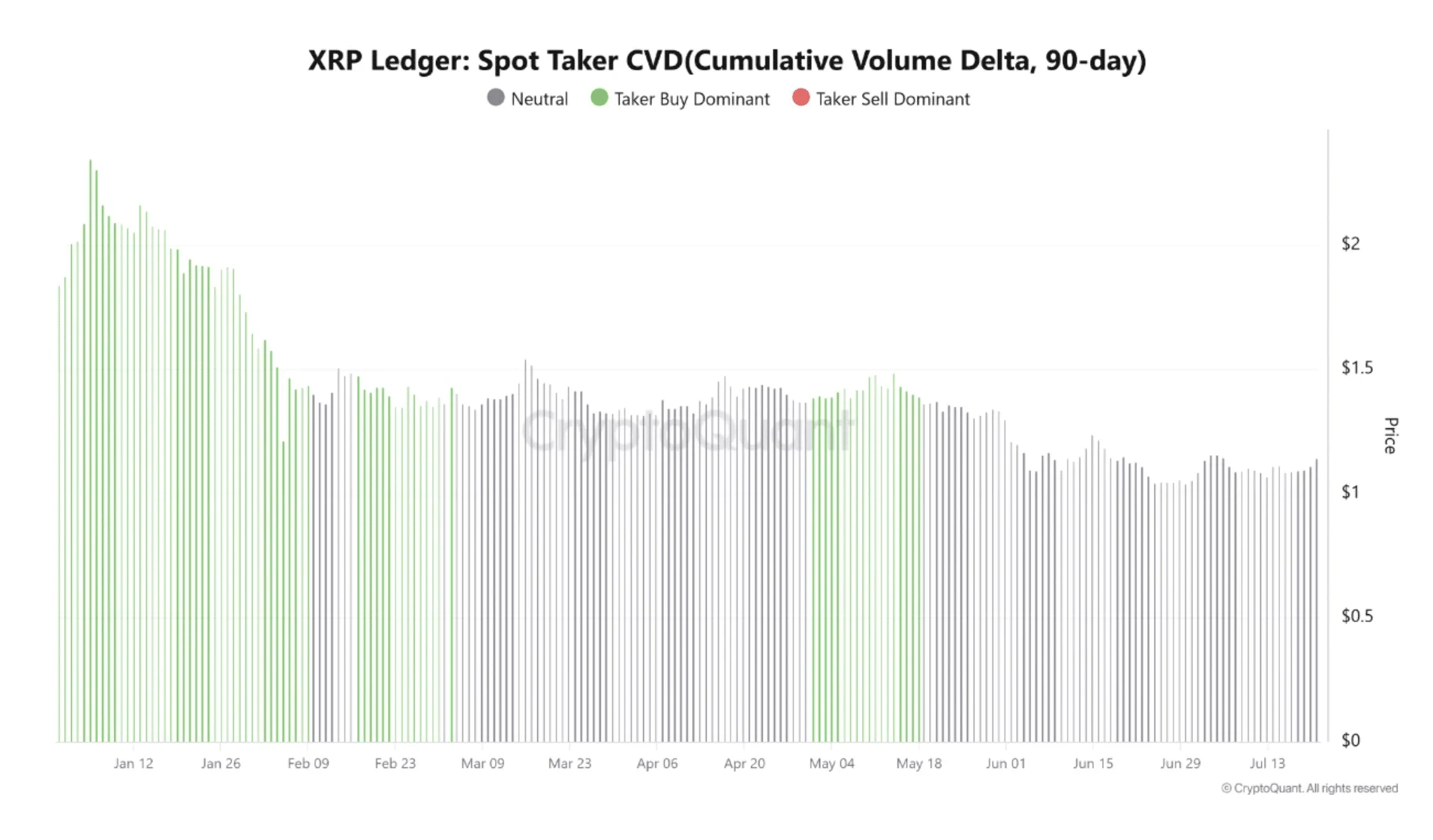
Large deposit bands have also muted, suggesting easing distribution pressure. However, the 90-day Spot Taker CVD has returned to neutral after briefly being buyer dominant in May. As a result, aggressive buyers in the spot haven’t regained control yet.

Source: CryptoQuant

Until buying pressure strengthens, shrinking exchange supply alone is unlikely to sustain XRP’s recovery.

While spot demand remains subdued, broader market positioning offers additional insight into XRP’s recovery. Recently, AMBCrypto reported that large holders have continued accumulating during recent exchange outflows, while long-term holders remain profitable without accelerating distribution.

In this context, concentrated holdings among top wallets still warrant close monitoring. Derivatives positioning also remains constructive. Open Interest stays steady at $2.5 billion, while funding rates fluctuate between neutral and mildly positive levels.

Together, these data signals suggest a cautious conviction, rather than speculative excess. Therefore, XRP’s recovery depends upon sustained accumulation and healthy participation in futures contracts.


Final Summary

  • XRP withdrawals continue tightening exchange supply, but spot demand remains too weak to confirm a sustained recovery.
  • Whale accumulation supports a constructive outlook, though stronger spot buying is still needed for further upside.


Source link

Bitcoin Rally May Have Legs; Bank Income With BTCI

0
Bitcoin Rally May Have Legs; Bank Income With BTCI


This article was originally published on ETFTrends.com.

Bitcoin, the largest digital currency by market capitalization, is showing signs. It surpassed the psychologically important $65,000 level and is higher by nearly 3% for the week ending July 21.

It remains to be seen if months of cryptocurrency frustration are nearing an end. The same is true regarding a bitcoin bottom. However, with the CLARITY Act close to passing and bullish price action of late, crypto investors may have credible reasons to get back in the game. Thanks to the NEOS Bitcoin High Income ETF (BTCI), market participants can earn compensation while waiting for the bitcoin dust to settle.

The $1.12 billion BTCI turns two years old in October and has rapidly become royalty in the bitcoin income ETF space. The actively managed BTCI writes or sells options on a pair of well-known spot bitcoin ETFs, ensuring a solid liquidity profile. It’s a smart income move, as highlighted by a 30-day SEC yield 2.13% — a percentage previously unthinkable with crypto ETFs.

Betting on Bitcoin Paydays With BTCI

BTCI’s status as an income-generating bitcoin avenue is potentially attractive at a time when some market participants are apprehensive about what comes next for the dominant digital currency.

While it is too early to say if a new Bitcoin bull run has commenced, such a development would certainly improve the immediate outlook. The combination of multiple factors which have contributed to the short-lived reversal could become a basis for further BTC gains if the price manages to hold above the key level,” reported Yuri Molchan for The Bitcoin Foundation.

It’s worth noting that even with its high-income profile, the NEOS ETF offers investors some participation in bitcoin’s upside. That trait compels regardless of the market environment. However, it may be all the more attractive now that $65,000 has been reclaimed.

“The recent development has given the bulls a much-needed boost, with BTC finding itself near key resistance. Turning the level into support would improve the technical outlook considerably, and multiple consecutive days of BTC trading above $65,000 would improve the situation even more,” added Molchan.

Data indicating professional investors are reentering the market supports bitcoin’s recent bullishness. In the first trading day of this week, spot bitcoin ETFs hauled in nearly $227 million in fresh capital, indicating professionals are, at the very least, nibbling at bitcoin again. If those flows prove durable, BTCI could benefit.


Source link