Semiconductor chip by Mykola Pokhodzhay via iStock
Lumentum Holdings (LITE) stock is extending gains on Monday after a senior Barclays analyst issued a bullish note in favor of the semiconductor equipment specialist. In a research note on July 20, Tom O’Malley upgraded LITE to “Overweight” and maintained a bold $1,000 price target, indicating potential upside of nearly 30% from current levels.
Note that Lumentum shares have already been an outperformer in 2026 — currently trading at more than 2x their price at the start of this year.
More News from Barchart
www.barchart.com
Why Barclays Recommends Owning Lumentum Stock
O’Malley turned bullish on LITE stock mostly because of the firm’s rapidly improving profitability metrics.
“Lumentum Holdings has seen gross margins expand ~1300bps over the past year to ~48%,” he told clients. In comparison, peer Coherent (COHR) has grown margins by about 100 bps only, to 39.6% over the same period.
In the trailing 12 months, LITE has executed significantly better than industry rivals — something O’Malley believes will remain true through the remainder of 2026.
Note that Lumentum currently sits just below its 20-day moving average (MA), with a clear break above $788 expected to accelerate bullish momentum in the near term.
LITE Shares Are Attractively Priced
Barclays recommends owning Lumentum shares at the current price also because it stands to benefit from “higher pricing on EML lasers in the shortage and OCS.”
In the near term, the company’s earnings scheduled for Aug. 11 are expected to prove a tailwind as well. Consensus is for LITE to report $2.62 a share of earnings, up a whopping 718% on a year-over-year basis.
At the time of writing, Lumentum Holdings is trading at roughly 24x sales, which Tom O’Malley dubbed palatable for an artificial intelligence (AI) beneficiary in his research report.
Barclays’ view on LITE is particularly significant given it downgraded peer Allegro MicroSystems (ALGM) to “Equal-Weight” and Penguin Systems (PENG) to “Underweight” this morning.
What’s the Consensus Rating on Lumentum Holdings?
Interestingly, Barclays is among the more conservative Wall Street firms on Lumentum.
The consensus rating on LITE shares sits at “Moderate Buy,” with the mean price objective of about $1,098 signaling potential for another 42% upside from current levels.
www.barchart.com
On the date of publication, Wajeeh Khan did not have (either directly or indirectly) positions in any of the securities mentioned in this article. All information and data in this article is solely for informational purposes. This article was originally published on Barchart.com
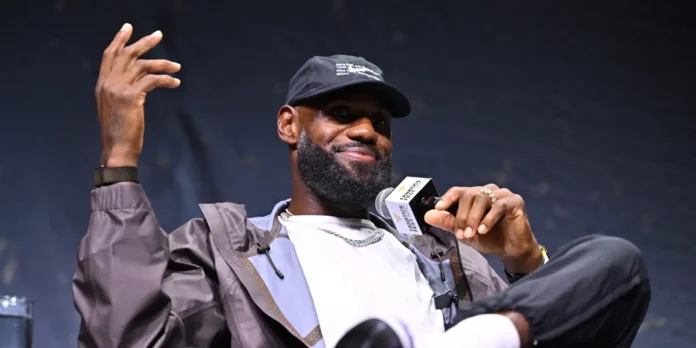
LeBron James, 41, said he doesn’t see why athletes should retire if they’re still performing at a high level.
In a video released Monday from a live “The Shop” podcast panel at Fanatics Fest, the NBA star spoke about what keeps him playing after 23 seasons and why he’s not ready to stop.
“One of the deciding factors, of many, is the younger generation and the kids that have been following my career,” James said.
Seeing young fans who still look to him as “their superhero,” along with inspiring his own children, are among his biggest motivations for continuing to play basketball, he added.
“And then, me just loving what I do. I love the game,” James said.
The idea that athletes should be forced to retire just because of their age “needs to stop,” he said.
“You see it with R&B artists and musicians, and things of that nature. You see it with us in sports. There are always conversations like, when is he going to retire? He needs to retire. He’s this age. He’s that age,” James said.
“But why? Why are we trying to force people that are still doing what they do at a high level?” James continued.
He pointed to Bruce Springsteen and the Rolling Stones as examples of performers who aren’t expected to retire simply because of their age.
“The Stones, they’ve been on tour for 50, 60 years, and no one’s telling them, ‘Hey, don’t come to our city and go do a tour,'” he added.
James said the same logic should apply to athletes. Those who are still dedicated to their craft and continue contributing to the sport shouldn’t be expected to retire.
“We’re giving everything that we have to the sport, and we’re still driving revenue as well. Why not still play it if you still love it?” James said. “I’m just trying to squeeze as much of the juice out of it as possible.”
James’ comments come just weeks after he became an unrestricted free agent, ending his eight-year stint with the Los Angeles Lakers. If they’re any indication, he isn’t ready to slow down just yet, even as where he’ll play next remains up in the air.
“We’re not going to be rushed,” Rich Paul, James’ agent, said on Monday’s episode of the “Game Over” podcast, which he cohosts with Max Kellerman. “It’s his choice to make, and when he makes the choice, he’ll make it.”
James isn’t the only public figure to reject the idea that age alone should determine when someone retires.
Roger Federer has previously spoken about the retirement speculation that followed him for years.
In a press conference after the 2018 US Open, the tennis great said reporters had been asking him about retirement for “nine years,” and “almost every interview” included questions about when he would call it quits.
“Sometimes you wonder why they ask you again because do they not hear what I said yesterday? Do they not listen to what I said two months ago?” Federer said. He ultimately retired in 2022 after struggling with persistent knee injuries.
Halle Berry has also said she doesn’t understand why people think 60 is the age to stop working.
“Why should I now sit down and give that all away — and then what?” Berry said during a podcast appearance in July.
Galaxy Digital (GLXY) said it set up a $5 million fund for Bitcoin developers working to protect the network from the potential future threat posed by quantum computing.
The crypto financial services company said it will begin accepting applications for the Galaxy Bitcoin Quantum Readiness Initiative immediately, with grants focusing on developing quantum-resistant signature schemes, wallet migration tools and security audits. The company said it hopes other firms will contribute funding and research to accelerate the transition to quantum-resistant cryptography.
Bitcoin secures wallets and transactions with cryptographic techniques that current computers cannot break in a meaningful timeframe. While quantum computing is still too immature to attack the blockchain, advances in the technology have accelerated efforts across government and industry to adopt quantum-resistant standards before the threat becomes a reality.
In the event that quantum computers do become capable of breaking Bitcoin’s cryptography, roughly 6.9 million bitcoin BTC$66,310.30 could become vulnerable to theft, according to CryptoQuant research. At today’s price of about $66,800, that comes to about $461 billion.
Hyperliquid [HYPE] has proposed a HIP-4 upgrade in an effort to introduce permissionless outcome markets. The proposal expands the protocol beyond perpetual futures into a broader infrastructure layer for on-chain applications.
Deployers must stake 500,000 HYPE to launch new markets. Validator-approved templates and slashing rules help preserve market quality as participation scales. Together, these measures shift Hyperliquid from building products to enabling developers to build on its infrastructure.
Source: X
According to Varun Datta, Founder & CEO of Truth Ventures,
“The next phase of digital finance won’t be won by the platforms building the most products.”
Instead, it’ll be won by the platforms enabling everyone else to build them. Additionally, in an email to AMBCrypto, he argued that this model will deliver greater long-term investment value.
Source: Santiment
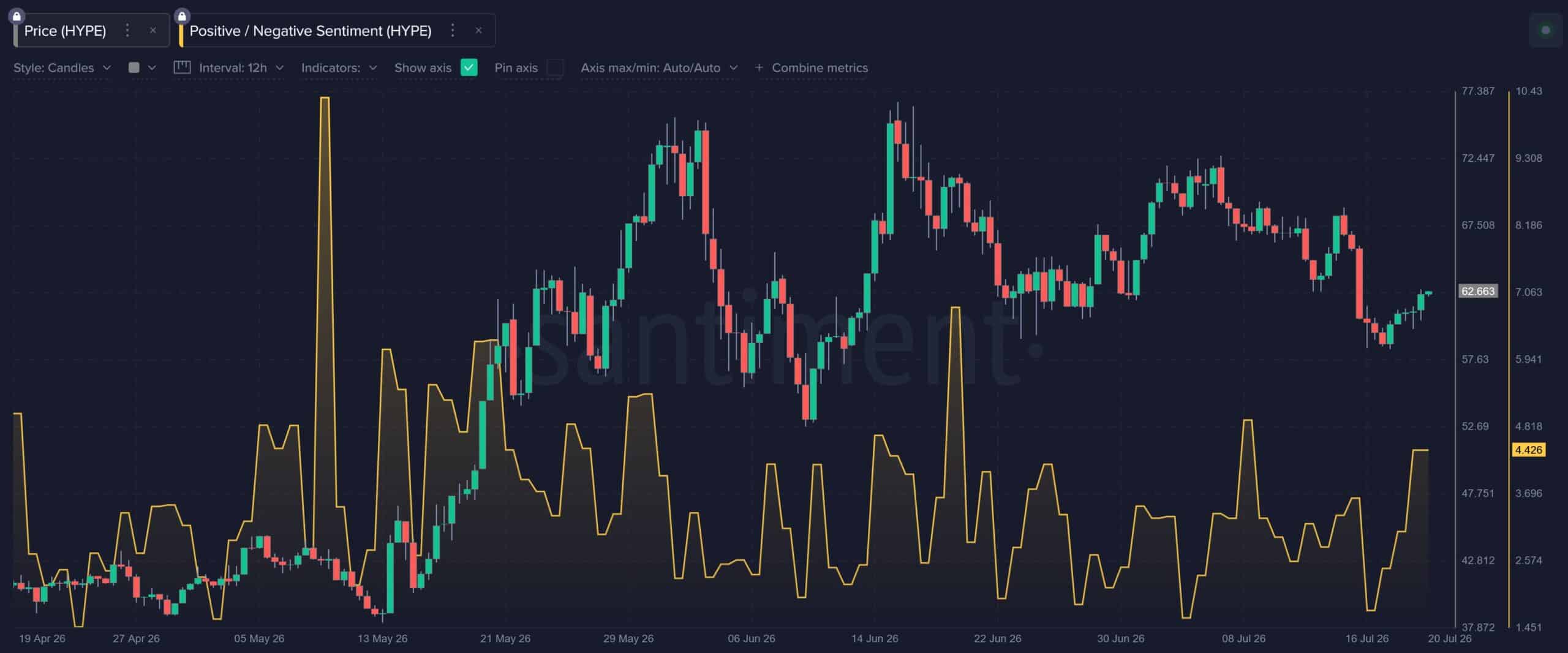
Meanwhile, HYPE’s positive sentiment recently hit its second-highest level over the past month. This improvement suggested that investors now increasingly recognize Hyperliquid’s expanding role in digital finance.
At the time of writing, that growing confidence was visible across HYPE’s on-chain positioning too. For instance, a trader with $2.37 million in all-time perpetual profits recently staked 249,243 HYPE, worth about $15.5 million, instead of realizing gains.
Source: X
This move may be evidence of broader network participation. According to Dune, total staked HYPE climbed to approximately 438.7 million tokens at press time, representing 43.9% of the token’s total supply.
Meanwhile, the overall staking rate remained near 44%. Liquid staking participation eased gradually too, indicating that most users still prefer native validators.
Sustained staking reduces immediately available supply and strengthens network security. Notably, progressive growth in protocol usage may ultimately lead to reduced availability of supply for investors while also supporting Hype’s long-term value proposition.
Market structure tests Hyperliquid’s momentum
The trend of increasing investor confidence is transforming the overall market structure of Hyperliquid as well. In the last 24 hours, for instance, Open interest crossed the $11 billion-mark.
Furthermore, balanced funding rates and limited liquidations hinted that traders may be adding exposure without excessive leverage.
Source: Hyperliquid Analytics
This positioning suggested that users may be taking a measured approach, rather than reacting on speculation. Beyond derivatives, protocol fundamentals have continued to strengthen the outlook too.
Rising revenue, expanding TVL, and active governance participation mean ecosystem growth may be extending beyond price action alone. However, sustaining that momentum will depend on continued user adoption and successful execution of upcoming upgrades.
If those trends persist, improving fundamentals could reinforce the confidence already reflected in HYPE’s staking and derivatives markets.
Final Summary
Hyperliquid [HYPE] is expanding beyond perpetual futures, with HIP-4 strengthening its long-term infrastructure and ecosystem potential.
Hyperliquid continues to attract long-term conviction as hike in staking and healthy market structure support its growth outlook.
Economic resilience is probably something most Americans would welcome.
We’re seeing that consumer spending is still growing, wage gains haven’t gone away, and corporate dealmaking is showing fresh momentum. Those trends point to a country that is successfully blowing past the recent inflation shock.
However, in an exclusive interview with CBS News’ “Face the Nation,” Bank of America CEO Brian Moynihan sees something more troubling beneath the surface.
The economy is arguably holding its own, but the relief households expected hasn’t followed. Food, housing, and fuel costs remain painful, while the strongest spending growth continues to come from consumers with the greatest financial cushions.
For investors and households, the next phase could look very different from the soft landing many had anticipated.
Economic growth isn’t disappearing, but interestingly, that relentless pace of expansion might compel an economic response few people are prepared for.
Moynihan warns inflation could outlast the recovery
Moynihan’s big concern is that inflation will likely remain sticky enough to prevent the relief everyone is expecting.
“It’s drifting down, and it’s drifting down slower than people would like it,” he said, pointing to continued pressure from housing, food, fuel, and other essential costs.
The problem extends beyond prices at the pump.
More Fed:
Moynihan said businesses are worried about “the cost of goods that’s coming through the pipeline,” as higher energy costs feed into plastics, materials, manufacturing, and transportation.
In effect, that has complicated the economic outlook.
The delayed pass-through helps to explain why Bank of America’s economists see “inflation staying higher all the way into 2027 and 2028.”
Moreover, that forecast led to a steep reversal in the bank’s interest-rate outlook.
Moynihan said that six months ago, the team expected the Federal Reserve to cut rates. Now, the team says, “our belief is we’ll raise rates” to contain consistent inflation.
He indicated that the tightening cycle would likely begin “more towards the end of the year,” with additional increases potentially extending into next year.
For perspective, as of its June 2026 outlook, I reported that BofA expects three quarter-point Fed rate hikes, in September, October, and December 2026, totaling 0.75 points.
Taken collectively, that forms a remarkably uncomfortable setup, where inflation will take “a long time to squeeze out of the system,” while renewed rate hikes add more pressure to already-strained household budgets.
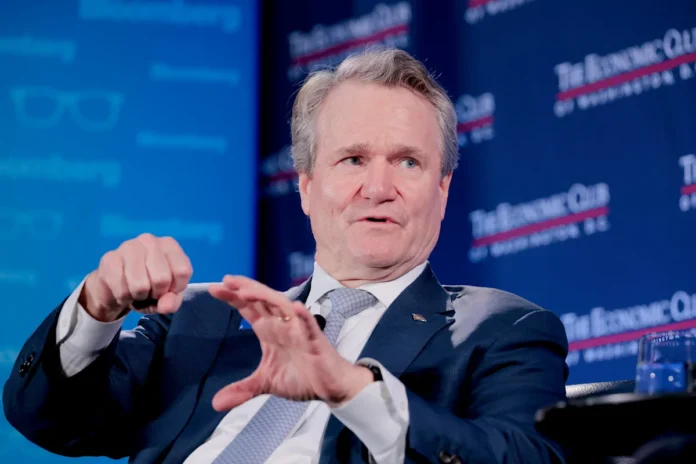
Bank of America CEO Brian Moynihan discusses inflation, interest rates, and the U.S. economy during a “Face the Nation” interview.Chip Somodevilla/Getty Images
Why inflation could outlast the oil shock
Moynihan’s warning of a greater risk is that the shock spreads beyond underlying prices, keeping monetary policy restrictive even as gasoline prices retreat.
According to the Fed’s summary of economic projections, the bank expects 2026 headline PCE inflation of 3.6% and core PCE of 3.3% (median). Moreover, according to the Bureau of Economic Analysis, headline PCE was already running at 4.1% in May, while core PCE stood at 3.4%.
According to its June projections, officials forecasted headline PCE to drop to 2.3% in 2027 and 2% in 2028, with core inflation easing to 2.5% and 2.1%, respectively.
At the same time, the Energy Information Administration expects average gasoline prices to decline from $3.64 per gallon in 2026 to $3.09 in 2027, according to Energies Media.
So the higher-for-longer inflation thesis only sticks if there are second-round effects.
That would include fuel and freight costs being passed through to goods, businesses defending margins through price bumps, workers seeking compensation for lost purchasing power, and consumers beginning to expect faster inflation.
BofA’s thesis weakens if gasoline follows the EIA’s path, while core services, wages, and inflation expectations simultaneously cool.
Moynihan sees an economy pulling apart
Another major arc from the interview was Moynihan’s comments, which reinforce the idea that America is running on two economic tracks.
“Affordability is a challenge,” he said, pointing to pressure from gas, food, and inflation. Yet Bank of America’s 70 million customers are still spending roughly 6% more in June than a year earlier, indicating that headline consumption still remains resilient.
However, there’s a clear split, which the bank’s been talking about for weeks.
Moynihan said spending among the “middle third” and “top third” of households is growing more quickly, while wage growth across income groups has only recently “coalesced together around 3% to 4%.”
“In some ways, the game is rigged,” Vance said. “We ran the experiment of offshoring all of our industrial jobs, becoming a services-and-finance economy, and allowing Wall Street to come in and buy every asset of modern life and turn it into an investable, line-goes-up asset.”
On top of that, recent investing trends underscore incredible frustration among younger retail investors, who are willing to take on much more risk to achieve outsized gains.
The crypto mania gave way to meme stocks during the pandemic, while prediction markets are the latest in this ongoing episode.
For perspective, prediction platform Kalshi said that millions accessed its platform on a weekly basis, with volumes surging past $1 billion per week in late 2025, while combined monthly trading on Kalshi and Polymarket surged from under $5 billion in September 2025 to roughly $24 billion by April 2026.
Moreover, the appetite for quick gains comes as more young adults remain at home.
Federal Reserve data shows 49% of Americans under 30 lived with a parent in 2025, up 6 percentage points from 2022 and 12 points from 2019.
What would three more rate hikes mean?
I feel Moynihan’s warning becomes a lot more consequential once BofA’s forecast is converted into an actual policy rate.
It’s important to note that the Fed is targeting a 3.5% to 3.75% range, according to CNBC.
Three conventional quarter-point increases would lift that range to 4.25% to 4.5%, with a midpoint of 4.375%.
Interestingly, that implied rate is roughly 0.63% above the Fed’s June median year-end projection of 3.75%.
It is also higher than current market expectations. According to the Fed’s July Monetary Policy Report, futures imply an effective rate near 4% by year-end, or 0.3% above its current level.
For consumers, a 0.75-point increase adds nearly $75 in annual interest for every $10,000 of fully repricing variable-rate debt. The consequences likely extend into housing affordability, small-cap refinancing, and long-duration stock valuations.
For investors, renewed rate hikes raise discount rates, which in turn make future earnings a lot less valuable and pressuring richly valued growth stocks that have dominated markets. Small-cap companies might face higher refinancing expenses, while homebuilders and REITs would contend with sluggish affordability and demand.
Banks will initially earn more on loans, though higher deposit expenses and eventual credit deterioration erode that benefit.
BofA might revisit that call if multiple core PCE readings decisively softened, wage growth fell behind inflation, and unemployment began rising.
An April 2025 CoinDesk investigation found that Movement was examining whether it had been misled into signing a market-making agreement that handed a single counterparty unusual influence over MOVE’s circulating supply. Internal documents reviewed by CoinDesk at the time showed the arrangement allowed 66 million MOVE tokens to be sold into the market one day after the token debuted, contributing to a sharp decline in price.
The controversy centered on Rentech, a little-known intermediary that appeared in contracts connected to Chinese market maker Web3Port. According to documents obtained by CoinDesk, Movement executives later questioned whether the foundation believed Rentech was affiliated with Web3Port when it was not. Rentech has denied any wrongdoing or misrepresentation.
The fallout extended beyond Movement. Binance banned the market-making account involved in the token launch for what it described as misconduct, while Movement launched a token buyback program and hired outside firm Groom Lake to review the events surrounding the deal.
Movement Labs and co-founder Rushi Manche separated in May 2025.
More recently, the company attempted to chart a new course.
In June, Move Industries, a separate legal entity from MVMT Labs, the company that filed for bankruptcy, announced it would pivot away from competing with other Ethereum scaling networks and instead focus on cross-border payments, remittances and stablecoin settlement. The company said it had secured access to licensed payment infrastructure in the U.S., Canada and the European Union as it sought to build services aimed at emerging markets.
Deposit account rates are on the decline — but the good news is you can lock in a competitive return on a certificate of deposit (CD) today and preserve your earning power. In fact, the best CDs still pay rates of 4% or higher. Read on for a snapshot of CD rates today and where to find the best offers.
Where are the best CD rates today?
CDs today typically offer rates significantly higher than traditional savings accounts. Currently, the best short-term CDs (six to 12 months) generally offer rates around 4% APY.
Today, the highest CD rate is 4.20% APY. This rate is offered by United Fidelity Bank and Sallie Mae on their 2-year CDs.
The following is a look at some of the best CD rates available today, Tuesday, July 21, 2026, from our verified partners.
Historical CD rates
The 2000s were marked by the dot-com bubble and later, the global financial crisis of 2008. Though the early 2000s saw relatively higher CD rates, they began to fall as the economy slowed and the Federal Reserve cut its target rate to stimulate growth. By 2009, in the aftermath of the financial crisis, the average one-year CD paid around 1% APY, with five-year CDs at less than 2% APY.
The trend of falling CD rates continued into the 2010s, especially after the Great Recession of 2007-2009. The Fed’s policies to stimulate the economy (in particular, its decision to keep its benchmark interest rate near zero) led banks to offer very low rates on CDs. By 2013, average rates on 6-month CDs fell to about 0.1% APY, while 5-year CDs returned an average of 0.8% APY.
However, things changed between 2015 and 2018, when the Fed started gradually increasing rates again. At this point, there was a slight improvement in CD rates as the economy expanded, marking the end of nearly a decade of ultra-low rates. However, the onset of the COVID-19 pandemic in early 2020 led to emergency rate cuts by the Fed, causing CD rates to fall to new record lows.
The situation reversed following the pandemic as inflation began to spiral out of control. This prompted the Fed to hike rates 11 times between March 2022 and July 2023. In turn, this led to higher rates on loans and higher APYs on savings products, including CDs.
Fast forward to September 2024 — the Fed finally decided to start cutting the federal funds rate after it determined that inflation was essentially under control. The Fed cut rates three times in 2025, and we saw CD rates steadily come down from their peak. Even with the Fed leaving interest rates unchanged so far in 2026, CD rates remain high by historical standards.
Take a look at how CD rates have changed since 2009:
Understanding today’s CD rates
Traditionally, longer-term CDs have offered higher interest rates compared to shorter-term CDs. This is because locking in money for a longer period typically carries more risk (namely, missing out on higher rates in the future), which banks compensate for with higher rates.
However, this pattern doesn’t necessarily hold today; the highest average CD rate is for a 12-month term. This indicates a flattening or inversion of the yield curve, which can happen in uncertain economic times or when investors expect future interest rates to decline.
When opening a CD, choosing one with a high APY is just one piece of the puzzle. There are other factors that can impact whether a particular CD is best for your needs and your overall return. Consider the following when choosing a CD:
Your goals: Decide how long you’re willing to lock away your funds. CDs come with fixed terms, and withdrawing your money before the term ends can result in penalties. Common terms range from a few months up to several years. The right term for you depends on when you anticipate needing access to your money.
Type of financial institution: Rates can vary significantly among financial institutions. Don’t just check with your current bank; research CD rates from online banks, local banks, and credit unions. Online banks, in particular, often offer higher interest rates than traditional brick-and-mortar banks because they have lower overhead costs. However, make sure any online bank you consider is FDIC-insured (or NCUA-insured for credit unions).
Account terms: Beyond the interest rate, understand the terms of the CD, including the maturity date and withdrawal penalties. Also, check if there’s a minimum deposit requirement, and if so, that it fits your budget.
Inflation: While CDs can offer safe, fixed returns, they might not always keep pace with inflation, especially for longer terms. Consider this when deciding on the term and amount to invest.